Chennai has worrying air quality levels in Air Quality levels in year, with the city’s Air Quality Index (AQI) reaching 190 in January 2026. These numbers are placed in the ‘Unhealthy’ category according to the data.
Early this year, in January, the PM2.5 level stood at 119 µg/m³, and PM10 was measured at 146 µg/m³, which is four times higher than the safe limit recommended by the global health standards.
The data from December 2025 shows that air quality in Chennai is witnessing the poorest quality in the last six years, with an average AQI of 158.
Air Quality Index (AQI)
The Air Quality Index (AQI) is used to give the general people with an indication of air quality in local area. The AQI is an index for reporting daily air quality and give you how clear or polluted the air in the local area and what associated health effects might be concering for you.
Different nations have their own Air Quality criteria and indexes. Some of the benchmarks around the world are:
- Air Quality Index, India
- Nation Ambient Air Quality Standards(NAAQS)
- Air Quality Health Index (AQHI), Canada
- Air Quality Pollution Index (API), Malaysia
- Air Quality Health Index (AQHI), Hong Kong
- Comprehensive Air-Quality Index (CAI), South Korea
- Daily Air Quality Index (DAQI), UK
- Common Air Quality Index (CAQI), Europe
- The Pollutants Standards Index (PSI), Singapore
For calculating AQI, five major air pollutants is taken into the account by National Ambient Air Quality Standards (NAAQS), USA. They are Particle pollution (also known as particulate matter), ground level ozone, carbon monooxide, sulfur dioxide and nitrogen dioxide.
Air Quality Index (AQI), India
National AQI, India is an index of outdoor air quality that takes air conditions throughout the country. The AQI India, index analyse eight major pollutants – PM10, PM2.5, Sulfur dioxide (SO2), Nitrogen dioxide (NO2), Carbon monoxide (CO), Ammonia (NH3), and Ozone (O3).
Based on the concentration of pollutants, AQI has been classified into six groups namely:
- Good
- Satisfactory
- Moderately Polluted
- Poor
- Very Poor
- Severe
Air Pollution
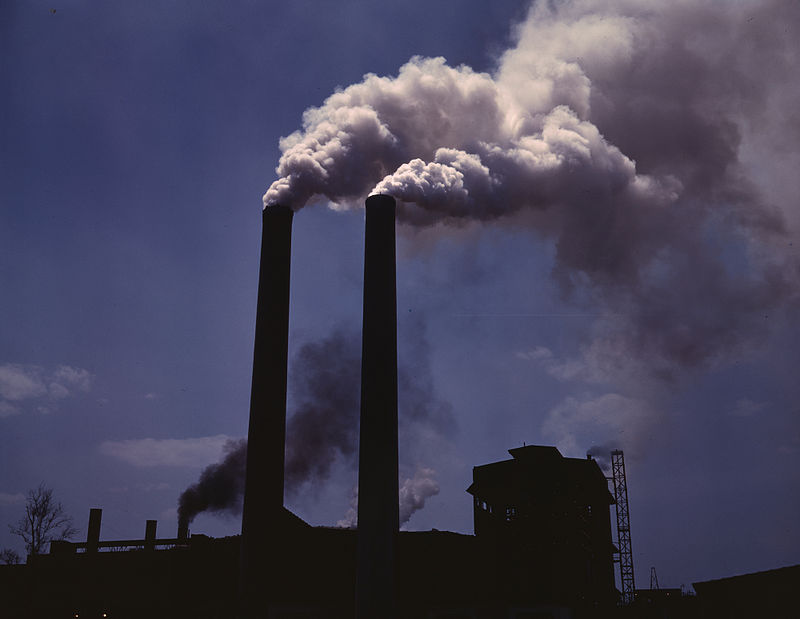
Air pollution is the poisoning of air due to the addition of solid, liquid, or gaseous particles in a certain concentration, which may cause health hazards to Humans, Animals, Plants, etc, and also affects the environment or ecology in the long term.
In India, to prevent and control air pollution government of India enacted a law which is called the Air (Prevention and Control of Pollution) Act, 1981.
Types of Air Pollution
There are two types of Air Pollution: Indoor Air and Outdoor air pollution.
Indoor Air Pollution
It refers to the air pollution, we face daily in the Home workplace. It is caused by cooking, heating using traditional stoves, and burning of log woods that results in high air pollution inside the rooms.
Outdoor Air Pollution
It refers to outside of the home or workplace, ambient air. It is caused by Petrol, diesel vehicles, solid fuel burning, and industries such as thermal power plants, etc.
Causes of Air Pollution
Vehicle Exhaust
The burning of fuels by vehicles releases a high amount of carbon monoxide. A million vehicles operate on roads every day, leaving behind their own carbon footprint.
Thermal Power Plants
Power Plants use fossil fuels on a wide scale. That releases a lot of smoke into the environment. It also releases chemical waste such as Sulphur-di-oxide etc that travel and mix rapidly in the environment. These things react with water molecules and fall as acid rain.
Factories
Industrial plants and factories emit a wide range of air pollutants.
Construction
The construction site produces a lot of construction debris, dust particles, and gaseous emissions into the atmosphere.
Agricultural Activities
In agriculture, there is high usage of fertilisers. This releases byproducts of ammonia and other substances into the air.
Natural Causes
Even nature produces a lot of air pollutants. Examples are Volcano eruptions, Forest, Dust storms, etc. The scale of natural causes is larger than the man-made ones.
Household Activities
It includes cooking, cleaning using chemicals, mosquito repellants, pesticides, artificial fragrances, etc.
Effects of Air Pollution
Heart and Respiratory Problems
It creates several health hazards, including Heart and respiratory problems. In some cases, there is Cancer. Children and older people are highly vulnerable to air pollutants. The common diseases caused by air pollutants are Pneumonia, Asthma, chronic obstructive pulmonary disease (COPD) and other respiratory allergies.
Global Warming
Global warming creates environmental effects such as an increase in sea level, melting of Icebergs, loss of habitats, forest fires, etc.
Acid Rain
Acid rain is caused by gases such as nitrogen oxides and sulfur oxides that are released into the atmosphere. This reacts with water and falls as acid rain. This causes great damage to human beings, animals, and crops.
Effect on Wildlife
Can force wildlife species to move to new places and change their habitat.
Depletion of the Ozone layer
Ozone exists in the Earth’s atmosphere and is responsible for protecting humans from harmful ultraviolet (UV) rays. This layer depletes due to chlorofluorocarbons and hydrochlorofluorocarbons.
Human Health
Outdoor air pollution is the major cause of disease globally. The effect is an increase in admissions to hospitals and the risk of premature death. It is estimated that 4.2 billion premature death that occurs globally are linked to ambient air pollution.
WHO
Every day about 93% of the world’s children under the age of 15 (1.8 billion children) breathe polluted air that puts their health and development at serious risk
How to control air pollution?
Air pollution can be controlled to a certain limit by following the ways:
- By establishing Industries away from areas of high human pollution. Such as constructing the Industries outside the cities, towns, etc.
- By increasing the length of Chimneys in Industries. This may reduce the effect on the ground to a certain limit.
- By planting more trees and plants.
- Encouraging the Public to use Biogas, LPG, and CNG for their motor vehicles.
- By using Public Transport, such as trains, buses, etc.
- Avoid Air Travel as Aviation alone is responsible for 12% of CO2 emissions from all transport sources, compared to 74% from road transport.
