The arts of the Indus valley civilization came throughout the last half of 3000 BCE. The artworks of the Indus Valley civilisation embrace Sculptures, seals, pottery, gold ornaments, terracotta models, etc.
The artworks of the Indus Valley Civilisation are extremely realistic in the portrayal of human and animal figures. The two major sites of this civilisation are Harappa in the North and Mohenjo-daro in the South.
These 2 sites are wonderful samples of Civic design. The Indus Valley civic design includes homes, Markets, Storage Facilities, public baths, offices, etc. The whole city is organised in an exceedingly grid-like pattern. These cities had an awfully smart drainage system.
Harappa and Mohenjo-daro are presently in the Islamic Republic of Pakistan. In India, there are Lothal and Dholavira, each in Gujarat, Rakhigarhi in Haryana, Ropar in Punjab, Kalibangan, and Balathal in Rajasthan. etc.
Indus Valley Sculptures
Stone Statues
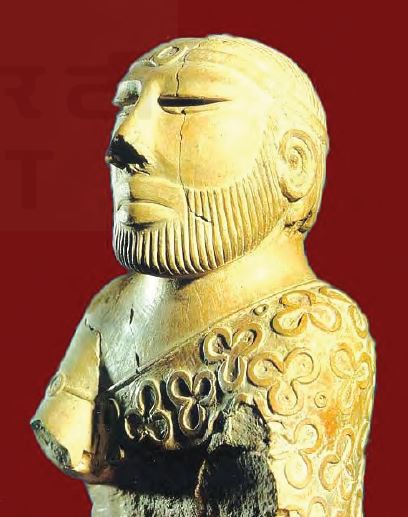
Three-dimensional models are found at Harappa and Mohenjo-daro. There are two prominent male figures, one is made of red sandstone and the other is made of steatite. One is a torso made of Red Sandstone. Steatite figure is a Bearded man with a bust, this man is believed to be a priest, wrapped in a scarf beneath the right arm, and the left shoulder covered.
This shawl is designed with trefoil patterns. This bearded man figure has elongated, little, half-closed eyes. The nose is well-shaped, with an average-sized mouth, the moustache is close-cut and short beard, whiskers.
The ears bear a likeness to double shells with a hole at the centre. Hair moves aloof from one another in the middle, and a plain-woven fillet is passed around the head. An armlet is in the right hand, and holes in the neck show a necklace.
Bronze Casting
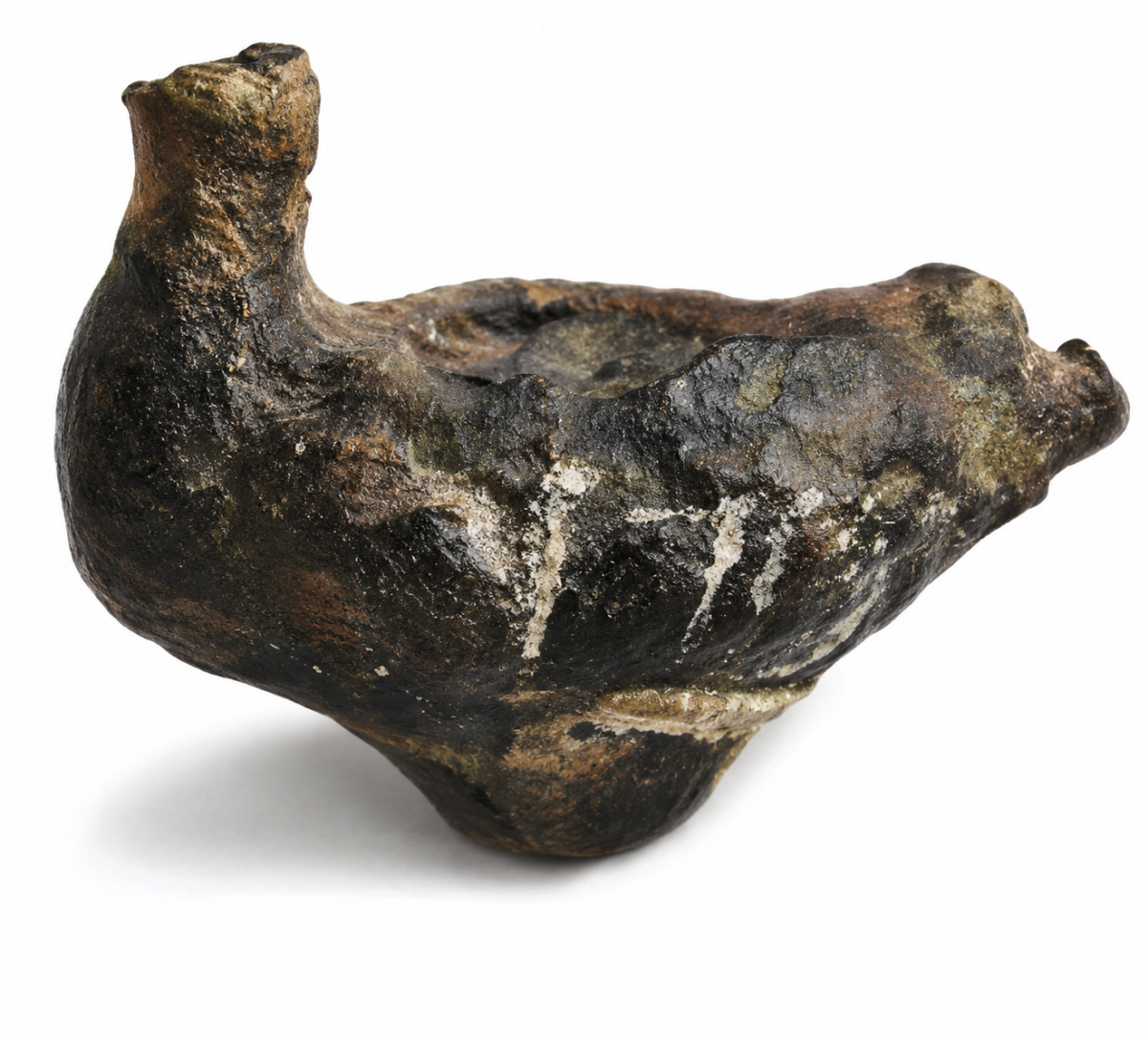
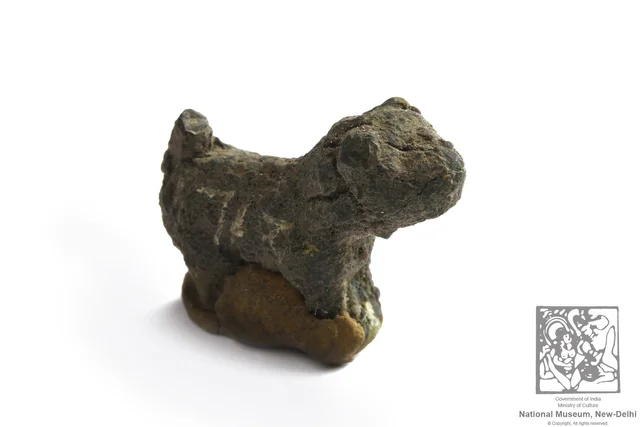
Harappans made bronze statues using the lost wax technique. Made Human and Animal figures. The best example of a Bronze statue made by the Lost Wax technique is the famous ‘Dancing Girl’.
This method is famous all over the Indus Valley Civilisation. The copper dog and bird of Lothal. Bronze figure of a bull from Kalibangan. Daimabad, a Chalcolithic site, provided good examples of metal cast sculptures.
Terracotta Figures
The terracotta figures were more realistic in Kalibangan (Gujarat). The terracotta figures include the Mother Goddess. It includes some figurines, such as Bearded males with curled hair.
The bearded figurines have a rigid posture, legs slightly apart and arms parallel to the body. A terracotta mask of a horned God is also found.
Some of the terracotta objects found are Toy carts with wheels, rattles, birds and animals, whistles, gamesmen, and discs.
Seals
Seals of the Indus Valley are made of terracotta, faience, copper, chert, agate, and steatite. Seals include figures of unicorn bull, rhinoceros, tiger, bison, buffalo, goat, etc
These seals were for commercial purposes, carried as a person’s or a company’s identity cards, or logos. The size of the standard Harappan seal is 2×2 square inches, generally made of Soft river stone, steatite.
Every seal contains some kind of pictographic script that is yet to be deciphered. Some found seals were made of gold or ivory. These seal bears a variety of motifs, bulls without horns and hump, elephants, tigers, goats, and monsters too.
One of the most important seals is the Pashupati seal/ Female Deity with the figure in the centre and animals around. Pashupati seal depicts a human figure seated cross-legged, elephant and tiger on the right side and rhinoceros and buffalo on the left side and two antelopes below the seat.
A considerable number of seals found in Mohenjo-daro date from around 2500 to 1500 BCE. Copper tablets of square and rectangular shapes with animal or human figure on one side, and an inscription on the other side are also found.
The Burin is used to cut the figures and copper tablets. These copper tablets appear to be an amulet ( One who possesses them to have good luck, free from danger, etc). Most animals are portrayed on copper tablets.
Pottery
The pottery of the Indus Valley is mostly wheel-made and very few hands made. Plain pottery is more common than painted ware. Plain pottery is generally made up of red clay, with fine red or grey slip and without fine red or grey slip.
Geometric and animal designs are drawn in glossy black paint on black-painted ware with a fine coating of red slip. Geometric patterns in red, black, green, and rarely white and yellow decorated small vases of Polychrome pottery.
Incised ware is also rare, and the incised decoration was confined to the bases of the pans, always inside and to the dishes of offering stands.
Perforated pottery includes a large hole at the bottom and small holes all over the walls, and was probably used for straining liquor. Miniature vessels, mostly less than half an inch in height, are particularly well crafted to raise excitement.
Ornaments used in the Indus Valley Civilisation
The people have a great sense of fashion; they decorated themselves with ornaments made of valuable metals, gems, bone, and baked clay. The common ornaments worn are finger rings, armlets, fillets, necklaces, etc.
Jewellery found at Mohenjodaro and Lothal incorporates necklaces of gold and semi-precious stones, copper bracelets and beads, gold earrings and head ornaments, faience pendants, and buttons and beads of steatite and gemstones.
Dead bodies found at Farmana in Haryana were buried with ornaments. Evidence of bead factories found at Chanhudaro and Lothal
These beads are made of cornelian, amethyst, jasper, crystal, quartz, steatite, turquoise, lapis lazuli, etc. Metals such as copper, bronze, gold and shell, faience, terracotta, or burnt clay were also used in bead-making.
Cylindrical, spherical, barrel-shaped, and segmented are some of the shapes these beads are made in. Some had incising or painting, and some had designs etched onto them. Models of animals, especially monkeys and squirrels, are used as pinheads and beads.
The spinning of cotton and wool was very common in the valley, as evidenced by the pieces of evidence of a large number of spindles and spindle whorls found in the houses. Men and women wore two pieces of cloth similar to a dhoti. Cinnabar is used as a cosmetic and face paint, lipstick, and collyrium as eyeliner.
Indus Valley civilisation jewellery
In the Indus society, the most commonly found artefacts are Jewellery. Jewellery is adorned by both men and women in this society. The Jewellery is made of gold, silver, copper, ivory, etc.
The people of the Indus Valley Civilisation were the first to explore Jewellery making in the world. Many researchers support this argument. By 1500 BC, the Indus Valley people created moulds for metal and terracotta ornaments.
Gold Ornaments such as necklaces, bracelets, bangles, rings, etc are found here. Both women and men wore jewellery. Also, small beads were placed in men’s and women’s hair. Some ornaments, such as Necklaces, armlets, finger rings, fillets, etc were commonly worn by both men and women.
Conclusion
The jewellery of the Indus Valley civilisation is still studied and researched due to the people’s skill in the gem and precious stone work.
[…] Jewellery of Indus valley civilization Upsc […]