Major religions in the world and their beliefs Upsc

Religion

Religion is a relation of all the members of a community to a power that has the good of the community at heart and protects its law and moral order.

Religion is not vague fear or unknown fear, nor it is an unknown power not the child of terror.

Religion produces a distinct attitude towards life which affects the further development of society.

Classification of Religion

Religion is classified based on a belief in god.

Monotheistic

Belief in Single God. Ex: Christianity, Islam, etc.

Polytheistic

Belief in multiple Gods. Ex: Hinduism.

There is another classification on the basis of areas of origin such as Eastern religion, western religion, far east religion, African religion, Indian religion, etc.

The Universal religions classified by the Geographers are Christianity, Islam, Buddhism. Ethnic Religions such as Hinduism, Shintoism in Japan, Chinese Faiths, Judaism.

Tribal or Traditional religions such as Animism, Shamanism, and secular that is Non-religious and Atheists.

Major Religions In the World

Christianity

Christianity is a universal religion that has the largest number of followers in the world.

They have over 2 billion followers and their faith centers on beliefs regarding the birth, life, death, and resurrection of Jesus Christ.

Christianity originated with the ministry of Jesus, who is a Jewish teacher and healer who proclaimed the imminent kingdom of God and was crucified between c. AD 30–33 in Jerusalem in the Roman province of Judea.

Followers of the Christian religion base their beliefs on the life, teachings, and death of Jesus Christ.

Christians believe in one God that created heaven, earth, and the universe. The belief in one God originated with the Jewish religion. Christians believe Jesus is the “Messiah” or savior of the world.

Its book is the Bible – New Testament, Old Testament, etc

Islam

Islam is the second-largest religion in the world. The large Islam population is in South West Asia, Central Asia, South Asia, and South-East Asia, North Africa.

Shia and Sunni are two of its main section.

Its sacred book is Kuran.

Hinduism

Hinduism is the oldest ethnic religion in the world which was founded about 3000 BC in India. This Polytheistic religion has 8 million followers in the world.

But this religion is concentrated mostly in India and Nepal. But it has sizable numbers in Northern America and Western European countries.

99% of the Hindu population is concentrated in South Asia.

Its sacred book is Vedas, Upanishads. Also, it has Epics such as Ramayana and Mahabharata, Bhagavad Gita.

Buddhism

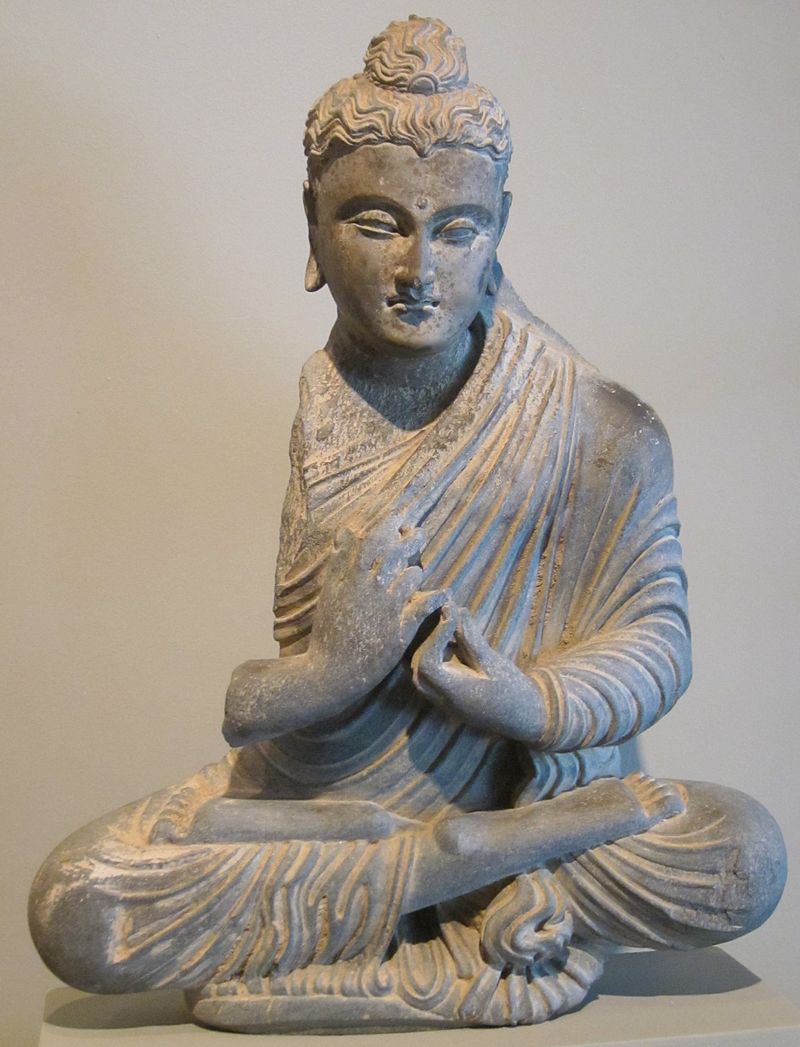
Buddhism is one of the oldest Religions in India founded by Gautama Buddha, a Kshatriya prince from the Shakya clan around 525 BC.

This religion spread in several Asian countries such as China, Myanmar, India, Sri Lanka, Japan, Mongolia, Korea, and South-East Asian Countries.

It is spread due to its liberal policy and its two main sections are Hinayana and Mahayana.

Judaism

Judaism is one of the oldest monotheistic faith considered as a parent of Christianity. It is originated around 4000 years ago in the Middle East.

There are 14 Million followers living in the USA, Europe, and Asia.

Chinese Religion

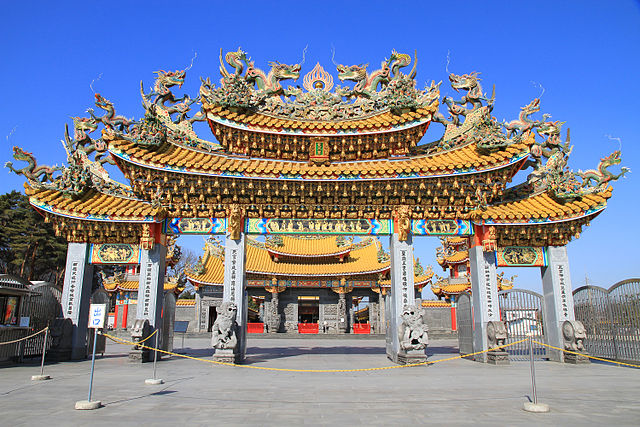
Chinese Religions include two sections, namely Confucianism and Taoism. Confucianism was established by Confucious from around 551 to 479 BC.

Taoism was established by Lao Tse around 604 to 517 BCE.

Jainism

Jainism is also born in India as a reaction to orthodox Hinduism.

It is founded by Lord Mahavir who was a contemporary of Lord Buddha. Its followers mostly concentrated in India.

Sikhism

Sikhism is an offshoot of Hinduism and Islam. It is established in the 15 century by Guru Nanak. It is confined to the Punjab state. It has accepted Gurumukhi as its language.

Tribal Religion

It is a special form of ethnic religion. The tribal people are generally in the Neolithic stage of social development.

Each tribal religion has different cultures, social and economic life. Also, they maintain a close relationship between land and the natural environment.

Tribals are engaged in food gathering, hunting, fishing, primitive agriculture, etc. It is estimated that there are about 300 million indigenous people worldwide.

These numbers constitute 4% of the total population in the world and live in over 60 countries.

Over 90% of the population of Greenland is tribal people. The tribal population is 66% in Bolivia and 40% in Peru.

In India, the tribal population is 8.2%. They are categorized as ST ( Scheduled Tribes) in India. They follow their own tribal deities.
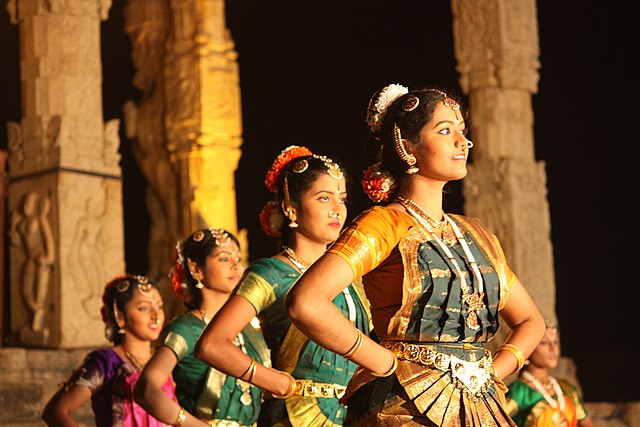
Classical dances of India Upsc

Classical dances of India

Classical dances of India are recognized by Sangeet Natak Akademi. It includes Bharatanatyam, Katak, Kuchipudi, Odissi, Kathakali, Sattriya, Manipuri and Mohiniyattam. These mentioned dances are major classical dances of India.

Also, the Culture Ministry of the Government of India includes Chhau in its classical list.

These dances represent a unity of core ideas in different styles, costumes, and diversified expressions. Indian classical dance, which is Shastriya Nritya, is a term that covers the various performance arts which are rooted in the Hindu religious, musical theatre styles.

The practice of these arts can be traced to the Sanskrit text, Natya Shastra. Natya Shastra, is the rule or foundation for classical dances in India, and this text is attributed to the ancient scholar “Bharata Muni“.

8 Classical dances of India are:

Bharatanatyam dance upsc

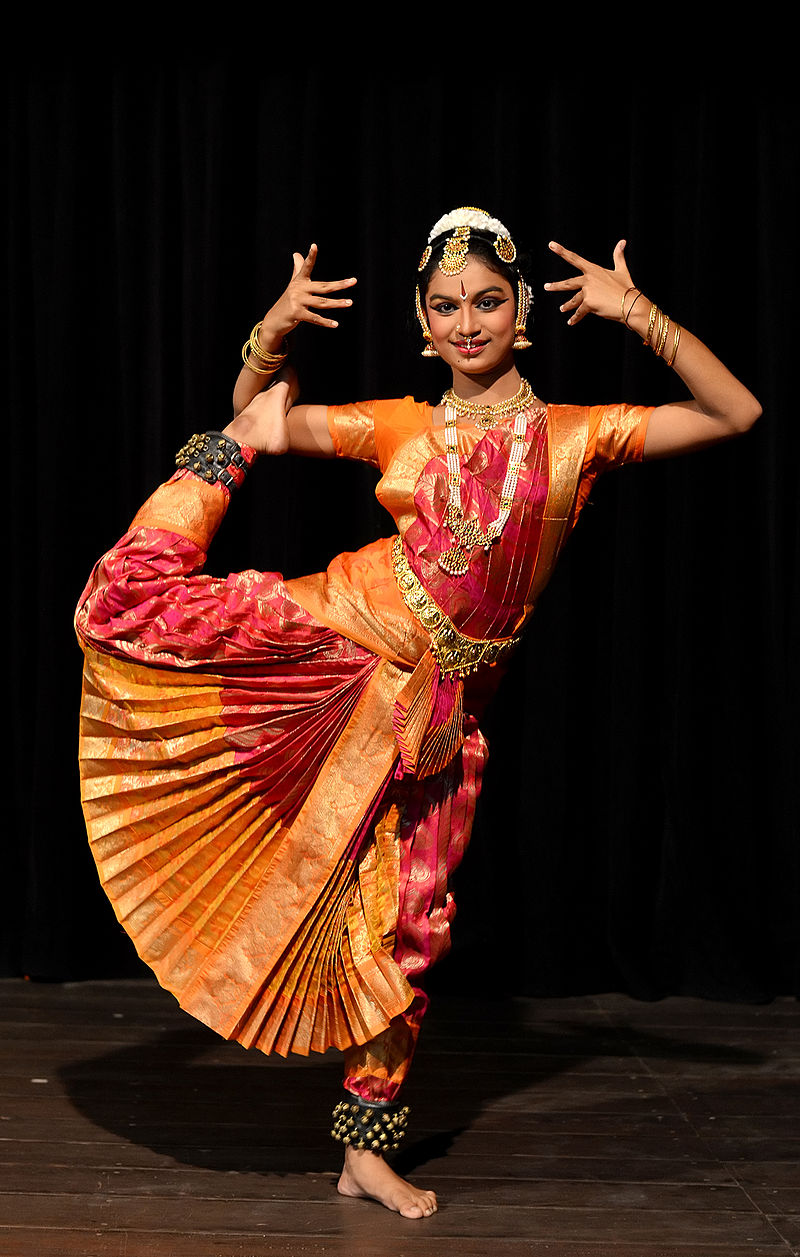
Bharatanatyam is a clasical dance of Tamil Nadu
Bharatanatyam By Arian Zwegers – Thanjavur, Brihadishwara Temple, dance, CC BY 2.0, https://commons.wikimedia.org/w/index.php?curid=24487525

It is the oldest classical dance form. It gets its name from the ancient scholar “Bharata Muni” and the word “Natyam”, which means Dance in the Tamil Language. Bharatanatyam’s origins can be traced to the solo dance performance of Devadasi, which means temple dancer in the Tamil Language.

Today, the modern stage production of Bharatnatyam has incorporated, technical performance with pure dance that is based on non-religious ideas and fusion themes. Bharatanatyam, dance was revived as mainstream dance by Bhatanatyam artists Rukmini Devi Arundale, Bala Saraswati, and Yamini Krishnamurthi.

Bharatanatyam features and styles Upsc

Like all major classical Indian dance forms, there are three performance categories in the Natya Shastra. They are Nritta(Nirutham), Nritya(Niruthiyam), and Natya (Natyam).

Styles of Bharatanatyam

Pandanallur, Vazhavoor, Melathoor and Kalakshetra style.

Kerala kathakali dance upsc

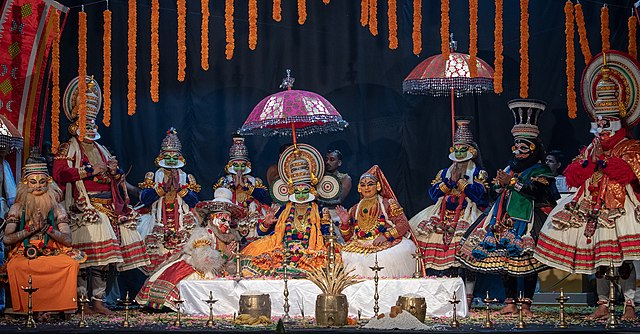
Classical dance Kathakali dance from Kerala (India)
Kathakali dance from Kerala By AdvaithNair – Own work, CC BY-SA 4.0, https://commons.wikimedia.org/w/index.php?curid=94980841

This is a Hindu performance art in Kerala. Katha means story and Kali means Drama. The themes of Kathakali include folk mythologies, religious heroes, legends, and religious, spiritual ideas from Hindu Puranas/epics.

In most of its presentations, Kathakali depicts the conflicts between good and evil. It is performed in Sanskritised Malayalam and performed in open-air theatre or temple premises.

A brass lamp is used for lighting. The most remarkable feature of Kathakali is a representation of Rasa through the movement of eyes and eyebrows.

Kuchipudi dance form upsc

Kutchipudi is classical dance of india from the state of Andra Pradesh
Kuchipudi By Yunji23asdfg – Own work, CC BY-SA 4.0, https://commons.wikimedia.org/w/index.php?curid=69734494

It originated from a village named Kuchipudi, in the state of Andra Pradesh. It is developed as a Hindu God, Krishna oriented to Vaishnavism tradition. Its recital is based on Bhagavata Purana, but it has a secular theme.

The traditional Kuchipudi was performed by all-male troupes.Lasya and Tandava are important in Kuchipudi dance.

Carnatic music instruments and vocal in the Telugu language accompanies the performance. The musical instruments used as Mridangam, Cymbals, veena, flute, and the tambura. Lakshmi Narayan Shastri bought renown to this dance form.

Kathak dance upsc

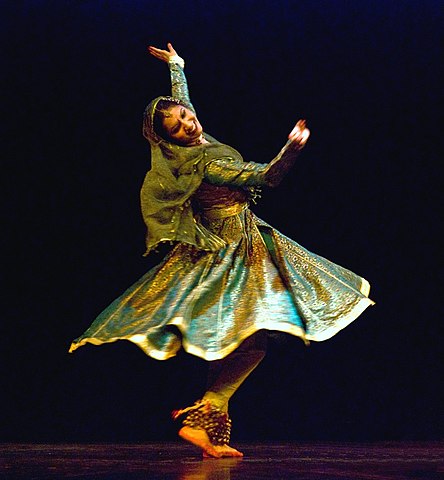
kathak classical dance is from state of uttar pradesh
Kathak By https://www.flickr.com/photos/payalam/ – https://www.flickr.com/photos/payalam/3511900193/sizes/l/, CC BY 2.0, https://commons.wikimedia.org/w/index.php?curid=8284588

The origin of Kathak is from traveling bards of ancient northern Indian known as Kathakars or Story tellers. Kathak is a traditional dance form of Uttar Pradesh state. During the Mughal Empire, it was influenced by Islamic features, especially in its costumes and dancing style.

Kathak is commonly identified with the court tradition in North India. It is found in three distinct forms called Gharanas. It is named after the cities Jaipur, Banaras, and Lucknow, where the Kathak dance traditions evolved.

One of the main features of the Kathak recital is Jugulbandi, where it shows a competitive play between dancer and tabla player. This dance form is based on Hindustani music also accompanied by Dhrupad music.

The main proponents of Kathak are Lachha Maharaj, Shambu Maharaj, and Birju Maharaj.

Odissi

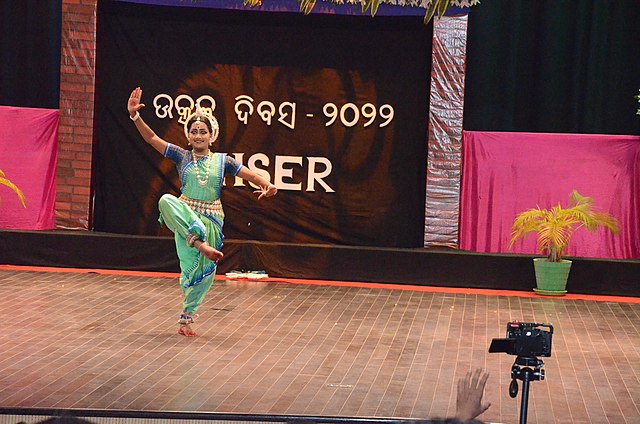
Odissi classical dance from Odissa state in India
Odissi Nritya By Amiwins – Own work, CC BY-SA 4.0, https://commons.wikimedia.org/w/index.php?curid=116715757

It derives its name from Odra Nirtya, which is mentioned in Natya Shastra. Mudras and Postures express emotions similar to Bharatnatyam. The three-bent form of dance is called Tribanga posture is an important feature in Odissi.

This dance expresses religious stories and ideas of spirituality, most commonly Vaishnavism, where Vishnu is Jagannath. Odissi dance accompanied by Hindustani music.

Elements of Odissi include Mangalcharan, Batunirtya, Pallavi, Tarijham.

  • Mangalcharan – Beginning of the dance.
  • Batu Nirtya – It comprises dancing.
  • Pallavi – It includes the facial expression and representation of the song.
  • Tarijhan – It is pure dance before the conclusion.

Sattriya

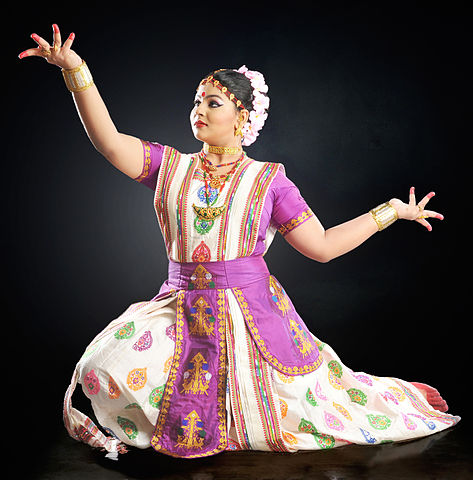
Sattriya dance is from state of Assam
Sattriya dancer – अपना काम, CC BY-SA 3.0, https://commons.wikimedia.org/w/index.php?curid=25927682 द्वारा

Sattriya or Sattriya Nritya originated in the eastern state of Assam. It is a dance-drama performance. The art with origins in the Krishn-centered Vaishnavism monasteries in Assam.

It attributes to the 15th-century, Bhakti movement. Its scholar and Saint Mahapurush Srimata Sankardev. It focuses more on the devotional aspects of dance. Also, it narrates the mythological stories of Vishnu.

This dance is performed by a group of Male monks known as Bhokots. It is part of their daily rituals. The main musical instruments used are Khol and Flute.

Manipuri dance upsc

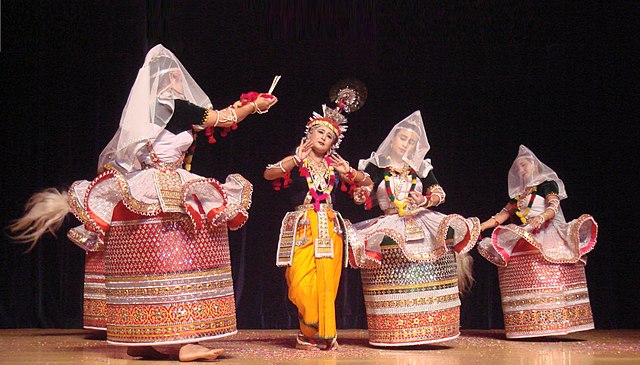
Manipuri dance is from state of Manipur
Manipuri dance By https://www.flickr.com/photos/matsukin/ – https://www.flickr.com/photos/matsukin/486353380/, CC BY 2.0, https://commons.wikimedia.org/w/index.php?curid=4517518

It is also known as Jagoi. It is one of the major classical dance forms and it is named after the region Manipur. This dance is known for its Hindu Vaishnavism Themes. It exquisite performance of a love-inspired dance drama of Radha-Krishna called Raslila.

Mohiniyattam dance upsc

Classical dance Mohiniattam is from state of kerala (India)
By Shagil Kannur – Own work, CC BY-SA 4.0, https://commons.wikimedia.org/w/index.php?curid=85542877

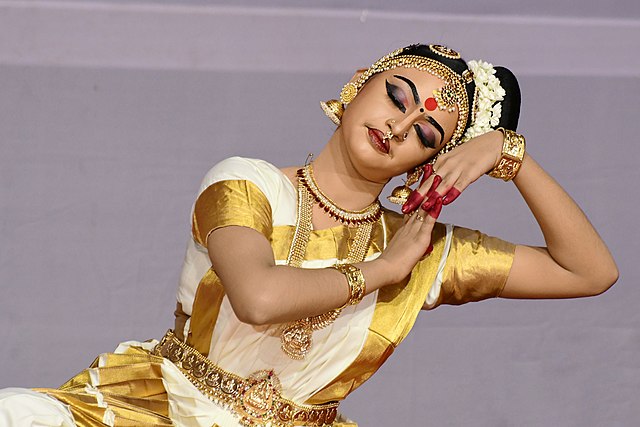
It is a traditional dance form of Kerala. The Mohiniattam comes from the word Mohini which means beautiful and Attam which means dance.

Mohiniattam is essentially a solo dance performance that incorporates Lasya and Tandava style. It generally narrates the story of the feminine dance of Vishnu.

References

Indian Art and Culture by Nitin Singhania

Art and architecture of Mughal empire Upsc

Art and architecture of Mughal empire

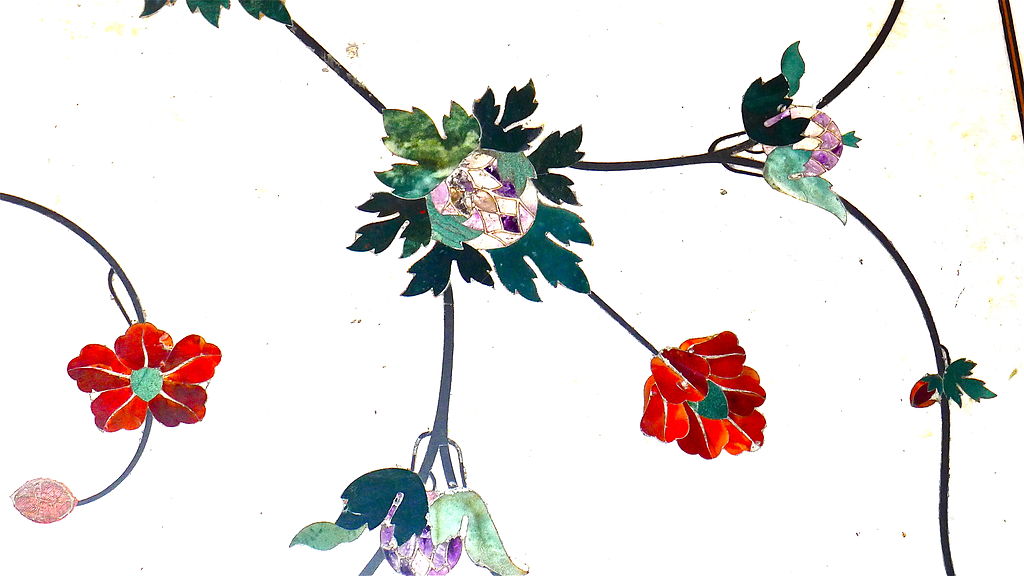
The Mughal empire’s rule is a landmark in World art and Architecture. Their buildings were known for their huge structures that are decorated with bulbous domes, minarets, cupolas at the four corners, elaborate designs, and also for pictorial mosaic work which is called Pietra Dura.

Pietra Dura Art and architecture of Mughal empire Upsc
Pietra Dura at Tomb of Jahangir, Lahore By Gajus Scheltema – Own work, CC BY-SA 4.0, https://commons.wikimedia.org/w/index.php?curid=21916508

The mosques which were during the time of Babur and Humayun were not of much architectural significance. But the Sur dynasty has left spectacular architecture in the form of Purana Qila at Delhi, tombs of Sher Shah, and Islam Shah at Sasaram in Bihar.

Where Purana Qila has raised Citadel and tombs on the terraced platform surrounded by large tanks were artistic features.

Akbar Architecture

It was during Akbar’s rule, that Humayun’s tomb was enclosed with gardens and placed on a raised platform. Built by Indian artisans and designed by Persian architects it set a pattern to be followed in the future.

The Agra fort built with red sandstone is an example where Rajput architectural styles were also used.

The new capital city of Akbar, Fatehpur Sikri enclosed within its walls several inspiring buildings.

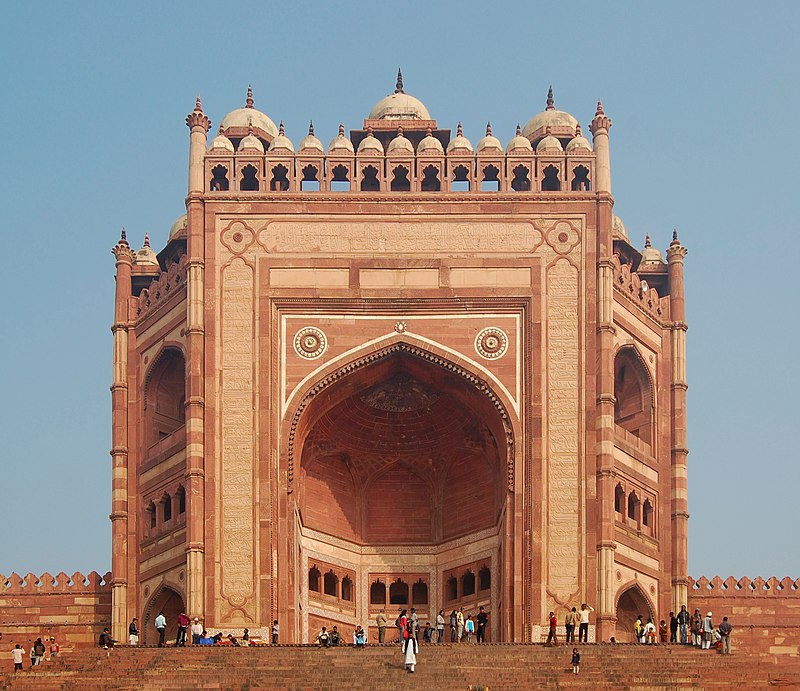
gateway to Fatehpur Sikri Buland Darwaza built by Akbar
Buland Darwaza – Image By Marcin Białek – Own work, CC BY-SA 3.0, https://commons.wikimedia.org/w/index.php?curid=14741170

The magnificent gateway to Fatehpur Sikri, the Buland Darwaza, built by Akbar with red sandstone and marble is considered to be a perfect architectural achievement.

Jahangir Architecture

The mausoleum of Akbar at Sikandra near Agra started by Akbar and completed by Jahangir includes some Buddhist architectural elements.

The tomb of Itimad-ud-daula, father of Nurjahan, built by Jahangir was the first Mughal building built completely with white marble.

 Jahangir Architecture
Tomb of Itimad-ud-daula By Muhammad Mahdi Karim – Own work, GFDL 1.2, https://commons.wikimedia.org/w/index.php?curid=20150525

Shah Jahan Architecture

Mughal architecture reached its apex during the reign of Shah Jahan.

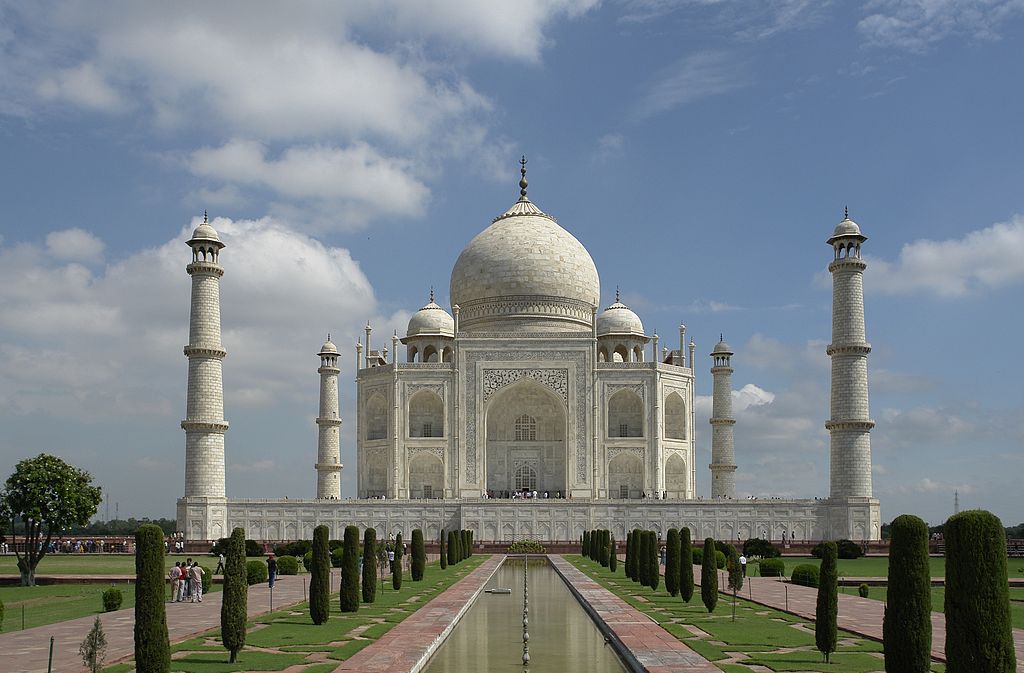
The Taj Mahal is a marble structure on an elevated platform, the bulbous dome in the center rising on a recessed gateway with four cupolas around the dome and with four free-standing minarets at each of its corners is a monument of universal fame.

The Red Fort in Delhi, encompassed by magnificent buildings like Diwan-i Aam, Diwan-i-Khas, Moti Mahal, and Hira Mahal reflect the architectural skills of the times of Shah Jahan.

The Moti Masjid inside the Agra Fort is made exclusively of marble, and the Jama Masjid in Delhi, with its lofty gateway, series of domes, and tall and slender minarets are the two significant mosques built by Shah Jahan.

He also established a new township, Shah Jahanabad (present-day Old Delhi) where Red Fort and Jama Masjid are located.

Aurangzeb’s Architecture

Aurangzeb’s reign witnessed the construction of Badshahi mosque in Lahore and the marble tomb of Rabia-ud-daurani, known as Bibi-ka-maqbara (Tomb of the Lady) at Aurangabad.

Other Mughal Architecture

The Shalimar Gardens of Jahangir and Shah Jahan are showpieces of Indian horticulture.

The Mughals contributed to many civil works for the public works, of which the greatest is the bridge over the Gomati river at Jaunpur, West Yamuna Canal which provides water to Delhi.

Mughal architecture influenced even temple construction in different parts of the Indian subcontinent.

The temple of Govind Dev at Vrindavan near Mathura and Bir Singh’s temple of Chaturbhujat Orchchaa (Madhya Pradesh) display Mughal influence.

Paintings

Mughals was known for their paintings worldwide, and their miniature is kept at museums worldwide.

Their painting traditions were kept alive in Malwa and Gujarat provinces along with central Asian influences.

During the Humayun period, the master of miniature painting, Abdu’s Samad and Mir Sayyid Ali came to India from central Asia and they inspired many Indian painters.

The primary idea of these paintings is to illustrate literary works. Examples are Persian translations of Mahabharata and Akbar Namah were illustrated through painting by different paintings.

In the Mughals court, European paintings were introduced by Portuguese priests.

Animal painting and time portraits were developed during Jahangir’s period. Mansur was great in time portrait painting and animal painting.

The Mughal miniatures also influenced the great Dutch painter Rembrandt. These painting traditions were continued this Shah Jahan.

But Aurangzeb had a difference in opinion towards painting, which led to the dispersal of the painters to different parts of the country. This has led to the promotion of painting in the provinces.

Music and Dance

According to Ain-i-Akbari, Tansen of Gwalior was credited with composing many ragas, and these were patronized by Akbar along with 35 other musicians.

Jahangir and Shah Jahan were great patrons of music. There was a misconception that Aurangzeb was against music but a large number of books on Indian classical music were written during his rule.

The later Mughal, Muhammad Shah was instrumental in inspiring important developments in the field of music.

Paintings in Babur Namah and Padshah Namah show a woman dancing with musical instruments.

Literature

Persian, Sanskrit, and other regional languages grew during the Mughals. The language of administration of Mughal and Deccan states was Persian.

The Persian language also influenced Rajput state administration. Abul Fazal wrote Akbar’s history in Akbar Nama, Mughal administration in Ain-i-Akbari. Ain-i-Akbari also had science, statistics, culture, and geography.

Abdul Hamid Lahori and Muhammad Waris wrote together Padshah Nama, which is a biography of Shah Jahan. Muhammad Kazim wrote Alamgir Nama, describing the first decade of the ruling of Aurangzeb. 

Abdur Rahim Khan-e-Khanan translated Babur’s Autobiography which was written in Chaghatai Turkish into Persian. Dabistan is an impartial work on religious belief.

Several Sanskrit works were translated into Persian. Abul Faizi, a court poet of Akbar and brother of Abul Fazal, translated Mahabharata into Persian.

Dara Shukoh translated Upanishads titled Sirr-I-Akbar (the great secret). The Masnawis of Abul Faizi, Utbi, and Naziri enriched Persian Poetry in India.

There are also several Sanskrit produced during the Mughals. A kavya, named Rajavalipataka was written by Prajna and concluded that the entire history of Kashmir belonged to Akbar.

Several Graeco-Arabic were brought to India via Persian works through Sanskrit translations. Tajika Neelakanthi, is an astrological work written by Akbar’s astronomer Nilakantha.

Rasagangadhara was written by Shah Jahan’s court poet Jaganath Panditha. The greatest achievement of the Mughals is their contribution to literature and making Urdu a common language for various people speaking different dialects.

Abdur Rahim Khan-e-Khanan composed bhakti poetry with a Persian blend, in Brij form of Hindi.

Tulsidas wrote in Awadi, the Hindi dialect spoken in the eastern UP, which was famous for his devotional ideals. Marathi literature was raised during Eknath, Tukaram, Ramdas, and Mukteshwar.

Eknath questioned the superiority of Sanskrit over other languages. Tukaram preached Monotheism. Mukteshwar translated Ramayana and Mahabharata into Marathi.

In the Assamese language, Bhakti poetry was popularised by Shankara Deva. Assamese works were produced in the fields of astronomy, arithmetic, and the treatment of elephants and horses.

Ramayana and Mahabharata are also translated into Assamese. Chaitanya cult also portrayed the love of Krishna and Radha in Bengali literature. The Guru Granth Sahib, the holy book of Sikhs written by Guru Arjun and Shaikh Farid and other monotheists contributed to Punjabi literature.

During the Mughal period, Tamil literature was dominated by Saivite and Vaishnavite. Kumaraguruparar, A Saiva poet composed Meenakshiammai Pillai Tamil and Neethineri Vilakkam.

Thayumanavar wrote devotional poems to brides in various Saivite Sections. Christian missionaries like Roberto de Nobili and Constantine Joseph Beschi also contributed to the Tamil language.

Conclusion

This is an article upsc exam for the topic ‘Art and Architecture of Mughal Emperor’. This note is taken from Ncert’s books.

Indian Bronze Sculpture Upsc

Indian Sculptors and Bronze Mastery

Indian sculptors had mastered the bronze medium and the casting process as much as they had mastered terracotta sculpture and carving in stone. The cire-perdu or ‘lost-wax’ process for casting was learnt as long ago as the Indus Valley Culture. Along with it was discovered the process of making alloy of metals by mixing copper, zinc and tin which is called bronze.

Bronze sculptures and statuettes of Buddhist, Hindu and Jain icons have been discovered from many regions of India dating from the second century until the sixteenth century. Most of these were used for ritual worship and are characterised by exquisite beauty and aesthetic appeal. At the same time the metal-casting process continued to be utilised for making articles for various purposes of daily use, such as utensils for cooking, eating, drinking, etc. Present-day tribal communities also utilise the ‘lost-wax’ process for their art expressions.

Early Bronze Sculptures in India

The ‘Dancing Girl’ from Mohenjodaro

Perhaps the ‘Dancing Girl’ from Mohenjodaro is the earliest bronze sculpture datable to 2500 BCE. The limbs and torso of this female figurine are simplified in tubular form.

Bronze Statuettes from Daimabad

A similar group of bronze statuettes have been discovered from archaeological excavation at Daimabad (Maharashtra) datable to 1500 BCE. Significant is the ‘Chariot’, the wheels of which are represented in simple circular shapes while the driver or human rider has been elongated, and the bulls in the forefront are modelled in sturdy forms.

Jain Bronze Sculptures

Jain Bronzes from Chausa, Bihar

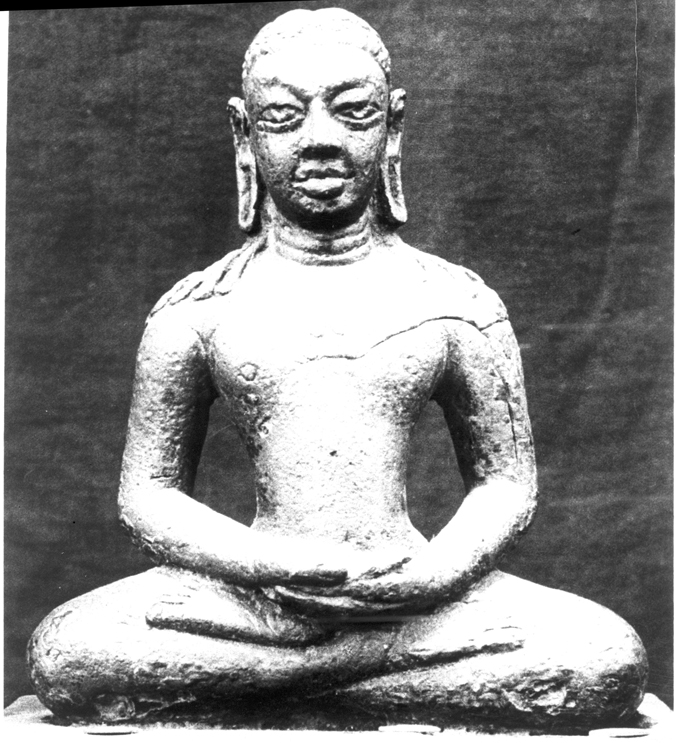
Interesting images of Jain tirthankaras have been discovered from Chausa, Bihar, belonging to the Kushana Period during second century CE. These bronzes show how the Indian sculptors had mastered the modelling of
masculine human physique and simplified muscles. Remarkable is the depiction of Adinath or Vrishabhnath, who is identified with long hairlocks dropping to his shoulders. Otherwise the tirthankaras are noted by their
short curly hair.

Akota Hoard: Jain Bronzes of Gujarat

Gujarat and Rajasthan have been strongholds of Jainism since early times. A famous hoard of Jain bronzes was found at Akota, on the outskirts of Baroda, dated between the end of the fifth and the end of the seventh century CE. Finely cast through the lost-wax process, these bronzes were often subsequently inlaid with silver and copper to bring out the eyes, crowns and details of the textiles on which the figures were seated. Many famous Jain bronzes from Chausa in Bihar are now kept in the Patna Museum. Many Jain bronzes from Hansi in Haryana and from various sites in Tamil Nadu and Karnataka are kept in various museums in India.

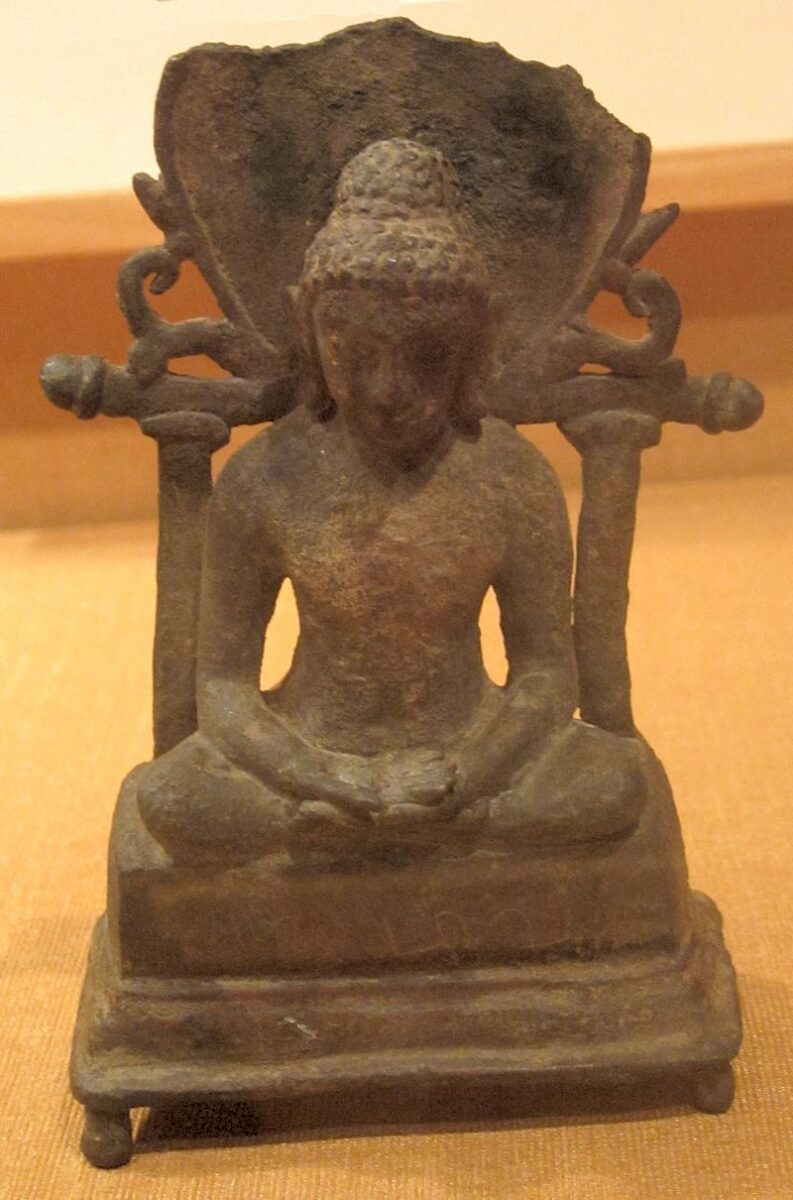
The hoard of bronzes discovered in Akota near Vadodara established that bronze casting was practised in Gujarat or western India between the sixth and ninth centuries. Most of the images represent the Jain tirthankaras like Mahavira, Parshvanath or Adinath.

A new format was invented in which tirthankaras are seated on a throne; they can be single or combined in a group of three or in a group of twenty-four tirthankaras. Female images were also cast representing yakshinis or Shasanadevis of some prominent tirthankaras. Stylistically, they were influenced by the features of both the Gupta and the Vakataka period bronzes. Chakreshvari is the Shasanadevi of Adinath and Ambika is of Neminath.

Buddha Bronze Sculptures

Gupta and Post-Gupta Period Bronzes

Many standing Buddha images with right hand in abhaya mudra were cast in North India, particularly Uttar Pradesh and Bihar, during the Gupta and Post-Gupta periods, i.e., between the fifth, sixth and seventh centuries.

Styles of Drapery in Buddha Images

The sanghati or the monk’s robe is wrapped to cover the shoulders which turns over the right arm, while the other end of the drapery is wrapped over the left arm. Eventually the pleats are held by the extended hand of the same arm. The drapery falls and spreads into a wide curve at the level of the ankles. The Buddha’s figure is modelled in a subtle manner suggesting, at the same time, the thin quality of the cloth. The whole figure is treated with refinement; there is a certain delicacy in the treatment of the torso.

The figure appears youthful and proportionate in comparison with the Kushana style. In the typical bronze from Dhanesar Khera, Uttar Pradesh, the folds of the drapery are treated as in the Mathura style, i.e., in a series of drooping down curves. Sarnath-style bronzes have foldless drapery. The outstanding example is that of the Buddha image at Sultanganj, Bihar, which is quite a monumental bronze figure. The typical refined style of these bronzes is the hallmark of the classical quality.

Vakataka Bronzes and Their Portability

Vakataka bronze images of the Buddha from Phophnar, Maharashtra, are contemporary with the Gupta period bronzes. They show the influence of the Amaravati style of Andhra Pradesh in the third century CE and at the same time there is a significant change in the draping style of the monk’s robe. Buddha’s right hand in abhaya mudra is free so that the drapery clings to the right side of the body contour. The result is a continuous flowing line on this side of the figure. At the level of the ankles of the Buddha figure the drapery makes a conspicuous curvilinear turn, as it is held by the left hand.

The additional importance of the Gupta and Vakataka bronzes is that they were portable and monks carried them from place to place for the purpose of individual worship or to be installed in Buddhist viharas. In this manner the refined classical style spread to different parts of India and to Asian countries overseas.

Regional Contributions to Bronze Sculptures

Himachal Pradesh and Kashmir: Vishnu and Other Deities

Himachal Pradesh and Kashmir regions also produced bronze images of Buddhist deities as well as Hindu gods and goddesses. Most of these were created during the eighth, ninth and tenth centuries and have a very distinct style in comparison with bronzes from other parts of India. A noteworthy development is the growth of different types of iconography of Vishnu images. Four-headed Vishnu, also known as Chaturanana or Vaikuntha Vishnu, was worshipped in these regions.

While the central face represents Vasudeva, the other two faces are that of Narasimha and Varaha. The Narasimha avatar and Mahishasuramardini Durga images of Himachal Pradesh are among the very dynamic bronzes
from that region.

Nalanda School of Bronze-Casting

In Buddhist centres like Nalanda, a school of bronze- casting emerged around the ninth century during the rule of the Pala Dynasty in Bihar and Bengal regions. In the gap of a few centuries the sculptors at Kurkihar near Nalanda were able to revive the classical style of the Gupta period.

A remarkable bronze is of a four-armed Avalokitesvara, which is a good example of a male figure in graceful tribhanga posture. Worship of female goddesses was adopted which is part of the growth of the Vajrayana phase in Buddhism. Images of Tara became very popular. Seated on a throne, she is accompanied by a growing curvilinear lotus stalk and her right hand is in the abhaya mudra.

South Indian Bronze Sculptures

The bronze casting technique and making of bronze images of traditional icons reached a high stage of
development in South India during the medieval period.

Pallava Period Contributions

Although bronze images were modelled and cast during the Pallava Period in the eighth and ninth centuries, some of the most beautiful and exquisite statues were produced during the Chola Period in Tamil Nadu from the tenth to the twelfth century.

Chola Period Excellence in Bronze Art

The technique and art of fashioning bronze images is still skillfully practised in South India, particularly in Kumbakonam. The distinguished patron during the tenth century was the widowed Chola queen,
Sembiyan Maha Devi. Chola bronzes are the most sought- after collectors’ items by art lovers all over the world.
Among the Pallava Period bronzes of the eighth century is the icon of Shiva seated in ardhaparyanka asana (one
leg kept dangling). The right hand is in the achamana mudra gesture, suggesting that he is about to drink poison.
The well-known dancing figure of Shiva as Nataraja was evolved and fully developed during the Chola Period
and since then many variations of this complex bronze image have been modelled.

Iconography of Shiva in South India

A wide range of Shiva iconography was evolved in the Thanjavur (Tanjore) region of Tamil Nadu. The ninth century kalyanasundara murti is highly remarkable for the manner in which Panigrahana (ceremony of marriage) is represented by two separate statuettes. Shiva with his extended right hand accepts Parvati’s (the bride’s) right hand, who is depicted with a bashful expression and taking a step forward.

The union of Shiva and Parvati is very ingeniously represented in the ardhanarisvara murti in a single image.
Beautiful independent figurines of Parvati have also been modelled, standing in graceful tribhanga posture.

Vijayanagar Period Innovations

Portrait Sculptures of Royal Patrons


During the sixteenth century, known as the Vijayanagar Period in Andhra Pradesh, the sculptors experimented with portrait sculpture in order to preserve knowledge of the royal patron for posterity. At Tirupati, life-size standing portrait statues were cast in bronze, depicting Krishnadevaraya with his two queens, Tirumalamba and
Chinnadevi.

Idealisation in Bronze Portraiture

The sculptor has combined the likeness of the facial features with certain elements of idealisation. The
idealisation is further observed in the manner the physical body is modelled to appear imposing as well as graceful. The standing king and queens are depicted in praying posture, that is, both hands held in the namaskara mudra.

* * All the Notes in this blog, are referred from Tamil Nadu State Board Books and Samacheer Kalvi Books. Kindly check with the original Tamil Nadu state board books and Ncert Books.