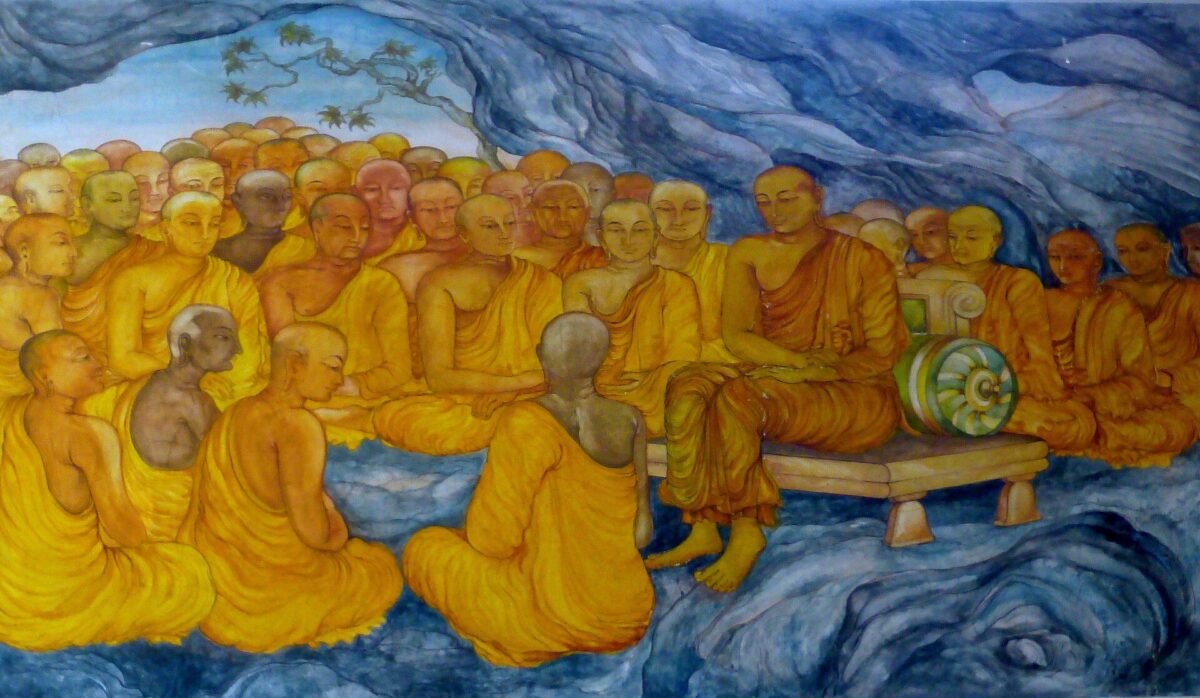
Important keywords for Religion & Policies for upsc

1. Religious Policies of Key Mughal Rulers

Akbar (1556–1605) – Liberal Policies

  • Sulh-i-Kul (“Peace with All”) – Universal religious tolerance
  • Din-i-Ilahi (1582) – Syncretic religion (blended Islam, Hinduism, Zoroastrianism)
  • Ibadat Khana (House of Worship) – Interfaith debates (1575)
  • Abolition of Jizya (1564) – Tax on non-Muslims revoked
  • Pilgrim Tax removed – For Hindu shrines
  • Marriage Alliances – Hindu Rajput wives (e.g., Jodha Bai)

Jahangir (1605–1627) – Moderate Approach

  • Continued Sulh-i-Kul but less actively
  • Execution of Guru Arjan Dev (1606) – Sikh relations strained
  • Permitted Jesuit missionaries in court

Shah Jahan (1628–1658) – Orthodox Shift

  • Temple Destruction (e.g., Benaras temples)
  • Restrictions on Hindus – Barred from public offices

Aurangzeb (1658–1707) – Orthodox Extremes

  • Reimposition of Jizya (1679) – Tax on non-Muslims
  • Temple Destruction – Kashi Vishwanath (1669), Mathura’s Kesava Deo
  • Ban on Music & Art – Considered un-Islamic
  • Fatwa-i-Alamgiri – Islamic legal code based on Sharia

2. Key Religious Terms & Institutions

  • Jizya – Poll tax on non-Muslims (abolished by Akbar, revived by Aurangzeb)
  • Zakat – Alms tax on Muslims
  • Waqf – Religious endowments (for mosques/schools)
  • Madad-i-Maash – Tax-free land grants to scholars/clerics
  • Sufi Orders – Chishti, Naqshbandi (played advisory roles)

3. Interfaith Relations & Conflicts

Hindu-Muslim Dynamics

  • Akbar’s Rajput Policy – Alliances via marriages, granted autonomy
  • Aurangzeb’s Demolitions – Targeted major Hindu temples
  • Guru Tegh Bahadur’s Execution (1675) – Anti-Sikh policy

Christian Interactions

  • Jesuit Missions – Akbar allowed churches in Agra/Lahore
  • European Traders – Portuguese, British, given limited religious freedom

4. Cultural Syncretism

  • Persian + Indian Traditions – Urdu language emergence
  • Mughal Miniatures – Blended Islamic & Hindu motifs
  • Music – Tansen (Hindu) in Akbar’s court
  • Architecture – Fusion styles (e.g., Taj Mahal’s lotus motifs)

5. Impact of Policies

RulerPolicyOutcome
AkbarSulh-i-KulStrengthened unity, reduced rebellions
AurangzebJizya reimposedAlienated Hindus/Sikhs, fueled revolts

Comparative Table: Akbar vs. Aurangzeb

PolicyAkbarAurangzeb
JizyaAbolished (1564)Reimposed (1679)
TemplesProtected, granted landsDestroyed (e.g., Kashi Vishwanath)
Non-MuslimsIncluded in administrationIncluded in the administration

Important keywords mughal empire for upsc

1. Mughal Rulers & Dynastic Timeline

  • Babur (1526–1530)
    • First Battle of Panipat (1526) vs. Ibrahim Lodi
    • Battle of Khanwa (1527) vs. Rana Sanga
    • Tuzuk-i-Baburi (Baburnama) – Autobiography (Chagatai Turkish)
  • Humayun (1530–1540, 1555–1556)
    • Defeated by Sher Shah Suri (1540)
    • Exile & return (1555) with Persian help
    • Din Panah (Delhi fort)
  • Akbar (1556–1605)
    • Second Battle of Panipat (1556) vs. Hemu
    • Mansabdari System (Rank-based bureaucracy)
    • Din-i-Ilahi (Syncretic religion)
    • Sulh-i-Kul (Universal peace policy)
    • Navratnas (Birbal, Tansen, etc.)
  • Jahangir (1605–1627)
    • Nur Jahan (Influential queen)
    • Mughal-Sikh conflicts (Guru Arjan Dev’s execution)
    • Tuzuk-i-Jahangiri (Autobiography)
  • Shah Jahan (1628–1658)
    • Taj Mahal (Built for Mumtaz Mahal)
    • Red Fort (Delhi), Jama Masjid
    • Peak of Mughal architecture
  • Aurangzeb (1658–1707)
    • Alamgir (Title)
    • Reimposed Jizya tax (1679)
    • Annexed Deccan (Golconda, Bijapur)
    • Conflict with Shivaji & Sikhs
  • Later Mughals (1707–1857)
    • Bahadur Shah I (1707–1712)
    • Farrukhsiyar (1713–1719) – Signed 1717 Firman (British trade rights)
    • Muhammad Shah (1719–1748)Nadir Shah’s invasion (1739)
    • Shah Alam II (1759–1806)Battle of Buxar (1764)
    • Bahadur Shah Zafar II (Last Mughal, 1857 Revolt)

2. Administration & Governance

  • Centralized Monarchy
  • Mansabdari System (Rank & salary system)
  • Zabt (Land Revenue)Todar Mal’s Dahsala System
  • Jagirdari System (Land grants to nobles)
  • Subahs, Sarkars, Parganas (Administrative divisions)
  • Diwan, Mir Bakshi, Sadr-us-Sudur (Key officials)

Check the complete list of Administration and Governance.


3. Economy & Society

  • Agriculture – Cash crops (cotton, indigo)
  • TradeSurat, Hooghly, Masulipatnam ports
  • European Companies – EIC, Dutch, Portuguese
  • CoinageGold Mohur, Silver Rupiya, Copper Dam
  • Zamindars (Landlords)
  • Sati, Child Marriage, Purdah (Social issues)

Complete list of important keywords for Economy and Society during the Mughals


4. Art, Architecture & Culture

Architecture

  • Indo-Islamic/Persian style
  • Fatehpur Sikri (Buland Darwaza, Panch Mahal)
  • Red Fort (Delhi), Agra Fort
  • Shalimar Gardens (Lahore)
  • Moti Masjid (Agra), Jama Masjid (Delhi)

Paintings & Literature

  • Mughal Miniature Paintings (Persian influence)
  • Akbar’s Razmnama (Mahabharata translation)
  • Jahangir’s patronage (Ustad Mansur – naturalist paintings)
  • Persian as court language

Music & Science

  • Tansen (Akbar’s court)
  • Ain-i-Akbari (Abul Fazl) – Detailed Mughal administration

5. Religion & Policies

  • Akbar’s Religious Tolerance
  • Ibadat Khana (Debates)
  • Abolished Jizya & Pilgrim Tax
  • Aurangzeb’s Orthodox Policies
  • Ban on music, art
  • Temple destruction (Kashi Vishwanath, Mathura)

Check the complete list for the Religions and Policies of the Mughal


6. Foreign Travellers & Sources

  • Bernier (French criticised the Mughal economy)
  • Tavernier (French, described trade)
  • Manucci (Italian, detailed Aurangzeb’s reign)
  • Ain-i-Akbari & Akbarnama (Abul Fazl)

7. Decline of Mughals

  • Causes:
    • Aurangzeb’s Deccan wars (Financial drain)
    • Jagirdari Crisis (Noble Revolts)
    • Rise of Marathas, Sikhs, British
  • Key Events:
    • Nadir Shah’s invasion (1739) – Peacock Throne looted
    • Battle of Plassey (1757) – EIC’s rise
    • 1857 Revolt – End of Mughal rule

Important keywords mughal empire Administration & Governance for upsc

1. Central Administration

  1. Emperor (Padshah)
  • Absolute authority, “Shadow of God” (Zill-i-Ilahi).
  • Akbar’s Divine Faith (Din-i-Ilahi) – Symbolized supreme authority.
  1. Key Ministers & Officials
  • Wazir/Vakil – Prime Minister (Finance & Revenue).
  • Diwan-i-Kul – Chief Finance Minister (Revenue head).
  • Mir Bakshi – Head of Military (Mansabdari system).
  • Sadr-us-Sudr – Incharge of religious/charitable grants.
  • Qazi-ul-Quzat – Chief Judge.
  • Muhtasib – Censor of Public Morals.

2. Provincial Administration

  1. Subahs (Provinces)
  • 12 Subahs under Akbar → 20 under Aurangzeb.
  • Governed by Subahdar (Provincial Governor).
  1. Sarkars (Districts) & Parganas (Sub-Districts)
  • Faujdar – Military head of Sarkar.
  • Amalguzar – Revenue collector (Zabt system).
  • Kotwal – Police & Municipal officer (in cities).
  1. Village Administration
  • Muqaddam – Village headman.
  • Patwari – Accountant.

3. Revenue System

  1. Land Revenue (Zabt System)
  • Todar Mal’s Dahsala System (10-year avg. yield assessment).
  • Batai/Ghalla Bakshi – Crop-sharing.
  • Kankut – Estimation-based.
  1. Revenue Terms
  • Jama – Assessed revenue.
  • Hasil – Actual collection.
  • Zamindars – Intermediaries (not landowners).
  1. Taxes
  • Jizya – Tax on non-Muslims (abolished by Akbar, reimposed by Aurangzeb).
  • Zakat – Tax on Muslims.
  • Kharaj – Land tax.

4. Military & Mansabdari System

  1. Mansabdari System (Rank-based bureaucracy)
  • Zat – Personal rank (salary).
  • Sawar – Cavalry rank (horsemen to maintain).
  • Dagh (Branding) & Chehra (Descriptive roll) – Anti-corruption measures.
  1. Military Organization
  • Ahadis – Elite royal guards.
  • Shamshir-bardar – Sword-bearing cavalry.

5. Judicial System

  1. Emperor – Highest judicial authority.
  2. Qazis – Islamic judges in provinces.
  3. Secular & Religious Laws
  • Sharia (Islamic law) for Muslims.
  • Customary laws for non-Muslims.

6. Key Policies

  1. Akbar’s Sulh-i-Kul – Universal tolerance policy.
  2. Aurangzeb’s Orthodoxy – Ban on music, reimposition of Jizya.
  3. Jagirdari Crisis – Land grants to nobles led to corruption (later decline).

7. Important Documents

  1. Ain-i-Akbari – By Abul Fazl (details on administration).
  2. Akbarnama – Official history of Akbar’s reign.
  3. Fatwa-i-Alamgiri – Aurangzeb’s legal code.

Why Important for UPSC?

  • Prelims: Terms like Mansabdar, Zabt, Dahsala.
  • Mains:
  • Compare Mughal & British land revenue systems.
  • Impact of Mansabdari system on decline.
  • Previous Questions:
  • Mansabdari system (UPSC 2019).
  • Todar Mal’s reforms (UPSC 2020).

Important keywords vijayanagar empire for upsc

1. Dynasties of the Vijayanagar Empire

  1. Sangama Dynasty (1336–1485)
  • Founders: Harihara I & Bukka Raya I
  • Key Rulers:
    • Deva Raya I (Irrigation works, Nicolo Conti’s visit)
    • Deva Raya II (Peak of Sangama rule, Abdur Razzaq’s visit)
  1. Saluva Dynasty (1485–1505)
  • Transitional dynasty, weakened by rebellions.
  1. Tuluva Dynasty (1505–1570)
  • Golden Age of Vijayanagar.
  • Krishnadevaraya (Greatest ruler, military conquests, cultural patronage)
  • Achyuta Deva Raya (Successor)
  • Sadasiva Raya (Last effective ruler)
  1. Aravidu Dynasty (1570–1646)
  • Aliya Rama Raya (Defeated at Battle of Talikota)
  • Shifted capital to Penukonda, Chandragiri, Vellore

2. Key Rulers

  • Harihara I & Bukka Raya I (Founders, 1336 CE)
  • Deva Raya I & II (Sangama peak)
  • Krishnadevaraya (Tuluva, patron of Ashtadiggajas, wrote Amuktamalyada)
  • Aliya Rama Raya (Defeat at Talikota, 1565 CE)

3. Significant Battles & Events

  • Battle of Talikota (1565) – Vijayanagar vs. Deccan Sultanates (Destruction of Hampi)
  • Battle of Raichur (1520) – Krishnadevaraya’s victory over Bijapur
  • Sack of Vijayanagara – Capital destroyed post-Talikota
  • Shift of Capital – To Penukonda, Chandragiri, Vellore (Aravidu Dynasty)

4. Administration & Governance

  • Nayaka System – Provincial governors with autonomy
  • Amaram/Amaranayaka System – Land grants for military service
  • Centralized Monarchy – King + Council of Ministers (Mahanayakacharya, Dandanayaka)
  • Land Revenue – Primary income source

5. Economy & Society

  • Agriculture – Tank irrigation (Deva Raya I’s projects)
  • Trade – Ports like Muziris, trade with Portuguese, Arabs, Persians
  • CoinageGold Varaha, other metallic coins
  • Social Hierarchy – Caste-based but flexible under royal patronage
  • Status of WomenDevadasi system, limited rights but some economic roles

6. Art, Architecture & Culture

Architecture (Vijayanagara Style)

  • Fusion of Dravidian & Indo-Islamic styles
  • Temples:
  • Virupaksha Temple (Hampi)
  • Vittala Temple (Stone Chariot)
  • Hazara Rama Temple (Ramayana carvings)
  • Lepakshi Temple (Andhra)
  • Gopurams (Massive gateways)
  • Pillared Halls (Kalyanamandapas)

Literature & Patronage

  • Multilingual (Telugu, Kannada, Sanskrit, Tamil)
  • Ashtadiggajas – 8 poets under Krishnadevaraya (e.g., Allasani Peddana)
  • Amuktamalyada – Krishnadevaraya’s Telugu epic
  • Religious Tolerance – Hindus, Muslims, Jains coexisted

7. Foreign Travelers & Their Accounts

TravelerNationalityRulerKey Observations
Nicolo ContiItalianDeva Raya IWealth, irrigation
Abdur RazzaqPersianDeva Raya IIProsperity, grandeur
Domingo PaesPortugueseKrishnadevarayaDescribed Hampi’s splendor
Fernao NunizPortugueseAchyuta Deva RayaWrote about history & decline

8. Decline & Legacy

  • Battle of Talikota (1565) – Defeat by Deccan Sultanates
  • Destruction of Hampi – Capital ruined, shifted to Penukonda
  • Legacy:
  • UNESCO World Heritage Site (Hampi)
  • Influence on Nayaka kingdoms (Madurai, Thanjavur)

Why Important for UPSC?

  • History: Dynastic shifts, battles, foreign accounts.
  • Art & Culture: Architecture (Hampi, temples), literature.
  • Economy & Administration: Nayaka system, trade.
  • Previous Year Questions: Often asked in Prelims & Mains.

Would you like a mind map or sample questions on this topic?

Zero-Based Budgeting (ZBB) in the Indian Economy Upsc

Introduction:

Zero-Based Budgeting (ZBB) is a budgeting approach where all expenditures for each new period must be justified from a zero base. Instead of relying on the previous year’s budget as a starting point, every proposed expense needs to be thoroughly evaluated for its necessity and cost-effectiveness. The process involves breaking down activities into “decision packages,” which are then ranked and funded based on their contribution to the organisation’s objectives.

Implementation in India

  • Early Introduction: ZBB was first experimented with in India in April 1987.
  • Government Mandate: In 1986, the Indian government made it mandatory for all ministries to review their programs and activities and prepare their expenditure estimations based on the ZBB concept.
  • Objective: The primary goal was to link financial resource allocation with strategic targets and to identify and eliminate outdated or low-priority programs.
  • Focus: ZBB in the Indian context emphasises a critical review of existing government programs and projects to allocate funds to high-priority areas by removing obsolete ones and reducing funding for less important items.
  • Annual Re-evaluation: A core principle in India’s adoption is the annual re-evaluation of programs as if they were new initiatives, ensuring funding aligns with current priorities.
  • Cost-Benefit Analysis: Programs are subjected to annual cost-benefit analysis, and those falling below prescribed norms are considered for elimination.

Examples of Application in the Indian Public Sector:

While specific, widespread and consistently applied examples across all government sectors might be limited or not always publicly detailed, the principles of ZBB have likely influenced various initiatives. Some areas where its tenets could be applied include:

  • Ministry of Health: Identifying and eliminating redundant health programs to redirect funds to critical healthcare initiatives.
  • Public Sector Enterprises (PSE): Enhancing operational efficiency and financial performance by justifying all expenditures from scratch.
  • Panchayati Raj Institutions: Improving financial discipline, prioritising spending, and aligning budget allocations with rural development objectives.
  • ISRO (Indian Space Research Organisation): Applying ZBB principles to ensure efficient resource allocation in its various projects and centres.

Advantages for the Indian Economy:

  • Improved Cost Control: Scrutinising all expenses helps identify and eliminate unnecessary spending within government departments and public sector units.
  • Enhanced Efficiency: Encourages a review of how activities are carried out, potentially leading to more efficient processes and resource utilisation.
  • Alignment with Strategic Priorities: Ensures that government spending is directed towards programs and projects that best serve the nation’s developmental goals.
  • Increased Accountability: Requires departments to justify their budget requests, fostering greater responsibility in spending decisions.
  • Better Resource Allocation: Funds are allocated based on current needs and priorities rather than historical spending patterns, allowing for more responsive budgeting.
  • Potential for Savings: By identifying and eliminating redundant or low-priority expenditures, the government can potentially free up resources for more critical areas.

Challenges in Implementation in India:

  • Time-Consuming and Complex: Thoroughly analysing and justifying every expense can be a lengthy and intricate process, especially for large government bodies.
  • Resource Intensive: Requires significant manpower, time, and expertise for effective implementation.
  • Resistance to Change: Government departments accustomed to traditional budgeting methods may resist the shift to a more demanding ZBB approach.
  • Data Requirements: Accurate and comprehensive data on various programs and activities are essential for effective decision package creation and ranking, which might not always be readily available.
  • Lack of Expertise: Training and developing the necessary skills in financial analysis and strategic thinking for government personnel is crucial.
  • Political and Bureaucratic Inertia: Overcoming established practices and potential resistance from various stakeholders can be a significant hurdle.
  • Difficulty in Ranking Qualitative Aspects: Objectively ranking decision packages for programs with non-quantifiable benefits can be challenging.

Conclusion:

Zero-Based Budgeting offers a valuable framework for enhancing efficiency and aligning government spending with national priorities in the Indian economy. While it presents significant advantages in terms of cost control and resource allocation, its successful implementation requires addressing challenges related to time, resources, resistance to change, and data availability. Despite these hurdles, the principles of ZBB can contribute to a more rational and effective use of public funds, ultimately supporting India’s economic development.

Important Judgments for Rule of Law in India Upsc

Rule of Law in India

Rule of Law means governance by law and not by arbitrary power. Though not explicitly mentioned in the Constitution of India, it is considered a basic feature upheld by the Supreme Court.

History and Development

  • Ancient Origin: Started with Aristotle.
  • Medieval Thinkers: Sir John Fortescue, John Locke, Montesquieu.
  • Modern Thinkers: A.V. Dicey, F.A. Hayek, John Rawls.

Dicey’s Principles of Rule of Law

  • Supremacy of Law: No person can be punished except for a breach of law proven in a court.
  • Equality before Law: Everyone is subject to the same laws.
  • Predominance of Legal Spirit: Rights are defined and enforced by the courts.

Key Characteristics

  • Supremacy of law
  • Equality before law
  • Protection against arbitrary action
  • Government actions must be lawful
  • Judiciary protects the Rule of Law
  • Based on natural justice
  • Core of democracies worldwide

Rule of Law in Indian Constitution

  • Preamble: Enshrines justice, liberty, equality.
  • Article 14: Equality before the law and equal protection of laws.
  • Article 21: Right to life and personal liberty via due process.
  • Judicial Review: Articles 13, 32, 136, 142, 226 allow courts to check the constitutionality of laws.

Exceptions to Rule of Law in India

  • Discretionary Powers: President (Art. 72), Governor (Art. 161), prorogation (Art. 85), emergency reports (Art. 356).
  • Immunities: President/Governor not answerable in court; protections from criminal/civil proceedings while in office.
  • Police Powers: Arrests without warrants for cognisable offences.
  • Public Servants: Certain immunities for administrative efficiency.
  • Criminal Courts: Wide discretionary powers in sentencing.
  • Diplomatic Immunities: Provided under international law.

Important Judgments

  • Indira Gandhi v. Raj Narain: Rule of law is part of the basic structure.
  • ADM Jabalpur v. Shivkant Shukla: Known as the “Habeas Corpus Case”; Justice H.R. Khanna dissented upholding individual liberty.
  • Maneka Gandhi Case: Expanded Article 21 to include fairness and non-arbitrariness; connected Articles 14, 19, and 21.
  • Som Raj v. State of Haryana: Arbitrary power contradicts the Rule of Law.
  • Kesavananda Bharati v. State of Kerala: Rule of Law is part of the basic structure doctrine.

UPSC Previous Year Questions (PYQs)

Q1: In essence, what does ‘Due Process of Law’ mean? (UPSC Prelims 2023)
Answer: (c) Fair application of law
Q2: A legislation which confers on the executive an unguided and uncontrolled discretionary power violates which Article? (UPSC Prelims 2021)
Answer: (a) Article 14
Q3: Main features of Rule of Law? (UPSC Prelims 2018)
Answer: (c) 1, 2 and 4 only – Limitation of powers, Equality before law, Liberty and civil rights

List of peasant movement in India Upsc

🧭 Overview: Why Peasant Movements Happened

🔴 Trigger: British mercantilist policies → 📉 Agriculture degraded → ⚡ Commercialisation of farming
⚠️ Result: Increased taxes, land alienation, debt traps, famines → Widespread peasant unrest

FactorExplanation
Stagnation of AgricultureNo growth due to land crowding, handicraft ruin, & high revenue
Land Revenue Systems👑 Zamindari, Ryotwari, Mahalwari → Tenants squeezed for money
IndebtednessBorrowed from 💰moneylenders at high interest, lost land
CommercialisationTurned cultivators into landless labourers, sharecroppers
EvictionsTurned cultivators into landless laborers, sharecroppers
Depression & Famines1870s-90s → Starvation + revolt 🌾
Forest LossFor cash crops → Displaced tribals & peasants
Rent IncreasesUnjust hikes, illegal exactions → 🔥 revolts

🕰️ Timeline of Movements: Two Phases

PhaseTimeframeFeatures
🟡 Phase 1Before 1857Local revolts, no national agenda, cultural leaders
🔵 Phase 2After 1857Politicised, organised, national linkages (INC, CPI)

🔸 Major Peasant Movements (Colour-coded Timeline)

🔶 Before 1857

🏴 Movement📍 Region🧑‍🏫 Leader(s)💥 Reason
Sanyasi Revolt (1763–1800)BengalMajnu Shah Fakir, Devi ChaudhuraniReligious taxes + famine
Narkelberia (1782–1831)BengalTitu MirBeard tax + indigo oppression
Pagal Panthis (1825–1833)BengalTipu ShahRent hikes & zamindari abuse

🔷 After 1857

🔥 Movement📍 Region👥 Leaders🎯 Focus
Indigo Revolt (1859–60)BengalBiswas BrothersForced indigo farming
Deccan Riots (1875)MaharashtraMoneylender exploitation
Pabna Movement (1873–85)BengalIshan Roy, Khodi MullaAnti-zamindari + no-rent union
Champaran (1917)BiharGandhiji‘Teen Kathia’ Indigo system
Kheda Satyagraha (1918)GujaratGandhijiRevenue relief post-famine
Eka Movement (1921)UPMadari PasiHigh rents, forced labor
Mappila Rebellion (1921)KeralaLandlord oppression + communal
Bardoli Satyagraha (1928)GujaratSardar Patel22% tax hike resistance
AIKS Formation (1936)All IndiaSahajanand, N.G. RangaTenant rights, zamindari end
Tebhaga (1946)BengalCommunist Party2/3 share to tillers
Telangana (1946–52)APCPI, AMSGuerrilla fight vs landlords & razakars

Sanyasi Revolt (Around 1763–1800)

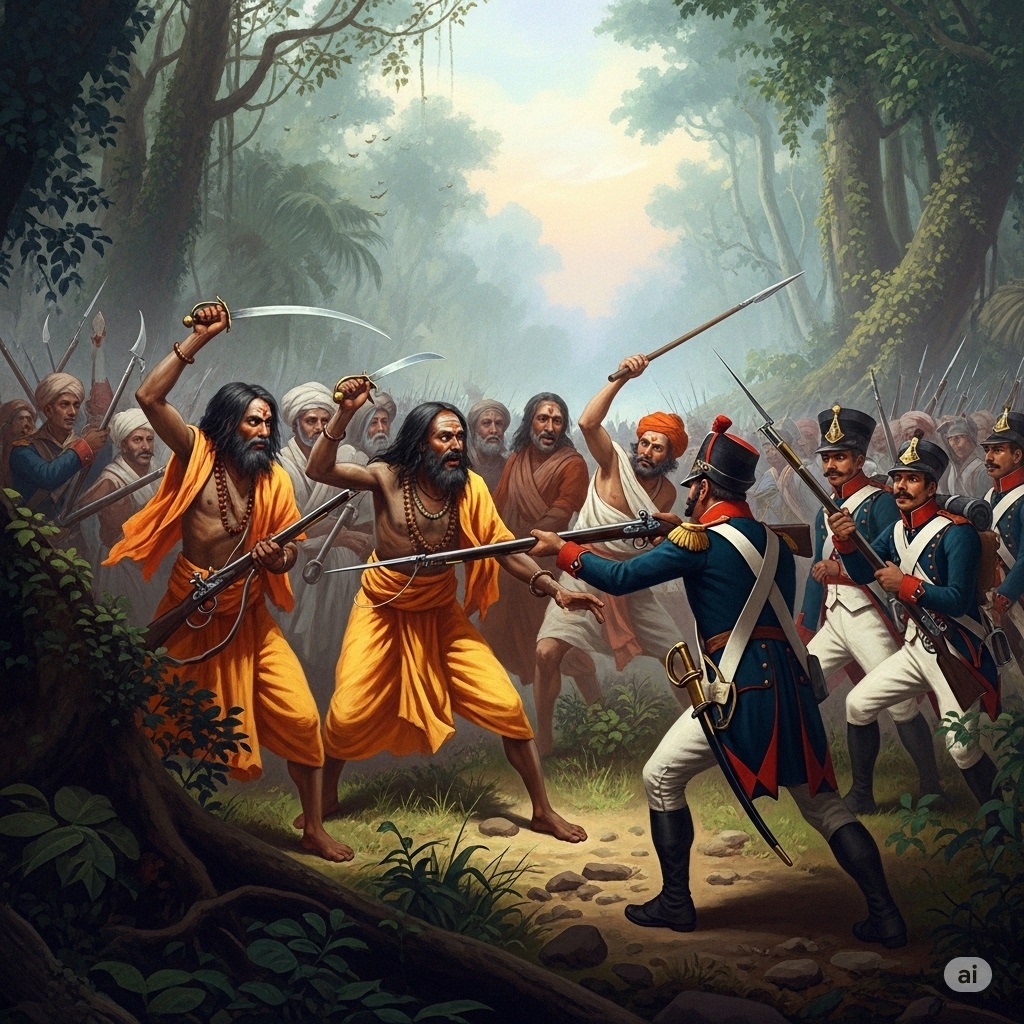
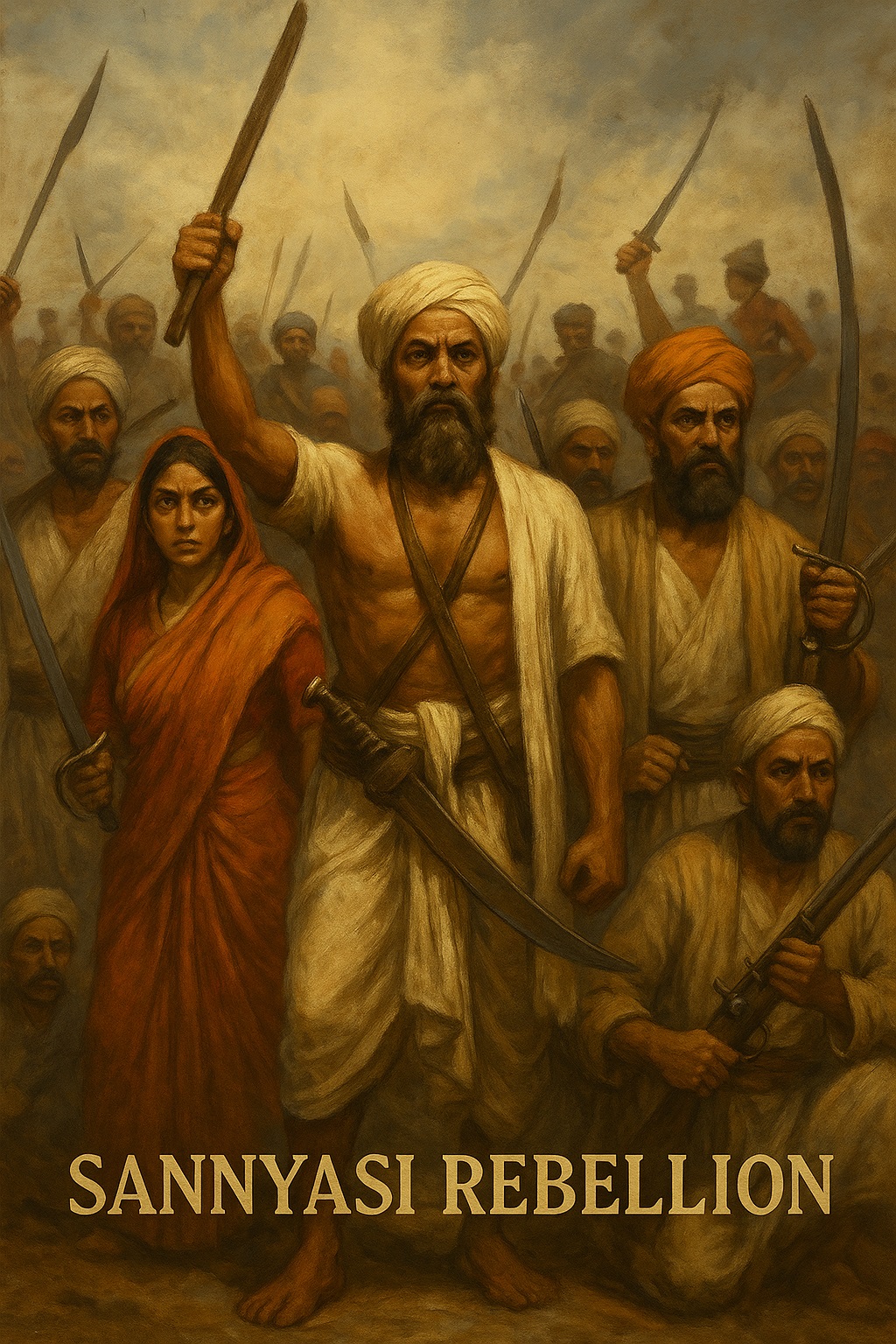
The Sanyasi rebellion took place between 1770 and 1780 AD in Bengal. The terrible famine in Bengal in 1770 AD caused this province to suffer from misery. On the other hand, the restrictions imposed on the pilgrimage made the Sanyasis upset with the British and led to their revolt against the company rule.

These Sanyasis were followers of Shankaracharya and were divided into various sects. The Sanyasis belonging to the ‘Giri’ sect rose in revolt against the company’s policies.

The Sanyasi very joined by farmers, evicted landlords, and disbanded soldiers. Majnu Shah Fakir was the leader of the revolt. The centre of revolt was Rangpur to Dhaka. The Sanyasis defeated a Company of sepoys and killed the commander. They captured some districts and started running a parallel government.

Sanyasi Revolt UPSC

The Sanyasis started looting the British godowns and the standing crops and made stiff resistance to the company’s forces.

This rebellion continued till the end of the 18th century. The Governor-General Warren Hastings launched a military campaign against the Sanyasis. The mighty English power crushed the revolt.

Chirag Ali, Musa Shah, Bhawani Pathak and Debi Chaudhurani were important leaders of the revolt. Debi Chaudhurani‘s participation is an important feature as it shows the active participation of women in early resistance against the British.

The description of the Sanyasi rebellion can be found in Bankim Chandra Chatterjee’s famous book “Anand Math”, which is a semi-historical novel.

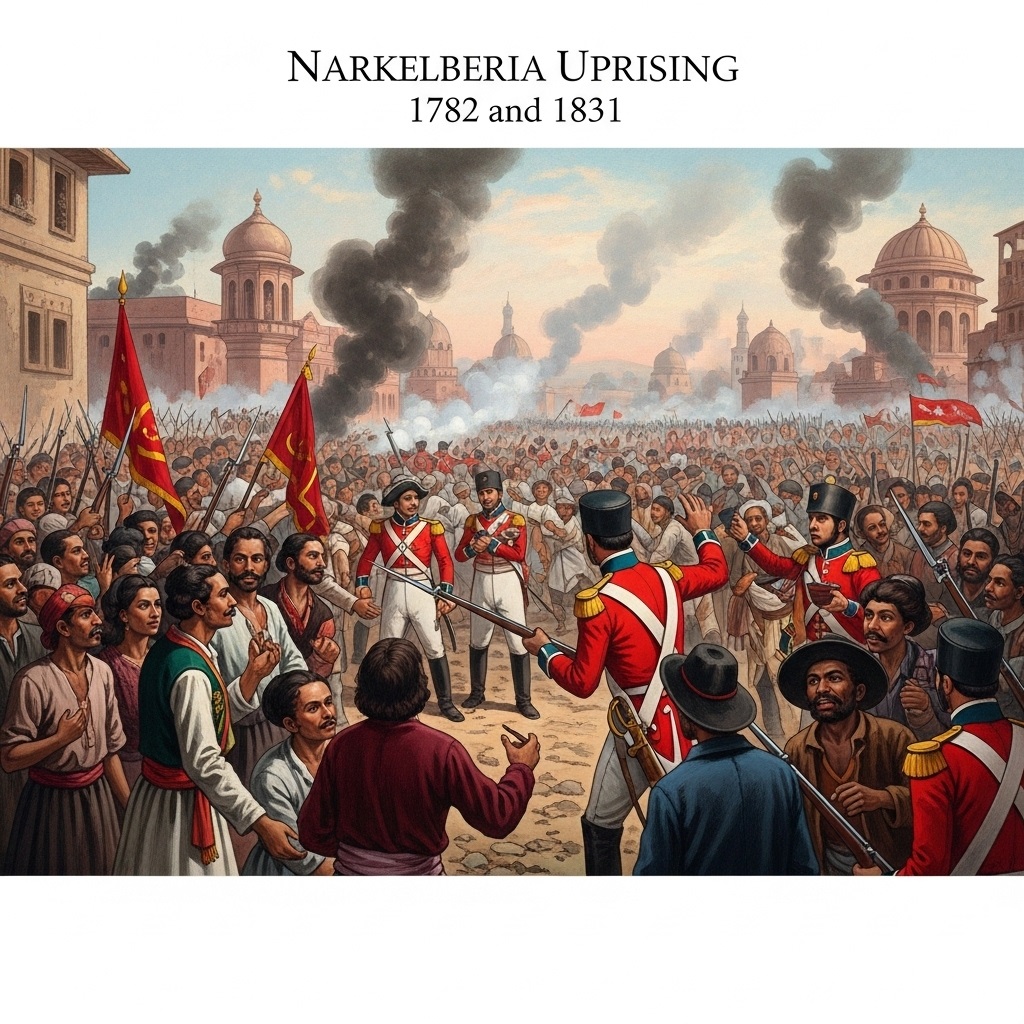
Narkelberia (1782–1831)

The Muslim tenants fought back against Hindu landlords who imposed a beard tax on Faraizis and British Indigo planters. The leader of the movement is Mir Nithar Ali (Titu Mir).

Initially is it was an armed peasant uprising against the British, the movement took on a religious dimension. It later merged into the Wahhabi movement.

Narkelberia uprising 1782–1831

The Narkelberia uprising is considered the first armed uprising by peasants against the British. The Narkelberia uprising was so strong that Lord William Benetick deployed a strong army in November 1831 to suppress the uprising.

Titu Mir, along with 50 other fellow peasants, were killed, and about 800 peasants were arrested.

Pagal Panthis, 1833

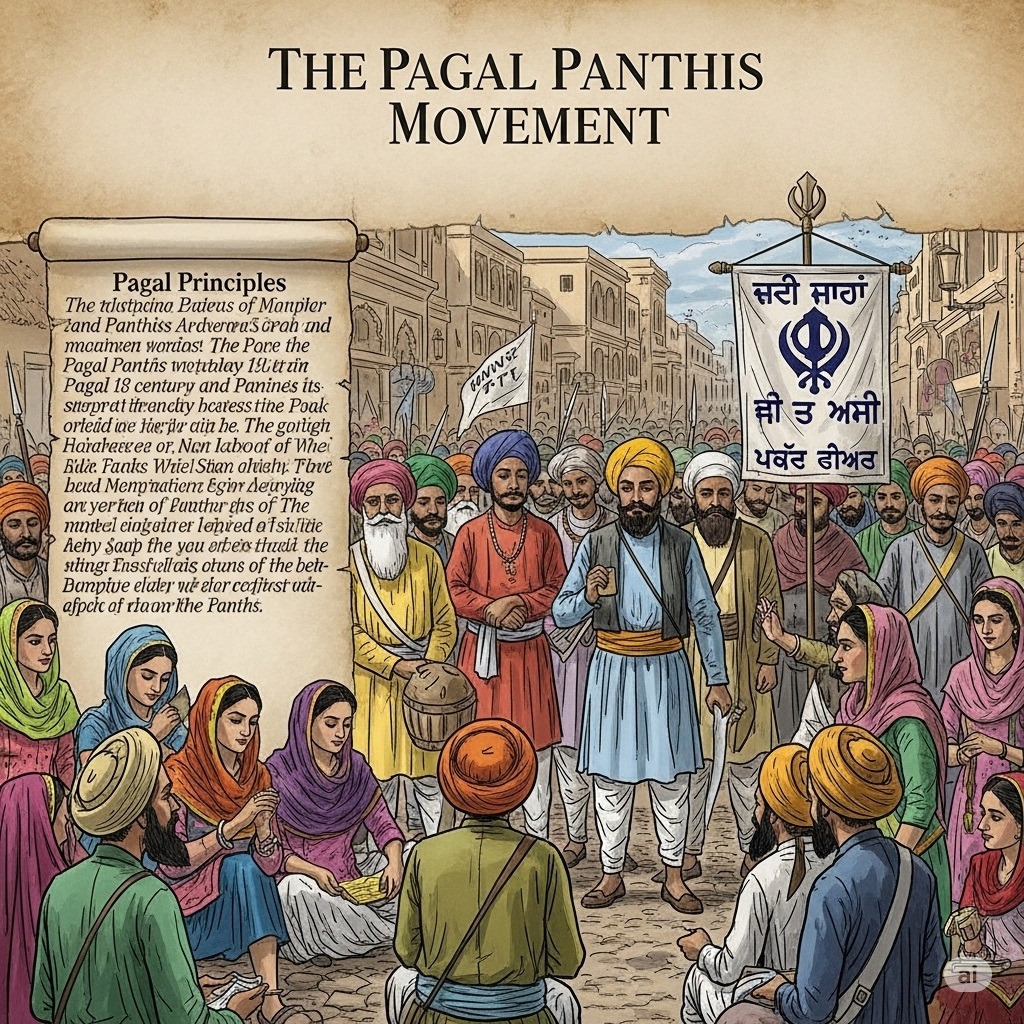
Pagal Panthis were a socio-religious group belonging to different religions, including tribals living around the Mymensingh region of Bengal, in present-day Bangladesh. This socio-religious group was founded by Karim Shah.

After the death of Karim Shah, this group was headed by Tipu Shah, son of Karim Shah. Pagal Panthis firmly believed that God made all equal and all have equal access to the resources.

Pagal Panthis became popular amongst the landless peasants and tribals of the region. The tribes of the region, Hodi, Garo, and Hajong tribes, also have the same philosophies, hence were attracted toward the teachings and preachings of the Pagal Panthis.

Muslims were against the Pagal Panthis. There were a large number of landless peasants in the region who were exploited by the local zamindars, local rulers with the backing of the British officers. Severe taxation was imposed on the region’s peasants.

Pagal Panthis Movement 1833

Forcible collections and the usurpation of the property increased peasant discontentment and disorder. The Pagal Panthis sought to protect and defend peasants from the militia of the landlords and the company’s armed forces.

By the advice of Tipu Shah, the peasants stopped paying taxes. In 1833, Tipu Shah was arrested. However, this did not end the uprising of the Pagal Panthis, compelling the British to lower the tax rates and relax.

After Tipu Shah died in 1852, after his death, there was another wave of uprisings by Pagal Panthis and suppressed by the Company’s officers.

Indus valley civilization mind map for upsc

Indus Valley Civilization
Major Cities
  • Harappa
  • Mohenjo-daro
  • Lothal
  • Kalibangan
Features
  • Urban Planning
  • Drainage System
  • Granaries
  • Citadel and Lower Town
Art & Culture
  • Terracotta Figurines
  • Seals
  • Dancing Girl Statue
  • Bead Making
Economy
  • Agriculture
  • Trade (Internal & External)
  • Cotton Cultivation
  • Dockyard at Lothal
Decline
  • Climate Change
  • Floods
  • Decline in Trade
  • Possible Aryan Invasion
Indus Valley Civilization: Major Cities & Significance

Harappa

  • First discovered site (1921).
  • Granaries and fortifications found.
  • Evidence of cemeteries (burial practices).

Mohenjo-daro

  • Great Bath (ritual bathing).
  • Advanced drainage system.
  • Granaries and Assembly Halls.

Lothal

  • Famous Dockyard.
  • Trade center (beads, gems, ornaments).
  • Evidence of rice cultivation.

Kalibangan

  • Pre-Harappan and Harappan phases.
  • Evidence of ploughed agricultural field.
  • Fire altars (suggest ritualistic practices).

Dholavira

  • Unique water conservation system.
  • Divided into Citadel, Middle Town, Lower Town.
  • Large inscriptions in Harappan script found.
Indus Valley Civilization: Features & Significance

Urban Planning

  • Grid pattern layout of cities.
  • Wide roads, right-angle intersections.
  • Division into Citadel (administrative) & Lower Town (residential).

Architecture

  • Use of burnt bricks extensively.
  • Public buildings: Granaries, Great Bath.
  • Standardized residential houses with courtyards.

Drainage System

  • Covered drains running along streets.
  • Manholes at regular intervals.
  • Highly advanced sanitation system.

Art & Craft

  • Terracotta figurines (animals, humans).
  • Bead-making, pottery, metallurgy (copper, bronze).
  • Seals with intricate animal motifs.

Economy

  • Agriculture (wheat, barley, cotton).
  • Trade with Mesopotamia (Meluhha).
  • Standardized weights and measures.

Script

  • Undeciphered pictographic script.
  • Short inscriptions on seals and pottery.
  • Possible administrative or ritual use.

Religion

  • Worship of Mother Goddess.
  • Proto-Shiva (Pashupati Seal).
  • Tree (Peepal) and animal worship.
Indus Valley Civilization: Art & Culture

Seals

  • Steatite seals with animal motifs.
  • Unicorn, humped bull common figures.
  • Used for trade, identity, or religious purposes.

Terracotta Art

  • Clay figurines of animals, humans.
  • Mother Goddess figurines symbolizing fertility.
  • Toys with movable limbs, carts.

Sculptures

  • Bronze “Dancing Girl” of Mohenjo-Daro.
  • Bearded Priest statue (Steatite).
  • Evidence of advanced metallurgy and craftsmanship.

Pottery

  • Red and black painted pottery.
  • Geometric and animal motifs.
  • Used both for daily and ceremonial purposes.

Bead Making & Ornaments

  • Beads made of semi-precious stones (carnelian, lapis lazuli).
  • Gold and silver ornaments.
  • Advanced techniques of drilling and polishing.

Script & Inscriptions

  • Pictographic script on seals, tablets.
  • Yet to be deciphered.
  • Indicates administrative sophistication.

Music & Instruments

  • Evidence of string instruments (based on terracotta models).
  • Dance depiction in Dancing Girl statue.
  • Possible use of drums and other musical elements in rituals.
Indus Valley Civilization: Economy

Agriculture

  • Main occupation: Wheat, barley, cotton cultivation.
  • Use of plough, irrigation through wells and canals.
  • Surplus production supporting urban life.

Animal Domestication

  • Domesticated cattle, buffalo, sheep, goat.
  • Limited evidence of horse domestication.
  • Animals used for food, agriculture, trade.

Internal & External Trade

  • Trade in cotton, beads, pottery, metals.
  • Dockyard at Lothal for overseas trade.
  • Evidence of trade with Mesopotamia (Sumerian texts mention Meluha).

Craft Production

  • Skilled craftsmanship: pottery, bead-making, metallurgy.
  • Specialized centers like Chanhudaro.
  • Artisan class contributed to economy.

Foreign Relations

  • Trade links with Persia, Afghanistan, Central Asia.
  • Imported raw materials like lapis lazuli, copper.
  • Exported beads, textiles, pottery.

Currency & Exchange

  • No coinage system.
  • Barter system mainly used.
  • Seals possibly served as proof of ownership or trade authentication.
Indus Valley Civilization: Metallurgy

Copper

  • Extensively used for tools, vessels, ornaments.
  • Sources: Khetri mines (Rajasthan), Baluchistan.

Bronze

  • Alloy of copper + tin.
  • Used for statues (e.g., Dancing Girl), tools.
  • Indicates advanced knowledge of alloy making.

Gold

  • Found in jewelry: necklaces, bangles, earrings.
  • Source likely Karnataka region (gold fields).

Silver

  • Used for ornaments, vessels.
  • More abundant than gold.
  • Source: Afghanistan and western India.

Stone Tools

  • Continuity of stone tools like microliths.
  • Use of semi-precious stones for beads: Carnelian, Lapis Lazuli, Jasper.

Metal Tools

  • Axes, chisels, fish-hooks, knives made of copper/bronze.
  • Weapons were rare — suggests a peaceful society.

Significance

  • Advanced metallurgy = Technological sophistication.
  • Boosted trade (exports of crafted goods).
  • Helped in urbanization and cultural prosperity.
Indus Valley Civilization: External Trade

Trade with Mesopotamia

  • Known as “Meluha” in Sumerian records.
  • Exported: Cotton textiles, beads, ivory, pottery.
  • Imported: Silver, lapis lazuli, wool.

Trade with Persia (Iran)

  • Overland routes via Baluchistan.
  • Exchange of precious stones, metals.
  • Influence seen in some art motifs.

Trade with Afghanistan

  • Import of Lapis Lazuli (blue stone).
  • Gold from Badakhshan region.
  • Key mineral supplier to IVC craftsmen.

Trade with Oman Peninsula

  • Marine trade through Lothal port.
  • Exported goods: Beads, pottery.
  • Imported copper ingots (Magan).

Major Exports

  • Beads, ivory, pottery, cotton fabrics.
  • Gold and silver ornaments.
  • Shell and semi-precious stone products.

Major Imports

  • Raw materials: Tin, copper, silver, lapis lazuli.
  • Luxury goods: Woolen textiles, silver items.

Significance

  • IVC was globally connected — early globalization!
  • Boosted craft industries and urban economy.
  • Enhanced cultural exchanges and prosperity.
Decline of Indus Valley Civilization

Timeline

  • c. 1900 BCE – Start of decline.
  • c. 1800 BCE – Urban centers begin to collapse.
  • c. 1700 BCE – Regional cultures replace urbanism.
  • c. 1500 BCE – Complete end of urban civilization.

Climate Change

  • Weakening monsoon patterns.
  • Increased aridity (desertification).
  • River Saraswati (Ghaggar-Hakra) dried up.
  • Agricultural collapse, famine-like situation.

Frequent Floods

  • Layers of silt found in Mohenjodaro excavations.
  • Destruction of housing and city planning.
  • Forced mass migrations from cities.

Tectonic Activity

  • Earthquakes altered river courses (Indus, Saraswati).
  • Disrupted irrigation and agriculture.
  • Isolated urban centers from trade routes.

Aryan Invasion Theory

  • Proposed by early historians (e.g., Mortimer Wheeler).
  • Suggested violent destruction by invading Aryans.
  • Now largely dismissed – lack of strong archaeological proof.
  • Gradual internal decline more accepted today.

Economic Decline

  • Collapse of long-distance trade (Mesopotamia, Oman).
  • Disruption in craft production and specialization.
  • Urban economies could not sustain themselves.

Political Instability

  • No evidence of strong centralized rulers.
  • Possible local rebellions or power struggles.
  • Fragmentation into smaller, rural communities.

Cultural Decline

  • Decline of uniformity in weights, seals, script.
  • Loss of sophisticated town planning traditions.
  • No continuity of writing system after decline.

Overall Significance

  • Multifactorial decline – not a single cause.
  • Environmental factors primary contributors.
  • Urban collapse important lesson for civilization studies.
  • Contributed to early Vedic culture development later.

Tnpsc Group 1 syllabus 2025 pdf download

The Tamil Nadu Public Service Commission (TNPSC) Group 1 Examination is one of the most sought-after competitive exams in Tamil Nadu, aimed at recruiting candidates for high-ranking administrative positions in the state government. These roles include Deputy Collector, Deputy Superintendent of Police, Assistant Commissioner, and other pivotal posts in various government departments.

Selection Process

The TNPSC Group 1 Exam follows a three-stage selection process:

  1. Preliminary Exam:
  • Objective-type questions are designed to test general knowledge and aptitude.
  • Comprises 200 questions worth 300 marks.
  • Qualifying in nature, with no negative marking.
  1. Main Examination:
  • Descriptive papers covering General Studies across three levels.
  • Includes a Tamil Eligibility Test and General Studies Papers I, II, and III.
  • Total marks: 850.
  1. Interview:
  • Candidates who clear the Mains are called for an interview worth 100 marks.
  • Final merit is based on combined scores from the Mains and Interviews.

Exam Pattern

Preliminary Exam

  • Duration: 3 hours.
  • Subjects: General Studies (175 questions) and Aptitude & Mental Ability (25 questions).

Main Examination

  • Duration: 3 hours per paper.
  • Papers:
  • Tamil Eligibility Test (100 marks).
  • General Studies Papers I, II, III (250 marks each).

Key Dates for TNPSC Group 1 Recruitment 2025

  • Notification Release: April 1, 2025.
  • Last Date to Apply: April 30, 2025.
  • Preliminary Exam: June 15, 2025.

Preparation Tips

To excel in the TNPSC Group 1 exam:

  • Understand the syllabus thoroughly for both Prelims and Mains.
  • Focus on Indian Polity, Economy, History, Geography, and Current Affairs.
  • Practice mock tests and previous year’s papers to improve speed and accuracy.

Why Choose TNPSC Group 1?

Clearing this exam opens doors to prestigious roles that offer not only financial stability but also the opportunity to contribute significantly to governance and public service delivery in Tamil Nadu. With structured preparation and dedication, aspirants can achieve their dream of serving in these esteemed positions.

Tnpsc Group 1 syllabus 2025 Preliminary Examination

Unit I: General Science (10 Questions)

Scientific knowledge and scientific temper – Power of reasoning – Rote learning vs conceptual learning – Science as a tool to understand the past, present, and future; Nature of universe – General scientific laws – Mechanics – Properties of matter, force, motion, and energy – Everyday application of the basic principles of mechanics, electricity and magnetism, light, sound, heat, nuclear physics, laser, electronics, and communications; Elements and compounds, acids, bases, salts, petroleum products, fertilizers, pesticides; Main concepts of life science, classification of living organisms, evolution, genetics, physiology, nutrition, health and hygiene, human diseases; Environment and ecology; Latest inventions in science and technology; Current affairs.

Unit II: Geography of India (10 Questions)

Location – Physical features – Monsoon, rainfall, weather and climate – Water resources – Rivers in India – Soil, Minerals and Natural Resources – Forest and Wildlife – Agricultural pattern; Transport – Communication; Social Geography – Population density and distribution – Racial, linguistic groups and major tribes; Natural calamity – Disaster management – Environmental pollution – Reasons and preventive measures – Climate change – Green energy; Geographical landmarks; Current affairs.

Unit III: History, Culture of India, and Indian National Movement (25 Questions)

Indus Valley Civilization – Guptas, Delhi Sultans, Mughals, and Marathas – Age of Vijayanagaram and Bahmani Kingdoms – South Indian History; Change and continuity in the socio-cultural history of India; National Renaissance – Early uprising against British rule – Indian National Congress – Emergence of leaders – B.R.Ambedkar, Bhagat Singh, Bharathiar, V.O.Chidambaranar, Jawaharlal Nehru, Kamarajar, Mahatma Gandhi, Maulana Abul Kalam Azad, Thanthai Periyar, Rajaji, Subash Chandra Bose, Rabindranath Tagore, and others; Different modes of agitation: Growth of Satyagraha and Militant Movements; Communalism and Partition; Characteristics of Indian Culture, Unity in Diversity – Race, Language, Custom; India as a Secular State, Social Harmony; Prominent personalities in various spheres – Arts, Science, Literature and Philosophy; National symbols – Eminent personalities and places in news – Sports – Books and Authors; Current affairs.

Unit IV: Indian Polity (40 Questions)

Constitution of India – Preamble to the Constitution – Salient features of the Constitution – Union, State and Union Territory – Citizenship, Fundamental Rights, Fundamental Duties, Directive Principles of State Policy – Union Executive, Union Legislature – State Executive, State Legislature – Local Governments, Panchayat Raj – Spirit of federalism: Centre – State relationships – Election – Judiciary in India – Rule of Law – Corruption in public life – Anti-corruption measures – Lokpal and Lok Ayukta – Right to Information – Empowerment of Women – Consumer Protection Forums, Human Rights Charter; Political parties and political system in India; Current affairs.

Unit V: Indian Economy and Development Administration in Tamil Nadu (50 Questions)

Nature of Indian Economy – Five-year plan models – an assessment – Planning Commission and Niti Aayog; Sources of revenue – Reserve Bank of India – Fiscal Policy and Monetary Policy – Finance Commission – Resource sharing between Union and State Governments – Goods and Services Tax; Structure of Indian economy and employment generation, Land Reforms and Agriculture – Application of Science and Technology in Agriculture – Industrial growth – Rural welfare oriented programmes – Social problems – Population, Education, Health, Employment, Poverty; Human Development Indicators in Tamil Nadu and a comparative assessment across the Country – Impact of social reform movements in the socio-economic development of Tamil Nadu – Political parties and welfare schemes for various sections of people – Rationale behind the reservation policy, and access to the social resources – Economic trends in Tamil Nadu – Role and impact of social welfare schemes in the socio-economic development of Tamil Nadu – Social justice and social harmony as the cornerstones of socio-economic development; Education and health systems in Tamil Nadu; Geography of Tamil Nadu and its impact on economic growth; Achievements of Tamil Nadu in various fields; e-Governance in Tamil Nadu; Public awareness and General administration – Welfare oriented Government schemes and their utility, Problems in public delivery systems; Current socio-economic issues; Current affairs.

Unit VI: History, Culture, Heritage, and Socio-Political Movements in Tamil Nadu (40 Questions)

History of Tamil Society, related archaeological discoveries, Tamil literature from Sangam age till contemporary times; Thirukkural – Significance as a secular literature – Relevance to everyday life, Impact of Thirukkural on humanity, Thirukkural and universal values – Relevance to Socio-politico-economic affairs, Philosophical content in Thirukkural; Role of Tamil Nadu in freedom struggle – Early agitations against British Rule – Role of women in freedom struggle; Evolution of 19th and 20th century socio-political movements in Tamil Nadu – Justice Party, Growth of Rationalism – Self Respect Movement, Dravidian Movement, and principles underlying both these movements; Contributions of Thanthai Periyar and Perarignar Anna.

Part B: Aptitude and Mental Ability (SSLC Standard – 25 Questions)

Unit I: Aptitude (15 Questions)

Simplification – Percentage – Highest Common Factor (HCF) – Lowest Common Multiple (LCM) – Ratio and Proportion – Simple interest – Compound interest – Area – Volume – Time and Work.

Unit II: Reasoning (10 Questions)

Logical reasoning – Puzzles – Dice – Visual reasoning – Alpha numeric reasoning – Number series.
Tnpsc Group 1 syllabus 2025 pdf download

Four noble truths of Buddhism upsc

Four Noble Truths of Buddha

The four noble truths prescribed by Buddha are as follows:

  1. The Noble Truth of Suffering: Birth, age, death, unpleasantness, separation, unfulfilled wish.
  2. The Noble Truth of the Origin of Suffering: thirst for pleasure, power, long life, etc. are the causes of sorrow.
  3. The Noble Truth of the Cessation of Suffering (Nirvana): complete stopping or release from sorrow.
  4. The Noble Truth of the Path Leading to Cessation of Suffering: the Noble Eightfold Path or the Middle Path.

Buddhism believed in karma and the doctrine of rebirth. Past actions determine one’s condition in this birth. To be free from karma or the cycle of rebirth is to attain nirvana. It can be attained by following the Middle Path.

Among the heterodox sects, Buddhism was the most popular. It went on to emerge as a powerful religion patronised by various rulers. It was so influential that its ideas were adopted by Asoka as a state policy. Though it virtually disappeared from India for nearly a millennium, it spread far and wide and is widely followed even today in the South-east and East Asian countries. In the mid-twentieth century it was revived in India by Dr. B.R. Ambedkar.

Life of Buddha

Gautama Buddha was born as Siddhartha in the Sakya clan to its king Suddhodhana and his chief queen Mahamaya. His mother Mahamaya dreamt of a white elephant with six tusks entering her womb when she was pregnant. Learned men prophesied that the child would either become ‘a Universal Emperor or a Universal Teacher’. While Mahamaya was going to her parents’ home, Siddhartha was born in a park in Lumbini near Kapailavastu. Siddhartha grew in luxury as a royal prince. He married Yashodhara and had a son named Rahula. When he was riding on his chariot with his charioteer one day outside the palace, he saw an old man, a sick man, a corpse and finally a religious mendicant.

Overcome by remorse at the misery of people, he left his palace in the dead of night in search of eternal truth. He rode in his chariot pulled by his favourite horse Kanthaka and driven by his charioteer Channa far away from the city. He cut his hair and sent it along with his discarded garments and jewellery to his father. This is known as Mahabhiraskramana or the Great Going Forth.

Siddhartha wandered about and joined Alara Kalama as a disciple for a brief period. He also sought guidance from a hermit Uddaka Ramaputta. Siddartha was not satisfied with their path and practised severe austerities, which left him nearly dead. One day, he ate rice boiled in milk given by a milkmaid named Sujata and began meditation under a pipal tree in Bodhgaya.

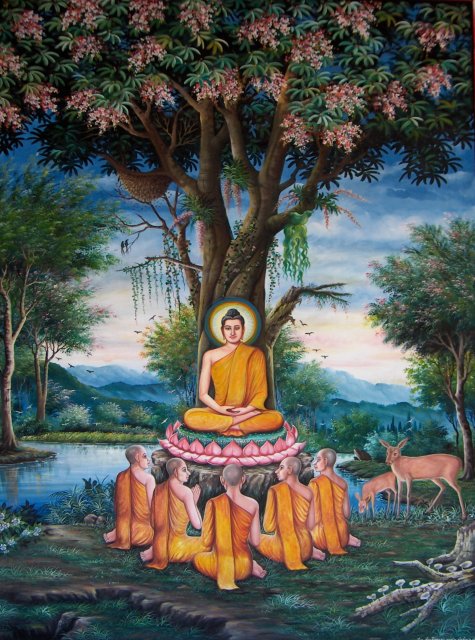
After 49 days of meditation, he attained enlightenment, at the age of 35. Thereafter, he came to be called Buddha or the Enlightened. He then delivered his first sermon in a deer park in Sarnath near Varanasi. This event is described as Dharmachakra-parivartana or ‘wheel of the great law’.

He spoke about the Four Noble Truths and the Middle Path. He established Sangha and spread his ideas far and wide. Buddha and his followers travelled for eight months of the year and stayed at a place for four months of the rainy season. At the age of 80, he passed away in Kusinagara. This is known as Parinirvana. The prominent disciples of Buddha were Sariputta, Mahamoggallana, Mahakaccayana and Ananda. Buddha had a huge following among both the royalty and lay persons.

Buddhist Councils

After the death of Buddha, the tenets and other aspects of Buddhism were decided upon in the councils of Buddhist monks. Over a period of time, four Buddhist councils were held. The First Buddhist Council was held at Rajgriha after Buddha’s death. It was headed by Upali. In this council, Upali recited the Vinaya Pitaka. Ananda recited Sutta Pitaka.

Buddhist Councils

The Second Buddhist Council met at Vaishali a century after Buddha’s death. The Buddhist Order split into two later. One was called the Sthaviravadins or ‘Believers in the Teachings of the Elders’ and the other was known as Mahasanghikas or ‘Members of the Great Community’. The Third Buddhist Council was held at Pataliputra. It was convened by Asoka.

The Sthaviravadins established themselves strongly and expelled the heretics. The last section called “Kathavatthu” was added to Abhidhamma Pitaka. The Fourth Buddhist Council was held at Kashmir during the reign of Kanishka. Sarvastivadins were an important sect of Buddhism. Its doctrines were compiled in Mahavibhasa.

Buddhist Sects

In course of time, Sthaviravadins, Mahasanghikas and Sarvastivadins emerged as major sects of Buddhism. New ideas emerged among the Sarvastivadins and Mahasanghikas. It led to the emergence of Mahayana and Hinayana (the Great and Lesser Vehicles) in Buddhism. Mahayana or the Great Vehicle became popular and influential in India. Nalanda University was an important centre of Buddhist learning and was patronised by the Palas. It spread to China and Japan.

Hinayana or the Lesser Vehicle became popular in Sri Lanka, Burma, Thailand and other South-east Asian countries. By the end of the Gupta period, Vajrayana or the Vehicle of the Thunderbolt emerged. It was popular in Bengal and Bihar. It was influenced by primitive local cults and spread to Tibet in the 11th century CE. The Vikramasila University in Bihar was an important centre of Vajrayana Buddhism.

Buddhism in India began to decline with the onset of the Bhakti movement. Slowly Buddhism came to be influenced by Hindu practices. Soon, Buddhism was incorporated into Hinduism, and Buddha came to be considered an avatar of Vishnu in some traditions.

Buddhist Literature

The Buddhist texts were compiled in Pali. The Pali canons are called as the Tripitakas (Three Baskets). They are Vinaya Pitaka, Sutta Pitaka and Abhidhamma Pitaka. Vinaya Pitaka deals with monastic rules and moral disciplines. Sutta Pitaka dwells upon discourses and teachings of Buddha. Abhidhamma Pitaka expounds Buddhist philosophy. The Sutta Pitaka, which contains the teachings of Buddha, is divided into five groups or Nikayas.

They contain popular works such as Theragatha and Therigatha (Hymns of the Elder Monks and Nuns) and Jataka tales (Buddha’s deeds in previous births as Bodhisattva).

Other important Buddhist works include Milinda Panha, a discussion between Greco-Bactrian king Menander and Buddhist monk Nagasena, and Ceylonese chronicles Dipavamsa (Island Chronicles), Mahavamsa (Great Chronicle) and Culavamsa (Lesser Chronicle).

* * All the Notes in this blog, are referred from Tamil Nadu State Board Books and Samacheer Kalvi Books. Kindly check with the original Tamil Nadu state board books and Ncert Books.