Ncert notes Indian National movement – Extremist period

The year 1905 onward was called the era of extremism in the Indian National Movement. The aggressive nationalist believed that success could be achieved only by bold means.

Important extremist leaders such as Lala Lajpat Rai, Bal Gangadhar Tilak, Bipin Chandra Pal and Aurobindo Ghosh.

Causes for the Rise of Extremism

The only success of the moderates is the expansion of the legislative councils by the Indian council Act (1892). The famine and plague of 1896-97. The poor economic condition of people. Poor treatment of Indians in South Africa on the basis of colour.

Japan won the battle with Russia in 1904-05, this encouraged Indian extremists. The immediate reason for the rise of extremism was the reactionary rule of Lord Curzon. Lord Curzon pass the Calcutta Corporation Act (1899) that reduced the Indian’s control over this local body.

The Universities Act (1904) reduced the elected members in the University bodies and also reduced the autonomy of the universities and made their government departments. Lord Curzon reduced the people’s freedom through the Sedition Act and the Official Secrets act.

Also, the most important one was the partition of Bengal (1905).

Main Goals of Extremist

The main objective was to attain Swaraj or complete independence.

Militant method of Extremist

The extremist had no faith in the British sense of justice and fair play. By forceful means by which the British had taken control of India. Not cooperating with the British government by boycotting government courts, schools and colleges.

Promotion of Swadeshi and boycott of foreign goods. Introduction and promotion of national education.

Leaders of the Extremist

  • The extremist leaders were led by Bala Gangadhar Tilak, Lala Lajpat Rai, Bipin Chandra Pal, and Aurobindo Ghosh.

Bal Gangadhar Tilak

  • Bal Gangadhar tilak is considered as the real founder of the anti-British movement in India. Bal Gangadhar Tilak known as Lokamanya attacked the British through his weeklies The Mahratta and the Kesari. He was jailed twice by the British in 1908. He was deported to Mandalay for six years.
  • He set up the home rule movement in 1916 at Poona and declared “Swaraj is my birthright and I will have it”.

Lala Lajpat Rai

  • Lal Lajpat Rai is popularly known as the Lion of Punjab, played an important role in Swadesi Movement and founded the Indian Hole Rule League in the US in 1916.
  • He was deported to Mandalay on the ground of sedition.
  • Lala Lajpat Rai received fatal injuries while leading a procession against the Simon Commission and died on November 17, 1928.

Bipin Chandra Pal

  • He was the founder of Journal ‘Bande Mataram’.
  • He left for england during the arrest of Bal Gangadhar Tilak and he was associated with the Radical India House and also founded the Swaraj Journal.

Aurobindo Ghosh

FAQ

1. Calcutta Corporation act 1899

As per this act. This act reduced the number of elected legislatures and increase the number of nominated officials to deprive the Indians of Self-Governance. Lord Curzon, the Viceroy passes this act.

2. Official secrets act 1904

This act is for ensuring secrecy and confidentiality in governance, primarily on national security and espionage issues. The official secret Act was passed by Lord Curzon, then Viceroy of India from 1899 to 1905. This act states that any action that involves helping the enemy state against India are strongly condemned.

3. Mention the movement led by Bal Gangadhar tilak against the partition of Bengal?

After the partition of Bengal by Lord Curzon, to weaken the nationalist movements. Bal Gangadhar Tilak encouraged the Swadeshi movement and the Boycott movement. Swadeshi Movement was officially proclaimed on August 7, 1905, at the Calcutta Town Hall in Bengal

History Upsc Mains

1. Sources
Archaeological sources :
Exploration, excavation, epigraphy, numismatics, monuments.
Literary sources:
Indigenous: Primary and secondary; poetry, scientific literature, literature, literature in regional
languages, religious literature.
Foreign account: Greek, Chinese and Arab writers

2. Pre-history and Proto-history :
Geographical factors; hunting and gathering (paleolithic and mesolithic); Beginning of agriculture
(neolithic and chalcolithic).
3. Indus Valley Civilization :
Origin, date, extent, characteristics-decline, survival and significance, art and architecture.
4. Megalithic Cultures :
Distribution of pastoral and farming cultures outside the Indus, Development of community life,
Settlements, Development of agriculture, Crafts, Pottery, and Iron industry.
5. Aryans and Vedic Period :
Expansions of Aryans in India :
Vedic Period: Religious and philosophic literature; Transformation from Rig Vedic period to the
later Vedic period; Political, social and economical life; Significance of the Vedic Age; Evolution of
Monarchy and Varna system.
6. Period of Mahajanapadas :
Formation of States (Mahajanapada): Republics and monarchies; Rise of urban centres; Trade
routes; Economic growth; Introduction of coinage; Spread of Jainism and Buddism; Rise of
Magadha and Nandas.
Iranian and Mecedonian invasions and their impact.
7. Mauryan Empire :
Foundation of the Mauryan Empire, Chandragupta, Kautilya and Arthashastra; Ashoka; Concept
of Dharma; Edicts; Polity, Administration, Economy; Art, architecture and sculpture; External
contacts; Religion; Spread of religion; Literature.
Disintegration of the empire; sungas and Kanvas.
8. Post-Mauryan Period (Indo-Greeks, Sakas, Kushanas, Western Kshatrapas) :
Contact with outside world; growth of urban centres, economy, coinage, development of religions,
Mahayana, social conditions, art, architecture, culture, literature and science

9. Early State and Society in Eastern India, Deccan and South India:
Kharavela, The Satavahanas, Tamil States of the Sangam Age; Administration, Economy, land
grants, coinage, trade guilds and urban centres; Buddhist centres; Sangam literature and culture;
Art and architecture.
10. Guptas, Vakatakas and Vardhanas:
Polity and administration, Economic conditions, Coinage of the Guptas, Land grants, Decline of
urban centres, Indian feudalism, Caste system, Position of women, Education and educational
institutions; Nalanda, Vikramshila and Vallabhi, Literature, scientific literature, art and
architecture.
11. Regional States during Gupta Era:
The Kadambas, Pallavas, Chalukyas of Badami; Polity and Administration, Trade guilds,
Literature; growth of Vaishnava and Saiva religions. Tamil Bhakit movement, Shankaracharya;
Vedanta; Institutions of temple and temple architecture; Palas, Senas, Rashtrakutas, Paramaras Polity and administration; Cultural aspects. Arab conquest of Sind; Alberuni, The Chaluky as of
Kalyana, Cholas, Hoysalas, Pandyas; Polity and Administration; Local Government; Growth of art
and architecture, religious sects, Institution of temple and Mathas, Agraharas, education and
literature, economy and society.
12. Themes in Early Indian Cultural History:
Languages and texts, major stages in the evolution of art and architecture, major philosophical
thinkers and schools, ideas in Science and Mathematics.
13. Early Medieval India, 750-1200:
Polity: Major political developments in Northern India and the peninsula, origin and the
rise of Rajputs.
The Cholas: administration, village economy and society “Indian Feudalism”.
Agrarian economy and urban settlements.
Trade and commerce.
Society: the status of the Brahman and the new social order.
Condition of women.
Indian science and technology.

14. Cultural Traditions in India,
Philosophy: Skankaracharya and Vedanta, Ramanuja and Vishishtadvaita, Madhva and
Brahma-Mimansa.
Religion: Forms and features of religion, Tamil devotional cult, growth of Bhakti, Islam
and its arrival in India, Sufism.
Literature: Literature in Sanskrit, growth of Tamil literature, literature in the newly
developing languages, Kalhan’s Rajtarangini, Alberuni’s India.
Art and Architecture: Temple architecture, sculpture, painting

15. The Thirteenth Century:
Establishment of the Delhi Sultanate: The Ghurian invasions – factors behind Ghurian
success.
Economic, Social and cultural consequences.
Foundation of Delhi Sultanate and early Turkish Sultans.
Consolidation: The rule of Iltutmish and Balban.
16. The Fourteenth Century:“The Khalji Revolution”.
Alauddin Khalji: Conquests and territorial expansion, agrarian and economic measure.
Muhammad Tughluq: Major projects, agrarian measures, bureaucracy of Muhammad
Tughluq.
Firuz Tugluq: Agrarian measures, achievements in civil engineering and public works,
decline of the Sultanate, foreign contacts and Ibn Battuta’s account.
17.Society, Culture and Economy in the Thirteenth and Fourteenth Centuries:
— Society: composition of rural society, ruling classes, town dwellers, women, religious
classes, caste and slavery under the Sultanate, Bhakti movement, Sufi movement.
— Culture: Persian literature, literature in the regional languages of North India, literaute in
the languages of South India, Sultanate architecture and new structural forms, painting,
evolution of a composite culture.
— Economy: Agricultural Production, rise of urban economy and non-agricultural
production, trade and commerce.
18. The Fifteenth and Early Sixteenth Century-Political Developments and Economy:
— Rise of Provincial Dynasties : Bengal, Kashmir (Zainul Abedin), Gujarat.
— Malwa, Bahmanids.
— The Vijayanagara Empire.
— Lodis.
— Mughal Empire, first phase : Babur, Humayun.
— The Sur Empire : Sher Shah’s administration.
— Portuguese colonial enterprise, Bhakti and Sufi Movements.
19. The Fifteenth and Early Sixteenth Century- Society and culture:
— Regional cultures specificities.
— Literary traditions.
— Provincial architectural.
— Society, culture, literature and the arts in Vijayanagara Empire.
20. Akbar:
— Conquests and consolidation of empire.
— Establishment of jagir and mansab systems.
— Rajput policy.
— Evolution of religious and social outlook. Theory of Sulh-i-kul and religious policy.
— Court patronage of art and technology.
21. Mughal Empire in the Seventeenth Century:
— Major administrative policies of Jahangir, Shahjahan and Aurangzeb.
— The Empire and the Zamindars.
— Religious policies of Jahangir, Shahjahan and Aurangzeb.
— Nature of the Mughal State.
— Late Seventeenth Century crisis and the revolts.
— The Ahom kingdom.
— Shivaji and the early Maratha Kingdom.
22. Economy and society, in the 16th and 17th Centuries:
— Population Agricultural and craft production.
— Towns, commerce with Europe through Dutch, English and French companies : a trade
revolution.
— Indian mercantile classes. Banking, insurance and credit systems.
— Conditions of peasants, Condition of Women.
— Evolution of the Sikh community and the Khalsa Panth.
23. Culture during Mughal Empire:
— Persian histories and other literature.
— Hindi and religious literatures.
— Mughal architecture.
— Mughal painting.
— Provincial architecture and painting.
— Classical music.
— Science and technology.
24. The Eighteenth Century:
— Factors for the decline of the Mughal Empire.
— The regional principalities: Nizam’s Deccan, Bengal, Awadh.
— Maratha ascendancy under the Peshwas.
— The Maratha fiscal and financial system.
— Emergence of Afghan power Battle of Panipat, 1761.
— State of, political, cultural and economic, on eve of the British conquest.
PAPER-II
1. European Penetration into India:
The Early European Settlements; The Portuguese and the Dutch; The English and the French
East India Companies; Their struggle for supremacy; Carnatic Wars; Bengal-The conflict
between the English and the Nawabs of Bengal; Siraj and the English; The Battle of Plassey;
Significance of Plassey.
2. British Expansion in India:
Bengal-Mir Jafar and Mir Kasim; The Battle of Buxar; Mysore; The Marathas; The three
Anglo-Maratha Wars; The Punjab.
3. Early Structure of the British Raj:
The Early administrative structure; From diarchy to direct contol; The Regulating Act (1773);
The Pitt’s India Act (1784); The Charter Act (1833); The Voice of free trade and the changing
character of British colonial rule; The English utilitarian and India.
4. Economic Impact of British Colonial Rule:
(a) Land revenue settlements in British India; The Permanent Settlement; Ryotwari Settlement;
Mahalwari Settlement; Economic impact of the revenue arrangements; Commercialization of agriculture; Rise of landless agrarian labourers; Impoverishment of the rural society.
(b) Dislocation of traditional trade and commerce; De-industrialisation; Decline of traditional
crafts; Drain of wealth; Economic transformation of India; Railroad and communication
network including telegraph and postal services; Famine and poverty in the rural interior;
European business enterprise and its limitations.
5. Social and Cultural Developments:
The state of indigenous education, its dislocation; Orientalist-Anglicist controversy, The
introduction of western education in India; The rise of press, literature and public opinion;
The rise of modern vernacular literature; Progress of Science; Christian missionary activities
in India.
6. Social and Religious Reform Movements in Bengal and Other Areas:
Ram Mohan Roy, The Brahmo Movement; Devendranath Tagore; Iswarchandra Vidyasagar;
The Young Bengal Movement; Dayanada Saraswati; The social reform movements in India
including Sati, widow remarriage, child marriage etc.; The contribution of Indian renaissance
to the growth of modern India; Islamic revivalism-the Feraizi and Wahabi Movements.
7. Indian Response to British Rule:
Peasant movement and tribal uprisings in the 18th and 19th centuries including the Rangpur
Dhing (1783), the Kol Rebellion (1832), the Mopla Rebellion in Malabar (1841-1920), the
Santal Hul (1855), Indigo Rebellion (1859-60), Deccan Uprising (1875) and the Munda
Ulgulan (1899-1900); The Great Revolt of 1857 —Origin, character, casuses of failure, the
consequences; The shift in the character of peasant uprisings in the post-1857 period; the
peasant movements of the 1920s and 1930s.
8. Factors leading to the birth of Indian Nationalism; Politics of Association; The Foundation of
the Indian National Congress; The Safety-valve thesis relating to the birth of the Congress;
Programme and objectives of Early Congress; the social composition of early Congress
leadership; the Moderates and Extremists; The Partition of Bengal (1905); The Swadeshi
Movement in Bengal; the economic and political aspects of Swadeshi Movement; The
beginning of revolutionary extremism in India.
9. Rise of Gandhi; Character of Gandhian nationalism; Gandhi’s popular appeal; Rowlatt
Satyagraha; the Khilafat Movement; the Non-cooperation Movement; National politics from
the end of the Non-cooperation movement to the beginning of the Civil Disobedience
Movement; the two phases of the Civil Disobedience Movement; Simon Commission; The
Nehru Report; the Round Table Conferences; Nationalism and the Peasant Movements;
Nationalism and Working class movements; Women and Indian youth and students in Indian
politics (1885-1947); the election of 1937 and the formation of ministries; Cripps Mission;
the Quit India Movement; the Wavell Plan; The Cabinet Mission.
10. Constitutional Developments in the Colonial India between 1858 and 1935.
11. Other strands in the National Movement.
The Revolutionaries: Bengal, the Punjab, Maharashtra, U.P. the Madras Presidency, Outside
India.
The Left; The Left within the Congress: Jawaharlal Nehru, Subhas Chandra Bose, the Congress
Socialist Party; the Communist Party of India, other left parties.
2. Politics of Separatism; the Muslim League; the Hindu Mahasabha; Communalism and the
politics of partition; Transfer of power; Independence.
13. Consolidation as a Nation; Nehru’s Foreign Policy; India and her neighbours (1947-1964);
The linguistic reorganisation of States (1935-1947); Regionalism and regional inequality;
Integration of Princely States; Princes in electoral politics; the Question of National Language.
14. Caste and Ethnicity after 1947; Backward Castes and Tribes in post-colonial electoral politics;
Dalit movements.
15. Economic development and political change; Land reforms; the politics of planning and rural
reconstruction; Ecology and environmental policy in post-colonial India; Progress of Science.
16. Enlightenment and Modern ideas:
(i) Major Ideas of Enlightenment : Kant, Rousseau.
(ii) Spread of Enlightenment in the colonies.
(iii) Rise of socialist ideas (up to Marx); spread of Marxian Socialism.
17. Origins of Modern Politics :
(i) European States System.
(ii) American Revolution and the Constitution.
(iii) French Revolution and Aftermath, 1789-1815.
(iv) American Civil War with reference to Abraham Lincoln and the abolition of slavery.
(v) British Democratic politics, 1815-1850 : Parliamentary Reformers, Free Traders, Chartists.
18. Industrialization :
(i) English Industrial Revolution : Causes and Impact on Society.
(ii) Industrialization in other countries : USA, Germany, Russia, Japan.
(iii) Industrialization and Globalization.
19. Nation-State System :
(i) Rise of Nationalism in 19th century.
(ii) Nationalism : State-building in Germany and Italy.
(iii) Disintegration of Empires in the face of the emergence of nationalities across the World.
20. Imperialism and Colonialism :
(i) South and South-East Asia.
(ii) Latin America and South Africa.
(iii) Australia.
(iv) Imperialism and free trade: Rise of neo-imperialism.
21. Revolution and Counter-Revolution :
(i) 19th Century European revolutions.
(ii) The Russian Revolution of 1917-1921.
(iii) Fascist Counter-Revolution, Italy and Germany.
(iv) The Chinese Revolution of 1949.
22. World Wars :
(i) 1st and 2nd World Wars as Total Wars : Societal implications.
(ii) World War I : Causes and Consequences.
(iii) World War II : Causes and Consequences.
23. The World after World War II:
(i) Emergence of Two power blocs.
(ii) Emergence of Third World and non-alignment.
(iii) UNO and the global disputes.
24 . Liberation from Colonial Rule :
(i) Latin America-Bolivar.
(ii) Arab World-Egypt.
(iii) Africa-Apartheid to Democracy.
(iv)South-East Asia-Vietnam.
25. Decolonization and Underdevelopment :
(i) Factors constraining Development ; Latin America, Africa.
26. Unification of Europe :
(i) Post War Foundations ; NATO and European Community.
(ii) Consolidation and Expansion of European Community
(iii) European Union.
27. Disintegration of Soviet Union and the Rise of the Unipolar World :
(i) Factors leading to the collapse of Soviet Communism and Soviet Union, 1985-1991.
(ii) Political Changes in East Europe 1989-2001.
(iii) End of the Cold War and US Ascendancy in the World as the lone superpower.

GEOGRAPHY Upsc Mains

Physical Geography :

  1. Geomorphology : Factors controlling landform development; endogenetic and exogenetic
    forces; Origin and evolution of the earth’s crusts; Fundamentals of geomagnetism; Physical
    conditions of the earth’s interior; Geosynclines; Continental drift; Isostasy; Plate tectonics;
    Recent views on mountain building; Volcanicity; Earthquakes and Tsunamis; Concepts of geomorphic cycles and Land scape development; Denudation chronology; Channel
    morphology; Erosion surfaces; Slope development; Applied Geomorphology;
    Geomorphology, economic geology and environment.


  2. Climatology : Temperature and pressure belts of the world; Heat budget of the earth;
    Atmospheric circulation; Atmospheric stability and instability. Planetary and local winds;
    Monsoons and jet streams; Air masses and fronto; Temperate and tropical cyclones; Types
    and distribution of precipitation; Weather and Climate; Koppen’s Thornthwaite’s and
    Trewar Tha’s classification of world climate; Hydrological cycle; Global climatic change,
    and role and response of man in climatic changes Applied climatology and Urban climate.


  3. Oceanography : Bottom topography of the Atlantic, Indian and Pacific Oceans;
    Temperature and salinity of the oceans; Heat and salt budgets, Ocean deposits; Waves,
    currents and tides; Marine resources; biotic, mineral and energy resources; Coral reefs
    coral bleaching; Sea-level changes; Law of the sea and marine pollution.


  4. Biogeography : Genesis of soils; Classification and distribution of soils; Soil profile; Soil
    erosion, Degrada-tion and conservation; Factors influencing world distribution of plants
    and animals; Problems of deforestation and conservation measures; Social forestry,
    agro-forestry; Wild life; Major gene pool centres.

  5. Environmental Geography : Principle ecology; Human ecological adaptations; Influence
    of man on ecology and environment; Global and regional ecological changes and
    imbalances; Ecosystem their management and conservation; Environmental degradation,
    management and conservation; Biodiversity and sustainable development; Environmental
    policy; Environmental hazards and remedial measures; Environmental education and
    legislation.

Human Geography :

  1. Perspectives in Human Geography : Areal differentiation; Regional synthesis;
    Dichotomy and dualism; Environmentalism; Quantitative revolution and locational analysis;
    Radical, behavioural, human and welfare approaches; Languages, religions and
    secularisation; Cultural regions of the world; Human development indix.

  2. Economic Geography : World economic development: measurement and problems; World
    resources and their distribution; Energy crisis; the limits to growth; World agriculture:
    typology of agricultural regions; Agricultural inputs and productivity; Food and nutritions
    problems; Food security; famine: causes, effects and remedies; World industries: location
    patterns and problems; Patterns of world trade.

  3. Population and Settlement Geography : Growth and distribution of world population;
    Demographic attributes; Causes and consequences of migration; Concepts of
    over-under-and optimum population; Population theories, world population problems and
    policies, Social well-being and quality of life; Population as social capital.
    Types and patterns of rural settlements; Environmental issues in rural settlements;
    Hierarchy of urban settlements; Urban morphology; Concept of primate city and rank-size
    rule; Functional classification of towns; Sphere of urban influence; Rural-urban fringe;
    Satellite towns; Problems and remedies of urbanization; Sustainable development of cities.

  4. Regional Planning : Concept of a region; Types of regions and methods of regionalisation;
    Growth centres and growth poles; Regional imbalances; Regional development strategies;Environmental issues in regional planning; Planning for sustainable development.

  5. Models, Theories and Laws in Human Geography : System analysis in Human geography;
    Malthusian, Marxian and demographic transition models; Central Place theories of
    Christaller and Losch; Perroux and Boudeville; Von Thunen’s model of agricultural location;
    Weber’s model of industrial location; Ostov’s model of stages of growth. Heart-land and
    Rimland theories; Laws of international boundaries and frontiers.

PAPER II

GEOGRAPHY OF INDIA

  1. Physical Setting : Space relationship of India with neighbouring countries; Structure and
    relief; Drainage system and watersheds; Physiographic regions; Mechanism of Indian
    monsoons and rainfall patterns; Tropical cyclones and western disturbances; Floods and
    droughts; Climatic regions; Natural vegetation, Soil types and their distributions.

  2. Resources : Land, surface and ground water, energy, minerals, biotic and marine
    resources, Forest and wild life resources and their conservation; Energy crisis.

  3. Agriculture : Infrastructure: irrigation, seeds, fertilizers, power; Institutional factors; land
    holdings, land tenure and land reforms; Cropping pattern, agricultural productivity,
    agricultural intensity, crop combination, land capability; Agro and social-forestry; Green
    revolution and its socio-economic and ecological implications; Significance of dry farming;
    Livestock resources and white revolution; Aqua-culture; Sericulture, Agriculture and
    poultry; Agricultural regionalisation; Agro-climatic zones; Agro-ecological regions.

  4. Industry : Evolution of industries; Locational factors of cotton, jute, textile, iron and steel,
    aluminium, fertiliser, paper, chemical and pharmaceutical, automobile, cottage and
    ago-based industries; Industrial houses and complexes including public sector underkings;
    Industrial regionalisation; New industrial policy; Multinationals and liberalisation; Special
    Economic Zones; Tourism including ecotourism.

  5. Transport, Communication and Trade : Road, railway, waterway, airway and pipeline
    net works and their complementary roles in regional development; Growing importance of
    ports on national and foreign trade; Trade balance; Trade Policy;Export processing zones;
    Developments in communication and information technology and their impacts on
    economy and society; Indian space programme.

  6. Cultural Setting : Historical Perspective of Indian Society; Racial linguistic and ethnic
    diversities; religious minorities; Major tribes, tribal areas and their problems; Cultural
    regions; Growth, distribution and density of population; Demographic attributes:
    sex-ratio, age structure, literacy rate, work-force, dependency ratio, longevity; migration
    (inter-regional, interaregional and international) and associated problems; Population
    problems and policies; Health indicators.

  7. Settlements : Types, patterns and morphology of rural settlements; Urban developments;
    Morphology of Indian cities; Functional classification of Indian cities; Conurbations and
    metropolitan regions; Urban sprawl; Slums and asssociated problems; Town planning;
    Problems of urbanisation and remedies.

  8. Regional Development and Planning: Experience of regional planning in India; Five Year
    Plans; Integrated rural development programmes; Panchayati Raj and decentralised
    planning; Command area development; Watershed management; Planning for backward area, desert, drought-prone, hill tribal area development; Multi-level planning; Regional
    planning and development of island territories.

  9. Political Aspects : Geographical basis of Indian federalism; State reorganisation;
    Emergence of new states; Regional consciousness and inter-state issues; International
    boundary of India and related issues; Cross-border terrorism; India’s role in world affairs;
    Geopolitics of South Asia and Indian Ocean realm.

  10. Contemporary Issues : Ecological issues: Environmental hazards: landslides, earthquakes,
    Tsunamis, floods and droughts, epidemics; Issues related to environmental pollution;
    Changes in patterns of land use; Principles of environmental impact assessment and
    environmental management; Population explosion and food security; Environmental
    degradation; Deforestation, desertification and soil erosion; Problems of agrarian and
    industrial unrest; Regional disparities in economic development; Concept of sustainable
    growth and development; Environmental awareness; Linkage of rivers; Globalisation and
    Indian economy.

Economic Upsc Mains

1. Advanced Micro Economics :
(a) Marshallian and Varrasiam Approaches to Price determination.
(b) Alternative Distribution Theories; Ricardo, Kaldor, Kaleeki.
(c) Markets Structure : Monopolistic Competition, Duopoly, Oligopoly.
(d) Modern Welfare Criteria : Pareto Hicks and Scitovsky, Arrow’s Impossibility Theorem, A. K.
Sen’s Social Welfare Function.
2. Advance Macro Economics :
Approaches to Employment Income and Interest Rate determination : Classical, Keynes
(IS)-LM) curve, Neo-classical synthesis and New classical, Theories of Interest Rate
determination and Interest Rate Structure.
3. Money-Banking and Finance :
(a) Demand for and Supply of Money : Money Multiplier Quantity Theory of Money (Fisher,
Pique and Friedman) and Keyne’s Theory on Demand for Money, Goals and Instruments of
Monetary Management in Closed and Open Economies. Relation between the Central Bank
and the Treasury. Proposal for ceiling on growth rate of money.
(b) Public Finance and its Role in market Economy : In stabilisation of supply, allocative, of
resources and in distribution and development. Sources of Government revenue, forms of
Taxes and Subsidies, their incidence and effects. Limits to taxation, loans, crowding-out effects and limits to borrowings. Public expenditure and its effects.
4. International Economics :
(a) Old and New theories of International Trade.
(i) Comparative advantage,
(ii) Terms of Trade and Offer Curve.
(iii) Product Cycle and Strategic Trade Theories.
(iv) Trade as an engine of growth and theories of underdevelopment in an open economy.
(b) Forms of Protection : Tariff and quota.
(c) Balance of Payments Adjustment : Alternative Approaches.
(i) Price versus income, income adjustments under fixed exchange rates.
(ii) Theories of Policy Mix.
(iii) Exchange rate adjustments under capital mobility.
(iv) Floating Rates and their Implications for Developing Countries : Currency Boards.
(v) Trade Policy and Developing Countries.
(vi) BOP, adjustments and Policy Coordination in open economy macromodel.
(vii) Speculative attacks.
(viii) Trade Blocks and Monetary Unions.
(ix) WTO : TRIMS, TRIPS, Domestic Measures, Different Rounds of WTO talks.
5. Growth and Development :
(a) (i) Theories of growth : Harrod’s model;
(ii) Lewis model of development with surplus labour.
(iii) Balanced Unbalanced Growth.
(iv) Human Capitals and Economic Growth.
(v) Research and Development and Economic Growth.
(b) Process of Economic Development of less developed courtries : Myrdal and Kuzments on
economic development and structural change : Role of Agriculture in Economic Development
of less developed countries.
(c) Economic Development and International Trade and Investment, Role of Multinationals.
(d) Planning and Economic Development : changing role of Markets and Planning, Private-Public
Partnership.
(e) Welfare indicators and measures of growth—Human Development Indices. The basic needs
approach.
(f) Development and Environmental Sustainability—Renewable and Non-renewable Resources,
Environmental Degradation, Intergenerational equity development.

PAPER-II

Indian Economics in Post-Independence Era :

Land System and its changes, Commercialization of agriculture Drain theory, Laissez faire
theory and critique. Manufacture and Transport : Jute, Cotton, Railways, Money and Credit.
Indian Economy after Independence :
A. The Pre-Liberalization Era :
(i) Contribution of Vakil, Gadgil and V.K.R.V. Rao.
(ii) Agricultrure : Land Reforms and land tenure system, Green Revolution and capital
formation in agriculture.
(iii) Industry Trends in composition and growth, Role of public and private sector, small scale
and cottage industries.
(iv) National and Per capita income : Patterns, trends, aggregate and sectoral composition and
changes therein.
(v) Broad factors determining National Income and distribution, Measures of poverty, Trends
in poverty and inequality.
B. The Post-Liberalization Era :
(i) New Economic Reform and Agriculture : Agriculture and WTO, Food processing, subsidies,
Agricultural prices and public distribution system, Impact of public expenditure on
agricultural growth.
(ii) New Economic Policy and Industry : Strategy of industrialization, Privatization,
Disinvestments, Role of foreign direct investment and multinationals.
(iii) New Economic Policy and Trade : Intellectual property rights : Implications of TRIPS,
TRIMS, GATS and new EXIM policy.
(iv) New Exchange Rate Regime : Partial and full convertibility, Capital account convertibility.
(v) New Economic Policy and Public Finance : Fiscal Responsibility Act, Twelfth Finance
Commission and Fiscal Federalism and Fiscal Consolidation.
(vi) New Economic Policy and Monetary System. Role of RBI under the new regime.

(vii) Planning : From central Planning to indivative planning, Relation between planning and
markets for growth and decentralized planning : 73rd and 74th Constitutional
amendments.
(viii) New Economic Policy and Employment : Employment and poverty, Rural wages,
Employment Generation, Poverty alleviation schemes, New Rural, Employment Guarantee
Scheme.

Upsc Mains Syllabus with Notes

Paper-I

Essay

Paper-II

General Studies-I

Indian Heritage and Culture, History and Geography of the World and Society

  • Indian culture will cover the salient aspects of Art Forms, literature, and Architecture from ancient to modern times.
  • Modern Indian history from about the middle of the eighteenth century until the present significant events, personalities, issues.
  • The Freedom Struggle — its various stages and important contributors/contributions from
    different parts of the country.
  • Post-independence consolidation and reorganization within the country.
  • History of the world will include events from 18th century such as industrial revolution, world wars, redrawal of national boundaries, colonization, decolonization, political philosophies like communism, capitalism, socialism etc.— their forms and effect on the society.
  • Salient features of Indian Society, Diversity of India.
  • Role of women and women’s organization, population and associated issues, poverty and developmental issues, urbanization, their problems and their remedies.
  • Effects of globalization on Indian society.
  • Social empowerment, communalism, regionalism & secularism.
  • Salient features of world’s physical geography.
  • Distribution of key natural resources across the world (including South Asia and the Indian sub-continent); factors responsible for the location of primary, secondary, and tertiary sector industries in various parts of the world (including India).
  • Important Geophysical phenomena such as earthquakes, Tsunami, Volcanic activity, cyclone etc., geographical features and their location-changes in critical geographical features (including water-bodies and ice-caps) and in flora and fauna and the effects of such changes.

Paper-III

General Studies -II 250 Marks

Governance, Constitution, Polity, Social Justice and International relations

  • Indian Constitution—historical underpinnings, evolution, features, amendments, significant provisions and basic structure.
  • Functions and responsibilities of the Union and the States, issues and challenges pertaining to the federal structure, devolution of powers and finances up to local levels and challenges therein.
  • Separation of powers between various organs dispute redressal mechanisms and institutions.
  • Comparison of the Indian constitutional scheme with that of other countries.
  • Parliament and State legislatures—structure, functioning, conduct of business, powers & privileges and issues arising out of these.
  • Structure, organization and functioning of the Executive and the Judiciary—Ministries and Departments of the Government; pressure groups and formal/informal associations and their role in the Polity.
  • Salient features of the Representation of People’s Act.
  • Appointment to various Constitutional posts, powers, functions and responsibilities of various Constitutional Bodies.
  • Statutory, regulatory and various quasi-judicial bodies.
  • Government policies and interventions for development in various sectors and issues arising out of their design and implementation.
  • Development processes and the development industry —the role of NGOs, SHGs, various groups and associations, donors, charities, institutional and other stakeholders.
  • Welfare schemes for vulnerable sections of the population by the Centre and States and the performance of these schemes; mechanisms, laws, institutions and Bodies constituted for the protection and betterment of these vulnerable sections.
  • Issues relating to development and management of Social Sector/Services relating to Health, Education, Human Resources.
  • Issues relating to poverty and hunger.
  • Important aspects of governance, transparency and accountability, e-governance applications, models, successes, limitations, and potential; citizens charters, transparency & accountability and institutional and other measures.
  • Role of civil services in a democracy.
  • India and its neighborhood- relations.
  • Bilateral, regional and global groupings and agreements involving India and/or affecting India’s interests.
  • Effect of policies and politics of developed and developing countries on India’s interests, Indian diaspora.
    Important International institutions, agencies and fora- their structure, mandate.

Paper-IV

General Studies -III 250 Marks

Technology, Economic Development, Bio-diversity, Environment, Security and Disaster Management

  • Indian Economy and issues relating to planning, mobilization, of resources, growth, development and employment.
  • Inclusive growth and issues arising from it.
  • Government Budgeting.
  • Major crops-cropping patterns in various parts of the country, – different types of irrigation and irrigation systems storage, transport and marketing of agricultural produce and issues and related constraints; e-technology in the aid of farmers.
  • Issues related to direct and indirect farm subsidies and minimum support prices; Public Distribution System- objectives, functioning, limitations, revamping; issues of buffer stocks and food security; Technology missions; economics of animal-rearing.
  • Food processing and related industries in India- scope’ and significance, location, upstream and downstream requirements, supply chain management.
  • Land reforms in India.
  • Effects of liberalization on the economy, changes in industrial policy and their effects on industrial growth.
  • Infrastructure: Energy, Ports, Roads, Airports, Railways etc.
  • Investment models.
  • Science and Technology- developments and their applications and effects in everyday life.
  • Achievements of Indians in science & technology; indigenization of technology and developing new technology.
  • Awareness in the fields of IT, Space, Computers, robotics, nano-technology, bio-technology and
    issues relating to intellectual property rights.
  • Conservation, environmental pollution and degradation, environmental impact assessment.
    Disaster and disaster management.
  • Linkages between development and spread of extremism.
  • Role of external state and non-state actors in creating challenges to internal security.
  • Challenges to internal security through communication networks, role of media and social networking sites in internal security challenges, basics of cyber security; money-laundering and its prevention.
  • Security challenges and their management in border areas – linkages of organized crime with terrorism.
  • Various Security forces and agencies and their mandate.

Paper-V

General Studies -IV 250 Marks

Ethics, Integrity, and Aptitude

This paper will include questions to test the candidates’ attitude and approach to issues relating to integrity, probity in public life and his problem solving approach to various issues and conflicts faced by him in dealing with society.

Questions may utilise the case study approach to determine these aspects. The following broad areas will be covered:
Ethics and Human Interface: Essence, determinants and consequences of Ethics in-human actions; dimensions of ethics; ethics – in private and public relationships.

Human Values – lessons from the lives and teachings of great leaders, reformers and administrators; role of family society and educational institutions in inculcating values.


Attitude: content, structure, function; its influence and relation with thought and behaviour; moral and political attitudes; social influence and persuasion.


Aptitude and foundational values for Civil Service, integrity, impartiality and non-partisanship, objectivity, dedication to public service, empathy, tolerance and compassion towards the weaker-sections.

Emotional intelligence-concepts, and their utilities and application in administration and governance.


Contributions of moral thinkers and philosophers from India and world.


Public/Civil service values and Ethics in Public administration: Status and problems; ethical concerns and dilemmas in government and private institutions; laws, rules, regulations and conscience as sources of ethical guidance;

accountability and ethical governance;


strengthening of ethical and moral values in governance; ethical issues in international relations and funding; corporate governance.


Probity in Governance: Concept of public service; Philosophical basis of governance and probity; Information sharing and transparency in government, Right to Information, Codes of Ethics, Codes of Conduct, Citizen’s Charters, Work culture, Quality of service delivery, Utilization of public funds, challenges of corruption.


Case Studies on above issues.

Paper-VI

Optional Subject – Paper 1

Paper-VII

Optional Subject – Paper 2

Economic Upsc Mains

Geography Mains

History Upsc Mains

Prescribed books for Political Science Optional

Books for the paper I

An introduction to Political Theory-  O.P. Gauba

An introduction to Constitution- D.D. Basu

Indian Polity – Laxmikanth

A History of Political Thought: Plato to Marx – Mukherjee and Sushila Ramaswamy

India’s Struggle for Independence – Bipan Chandra

Politics in India – Rajni Kothari

Books for paper II

Does the Elephant Dance? – David Malone

India’s Foreign Policy – V.P. Dutt

Challenge and Strategy: Rethinking India’s Foreign Policy- Rajiv Sikri

Global politics- Andrew Heywood

Structure and Physiography of India Upsc

India Structure and Physiography

The Northward movement of the Indian plate is still continuing and has significant consequences on the physical environment of the Indian subcontinent.

The movement of the plate is primarily because of endogenic and exogenic forces and lateral movement of the plates present geological structure and geomorphologic processes that are active in the Indian subcontinent.

India can be divided into three geological divisions such as Penisular Block, Himalayas, and other Peninsular Mountains, Indo-Ganga-Brahmaputra Plain.

The Peninsular Block

The northern boundary of the Peninsular Block may be taken as an irregular line running from Kachchh along the western flank of the Aravali Range near Delhi and then roughly parallel to the Yamuna and Ganga as far as the Rajmahal Hills and the Ganga delta.

Apart from these, the Karbi Anglong and the Meghalaya Plateau in the northeast and Rajasthan in the west are also an extension of this block.

The northeastern parts are separated by the Malda fault in West Bengal from the Chotanagpur plateau.

In Rajasthan, the desert and other desert-like features overlay this block.

The Peninsula is formed essentially by a great complex of very ancient gneisses and granites, which constitutes a major part.

Since the Cambrian period, the peninsula has been standing like a rigid block with the exception of some of its western coasts which is submerged beneath the sea and some other parts changed due to tectonic activity without affecting the basement.

As a part of the Indo-Australian plate, it has been subjected to various vertical movements and block faulting.

The rift valleys of the Narmada, the Tapi and the Mahanadi and the Satpura block mountains are some examples.

The Peninsula mostly consists of relict and residual mountains like the Aravali Hills, the Nallamala Hills, the Javadi Hills, the Veliconda Hills, the Palkonda Range, and the Mahendragiri Hills, etc.

The River valleys shown here are shallow with low gradients.

Most of the east-flowing rivers form deltas before entering into the Bay of Bengal.

The deltas formed by Mahanadi, Krishna, Kaveri, and Godavari are good examples.

The Himalayas and other Peninsular Mountains

The Himalayas and other Peninsular mountains are young, weak, and flexible in their geological structure, unlike the rigid and stable Peninsular Block.

These mountains are tectonic in origin, dissected by fast-flowing rivers that are in their young stage.

Various landforms like gorges, V-Shaped Valleys, Rapids, Waterfall, etc are indicative of this stage.

Indo-Ganga-Brahmaputra Plain

The third geological division of India comprises the plains formed by the river Indus, the Ganga, and the Brahmaputra.

Originally, it was geo-synclinal depression that reached maximum development during the third phase of the Himalayan mountain formation approximately about 64 million years ago.

Since then, it is gradually filled by the sediments brought by the Himalayan and Peninsular rivers.

The average depth of alluvial deposits in these plains ranges from 1000-2000 meters.

Physiography of India

Physiography of an area is the result of the structure, process, and stage of development.

India can be divided into the following physiographic divisions as The Northern and North-eastern Mountains, the Northern Plain, the Peninsular Plateau, Indian Desert, Coastal Plains, and Islands.

North and Northeastern Mountains

The north and northeastern mountains consist of the Himalayas and the northeastern hills.

The Himalayas consist of a series of parallel mountain ranges.

Some of the important ranges are the Greater Himalayan Range that including the great Himalayas and Shiwalik.

The general orientation of these ranges is from northwest to the southeast direction in the northwestern part of India.

The Himalayas in the Darjiling and Sikkim regions lie in an east-west direction, while in Arunachal Pradesh they are from southwest to north-south direction.

The approximate length of the Great Himalayan range, also known as the central axial range is 2500 km from east to west and their width varies between 160 to 400 km from north to south.

The Himalayas are not only the physical barrier but also climatic, drainage, and cultural divide.

On the basis of relief, alignment of ranges, and other geomorphological features, the Himalayas are divided into Kashmir or Northwestern Himalayas, Himachal, and Uttarakhand Himalayas, Darjiling, and Sikkim Himalayas, Arunachal Himalayas, and Eastern Hills and Mountains.

Tnpsc Group-I Main Syllabus and Notes

PAPER – I – General studies

UNIT- I: MODERN HISTORY OF INDIA AND INDIAN CULTURE

Advent of European invasion ‐ Expansion and consolidation of British rule – Early uprising against British rule ‐ 1857 Revolt – Indian National Congress ‐ Growth of militant movements ‐ Different modes of agitations –Emergence of national leaders ‐ Gandhi, Nehru, Tagore, Netaji, Moulana Abulkalam Azad, Ambedkar and Patel ‐ Era of different Acts & Pacts ‐Second World War & final phase struggle ‐ Communalism led to partition.

Effect of British rule on socio‐economic factors ‐ National renaissance – Socio religious reform movements.

India since independence ‐ Characteristics of Indian culture ‐ Unity in diversity ‐ Race, Language, Religion Custom ‐ India: a secular state ‐Organizations for fine arts, dance, drama and music.

Role of Tamil Nadu in freedom struggle ‐ Bharathiar, VOC, Subramania Siva, Rajaji, Periyar and others – Political parties and Welfare schemes.

Latest diary of events: National and International ‐ National symbols– Eminent personalities & places in news ‐ Sports & Games ‐Books & Authors ‐ Awards & Honours ‐ Cultural panorama ‐ Latest historical events – Latest terminology ‐ Appointments ‐ who is who?

UNIT- II : SOCIAL ISSUES IN INDIA AND TAMIL NADU

Population Explosion ‐ Unemployment issues in India & Tamil Nadu ‐Child Abuse & Child Labour – Poverty – Rural and Urban Sanitation –Illiteracy.

Women Empowerment ‐ Role of the Government in Women Empowerment – Social injustice to Women ‐ Domestic violence, Dowry menace, Sexual assault – Role of women and women’s organisations

Social changes in India – Urbanization and its impact on the society– Problems and remedies ‐ Impact of violence on Society – Religious violence, Terrorism and Communal violence ‐ Regional Disparities ‐Problems of Minorities ‐ Human Rights issues.

Education – Linkage between Education and Social Development ‐Community Development Programmes ‐ Employment Guarantee Schemes‐ Self Employment and Entrepreneurship Development ‐ Role of N.G.Os in Social Welfare – Government Policy on Health.

Welfare Schemes for vulnerable sections of the population by the Central and State governments and their performance.

Current Affairs

UNIT-III: GENERAL APTITUDE & MENTAL ABILITY (SSLC Standard)

PAPER – II – General studies

UNIT – I : INDIAN POLITY AND EMERGING POLITICAL TRENDS ACROSS THE WORLD AFFECTING INDIA

Constitution of India: Historical background – Making of the Indian Constitution – Preamble – Salient features of the Indian Constitution – Fundamental Rights and Fundamental Duties – Directive Principles of State Policy – Schedules to the Indian Constitution.

Union Executive: President, Vice – President, Prime Minister and Council of Ministers, Attorney General of India.

Union Legislature: Parliament: Lok – Sabha and Rajya – Sabha – Composition, Powers, Functions and Legislative procedures.

Union Judiciary: Structure, Powers and Functions of the Supreme Court – Judicial Review – Latest Verdicts.

State Executive: Governor, Chief Minister – Speaker and Council of Ministers , Advocate General of the State.

State Legislature: State Legislative Assembly – Organization, Powers and Functions.

State Judiciary: Organisation, Powers and Functions of High Courts, District Courts and Subordinate Courts.

Local Government: Historical Development – Features and working of 73rd and 74th Constitutional Amendment Act, 1992.

Union Territories: Evolution of States and Union Territories – Administration of Union Territories.

Federalism in India: Centre-State Relations – Centre-State Administrative Relations – Centre-State Legislative Relations and Centre-State Financial Relations.

Civil Services in India: Historical background – Classification of Civil Services – Recruitment & Training of Civil Servants.

State Services: Classification of State Services and Recruitment.

Official Language: Constitutional provision – Official Language Act, VIII Schedule to the Constitution.


Amendments: Major Amendments to the Indian Constitution.


Special Status to Jammu & Kashmir: Art 370.


Political Parties: National & Regional parties, Pressure Groups, Interest Groups, Public Opinion, Mass Media, Non-Governmental Organizations (NGOs) and their role.


Issue Areas in Indian Administration: Corruption in India – Anti -Corruption Measures – CVC – Lok Adalats – Ombudsman – RTI Act -Minister – Secretary Relationship – Generalist Vs. Specialist controversy.

Constitutional and Non-Constitutional Bodies – Composition, Powers and Functions.

Profile of States – Defence, National Security and Terrorism – World Organisations – Pacts and Summits.

India’s Foreign Policy: Foreign Affairs with Special emphasis on India’s relations with neighbouring countries and in the region – Security and defence related issues – Nuclear Policy – Issues and conflicts.

The Indian Diaspora and its contribution to India and to the World.

Current Affairs

UNIT – II : ROLE AND IMPACT OF SCIENCE AND TECHNOLOGY IN THE DEVELOPMENT OF INDIA

Science and Technology – Role, Achievements and Developments -Their applications and effects in everyday life ‐ Energy ‐ Conventional and Non-conventional – Self-sufficiency ‐ Oil exploration ‐ Defence Research Organizations and other science and technology institutions – Ocean Research and Development – Role and Functions. Advancements in the fields of I.T., Space, Computers, Robotics, Nano-Technology ‐ Mobile Communication – Remote sensing and its benefits.

Health and hygiene ‐ Human diseases – Prevention and remedies ‐ Communicable diseases and non‐communicable diseases – Genetic Engineering – Organ transplantation – Stem cell Technology – Medical Tourism – Advancements in Horticulture & Agriculture.

Achievements of Indians in the fields of Science and Technology.

Latest inventions in science & technology.

UNIT – III : TAMIL SOCIETY – ITS CULTURE AND HERITAGE

1) Tamil Society: Origin and expansion.
2) Art and Culture: Literature, Music, Film, Drama, Architecture, Sculpture, Paintings and Folk Arts.
3) Socio – economic history of Tamil Nadu from Sangam age to till date.
4) Growth of Rationalist, Dravidian movements in Tamil Nadu -Their role in the socio – economic development of Tamil Nadu.
5) Social and cultural life of contemporary Tamils: Caste, Religion, Women, Politics, Education, Economy, Trade and relationship
with other countries.
6) Tamil and other Disciplines: Mass Media, Computer etc.

PAPER – III ‐ General studies

UNIT-I : GEOGRAPHY OF INDIA WITH SPECIAL REFERENCE TO TAMILNADU

Location – Physical features – Major Rivers – Weather & Climate -Monsoon, Rainfall ‐ Natural resources:- Soil, Water, Forest, Minerals and Wildlife – Agricultural pattern – Livestock – Fisheries – Industries; Major industries – Growth and Development – Social- Cultural geography – Population: Growth, Density and Distribution – Racial, linguistic and major tribes.

Oceanography – Bottom relief features of Indian Ocean, Arabian Sea and Bay of Bengal.

Basics of Geospatial Technology: Geographical Information System (GIS) and Bottom relief features of Ocean (GNSS).
Map: Geographical landmarks – India and its neighbours.

Current Affairs

UNIT II: ENVIRONMENT, BIODIVERSITY AND DISASTER MANAGEMENT

Ecology: Structure and function of Ecosystem – Ecological succession -Biodiversity conservation: Types – Biodiversity Hot Spots in India – Biodiversity : Significance and Threats – In situ and Ex situ conservation measures – Roles of Convention on International Trade in Endangered Species of Wild Fauna and Flora (CITES), International Union for Conservation of Nature (IUCN) & Convention on Biological Diversity (CBD).

Environmental Pollution and Management: Air, Water, Soil, Thermal and Noise pollution and control strategies – Solid and Hazardous waste management – Environmental Impact Assessment (EIA): Steps in EIA process – Environmental Clearance – Environmental Auditing.

Climate Change: Global Environmental Issues and Management –Changes in monsoon pattern in Tamil Nadu and India – Environmental consequences of climate change and mitigation measures – Clean and Green Energy – Environmental Sustainability.

Environmental Laws, Policies & Treaties in India and Global scenario -Natural calamities and Disaster Management – Environmental Health and Sanitation.

Current Affairs

UNIT III : INDIAN ECONOMY – CURRENT ECONOMIC TRENDS AND IMPACT OF GLOBAL ECONOMY ON INDIA

Features of Indian Economy – Demographical profile of India –National Income – Capital formation – NEP (New Economic Policy) – NITI AYOG – National Development Council.

Agriculture – Role of Agriculture – Land reforms – New Agricultural Strategy – Green Revolution – Price Policy, Public Distribution System (PDS), Subsidy, Food Security– Agricultural Marketing, Crop Insurance, Labour – Rural credit & indebtness – WTO & Agriculture.

Industry – Growth ‐ Policy – Role of public sector and disinvestment– Privatisation and Liberalization – Public Private Partnership (PPP) – SEZs. – MSMEs. – Make in India.

Infrastructure in India – Transport System – Energy – Power – Communication – Social Infrastructure – Science & Technology – R&D.

Banking & Finance – Banking, Money & Finance – Central Bank – Commercial Bank – NBFIs. – Stock Market – Financial Reforms – Financial Stability – Monetary Policy – RBI & Autonomy.

Public Finance – Sources of Revenue – Tax & Non-Tax Revenue – Canons of taxation – GST – Public expenditure – Public debt – Finance Commission – Fiscal Policy.

Issues in Indian Economy – Poverty & inequality – Poverty alleviation programmes – MGNREGA – New Welfare programmes for rural poverty – Unemployment – Inflation – Inflation targeting – Sustainable economic growth – Gender issues.

India’s Foreign Trade – BOP, EX-IM Policy, FOREX Market, FDI; Globalization & its impact – Global economic crisis & impact on Indian economy.

International Agencies – IMF (International Monetary Fund)– World Bank – BRICS – SAARC – ASEAN.

Tamil Nadu Economy & Issues – Gross State Domestic Product – Trends in State’s economic growth – Demographic profile of Tamil Nadu – Agriculture – Industry & entrepreneurship development in Tamil Nadu –Infrastructure – Power, Transportation systems – Social Infrastructure – SHGs. & Rural Women empowerment – Rural poverty & unemployment – Environmental issues – Regional economic disparities – Local Government – Recent government welfare programmes.

Current Affairs

The Rationale behind Reservation Policy Tnpsc

Rationale behind Reservation Policy

This article is written for Tnpsc for the topic “Rationale behind Reservation Policy and Access to Social resources“.

This article explains why the reservation is provided to a certain class of people in job and education. Why is not everyone treated equally? Why there is partiality is done by the government?

To get the answer to the above questions one should learn the history and society of India.

Until 20th Century, almost every Philosophical discussion of Justice and equality are just limited to a single society. Also, even Rawls’s theory of Justice mentioned nothing about the distribution of wealth between the societies.

But it in the 1990s, Philosophical discussions was about the distribution of wealth between the developed, developing countries and underdeveloped countries. These philosophers pointed out that there is inequality in the distribution of wealth between the developed countries and others.

Also found out that the poor and developing countries face widespread disease and famines that results in millions of death.

Thomas Pogge, a German Philosopher pointed out that the developed countries are responsible, all the miseries in the developing and poor countries.

Let’s learn about the society of India and why there is a need for reservations? To know about this one should know about the term ‘Social Justice’.

Social Justice

“It is a justice in terms of the distribution of wealth, opportunities, and privileges within a society”.

There is inequality among people in all the societies which have developed due to some negative values or practices of regions and customs.

The inequality includes race, gender, class, color, etc.

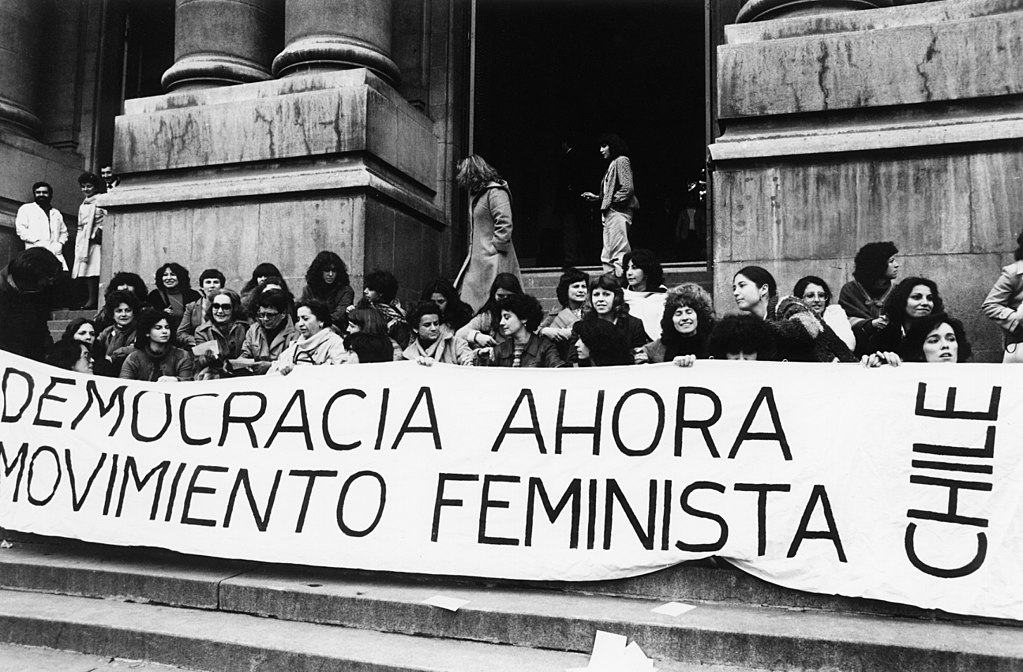
Gender Inequality

Gender Inequality
Gender Inequality By Kena Lorenzini – Museum of Memory and Human Rights, CC BY-SA 3.0, https://commons.wikimedia.org/w/index.php?curid=20138154

But the women are portrayed as a weaker one over several thousand. Also, they are suppressed all over the world and this suppression is supported in several religious books.

As a result, women are subjugated and exploited without given opportunities in education and jobs, all over the world. Most importantly the religions all over the world, say Women are inferior to men.

Racial Inequality

The Europeans have developed a superiority complex against the blacks and treated them as mere slaves. They were even treated much worse than animals. The blacks were denied opportunities in jobs and education.

The Europeans considered them as Knowledge-less people.

Caste Inequality

The same racial inequality that is practiced even today in India is the Caste system. This same where people were denied opportunities in the name of Caste. In India, a particular race dominated the entire resources and took absolute control over the lower caste people.

The above-mentioned inequalities are against social justice. The one that preaches and practices equality is called Social Justice

India is a nation where Plural Society and culture exist. Here the dominance of a single community is unfair and it’s against social justice.

These dominant groups trigger racial, caste, lingual, religious, and cultural feelings and create trouble for the rights of other communities. Also, this created never-ending enmity among the groups.

The various struggle taken by the weaker section or groups in order to establish social equality is known as Social Justice.

The Government plays a very important role in establishing Social Justice using several tools and one such tool is called Reservation.

UN Proclamation for Reservation

Salient Features of Race, religion and lingual minorities UN proclamation – December 18, 1992

  • All the minorities have the equal right without discrimination and intervention to exercise their freedom in following hereditary values, to cling to religion, to propagate, and to use their language.
  • All minorities can make their own organization and has every right to maintain it.
  • The Minority has the right to upgrade their knowledge related to their history, conventions, language, and other hereditary values.
  • The minorities should be provided with the opportunity to learn about the entire society to which they belong.
  • This declaration may not affect the basic freedom which is stipulated in the declaration of the existing rights.

Article 29 (2) may not act as an obstacle in making special policy decisions for socially and educationally backward communities or SC/ST people.

Article 15 (4) of the Indian Constitution

Caste reservation in India

“Nothing in this article shall prevent the State from making any provision for the reservation of appointments or posts in favour of any backward class of citizens which, in the opinion of the State, is not adequately represented in the services under the state.”

Article 16 (4) of Indian Constitution

Concept of equality

People accept equality as an essential phenomenon. But still, inequality and discrimination are serving as distributing factors.

Inequality prevails everywhere like opportunities, comforts, and a working atmosphere. This kind of inequality and discrimination are permanent and unavoidable.

What we are going to do for the people, who do not have opportunities to work for the development of our nation? How far cultural values are responsible for this kind of inequality.

This discrimination happens across the globe, It is for this reason, social equality stood in the primary place in the socio-political principles.

Some common questions arise due to Reservation:

  • Equality as a principle indicates what?
  • What do you mean by “equal society”.
  • How do we assure equality?
  • With that assurance, what we are going to achieve?
  • Do we try to resolve inequality only in our income?
  • What type of equality has to be established?
  • To whom do we have to provide equality?

To continue reading, kindly click the below link…

* * All the Notes in this blog, are referred from Tamil Nadu State Board Books and Samacheer Kalvi Books. Kindly check with the original Tamil Nadu state board books and Ncert Books.