Tamil Nadu state symbols and National Symbols Tnpsc

This article is written for the topic “Tnpsc: National Symbols in Current Events“.

Tamil Nadu State Natural Symbols

1.The State Animal is Nilgiri Tahr

 Tamil Nadu State Animal is Nilgiri Tahr
Tamil Nadu State Animal is Nilgiri Tahr By A. J. T. Johnsingh, WWF-India and NCF – Own work, CC BY-SA 4.0, https://commons.wikimedia.org/w/index.php?curid=55439382

2. The State Bird is Emerald Dove

Tamil Nadu State Bird is Emerald Dove
Tamil Nadu State Bird is Emerald Dove By Sham Edmond – Flickr: Emerald Dove, CC BY 2.0, https://commons.wikimedia.org/w/index.php?curid=31290825

3.The State Flower is Gloriosa Superba

Tamil Nadu State Flower is Gloriosa Superba
Tamil Nadu State Flower is Gloriosa Superba By Vijayanrajapuram – Own work, CC BY-SA 4.0, https://commons.wikimedia.org/w/index.php?curid=81597675

4.The State Tree is Palmyrah tree

 Tamil Nadu State Tree is Palmyrah tree
Tamil Nadu State Tree is Palmyrah tree By AMALAN619 – Own work, CC BY-SA 3.0, https://commons.wikimedia.org/w/index.php?curid=18306845

5.The national fruit of Tamilnadu is Jackfruit

Tamil Nadu state fruit is Jackfruit
Tamil Nadu state fruit is Jackfruit By Balaram Mahalder – Own work, CC BY-SA 3.0, https://commons.wikimedia.org/w/index.php?curid=14977521

6.The state insect is Tamil yeoman (Cirrochroa this)

Tamil Nadu state insect is Tamil yeoman (Cirrochroa thais)
Tamil Nadu state insect is Tamil yeoman (Cirrochroa thais) By Vivekpuliyeri – Own work, CC BY-SA 3.0, https://commons.wikimedia.org/w/index.php?curid=31002228

The state sport is Kabaddi

Tamil Nadu State Sport is Kabaddi
Tamil Nadu State Sport is Kabaddi By Fars Media Corporation, CC BY 4.0, https://commons.wikimedia.org/w/index.php?curid=71982072

The state’s dance is Bharath Natyam

Tamil Nadu state's dance is Bharath Natyam
Tamil Nadu state’s dance is Bharath Natyam By Arian Zwegers – Thanjavur, Brihadishwara Temple, dance, CC BY 2.0, https://commons.wikimedia.org/w/index.php?curid=24487525

India National Symbols

national symbols
National symbols of India images

National flag

National flag of India
National flag of India https://en.wikipedia.org/w/index.php?curid=23473510

The tricolor flag is India’s National Flag The three colors are the same width and arranged Horizontally. The saffron color represents valor and sacrifice. The green color represents fertility and prosperity.

The white represents peace, purity, and honesty. The Wheel in Navy blue called Ashoka Chakra represents truth and peace. The length and width of India’s national flag are in the ratio of 3:2.

Ashoka chakra has 24 spokes.

National Emblem

The four lions on top of the Ashoka Pillar at Sarnath were chosen to be our National emblem. The national emblem was accepted on 26th January 1950, ‘Satyameva Jayate” has been inscribed at its bottom.

It means ‘Truth alone triumphs. The National emblem consists of two parts the upper and the lower parts.

The upper part has four lions facing the North, South, East, and West. This is on a circular pedestal.

One can only see three lions at a time. The lower part has an elephant, a horse, a bull, and a lion. The ‘Wheel of righteousness’ is placed between them.

This emblem is found at the top of the government communication, Indian currency, and passport. The four lions, chosen from the Sarnath pillar of Ashoka as our emblem, are now placed in the Sarnath Museum.

The National flag was designed by Pingali Venkayya from Andhra Pradesh. The first Indian Flag was woven at Gudiyatham in the Vellore district of Tamilnadu.

This flag was hoisted by Pandit Jawaharlal Nehru on 15th August 1947 at Red Fort (Delhi). This flag is now an exhibit at the St.George’s Fort Museum, Chennai.

National Anthem

National Anthem of India - Jana Gana Mana
National Anthem of India – Jana Gana Mana By Generalstabens litografiska anstalt – Various, e.g. [1], published in 1914 in Sweden in Les Prix Nobel 1913, p. 60, Public Domain, https://commons.wikimedia.org/w/index.php?curid=1226545

‘Jana Gana Mana’ is our National anthem. It symbolizes the sovereignty and integrity of our nation. This anthem was written by Rabindranath Tagore in Bengali.

This was transcripted in Hindi and was accepted by the Constituent Assembly on 24th January 1950.

The rules to be observed while singing the Anthem.

This anthem has to be sung at a duration of 52 seconds. Everyone should stand erect while singing the national anthem. One should understand the meaning while singing.

National song

National song - Bande Mataram composed by Bankim Chandra Chatterjee
National song – Bande Mataram composed by Bankim Chandra Chatterjee By India Post, Government of India – [1] [2], GODL-India, https://commons.wikimedia.org/w/index.php?curid=75151107

On 27th December 1911, this National anthem was sung for the first time during the Congress committee meet held at Kolkata.

The song Vande Mataram, composed by Bankim Chandra Chatterjee, was a source of inspiration to the people of India in their struggle for freedom.

It has an equal status with Jana Gana Mana. On January 24, 1950, the then President, Dr Rajendra Prasad came up with a statement in the Constituent Assembly,

“the song Vande Mataram, which has played a historic part in the struggle for Indian freedom, shall be honored equally with Jana Gana Mana and shall have equal status with it.”

The song was a part of Bankim Chandra’s most famous novel ‘Anand Math’.

National pledge

“India is my country. All Indians are my brothers and sisters” is our national pledge. The pledge was written by Pydimarri Venkata Subba Rao in Telugu.

National Microorganism

Indian National Microorganism is Lactobacillus Delbrueckii
Indian National Microorganism is Lactobacillus Delbrueckii By Goumisao – Own work, CC BY-SA 4.0, https://commons.wikimedia.org/w/index.php?curid=40953172

The curd which we consume every day is curdled from milk by a microorganism called lactobacillus delbrueckii. This was accepted as our national microorganism in the year 2012.

This microorganism makes the milk undergo a chemical reaction and changes the protein content of the milk. Curd is known for its digestive quality and cooling capacity.

Currency of India- (INR)

The Indian currency is the Indian Rupees. The currency released by SherShah Sur in the sixteenth century was ‘Rupiya’.

This ‘rupiya’ has been transformed, into ‘Rupees’.

The symbol of rupees is ₹.

This was designed by D.Udhayakumar from Tamil Nadu in the year 2010.

National Calendar

During the reign of Emperor Kanishka, he began following a new calendar in the year 78 CE/AD. The year begins from the spring equinox which falls on March 22nd. During a leap year, it begins on March 21st. Our country follows this calendar.

The famous astronomer Meghnad Saha headed the Calendar Reformation Committee on 22nd March 1957.

It was then accepted by the committee as our national calendar. The National symbols help in uniting the diversified sections of India and instill patriotism.

National Holidays

Independence Day

Every year, August 15 is celebrated as Independence Day to commemorate India’s freedom from British rule. This auspicious day is also marked as the birth of the world’s biggest democracy, India.

On the day India gained independence, Mahakavi Bharathiyar’s poem “Aaduvome Pallu Paduvome” and was sung over the AIR (All India Radio) by T.K.Pattammal, a famous singer of Carnatic Music.

The celebration of Independence Day continues every year. The Prime Minister unfurls the National Flag on Independence Day at the Red Fort, New Delhi.

Republic Day

On 26th January 1950, India was declared a democratic republic. Every year this day is celebrated as Republic Day. The constitution was commenced on 26th January 1950.

The Queen of Britain was the Honorary head of India from August 1947 to 26th January 1950. On 26th January 1950, India was declared as a democratic state and the President became the first citizen of India.

The President Hoist the Nation flag at the Red Fort, New Delhi on Republic Day. On January 29, the third day of Republic Day, the celebrations are brought to end with the “Beating Retreat” Ceremony.

The Beating Retreat Ceremony is performed by bands of the Indian Navy, Navy, and Airforce.

The President of India is the chief guest of this ceremony. The Rashtrapati Bhavan will be Illuminated at 6 pm as a part of the celebration.

Gandhi Jayanthi

The birthday of Mahatma Gandhi is celebrated as National Festival. It comes on 2nd October. In 2007, the United Nations declared October 2nd as the ‘International Day of Non-Violence’.

Conclusion

The National symbols represent the culture and nature of the national identity. This infuses a sense of pride and patriotism in the Indians heart. The national symbols are designed to represent the people of the national community.

Modern methods of water conservation and rainwater harvesting

o 12 geo p 144

Modern methods of water conservation and storage

Modern methods of water conservation are important as freshwater resources in under large pressure.

For two reasons, the water demand for humans increases, one is the rapid human population growth and improvement in the standard of living in different countries, which forced to increase of the water demand to meet new needs in the industry, domestic and agricultural use.

But the freshwater resource is in limited quantity and it is scarce in its availability on Earth. People in Canada and the United States, for example, believe that clean water is available to them in an unlimited supply.

But the water supplies are not unlimited but finite. The increasing demand for this resource will soon create problems that can only be corrected by management and conservation.

Today, people started to recognize that water is vital, for things other than domestic, agricultural, and industrial purposes.

Water is important for maintaining fish and wildlife populations. Also for recreation, and for aesthetics. Today governments in many nations established water resource management programmes. Its aim is to provide a sustainable supply of high-quality water in an efficient and environmentally friendly manner.

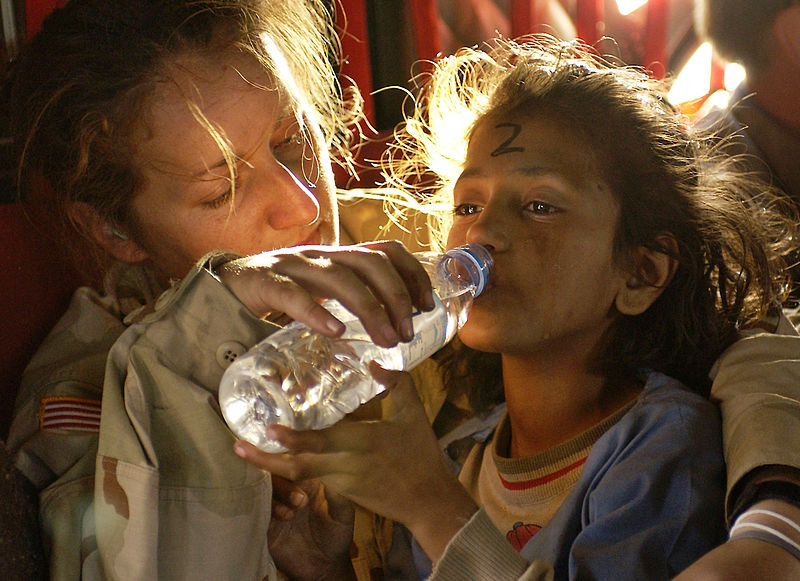
By Technical Sergeant Mike Buytas of the United States Air Force – This image was released by the United States Air Force with the ID 051019-F-9085B-154 (next).Public Domain, https://commons.wikimedia.org/w/index.php?curid=1823959

Modern methods of water conservation Techniques

A number of techniques and technologies can be used to make agricultural, industrial, and domestic water use more efficient. Reductions can easily occur in the following areas:

Reducing Agricultural Waste

Agricultural irrigation accounts for 70% of the world’s water usage. Most irrigation systems deliver water to the crop field by flooding the land. Diverting the water to the open fields by open channels.

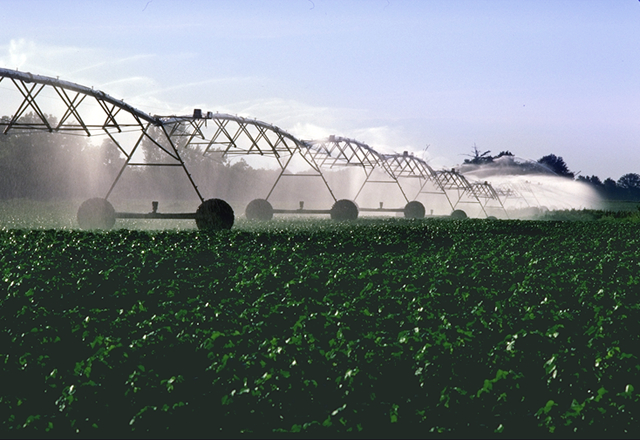
Also, sprinkler systems spray water into the crop fields. But these methods are highly inefficient. Because only 50% of water is consumed by the crops and the rest is lost by evaporation and running off the crop fields.

Micro-Irrigation Techniques

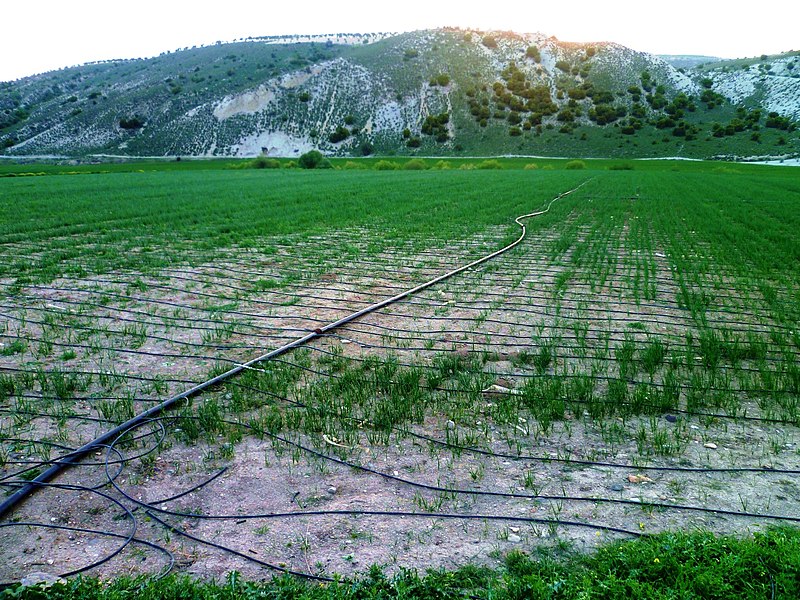
Micro-Irrigation Techniques By Water Alternatives Photos – https://www.flickr.com/photos/water_alternatives/27501936612/, CC BY 2.0, https://commons.wikimedia.org/w/index.php?curid=99347213

The amount of water applied to the crops can be reduced by 40 to 60% by Micro Irrigation techniques.

Some Strategies to reduce Water usage in Agriculture are:

The strategies include the cultivation of crops that consumes less water. Then reducing water losses by infiltration and evaporation. By using the covered canal and lined irrigation canal.

Also irrigating the crops during the night or early morning to avoid evaporation losses.

Water can be priced or water subsidies such as free electricity can be reduced to reduce the over usage of water. But this method affects poor farmers.

Reducing Industrial Waste

After farming or agriculture use, Industries are the second-largest consumer of water resources. If the usage of water in industries is reduced, water could be available for other purposes and also reduce water pollution.

Industrial water usage can be reduced by:

Water Recycle

Recycling of water can be achieved by many methods, one such method is redesigning the industries to make use of water again. Such Used Water can be used for cooling purposes, also sewage water can be used for watering the plant after removing harmful chemicals.

Increasing the Water Price

Installing water meters and increasing the price of water, may reduce the consumption of water in industries.

Recycling materials themselves can also reduce water usage. For example, manufacturing a ton of aluminium from scrap rather than from virgin ore can reduce the volume of water used by 97 per cent.

3. Reducing Domestic Waste

Strategies to reduce domestic water consumption are:

a.Replace lawns in semiarid and arid urban areas with xeriscaped surfaces.

Xeriscape Garden to reduce water usage By Jeffrey Beall – Own work, CC BY 3.0, https://commons.wikimedia.org/w/index.php?curid=41849718

b. Regulate and manufacture more efficient washing machines, showers, toilets, and dishwashers.

c. Repair of water distribution systems to reduce leakage issues as water distribution systems in urban areas around the world lose an average of 25 to 50% of their water during the supply to the consumers.

d. Pricing water for domestic usage at this price must reflect the environmental cost of overconsumption and resource degradation. Higher the price of water will make people conserve water.

Impact of Water Meter

The introduction of water meters in Boulder, Colorado reduced water use by about 30 %. In Canada, water is metered in approximately two-thirds of the municipalities.

e. Education can encourage people to reduce the amount of personal consumption. Increasing Water Supplies Humans have used several different methods to increase supplies of water.

Techniques involve the modification of the runoff process

a. Dams and reservoirs have been used for many centuries to trap runoff behind earth or concrete walls.

b. The stored water is then transferred via canals or aqueducts for use in agriculture, industry, or domestic processes. Worldwide there are now over 36,000 operational dams, some of which are also used to generate energy.

c. Several problems can occur with the storage of water in these human-created features.

d. In some reservoirs, sediments can accumulate to a point where they can no longer be used for water storage or hydroelectric production.

e. Other reservoirs have severe evaporation or leakage problems. Large amounts of water are annually lost from the Aswan High Dam in Egypt because of evaporation.

This problem has reduced the planned amount of irrigation water supplied by this dam by one-half.

Groundwater Depletion

In recent years, many nations have increased their supply of freshwater by exploiting the water found beneath the Earth’s surface.

Groundwater contains more than 10 per cent of the freshwater found in the hydrosphere.

Saudi Arabia receives 75 per cent of its water supply from groundwater mining.

In many cases, withdrawal rates of this water greatly exceed the natural rates of recharge. Depleting groundwater reservoirs can lead to a number of problems, including subsidence, earthquakes, sinkhole development, and saltwater intrusion.

Many projects have used canals, aqueducts, and diversion techniques to move water to places of need. In the former Soviet Union, diversions on the Amu Dar’ya and Syr Dar’ya Rivers have been used to create irrigation water for cropland.

However, these diversions are also responsible for reducing the flow of runoff water to the Aral Sea. Because of the reduced flow, the Aral Sea has declined in area by over 50 %, has lost two-thirds of its volume, and has greatly increased in salinity. At current rates of reduction, the Aral Sea could be gone by 2020.

Modern methods of water conservation in India
Modern methods of water conservation

Rainwater Harvesting

Rainwater harvesting may be defined as the process of augmenting the natural infiltration of rainwater or surface runoff into the ground by some artificial methods.

The methods suggested are recharge through pits, trenches, and bore well shafts by directly diverting runoff water into existing or disused wells or conserving the rainwater by artificial storing and using the same for human use.

The choice and effectiveness of any particular method are governed by local hydrological and soil conditions and the ultimate use of water.

Need for Rainwater Harvesting: Nature replenishes the groundwater resources annually through rainfall; by way of infiltration through soil layers.

In urban areas, due to urbanization, the soil surface exposed to natural recharge gets reduced. Therefore, natural recharge is diminishing, resulting in the drying of wells.

Groundwater source has the benefit of availability where water is needed and during emergencies and scarcity period, the public at large or NGOs should take measures to improve the groundwater recharge by rainwater harvesting to maintain reliable and sustainable groundwater resources. Rainwater can be stored in tanks.

Rainwater Harvests and Techniques

In many countries, especially those countries where there are monsoonal climates and long dry seasons, there occurs water shortages. This is not because of a lack of rainfall but from a seasonally uneven supply. Rainfall in these countries is seasonal and water storage here is a difficult task.

Example: India receives around 2.1 Trillion Cubic metres of fresh water and the United States has 2.5 trillion cubic metres of fresh water every year. But the fact there is rainfall in the United States states throughout the year and also the United States is One-third larger than India.

But in India, almost one year of rainfall in the United State falls in just two months i.e Mid-June and Mid-September. Due to such rainfall in a short duration, the deluge runs off and is carried back to the sea by the rivers and their channels.

Dams

Even though there are thousands of Dams in India, only a fraction of that rainfall gets collected in them. But the construction of dams comes with a lot of issues such as:

  • Sites became scarce and because the construction of large dams often inundates large areas,
  • Construction displaces the local population,
  • The construction of dams alters the local ecosystem irreversibly.

The construction of dams now has stopped to a large extent.

Local Water Harvesting

As the construction of dams has now been stopped due to a lot of issues that are mentioned above. Governments across the world are turning to local water harvesting to ensure adequate supply.

In Rajasthan, where water shortages constrain development and prevent people from escaping poverty. The villagers under the leadership of a movement helped design local water storage facilities. Once villagers helped select a site, they would organize to build an earthen dam. All the materials, the stone, and the earth were local. So too was the labour-sweat equity provided by the villagers.

The leader would help with the engineering and design. In addition to meeting their daily needs for water, the seepage from the small reservoir would gradually raise the water table, restoring wells that had been abandoned.

The initial success led to the creation of a local non-governmental organization with full-time employees and part-timers.

When the local topography is favourable for building successful small water storage structures, this can be a boon for local communities. This approach works not only in monsoonal climates but also in arid regions where low rainfall is retained for local use.

With a modest amount of engineering guidance, hundreds of thousands of communities worldwide can build water storage works.

Ridge Terraces

Another technique to retain rainfall is the construction of ridge terraces on hillsides to trap rainfall near where it falls, letting it soak into the soil rather than runoff.

Using a plough to establish the ridges, local farmers can build these terraces on their own, but they are more successful if they are guided by a surveyor who helps establish the ridgelines and determines how far apart the ridges or terraces should be on the hill.

Once the terraces are established, the moisture that accumulates behind them can help support vegetation, including trees that can both stabilize the ridges and produce fruit and nuts or fuelwood. The terraces, which are particularly well adapted to the hilly agricultural regions of the semiarid regions of India, and Africa can markedly raise land productivity because they conserve both water and soil.

Tanks in Deserts

The practice of collecting rainwater where it falls is several hundred years old. In desert areas all over the world, where there is a shortage, communities have been collecting rainwater in open tanks, open wells, and from the rooftops of buildings for centuries.

With the coming of more so-called advanced technology including sophisticated groundwater survey and exploration equipment, with the installation of hand pumps and piped water supply schemes, the importance of people’s technologies and community solutions were devalued.

There is thus a need to go back to learn the important lessons from the past on how communities have solved their drinking water problems by collecting rainwater on a large scale.

Modern methods of water conservation in Cities

Broadly the rainwater can be harvested by two methods:

Store the rainwater in containers above ground or below ground. Recharge into the soil for withdrawal later by groundwater recharging basis.

Elements of a typical water harvesting system: Any rainwater harvesting will have four elements:

  • Catchment area
  • Conduits
  • Settlement Tank
  • Recharge facility or storage facility

Rainwater harvesting techniques are simple, labour-intensive, and cost-effective. By collecting water where it falls

(a) in underground tanks in rural primary schools,

(b) in artificial ponds deepened to collect more water, and (c) in unused and disused open wells where surface water is channelled for faster percolation into the ground, rainwater could be usefully harvested and at much lower costs.

What will this achieve?

It will be a long-term solution to drought-proof villages. It will allow for faster percolation into the ground which will revitalize dry hand pumps for drinking water and open wells for irrigation. It is a far more inexpensive and economic way of providing drinking water than drilling for new sources.

It will allow the community of users to manage and control the water and reduce dependency on the government.

The barefoot architects constructing the rainwater harvesting tanks using local materials, traditional knowledge, and skills, demonstrate how there is no need to bring urban skills from outside.

Conclusion

Traditional water conservation methods were mostly adopted in India. But in the last decade, things have changed. Now the cities and as well as villages started to adopt modern methods of water conservation.

Environmental degradation Upsc notes

Environmental degradation

Environmental degradation is the deterioration of the environment through the depletion of resources such as air, water, and soil; the destruction of ecosystems; habitat destruction; the extinction of wildlife; and pollution. It is defined as any change or disturbance to the environment perceived to be deleterious or undesirable.

Environmental degradation Upsc notes

Environmental degradation can be caused by a variety of factors, including:

  • Human activities: The most common cause of environmental degradation is human activities, such as:
    • Pollution: The release of harmful substances into the environment, such as air pollution, water pollution, and soil pollution.
    • Overexploitation of resources: The overuse of natural resources, such as deforestation, overfishing, and overgrazing.
    • Habitat destruction: The destruction of natural habitats, such as forests, wetlands, and coral reefs.
    • Climate change: The long-term alteration of temperature and typical weather patterns in a place.
  • Natural disasters: Natural disasters, such as floods, droughts, and earthquakes, can also cause environmental degradation.

Environmental degradation can have a number of negative impacts on human health, the economy, and the environment. Some of the most serious consequences of environmental degradation include:

  • Health problems: Environmental pollution can cause a variety of health problems, such as respiratory problems, cancer, and birth defects.
  • Economic losses: Environmental degradation can lead to economic losses due to damage to property, infrastructure, and natural resources.
  • Loss of biodiversity: The destruction of ecosystems and habitat loss can lead to the extinction of species and a decrease in biodiversity.
  • Climate change: Climate change is one of the most serious consequences of environmental degradation. It can lead to more extreme weather events, rising sea levels, and changes in agricultural yields.

There are a number of things that can be done to address environmental degradation, including:

  • Reduce pollution: This can be done by using cleaner energy sources, reducing our reliance on cars, and recycling and composting.
  • Sustainably manage resources: This means using natural resources in a way that does not deplete them for future generations.
  • Protect ecosystems: This can be done by creating protected areas, restoring degraded ecosystems, and reducing our impact on wildlife.
  • Reduce our carbon footprint: This can be done by making changes to our lifestyle, such as driving less, eating less meat, and using less energy at home.

Environmental degradation is a serious problem, but it is one that we can solve if we work together. By taking action to reduce pollution, sustainably manage resources, protect ecosystems, and reduce our carbon footprint, we can create a more sustainable future for ourselves and for generations to come.

Causes of environmental degradation

The most common causes of environmental degradation are human activities, such as:

  • Pollution: The release of harmful substances into the environment, such as air pollution, water pollution, and soil pollution.
  • Overexploitation of resources: The overuse of natural resources, such as deforestation, overfishing, and overgrazing.
  • Habitat destruction: The destruction of natural habitats, such as forests, wetlands, and coral reefs.
  • Climate change: The long-term alteration of temperature and typical weather patterns in a place.

Other causes of environmental degradation include:

  • Poverty: People in poverty often have to rely on unsustainable practices in order to survive, such as cutting down forests for firewood or overfishing.
  • Lack of education: People who are not educated about the environment are more likely to engage in activities that degrade it.
  • Weak governance: Governments that do not adequately enforce environmental regulations can contribute to environmental degradation.

Pollution is the release of harmful substances into the environment. It can come from a variety of sources, including industrial emissions, vehicle exhaust, and agricultural runoff. Pollution can have a number of negative impacts on the environment, including:

  • Air pollution: Air pollution can cause respiratory problems, heart disease, and cancer.
  • Water pollution: Water pollution can contaminate drinking water and make it unsafe to swim or fish.
  • Soil pollution: Soil pollution can make it difficult to grow crops and can pollute groundwater.

Overexploitation of resources is the overuse of natural resources. This can lead to the depletion of resources and the destruction of ecosystems. Some examples of overexploitation include:

  • Deforestation: Deforestation is the clearing of forests for agriculture, development, or other purposes. It can lead to soil erosion, flooding, and the loss of biodiversity.
  • Overfishing: Overfishing is the harvesting of fish at a rate that exceeds the ability of fish populations to recover. It can lead to the depletion of fish stocks and the collapse of fisheries.
  • Overgrazing: Overgrazing is the grazing of livestock on land that cannot support them. It can lead to soil erosion and the loss of vegetation.

Habitat destruction is the destruction of natural habitats, such as forests, wetlands, and coral reefs. This can lead to the loss of biodiversity and the disruption of ecosystems. Habitat destruction can be caused by a variety of factors, including:

  • Logging: Logging is the harvesting of trees for timber. It can lead to deforestation and the destruction of wildlife habitats.
  • Mining: Mining is the extraction of minerals from the earth. It can lead to deforestation, soil erosion, and water pollution.
  • Urbanization: Urbanization is the growth of cities. It can lead to the destruction of natural habitats and the fragmentation of ecosystems.

Climate change is the long-term alteration of temperature and typical weather patterns in a place. It is caused by the release of greenhouse gases into the atmosphere, such as carbon dioxide and methane. Climate change can have a number of negative impacts on the environment, including:

  • Rising sea levels: Rising sea levels can inundate coastal areas and displace people.
  • More extreme weather events: Climate change can lead to more frequent and intense heat waves, droughts, floods, and storms.
  • Changes in agricultural yields: Climate change can lead to changes in agricultural yields, which can have a negative impact on food security.

Poverty can contribute to environmental degradation in a number of ways. For example, people in poverty may have to rely on unsustainable practices in order to survive, such as cutting down forests for firewood or overfishing. They may also be more likely to live in areas that are exposed to environmental hazards, such as pollution or flooding.

Lack of education can also contribute to environmental degradation. People who are not educated about the environment are more likely to engage in activities that degrade it, such as littering or polluting waterways.

Weak governance can also contribute to environmental degradation. Governments that do not adequately enforce environmental regulations can allow businesses and individuals to pollute the environment without consequence.

Environmental degradation is a serious problem that has a number of negative impacts on human health, the economy, and the environment. It is important to understand the causes of environmental degradation so that we can take steps to address them.

Consequences of environmental degradation

Environmental degradation can have a number of negative consequences on human health, the economy, and the environment. Some of the most serious consequences include:

Health problems: Environmental pollution can cause a variety of health problems, such as respiratory problems, cancer, and birth defects. For example, air pollution can cause asthma, bronchitis, and lung cancer. Water pollution can cause diarrhoea, cholera, and other waterborne diseases. Soil pollution can contaminate food and lead to poisoning.

Economic losses: Environmental degradation can lead to economic losses due to damage to property, infrastructure, and natural resources. For example, flooding caused by deforestation can damage homes and businesses. Pollution can contaminate crops and livestock, leading to decreased agricultural yields.

Loss of biodiversity: The destruction of ecosystems and habitat loss can lead to the extinction of species and a decrease in biodiversity. Biodiversity is essential for the health of the environment and for human well-being. For example, pollinators are essential for food production, and many medicines are derived from plants and animals.

Climate change: Climate change is one of the most serious consequences of environmental degradation. It can lead to more extreme weather events, rising sea levels, and changes in agricultural yields. For example, heat waves, droughts, and floods can damage crops and livestock, leading to food shortages and economic losses. Rising sea levels can inundate coastal areas and displace people.

Other consequences of environmental degradation include:

  • Migration: People may be forced to migrate due to environmental degradation, such as desertification or flooding.
  • Conflict: Environmental degradation can contribute to conflict, as people compete for scarce resources.
  • Social unrest: Environmental degradation can lead to social unrest, as people become frustrated with the government’s inability to address the problem.

Environmental degradation is a serious problem that has a number of negative impacts on human health, the economy, and the environment. It is important to take steps to address environmental degradation in order to protect our planet and our future.

What can be done to address environmental degradation?

There are a number of things that can be done to address environmental degradation, including:

  • Reduce pollution: This can be done by using cleaner energy sources, reducing our reliance on cars, and recycling and composting.
  • Sustainably manage resources: This means using natural resources in a way that does not deplete them for future generations.
  • Protect ecosystems: This can be done by creating protected areas, restoring degraded ecosystems, and reducing our impact on wildlife.
  • Reduce our carbon footprint: This can be done by making changes to our lifestyle, such as driving less, eating less meat, and using less energy at home.

Individuals can also play a role in addressing environmental degradation by making changes to their own lives. For example, we can:

  • Reduce our consumption of goods and services.
  • Choose products that are made from sustainable materials and that have a low environmental impact.
  • Support businesses that are committed to sustainability.
  • Get involved in environmental activism.

By working together, we can create a more sustainable future for ourselves and for generations to come.

Environmental science notes for upsc pdf

History of Tamil society Tnpsc

History of tamil society

History of Tamil society can be studied from various excavation at Arikkamedu, korkai, Uraiyur Kanchipuram etc. Also the earliest history of Tamil writing is found in inscription from 5th century Bce.

Like Harappa and Mohenjo Daro in ancient India, there were famous towns in ancient Tamilagam and they are Madurai, Kanchi, and Poompuhar etc.

The traces of ancient Tamil society can be found from:

  • Tamil literature,
  • Accounts of foreign travelers
  • Archaeological pieces of evidence, etc.
history of tamil society tnpsc
Temple from Ancient Tamil Society

Famous towns from history of tamil society

Poompuhar

Poompuhar is one of the oldest towns in ancient Tamilagam or Tamil country. The famous characters of Silapathikaram such as Kovalan and Kannagi lived in Poompuhar.

This city was also a port situated at the Bay of Bengal. Even during earlier times, the countries began to trade commodities by sea. As Poompuhar was a coastal town near the present-day Mayiladurai and located near river Cauvery where it drains into the sea.

Poompuhar Port or Kaveripoompattinam

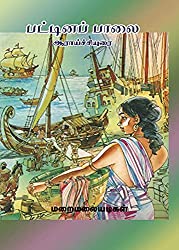
Poompuhar is also referred to as Puhar or Kaveripoompattinam and this city served as the port to the early Chola Kingdom.This city is referred to in popular Sangam literature such as Pattinappaalai, Silappathikaram, and Manimegalai. Historians, referring to the city Puhar as brisk seaborne trade port city.

Numerous merchants from foreign countries such as Greece, Rome, etc visited Poompuhar and many of them stayed in Poompuhar indefinitely. This can is confired after several pieces of evidence of foreign settlement in the town.

The Foreign people started to interact with local people and this enabled the natives to learn a foreign language and vice versa for communication. This made the exchange of languages and ideas resulting in cultural blending.

The traders of Poompuhar are known for their honesty and integrity. And these merchants sold goods and commodities at legitimate prices.

Poompuhar had been built differently from other towns and each social group had a separate settlement. The streets of Poompuhar were broad and straight, dotted with well-designed houses and there was also a dockyard.

Puhar was a busy port until 200 CE. It might have been destroyed by sea or tsunami. The city remains still present in Poompuhar town.

Madurai

Madurai is one of the oldest cities in India and its antiquity can be understood from the sobriquet “Sangam Valartha Nagaram“. It is the name it has earned.

This city was ruled several rulers like Pandyas, Cholas and later by Kalabras. During medieval, later Cholas and later Pandyas ruled Madurai and then Nayaks ruled Madurai. This resulted in cultural blending.

The archaeological excavation done in Keezhadi near Madurai shows the evidence of trade flourished in Madurai. Madurai is associated with Sangam which worked on the promotion of the Tamil Language. Forty-nine poets were associated with the last Sangam.

Ahil, Fragrant wood was brought from Port Thondi to Madurai. King Solomon of ancient Israel imported pearls from Uvari near the Pandyan port, Korkai. A mint of Roman coins was present at Madurai. Other country’s coins are also minted at Madurai which is great proof of the glory of Madurai.

Megasthanes, a Greek Historian accounted for the glory and fame of ancient Madurai. Madurai was also mentioned in Arthasastra written by Chanakya, Chandragupta’s minister.

It is accounted that the moat around town, tunnels were constructed very big that even the elephants could comfortably enter. Madurai had Naalangadi and Allangadi. Naalangadi means Day Market and Allangadi means evening market.

Madurai was also referred to as Thoonga Nagaram, which means the city near sleep. Madurai was a very safe city, where women do shopping from Allangadi without any fear.

Kanchi

Many schools were established in great numbers for the first time in Kancheepuram. Jains studied in Jainapalli and Buddhists studied in Viharas.

Chinese traveler Hieun Tsang studied at Nalanda university visited Kanchi ‘Kadigai’ to pursue his further studies.

Poet Kalidasa says, “Kanchi is the best of towns”. Tamil Poet saint Thirunavukarasar praises Kanchi as “Kalviyil Karaiillatha Kanchi”.

Hieun Tsang remarked that Kanchi can be counted as one among the seven sacred places like Budh Gaya and Sanchi. Kanchi is an older town in Thondai Nadu.

Scholars like Dharamabalar, Jothibalar, Sumathi, and Bodhi Dharma were born in Kanchi.

Kanchi was also known as a temple town. Kailasanathar temple at Kanchi was built by Pallava King Rajasimha. In the Pallava period, a number of cave temples were built.

The Buddhist monk Manimekalai spent the last part of her life at Kanchi. Water management is important for agrarian society.

Hundreds of lakes were created for storing water around the Kanchi. These lakes were connected by canals. Later, Kanchi came to be known as the district of lakes.

The glory of ancient Tamilagam can be known from Kallanai in Chola country and lakes, canals in Kanchi.

There are other important towns in ancient Tamil country such as Korkai, Vanchi, Thondi, Uraiyur, Musiri, Karuvur, Mamallapuram, Thanjai, Thagadoor, and Kaayal, etc.

Related Archaeological Discoveries and History of Tamil society

CONTEMPORARY CULTURE IN SOUTH INDIA AND TAMIL NADU

The early Vedic culture in northern India coincided with Chalcolithic cultures that existed in other parts of the sub-continent.

Since people used copper (Chalco) and stone (lithic), it was called the Chalcolithic period. Chalcolithic culture of India was contemporary to the mature phase of Harappan culture, they continued even after the decline of the Harappan.

The later Vedic Culture in north India and the Iron Age in South India belong to the same period. Towards the end of the Iron Age, people stepped into Megalithic Culture (600 BC to 100 AD).

The megalithic Period in ancient Tamilakam synchronized with the Pre-Sangam Period. The Black and Red Ware Pottery became the Characteristic of the Megalithic period.

MEGALITHIC / IRON AGE IN TAMILNADU

Some of the Megalithic/Iron Age Archaeological sites in Tamil Nadu

Adichanallur-Thoothukudi District

Artifacts Unearthed were Urns, Pottery of Various Kinds (redware, Black Ware), iron implements, daggers, swords, spears, and arrows.

Stone Beads and gold ornaments, Bronze objects representing domestic animals, and wild animals like tigers, antelope, and elephants have been unearthed.

The people were skillful in making pottery and in working stone and wood.

Keezhadi – Sivagangai District

Archaeological Survey of India (ASI) excavated an ancient town Keezhadi Village at Tirupathur Taluk that dates to the Sangam Age.

Excavations have produced evidence for Brick buildings and drainage systems. Tamil-Brahmi inscriptions on pottery, beads of glass, carnelian and quartz, pearl gold ornaments and iron objects, shell bangles, ivory dice have been unearthed.

In 2017 ASI sent two samples for Radio Carbon dating to Beta Analytic, Florida USA. As the result, was these samples dated as 200 BCE.

The roman artifacts found at the site add to the evidence of ancient Indo-Roman trade relations.

Periplus mentions the steel imported to Rome from Peninsular India was subjected to duty in the port of Alexandria.

Porunthal – Dindigul District

Grave goods, glass beads in red, white, yellow, blue, and green. Iron swords, pottery with Tamil Brahmi scripts, pots filled with rice, semi-precious metals such as quartz, carnelian, bangles made of glass, and shell.

The discovery of iron sickle, pike, and the tip of plows provide evidence of the cultivation of rice in ancient Tamilakam. A pot of rice from the Porunthal site proves that rice was the people’s staple food.

Paiyampalli – Vellore District

Iron artifacts along with Megalithic Black and Red Ware Pottery were found. Evidence for iron smelting at Paiyampalli.

The date of this culture was found to be 1000 BC.

Kodumanal – Erode District

It is identified with the Kodumanam of Pathitrupathu. More than 300 pottery inscriptions in Tamil-Brahmi have been found. The archaeologist has also discovered spindles, whorls (used for making threads from cotton).

Also pieces of cloth, along with tools, weapons, ornaments, beads, particularly carnelian. A Menhir found at the Burial site is assigned to the Megalithic period.

Megalithic Monuments in Tamil Nadu

The people who lived during the last stages of the New Stone Age began to follow the Megalithic system of burial.

According to this system, the dead body was placed in a big pot along with burial goods. The Megalithic monuments bear witness to a highly advanced state of civilization with the knowledge of iron and community living.

Dolmens are Megalithic tombs made of two or more upright stones with a single stone lying across the burial site.

Megalithic Dolmens have been found in Veeraraghavapuram village, Kanchipuram district, Kummalamaruthupatti, Dindigul district, and in Narasingampatti, Madurai district.

Menhir

In Breton Language ‘Men’ means “stone” and ‘hir’, “long.” They are monolithic pillars planted vertically into the ground in memory of the dead.

Menhir at Singaripalayam in Tirupur District and at Vembur in Theni District points to the existence of an ancient settlement along the banks of River Uppar.

Menhirs are found at Narasingampatti, Madurai district, Kumarikalpalayam and Kodumanal in Erode district.

Hero Stones

A Hero Stone is a memorial stone raised in remembrance of the honorable death of a hero in a battle or those who lost their lives while defending their village from animals or enemies.

Hero stones are found at Maanur village near Palani, Dindigul district, Vellalankottai, Tuticorin district, and Pulimankombai, Dindigul district.

Spirit of Federalism Tnpsc

Centre-state relations in India

What is Federalism

Federalism is a political system that provides the distribution of powers between the central and state government.

It is constitutionally created and protected.

Federalism is usually present in countries where there is a diversity of people.

In a country where there are different races, languages, religions, etc, the ideal form of government is the federal government.

By Federalism, the constituent state shall retain and safeguard their distinct language, religion, and cultural identity.

By this, there will be no compromise on the unity of the nation.

In the federal government, the state enjoys quasi sovereignty and the centre enjoys ultimate sovereignty.

The federal system is based on the distribution of powers between centre and state governments.

The distribution of powers is determined by the constitution, in clear written terms.

Thereby the constitution is the supreme authority in any federal system.

Examples of Federalism

The thirteen British colonies in America revolted and liberated themselves from British rule.

Then they formed a federal state, by which the USA became the first federal state.

Canada and Australia were also granted Self government and adopted a federal form of government.

Trilingual Switzerland also formed as a federal nation.

The European Union is also an example of federal formation on a voluntary basis.

How did federalism became a success in India?

Federalism in modern India is traced back to the Regulating Act of 1773.

By Regulating Act of 1773, the East India Company brought Madras, Calcutta, and Bombay under the supervisory control of the governor-general at Calcutta.

The Indian National movement was inspired by the already existing federal democracies in the USA, Switzerland, Australia, and Canada.

Where Australia and Canada are British colonies.

The USA is a colony of a number of European countries.

Partial autonomy (Dyarchy), was introduced by the Government of India Act1919 in the presidencies.

While the Government of India Act 1935 granted provincial autonomy at the presidencies and proposed a Dyarchy form of government at the centre.

The Nehru committee report in 1928 and Pandit Jawaharlal Nehru’s first proposal of the constitution of India favored a federal structure with more powers for the constituent states.

But the creation of Pakistan and the death of innocent people on both sides changed the views of the constituent Assembly.

That resulted in the formation of a weak state government and an over-centralized, Powerful Union Government.

But the Princely State of Jammu and Kashmir became a district state within the Indian Union.

The constitution of Independent India establishes federalism by Part VI provision.

The seventh schedule of the constitution contains the three lists regarding the distribution of powers between the centre and states.

Features of Indian Constitution

Co-operative Federalism

The Indian Constitutional expert Granville Austin described, Indian Federal system as Co-operative Federalism designed to promote cooperation between the centre and states.

The concepts of cooperative federalism apply to those federal governments like the USA where the states have more or adequate powers and the formation of the union is based on “the indestructive union composed of indestructible states”.

In a quasi-federal state like India, the Union Government can very pull down any constituent state for non-co-operation or non-compliance or defiance of the Union Government’s will through constitutional provisions,

especially through the emergency powers assigned to the President.

The constitution does not permit states’ defiance to centre.

There are many provisions, institutions, and bodies created in the Indian Political system to promote the co-ordinative functioning of the central and state governments in India.

They can be classified into constitutional, statutory, and Political bodies and provisions.

Constitutional provisions in India

The constitution itself created a number of instruments to promote cooperation and coordination.

Inter-State Council

As per Article 263 of the constitution, the President of India can establish the Inter-State Council to serve public interests.

There are three functions and duties assigned to the Inner-State Council.

To enquire into and advise upon disputes among the states.

To investigate and discuss the subjects which are common to both the Union and State government.

To make recommendations to the President for better coordination on any particular subjects among the state governments.

A number of councils have been created to promote cooperation on specific subjects in the past like the Central Council of Health, Transport Development Council, and Central Council of Local Self-Government.

The holistic Inter-State Council was established in the early nineties to deal with general cooperation among the units of the Indian Federal System on the recommendation of the Sarkaria Commission.

The Prime Minister functions as the Chairperson of the Council.

The Chief Ministers of all the states and Union Territories with Legislative Assemblies, six cabinet ministers of the union government, administrators of the Union Territories without Legislative Assemblies, and Governors of states under President’s Rule are its members.

A standing committee consisting of the Union Home Minister, five other cabinet ministers, and nine Chief Ministers also works as part of the Inter-State Council to promote cooperation among the members of the federal system.

Statutory Bodies

There are certain bodies created through the statute of the parliament but not mentioned in the constitution that function to promote cooperative federalism.

Zonal Council

The Zonal Councils were established by the States Reorganization Act in 1956 to achieve cooperation and coordination among states.

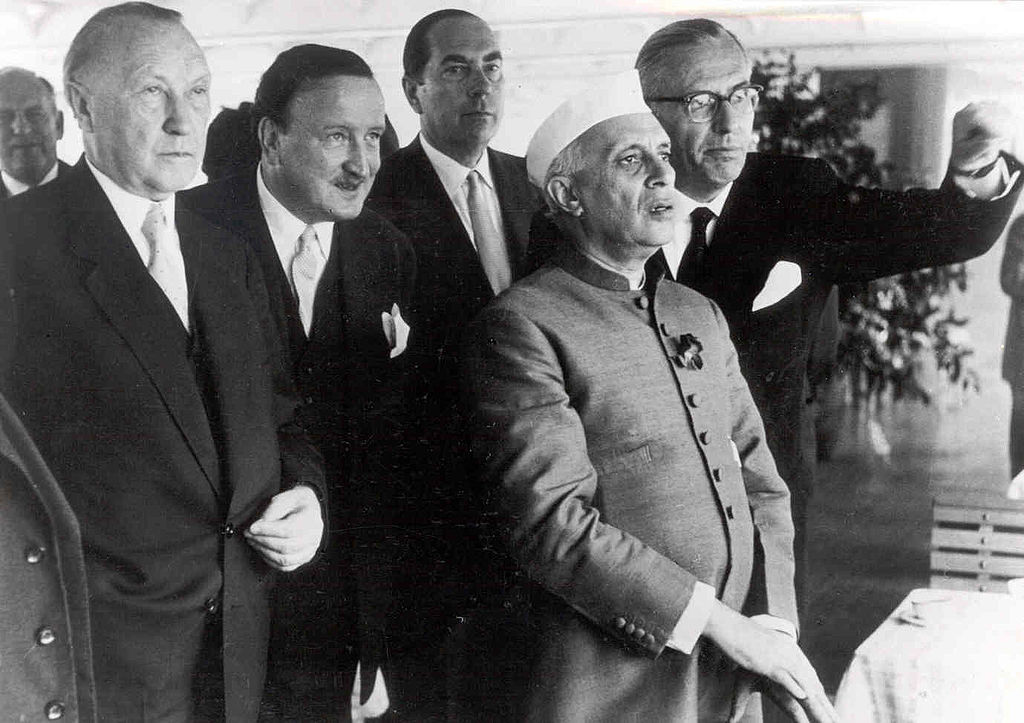
They were created during the linguistic reorganization of India and the first Prime Minister of India Jawaharlal Nehru described their objective as to “Develop the Habit of co-operative working“.

Originally five zonal councils were created.

Later in 1971 one more Zonal Council was established for the North Eastern States. They are:

Northern Zonal Council, Southern Zonal Council, Eastern Zonal Council, Western Zonal Council, Central Zonal Council, North-Eastern Zonal Council.

The Union Home Minister will be the common Chairperson of all the Zonal Councils.

Additionally, each Zonal Council will consist of the Chief Minister and two other Ministers of each state and the administrator of the Union Territory in the zone.

The Zonal Councils will discuss and suggest measures to promote cooperation among the members in areas like economic and social planning, border disputes, inter-state transport, etc.

River Board

The Rivers Boards Act, 1956 establishes River Boards to provide advice to the concerned governments for the regulation of an interstate river of river valley.

Water Disputes Tribunal

Inter-state water disputes Act, 1956 was enacted in accordance with Article 262 of the constitution that mandated that all interstate river disputes should be resolved through negotiations.

The act provides for the formation of ad-hoc tribunals for resolving the interstate water disputes if the repeated negotiations prove to be futile in resolving the problem.

Political or Resolution Bodies

NITI AYOG

The Union Government created the National Commission for Transforming India after dissolving the Planning Commission.

The Prime Minister is the ex-officio chairman and the permanent members of the governing council are all the Chief Minister of all the states, Chief Ministers of the Union Territories of Delhi and Puducherry, and the Lieutenant Governor of Andaman and Nicobar Islands.

The primary objectives of the commission are to “foster cooperative federalism through structured support initiatives and mechanism with the states on a continuous basis“.

It recognizes that strong states will make a strong nation.

But without constitutionally empowering more the constituent states and adequate devolution of revenue resources, the states continue to remain dependent on the Union Government, even in matters relating to tackling natural calamities.

Inter State River Water Dispute

Inter-state river water disputes play a crucial role in the evolution of federalism in Indian Politics.

There are a large number of disputes in the country.

The Cauvery dispute involving Tamil Nadu, Karnataka, Kerala and Puducherry,

Vamsadara river dispute involving Andra Pradesh and Odisha,

Sutlej dispute involving Punjab, Haryana,

Mahadayi river dispute involving Goa, Maharashtra and Karnataka are some major disputes between the states.

In India, we have following a dispute settlement mechanism in Indian Federalism to solve them.

Constitution and Inter-State River Water Disputes

Article 262 of the constitution empowers the parliament to enact a law providing for the adjudication of any dispute, complaint relating to the use,

distribution and control of any inter-state river or river valley.

It also provides that parliament can exclude the Supreme Court or any other court from exercising any jurisdiction over inter-state river water disputes.

For this purpose, parliament is empowered to enact a law overriding any provision of the constitution.

The logic of this provision is that inter-state river water disputes contain emotional and economic implications affecting the lives and livelihood of millions of people.

Judicial adjudication of the disputes may create social and economic problems.

Therefore the national legislature must have the competence to evolve a mechanism for resolution of these disputes through negotiations and direct dialogue.

Inter-state river water disputes Act, 1956 Empowered by Article 262 of the constitution the parliament enacted inter-state river water dispute act, 1956.

This act enables the Union Government to establish a tribunal for the adjudication of an inter-state river water dispute.

The Indian Constitutional and legal consensus is that all inter-state river water disputes must be resolved through peaceful negotiations.

If no decision can be reached through negotiation the state concerned can approach the Union for the constitution of a tribunal on ad hoc basis for resolving that issue.

When the Union government decides to constitute a tribunal the Chief Justice of the Supreme Court of India will nominate a person to heat it.

Earlier, the tribunal always used to consists of one person only but later on this provision was amended to include more members.

The chief justice will choose a person (nominee) from the sitting or retired Judge of the Supreme Court and High Courts.

The decision of the Tribunal shall be published in the Official Gazette and thereafter that decision shall be final and binding on the parties to the dispute.

Neither the Supreme court nor any other court shall have jurisdiction over any inter-state water dispute referred to a tribunal under the Act.

No tribunal can be constituted for any dispute that has been placed for arbitration under the River Water Board Act 1955.

The conclusion is that our constitutional, legal and political strategy advocates a dual strategy to resolve interstate river water disputes.

It advocates negotiated settlement as the first choice and as and when sincere negotiations fail to resolve the issues, an ad hoc tribunal-based adjudication should be established.

Emerging trends in Indian Federalism

There are many issues in Indian Federalism that create disturbances in the center-state relations.

We will focus on the major problems in this section Appointment and Role of Governor.

The very office of the governor as an agent of the central government to monitor the state government imperils the sovereignty of the constituent states.

The Rajamannar Committee report was highly critical of the office and the role of the governor.

It is often pointed out that the Union Government arm-twist the state executive.

The Dravidian parties, since the days of C.N.Annadurai, have been demanding ‘genuine autonomy for the states, by divesting the Governor’s power of interfering with the state executive and interfering with the state executive and state legislature.

The regional parties have deprecated the practice of appointing politically active and partisan persons as governors.

They have frequently demanded that the governor should be appointed in consultation with the state government.

Many political commentators and commissions have argued for the appointment of eminent persons who have contributed to India’s development in diverse fields as governors.

The attitude of the Governor towards the state governments of those ruled by parties opposed to the ruling party at the centre is another major tension area in center-state relations.

Whenever there is a split in a ruling state party or hung assembly, the role of the governor becomes very crucial and in many instances, the regional and opposition parties have agitated against the decisions of the incumbents in gubernatorial office.

Role of government in education

There is a popular demand that the subject of education must be restored to List-II or State List in which originally it was located.

The Parliament in 1976 enacted the 42nd Constitutional Amendment Act that transferred the subject of education to List III or Concurrent List.

The state government exclusively had authority over education when it was in the State List and Union Government came to acquire joint jurisdiction over education after this transfer.

As we learned earlier when a contradiction arises between the states and the central government in the Concurrent List the authority of the central government or Parliament will prevail.

Many political parties in states like Tamil Nadu are demanding the transfer of education back to the State List.

Presidential assent to State bills

The Governor of a state has discretionary power to reserve a bill of the state legislature for the consideration of the President.

Whenever the Governor reserves a money bill of the state legislature, the President may either declare or withhold his assent.

President can also direct the Governor to send the bill for reconsideration to the legislature concerned.

Even if the state legislature again passes a bill it is not obligatory for President to declare his assent.

This provision was incorporated into the constitution to protect the unity and integrity of India.

But many state governments have criticized the governors for reserving the duly passed state bills for the consideration of the President as there were alleged to have been motivated by political considerations to suppress the state government and to further the interest of the ruling party or coalition at the centre.

All India services violations against federalism

All India Services are created under Article 312 of the constitution.

The officers to these services are recruited by the Union government and posted in the states.

The state governments have powers of posting, transfer while the central government alone has the power to dismiss them.

As the ultimate control over the All India Services is with the central government the state governments have sought changes in the system and the Rajamannar Commission of Tamil Nadu government suggested a complete revamping in the structure and position of All India Services.

Commissions on Centre-State Relations

Rajamannar Commission, Punchhi Commission, Venkatachaliah Commission

Spirit of federalism Tnpsc pdf

Tnpsc: Union legislature, the parliament of India

Parliament of India: Introduction

parliament of india
  • The legislature is the most important institution for the functioning of representative democracy.
  • The primary object of the legislature is to hold its representatives accountable, responsible for the interest of the people.
  • It is the highest law-making body, having elected representation from all the constituents of the state.
  • In India, the legislature at the Centre is called the Parliament of India.
  • The legislative in the state and the union territory are called Legislative Assemblies.
  • The parliament consists of two houses: the House of People is Lok Sabha and the Council of States that is Rajya Sabha.
  • Lok Sabha also called as Lower House and the Council of States is called the Upper House. This is called a Bicameral system of Parliament.
  • The bicameral system of Parliament is inspired by the British Parliament system and the USA.
  • Similarly, the USA has the Legislative Assembly and Legislative Council.
  • In many states, the unicameral legislature only exists, that is in many state Legislative Council is absent.
  • In India, the Parliament shares its law-making function and responsibilities of implementation with  28 states and 8 Union territories in the country.

Union Legislature: The Parliament

  • The Parliament is also called as Union Legislature or National Legislature.
  • It is the supreme body of law-making, decision making and symbol of democratic governance.

Session of Parliament UPSC

  • When the Parliament meet for discussing the various issues, approving bills, motion with a scheduled meeting. It is called the Session.
  • The Parliament holds three sessions in a year:
    • Budget Session from February to May.
    • Monsoon Session from July to August
    • Winter Session from November to December

Powers of parliament

  • Parliament has two important power and functions. It is Legislative and financial.
  • It is legislative powers for lawmaking and financial powers to prepare money bill as called Budget.
  • As it has the power to elect the President and Vice President.
  • It has judicial function on matters of the impeachment of President, Vice President, Judge of Supreme Court and High Court.
  • It is the duty of the President to summon the Parliament and must have not less than two sessions in year.

The Parliament has a judicial function also on the matters of the proposals for the removal of the President, Vice – President, Judges of the Supreme Court, and High Courts, and the process of removal is called ‘impeachment’.

It is the duty of the President to summon the Parliament and must have not less than two sessions in a year. Every year, at the commencement of the first session of the parliament, the President delivers his special address which would be the future course of action of the parliament in view of giving
framework for new policies, programmes, and initiatives of the government.

The parliament of India has functions of legislation, overseeing of administration, passing of the Budget, ventilation of public grievances, and discussing national policies and issues of concern. The cabinet, both individually and collectively accountable and removable by the Loksabha.


Functioning of House of People (Lok Sabha)

The parliament has two houses and both houses are carrying the same values and responsibilities with a few exceptions such as passing the finance bills. The first one is the Lok Sabha (Lower House or House of People) with 543 members elected from 543 Parliamentary constituencies across the country directly by the people who have attained the age of 18 and above and registered as voters.

The Lok Sabha has 2 nominated members from the AngloIndian community.

A quorum of the House: One-tenth of the total number of members of Lok Sabha / Rajya Sabha constitutes the quorum for a meeting of the House.

The grand total number of members in the Lok Sabha is 545, but the nominated members cannot decide the government when it proves majority on the floor of the House. The Lok Sabha is the highest forum for discussion, debate on public issues, interests, and policies to cater to the socio-economic needs of the people.

The members of both houses are generally called by the public as Member of Parliament, Member of ParliamentLok sabha is one who represents the constituency of the state, comprising of six assembly constituencies, directly elected by the people through elections. The term of the Lok Sabha is for five years.

Roles and Responsibilities of the SpeakerThe leader of the House of the People are the Speaker – who is elected by the LokSabha, from among its members. The speaker’s duties are to conduct, facilitate the debates and discussions, and answer questions regulating the conduct of members of the House and taking care of their privileges and rights.

The Speaker of Lok Sabha is the administrative head of the parliamentary secretariat. The speaker also ensures that the members adhere to the appropriate procedures, and allow the members to
raise questions, allotting time to speak and withdraw the objectionable remarks from the record, and moving a Motion of Thanks to the President’s speech.

The Speaker has the power to expel the members if they flout or violate the norms and rules of the
house. The permission of the speaker is required to move amendments to a bill. It is up to the speaker to decide whether the bill is to be moved or not.

The speaker plays the role of guardian of the rights and privileges of the house, its various committees such as consultative, select, Advisory and of members of that. Another important power of the speaker is to refer any question of privilege to the committee of privileges for examining, investigating, and reporting.

The questions raised by the members and answers, explanations and reports are addressed to the speaker. The speaker is the final authority to decide on the question of point of order. Under the constitution, Speaker enjoys special provisions and certifies money bills.

The speaker of the House of the People presides the joint sessions of the parliament in case of special occasions or in the event of disagreement between the two houses on certain legislative measures. The speaker decides whether a Bill is a Money Bill or not and his decision on this question is final.

It is the speaker who decides on granting recognition to the Leader of Opposition in the House of People. Under 52ndConstitution Amendment, the speaker has the disciplinary power to disqualify a member of the house on the grounds of defection.

Even though, the speaker is also one of the members of the House and holds neutral, does not vote in the house except on rare occasions when there is a tie at the end of the decision. The Rajya Sabha or the Council of states is called the upper house.

It has a total number of 250 members including238 from all the states and union territories and 12 members nominated by the President. The council of states Rajya Sabha is called the second chamber of the parliament of India.

The Rajya Sabha is an institution to protect the rights and interests of the states like the senate in
The USA. It was constituted on 3rd April 1952. The members for Rajya Sabha are elected by the members of the respective state Legislative Assemblies (MLAs). Apart from the members of the states, twelve distinguished members from the fields of literature, science, art, and social service were nominated by the President of India.

Unlike the House of People, the Council of states is not subject to dissolution but one-third of the members retire every second year. The term of the individual member is six years. The members of the Council of States are elected by their respective state legislative assemblies in accordance with
the system of proportional representation by means of the single transferable vote.
Functioning of Rajya Sabha.

The Vice-President of India is the ex-officio Chairman of the Rajya Sabha. The chairman presides over the proceedings and regulates the Rajya Sabha. Except for the Money/Financial Bill all, other bills will be placed before the Rajya Sabha for discussion, questions, motions, and resolutions under the rules of procedure and conduct of business.

The functions of Rajya Sabha may broadly be categorized as Legislative, Financial, Deliberative, and Federal. Legislation is by far the most important business of RajyaSabha, as indeed of Parliament and in this sphere, Rajya Sabha enjoys almost equal powers with Lok Sabha. In the U.S.A, the representatives in the state councils are called as Senate where every state has
equal representation irrespective of the size and population of the states. But in India,
the representation in the Rajya Sabha is based on its size of the population.

Who can be a Member of the Rajya Sabha?
 Must be a citizen of India
 Must not be less than 30 years
 Under the Representation of the
People Act, 1951, a person had to be an elector in a parliamentary constituency in the State from where he seeks election to Rajya Sabha.
 It may, however, be mentioned that the Representation of the People (Amendment) Act, 2003,
which amended Section 3 of the Representation of the People Act, 1951, has done away with the
requirement of being a resident of State or Union territory from which a person seeks to contest elections to Rajya Sabha.
 He/She has to be an elector in a parliamentary constituency anywhere in India. It has also provided that the election to fill a seat in Rajya Sabha shall be by open ballot.
Courtesy: https://rajyasabha.nic.in/ rsnew/practiceprocedure/book1.asp

For example, Uttar Pradesh with the highest population elects 31 members to Rajya Sabha; on the other hand, Sikkim, the least populated state, elects only one member to Rajya Sabha. Tamil Naduelects 18 members to the Rajya Sabha.

The number of members to be elected from each State has been fixed by the fourth schedule of the Constitution. Members of the Rajya Sabha are elected for a term of six years and then they can be re-elected.

The Rajya Sabha is known as the Permanent House of the Parliament never gets fully dissolved. Some of the important privileges and immunities are given to the members of Rajya Sabha as follows.

Powers and Privileges of Members of Parliament

  1. Freedom of speech in Parliament and immunity of a member from any proceedings
    in any court in respect of anything said or any vote given by him in parliament or
    any committee thereof.
  2. Immunity to a person from proceedings in any court in respect of the publication
    by under the authority of either House of Parliament of any report, paper, votes or
    proceedings.
  3. Prohibition on the court to inquire into proceedings of parliament.
  4. Immunity to a person from proceedings in any court in respect of the publication
    in Newspaper of a substantially true report of any proceedings of either House of
    Parliament unless the publication is proved to have been made with malice.
  5. Freedom from arrest of members in civil cases during the continuance of the session
    of the House and forty days before the commencement and forty days after its
    conclusion.
  6. Exemption of a member from service of legal process and arrest within the precincts
    of the House.
    Source: https://www.india.gov.in/sites/upload_files/npi/files/coi_part_full.pdf

Parliament: Lok Sabha, Rajya Sabha

Powers of the Lok Sabha

  1. The of Lok Sabha is the most powerfulpolitical institution which reflectsthe political, social and economic conditions of the country holds the highest responsibility and virtually represents the entire population.
  1. The Lok Sabha is constituted with members elected directly by the people. These members represent the variedinterests of the people. Thus it becomes the apex democratic institution. Itis here that the nations’ policies and programmes and laws emerge.
  2. The Lok Sabha makes the Laws on the matters of Union List and Concurrent List It can exact new laws and repeal existing law, or amend the same. I has an exclusive authority over money bills.
  3. The special power of the Lok Sabha is that once it passes the budget or any other money related law, the Rajya Sabha cannot reject it. But the Rajya Sabha can delay the law for 14 days only and if Rajya Sabha suggests any changes regarding the law, it is upto the Lok
    Sabha to accept or reject it.
  4. The one of the privileges of the Lok Sabha is preparing and presenting the budget and financial statement which is an explicit expression of peoples control over nation’s economy.
  5. The Lok Sabha controls the executiveby asking questions, supplementary questions, passing resolutions, motions and no confidence motion.
  6. The Lok Sabha has the power to amend the constitution and approve the proclamation of emergency.
  7. The Lok Sabha involves in electing the President and Vice-President of India. The Lok Sabha has power to establish new committees and commissions and tabling their reports for debate and discussion and further consideration for implementation.
  8. The Lok Sabha controls the council of Ministers and a Prime Minister, who enjoys the majority support of it. If the Prime Minister loses the confidence of the Lok Sabha the entire government
  9. has to quit and face the election.

Powers of Rajya Sabha

Position of Rajya Sabha

The Constitutional position of the RajyaSabha (as compared with the Lok Sabha)can be studied from three angles:

  1. Where Rajya Sabha is equal to Lok
    Sabha?
  2. Where Rajya Sabha is unequal to Lok
    Sabha?
  3. Where Rajya Sabha has special powersthat are not all shared with the Lok
    Sabha?

Equal Status with Lok Sabha

In the following matters, the powers and status of the Rajya Sabha are equal to that of the Lok Sabha:

  1. Introduction and passage of ordinarybills.
  2. Introduction and passage ofConstitutional amendment bills.
  3. Introduction and passage of financialbills involving expenditure from theConsolidated Fund of India.
  4. Election and impeachment of thepresident.
  5. Election and removal of the VicePresident. However, Rajya Sabhaalone can initiate the removal of the
    vice-president. He is removed by aresolution passed by the Rajya Sabha bya special majority and agreed to by theLok Sabha by a simple majority.
  6. Making recommendation to thePresident for the removal of Chief Justice
    and judges of Supreme Court and highcourts, chief election commissioner and
    comptroller and auditor general.
  7. Approval of ordinances issued by thePresident.
  8. Approval of proclamation of all threetypes of emergencies by the President.
  9. Selection of ministers includingthe Prime Minister. Under the
    Constitution, the ministers includingthe Prime Minister can be members of
    either House. However, irrespective oftheir membership, they are responsible
    only to the Lok Sabha. Enlargment of the jurisdiction of the
  10. Supreme Court and the Union Public
  11. Service Commission.

Unequal Status with Lok Sabha

In the following matters, the powers and status of the Rajya Sabha are unequal to
that of the Lok Sabha:

  1. A Money Bill can be introduced onlyin the Lok Sabha and not in the Rajya Sabha.
  2. Rajya Sabha cannot amend or reject aMoney Bill. It should return the bill to the Lok Sabha within 14 days, eitherwith recommendations or without recommendations.
  3. The Lok Sabha can either accept orreject all or any of the recommendation of the Rajya Sabha. In both the cases,the money bill is deemed to have been passed by the two Houses.
  4. A financial bill, not containing solelythe matters of Article 110, also can be introduced only in the Lok Sabhaand not in the Rajya Sabha. But, with regard to its passage, both the Houseshave equal powers.
  5. The final power to decide whether aparticular bill is a Money Bill or not is vested in the Speaker of the Lok Sabha.
  6. The Speaker of Lok Sabha presides overthe joint sitting of both the Houses.
  7. The Lok Sabha with greater numberwins the battle in a joint sitting except when the combined strength of theruling party in both the Houses is less than that of the opposition parties.
  1. Rajya Sabha can only discuss the budgetbut cannot vote on the demands for
    grants (which is the exclusive privilegeof the Lok Sabha).
  2. A resolution for the discontinuance ofthe national emergency can be passed
    only by the Lok Sabha and not by theRajya Sabha.
  3. The Rajya Sabha cannot remove thecouncil of ministers by passing a noconfidence motion. This is becausethe Council of ministers is collectivelyresponsible only to the Lok Sabha. But, the Rajya Sabha can discuss andcriticize the policies and activities of the government.

Special Powers of Rajya Sabha

Due to its federal character, theRajya Sabha has been given two exclusive
or special powers that are not enjoyed bythe Lok Sabha:

  1. It can authorize the Parliament to makea law on a subject enumerated in the
    State List (Article 249).
  2. It can authorize the Parliament to create new All-India Service common to both the Centre and states (Article 312).An analysis of the above points makes it clear that the position of theRajya Sabha in our constitutional system is not as weak as that of the House ofLords in the British constitutional system nor as strong as that of the Senate in theAmerican constitutional system. Except
    in financial matters and control over thecouncil of ministers, the powers and status of the Rajya Sabha in all other spheres are broadly equal and coordinate with that of the Lok Sabha.
  3. Even though the Rajya Sabha has been given fewer powers as compared with
  4. the Lok Sabha, its utility is supported on the following grounds:
  1. It checks hasty, defective, careless and ill-considered legislation made by the Lok Sabha by making provision of revision and thought.
  2. It facilitates giving representation toeminent professionals and experts who cannot face the direct election. The President nominates 12 such persons to the Rajya Sabha.
  3. It maintains the federal equilibrium by protecting the interests of the states against the undue interference of theCentre.

Article 120

Hindi and English have been declared by the Constitution to be the languages for conducting business in Parliament. The Presiding Officer may, however, allow any member not proficient in either to address the House in his mother tongue (Article 120).

Lawmaking Process

The Lawmaking Process in the Indian Parliament stands evident for its democratic credentials. In the law-making process, the role of opposition parties becomes much more important to reflect upon the
relevance of the bill and its context so as to streamline democratic governance.

The law is a guiding force to regulate society, politics, and the economy for the welfare of the state and people. The law is primarily introduced in the Parliament in the form of a ‘bill’ as proposed legislation for consideration of the legislature.

The bill will be taken for thorough discussion in the parliament to have an understanding
within the framework of the constitution.


The bill will become law once the legislature passed it and is approved by the president. The Law becomes an act only after getting consent from the President of India. The primary function of the
Parliament is to make fresh laws and bring changes in the existing laws in accordance
with the constitutional procedures. the parliament of India passes two types of
bills such as:

  1. Money Bill
  2. Non-Money Bill or ordinary or
    public bills

An ordinary bill has to pass through different stages before becoming an Act. The procedures prescribed in theConstitution for passing the bills are of two different categories. These are as follows:
An ordinary bill under consideration has to go through the following stages has to pass through both houses with discussions, suggestions, and approval. An ordinary bill may be introduced in either House of the Parliament.

  • The first stage of the bill relates to theintroduction of the bill in either house as ‘Reading of the Bill’. Most of thebills are introduced by the Ministers concerned. The bill is drafted by thetechnical experts in that particular field and then council of ministers willapprove the bill. The ordinary Member
    of Parliament can also introduce a billwhich is called as ‘Private Member Bill’.
  • For the introduction of the bill it shouldbe informed to the Speaker of the Lok Sabha or The Chairman of Rajya Sabha one month in advance. Then he date of introduction for the Private Member Bill will be fixed and allowed to move the bill in the floor of house. Generally there will be no discussion on the proposed bill at this reading stage which is only a formal affair.
  • After the introduction of bill, it will be published in Gazette of India. The Speaker or the Chairman may allowome bills to be published in the Gazette even before the first reading, in that case no motion for leave to introduce bill is necessary.
  • The Second Reading of the bill usuallytakes place after an interval of two days after the first reading. At this stage, anyof the four courses are adopted.
    • The bill may be taken forconsideration by the House at once.
    • It may be sent to a select committeeof the House.
    • It may be sent to a joint select
      committee of the two Houses or

It may be circulated for eliciting public opinion. Very rarely bills are taken up for consideration straight away.

When the bill is adopted for circulation (i.e.,4th course), the secretariat of the House concerned requests the state government to publish the bill in the State Gazettes invite opinions from local bodies and recognized associations.

Such opinions are circulated among the members of the House.

Committee Stage

If the bill is referred to a select committee, the mover selects the members of the committee, the Speaker or the Chairman of the House appoints one member of the committee and the chairman of the committee. The committee will study the bill and report back to the House.

Report Stage

The report stage is the most important stage where a bill is debated clause by clause. In this stage, the report is circulated along with the original bill and the report of the Select committee. The Report stage is for giving the final shape to the bill. Then the bill will be submitted for the Third Reading in which the bill is to be passed with a majority of votes. The Third Reading is for formal approval by
the Parliament.

After the bill is adopted at the Third Reading in either of the houses, it is transmitted to the other House where it goes through all the stages. The other house may accept the bill as it is. After
coming across all the stages, it is sent to the President’s assent.

Once a bill is passed in its originating house, it also may be rejected in the other house. Otherwise, it may introduce amendments not acceptable to the original House or, may not return the bill within six months. Insuch a case, a constitutional deadlock develops between the two houses.

The President may call a joint session of the two Houses to resolve the deadlock. The Speaker or in his absence the Deputy Speaker presides over such joint sessions. The deadlock is dissolved
by a majority vote.

Finally, the bill is passed by both houses and goes to the President for his assent. If the President assents to the bill, it becomes a law. But the President may return the bill for reconsideration. If the bill is sent back to the President with or, without amendments, the President cannot withhold his assent. Such a complicated and time-consuming procedure is adopted to prevent hasty legislation.

Structure, Powers, and Functions of Legislature

The legislative powers and functions of the Union and the States are clearly demarcated in the seventh schedule of theConstitution of India. The powers on which both unions and the states can legislate. The Constitution has classified the subjects for which the legislation made to perform the duties and responsibilities with specific powers for division of powers to avoid the seventh schedule of the constitution provides for trifurcation of legislative powers;

  1. The Union List
  2. The State List and
  3. The Concurrent List

The Union list includes the subjects over which the parliament has exclusive authority to make laws and change the existing laws. The state legislature has exclusive authority over subjects mentioned in the state list. In the subjects enumerated in the ‘Concurrent List’, both the union and the states can legislate.

In the event of contradictions between the union and states, the union’s authority will
prevail. The residuary power is vested in the Centre.

Table at 41,42

Amendment Process and Procedure

The constitution of India has a unique provision to make the Constitution relevant to changing conditions and needs but without changing the basic structure. Article 368 deals with the amendment
of the Constitution. As per this article, the Parliament has the supreme power to initiate the amendment process. The procedures for amendment of the constitution are as follows:

  1. Parliament may amend the constitution through by way of addition, variation or repeal any provision of this Constitution in accordance with the procedure laid down in this article.
  2. An amendment of this Constitution may be initiated through the introduction of a Bill in either House of Parliament, and when the Bill is passed in each House by a majority of the total membership of that House and by a majority of not less than two-thirds of the members of that House present and voting, it shall be presented to the President who shall give his assent to the Bill.
  3. The bill must be passed in each house by a special majority that is, majority
    by more than 50 per cent of the total membership of the house and a majority
    of two-thirds of the members of the house present and voting. Each house
    must pass the bill separately. In case of a disagreement between the two houses,
    on issues concerning amendment there is no provision for holding a jointsitting of the two houses. If the bill seeks to amend the federal provisions of the constitution, it must also be ratified by the legislatures of half of the states by a simple majority, that is, a majority of the members present and voting in such legislatures.
  1. After duly passed by both the housesof parliament and ratified by the state legislatures wherever necessary, the billis forwarded to the President for assent. The President must give his assent tothe bill. He can neither withhold his assent to the bill nor return the bill forreconsideration of the Parliament. After president’s assent, the bill becomes anAct (i.e., A Constitutional Amendment
    Act) and the constitution standsamended in accordance with the terms of the Act.

Types of Amendments

Article 368 provides for two types of amendments, that is, by a special majority of parliament and also through the ratification of half of the states by a simple majority.

But, some other articles provide for the amendment of certain provisions of the constitution by a simple majority of parliament, that is, a majority of the members of each house present and voting, similar to the ordinary legislative process. Therefore, the constitution can be amended in three ways:

  1. Simple majority of the parliament,
  2. Special majority of the parliament, and
  3. Special majority of the parliament and the ratification of half of the state legislatures.
  4. Simple Majority of Parliament: According to Article 368 a number of provisions in the constitution can be amended by a simple majority of the two houses of parliament. These provisions include

  1. Admission or establishment of new states, formation of new States and alteration of areas, boundaries, or names of existing states.
  2. Abolition or creation of legislative councils in states.
  3. Second schedule – emoluments, allowances, privileges and so on of the president, the governors, the speakers, judges, etc.
  4. Quorum in parliament.
  • Salaries and allowances of the members of parliament.
  • Rules of procedure in parliament.
  • Privileges of the parliament, its members and its members and its committees.
  • Use of English language in parliament.
  • Number of judges in the Supreme Court.
  • Conformant more jurisdiction on the Supreme Court.
  • Use of official languages.
  • Citizenship – acquisition and termination.
  • Elections to parliament and state legislatures.
  • Delimitation of constituencies.
  • Union territories. Fifth schedule – administration of schedule areas and scheduled tribes
  • Sixth schedule –administration of tribal areas.

By Special Majority of Parliament

The majority of the provisions in the constitution need to be amended by a special majority of the parliament, that is, a majority (i.e., more than 50 percent) of the total membership of each
house and a majority of two-thirds of the members of each house present and
voting.

The expression total membership of the house irrespective of the fact whether there are vacancies or absentees. The special majority is required only for voting at the third reading stage of the bill. The constitution’s clauses which can be amended in this way include:
(i) fundamental rights (ii) directive principles of state policy: and (iii) all other provisions which are not covered by the first and third categories.

Amendments by Special Majority of Parliament and Consent of States

The basic structures of the constitution which are related to the federal structure of the polity can be
amended by a special majority of the parliament and also with the consent of half of the state legislatures by a simple majority.

There is no time limit within which the states should give their consent to the bill. The following provisions can be amended in this way:

  • Election of the president and its manner.
  • Extent of the executive power of the union and the states.
  • Supreme Court and high courts.
  • Distribution of legislative powers between the union and the states.
  • Any of the list in the seventh schedule.
  • Representation of states in parliament.
  • Power of parliament to amend the constitution and its procedure (Article 368).

Unity in diversity in Indian culture Tnpsc

India is a vast country with extreme diversity in geographical, religious, linguistic, racial, cultural, aspects. There are high mountains, low coastal plains, fertile plains, deserts, evergreen forests, dry scrub vegetation, different types of flora and fauna, and cultures.

In spite of diversities, we maintain unity. The unity of diversity of India is because of our long history and rich heritage.

Religion

India with more than a hundred crores population made up of diverse ethnic groups is divided into a number of castes.

Different religions, speaking hundreds of languages and dialects. It is this marvellous diversity of people in India which has made it both a museum and a laboratory for the study of man.

Hence India is rightly called the “Museum of Human Race”. India is the birthplace of many religions and has become the home of many religions.

Vedic religion (Hinduism) is an ancient religion of our country. Christianity was first brought to India by St. Thomas, an apostle of Christ in the first century AD.

The Persians who can to India brought their religion Zoroastrianism. The Muslim conquest of India brought Islam into India.

Buddhism, Jainism, and Sikhism religion had their origin in India. In spite of all religion’s diversity, Indian have developed a spirit of religious tolerance.

Language

People of India speak different languages like Tamil, Telugu, Kannada, Malayalam, Urdu, Bengali, etc. Besides many foreign languages and dialects are spoken by its people.

There is nearly 845 language spoken in India today. Only 22 are recognized by the Indian government.

Hindi in Devanagari Script is chosen as the official language of India. English is being used as the official link language.

A language is only a tool for communication. But it has become an instrument of division rather than unity.

If we realize all other languages are as good and special as our own language, they would become the instrument of growth, development, and common brotherhood.

Literature

The growth of Indian languages led to Indian literature reaching its zenith. Sanskrit and other languages helped the growth of thoughts and philosophy.

The Ramayana and Mahabharata are two great epics of India. Thirukkural by Thiruvalluvar is the greatest literary work in Tamil.

The Bhagavad- Gita is the holy book of Hindus. Umaruppulavar’s Seerapuranam tells the life history of Prophet Mohammad. Thembavani written by Veeramamunivar is related to Christianity.

Festivals

The Hindu festivals of Deepavali, Navarathri, Vinayaka Chaturthi, Pongal, Chittirai Thiruvizha, Aadi Velli, and Vaikunta Ekadesi, Sri Rama Navami, and Kumbamela are important festivals.

The Christians celebrate Christmas and New Year’s Day. Muslims celebrate Meeladi-Nabi and Ramzan. The Buddhists celebrate the Buddha Poornima.

Jains celebrate Mahavir Jayanthi. The Sikhs celebrate Guru Nanak Jayanthi. All these festivals advocate and practice religious tolerance. All the religious people believe Godhood could be attained by devotion and tolerance.

Customs, Habits and Heritage

Indian heritage advocates, hospitality, charity, friendship, love, unselfishness, dharma, proper conduct, humility, truth, peace, mercy, spiritual feelings, respect for parents, elders and tolerance.

All these help the people live in unity forgetting their difference in other respects.

Art and Architecture

Even in Ancient days, India was famous for its architectural uniqueness. Still, it grows to suit modern tasks.

The paintings at Ajanta and Ellora are world-famous. The Gandhara Art and Sculpture speaks India’s excellence in this field.

Temple architecture is the best among Indian building architecture. North India goes to pilgrimage to the south India temples, churches, and Dargahs.

In the same way, South Indians go to North Indian places like Kasi, Mathura, Haridwar, and Rishikesh. Thus the Holy centres bring unity among Indians.

Music and Dance

The Carnatic style and Hindustani style of music originated in India. Bharatanatyam, Kuchipudi, Kathak, Manipuri, and Odissi are famous dances in India.

There are also various folk dances. The rich and varied Indian Music and Dance play an important part in unity and integration.

National Integration

In spite of diversity in physical features, its influences on a person’s living, varied habits, religious faiths, language, food, and dress habits make the people different but the heritage of India binds them together.

Humanism, spiritual urge, brotherhood, friendship, love, and religious tolerance make the Indians live in unity and harmony.

Racial diversity in India

Herbert Risley classified the Indians into basically seven racial types. They are Turko-Iranian, Indo-Aryan, Scytho-Dravidian, Aryo-Dravidian, Mongo o-Dravidian, Mongoloid and Dravidian.

Conclusion

This post is written for the topic ‘Unity in diversity in Indian culture‘ for Tnpsc, Upsc and other state exams. This article is referred to Tamil Nadu Samacheer Kalvi books.

Tamil literature from Sangam age till contemporary times Tnpsc

Tamil Literature from Sangam

Tholkappiyam, Ettuthogai (Eight Anthologies), Pathupattu (Ten Idylls), PathinanKeezhkanakku (a Collection of eighteen poetic works), Pattinapalai, Maduraikanji

Epics: Silapathikaram and Manimegalai

Silapathikaram

Silapathikaram, speaks about the greatness of Poompuhar and its author was Ilango Adigal. The lead female character in Silapathikaram is Kannagi. Maanaigan was the name given to the sea traders in silapathikaram. The name of the father of Kovalan is Maasathuvan, which means big trader.

From Silapathikaram, we come to know about life in Poompuhar and were big traders and sea merchants have settled down.

Pattinappaalai

From Pattinappaalai, we come to know about, life in an ancient Tamil country. Pattinappaalai state that “selling any commodity at a higher price was considered bad”.

The author of Pattinappaalai belonged to the 2nd Century BCE, his name was Uruttirangannanar. This shows how old is Pattinappaalai.

Pattinappaalai text shows that Horses were imported by sea, pepper was brought through land routes, Gold came from Vadamalai and polished, exported overseas.

Sandal from western ghats, pearls from the southern sea. Corals from the eastern sea and food items were imported from Eelam.

Science as a tool to understand the past present and future Tnpsc

Imagine our world without science and all these inventions and discoveries? How would it look like?

You would not do things you do now such as job, work, going to school, theatres, etc.

Or you would eat breakfast, lunch, or dinner sitting at a table, where the food is cooked for buying your favorite dish from the restaurant where the food is cooked from the grains or pulse which is stored safely for month after cultivation.

What have you done when there is no science? You possibly went to collecting food from the forest every time you got hungry.  What would have happed in the forest?

Either you hunt some animals for your food on some good day, or on a bad day, you would have become food for some bigger animals. Without Science humans a just an animal which is part of the natures food chain.

The moment the human thought of securing his life and his family against the big animals and ensuring food security is the start or the birth of science.

The human asked questing how, why, what, next is the mark of the progress of the thousands of years of civilization. Asking questing and understanding the concepts is called Science.

The same human which is just another animal that led it’s of hunting or being hunted by other animals changed its lifestyle secured its existence, grown and stored its food, traveled across the continents, and also started to travel to different planets all happened because of science.

Science in Everything We do

What is science? Who does it? Is it done by people who are only Engineers and doctors?

It is a common perception that only people who wear a lab coat, working in a laboratory, working with come colorful chemicals, wires, microchips, computers, blood, doing heart operations are only people who work with science.

The answer is no. Science is everywhere done by everyone. Cooking is a Science, Switching on your fan is science, driving a car is science etc.

You can ask, What is Cooking is Science? The answer is yes. Cooking involves a lot of processes, such as cleaning, cutting, heat, and cooling. All are science. All will accept the fact that cooking the first time does not give good food or good taste.

Cooking is all about practicing, measurement, time that is done again and again to get the perfect food.

Science is all tests, experiments, research that is done again and again in a certain pattern till we the certain results.

How would you know when switch on, the fan will run? It is because, you would a learned, practiced, and understood that when you switch on, the fan will run.

Yes, Science is everywhere, everything we do.

Science is evolved and evolving

Science continues to evolve.

The human took science earlier for their survival against big animals, food safety etc. But over the years, human started questions after question and tried to find answers. It may look unnecessary at first glance but these questions have taken us where we are today.

If you ask a question, is there a need to explore a new planet?

The answer is yes, at some point in time the Sun will no longer produce light and heat, which marks the end of our solar system. Where will all live? We need to explore.

Once we have thought all the heavenly objects such as Sun, Moon, Mars as Gods. But we found they are just planets and read Nature of Universe for more details on planets.

Once we thought when we pray god during disease we will be cured. But the answer is some disease heals itself in some and some needs medical attention.

Today, nobody goes to a temple, church, or mosque when we get a heart attack or accident. We take them to hospitals.

Science has though us Hospitals are the real temple, where the doctor who treats, where the engineers who made instruments, the scientist who invented things, the chemist who developed medicines, etc are the real god.

The fact is, today everyone is an atheist. Either you are an active atheist or passive atheist.

The active atheist is the one who already knows he an atheist.

The passive atheist is the one who worships gods, prays, and is religious. But he takes his family or friends to the hospital when they fall sick.

How does the past help us in understanding the present?

Science gives us picture of the present and future

The question above might be little confusion. If you rewrite the above question it will become “reasons why we study history“.

Learning the past or history is not just remembering King name, dates and wars. It is a document about the rising and fall of powerful people, countries, the right things they had done, and the wrong things they have done.

History gives us the blueprint of what should we do to succeed in life and what things we should not do which were done in the past.

Thus learning the past, it all about learning the people, culture, how humans are separated by religions, race, caste, all the wars that killed millions of innocent people only to satisfy the happiness of few individuals.

Thereby the past history gives us detailed proof of why should we feel that all humans are equal irrespective of Religion, Caste, Race, Color, Nationality, Gender, etc.

Understand in past

Understand in past helps us build a better life. As every human do not know what to do at what age. Whom to love?, When to love?, When to marry?, When to get kids?, etc.

When you read a book that describes the life of a person who lived in the past we can get some idea such as what to do and what not to do.

Suppose if you are reading a diary written by your grandfather or father, he would have written what are the mistakes he made in the life and what are its outcomes were.

Suppose your grandfather made a great mistake in his life by marrying the wrong person, he would have written something like “Marrying Late is better than Marrying the wrong person”.

This simple sentence will make you great difference in anyone’s life.

Conclusion

The day when humans started going to the hospital when fallen sick and not though going to temple or church or mosque.

Science has won. The atheist percentage is only increasing.

Main concepts of life Science – General Studies – Biology

Scientific knowledge and scientific temper Tnpsc

Scientific knowledge and scientific temper Tnpsc

Scientific temper, this word was used by Prime Minister of India, Jawaharlal Nehru in 1946. It is also mentioned in the Indian constitution, Article 51A.

As per Article 51A, “To develop scientific temper, humanism and the spirit of inquiry and reform” is one of the fundamental duties of the people of India.

The Scientific is a way of life that uses the scientific method and which may consequently include questioning, observing physical reality, testing, hypothesizing, analyzing, and communicating.

The idea of the scientific temper is expressed earlier by Charles Darwin when he said, “Freedom of thought is best promoted by the gradual illumination of men’s minds, which follows from the advance of science”. Check Charles Darwin’s book on The Descent Of Man to know more.

Karl Marx said religion is the reason for people’s problems and he wised religion should be abolished. Karl Marx said that “Religion is the sigh of the oppressed creature, the heart of a heartless world, and the soul of soulless conditions. It is the opium of the people. The abolition of religion as the illusory happiness of the people is the demand for their real happiness. To call on them to give up their illusions about their condition is to call on them to give up a condition that requires illusions.”

“[What is needed] is the scientific approach, the adventurous and yet critical temper of science, the search for truth and new knowledge, the refusal to accept anything without testing and trial, the capacity to change previous conclusions in the face of new evidence, the reliance on observed fact and not on pre-conceived theory, the hard discipline of the mind—all this is necessary, not merely for the application of science but for life itself and the solution of its many problems.” —Jawaharlal Nehru (1946) in the book The Discovery of India.

Advantages of Scientific Temper

Scientific temper helps us to deal with our life in a systematic way and helps us to have a sense of happenings around us. It helps us have rational thoughts which is the most necessary thing in this present world.

It gives us the courage and freedom to question the authorities about any issues regarding the public interest. Scientific temper to make life decisions, particularly to age-old customs that stop us to move further on the positive side.

It helps us to not get affected by social and cultural beliefs which stop us to love our fellow humans.

Inculcation of scientific temper

Encourage the children, and students to ask a question on almost every topic and help them understand what is right, and give them rational, scientific, and secular thoughts.

Question every single social, religious, scientific, and rational thought and make the student, children develop critical thinking skills on well-established ideals. Teach children and students, Science which is the principle behind everything around us.

Spread Science among all the people using various media such as Print, Television, Games, Apps, etc.

The Scientific Method

The scientific method is a bit-by-bit procedure in examining natural phenomenon and building laws that involve these phenomena.

It involves the following methods:

  • Well-organised observation
  • Controlled Research
  • Qualitative Thinking
  • Quantitative thinking
  • Mathematical modelling
  • Prediction and verification of falsification of theories

References

  1. Discovery of India by Jawaharlal Nehru
  2. Das Capital by Karl Marx
* * All the Notes in this blog, are referred from Tamil Nadu State Board Books and Samacheer Kalvi Books. Kindly check with the original Tamil Nadu state board books and Ncert Books.