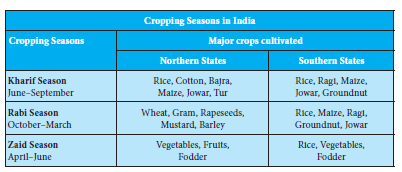
Soil in Tropical rainforest upsc

Soil in Tropical rainforest

The soil in tropical rainforests is often thin and nutrient-poor, despite the lush vegetation above. This is due to a number of factors, including:

  • High rainfall: The heavy rains in tropical rainforests leach nutrients from the soil.
  • Warm temperatures: The warm temperatures in tropical rainforests accelerate the decomposition of organic matter, which can release nutrients back into the soil, but these nutrients are quickly taken up by plants.
  • Acidic soils: The soils in tropical rainforests are often acidic, which makes it difficult for plants to absorb nutrients.

Despite these challenges, tropical rainforests are able to support a wide variety of plant and animal life. This is due in part to the efficient nutrient cycle in tropical rainforests. Plants quickly absorb nutrients from the soil and from dead organic matter, and then release those nutrients back into the soil when they die. Additionally, many plants in tropical rainforests have adaptations that allow them to thrive in nutrient-poor soils, such as deep roots and symbiotic relationships with bacteria and fungi.

Tropical rainforest soils are also important for storing carbon. The high levels of organic matter in the soil help to absorb carbon dioxide from the atmosphere. This is important for mitigating climate change.

Here are some of the key characteristics of tropical rainforest soil:

  • Thin and nutrient-poor
  • Acidic
  • High in organic matter
  • Important for storing carbon

Types of soil in tropical rainforest

The two main types of soil found in tropical rainforests are Oxisols and Ultisols.

  • Oxisols are the most common type of soil in tropical rainforests. They are characterized by their high iron and aluminium content, which gives them a red or orange colour. Oxisols are also very acidic and have low nutrient content.
  • Ultisols are similar to Oxisols, but they have a higher clay content and are less acidic. Ultisols are also more fertile than Oxisols, but they are still not well-suited for agriculture.

In addition to Oxisols and Ultisols, there are a few other types of soil found in tropical rainforests, but they are less common. These include:

  • Spodosols are soils that have a thick layer of organic matter on top of a layer of sand. Spodosols are found in areas with high rainfall and low pH.
  • Andisols are soils that are formed from volcanic ash. Andisols are very fertile and have a high water-holding capacity.
  • Histosols are soils that are made up of at least 80% organic matter. Histosols are found in swamps and bogs.

The type of soil found in a particular tropical rainforest depends on a number of factors, including the climate, topography, and parent material. For example, Oxisols are most common in areas with high rainfall and old, weathered rocks. Ultisols are more common in areas with lower rainfall and younger rocks. Spodosols are found in areas with high rainfall and acidic soils. Andisols are found in areas with volcanic activity. Histosols are found in poorly drained areas.

Tropical rainforest soils are important for supporting the lush vegetation and diverse wildlife of these ecosystems. However, they are also fragile and easily damaged by human activities such as deforestation and agriculture. It is important to protect and manage tropical rainforest soils sustainably in order to preserve these unique and valuable ecosystems.

Movement of indian plate Upsc

Movement of Indian plate

The Indian Plate consists of India Peninsular and Australian continental portions. The subduction zone along the Himalayas forms the northern plate boundary in the form of continent-continent convergence.

In the east, it extends through the Rakinyoma Mountains of Myanmar towards the island arc along the Java Trench. In the East, the margin is a spreading site lying to the east of Australia in the form of an oceanic ridge in SW Pacific.

The Western Margin follows Kirthar Mountain of Pakistan and further extends along the Makrana coast and joins the spreading site from the Red Sea rift southeastward along the Chagos Archipelago.

The boundary between India and the Antarctic plate is also marked by an oceanic ridge (divergent boundary) running in roughly W-E direction and merging into the spreading site, a little south of New Zealand.”

India was once a large island off the Australian coast. Until about 225 million years ago, the Tethys Sea separated India from the Asian continent.

About 200 million years ago India started its journey towards the north, at the same time when Pangaea broke and about 40-50 million years ago India collided with Asia, producing rapid uplift of the Himalayas.

About 140 million years ago, the Indian subcontinent was located as south as 50 degrees south latitude. The two major plates were separated by the Tethys sea and the Tibetian block was close to the Asiatic landmass.

During the movement of the Indian plate towards the Eurasian plate, a major event that occurred was the outpouring of lava and the formation of Deccan traps. This started somewhere around 60 million years ago and continued for a long period of time.

And 40 million years ago and thereafter, the event of formation of the Himalayas took place and scientist believe that this process is still continuing and the height of the Himalayas is still rising.

Red soil in India: Characteristics, Types and Crop Grown Upsc

Red Soil in India

Red Soil in India is 10.6% of the total geographic area. It is mostly found in the states of Tamil Nadu, Karnataka, Maharashtra, Eastern Andra Pradesh, Odisha, Jharkhand, Bihar Uttar Pradesh etc.

Red soil is developed on a crystalline igneous rock in places having low rainfall. In India, especially in the eastern and southern parts of the Deccan plateau.

Red Soil is found in parts of Odisha, Chattisgarh, along the piedmont zone of the Western Ghats. This soil develops reddish colour because of the diffusion of iron in metamorphic and crystalline rocks.

The Red soil looks yellow when it is hydrated.

Red Soil Types

Red soil includes multiple soil types such as Ultisols, Alfisols, and Oxisols. These soils are classified as red soil when it develops a unique red colour. The intensity of colour varies from reddish-brown to reddish-yellow-based amount of the presence of iron.

Ultisols – Ultisol is a type of red that is strongly leached. It is acidic forest soil that has low native fertility. Ultisols were found in humid temperate and tropical areas.

Alfisols – Alfisols are a type of red soil that is moderately leached with high native fertility. It is found in temperate humid and subhumid regions mostly under a hardwood forest cover. It is clay enriched. Alfisols are good for agriculture and silviculture.

In India, it is found in Tamil Nadu, Karnataka, SE Maharashtra, etc.

Primary crops are grown in Red Soil in India

With good irrigation and the use of modern fertilizers, the red soil gives a good yield. In India crops grown in red soil are mainly cotton, rice, pulses, wheat, millets, tobacco, oilseeds, etc.

Types of soil in Uttar Pradesh

Types of soil in Uttar Pradesh

The soil in Uttar Pradesh is mostly old. Except for the traces found in rivers valleys. Uttar Pradesh soil is covered by a deep layer of alluvium due to the slow-moving Ganges river and its tributaries. These alluvial soils are fertile that range from sandy to clayey loam.

Soils in Uttar Pradesh are mainly classified into three:

  1. Soils of Bhabar and Terai Region
  2. Soils of Genetic Plain
  3. Soils of Southern Plateau

Soils of Bhabar and Terai Region

Bhabar Region Soil

Bhabar runs along the Shiwalik foothills and is about 8-16 wide. The rivers that come from the Himalayas deposit their load along the foothills in the form of alluvial fans. This bhabar tract consists of gravel and un-assorted sediment deposits.

This region is not suitable for cultivation. The bhabar soil is very shallow and porous or permeable in nature. As a result, this is only good for the growth of a big tree that has large roots.

Terai Region Soil

The Terai is a lowland region that lies in northern and southern Nepal, lies south outer foothills of the Himalayas, Sivalik Hills and north of the Indo-Gangetic Plain. This lowland has characteristics of having tall grasslands, scrub savannah, sal forest and clay rick swamps.

This region runs parallel to the south of Bhabar and it is made of new alluvium. It is about 15 to 30 km wide. In this region, the underground streams of the Bhabar region re-emerge in this belt. This makes the region swampy lowland with silty soils.

The soil here is sand and clay, this soil is suitable for the cultivation of wheat, rice, sugarcane, jute etc.

Gangetic Plain Soil

The soils of the Gangetic plain are formed as a result of sedimentary deposition by rivers. As a result Alluvial soils are found in the Gangetic plain.

Alluvial soil consists of locally transported detritus materials of soil and parent materials of slopping terrains from its upper sections, erosions and landslides. Alluvial soil has fine particles of sand and Kankar (grave).

Its physical and chemical composition makes it the most fertile soil in the world. The alluvial soil in this region is divided into two: Khadar and Bangar Soil

Khadar

Khadar is composed of new alluvium and forms the flood plains along the banks of the river. These are clayey and loamy, leached and dry. Also, Khadar soil is less calcareous and carbonaceous. Khadar soil forms again and again as the river banks are flooded every year and a new layer of alluvium is deposited every year with every flood.

Khadar soil is found in Central Ranges, Western, and Eastern Gangetic regions.

Bangar

Bangar regions are beyond the floodplains that lie more upland and consist of older alluvium. Bangar soil is higher in sandy loam content. The Bangar region is less prone to flooding. This soil is sandier and less fertile compared to Khadar.

Best book for Indian Geography Upsc

Best book for Indian geography

Geography is an important part of General Studies Paper 1 in Upsc CSE. The geography part comes with questions from World and India Geography that also consists of the Physical, Social, and Economic geography of the World and India.

Geography is also one of the most taken optional papers in the Upsc Mains. Geography is divided into Indian and World Geography. One should initially refer to the Ncert books from Class 6 to Class 12 for the preparation of both World and Indian Geography and then refer to the below standard geography books.

The fact is nothing can beat the Ncert books for Upsc but to get a deeper understanding these standards are needed. Also please don’t confine yourself to Ncert books, they are for the basic foundation.

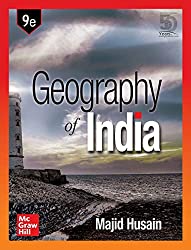
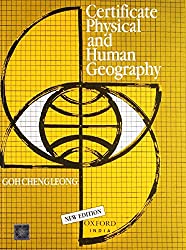
  1. Geography of India by Majid Husain

This is the most famous book for Indian Geography. It covers almost all the topic that is required by the Upsc CSE. But this book is very big and it is very difficult to complete this book. This book is a comprehensive book and it is popular among the aspirants who are preparing Upsc. This book covers almost all the topics required for Upsc.

Geography of India by Majid Hussin is a book, most of the aspirant trust and topics have been explained systematically that including the latest information on irrigation crops, food patterns, disasters, etc.

Also, this book contains government policies based on geography.

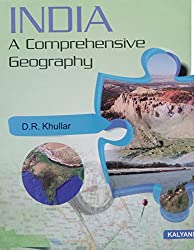
2. India A Comprehensive Geography

This book contains a lot of Maps and tables. This is beneficial for both general studies and optional ones. Also, this book is written in simple English and it is perfect for Upsc Optional and understanding of Indian geography.

In this book, almost all the topics are covered, which is essential for Upsc Optional.

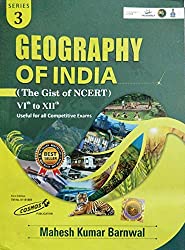
3. Geography of India (Gist of Ncert) by Mahesh Kumar Barnwal

This book has detailed descriptions, diagrams, pictures, and plenty of charts made from the Ncert Textbook from 6 to 12. This is complete, details of India Geography for Upsc, as it is prepared from Ncert books. Also has the latest schemes and Current Affairs. It is best for gaining map knowledge about India’s Geography.

By reading this book, there is no need to take short notes after this book.

Conclusion

The books mentioned above are for advanced study. One has to convert the Ncert books before getting these books.

Pressure belts of the World Upsc

Pressure belts of the World

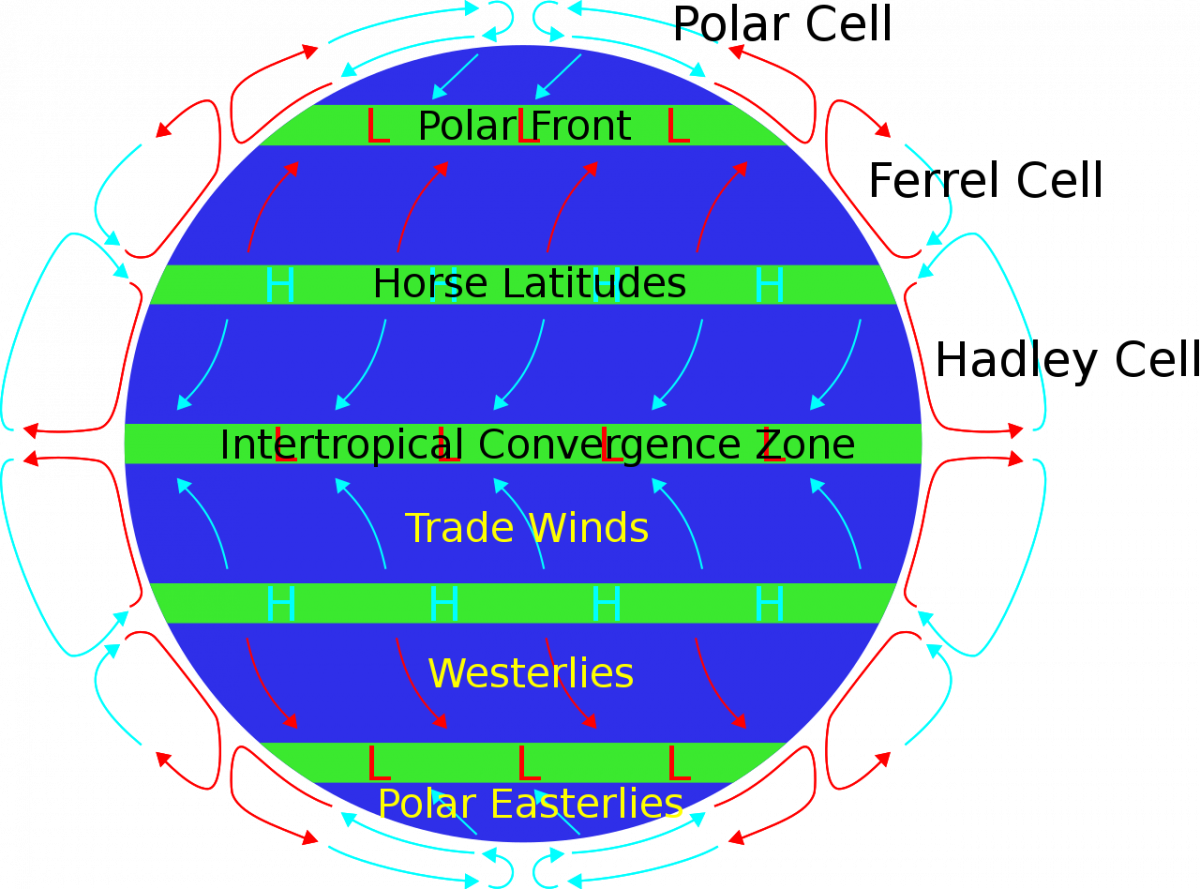
There is a relationship between temperature and the atmospheric pressure of place. This is not uniform everywhere in the world. As some places on the earth have low pressure and some places on the earth have high pressure. This is greatly modified by the rotation of the earth.

These permanent pressure belts are unstable as they shift northward during summer and southwards during winter. This is caused by the movement of the sun between the Tropic of Cancer and the Tropic of Capricorn.

There are four major Permanent pressure belts of the World

  1. Equatorial Low-Pressure Belt (5° N to 5° S)
  2. Sub-Tropical High-Pressure Belt ( (30° N & S to 35° N & S)
  3. Sub-Polar Low-Pressure Belt ( (60° N & S to 65° N & S)
  4. Polar High-Pressure Belt ( (90° N & S)
Permanent pressure belts of the World

Low-Pressure Belt

Doldrum

The Doldrum is also called equatorial low. It lies along the Equator and at a range of 5° north and south. This is an equatorial low-pressure belt. Here the temperature is high throughout the years.

Due to the high temperature, the air rises and expands, which causes this low-pressure belt.

Sub-Polar Low-Pressure Belt

This lies in the range of 60° and 65° north and south latitudes. The low pressure is caused due to the rotation of the earth. These are caused by the air that moves from high-pressure polar areas also from the air that comes from the subtropical high-pressure areas.

These two air meets at 60° North and 60° South latitudes. This makes the air rise and causes a low-pressure belt in these regions.

High-Pressure Belt

Sub tropical High Pressure Belt

These lie in the latitude of 30-35° North and 30-35° South of the Equator. This over here raises up due to heating moves towards the Poles. But this warm air cools down and sinks at 30° North and 30° South latitudes. Here it piles up to create high-pressure belts.

This sub-tropical high pressure is also called Horse Latitudes.

Polar High-Pressure Belt

Polar High-Pressure belts lie near the poles. This region is extremely cold. This makes the air cold, dense, and Heavy. The accumulation of heavy air in this region causes High-Pressure Belt.

This location is not fixed and moves towards the south and north as per the position of the Sun.

FAQ

1.Equatorial low-pressure belt is called?

It is called Doldrum. It is because it is a zone of total calm without any breeze. Here the air circulated in an upward direction and there is only little surface wind in ITCZ. The sailors know this are is calm for sailing ships for weeks.

Horticulture Crops in India Upsc

Fruits, vegetables, and flowers are horticulture crops. India is the second-largest producer of Horticulture crops. Apple is mostly produced in Himachal Pradesh, Jammu and Kashmir, and Uttarakhand.

Banana cultivation is mainly in Tamil Nadu and Maharashtra. Orange cultivation is mainly in Maharashtra, Uttarakhand, Himachal Pradesh, Jammu and Kashmir, Tamil Nadu, and Karnataka.

Grape cultivation is mainly in Uttarakhand, Himachal Pradesh, Jammu and Kashmir, Maharashtra, Andhra Pradesh, Tamil Nadu, and Karnataka. India produces 13% of the world’s production of vegetables.

State wise horticulture production in India

Andhra Pradesh

The Major fruit crop grown in Andhra Pradesh is Banana, Sweet Orange, Mango, Guava, and Pomegranate. The vegetable crops are Tomato, Beans, Brinjal, Bhendi, Onion, Chillies, etc.

Andra Pradesh emerges as are second-largest fruit-producing state in India and accounts for 11.8% of total fruits produced in the country. Banganapalle Mangoes are famous in Andra Pradesh, and this state got GI Tag for Banganappale Mangoes.

Arunachal Pradesh

The major fruits grown in Arunachal Pradesh are Litchi, Banana, Jack fruit, Orange, Pineapple, etc. The major vegetable grown in Arunachal Pradesh is Potatoes, brinjal, ginger, chilies, pumpkin, cucumber, cowpea, etc.

Also, nuts like Peach Walnut, almond, etc are also grown in this state.

Assam

Major fruit crops grown in the state are Banana, Pineapple, papaya, Assam lemon, Orange, Guava, Litchi, Jack fruit, and Mango. The vegetables are Potato, Sweet Potato, Tapioca, Onion, etc.

Bihar

Mango, guava, litchi, and banana are the major fruit crops of Bihar. The major vegetable cultivated in Bihar is potato, onion, eggplant, and cauliflower.

Chhattisgarh

The Major vegetable grown here is Cauliflower, cabbage, brinjal, tomatoes, ladyfinger, potatoes, green peas, karela, loki, torai, munga, kochai (arwi) carrot, parwal, onion etc. The major fruits grown in Chhattisgarh are Guava, Mango, Lime, Cashewnut, Cheku, Litchi, etc.

Goa

The major vegetable grown in Goa is Brinjal, Bhendi , Chillies, Cucumber, Pumpkin, Gourds, Musk Melons, Red amaranthus, Raddish, Knol-Khol, Cabbage, Bottle gourd, Long beans, Cluster beans, etc. The major fruits grown in goa are apples, pears, strawberries, grapes, melons, and watermelons.

Gujarat

The major vegetables grown in Gujarat are Onion, Garlic, Potato, Brinjal, Tomato, Okra, and Cucurbits. The major fruit crops grown in Gujarat are Banana, Mango, Citrus, Papaya, and Sapota.

Haryana

The major vegetable grown in Haryana is pea, tomato, potato, carrots, garlic, onion, etc. Also, the major fruits grown in Haryana are mango, litchi, chickoo, citrus fruits like oranges and ber.

Himachal Pradesh

The major vegetable grown in Himachal Pradesh is tomato, cauliflower, cabbage, pea, and capsicum. The major fruits varieties grown in Himachal Pradesh are Mango, Litchi, Guava, Loquat, Citrus Fig, Ber, Papaya, Grapes, Jack Fruit, Banana, Low chilling varieties of Peach, Plum and Pear, Strawberry.

Jharkhand

The major fruit grown in Jharkhand is Mango, Guava, Litchi, Lemon, Banana, Papaya, and Jackfruit. The major vegetable grown in Jharkhand is potato, tomato, ladyfinger, peas, cauliflower, brinjal, & cabbage.

Karnataka

The major fruits grown in Karnataka are Mango, Chikku, Guava, Custard, Soursop, Bur, Pomegranate, Fig, Jack fruit, etc. The major vegetables grown in Karnataka are tomatoes, Beans, Peas, etc.

Kerala

The major fruits grown in Kerala are Mango, Grapes, Banana, Jackfruits, Star gooseberry, Indian hog plum, Custard Apple, Papaya, etc. The main vegetables grown in Kerala are Okra, Tomato, Chilli, Bitter Gourd, Radish, Cucumber, Pumpkin, Brinjal, etc.

Madya Pradesh

The major fruits grown in Madhya Pradesh are Guava, Mango, Banana, and Orange. The major vegetable grown in Madhya Pradesh is Green Peas, Potatoes, Onion, Tomato, etc.

Maharashtra

The major fruit crops cultivated in Maharashtra are Mango, Cashew, Pomegranate, Citrus, Sapota, Banana, Grapes, and Guava. The major vegetables cultivated in Maharashtra are Beetroot, Bitter Gourd, Bottle Gourd, Cabbage, Cauliflower, Green left Caladium, Potato, Carrot, Onion, Yam(Kangar), Radish, etc.

Manipur

Banana, Pineapple, and Citrus have a major share in area and production, and also the Guava, Papaya, etc are grown on a large scale. Banana is native to this region and is called Tamenglong. Pineapple is grown on the hilly slopes.

Vegetables grown in Manipur are Cucurbits, Tomatoes, Brinjal, Bhindi, Cabbage, Cauliflower, Potato, Radish, Carrot, Broccoli, Capsicum, etc.

Meghalaya

In Meghalaya state, sub-tropical fruits are grown that include citrus species, pineapple, banana, guava, jack fruit, and papaya, and also temperate fruits such as pear, peach plums are grown in the Khasi Hills districts. The famous fruit in Meghalaya is Sohphie which is common.

Important vegetables grown in Meghalaya are cucumber, bitter gourd, brinjal, pumpkins, a number of green leafy vegetables, etc.

Mizoram

The major fruits grown in Mizoram are Mandarin Orange, Mango, Grape, Pineapple, Banana, and Strawberry. And also recent addition is Dragon fruit.

The major vegetables grown in Mizoram are Chayote, pumpkin, ash gourd, Cucumber, Bitter melon, etc.

Nagaland

There is a lot of native fruits in Nagaland such as persimmon, walnut, hazelnut, peach, lemon, avocado, Naga Apple, etc. The major vegetables cultivated in Mizoram are cabbage, cauliflower, knol-khol, radish, carrot, French bean, etc.

Odisha

The major fruits grown in Odisha are Mango, Banana, cashew, Jackfruit, Lemon, and Sapota. The major vegetables grown in Odisha are Tomato, Capsicum, Cabbage, Cauliflower, Carrot, Beat, Pea, Brinjal, Bhendi, Cucumber, etc.

Punjab

The major fruits cultivated in Punjab are Sweet Orange, lime, lemon, litchi, guava, pear, peach, grapes, ber, banana, etc. Also, the main vegetables cultivated in Punjab are Potato, Onion, Garlic, Tomato, etc.

Rajasthan

The major fruits cultivated in Rajasthan are Aonla, Banana, Ber, Blackberry, Custard Apple, Date Palm, Grapes, Guava, Lemon, Mango, Papaya, Sapota, etc. The major vegetables cultivated in Rajasthan are Brinjal, Cucurbits, Okra, Onion, Potato, Tomato, etc.

Sikkim

The major fruits cultivated in Sikkim are Banana, Papaya, Guava, etc. The major vegetables cultivated in Sikkim are Tomato, Broccoli, Iskus or Chayote, Cauliflower, etc.

Tamil Nadu

Mango and Banana are the most cultivated crops in Tamil Nadu that account for over 81% of the total fruit production. The other major fruits grown in Tamil Nadu are Lemon, Guava, Water Melon, Amla, Jackfruit, Grapes, Papaya, etc.

The major cultivated in Tamil is Tapioca, Onion, Brinjal, Tomato, and Ladies finger. These accounts for over 70% of the total area and as well as production. The other major vegetables grown in Tamil Nadu are Capsicum, Carrots, potatoes, green peas, green chilies, etc.

Telangana

The major fruits grown in Telangana are Mango, banana, guava, papaya, and citrus. The other major fruits grown in Telangana are Muskmelon, Watermelon, Sapota, Sweet Orange, etc. The Major vegetables grown in Telangana are Tomato, Brinjal, Bhendi, and different types of gourds.

Tripura

The major fruits grown in Tripura are Jackfruit and Pineapple. Other fruits are Mango, Orange, Banana, and Litchi. The major fruits cultivated in Bean, Cabbage, carrot, etc.

Uttarakhand

The major vegetables grown in Uttarakhand are Potato, Tomato, Cauliflower, Capsicum, etc. The major fruits grown in Uttarakhand are Litchi, guava, apricot, Strawberry, Plum, Indian Hawthorn, etc.

Uttar Pradesh

The major fruits grown in Uttar Pradesh is Mango, guava, aonla, banana, jack fruit, ber, citrus, etc. And the major vegetables are grown in Uttar Pradesh are Potato, Brinjal, Cauliflower, Cabbage, Spinach, Melon, Carrot, etc.

West Bengal

The major fruits grown in West Bengal are Mango, Pineapple, Banana, Citrus, Litchi, Guava, Papaya, etc. Also, the Major vegetables grown in West Bengal are Brinjal, Cabbage, Cauliflower, Cucumber, Radish, etc.

Union Territories

Andaman and Nicobar Islands

Andaman and Nicobar Islands are hilly lands. Here major fruits grown are Mango, Pineapple, Guava, Jackfruit, Citrus, Sapota, etc. The Major vegetables grown in this Island state are Bhindi, Lobia, Brinjal, Marsa, Poi, Radish, Cucurbits, etc.

Chandigarh

The major fruits produced in Chandigarh are Mangoes, Guava, Lemons, Phalsa, Chikoo, Amla, Peach, etc. The Major vegetables grown in Chandigarh are Tomato, Onion, Garlic,

//Draft
Livestock farming in India Upsc

One source of income for the farmer helps a lot during crop failure. It contributes 4% of GDP.

India contributes 11.6 % of livestock in the world, which is number one.

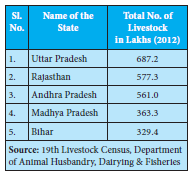
Distribution of livestock in India
Livestock in Indian states

i.Cattle

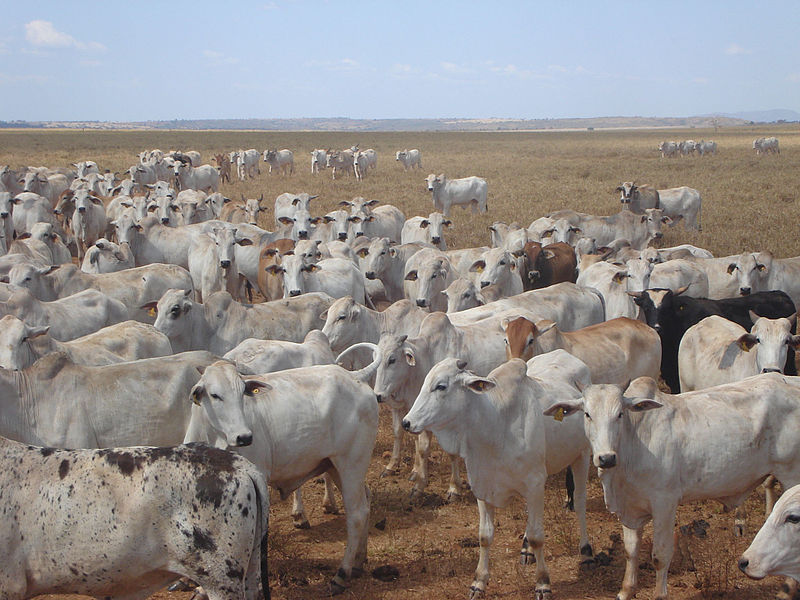
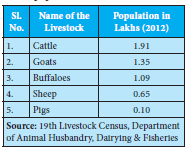
Cattle constitute 37.3 percent of the livestock population in India. India has second-largest cattle population after Brazil.

Madhya Pradesh tops with 10.3 % followed by Uttar Pradesh (10.2 %) and West Bengal (8.7 %). Cattle population includes 1) Milch Breed, 2) Draught breed and 3) Mixed or General breed.

Livestock
population of India in 2012

ii.Goats

Called a poor men’s cow, it provides milk, meat, skin, and hair. By the number of goats, Rajasthan is first with 16% followed by Uttar Pradesh and Bihar.

iii. Buffaloes

A vital source of milk in-country and UP has 28% of countries buffaloes followed by Rajasthan (9.6%) and Andhra Pradesh(7.9%).

Livestock Census

The livestock census was first conducted in the title of Dairy Cattle Census. The 19th Livestock census was conducted in 2012 October, it is conducted every 5 years.

Department of Animal Husbandry at the state level and Regional Joint Director at District level under the guidelines of Government of India Ministry of Agriculture and farmers welfare, Department of Animal Husbandry Dairying and Fisheries conducts the census.

Started in 1919 – 1920, conducted every 5 years.

As of now, a total of 19 Livestock census has been conducted.

Dairy, Meat and Wool Production

As per Animal Husbandry Department, during 2016-17, the total milk production is 163.7 million tons.

a.Dairy

Uttar Pradesh with 27.6 million tonnes (16.8%) was leading, followed by Rajasthan with 19.4 million tonnes (11.8 %) and Madhya Pradesh with 13.4 million tonnes (8.2 %).

b. Meat

The total meat production of the country is 7.4 million tonnes.

UP is leading with 1.3 million tonnes (18.2%), Maharashtra (11.4%), and West Bengal(18.2%) produces 0.8 million tonnes.

c. Wool

43.5 million KG of wool produced as per 2016-17 report. Rajasthan leads 14.3 million KG (32.9%) followed by Jammu and Kashmir(16.7) with 7.3 Million Kilogram and Karnataka(15.1%) with 6.6 Million Kilograms.

Fisheries

One of the important economic activities in the country. It employs over 14 Million People. India produces 3% of the world’s fish, standing second after China.

It gives good foreign exchange, employment to the nation. India has a coastline of 7517 Km and the mainland’s length is 6100 km. In India fishing is of two types:

Marine or Sea Fisheries:

India has a continental shelf up to the depth of 200 m. It includes coastal, off-shore, and deep-sea fishing. Kerala’s top fish production in India.

Inland or Fresh Water Fisheries:

Fishing in freshwaters such as lakes, canals, ponds, tanks, etc. About 50% of the country’s fish comes from inland fishing.

Andhra is the leading inland fish producer in India. Important fish varieties of India are Herrings, Mackerel, Cat Fish, Perches, Eels, Mullets, etc.

Total Inland fish production 65.77 Lakh tons in 2014-15. In India, the top five fish-producing states are Andhra Pradesh, West Bengal, Gujarat, Kerala, and Tamil Nadu.

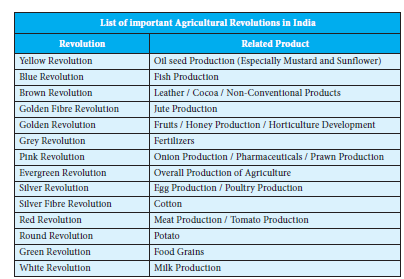
Agriculture revolutions in India

Commercial crops in India and its growing areas Upsc

Commercial crops in India

Commercial crops are crops that are planted mainly for the purpose of selling on the market to make exports and to make high profits. They are also called cash crop or profit crop that is grown to sell for profit. These crops are usually purchased by third parties such as agents, brokers, factories, corporates etc.

Also, these crops are readily salable crops produced or gathered mainly for the international market.

At the international level commercial crops are cocoa, oil palm, rubber, kola etc.

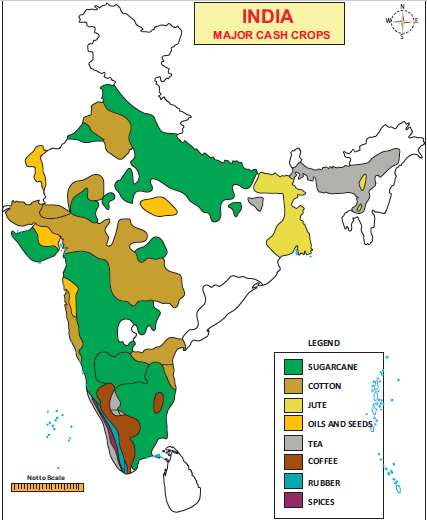
Commercial crops in India are crops such as fibre ( cotton, mesta, and jute), Sugar (Sugarcane), and Oilseeds (Linseed, Sunflower).

i. Sugarcane

Sugarcane is the most important cash crop in the country and India is the second-largest producer(Kindly check the latest).

It is the raw material for the sugar industry and also provides gur and khandsari, molasses for alcohol industries. For Paper producing industries it provides Bagasse.

Maharashtra, Karnataka, Tamil Nadu, and Gujarat are the largest producer of Sugar in India. Sugarcane takes almost a year to grow.

cash crops in india map - commercial crops in india upsc
Major Cash Crops in India Map as per States

ii. Cotton

It provides raw materials for Textile Industries and India is the second-largest producer of Cotton after China.

Cotton Producing States are Gujarat, Maharashtra, Andhra Pradesh, and Punjab which account for 79% of the country’s production.

iii. Jute

The tropical crop grows in alluvial soil.

Provides raw materials for Gunny bags, ropes, strings, carpet, hessian, rugs, clothes, tarpaulin, and upholstery.

In the production and cultivation of jute, West Bengal stands first, other cultivators are Bihar, Meghalaya, and Assam.


iv. Oil Seeds

Crops such as Linseed, Castor, Niger seed, Groundnut, etc are oilseed crops. These provide oil and oil cakes used to make lubricant, candles, cooking oil, etc.

Gujarat is the largest oil producer followed by Rajasthan, Madhya Pradesh, Maharashtra, and Andhra Pradesh.

India is the second-largest groundnut producer after China.

3.Plantation crops

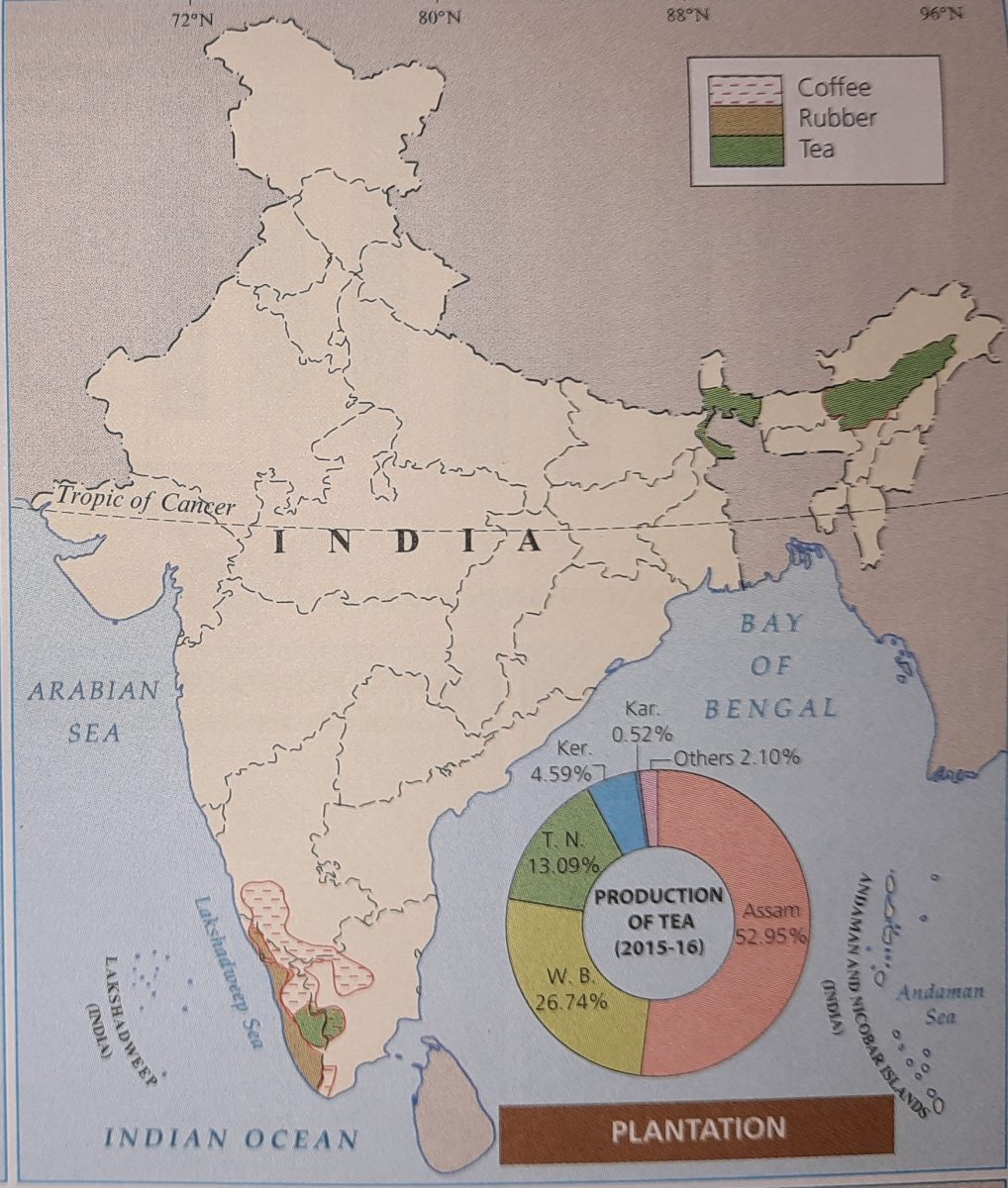
Cultivated in hilly areas, used mostly for exports. Tea, coffee, rubber, and spices are the major plantation crops of India.

i. Tea

It grows in tropical and subtropical regions, it is also an evergreen plant. Tea is a labor-intensive crop and light shade is required for its rapid growth.

It requires high rainfall, but its roots cannot withstand waterlogging. These two varieties of Tea are cultivated in India namely Bohea from China and Assamica.

Also, some hybrid varieties are cultivated. India is the second-largest producer after China.

Assam is the largest producer, Tamil Nadu, Kerala, and West Bengal are other producers.

ii. Coffee

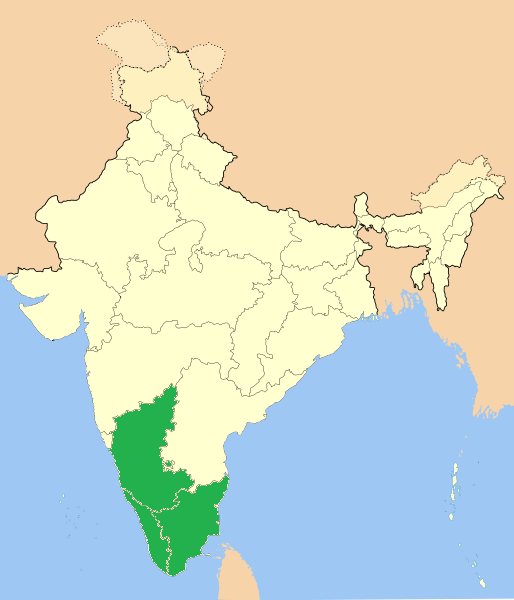
coffee growing areas in india map
coffee-growing areas in India map By Nicahlp, modified by Dr. Blofeld – Self-made based on File: India-locator-map-blank.svg, CC BY-SA 3.0, https://commons.wikimedia.org/w/index.php?curid=12186054

Grow in shady regions above 1000 and 1500 meters above sea level. There are two main varieties of Coffee Cultivated in India one is High quality ” Arabica ” which is cultivated more and the other is Robusta which is of Inferior quality.

India is the seventh-largest producer of Coffee. Karnataka is the largest producer of Coffee in India. It produces 71% in India and 2.5% in the world.

iii. Rubber

This plantation was first established in Kerala in 1902, these crops grow where the temperature is above 20 degrees Celsius and rainfall above 300 cm.

Major rubber producers are Tamil Nadu, Karnataka, Andaman Nicobar Islands, and Kerala.

major rubber producing states in india map

major rubber producing states in india map

iv. Spices

  • Used for flavoring of foods and for medicines.
  • Pepper, areca nut, ginger, clove, cardamom, chilies are major spices.
  • In India Kerala is the largest producer of spices.

Types of farming in India and their main features Upsc

Types of Farming

There are primarily six types of farming, particularly practised in India. They are Subsistence farming, Shifting Agriculture, Intensive farming, Dry Farming, Mixed farming and Terrace farming.

a) Subsistence Farming

Poor farmers with small land holding grow crops with the help of family members with little or no modern inputs. In this type of farming the farmer use the entire agricultural farm, they get little surplus to sell in the market.

In addition, food crops such as cotton, jute, oilseeds, tobacco, and sugarcane are cultivated. As a result of using the traditional method, productivity is low. Parts of Rajasthan, UP, and Madhya Pradesh are the places where subsistence farming is practised.

Modern Facilities such as irrigation, electricity, machines etc are not available to this. The farming is done manually.

b) Shifting Agriculture

Shifting agriculture is performed in forest land by tribal people, mostly. Farmland is created after cutting and burning trees.

Crops are grown until the soil is fertile, for two, three years. Then the farmer move to a new piece of land after the soil loses its fertility also called “Slash and Burn Cultivation“.

This type of agriculture is called Jhum in Assam, Poonam in Kerala, Podu in Andhra Pradesh and Odisha, and Beewar, Mashan, Penda, Beera in Madhya Pradesh.

c) Intensive Farming

It is a method of agriculture where the latest technologies and intensification methods are used to maximize the yield.

Also used for livestock such cows, pigs, and chickens raised in the indoors. It is also known as Factory Farms.

Intensive farming is practised in Rajasthan, UP, Madhya Pradesh.

d) Dry Farming

Dry Farming is also called Dryland Farming. In this farming, the cultivation of crops is practised in areas where irrigation is lacking, Like arid areas, typically less than 50 centimetres of precipitation annually. Dryland farming is based on efficient storage and utilization of limited moisture in the soil.

Also, crops selection is important for Dry farming. Dry climate withstanding crops are grown with the help of irrigation also grown under dry farming. The tilling is done in the land shortly after the harvest to capture the moisture from the air.

The moisture is regulated in the primary by removal of weeds and by runoff prevention. The Dry farming crops are selected, to be drought resistant or drought evasive. Example: Sorghum. This is because such crops reduce transpiration or reduce the emission of moisture and stop their growth. And resumes its growth after the conditions are favourable.

Yield is low and only one crop per year. This is practised in Drier parts of Rajasthan, Gujarat, Madhya Pradesh, etc.

e) Mixed Farming Agriculture

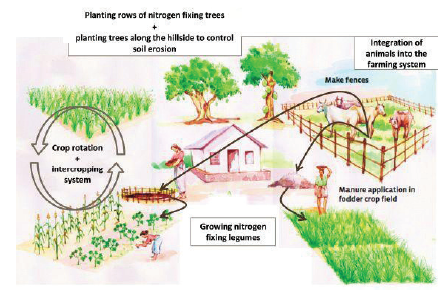
It is a method of agriculture where crops, livestock, fisheries, beekeeping, etc. are done in the same place.

Cropping pattern in India - Mixed Farming Agriculture
Mixed Farming Picture

f) Terrace Cultivation

Terrace Cultivation is practised in hilly areas, where there are slops, and the availability of flat land is limited. Soil erosion is also checked by Terrace farming.

Used in Hilly areas. Terrace cultivation is practised in Punjab, Meghalaya, Haryana, Uttar Pradesh, Himachal Pradesh, and Uttarakhand.

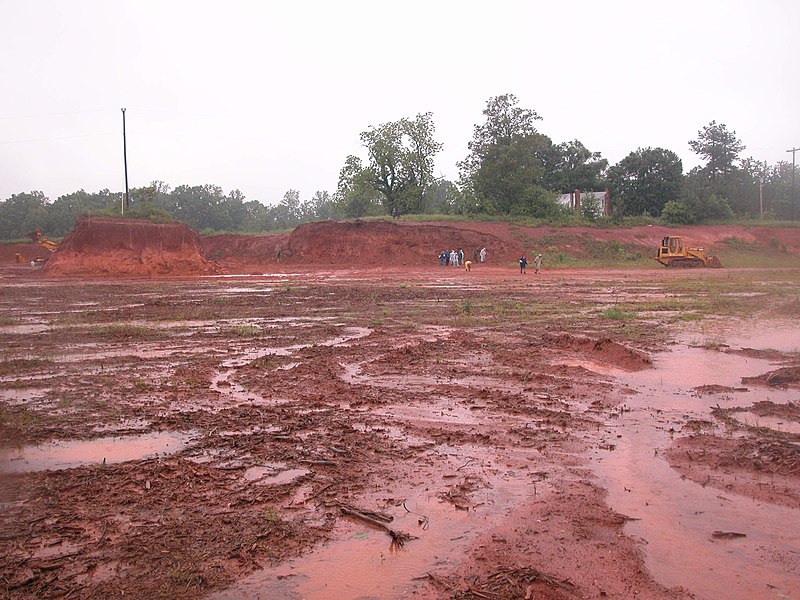
Agriculture seasons in India
Cropping Seasons in India
* * All the Notes in this blog, are referred from Tamil Nadu State Board Books and Samacheer Kalvi Books. Kindly check with the original Tamil Nadu state board books and Ncert Books.