Basics of force in physics Tnpsc

Force

A body needs a ‘push’ or ‘pull’ to move or to bring a moving body to rest or change its velocity. Hence this push or pull is called force. Force has both magnitude and direction. Therefore force is a vector quantity.

Definition of force in physics

Types of Forces

Force is classified into types as:

  • Like parallel force – Two or more forces of equal or unequal magnitude acting along the same direction, parallel to each other.
  • Unlike parallel force – Two or more forces either equal or unequal forces act in opposite directions parallel to each other.

Unit of Force: SI unit of force is newton(N) and in the C.G.S system its unit is dyne.

Definition of 1 newton (N) – The amount of force required for a body of mass 1 kg to produce an acceleration of 1 kg⋅m/s2.

1 N = 1 kg m/s2

Dyne

One dyne is the amount of force required for a body of mass 1 gram produces an acceleration of 1 cm/s-2.

1 dyne = 1 g cm/s-2 ; also 1 N = 105 dyne.

Unit Force

The amount of force required to produce an acceleration of 1 ms-2
in a body of mass 1 kg is called ‘unit force’.

Gravitational unit of force

The gravitational unit of force is kilogram-force, represented by kg f in SI units. In the C.G.S system, its unit is gram force, represented by gf.

1 kg f = 1 kg × 9.8 ms-2 = 9.8 N;
1 g f = 1 g × 980 ms-2 = 980 dyne

Issac Newton formulated three laws of motion.

  • Newtons 1st Law
  • Newtons 2nd Law
  • Newtons 3nd Law

These three are discussed later in the notes.

Mechanics

Mechanics is a branch of physics that studies the effect of force on bodies. It is divided into Statics and dynamics.

  • Static – Static deals with the bodies that deal with the bodies that are at rest under the action of force.
  • Dynamics – Dynamics deals with moving bodies under the action of forces. Dynamics is further divided into Kinematics and Kinetics
    • Kinematics – Kinematics studies the motion of bodies without considering the cause of movement.
    • Kinetics – Kinetics studies the motion of bodies considering the cause of movement.

Inertia

When a force is applied to bodies, they resist change in their state. This property is called Inertia.

Example: We tend to move forward when the bus suddenly stops. Or We move backwards when the bike starts suddenly.

Inertia is defined as the interesting property of a body to resist the state of rest state of uniform motion unless it is influenced by an external unbalanced force.

Types of Inertia

  • Inertia of rest – The resistance of a body to change its state of rest is known as Inertia of rest.
  • Inertia of motion – The resistance of a body to change its state of motion is called Inertia of motion.
  • Inertia of direction – It is the resistance of a body to change its direction of motion is called Inertia of direction.

Linear Momentum

Linear momentum measures the impact of force on a body. The impact of a force is more when the velocity and the mass of the body are more.

The product of mass and velocity of a moving body provides the magnitude of linear momentum. It acts in the direction of the velocity of the object.

Linear Momentum = Mass x Velocity

That is: p = mv. It helps to measure the magnitude of a force.

The unit of momentum in the SI system is kg ms-1and in the C.G.S system, its unit is g cms-1.

Newton’s Laws of Motion

Newton’s First Law of Motion

This law states that “a body continues to be in its state of rest or state of motion along a straight line unless an external force at act on it”.

This gives the definition of force as well as inertia.

Newton’s Second Law of Motion

According to this law,” The force acting on a body is directly proportional to the rate of change of linear momentum of the body. And the change in momentum takes place in the direction of the force.”

This law is used to measure the amount of force. So this is also called as ‘law of force‘.

F = m x a

Force = mass x acceleration

Newton’s Third Law of Motion

This law states that ‘for every action, there is an equal and opposite reaction ‘.

Example: Recoil of Gun, Swiming, Birds flying etc.

Principal of Conservation of Linear Momentum

As per this principle, there is no change in the linear momentum of a system of bodies as long as no net external force acts on it.

Moment of Force

The rotating effect of a force about a fixed point or fixed axis is called the moment of the force about that point or torque (τ). Torque is a vector quantity and its SI unit is N m.

The torque is measured by-product of the force (F) and the perpendicular distance (d) between the fixed point or axis and the line of action of the force.

τ = F × d

Couple

When two equal and unlike parallel forces are applied simultaneously at two distinct points, is a couple.

The line of action of the two forces does not coincide and does not produce translator motion. This is because the resultant is zero. But a couple causes the rotation of the body.

This rotating effect of a couple is called the moment of a couple. The unit of the moment of the couple is Newton metre (N m) in the SI system and dyne cm in the C.G.S system.

Example: Turning of Tap, winding a Screw, Spinning of top

Moment of a couple = Force × perpendicular distance between the
line of action of forces

M = F x S

Conclusion

This article is for Tnpsc, for the topic ‘Force‘. This article provides a brief description of basic concepts of force in Physics. For detailed notes please refer to the Samacheer Kalvi book, Science 10th Std, Unit-1, Laws of Motion.
Halogen lamp working principle

How does a halogen lamp work?

A Halogen lamp is an incandescent lamp. It is also called Tungsten Halogen or quartz-halogen or quartz iodine lamp. It consists of a tungsten filament that is sealed in a transparent envelope. This envelope is filled with an inert gas mixture.

The inert gas mixture consists of a small amount of halogen i.e iodine or bromine. This halogen gas and tungsten filament produce a halogen cycle chemical reaction.

This chemical reaction redeposits the evaporated tungsten on the filament. This increases the life and maintains the clarity of the envelope. This process allows the filament operates at a higher temperature that a standard incandescent lamp.

Different types of battery cells and their uses

An electric cell converts chemical energy into electrical energy to produce electricity. It contains two electrodes immersed in an electrolyte called Anode and Cathode. A number of electric cells are connected together to form a battery.

When a cell or battery is connected to a circuit, electrons flow from the negative terminal to the positive terminal through the circuit. By using chemical reactions, a battery produces a potential difference across its terminals and this cell is called the Electrochemical cell

In an Electrochemical cell, the chemical energy is converted into electric energy and vice versa. This potential difference provides the energy to move the electrons through the circuit. The starting point to the electric cell is the experiment by Luigi Galvani and his wife Lucia on the dissected frog hung from the iron railing with brass hooks.

Primary cells are one in which the electric energy is derived by irreversible chemical action is called Primary cells.

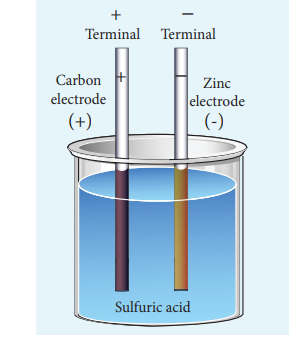
Simple diagram for electric cell with electrodes, electrolyte solutions in a jar
Simple diagram for electric cell

Voltaic Cell

  • The simple cell or voltaic cell consists of two electrodes, one of copper and the other one is zinc dipped in dilute sulphuric acid in a glass vessel.
  • The anode is copper.
  • Cathode is zinc
  • The potential difference is 1.08 V
  • The electrolyte is dilute Sulfuric acid.

Daniel Cell

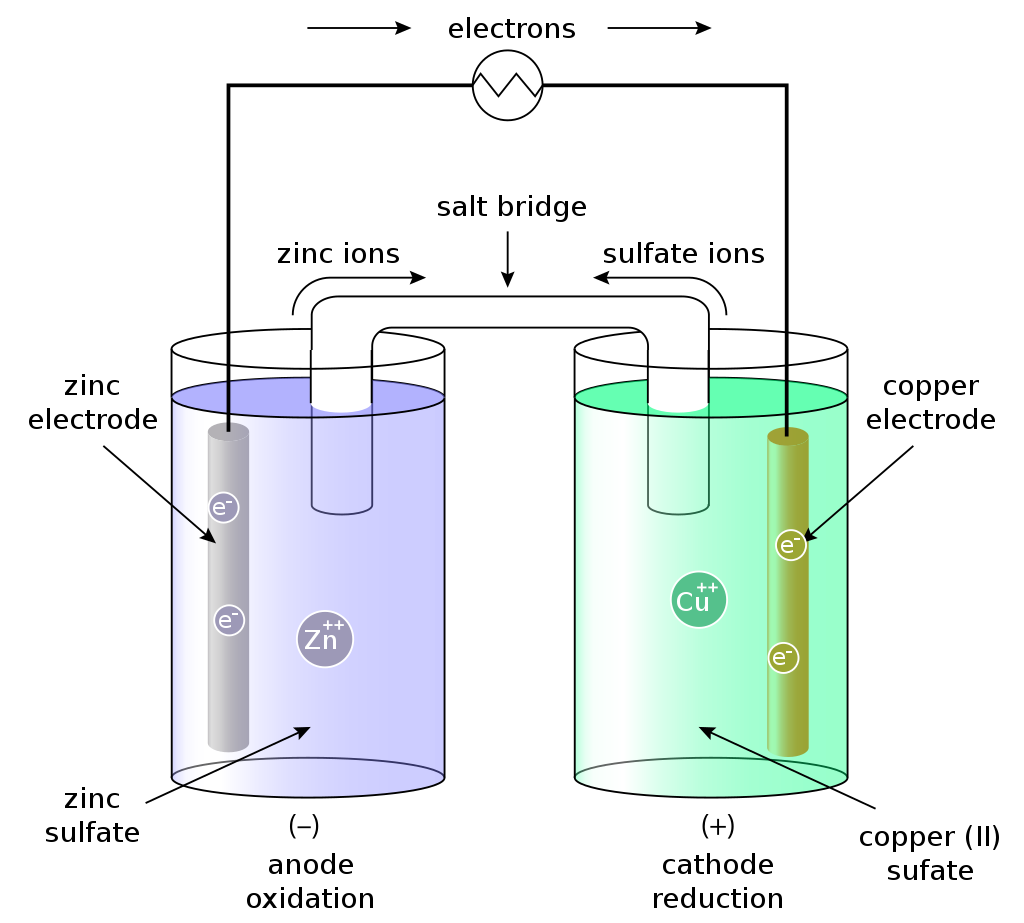
A simple diagram for Daniel cell, that  has two container with different electrodes and electrolytes connected by salt bridge
A simple diagram for Daniel cell
  • A galvanic cell example is Daniel Cell.
  • Invented in 1836 by John Frederic Danell.
  • It is a type of Galvanic cell or Voltaic Cell
  • The electrolyte is Copper Sulphate Solution in Copper Pot or Container dipped with a copper rod which acts as Cathode.
  • Zinc rod immersed in Zinc sulphate solution which acts as an Anode.
  • The two containers are connected by Salt Bridge which is a glass tube having potassium chloride or ammonium nitrate in a gelatin form.
  • Salt bridge allows ionic movement but prevents mixing
  • It cannot supply a steady current for a long time.

Leclanche Cell

  • It produces an Emf of 1.5 V and supplies current up to 0.25 A.
  • The anode is Carbon Rod.
  • The Cathode is Zinc Rod.
  • The electrolyte used is Ammonium Chloride.

Secondary Cells

  • The anode is lead.
  • The cathode is lead oxide.
  • The electrolyte is Sulphuric acid.
  • The advantage of a secondary cell is they are rechargeable.
  • The chemical process of obtaining current from a secondary cell is called Discharge.

Electromotive Force and Internal Resistance

The emf of a battery or cell is the voltage provided by the battery when no current flows in the external circuit. The electromotive force determines the amount of work a battery or cell does to move a certain amount of charge around the circuit.

It is denoted by Symbol ξ, pronounced as Xi. An Ideal battery has zero internal resistance and the potential difference across the battery is equal to its emf.

Practically, the battery is made of electrodes and electrolytes, there will be resistance to the flow of charge within the battery. This resistance is called Internal resistance r. For a real battery, the terminal voltage is not equal to the emf of the battery.

A brand new has low internal resistance and increases with aging.

Cell in Series

Several cells can be connected to form a battery. In a series connection, the negative terminal of one cell is connected to the positive terminal of the second cell. Then the negative terminal of the third cell and so on.

The free positive terminal of the first cell and the free negative terminal of the last cell becomes the terminal of the battery. Suppose n cells, each of emf ξ volts and internal resistance r ohms is connected in series with an external resistance R.

Series connection of cells is advantageous only when the effective internal resistance of the cells is negligibly small compared with R.

Cells in Parallel

In Parallel connection, all the positive terminals of the cells are connected to one point and all the negative terminals to a second point. These two points form the positive and negative terminals of the battery.

The current to the whole battery is the same for the connection of the Parallel cells. Hence it is advantageous to connect cells in parallel when the external resistance is very small compared to the internal resistance of the cells.

Domestic electric circuit explanation

The electricity generated from the power station is distributed to domestic and industrial users by overhead and underground cables. The first stage of the domestic circuit is to get the power supply to the main box from a distribution panel like a transformer.


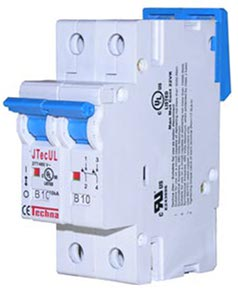
The main components of the main box are the Fuse Box and Meter. The meter records the usage of electrical energy. The fuse box contains either fuse wire or MCB(Miniature Circuit Breaker)
The prime application of MCB or Fuse Wire is to protect the electrical appliances in the home from overloading due to excess current.

Mcb diagram: Mcb which is used for saving electrical devices in the time high voltage, electrical leakage etc
mcb diagram

An MCB is a switching device that can be activated automatically and manually. The MCB has a spring attached to the switch which is attracted by an electromagnet when an excess current passes through the circuit.


Thereby the circuit is broken and the protection of the appliance is ensured. The electricity is brought to the house by two insulated wires. One wire has red insulation called the live wire.
The other wire has black insulation called the neutral wire.

The alternating current of the electric potential of 220 V is supplied for domestic purposes. Both the live and neutral wires enter the box where the main fuse is connected with the live wire.

After the electricity meter, these wires enter into the main switch, which is used to discontinue the electricity supply whenever required.

After the main switch, these wires are connected to live wires of two separate circuits.
Out of these circuits, one circuit is of a 5A rating, which is used to run the electric appliances with a lower power rating, such as tube lights, bulbs, and fans.


The other one is a 15A rating, which is used to run electric appliances with a high power rating, such as air conditioners, refrigerators, electric iron, and heaters.


All the circuit is home is connected in parallel so that the disconnection of one circuit does not affect the other circuit.


Also, the parallel connection of circuits is that each electric appliance gets equal voltage.
In India domestic circuits are supplied with an alternating current of potential 220/230V and frequency 50Hz.

In countries like the USA and UK, an alternating current of potential 110/120V and frequency 60Hz is supplied.

Overloading and Short-Circuiting

The fuse wire or MCB will cut the circuit if there occurs overloading and short-circuiting. Overloading occurs when a large number of devices are connected in series to the same source of electric power.

This points to a flow of excess current in the electric circuit. If the quantity of current passing over a wire surpasses the highest allowable limit, the wires are heated to such a level that may cause a fire. This is called overloading.

When a live wire gets in touch with a neutral wire, it creates a short circuit. This occurs when the insulation or the packing of the wire gets degraded due to temperature variations and some other outside forces.

Due to the short circuit, the effective resistance in the circuit becomes very small, which starts the flow of a high current via the wires. This results in the heating of wires to such a level that a fire may be caused in the building.

Earthing

A third wire called earth wire has a green covering or insulation connected to the body of the metallic electric appliance. Another end of the earth wire is connected to a metal tube or a metal electrode, which is buried into the ground.

This wire provides a low resistance path to the electric current. The earth wire conducts the current from the body of the electric device to the Earth, whenever a live wire unexpectedly touches the body of the metallic electric device.

Thus, the earth wire helps as a shielding conductor, which protects from electricity.

Consumption of electrical energy

Usage of Consumption of electricity is based on two factors: Amount of electric power duration of usage example 100 watt of electric power is used for 2 hours, then the power consumed is 100 x 2 = 200-watt hour.

Consumption of electrical energy is measured in Watt Hour, though its SI unit is watt-second.In practical terms, a larger unit is called kilowatt-hour (kWh). One kilowatt-hour is also called one unit of electrical energy.

One kilowatt-hour means an electrical power of 1000 watt used for one hour.Thereby, 1kWh = 1000 watt hour = 1000 x (60×60) watt second = 3.6 x 10⁶ J.

Led Bulb working Principle

Working principle of Led

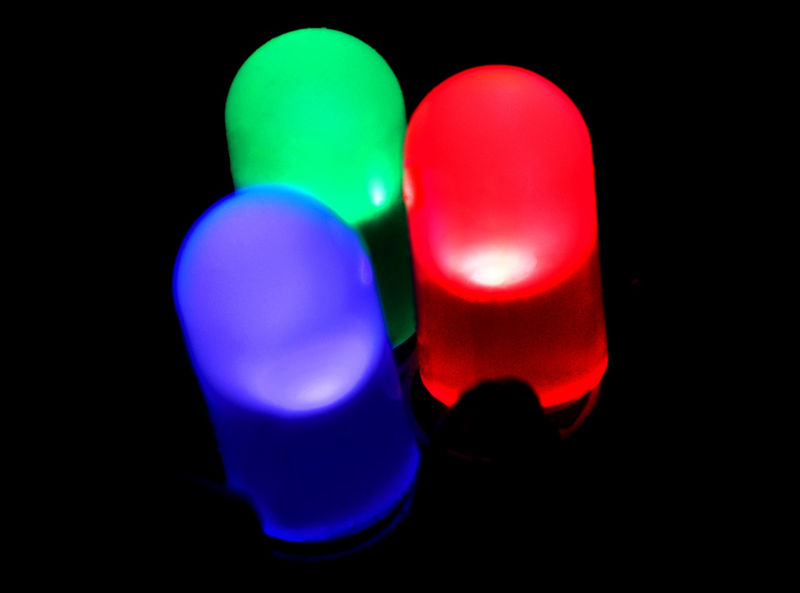
A led bulb is a semiconductor device that emits light when electricity passed through it. The colour of the light depends on the material used in the led making.

With the help of chemical compounds like Gallium Arsenide and Gallium Phosphide, a Led bulb that gives red, green, yellow, and orange lights are produced. Displays in digital watches and calculators, street lamps, traffic signals, etc are some examples of LED.

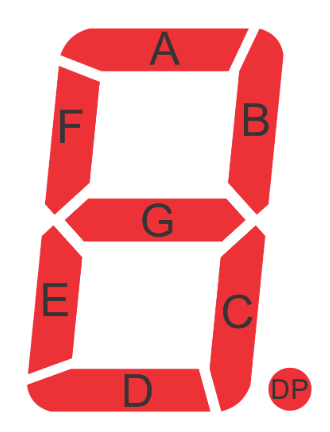
A seven-segment display is a display used to display numbers and text. It is used in digital meters, digital clocks, microwave ovens, etc. It consists of 7 segments of LED in the form of the digit 8. These seven LEDs are named as a,b,c,d,e,f, and g. An extra 8th LED is used to display a dot.

Seven segment display using led, used in calculator, traffic signals
Seven segment display using Led

Merits of a LED bulb

  • The LED bulb does not have a filament, so there is no loss of energy in the form of heat and as a result, it is cooler than the incandescent bulb.
  • It has a lower power requirement than fluorescent lights.
  • It is not harmful to the environment as it does not produce heat.
  • Many colour lights can be produced.
  • It is cost-efficient and energy-efficient.
  • Mercury and other toxic materials are not used in Mercury.
  • To overcome the energy crisis, we need to use more LED bulbs.

LED Television

  • LED Television is one of the important applications of LED.
  • It is actually an LCD panel with when LED backlight as an LCD panel does not produce light.
  • An array of LEDs act as pixels.
  • LED emitting white light is used in Monochrome tv (black and white tv)
  • Red, Green, and Blue (RGB) LEDs are used in colour television.
  • The first LED television screen developed by James P Mitchell in 1977, it had a monochromatic display.
  • In 2009, Sony introduced the first commercial LED television.

Advantages of LED television

  • Bright Picture Quality.
  • It is thin.
  • Uses less power.
  • It has more life span.
  • It is more reliable.

Periodic table with Valency

1H2He
3Li4Be5B 6C7N8O9F10Ne
11Na12Mg13Al14Si15P16S17Cl18Ar
19K20Ca21Sc22Ti23V24Cr25Mn26Fe27Co28Ni29Cu30Zn31Ga32Ge33As34Se35Br36Kr
37Rb38Sr39Y40Zr41Nb42Mo43Tc44Ru45Rh46Pd47Ag48Cd49In50Sn51Sb52Te53I54Xe
55Cs56Ba72Hf73Ta74W75Re76Os77Ir78Pt79Au80Hg81Tl82Pb83Bi84Po85At86Rn
87Fr88Ra104Rf105Db106Sg107Bh108Hs109Mt110Ds111Rg112Cn113Nh114Fl115Mc116Lv117Ts118Og
57La58Ce59Pr60Nd61Pm62Sm63Eu64Gd65Tb66Dy67Ho68Er69Tm70Yb71Lu
89Ac90Th91Pa92U93Np94Pu95Am96Cm97Bk98Cf99Es100Fm101Md102No103Lr
Periodic table with Valency


  1. Hydrogen (1,0,-1)
  2. Helium(0)
  3. Lithium(1,-1)
  4. Beryllium(2)
  5. Boron(3,2,1)
  6. Carbon(4,3,2,1,-1,-2,-4)

Bones and muscles in the Human body

Bones and Joints

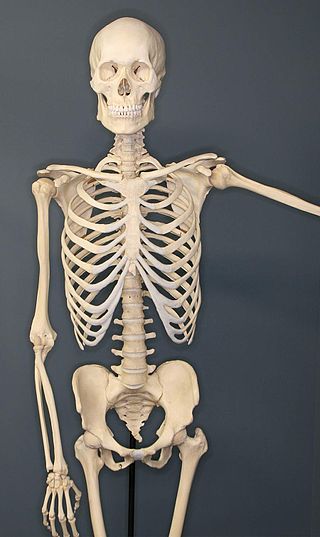
The adult human skeleton consists of 206 bones. The bones along with approximately 700 skeletal muscles account for 50% of our body weight.

Bones provide protection and support. When two or more bones join together, a joint or articulation is formed. Several types of joints help in movements.

Muscles

Muscles are elastic in nature. They are capable of contraction in response to stimuli from the central nervous system. The muscle cells function like biological machines that convert chemical energy into mechanical work.

The mechanical work involves various movements including vital processes like contraction of the heart and blood vessels. Approximately 40% of the body is skeletal muscle and almost 10% is smooth and cardiac muscles.

Structure of a Skeletal Muscle

A striated muscle is composed of many fibers arranged in bundles. The diameter of each fiber varies from 10 to 100 microns. The length of fibers ranges from 1 to 20mm.

Each fiber is surrounded by a membrane called the Sarcolemma. Each muscle fiber is made up of 4 to 20 thread-like structures called myofibrils.

They are parallel to each other. The myofibrils are 1 to 3 microns in diameter. In between the myofibrils, the sarcoplasm is present. A small segment of the myofibril is called the sarcomere.

Structure of Sarcomere

When a sarcomere is observed under a microscope we could see alternative dense (A band) and light bands (I band). The central region of the A band is often less dense and is known as the “H Zone“.

The ‘I band’ is bisected by a dense narrow line, the Z line. Thus each sarcomere includes repeating units between two Z lines in linear order as Z line, I band, A band, I band, and next Z line. There is the regular arrangement of 2 types of protein filaments.

A band contains a set of thick filaments formed of the contractile protein myosin. It may range up to 110 A in diameter and 1.5 microns in length. The second set of thin filaments (50 A diameter) overlaps the long filaments in the A band.

The second set of filaments extend partly in ‘I band’ and partly in ‘A band’. These filaments are formed of a substance called Actin.

Classification of Materials in electronics

Classification of Materials

Solids are classified into insulators, metals, and semiconductors.

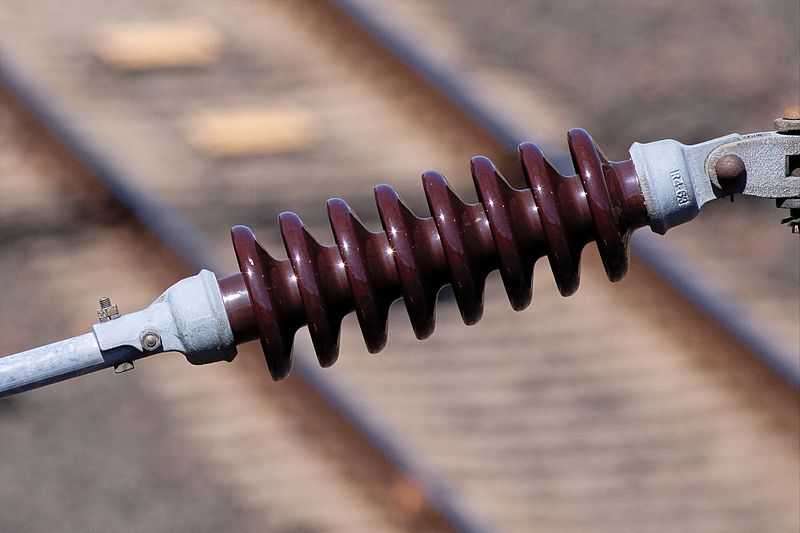
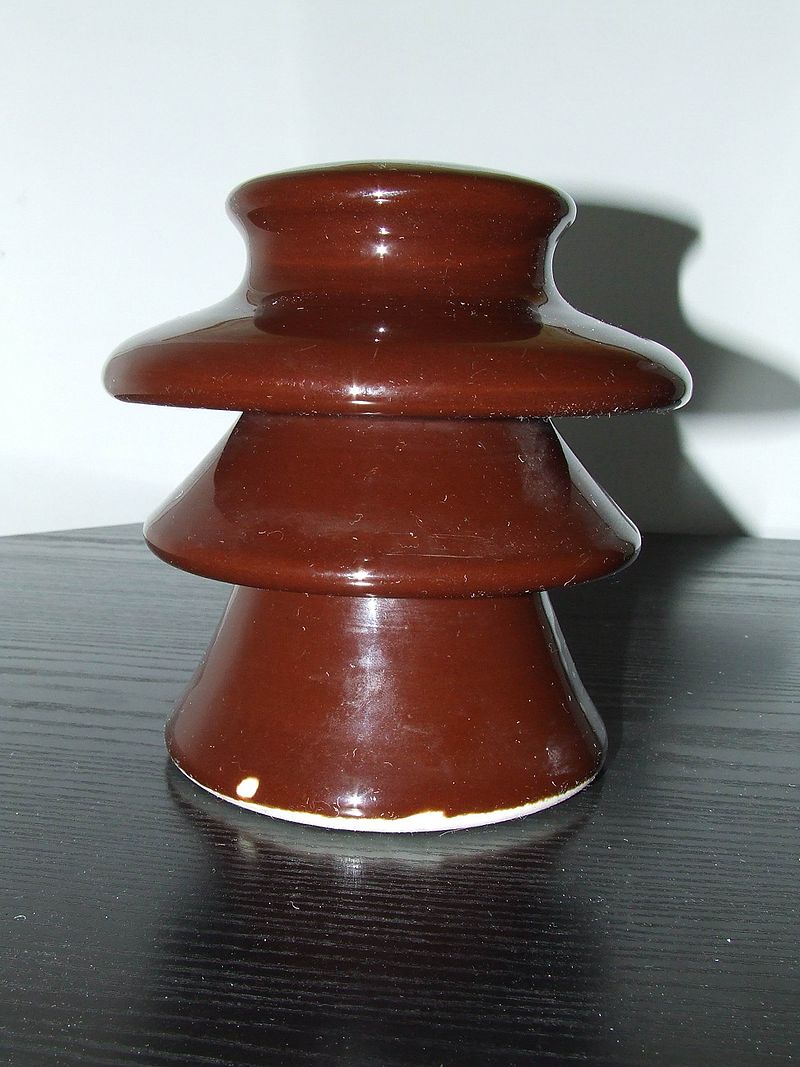
Insulators

Insulators
Insulators By Hiuppo – Own work, CC BY-SA 2.5, https://commons.wikimedia.org/w/index.php?curid=1349541

The valence band and the conductor band are separated from each other by an enormous energy gap. The energy gap between the valence band and the conductor is approximately 6eV.

The energy gap is enormous, and even high voltage or electric field or change in temperature, does make conduction. The electrical conduction is not possible as there are no free electrons. These materials are called insulators and their range of resistivity is 1011 – 1019 Ωm.

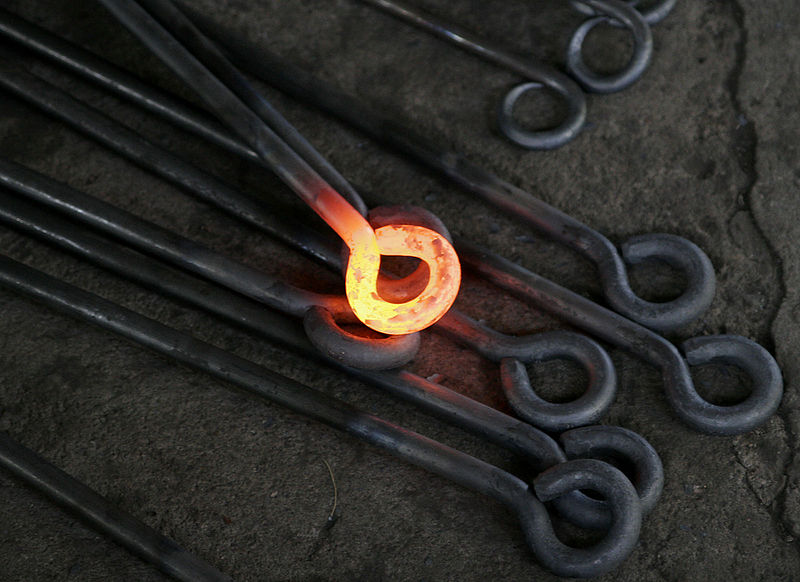
Metals

electrical conductivity of metals
electrical conductivity of metals By fir0002flagstaffotos [at] gmail.comCanon 20D + Tamron 28-75mm f/2.8 – Own work, GFDL 1.2, https://commons.wikimedia.org/w/index.php?curid=136199

In valence band and conduction band overlaps in metals. The electrons can flow freely into the conduction band which results in a large number of free electrons in the conduction band.

Thereby, even at low-temperature conduction is possible. The resistivity range between 10-12 to 10-8 Ωm.

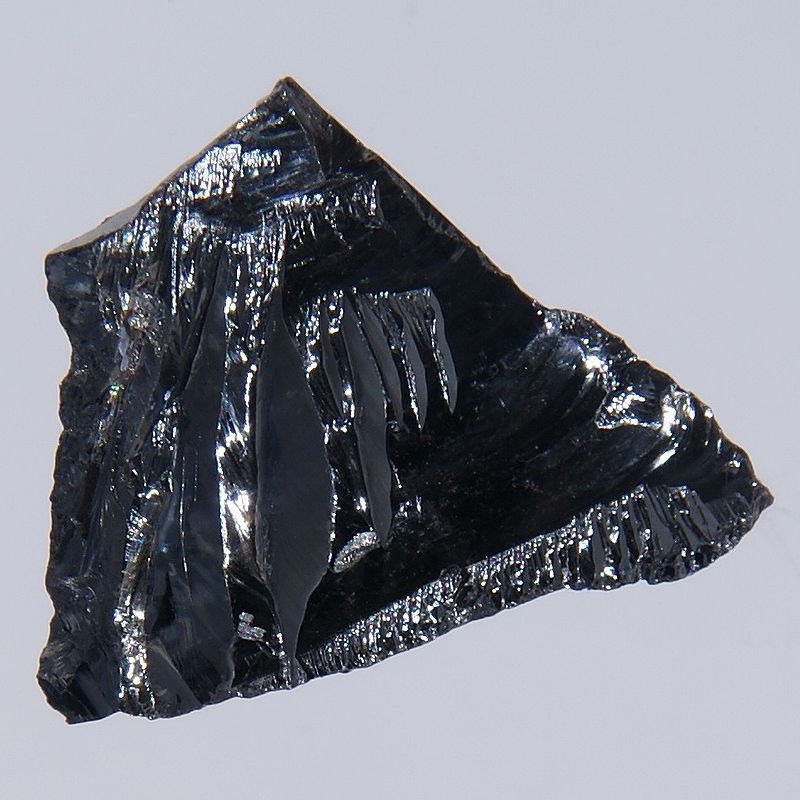
Semiconductors

Semiconductor- classification of materials
Semiconductor- classification of materials By Jurii – http://images-of-elements.com/silicon.php, CC BY 3.0, https://commons.wikimedia.org/w/index.php?curid=7353911

Semiconductors, a thing is forbidden energy gap (Eg < 3eV) endures among the valence band and the conductor band. At a limited temperature, thermal disturbance in the solid can destroy the convent bond between the atoms.

That covalent bond is developed due to the distribution of electrons to attain a steady electronic configuration. This loosens some electrons from the valence band to the conduction band.

Since free electrons are little in quantity, the conductivity of the semiconductors is not as big as the conductors. The resistivity ranges of the semiconductor 10-5 to 106 Ωm. In semiconductors, electrons in the valence band are bound electrons that cannot move and contribute to conduction.

When the temperature is raised more, a larger number of electrons is forwarded to the conduction band and the conduction is increased. Thus, the electrical conduction increases with the increase in temperature in the semiconductors.

Hence, “semiconductors have a negative temperature coefficient of resistance”. Examples of semiconductors are Silicon (Si) and Germanium (Ge). The energy gap for Silicon and Germanium at room temperature are 1.1 eV and 0.7 eV.

What is an oscillator explain transistor as an oscillator?

What is an oscillator?

The oscillator is a mechanical or electrical apparatus that produces periodic fluctuation. Or it is a device that produces a repeated waveform.

This signal can be a sine wave, a square wave, or a triangle wave. Oscillators are used in a wide variety of electronic devices, including clocks, radios, computers, and synthesizers.

The basic principle of an oscillator is to use positive feedback to amplify a signal and then feed it back into the input of the amplifier. This creates a loop that sustains the oscillation. The frequency of the oscillation is determined by the components in the feedback loop.

There are two main types of oscillators: linear and nonlinear. Linear oscillators produce a sinusoidal signal, while nonlinear oscillators produce a square wave or triangle wave.

Some common examples of oscillators include:

  • RC oscillator: This type of oscillator uses a resistor and a capacitor to create the feedback loop.
  • LC oscillator: This type of oscillator uses an inductor and a capacitor to create the feedback loop.
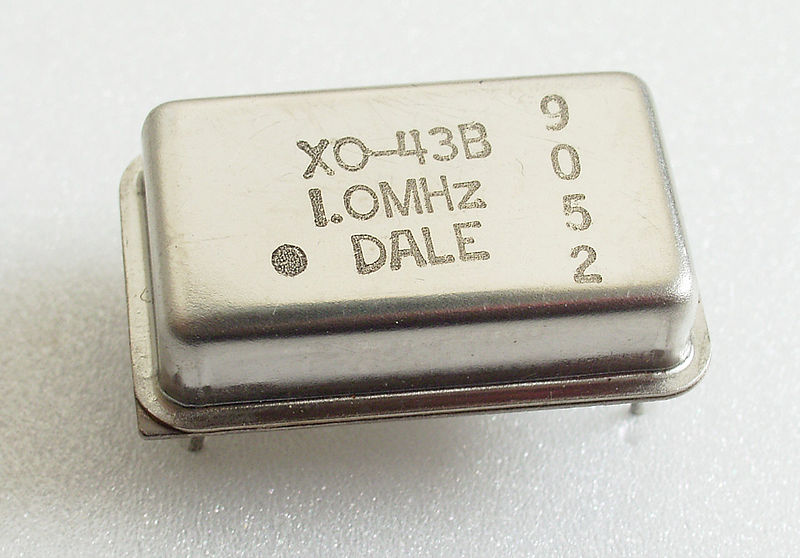
  • Crystal oscillator: This type of oscillator uses a crystal to create a very precise frequency.
  • Piezoelectric oscillator: This type of oscillator uses a piezoelectric crystal to create an oscillating signal.

Oscillators are essential components in many electronic devices. They are used to generate clock signals, control the frequency of radio waves, and produce audio signals. Oscillators are also used in a variety of other applications, such as medical imaging and telecommunications.

Here are some of the applications of oscillators:

  • Clock signals: Oscillators are used to generate clock signals in computers, digital watches, and other electronic devices. The clock signal is used to synchronize the operation of the device.
  • Radio waves: Oscillators are used to generate radio waves in radios, televisions, and other wireless devices. The frequency of the radio wave determines the channel that the device is tuned to.
  • Audio signals: Oscillators are used to generate audio signals in speakers, headphones, and other audio devices. The frequency of the audio signal determines the pitch of the sound.
  • Medical imaging: Oscillators are used in medical imaging devices, such as ultrasound machines and MRI scanners. The oscillators are used to generate the high-frequency waves that are used to create the images.
  • Telecommunications: Oscillators are used in telecommunications devices, such as cell phones and satellite receivers. The oscillators are used to generate the signals that are used to transmit and receive data.

An oscillator converts

What is oscillation?

It’s a movement back and forth. Example: Pendulum of a clock. hands of the clock.

Transistor as Oscillator

An electronic oscillator basically converts dc energy into ac energy of high frequency ranging from a few Hz to several MHz. There are two types of oscillators: one is Sinusoidal and Non-Sinusoidal.

Sinusoidal oscillators generate oscillations in the form of sine waves at constant amplitude and frequency. Whereas non-sinusoidal oscillators generate complex non-sinusoidal waveforms like a square wave, triangular wave, or Sawtooth wave.

Sinusoidal oscillation can be of two types: Damped and Undamped. If the amplitude of the electrical oscillation decreases with time due to energy loss is called Damped oscillation.

On the other hand, the amplitude of the electrical oscillation remains constant with time in undamped oscillation.

Application of Oscillator

  • To generate periodic sinusoidal or non-sinusoidal waveforms.
  • To generate RF carriers
  • To generate audio tones
  • To generate a clock signal in digital circuits
  • Sweep circuits in TV sets and CRO.

Semiconductor optoelectronic devices applications

Optoelectric devices

The devices that convert electrical energy into light and light into electrical energy through semiconductors.

Example of Optoelectric devices is Light-emitting diodes, photodiodes, and solar cells.

Light Emitting Diode (LED)

LED is a p-n junction diode that emits visible or invisible light when forward biased. The electrical energy is converted into light energy and this process is called electroluminescence.

The color of the light is determined by the energy bandgap of the material.LEDs are available in a wide range of colors such as blue (SiC), green (AlGaP) and red (GaAsP), white (GaAsP).

Application of LED

  • Indicator lamps
  • Seven segment display
  • Traffic signal

Photodiodes

A p-n junction diode that converts the optical signal into an electric current is called a photodiode. The operation of the photodiode is exactly the opposite of LED.

Photodiode works in reverse bias. Photodiodes can generate current when the p-n junction is exposed to light and are called light sensors.

Applications of Photodiodes

  • Alarm
  • Count items in conveyor belts in industries
  • Photoconductors
  • Compact disk players
  • Smoke detectors
  • A medical application such as detector for computer tomography etc

Solar Cell

A solar cell is also called a photovoltaic cell that converts light energy into electricity or electric potential difference by the photovoltaic effect.

A solar cell is of two types- p-type and n-type. Many solar panels are connected with each other to solar arrays.

For high power applications, solar panels and solar arrays are used.

Application of Solar Cell

  • Used in calculators, watches, portable power suppliers.
  • Power supply for satellites and space modules.
  • Solar panel used to generate electricity
* * All the Notes in this blog, are referred from Tamil Nadu State Board Books and Samacheer Kalvi Books. Kindly check with the original Tamil Nadu state board books and Ncert Books.