Law 1: A ray of light which is parallel to the optic axis or principal axis of a convex mirror seems to be coming from its principal focus after reflection from the mirror.
The light is parallel to the optic axis and mirror is convex
Law 2: A ray of light going towards the centre of curvature is reflected along the same path.
Light going towards the Centre of curvature and mirror is convex
Law 3: A ray of light going to the principal focus of a convex mirror becomes parallel to the principal axis reflection.
Light going to the principal axis and mirror is convex
Law 4: A ray of light which is incident at the pole of a convex mirror is reflected giving the same angle with the principal axis.
Light which is incident at pole and mirror is convex
Image generation a convex mirror
When the object is placed in the infinity, the image is formed behind the mirror at F. The size of the image is highly diminished, virtual and erect.
When the object is placed in between P and infinity, the image is formed behind the mirror, which is virtual, erect and diminished.
Uses of Convex Mirrors
Used in Rearview mirrors in vehicles, as it provides an erect and wider view.
Convex mirrors installed on roads as traffic safety, in bends, mountain passes.
Characteristics of Sound WaveThere are five characteristics of sound. They are:
Speed or Velocity, Amplitude, Frequency, period, Wavelength
Figure 2: Characteristics of Sound Wave
Amplitude(A)
Amplitude is the displacement of the particle of the medium from its original position when the wave is passed through it. If the displacement of the particle is maximum, it is understood that the Amplitude is high. As a result, the sound is also high.
Similarly, if the displacement of the particle is less, then the vibration is also less. It is understood that the Amplitude is less. As a result, the sound is low. Amplitude is denoted as A
Its SI unit is the meter (m).
Frequency (n)
The number of vibrations produced (waves or cycles) produced per second is called the frequency of the wave. The SI unit of Frequency is S-1 or Hertz(Hz). A human ear can recognize sound only that ranges from 20 Hz to 20,000 Hz.
The sound which is less 20Hz is called Infrasonic Sound. A sound that is greater than 20,000 Hz is called Ultrasonic Sound. A human ear cannot recognize or hear a sound that is below 20 Hz or about 20,000 Hz.
Simply Humans cannot hear Infrasonic and Ultrasonic Sounds.
Time-Period (T)
The time needed for one complete cycle or wave or vibration is called Time-Period of the wave. The time period is denoted as T. The SI unit of the time period is Second (S).
The frequency and time are reciprocal to each other. That is T=1/F or F=1/T.
Wavelength (λ)
The shortest distance in which a wave repeats itself is called Wavelength. The distance between the centres of two back-to-back compressions or rarefactions is called Wavelength.
The wavelength is denoted by λ. The SI unit of wavelength is the metre (m).
Velocity (V)
Velocity is simply the distance traveled by a sound wave in one second. The unit of Velocity is MS-1 ( M/S).
Reverberation
In big halls the sound produced from the speaker hits the wall, the multiple echoes are produced and are reduced to a value to zero after some time. This persistence of sound due to multiple reflections is called reverberation.
In cinema halls or theatres is designed such a way that the reverberation is optimal for a good audio experience. The walls, floor, etc are fixed with sound absorbers such as rough plaster, draperies, flannel cloths, fiberboard, etc.
Also, seats are made of sound-absorbing materials. A cinema hall is the one that provides good audio and video experience. A poor audio experience disturbs the cinema experience.
There is a separate branch in physics called Acoustics, where it deals with designing of Cinema Halls, theatres, auditoria etc.
The sound waves greater than 20,000 Hz is called ultrasonic sound. Humans cannot hear ultrasound and some animals can hear. Ex: Dogs, Deer etc. Ultrasonic whistles are used in vehicles such as cars to alert Deers that cross the roads.
Ultrasonics has an important application in the medical field. It is used as an alternative to X-Rays used to image internal organs, tissues, bones etc. The ultrasonics hit the internal organs and the reflection is captured by the computer and processed to give an X-Ray Image called an Echogram.
Ultrasound Range Diagram By Ultrasound_range_diagram.png: The original uploader was LightYear at English Wikipedia.Ultrasound_range_diagram_png_(sk).svg: The original uploader was LightYear at English Wikipedia.derivative work: Coolth (talk) – Ultrasound_range_diagram.pngUltrasound_range_diagram_png_(sk).svg, CC BY-SA 3.0, https://commons.wikimedia.org/w/index.php?curid=10755419
Ultrasonics is also used in Marine Surveying. Animals such as dolphins, oil birds, rats, and bats navigate using ultrasonic waves. Bats, some toothed whales, and dolphins use echolocation, an ultrasonic technique that is used to locate and identify objects.
Echolocation is used to navigate and catch their prey. Many Nocturnal insets such as Grasshoppers, praying mantis, beetles, moths, lacewings etc have ultrasonic hearing which helps them to escape.
Oilbirds use ultrasonic waves to fly at night, they lower echolocation frequencies compared to bats and other nocturnal insects.
Application of Ultrasonic waves
Used for cleaning purposes, small foreign particles can be removed from objects in a liquid bath via which the ultrasonic is passed.
Used to detect cracks and defects in metal blocks.
They are used in medicine for electrocardiography.
Used to break kidney stones, and flushed them out with urine.
A medical ultrasound on small paper By Julan Shirwod Nueva – Own work, CC BY-SA 4.0, https://commons.wikimedia.org/w/index.php?curid=82677143
Sonar
Used to calculate the distance, speed of underwater objects, and direction. It has a transmitter and a detector ( receiver) installed at the bottom of boats and ships. The transmitter transmits ultrasonic waves, it hits the objects such as rocks on the water surface, or seabed and gets reflected.
Sonar Image under the sea By Tuukritööde OÜ – Muinsuskaitseamet, CC BY-SA 4.0, https://commons.wikimedia.org/w/index.php?curid=38704726
The detector detects the reflected signals and calculates the target’s distance by measuring the difference between the transmission time and reception of reflected waves. The time interval between the transmission and reception of ultrasound is ‘t’ and the speed of sound through seawater is 2d = v x t. This method is called echo ranging.
Sonar is widely used in sea navigation to detect underways valleys, hills, icebergs, submarines etc.
ECG (Electrocardiogram)
In ECG the sound variations produced by the heart are converted into electrical signals.ECG is simply a representation of electric changes in the heart concerning time. Usually, the output is printed on paper for easy analysis.
The ear is a sensitive organ used to hear. It converts the pressure variations in the air with audible frequencies into electric signals sent through the auditory nerve to the brain.
The outer ear is known as Pinna. Pinna collects the sound. Then it travels via the auditory canal. At the auditory canal end, there is an eardrum or tympanic membrane.
The pressure created by vibration pushes the membrane of the eardrum inward or outward.
The eardrum vibrates, the vibration is amplified by the three bones namely stirrup, anvil, and the hammer in the middle part of the ear.
The middle ear sends the amplified vibration to the inner ear. In the inner ear, the Cochlea converts the vibration into electrical signals. These electrical signals are sent to the brain via the auditory nerve and the brain interrupts them as sound.
Christian Doppler (1803-1853), observed that the sound received by a listener is different from the original frequency produced when there is relative motion between the source and the receiver.
What is the doppler effect?
That is whenever the listener or source moves the frequency is changed from the original. This is called the Doppler effect.
The relative motion is due to :
The listener moves towards or away from the source. The source (Train, Speaker, Bus) moves towards or away from the listener.
Both the listener and the source move towards or away from each other. The medium moves when both source and listener are at rest.
Application of Doppler Effect
Police use to calculate the speed of vehicles inroads.
To track the satellites using the frequency of radio waves emitted, as frequency decrease when it passes away from the earth.
Radar(Radio Detection and Ranging) uses reflected waves to calculate the distance the object passes by such as airplanes, missiles.
Sonar is used to calculate the distance of underwater objects, like submarines, rocks, icebergs, etc.
Doppler Effect in Sound
In Physics, the Doppler effect is defined as the increase or decrease of the frequency of the wave in relation to an observer who is moving relative to the wave source.
Examples of Doppler effect in Sound
Pitch of a siren on a fire engines or ambulance. As the siren passes the observer, the pitch of siren suddenly drops in pitch. Initially the siren is coming towards the observer, then the pitch is high. After passing the observer, the siren is moving away from the observer then the is pitch is lower. This is an indication of the Doppler effect.
Doppler effect in light
The light waves leave the source and reach the observer, caused by the relative motion of the observer and wave source.
Doppler affects the lights produced by other bodies in space. When the body in space is “Blue Shifted“, its light waves are compacted and come towards the observer. If it is “redshifted” the waves of light are spread apart and travel away from the observer.
What are blueshift and redshift?
Redshift and Blueshift is the change in frequency of the light waves when the source is moving towards or away from the observer. When the object moves away from the observer, it is called redshift. Or when the object moves towards the observer, then the light from the sources is called blueshift.
How is the Doppler effect different for light?
The main difference between the doppler effect between sound and light is, in sound the velocity of the observer and source are relative to the medium. But the Doppler effect in light, where only the relative difference in velocity between the observer and source is vital.
Example
When the police move slowly passes the observer, the observer noticed no color change. But when the police car, moves faster passes the observer, the observer notices that the light changes to blue. Moreover, when the polices car moves away from the observer, the color changes to red. This Doppler effect for light works similarly to the doppler effect for sound.
How is the Doppler effect used in astronomy?
Astronomers regularly calculate how quickly the galaxies and stars move away from us (observers) by calculating the range to which the light is “stretched” into the low frequency, red region of the spectrum.
Sound is reflected or bounced back like a ball when it hit any object.
Laws of reflection of sound
The angle of incidence is equal to the angle reflected for a sound. The direction of the incident sound, direction of reflected sound, and the normal all lie in the same plane.
Uses of Multiple reflections of sound
a.Musical Instruments
Musical instruments such as Trumpets are designed in a particular design where the sound is not spread.
In these instruments, a tube is followed by a conical opening to guide the sound to the audience. Some of the instruments that use this method are Nadhaswaram, shehnai, loudspeaker, horns, megaphones, etc.
Trumpets By This file was contributed to Wikimedia Commons by Toledo-Lucas County Public Library as part of a cooperation project. The donation was facilitated by the Digital Public Library of America, via its partner Ohio Digital Network.Source record: http://www.ohiomemory.org/cdm/ref/collection/p16007coll33/id/12453DPLA identifier: c8a7388ca20497adf863257a4a0cfa38, Public Domain, https://commons.wikimedia.org/w/index.php?curid=90268015
b.Stethoscope
It is a medical instrument used to listen to sounds produced from the body. The sounds produced from the body reach the doctor’s ears after multiple reflections in the connecting tube.
Stethoscope works by reflection of sounds By this version: Sonarpulse. origenal:Huji – modified version made by myself of image:Stethoscope-2.jpg, Public Domain, https://commons.wikimedia.org/w/index.php?curid=4045290
Noise
Noise is a bad sound or unpleasant sound. A loudness of more than 120 dB (Decibel) and higher cause pain to the ear.
Continued exposure of 120 dB or more causes hearing problems or permanent hearing loss. Temporary hearing loss can be experienced with being exposed to a loud band for a long time or a loud bang for a short time.
A hearing can be avoided in workplaces by wearing ear protectors.
Echo
When sound-wave hit on reflecting surfaces such as tall buildings, mountains, etc, it will the reflection the same, This reflection is called an Echo.
The sound sensation persists or continues in our brain for about 0.1s.
Condition for Echo:
To hear a distinct echo, the time interval between the original and the echo must be at least 0.1s.
The sound must hit the reflecting surface or object and return to the listener after 0.1 s.
The total distance of sound traveled from the reflecting surface to the sound source should be at least 340 ms-1 x 0.1 s = 34m at 25-degree Celcius.
Thus for hearing echoes, the minimum distance must be 17m. This distance will be changed with the temperature of the air. Echoes may be heard multiple times due to multiple reflections.
The huge thunder sound is due to multiple reflections from the clouds at different heights and the land.
Dolphin Waves
Dolphin uses sound waves to navigate and to determine the shape, size, speed of moving objects in the waters. Dolphin uses a technique known as echolocation. By this technique, the dolphin produces high-frequency waves (click).
When this wave gets reflection from any object, the dolphins receive by their lower jaw and foreheads. These body parts of dolphins have enormous fatty tissue, that acts as a sensor and channelizes to its ear. That makes the dolphin see objects using sound for its navigation and food.
It is the distance traveled by sound waves per unit time through an elastic medium.
Speed (v) = Distance/ Time
If the distance traveled by one wave is taken together as one wavelength (λ), and therefore the time taken for this propagation is just one time period (T),
Speed (v) = One Wavelength (λ) / One Time Period (T) or v = λ/T.
Where T= 1/n and v = n λ
The speed of the sound stays the same for almost all the frequencies for a given medium under the same physical conditions.
Speed of Sound in Different Media
Sound travels via a medium at a finite speed.
The sound of the thunder during rain is heard only after the lightning is seen.
This indicates sound travels with lesser speed compared to light.
The velocity of sound is based on the nature of the medium.
The velocity of sound in a gaseous medium depends on the pressure, temperature, density, nature of the medium.
The velocity of the sound is higher in water by 5 times than in air.
Sound Speed is great in seawater with about 1530 ms-1 that is more than 5500 km h-1
Two whales communicate even hundreds of kilometers away.
The speed of sound in a solid medium depends on the elastic property, temperature, density of the medium.
The velocity of sound is less gas medium compared to the liquid medium and solid medium.
the speed of sound can be increased by increasing the temperature of any medium.
The speed of sound in air is 330ms-1 at 0-degree Celsius and 340ms-1 at 25 c.
Below table is the Speed of Sound in Different Medium
Loudness is a measure of which a sound can be differentiated from another one, that has the same frequency. Loudness or softness depends on the amplitude.
Loud sound travels long-distance than as loudness or soundness is associate with higher energy.
Sound decreases as we move away from the source as the amplitude decreases.
Figure 3: Soft and Loud Sound – Shape of the wave is the same
The shape of a wave of loud sound and the soft sound remains the same.
The loudness of the sound relies on the intensity of the sound wave.
The intensity of sound depends on:
The amplitude of the source sound
Distance from source
Source Surface Area (Size of Speaker diaphragm)
Medium’s Density (Air, Water etc)
Frequency
The unit of sound is the decibel(dB). It is named after the inventor of Telephone – Alexander Graham Bell.
Figure 4: Intensity of level of Sounds in different environments
Pitch
Pitch is the characteristics of sound, it is differentiated as it is shrill or base.
High pitch sound is sharp or shrill and low pitch sound is flat.
Two sounds from the same musical instrument with the same amplitude will differ when their vibration are of different frequency.
Figure 5: Longitudinal Nature of Sound
Timbre or Quality
Timbre is the nature which differentiates two sounds of the same loudness and pitch emitted by two different instruments.
A sound of only one or single frequency is called a tone.
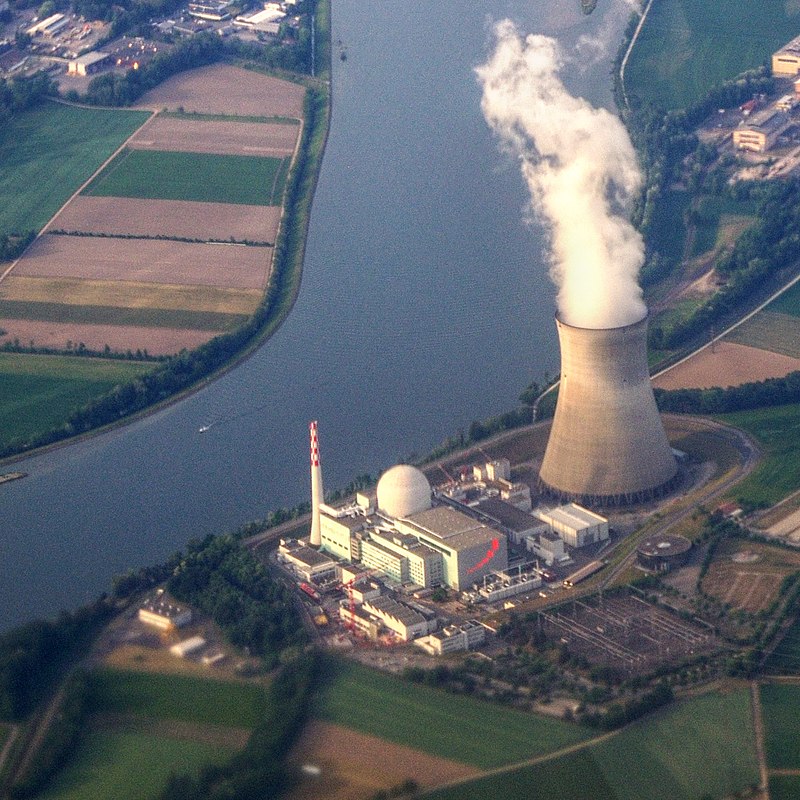
Nuclear energy produced by using a Nuclear Reactor is a power generation environment where a Control Nuclear Fission reaction is used to produce power.
Nuclear energy, a powerful and relatively low-carbon source of electricity, is produced through a complex process known as nuclear fission. This process involves splitting the nuclei of atoms, usually uranium-235 or plutonium-239, to release a tremendous amount of energy.
The energy generated is then converted into electricity through a series of well-orchestrated steps, including heat generation, steam production, and turbine rotation. In this post, we’ll take you through a detailed, step-by-step guide to understanding how nuclear energy is produced, from fuel preparation to the management of radioactive waste.
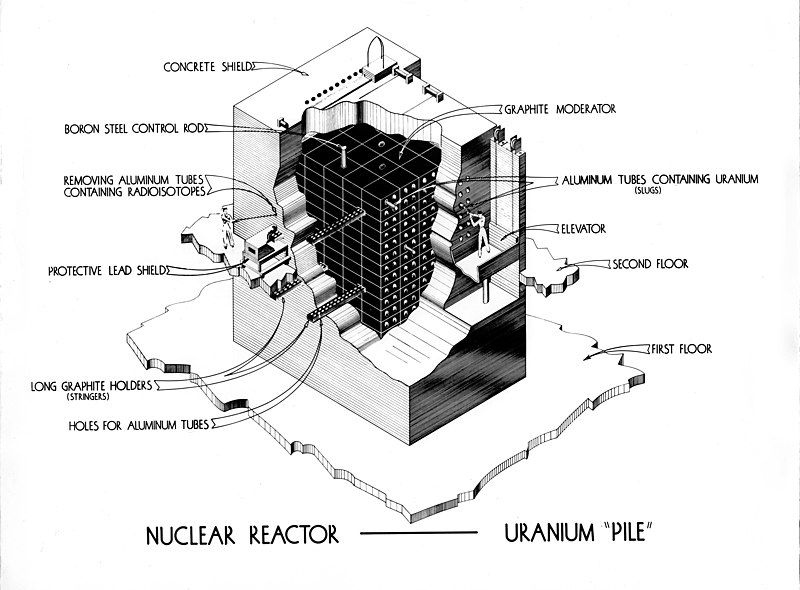
We built the first Nuclear Reactor in Chicago, USA in 1942.
Components of Nuclear Reactor
The major parts of the Nuclear Reactor are:
Fuel
Moderator
Control Rod
Coolant
Protection Wall
1. Fuel
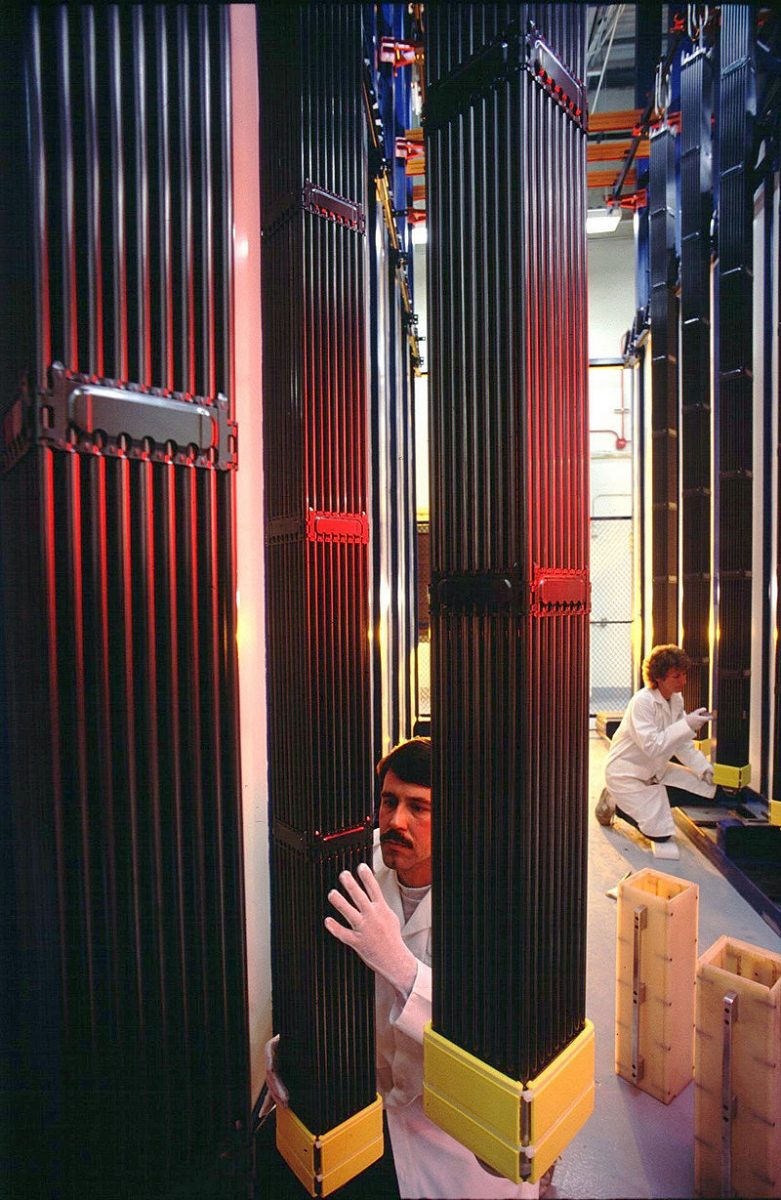
Nuclear fuel refers to the material used in nuclear reactors to sustain a chain reaction. The most commonly used nuclear fuels are uranium and plutonium. These elements contain isotopes that can be split into smaller parts when struck by a neutron, releasing a tremendous amount of energy in the process.
It is a fissile material that is the fuel for Nuclear reactors. The most commonly used Nuclear Fuel is Uranium.
Example of Nuclear Fuel
Uranium-235: The most prevalent nuclear fuel, uranium-235 is a naturally occurring isotope of uranium. It is favoured for its ability to sustain a nuclear chain reaction.
Plutonium-239: Created from uranium-238 in a reactor, plutonium-239 is another isotope capable of sustaining fission. It is commonly used in mixed oxide (MOX) fuel, which combines plutonium and uranium.
Thorium-232: An emerging nuclear fuel, thorium-232 can be converted into uranium-233 through a neutron absorption process. It offers a potentially safer and more abundant alternative to uranium and plutonium.
Nuclear Fuel Assembly By NRC
2. Moderator
A moderator in a nuclear power plant is a material used to slow down fast neutrons produced during nuclear fission. The slowing down of neutrons is crucial because slow (thermal) neutrons are more likely to cause further fission in fuel nuclei, such as uranium-235 or plutonium-239, sustaining the chain reaction needed for continuous energy production.
2.1 Function of Moderators
2.1.1 Slowing Down Neutrons
Neutrons released during fission are initially very fast and have high energy. Moderators reduce the speed and energy of these neutrons, making them more effective in sustaining the chain reaction.
2.1.2 Increasing Fission Probability
Slow (thermal) neutrons have a higher probability of being captured by the fuel nuclei, thereby increasing the likelihood of further fission events.
2.1.3 Increasing Fission Probability
Slow (thermal) neutrons have a higher probability of being captured by the fuel nuclei, thereby increasing the likelihood of further fission events.
2.1.4 Maintaining Reactor Stability
By ensuring a steady rate of fission, moderators help maintain the stability and control of the nuclear reactor, preventing runaway reactions or shutdowns.
2.2 Types of Moderators
2.2.1 Water
Light water (ordinary H2O) is the most common moderator used in nuclear reactors, especially in Pressurized Water Reactors (PWR) and Boiling Water Reactors (BWR). It serves the dual purpose of acting as a coolant and a moderator.
2.2.2 Heavy Water
Heavy water (D2O) contains deuterium, an isotope of hydrogen, and is used in reactors. Heavy water is an excellent moderator because it is less likely to absorb neutrons than light water.
2.2.3 Graphite
Graphite is a form of carbon used as a moderator in reactors like the RBMK (Reaktor Bolshoy Moshchnosti Kanalny) and some gas-cooled reactors. It effectively slows down neutrons without capturing them.
2.2.4 Beryllium
Beryllium is a lightweight metal that can also serve as a moderator. It is less common but used in some research reactors due to its low neutron absorption properties.
2.3 Importance of Moderators
2.3.1 Control of Fission Reaction
Moderators are essential for controlling the fission reaction rate, ensuring that it proceeds at a stable and manageable rate.
2.3.2 Efficiency and Safety
Proper moderation increases the efficiency of the nuclear reactor, leading to higher energy output and reduced fuel consumption. Additionally, effective moderation enhances the overall safety of the reactor by preventing uncontrolled reactions.
3.Control Rod
Control Rod
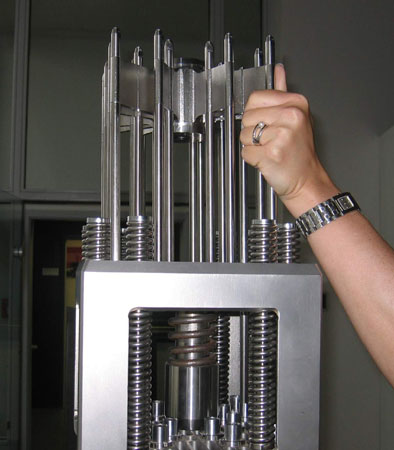
Control rods are used to control the number of neutrons to control the chain reaction. The most widely used control rods are Boron or Cadmium.
Control rods are long, slender tubes made of neutron-absorbing materials. They are inserted into the nuclear reactor core alongside fuel rods. Their primary function is to control the rate of the nuclear fission reaction by absorbing excess neutrons, which are essential to sustaining the chain reaction.
3.1 Function of Control Rods
3.1.1 Regulating the Reaction
By absorbing neutrons, control rods reduce the number of neutrons available to cause further fission. This allows operators to adjust the reactor’s power output as needed.
3.1.2 Shutting Down the Reactor
In the event of an emergency or planned shutdown, control rods are fully inserted into the reactor core to absorb a maximum number of neutrons, effectively halting the fission reaction.
3.1.3 Maintaining Stability
By adjusting the position of control rods, operators can maintain a stable and controlled fission reaction, preventing both runaway reactions and unplanned shutdowns.
3.2 Materials Used in Control Rods
Control rods are made from materials with a high capacity for absorbing neutrons. Common materials include:
Boron: Often used in the form of boron carbide (B4C), boron is an effective neutron absorber.
Cadmium: Cadmium rods are efficient at absorbing thermal neutrons and are commonly used in many reactor designs.
Hafnium: Hafnium is another material known for its neutron absorption properties and is used in some reactors.
Silver-Indium-Cadmium (Ag-In-Cd) Alloy: This alloy combines the properties of silver, indium, and cadmium to create highly effective control rods.
4. Coolant
A coolant is a substance used to remove heat from the reactor core and transfer it away to a secondary system where it can be used to generate electricity or be dissipated. Coolants ensure that the reactor operates within safe temperature limits, preventing damage to the reactor and maintaining the integrity of the fuel.
4.1 Function of Coolants
4.1.1 Heat Removal
The primary function of a coolant is to absorb the heat produced during nuclear fission and transport it away from the reactor core.
4.1.2 Temperature Regulation
Coolants help regulate the temperature within the reactor, ensuring it remains within safe operational limits.
4.1.3 Steam Production
In many reactors, the heat carried by the coolant is used to produce steam, which then drives turbines to generate electricity.
4.1.4 Safety
By preventing overheating, coolants play a vital role in maintaining the safety and stability of the reactor.
4.2 Types of Coolants
4.2.1 Water
4.2.1.1 Light Water
Ordinary water (H2O) is the most common coolant used in nuclear reactors, particularly in Pressurized Water Reactors (PWR) and Boiling Water Reactors (BWR). It acts as both a coolant and a moderator.
4.2.1.1 Heavy Water
Heavy water (D2O) contains deuterium, an isotope of hydrogen. It is used in reactors like the CANDU (Canada Deuterium Uranium) reactors. Heavy water is an excellent moderator and coolant due to its low neutron absorption properties.
4.2.2 Gas
4.2.2.1 Carbon Dioxide (CO2)
Used in some gas-cooled reactors, carbon dioxide is an effective coolant due to its ability to transfer heat efficiently.
4.2.2.2 Helium
An inert gas with excellent heat transfer properties, helium is used in High-Temperature Gas-Cooled Reactors (HTGR) and other advanced reactor designs.
4.2.3 Liquid Metals
4.2.3.1 Sodium
Liquid sodium is used in fast breeder reactors due to its high thermal conductivity and ability to operate at high temperatures without pressurization.
4.2.3.2 Lead and Lead-Bismuth Eutectic
These liquid metals are used in some advanced reactor designs for their excellent heat transfer capabilities and high boiling points.
4.2.4 Molten Salts
Molten salts, such as fluoride or chloride salts, are used in Molten Salt Reactors (MSR) due to their ability to operate at high temperatures and their good heat transfer properties.
4.2.5 Importance of Coolants
4.2.5.1 Safety
Coolants are critical for maintaining the safe operation of the reactor by preventing overheating and potential meltdowns.
4.2.5.2 Efficiency
Effective heat removal and transfer by coolants ensure that the reactor operates efficiently, maximizing energy production.
4.2.5.3 Versatility
Different types of coolants allow for various reactor designs, each with specific advantages and applications.
5. Protection Wall
Nuclear reactor Protection Wall
Protection walls, also known as containment structures or barriers, are critical safety features in nuclear power plants. These walls are designed to contain the release of radioactive materials and protect the environment and people from potential hazards. In this blog post, we will explore the function, types, and importance of protection walls in nuclear power plants.
5.1 Function of Protection Walls
5.1.1 Containment
Protection walls are designed to contain any radioactive materials that might be released during normal operation or in the event of an accident. This ensures that harmful radiation does not escape into the environment.
5.1.2 Shielding
These walls provide shielding against radiation, protecting plant workers and the surrounding community from exposure.
5.1.3 Structural Support
Protection walls also offer structural support to the reactor building, enhancing the overall integrity and stability of the facility.
5.2 Types of Protection Walls
5.2.1 Primary Containment
The innermost barrier surrounding the reactor core, designed to contain radioactive materials under all conditions. It includes components like the reactor pressure vessel and the biological shield.
5.2.2 Secondary Containment
An additional layer outside the primary containment, providing extra protection. It typically includes reinforced concrete walls and steel liners.
5.2.3 Tertiary Containment
In some designs, a third layer of containment may be present to provide further security and redundancy.
5.3 Importance of Protection Walls
5.3.1 Safety
The primary purpose of protection walls is to ensure the safety of the plant workers, the public, and the environment by preventing the release of radioactive materials.
5.3.2 Regulatory Compliance
Protection walls help nuclear power plants meet strict safety and regulatory standards set by national and international authorities.
5.3.3 Public Confidence
The presence of robust containment structures enhances public confidence in the safety of nuclear power plants.
Nuclear energy is commonly measured in Joules.
Uses of Nuclear Reactor
Used for power generation
Used to produce Radio Isotopes that used for various application such as Medicine, Industries, etc.
Used for research in Nuclear Physics.
Used to convert non-fissionable material into fissionable material.
Types of Nuclear Reactor
Breeder reactor
Fast Breeder Reactor
Pressurized Water Reactor
Pressurized Heavy Water Reactor
Boiling Water Reactor
Water-Cooled Reactor
Gas-Cooled Reactor
Fusion Reactor
Thermal Reactor
Conclusion
Understanding the step-by-step process of how nuclear energy is produced provides insight into one of the most powerful and efficient means of generating electricity. From the initial fuel preparation and nuclear fission reaction to the final generation of electricity, each step is meticulously designed to harness the immense energy contained within atomic nuclei. The use of nuclear energy, despite its complexities, offers a sustainable and low-carbon alternative to traditional fossil fuels. As advancements continue in nuclear technology, ensuring safety and efficiency remains paramount, further solidifying its role in meeting the world’s growing energy demands. By appreciating the intricate details and safety measures involved, we gain a deeper respect for this remarkable source of power that lights up our homes and powers our industries.
* * All the Notes in this blog, are referred from Tamil Nadu State Board Books and Samacheer Kalvi Books. Kindly check with the original Tamil Nadu state board books and Ncert Books.