
UN Sustainable Development Goals
Sustainable Development Goals aim to address issues like poverty, water, health, sanitation, education, etc. The 2030 Agenda for the UN Sustainable Development Goals was adopted by all UN Members in 2015. It provides shared planning and blueprints for peace and prosperity for the people around the globe today and tomorrow.
To propose the Sustainable Development Goals (SDGs), the General Assembly set up a 30-member Open Working Group in 2013.
Need for sustainable development
The need for sustainable development starts with the average global temperature and the climate change that caused it. As per the World Meteorological Organisation (WMO), the year 2016 was the warmest year, with a temperature of 1° C more than the pre-industrial era, and this is due to El Niño and warming by greenhouse gases.
This has been increasing since the Industrial Revolution. According to the International Energy Agency report of 2015, the concentration of CO2 in 2014 was greater than in the 1800s. The energy sector was the largest contributor to greenhouse gas emissions, and Co2 has the largest share.
The global emission profile shows that the distribution is very unequal among different nations. For example, the emission of carbon dioxide from the USA, EU, and China is the greatest among all the countries. India, with 39gt of carbon dioxide emissions, is comparatively less than the USA 232 gt, the European Union (190.2 gt, and China (176.2 gt. Know more about air pollution.
In both absolute and per capita emissions, India is way behind the three major carbon dioxide emitters. The composition pattern reflects different varieties for different countries; for example, India and China are from the manufacturing industry, which emits CO2. On the other hand, CO2 emissions are large in fuel combustion for electricity in the USA and EU.
SDG Goals
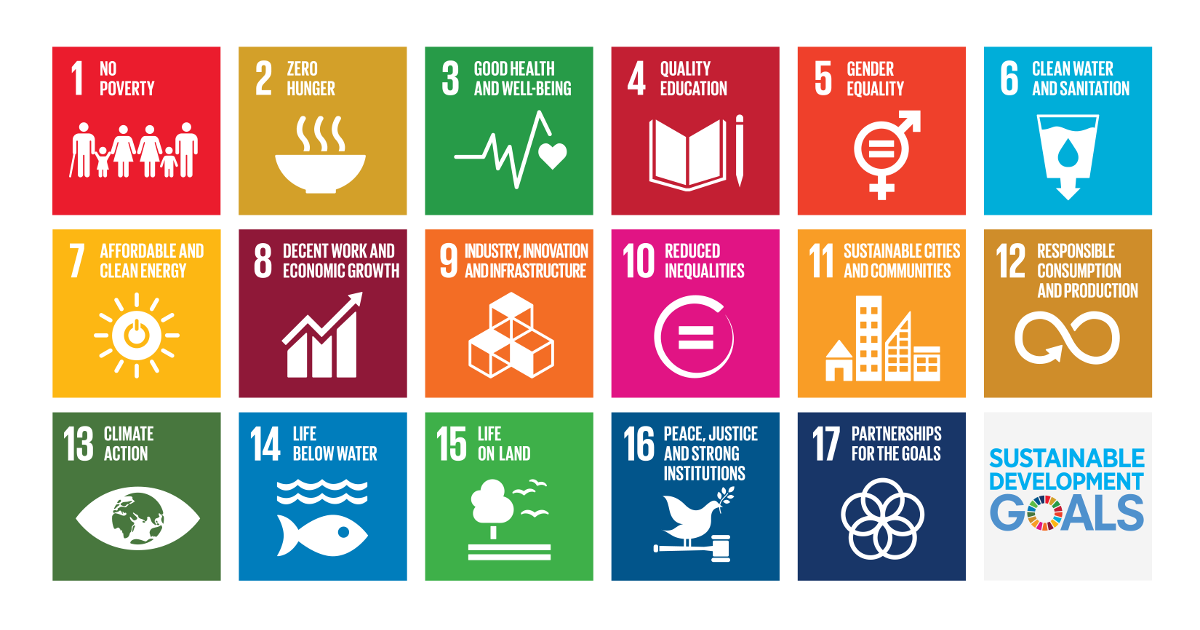
- The UN General Assembly in the 17th session in September 2015 announced 17 Sustainable Development Goals and 169 targets.
- These 17 goals and 169 targets for the next 15 years.
- This replaces the Millennium Development Goals (MDGs) ending in 2015 and tries to address the areas that were not completed.
- These goals were proposed at the United Nations conference Rio+20 on sustainable development in July 2012.
- These sustainable development goals will be effective from 2016 to 2030.
Major highlights of the Sustainable Development Goals.
- Eradicating poverty and combating inequalities.
- Women and girls’ empowerment and promoting gender equality.
- Improving health and education, and making cities much more sustainable.
- Combating climate change, protecting the oceans and the forests.
- Integrating social, economic and environmental dimensions.
- Sustainable development with global partnership.
- Effective follow-up and review architecture
- Enhancing the capacities of stakeholders for better quality assessment.
- Sustainable development using a compilation of data and information.
Purpose of SDG goals, targets and indicators?
- The Sustainable Development Goals are the blueprint to achieve a sustainable and better future for all.
- The SDGs try to address all-around global challenges such as poverty, inequality, climate change, degradation of the environment, justice, peace, etc.
- The 2030 Agenda for Sustainable Development provides a blueprint for peace, prosperity, and dignity for the people of today and for the future.
The number of SDG goals, targets and indicators?
- The 17 SDGs are defined in a list of 169 SDG targets.
- Progress towards these 169 targets is agreed to be tracked by 232 unique indicators.
- SDG Background
- 1: No Poverty.
- 2: Zero Hunger.
- 3: Good Health and Well-being.
- 4: Quality Education.
- 5: Gender Equality.
- 6: Clean Water and Sanitation.
- 7: Affordable and Clean Energy.
- 8: Decent Work and Economic Growth
- 9: Industry, Innovation, and Infrastructure
- 10: Reduced Inequalities
- 11: Sustainable Cities and Communities
- 12: Responsible Consumption and Production
- 13: Climate Action
- 14: Life Below Water
- 15: Life on Land
- 16: Peace, Justice and Strong Institutions
- 17: Partnerships for the Goals
- SDG Cross-Cutting SDG Issues
Conclusion
SDG goals, targets and indicators aspire to ensure the health and well-being of people, animals, nature, etc. It is a bold commitment to end epidemics such as TB, Malaria, Aids etc by 2030. It also tries to achieve universal health coverage, to provide safe and effective access to medicine and vaccines for all people and animals. This is what is mentioned in SDG3.
By eradicating poverty, health issues, women and child abuse, racial abuse and abuse of the environment, we could achieve the dream of the Sustainable Development Goals.
India’s Progress on Sustainable Development Goals 2025-2026 in the News
PACT FOR FUTURE
India has reaffirmed its commitment to the ‘Pact for the Future’ during a recent United Nations dialogue.
About the ‘Pact for the Future ’
● It is a historic international agreement adopted at the United Nations Summit of the Future in September 2024.
● It is designed as a wide-ranging, action-oriented pact to make the international system more inclusive, effective, and fit to address 21st-century global challenges. The Pact includes comprehensive commitments on peace and security, sustainable development, climate change, digital cooperation, human rights, gender equality, youth empowerment, and the transformation of global governance.
Key aspects of the Pact for the Future include:
● Strengthening multilateralism and international cooperation to tackle global issues. Specific pledges to accelerate progress towards the Sustainable Development Goals (SDGs) and climate action under the Paris Agreement.
● A Global Digital Compact to enhance digital cooperation and close digital divides, ensuring technology benefits all societies. A Declaration on Future Generations, committing nations to act responsibly for the welfare of people yet to be born.
● Promises to advance peace, human rights, gender equality, youth participation, and inclusivity. Calls for reforms in the UN system, including Security Council reform and strengthening UN bodies to make global governance more effective.
● Focus on sustainable development financing, food security, international peace, climate change, and technological innovation.
UN-India Global Capacity-Building Initiative
India has launched projects with the United Nations under the Global Capacity Building Initiative for countries in Asia, Africa, and the Caribbean.
About the Global Capacity Building Initiative (Launched in 2023)
● The Global Capacity Building Initiative is a collaborative effort between India and the United Nations aimed at strengthening the capacities of countries in the Global South to achieve the Sustainable Development Goals (SDGs).
● The implementation is carried out through the UN India SDG Country Fund and the Indian Technical and Economic Cooperation Programme (ITEC).
2nd World Summit for Social Development (WSSD)
The 2nd World Summit for Social Development (WSSD) was held in Doha, Qatar, with India represented by the Union Minister of Labour and Employment, Dr Mansukh Mandaviya.
About the World Summit for Social Development (WSSD)
● The WSSD is a United Nations–convened series of summits aimed at advancing global social development, poverty eradication, and social justice.
● The first WSSD, held in Copenhagen in 1995, marked a global consensus on people-centred development.
● It resulted in the adoption of the Copenhagen Declaration on Social Development and its Programme of Action.
● The second summit, held in Doha in November 2025, focused on accelerating progress towards the Sustainable Development Goals (SDGs) by addressing persistent challenges such as inequality and limited social protection.
DAKSHIN (Development and Knowledge Sharing Initiative)
Launched during the 1st Voice of Global South Summit (2023) by the Government of India.
- Aims to mobilise the Global South towards human-centric and sustainable development.
- Functions as an accelerator for achieving Agenda 2030 and the UN Sustainable Development Goals (SDGs).
