Water pollution causes effects and solutions Upsc

Water Pollution Definition

“The introduction (directly or indirectly) of substances or energy into the marine environment (including estuaries) results in deleterious effects to living resources, hazards to human health, a hindrance to marine activities” said United Nations, 1971.

Effects of Water Pollution

Water pollution adversely affects the health and life of man, animals, and plants alike. Polluted water is also harmful to agriculture as it adversely affects crops and soil fertility.

Pollution of seawater damages oceanic life. The effects can be catastrophic, depending on the kind of chemicals, concentrations of the pollutants.

The effects of water pollution are varied and depend on what chemicals are dumped and in which locations. Many water bodies near urban areas are highly polluted.

This is the result of both garbage dumped by individuals and dangerous chemicals legally or illegally dumped by manufacturing industries, health centres, and markets.

Death of aquatic animals

The main problem caused by water pollution is that it kills organisms that depend on these water bodies. Dead fish, crabs, birds and seagulls, dolphins, and many other animals often wind up on beaches, killed by pollutants in their habitat.

Disruption of food chains

Pollution disrupts the natural food chain as well. Pollutants such as lead and cadmium are eaten by tiny animals. Later, these animals are consumed by fish and the food chain continues disrupted at all higher levels.

Diseases

The discharge of untreated and under-treated effluent contributes to severe ecological degradation.
The indiscriminate human activities such as open defecation, solid waste dumping, discharge of drainage water are responsible for the pathogenic bacteria water-borne diseases like Hepatitis-A, Typhoid, Malaria, Dysentery, Jaundice, Dengue fever, Viral fever, and worm infections.

Destruction of Ecosystems

Ecosystems can be severely destroyed by water pollution. Many areas are now being affected by careless human pollution, and this pollution is coming back to hurt humans in many ways.

Remedial measures to Control Water Pollution

  1. Comprehensive water management plan.
  2. Construction of proper storm drains and settling ponds.
  3. Maintenance of drain line.
  4. Effluent and sewage treatment plant.
  5. Regular monitoring of water and wastewater.
  6. Stringent actions towards illegal dumping of waste into the water bodies.

Types of Water Pollution

a. Surface Water Pollution

The poisonous or Hazardous things come in contact with the surface waters of river, lakes, oceans, etc and it gets mixed with water. This is called Surface water pollution.

b. Groundwater Pollution

Groundwater Pollution occurs if human-made things such as Chemical, Petroleum products, or wastes comes into contact with groundwater.

Also, the untreated waste gets leaked from Septic tanks from Homes, hotels, Industries, underground storage tanks with Chemical or Petroleum products, landfills which may contaminate the groundwater.

c. Microbiological Pollution

This kind of pollution happens when Water bodies get affected naturally by microbes such as viruses, bacteria, etc. When this water is consumed without treating its property it might cause illness in Humans, Animals, and also aquatic species.

d. Oxygen depletion Pollution

This Pollution is caused in the water bodies, when the oxygen levels in the water get reduced, due to the aerobic organisms dying and they are replaced by anaerobic micro-organisms. These anaerobic microbes are harmful to animals, aquatic species, and also to humans as they produce harmful toxins such as Ammonic and Sulfides.

Causes of Water Pollution

Causes of Water Pollution
Causes of Water Pollution By Doreen Mbalo – https://www.flickr.com/photos/gtzecosan/6975426427/in/set-72157629202806662, CC BY 2.0, https://commons.wikimedia.org/w/index.php?curid=36322132

There are several factors that water pollution and they are:

Discharge of sewage and wastewater

Sewage, garbage and liquid waste of households, agricultural runoff, and effluents from factories are discharged into lakes and rivers. These wastes contain harmful chemicals and toxins which make the water poisonous to aquatic animals and plants.

Dumping of solid wastes

The dumping of solid wastes and litter in water bodies causes huge problems.

Discharge of industrial wastes

Industrial waste contains pollutants like asbestos, lead, mercury, grease oil, and petrochemicals, which are extremely harmful to both people and the environment.

Discharge of industrial wastes

Industrial waste contains pollutants like asbestos, lead, mercury, grease oil, and petrochemicals, which are extremely harmful to both people and the environment.

Oil Spill

Seawater gets polluted due to oil spilt from ships and tankers while travelling. The spilt oil does not dissolve in water and forms a thick sludge polluting the water.

Acid rain

Acid rain is the pollution of water caused by air pollution. When the acidic particles caused by air pollution in the atmosphere mix with water vapour, which results in acid rain.

Global warming

Due to global warming, there is an increase in water temperature as a result aquatic plants and animals are affected.

Eutrophication

Eutrophication is an increased level of nutrients in water bodies. This results in the bloom of algae in the water. It also depletes the oxygen in the water which negatively affects fish and other aquatic animal populations.

Water pollution causes global warming

Water pollution and global warming are two distinct environmental issues with separate causes and consequences. While water pollution can have various negative impacts on aquatic ecosystems and human health, global warming refers to the long-term increase in Earth’s average temperature due to the accumulation of greenhouse gases in the atmosphere.

The primary cause of global warming is the excessive emission of greenhouse gases, such as carbon dioxide, methane, and nitrous oxide, mainly through human activities like burning fossil fuels, deforestation, and industrial processes.

However, it is important to note that there can be indirect connections between water pollution and global warming. For example, certain types of water pollutants, such as certain industrial chemicals and agricultural runoff, can contribute to the generation of greenhouse gases.

Furthermore, pollution in the form of aerosols and particulate matter can have both cooling and warming effects on the climate system, depending on their composition and distribution in the atmosphere.

To address both water pollution and global warming, it is crucial to adopt sustainable practices and policies that reduce the emission of pollutants, promote conservation and protection of water resources, increase reliance on renewable energy sources, and encourage responsible waste management.

By addressing these issues holistically, we can work towards a healthier and more sustainable planet for future generations.

Solution of water pollution

Water pollution is a pressing environmental issue that requires collective efforts to find solutions. Here are some measures that can help address and prevent water pollution:

  1. Improve wastewater treatment: Ensuring that wastewater from industries, households, and agriculture is properly treated before being discharged into water bodies can significantly reduce pollution levels. Implementation of advanced treatment technologies and regular monitoring can help in this regard.
  2. Implement strict regulations: Governments should enforce strict regulations and standards for industries, agricultural practices, and waste disposal. This includes setting limits on the discharge of pollutants, promoting sustainable farming practices, and penalizing those who violate environmental regulations.
  3. Promote sustainable agriculture: Encouraging farmers to adopt sustainable agricultural practices, such as organic farming and responsible use of fertilizers and pesticides, can help reduce chemical runoff into water bodies.
  4. Reduce plastic pollution: Plastic pollution is a major contributor to water pollution. Implementing measures to reduce plastic consumption, promote recycling, and properly manage plastic waste can prevent it from entering water bodies.
  5. Protect and restore wetlands: Wetlands play a crucial role in filtering pollutants and preserving water quality. Protecting existing wetlands and restoring degraded ones can help in reducing water pollution.
  6. Promote public awareness: Educating the public about the impacts of water pollution and the importance of responsible water use can bring about behavioral changes. This can include promoting water conservation, proper waste disposal, and reducing the use of pollutants in households.
  7. Encourage green infrastructure: Implementing green infrastructure solutions, such as rain gardens and permeable pavements, can help in managing stormwater runoff and reducing the amount of pollutants entering water bodies.
  8. Invest in research and innovation: Supporting research and development efforts to find innovative and sustainable solutions for water pollution can lead to new technologies and practices that can effectively address the issue.

It is important to prioritize the protection and conservation of our water resources for the well-being of both ecosystems and human populations. By implementing these solutions and working together, we can make a significant impact in reducing water pollution.
Digital electronics and logic gates

Digital Electronics

It is a sub-branch of electronics that deals with digital signals. Used in large applications from high-end processor circuits to miniature circuits for signal processing, communication, etc.

It is preferred over analog signals for its performance, accuracy, speed, immunity to noise, etc.

Analog and Digital Signal

Analog signal is varying voltage or current with respect to time. Analog signals used rectifying circuits and transistor amplifier circuits. Digital signals are the one that contains only discrete values of voltages.

Digital signals need two states to switch ON and OFF. ON is considered as one state and OFF is considered as the other state.

It is also defined as a high (on) or low (off) state, closed (on), or open (off). These high and low states are defined using binary numbers 1 or 0 in Boolean Algebra.

1 is on and 0 is off.

Logic Gates

It is an electronic circuit that functions on digital signals. It is the basic building block for the digital system. It has one output with one or more than one input.

There are three basic types of logic gates: AND Gate, OR Gate, and NOT Gate. The other Logic gates are Ex-OR, NAND, and NOR. These logic gates are constructed from the basic logic gates.

Digital electronics deals with the logical operation. The variables are called Logical variables. The operators like logical addition (+) and logical multiplication (.) are called logical operators.

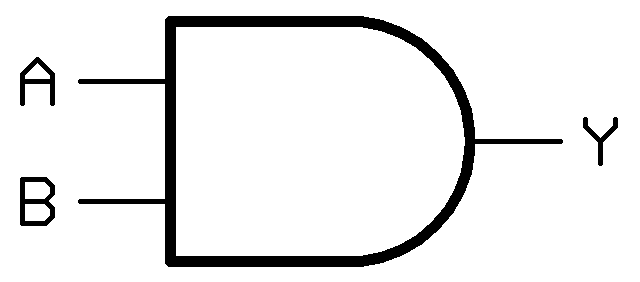
AND Gate

InputOutput
ABY= A.B
000
010
100
111

Boolean Equation for And is Y = A.B

We get output 1 only if both the inputs are 1. Otherwise, we get 0 as output.

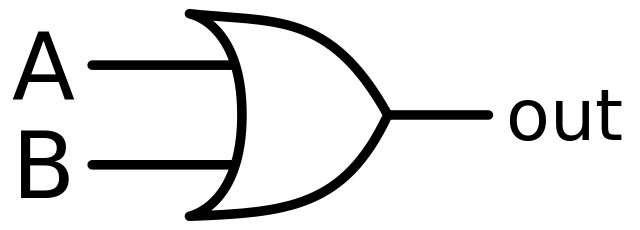
OR Gate

InputOutput
ABY= A+B
000
011
101
111

Boolean Equation for And is Y = A + B

We get output 1 if either one of the inputs is 1.

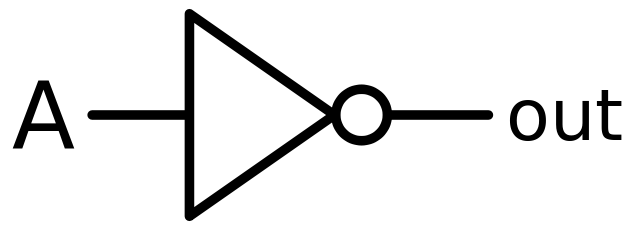
NOT Gate

InputOutput
A Y = Ā
01
10

The boolean equation is Y = Ā.

If the input is 1 then the output is 0. If the output is 0 then the input is 1. This gate is also called Inverter.

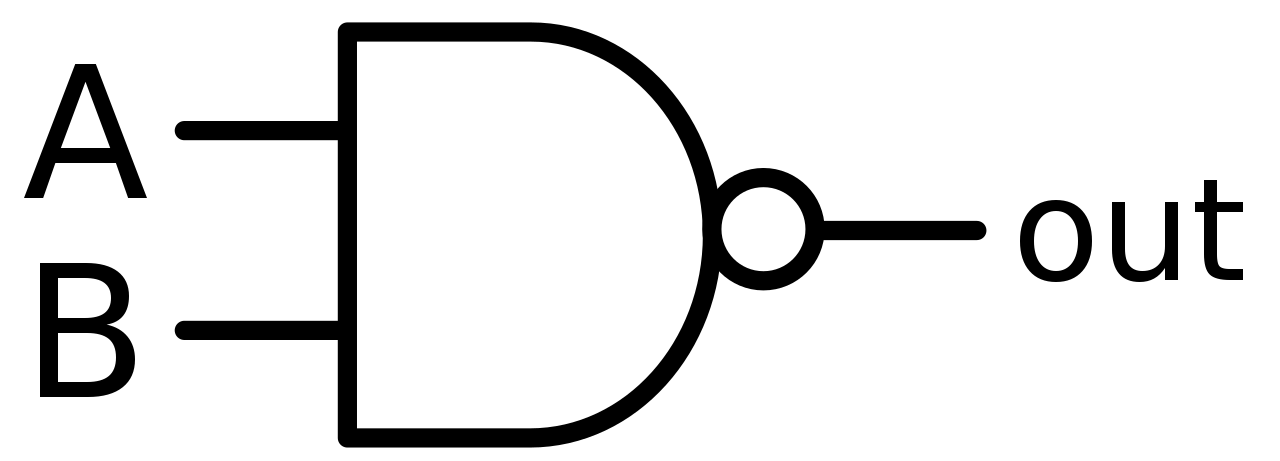
Nand Gate

AND Gate plus NOT Gate is NAND Gate. The output of AND is given as the input to NOT Gate.

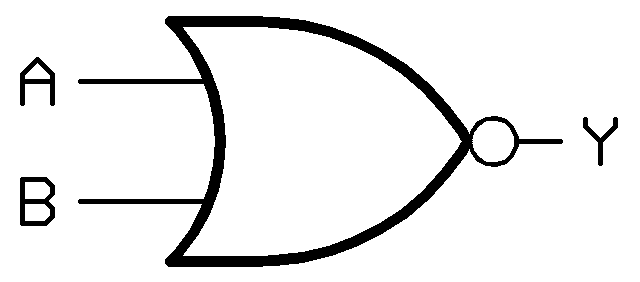
NOR GATE

The output of the OR gate is given as input to Not.

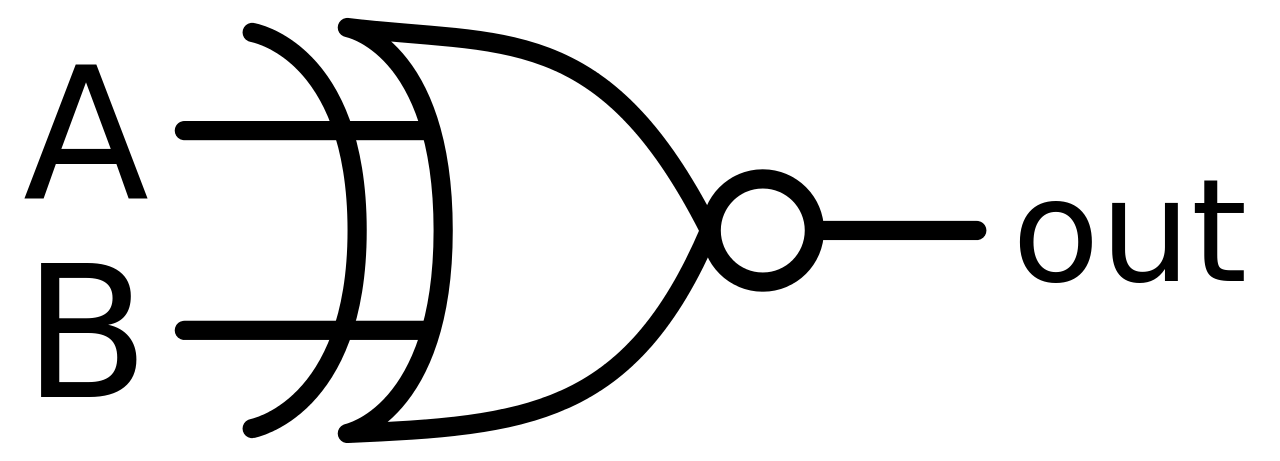
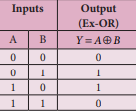
Ex-OR Gate

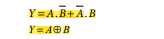
Boolean Equation
The output is zero when both the inputs are the same. Otherwise the output is 1.

Panchayat Raj: Gandhi vs Ambedkar

Gandhi wanted the central government to have less power and wanted the villages to rule themselves traditionally with village chiefs and councilors.

According to Ambedkar, the village possessed a cruel reality of communalism and a caste system, which will lead to problems for the minorities.

Gandhi through his social and political initiatives facilitated the county to realize the power of people which could be facilitated only by effective local self-government.

Gandhi again emphasized the need for power in the hands of the people in India by the Panchayat Raj model.

For Ambedkar, those villages were nothing “but a sink of localism, a den of ignorance and communalism.”

According to Ambedkar, the dominant and influential communities would make villages monopoly and that will make other communities voiceless.

The result was that the constitution that was drafted under Ambedkar Chairmanship did no mention a word about Panchayat Raj.

Many Gandhi followers persuaded the committee to have a provision for village Panchayat in Part IV of the Indian constitution titled Directive Principle of State Policy vesting the responsibility in the State legislature.

Article 40 states that the state shall take steps to organize village panchayat and endow them with such powers and authority as may be necessary to enable them to function as units of self-government.

Dravidian Parties rule in Tamil Nadu : DMK and AIADMK

In the general election of 1967, the congress party was defeated. The DMK formed the government.

The schemes of DMK are affordable universal housing for the poor, a rice scheme that is the precursor to food security, and a slum clearance board has been established.

The Government renamed the state of Madras to Tamil Nadu in 1969.

Other achievements of DMK are the Nationalisation of bus routes that are longer than 75miles.

Waiver of tuition fee for poor students of all caster in pre-university and pre technical courses. The second world Tamil conference was held. Subsidized price for rice for people.

Dravidian Rule in Post- Independence in Tamilnadu

Dravidian parties i.e. DMK and ADMK have been ruling Tamil Nadu for the past 62 years. Annadurai ruled for a very period between 1967 to 1969.

Annadurai renamed Madras state Tamilnadu, passed the civil marriages act, rejected three language policies of the central government, and enforced two languages English and Tamil policy in Tamil Nadu.

For the first time, Annadurai introduced subsidized rice that is a one-measure one rupee scheme. Annadurai was succeeded by M. Karunanidhi and continued his legacy.

In 1972, MGR formed a party called AIADMK. MGR came to power in 1977 and ruled until his death in 1987.

After that M.Karunanidhi and J.Jayalalitha ruled Tamil Nadu alternatively.

Besides DMK, AIADMK there are other Dravidian Parties such as Marumalarchi Dravida Munnetra Kazhagam of Vaico, DMDK (Desiya Murpokku Dravida Kazhagam).

For more than six decades, Dravidian rule contributed remarkably to the development of Tamil Nadu. A number of welfare schemes were introduced by the Dravidian government.

They ensured food security through subsidized and later free rice schemes, nutritious meal schemes, free education until undergraduate level, free electricity for farmers, the abolition of cycle rickshaws and manual scavenging, cradle baby scheme for the abandoned children, welfare boards for various unorganized workers and for transgender.

To remove caste conflicts, Samathuvapuram was formed.

Uzhavarsanthai was created for farmers, Free electricity was provided to huts.

Slum clearance board for the housing of slum dwellers, Industrial activities were increased.

Tamil Nadu registered a high ranking in HDI (Human Development Index), New Economic Zones were created to attract huge investment.

Tamil Nadu took a prominent position in the automobile industry.

Tamil Nadu infrastructure is acclaimed by all, Increase in the number of schools, Tamil has exclusive universities for women, engineering, law, medicine, Siddha, sports, etc.

To promote the Tamil language, ulaga Tamil Araichi Niruvanam, world Tamil conference, and ulaga Tamil Semmozhi conference, and script reforms were done to improve the Tamil Language.

The Dravidian parties since the days of Annadurai have been championing the cause of secularism and autonomy of the states.

The Dravidian parties have also been contributing substantially to national politics, the Dravidian political stream continues to be formidable in Tamilnadu.

Need of special privileges

Need of special privileges

If poor children were not provided with adequate education and proper health care, we are raising hue and cry. We give our voice for justice.

First, let us understand what we accept and which we refuse. If a person is treated with great respect on the basis of his caste, language, or race, we may not tolerate the reputation.

If a person wants to achieve in a field like music and if he is denied opportunity on the basis of caste, religion, gender, and race that is injustice.

Why this kind of discrimination and divisive tendencies exists? We have to understand the reasons. If the opportunity is denied along with social identity, that is absolute injustice in society.

This creates inequality among people. Regardless of caste, gender, religion, and other differences, people should be provided with appropriate opportunities to prove their talent and capacities in individual life.

In socio-political theories, the distinction between the difference between individual and socio-cultural differences exiting among them is considered as an important aspect.

Individuals should receive respect and reputation on the basis of their achievements and talents. It should not be on the basis of social identities.

Inequalities and discriminatory practices which prevail in society are artificial and are known as prejudices.

Distributive Justice and Retributive Justice

The substantial point of debate while studying the concept of Justice would be how the resources would be distributed to all sections of society.

In order to understand this point more clearly let us dwell upon a few important perspectives on the issue of Justice.

In the conventional understanding of politics, there are a few major theories of Justice being discussed at length. Equality of Resources, Common Ownership theories, and Entitlements are often referred to while discussing Justice.

A. Equality of Resources

This perspective defines the distribution of resources to be just; that is to say, if every individual has the same effective resources that amount to Justice.

If for some given work, each person obtains the same amount of wage or reward, that is how we must realize Justice.

If inequality exists it is singularly the result of individual choices – to be a productive earner or to be a person of leisure.

This perspective effectively rejects self-ownership and resource ownership but strongly advocates only responsibilities and obligations.

B. Common Ownership Theories

These theorists argue that a fair distribution means each person in the initial stages must have the same amount of land or other valuable resources.

It clearly means there are no major differences in terms of an individual’s preferences and abilities.

All individuals are endowed with an equal amount of abilities.

Therefore, by ensuring common ownership of resources, we can bring in substantial Justice.

C. Entitlements Theory

It defines just distribution when land or any other resources disbursed must be historically justified.

Individuals who have never had the ownership of land or other resources can appropriate it by voluntary transfer between and among themselves.

Transfer of resources, for them, must be absolutely voluntary.

All these perspectives as it is evident from the brief description do focus on both resources and human ability.

Resources could be, for example, land as well as knowledge; human ability also plays a vital role for some theorists.

There is a grand consensus that Justice in society is possible only when it becomes distributive rather than retributive.

How do we define retributive justice?

D. Retributive Justice

The concept of retributive justice is often invoked in several contexts. One can understand the framework of this form of justice by following certain principles.

i). Those who have committed wrongful acts, serious crimes do deserve harsh punishment quite proportionate to their crime.

ii). It is morally good; when the legitimate punisher gives the culprit a stern punishment what that person deserves; no matter whether the punitive action against wrongdoers is compared with others or not, the punishment is necessary as a moral good.

iii). It does not encourage punishing the innocent intentionally and also disapproves of inflicting large punishments on wrongdoers disproportionately.

Even though the idea of retributive justice played a vital role in theorizing punishment and Justice for some time, some of its pivotal features such as proportionality, the normative status of suffering, and the ultimate justification for retribution become highly contentious.

In a country like India, there are a few who tacitly approve of violence as a means to achieve and establish Justice by advocating retributive justice for many wrong acts.

This is a highly untenable proposition in a modern context.

Retributive justice as a mode Operandi to establish justice was firmly rejected in our constitution itself.

The architects of our Constitution firmly believed that violent methods will not bring in peaceful and enduring solutions to our problems nor does it establish sustainable Justice in our society.

Our intention is to introduce several perspectives on Justice to you. In the process, we must also realize which perspective would be very appropriate in our Indian context to realize the spirit of Justice.

Of all these perspectives, the framework offered by John Rawls stands out as a significant one; let’s study the vital aspects of his theory.

Cultural diversity and Socio-Cultural Equality

In a diversified society, people from different groups may practice their cultural values, habitual factors and improve individual talents. For this to happen, equality in society is an essential criterion.

Every individual should be assured of fair opportunity in society. To a large extent, an unequal atmosphere should be wiped out for attaining a liberal society.

To put it in a nutshell, actions must be taken at least to reduce the unequal circumstances. For instance, good healthcare, education, nutritious foodstuffs, minimum emoluments are the basic needs to be provided to all without discrimination.

Without these basic facilities, we may not call a society an egalitarian one.

What are the main issues of our Nation?

Beliefs and practices on the basis of caste and religion are dastardly obstacles.

In many parts of India, the status of women is at the lower level – education, employment, right to property are refused to women.

If this situation extends and is established as our culture, a major catastrophe may not be averted in India.

If inequality and discrimination are stamped as our cultural values, the path of equality may be at crossroads and cannot be attained at all.

Proportional Justice

The social justice provided by our Indian Constitution to the depressed and downtrodden communities is a helping hand for their development and advancement.

But how much and to whom are the major questions?

Caste hierarchy is the primary reason for inequality in our nation.

Hence on the basis of the caste hierarchy, social justice has to be maintained/must be maintained.

In categorization, we are having backward caste, most backward caste, scheduled caste, and scheduled tribe for whom; governments’ policies are distributed accordingly.

First Commission for the backward community was established in 1953. Kaka Kalelkar was the first head of this Commission in Independent India.

Article 16 (4) of Indian Constitution

This will not prevent any sort of appointment or reservation among backward communities if sufficient representation is not provided.

In India, inequality is existing due to the Varna System. According to the Indian Constitution, states which are having low technology or inadequate natural resources can make their own special policies for holistic advancement.

In accordance with the existing constitutional provisions, the downtrodden and underprivileged communities were provided with special laws and privileges in all states.

Ideas like all-inclusive development and self-sufficient societal growth highly hinge upon social justice along with special arrangements for the marginalized sections.

Equal opportunity is the process and social arrangement by which social democracy can sustain and pluralism will be strengthened. In such a society different groups of religion, race, and other factors can live with their social identity, tolerance, and shared power.

Economic condition and status are among the reason for the wedge created in European society. Whereas in India, the division is on the basis of Purusasvktha of Rigveda and particularly the four Varna System.

This varna system prevents individuals from their exercise of rights and values. Indian Constitution in this regard is implementing all its supervisory mechanisms and also is delivering distributive justice which is the motto of the largest democracy.

This justice intended to weed out the caste distinction (Varna System) and to establish an equal society in India. The democratic value in the Indian Constitution protects and delegates power to all the people equally to develop themselves in the socio-economic sectors.

Sticking on with these constitutional provisions may lead to social development and further give place for social freedom and justice.

Hence, vibrant social justice in India protects National Integration from which distributive justice and democratic value are concretized. Democracy is being misunderstood in terms of numbers, votes, or the reflection of the majority.

All-inclusive representation is the new thought which is growing in society. Democracy succeeds successfully only in the all-inclusive system.

In such a democratic atmosphere, the fabric of the plurality will be generated. Plural thinking and all-inclusive representations are considered as the bedrock of Indian Democracy.

Rashtrakutas Administration and Society Upsc

Administration

The Rashtrakuta Empire was divided into several provinces called rashtras under the control of Rashtrapati. They were further divided into vishayas or districts governed by vishayapatis. The subsequent subdivision was bhukti consisting of fifty to 70 villages under the control of bhogapatis.

These officers were directly appointed by the central government. The village administration was carried on by the village headmen. However, the village assemblies played a big role within the village administration.

Society and Economy

The Hindu sects of Vaishnavism and Saivism flourished during the amount of Rashtrakutas. Yet, they didn’t affect the progress of Jainism under the patronage of Rashtrakuta kings and officers. Almost one-third of the population of the Deccan were Jains. There have been some prosperous Buddhist settlements at places like Kanheri, Sholapur and Dharwar.

There was harmony among various religions. There was a college at Salatogi, situated in the modern Bijapur district. An inscription gives details of this educational centre. It had been travel by the income from the endowments made by the rich also as by all the villagers on occasions of functions and festivals.

The economy was also during a flourishing condition. There was lively commerce between the Deccan and therefore the Arabs. The Rashtrakuta kings promoted Arab trade by maintaining a friendship with them.

O Captain my captain poem Tnpsc

O Captain! My Captain! Our fearful trip is done,
The ship has weather’d every rack, the prize we sought is won,
The port is near, the bells I hear, the people all exulting,
While follow eyes the steady keel, the vessel grim and daring; -4

But O heart! heart! heart!
O the bleeding drops o red!
Where on the deck my Captain lies,
Fallen cold and dead. -8

O Captain! My Captain! Rise up and hear the bells;
Rise up – for you the flag is flung – for you the bugle trills,
For you bouquets and ribbon’d wreaths – for you the shores crowding,
For you they call, the swaying mass, their eager faces turning; – 12

Here, Captain! dear father!
This arm beneath your head!
It is some dream that on the deck
You’ve fallen cold and dead. -16

My Captain does not answer, his lips are pale and still,
My father does not feel my arm, he has no pulse nor will;
The ship is anchor’d safe and sound, its voyage closed and done,
From fearful trip the victor ship comes in with object won; – 20

Exult, O shores! and ring, O bells!
But I, with mournful tread,
Walk the deck my Captain lies,
Fallen cold and dead. -24

Figures of Speech

Identify the figure of speech from lines 4 and 10?

Ans: Personification, ( While follow eyes the steady keel, the vessel grim and daring; -4 and Rise up – for you the flag is flung – for you the bugle trills, – 10).

Identify the figure of speech from Line 1 and Line 2?

Ans: Metaphor, ( O Captain! My Captain! Our fearful trip is done, / The ship has weather’d every rack, the prize we sought is won, )

Identify the figure of speech from line 21?

Ans: Apostrophe, Exult, O shores! and ring, O bells!.

Explanation of Poem

Line 1 and 2

O Captain! My Captain! Our fearful trip is done,
The ship has weather’d every rack, the prize we sought is won,

From the above lines, answer the questions

a.Who is referred here as ‘Captain‘ from the above lines?

Answer: Captain, referred here is Abraham Lincoln, who was the President of US.

b. From the above lines, ‘Ship‘ Symbolize?

Answer: From the above lines, the ‘Ship’, symbolizes America. Its captain is Abraham Lincoln.

c. ‘Fear Trip‘ Means from above lines?

Answer: American Civil War. The American Civil War (April 12, 1861 – May 9, 1865) (also known by other names) was a civil war in the United States fought between the Union (states that remained loyal to the federal union, or “the North”) and the Confederacy (states that voted to secede, or “the South”). (Wikipedia).

d. Explain the line ‘The ship has weathered‘

Answer: This line explains America has successfully come out of civil war.

Line 3 and 4

The port is near, the bells I hear, the people all exulting,
While follow eyes the steady keel, the vessel grim and daring;

Questions from the above lines:

a. ” the people all exulting“, Why?

Ans: Exult means “feel or show triumphant elation or jubilation“. They are exulting because of the victory in the civil war.

b. “the vessel grim and daring“, Explain?

Ans: The Vessel is grim because the Vessel carries the dead body of its captain(Abraham Lincoln). ‘Darling‘, here means to say, America is not broken due to grief.

Line 5 and 6

But O heart! heart! heart!
O the bleeding drops o red!
a. Explain the above line?

Answer: The poet describes the assassination of Abraham Lincoln. He expresses his grief over death of the captain. The poet loves him so much as he put ‘heart’ three times. 

The poet also sees the  blood flowing from out his body. His captain is lying on the uppermost part of the ship and his body is lifeless.

Line 7 and 8

Where on the deck my Captain lies,
Fallen cold and dead

Question from above lines:

a. What happened to the Captain?
The Captain was assasinated. He lies cold and dead.

Line 9 and 10

O Captain! My Captain! Rise up and hear the bells;
Rise up – for you the flag is flung – for you the bugle trills,

a. What do bells means from the above lines and why do the bells ring?

Answer: The bells signify the victory in the civil wars. Also bells rang to signify the presidents death.

b. "flag is flung", Explain?
Answer: The flag is flung to celebrate the victory in the civil war.

c. "for you the bugle trills", Explain?
Answer: A bugle trill is a short burst of notes from a bugle horn, often meant to signify military victory. Here it is used to signify the Captains death/ Presidents death.

Line 11 and 12

For you bouquets and ribbon’d wreaths – for you the shores crowding,
For you they call, the swaying mass, their eager faces turning; – 12

a. For you bouquets and ribbon’d wreaths – for you the shores crowding, Explain?

Answer: The bouquets and ribbon’d wreaths were the things brought by the crowd to receive their beloved president who is dead. 

b. For you they call, the swaying mass, their eager faces turning; - Explain?

Answer: The faces of the people were eager because, this is their last time they are goint see the face of their beloved captain.

Lines 13 and 14

Here, Captain! dear father!
This arm beneath your head!

a. Explain the above line?

Answer: The president gives no response to the poet’s request and the poet becomes suspicious. After knowing, that the President is dead, the Poet addresses him as his dear father and puts his own arm beneath the head of the president.

Line 15 and 16

It is some dream that on the deck
You’ve fallen cold and dead.

a. Explain the above lines?

The poet does not believe that the President is dead. He thinks it is some dream that he lies on the deck of the ship, cold and dead.

Here ‘You’, refers to the President.

Line 17 and 18

My Captain does not answer, his lips are pale and still,
My father does not feel my arm, he has no pulse nor will;

a. Explain the above line?

The poet tries to communicate with the Captain but the Captain is not responding. The poet finds that the captain’s lips are still and turned into pale color. This signifies that the captain is lifeless.

From the previous line, we can understand, that the poet put his hand beneath the captain’s head. And Say, that his father (captain) does not feel his hand, which is lying underneath his head.

Also, the poet does not feel the pulse of the Captain.

Line 19 and 20

The ship is anchor’d safe and sound, its voyage closed and done,
From fearful trip the victor ship comes in with object won; 

a. Explain above lines?
Answer: The poet mean "Voyage and fearful trip" as Civil War. 

"Object Won" means Victory in War. The war against the slavery. Here mean Object means Objective, the Objective of emancipation of slavery.

Line 21 and 24

Exult, O shores! and ring, O bells!
But I, with mournful tread,
Walk the deck my Captain lies,
Fallen cold and dead.

a. Explain above lines?
Answers: The poet want to rejoice because of the victory in the war. The bells are rang to conmenrate the victory.

The poet want the people to celebrate the victory with rejoic, eventhough he was overwhelmed with grief.

About the Poem and Poet

Walt Whitman poet of O Captain My Captain
Walt Whitman poet of O Captain My CaptainBy George C. Cox (1851–1903, photo)Adam Cuerden (1979-, restoration) – This image is available from the United States Library of Congress’s Prints and Photographs divisionunder the digital ID ppmsca.07549.This tag does not indicate the copyright status of the attached work. A normal copyright tag is still required. See Commons:Licensing for more information., Public Domain, https://commons.wikimedia.org/w/index.php?curid=27205667

O Captain! My Captain! is an extended metaphor poem. It is written by Walt Whitman in 1865. The poem is about the death of Abraham Lincoln, who was assassinated during the end of the American civil war.

Walt Whitman (Walter Whitman) was an American Poet, and journalist. His other works are:

  • Franklin Evans (1842),
  • The Half-Breed; A Tale of the Western Frontier (1846),
  • Life and Adventures of Jack Engle (serialized in 1852),
  • Leaves of Grass (1855, the first of seven editions through 1891),
  • Manly Health and Training (1858), Drum-Taps (1865),
  • Democratic Vistas (1871),
  • Memoranda During the War (1876),
  • Specimen Days (1882)

curved mirrors ray diagrams

Curved Mirrors

  • There are many types of curved mirrors such as spherical and parabolic mirrors.
  • The most widely used curve is a spherical mirror.
  • The hemispherical spoon is also a curved mirror, it has an inner and outer surface.
  • One side of the spoon is a concave mirror and another side is a convex mirror.
A silvered or shinny spoon can act as  spherical mirror where one side is convex and other side is concave mirror.
Two sides of metal spoon, where one side acts as concave mirror and other side as the convex mirror

Spherical Mirror

  • Mirrors whose reflecting surface are spherical are called Spherical Mirrors.
  • Spherical Mirror, whose reflecting surface is curved inwards is called Concave Mirror.
Ray diagram of concave mirror, with principal axis, center of curvature, focus, reflective surface is shown
Ray diagram of Concave mirror
  • The spherical mirror whose reflecting surface is curved outward is called Convex Mirror.
A convex mirror, used in road, bends,  which is used to prevent accident. A child is seeing her reflection in the convex mirror placed along the road side
Convex mirror used in road, bends to prevent accidents
  • To study the reflection of light on the curved surface, then we need to know about Centre of Curvature ( C), Pole (P) 
Ray diagram of convex mirror, with principal axis, reflective surface, focus, center of curvature is shown
Ray diagram for Convex mirror
  • Centre of Curvature – The above diagram a spherical mirror is part of the imaginary sphere. The centre of the hollow sphere of which the spherical mirror forms a part.
  • Pole (P) – The geometrical centre of the spherical mirror.
  • Principal Axis (PC) – The perpendicular line connecting the pole and the centre of curvature of the mirror.
  • The radius of Curvature (R ) – The distance between the pole and centre of curvature of the spherical mirror.
  • Principal Focus (F) – The point on the principal axis of the spherical mirror where the rays of light parallel to the principal axis meet or appear to meet after reflection from the spherical mirror.
  • Focal Lenght (f) – The distance between the pole and the principal focus.
  • The radius of curvature and focal length are related, thereby by R = 2f.

Sign Convention for Determination of Distances

  • A collection of sign laws called the cartesian sign convention.
  • Convention the pole (P) of the mirror is considered as the origin.
  • The principal axis is considered as the x-axis of the coordinate system.
Type of MirrorUVfRHeight of the ObjectHeight of the Image
ReadVirtualRealVirtual
Concave Mirror––+––+–+
Convex Mirror–No Real Image++++NO Real Image+
  • The object is eternally placed on the left side of the mirror.
  • All distances are estimated from the pole of the mirror.
  • Distances estimated the direction of incident light are understood as positive and those measured in the opposite direction are considered as negative.
  • All distances estimated perpendicular to and above the principal axis is considered to be positive.
  • All distances estimated perpendicular to and below the principal axis is considered to be negative.

Affirmative Action and its Impact on Diversity Upsc

Affirmative Action

Affirmative action is a principle to promote societal equality through the preferential treatment of socially and economically disadvantaged people.

Mostly, these people are disadvantaged for historical reasons, such as oppression or slavery.

Support for affirmative action has sought to achieve a range of goals:

  • Bridging inequalities in employment and pay;
  • Increasing access to education;
  • Enriching state, institutional, and professional leadership with the full spectrum of society;
  • Redressing apparent past wrongs, harms, or hindrances and in particular addressing the apparent social imbalance left in the wake of slavery and slave laws.

For example, a 2017 study found that affirmative action in the United States of America “there is an increase in the share of black employees over time: in 5 years after an establishment is first regulated.”

History of affirmative action

Affirmative action has a long history in the USA, which dates back to the Civil Rights Movement of the 1960s. The first major action case was Brown vs Board of Education, in which the Supreme Court rules that segregated schools were unconstitutional.

United States of America

There was still sustained discrimination on the basis of colour till the later period of the Twentieth century. This raised Civil Rights agitations there.

Following this Affirmation Action was introduced by John F. Kennedy in the 1960s in the United States of America. This was called Executive Order 10925.

Executive Order 10925

Through this order, Govt requested the employers not to discriminate against their employees or candidates on the basis of race, creed, colour, or national origin.

This order was replaced by another order 11246 in the year 1965. By this, the Federal Government commit “to promote the full realization of equal employment opportunity through a positive, continuing program in each executive department and agency”.

In the U.S., affirmative action’s basic purpose was to pressure institutions into compliance with the nondiscrimination mandate of the Civil Rights Act of 1964. Affirmation Action was extended to women in 1967.

United Nations

The International Convention on the Elimination of All Forms of Racial Discrimination stipulates that affirmative action programs may be required for all countries that ratified the convention, in order to rectify systematic discrimination.

It states, however, that such programs “shall in no case entail as a consequence of unequal or separate rights for different racial groups after the objectives are achieved.

“The United Nations Human Rights Committee states that “the principle of equality sometimes requires State parties to take affirmative action in order to diminish or eliminate conditions which cause or help to perpetuate discrimination prohibited by the Covenant.

Social Justice Laws in South Africa

Following the transition to democracy in 1994, South Africa chose to implement affirmative action through legislation to correct previous imbalances.

As such, all employers were compelled by law to employ previously disenfranchised groups (blacks, Indians, and Coloured).

By this, the companies employing more than 50 people have to design and implement plans to improve the workforce demographics and report them to the Department of Labour.

Employment Equity also forms part of a company’s Black Economic Empowerment scorecard. Moreover, the Supreme Court has ruled that in principle blacks may be favored.

China

China followed some sort of affirmative action in education for minority nationalities.

Russia

Quota systems existed in the USSR for various social groups including ethnic minorities, women, and factory workers for access to university education, and offices in the former Soviet Union.

Affirmative Action in India

Affirmative action in India is commonly known as reservation. It is a form of affirmative action designed to improve the well-being of Scheduled Castes and Scheduled Tribes (SC/ST) and other backward classes (OBC). This reservation is based on caste.

As per the constitution of India, in Government run education institutions and in government jobs, 50% of seats are reserved for SC/ST and OBC. Also, 10% of seats are reserved for the Economically Weaker Section (EWS).

History of affirmative action in India

The history of affirmative action in India dates back to the British period. The British colonial government started to implement policies to improve the status of the so-called “Untouchables“.

These “Untouchables” were at the bottom of the Hindu caste hierarchy. The policies made by the British colonial government include:

  • Establishment of separate schools and colleges for untouchables.
  • Quotas for Untouchables in government jobs.
  • Also, Panchami lands are assigned to Dalits.
* * All the Notes in this blog, are referred from Tamil Nadu State Board Books and Samacheer Kalvi Books. Kindly check with the original Tamil Nadu state board books and Ncert Books.