As socio–psychologists describe, Human beings identify themselves as part of their group. They felt prestigious and energetic only when they are recognized as a part of their own group.
What discrimination means is that out-grouping their own members from the membership of their group or banning their members from accessing natural resources. Indeed, wealth is an important matter.
Someone of the group’s eligibility and self–respect indirectly defends someone getting wealth. Empirical studies confirm that persons with a low sense of social recognition display more out-group devaluation and group-focused enmity based on an ideology of human inequality.
Negative attitudes toward different out-groups (ethnic and religious minorities, women, and people who are disabled or homeless) are strongly correlated with each other, indicating the unspecific nature of discrimination.
Economic equality can be identified by an individual’s income and the value of the property, he possesses in society. Otherwise, the gap between rich people community and poor may indicate the status of economic equality.
Further, by calculating the number of people under the poverty line, we may draw strong inferences and resolutions. This kind of identification is widespread among all nations.
But certain discriminations on the basis of culture and history along with some habitual practices may create precarious issues in the concerned society. Radical reformers during different phases of history have made wide awareness about these untoward and unethical happenings to the people.
“Humans respected on the basis of caste which he belongs to, is barbarian and anti-human thinking”, exclaimed E.V.Ramaswamy alias Periyar in Tamilnadu. He outrightly condemned the cultural practices, habitual follow-ups, and other so-called values which refute equality in all its aspects.
Periyar also was against “Patriarchal Chauvinism” which subjugated women all along with history. That society is best which got rid of caste, religion, gender, and suppressive habitual practices”, lamented Periyar.
Modern society cannot be sanctified by the people who cling towards the language and discriminatory cultural practices. Apart from Periyar, various saints, seers, and philosophers took strenuous efforts to have an egalitarian society.
People who enjoyed all kind of privileges on the basis of dynasty, birth, and descent so far has to come to end. Determining an individual’s capacity in accordance with birth is the primary and precarious feature of an unequal society.
All are equal and an individual’s capacity, if decided on the basis of merit, is the first step towards an equal society. So far, a number of modern nations refused to provide voting rights for poor people.
There are nations that restrict women’s education and public offices in the 21st century. In India, lower strata people are permitted to work only in clerical and other benefitless offices.
They were not permitted to occupy higher positions, because of their caste identity. Individuals and organizations for the past centuries made onerous efforts to curb out in equal menace from the society.
There are some human communities that need special attention since they were totally ignored and exploited by the upper strata people. Truthful equality can be identified only on those rare occasions. Injustices unleashed in the past must be identified to know what real or fair equality is.
The reservation policy is a good initiative on the part of the government in delivering equal justice. People, who were denied education and employment opportunities so far, were provided with reservations for uplifting the condition and status.
Discriminatory practices which were followed for a long time in the historical phases may not be curbed out in a short span. Expecting the change within one or two generations is a utopian faith, stated researchers.
If reforms happened in a short time, it will be a good sign for the development of the entire nation.
Social Justice and Equality
All civilizations were equipped with the awareness of their practices. The accepted practices are “Dharma” and the negative is “Adharma”.
Those people who breach these practices will be punished by the king. Mistakes and related punishments are quite natural in all countries. The Greek philosopher Plato and his disciples often debate and discuss justice and its practices.
The discourses and teachings of Socrates consist of anti-justice people and their impact on society. Justice and fairness may do only good things in society. If justice does favor certain individuals, that may not be considered and called justice.
Justice is all about the entire development and advancement of society. Fair justice is applicable to all the people in a society, claimed Socrates. We may infer from the above said arguments that reservation is the fair justice provided to the people, who were hitherto discriminated against and exploited.
When we agreed to the idea that different people in a society must be treated differently, the subsequent question would be who and how we can ensure Justice.
Government can and will enact laws to facilitate the just distribution of resources to individuals within a society.
Laws simply pave the way for the fair distribution of resources. Law enforcement agencies may have to monitor the process of the distribution itself. This is the ideal situation.
Gender Equality
In a country like ours where socio-cultural inequalities are well entrenched, a law for fair distribution will not automatically ensure just distribution of resources. Governments will have to ensure a level playing field in order to establish Justice.
In other words, before the law brings us together, people should enjoy some basic equality of living conditions and opportunities. This attempt to create a level playing field must be seen as a necessary condition for each person to pursue his/her objectives in life.
Since our constitution has abolished untouchability and other caste-based discriminatory practices, both the State and the legislature would have to ensure the creation of such a level playing field.
Thus, the government which swears in the name of protecting our constitution has the obligation of ensuring one of the finest promises of our constitution itself – bringing inequality to our society.
Therefore, it is legal, constitutional, and moral on the part of the government to create a level playing ground for all its citizens especially those who have been historically denied basic rights.
This level playing field or what we popularly call ‘equal opportunity’ must not be treated either as charity or as a philanthropic gesture of the government.
It is the obligation on the part of the government to treat people differently in order to ensure Justice; more importantly, it is a fundamental right enshrined in the constitution for disadvantaged people to seek legal, constitutional remedy.
Similarly, a level playing ground is aimed at creating equal opportunity only in education and employment opportunities for the disadvantaged communities. In many realms of our everyday lives, there is virtually no demand from the marginalized sections to provide a level playing ground.
This clearly conveys the meaning of what is the aim of providing equal opportunity. When modern education becomes the most significant resource and employment in the government sector remains a major source of livelihood, the concept of level playing ground or equal opportunity was advocated and subsequently this idea became an integral part of our constitutional apparatus.
There are several opinions in this regard. How should we distribute the resources and ensure equal opportunity/ fair access to education and jobs to all especially to the disadvantaged groups?
Many especially people from the so-called upper echelon of society tend to think of treating people differently in order to ensure just distribution effectively amounts to discrimination.
This opinion slowly and steadily invokes strong passion and at times results in violence too. The fear of losing educational and employment opportunities among the privileged communities was steadily growing as the government planned to ‘reserve’ seats for people from marginalized and underprivileged communities as part of its equal opportunity plan.
The idea of ‘merit’ would be invoked by the privileged sections of our country to argue that any attempt to ‘reserve’ seats for the underprivileged people would strongly damage the merit-based output of our education system; thus it would subsequently affect the professional abilities of the candidates.
But as students of political theory, we must be able to dispassionately examine the issues involved in our quest to understand Justice.
Do you, first of all, agree that some interventions are required to help the marginalized, underprivileged people?
What would be the outcome if the privileged section retains all the resources including education and employment opportunities with themselves even after we become an independent country and a republic? Should we opt for an inclusive nation or an exclusive mob? What kind of social Justice we would eventually emulate?
The educational system which we had in Ancient India was discriminatory. People were permitted to undergo education on the basis of their own caste. After the introduction of a new education system in modern India, the marginalized communities are not allowed in the mainstream.
In south India, new or modern education was introduced by Christian missionaries of European nations. In the initial part of the 19th century, the British established more Christian missionaries in many parts of India.
Many communities, who were denied educational opportunities, utilized the choice for their development.
Status in Madras Presidency
During the same period, the Chennai presidency came under the direct rule of the British Empire. Laws like ‘Ryotwari’ were made. Moreover, a tax collecting system was introduced. Further, military forces were also instigated.
In 1835, English was declared as an official and administrative language in India. Indians were appointed in the British Indian military forces. The majority of the people who joined in the military were non-Brahmins and deprived communities.
Although the colonial British regime appointed Indians in military forces, it hesitated to permit Indian languages in the educational institutions. This untoward situation remained the same until the end of the 19th century.
People who are fluent in English were appointed to these services. Apart from the Europeans, Anglo- Indians, and Brahmins were appointed in all government services. Due to the establishment of the ‘Jamindari’ and ‘Ryotwari’ system in the initial part of the 19th century, ‘Landlords’, ‘Zamindars’ and other dominant groups spearheaded in entire India.
All the above said are “Caste Hindus”. “Caste Hindus” domination in all villages greatly affected the villages and particularly, the downtrodden communities were kept aside from the lands in all villages of India.
In this connection, a British officer ‘Francis Ellis’ was appointed to submit the status report regarding the ‘Ryotwari System’. In a similar way, another officer, ‘Thomas Munro’ also submitted a report related to the ‘Ryotwari System’.
According to the reports, ‘Lands which were tilled by lower strata people, were illegally occupied and acquired by ‘Zamindars’ and ‘Landlords’ and thus caused quality-less farming and low level of yields.
It is also reported that Land Income Tax was also affected due to this acquisition. Moreover, the deprived and downtrodden communities were checked out of their lands and also their children were denied admissions in the schools and other educational institutions.
In 1854, the court delivered the direction that there may not be any restriction to admit children who belong to lower caste groups. The caste Hindus and other dominant communities, however, didn’t obey the judgment of the court proceedings.
In 1865, the Secretary of state for India in the British Parliament ordered for admission of children who belong to lower caste groups but the condition remains unchanged.
British India at the end part of the 19th century supported Brahmin development in all spheres, whereas minorities were denied opportunities in education, society, power, and employment sectors.
The Non-Brahmins, particularly minorities (lower caste) who studied in the modern educational institutions were dissatisfied with the government’s biased stand. They demanded representation for lower caste groups in government services.
Those people who demanded appropriate representation are Ayothidasa, Singaravelar, Rettamalai Srinivasan, Pitti Theagarayar, Raja of Panagal, and many others.
Demands put forth by these people were accepted in 1892. Community-based representation order was issued in all departments of the Madras Presidency. This order is called 128(2).
The order has to be implemented in all parts of the Chennai Presidency, declared the government.
The efforts are taken towards “education to all” in Tamilnadu also spread over to other states of India. Leaders like Jyotirao Phule, Savithribai Phule took onerous efforts in Maharastra for educating the depressed and downtrodden communities.
The Indian National Congress, a major political organization in India at that time, was dominated by Brahmins who refused to consider the demands of non-brahmin members.
The leader of the non-brahmin in the Madras Presidency started to think of a non-brahmin political organization. The political reforms after the First World War and the formation of representing institutions stimulated their idea of non-brahmin political organization.
Dr T.M.Nair, Pitti Theagarayar, and Dr C.Natesan founded the South India Liberal Federation to promote the political, economical, and social interests of the non-brahmins. The South Indian Liberal Federation (SILF) popularly known as the Justice Party named the English Journal Justice.
Through the efforts of the Justice Party, they secured the reservation of seats for the non-brahmin in the elections to the legislative council.
The main objectives of the Justice Party (JP)
To promote the educational, social, economic, political progress of all the communities other than the Brahmins of South India.
To work for Non-Brahmin development by constitutional government. To make a truly representative government.
To create public opinion in favor of Non-Brahmins demands.
Montagu Chelmsford reform 1919, introduced dyarchy in presidencies by which some departments were marked for Indian Ministers to be chosen from the elected members.
In the first election under dyarchy in 1920, the Justice party won the majority and A.Subbarayalu became the Chief Minister and after his death, Raja of Panagal became the Chief Minister of Madras in 1921.
As a part of the Non-Co-operation movement, congress boycotted the elections.
Contributions of Justice Party
In spite of the fluctuating fortunes in the subsequent elections, the Justice party continued to hold power from 1921 to 1937.
The Justice Party introduced several reforms.
By Communal government order, the Justice Party ensured an adequate number of opportunities for non-brahmins of every category in education, and employment.
They removed discrimination against Sudras and Panchamas in public transport, roads, restaurants, and public wells.
They regulated temple laws through a newly constituted Hindu Religious Endowment Board, and provided lands to the Panchamas called Panchami Land.
They introduced new townships and industrial estates.
Education was provided to the children of depressed classes.
They introduced an experiment called the “Noon Meal Scheme” for the first time in a few schools.
Knowledge of Sanskrit as the basic eligibility for medical education was removed, which gave non-brahmin students to enter into medical education.
Dr Muthulakshmi and others abolished the Devadasi System in Tamil Nadu and women were enfranchised which means the women were given the right to vote.
Co-operative societies were promoted. Mirasdari’s system was abolished. Various irrigation schemes were introduced in 1923.
Annamalai and Andra University were started during the Justice Party regime. It was the Justice Party that provided the most successful government though they were given a few departments by the British.
The decline of the Justice Party
The Justice party began to face a decline in 1930. Factors of the decline of the Justice Party are,
It lost support among the Depressed section of society and minorities. The self-respect movement under Periyar had become more radical. The pro-British outlook of the Justice Party is important for its decline.
Periyar’s refusal to enter electoral politics and the growing popularity of Gandhi made congress win the elections in Madras Presidency in 1937 and Rajagopalachari became the premier.
During the rule of the Justice Party in the Chennai Presidency, the demand for communal representation was reflected in a vigorous manner.
The prolonged struggle for communal representation by Justice Party and wide support from the people propelled the central government to make a resolution in this regard in 1921.
This resolution, later on, was called a Communal Representation Decree.
It is the red-lettered day in Indian history, lower-caste groups, who were suppressed and deprived of Social and Economical conditions for many centuries had the fullest confidence to lead their life with self-respect and dignity by this decree.
A resolution was submitted by Munusamy a member of the legislative assembly in Chennai.
The Resolution reads; “Non-Brahmins with minimum educational qualification should be provided with employment opportunity.
Non-Brahmins specifically, Christians, Muslims, and lower-caste groups to be appointed in all government services. For this, a permanent order should be legalized.
If salary is above Rs.100, this order should be implemented for 7years until it reaches 75% of the population”.
With regard to this resolution, R.K.Shanmugam stated that “If this historical and landmark resolution is implemented, the future generation may really appreciate our truthful efforts towards emancipation”.
In supporting this view, Dr C.Nadesan voiced that “If fair representation is not provided for our people, we will not pay taxes”.
Periyar, EV. Ramaswamy, a staunch supporter of the Congress party also eulogized the ideas of the Justice Party, he expressed the same demand in Congress Party.
In 1925, during the Kanchipuram Congress Party Conference, Periyar passed a resolution regarding communal representation in education and employment. Periyar came out of the Congress party since his resolution was rejected by the high command.
In 1928, during the leadership of R.Muthiah, (Justice Party), Communal representation was passed and implemented in all the government departments.
First Amendment
In the aftermath of the effective implementation of the Indian Constitution, in 1951, Mr Senbagarajan filed a suit in the High Court; related to the denial of Medical Seats.
He also mentioned that communal representation is the reason for the denial of his seat.
The High Court gave its Verdict that the Communal representation decree is against the constitution and to be abandoned.
In addition to that, Supreme Court also sided with the same Verdict. Reservation Policy on the basis of caste was abandoned due to the Verdict.
Statewide protests erupted in Tamilnadu against the Verdict. E. V. Ramasamy demanded an amendment to the constitution.
It is due to the efforts of Periyar, Tamilnadu congress committee President Kamaraj, Prime Minister Jawarharlal Nehru, and Ambedkar, an amendment was made related to the extension of the Reservation Policy.
This was the First Amendment in the Indian Constitution. Due to this, backward and other communities retained the opportunity of reservation.
According to articles 15 and 16 of the Indian Constitution, “Socially and economically backward people can be provided with special privileges”. This provision made Nehru come up with First Amendment in the Indian Constitution.
Accordingly, sub-sections 15 (4) and 16 (4) were included in the constitution. After the Amendment, from 1951 onwards Backward Communities receive 25% and Lower Caste 16% respectively due to reservation policy.
A commission was constituted under the Chief Minister of Tamil Nadu, M.Karunanidhi known as the Sattanathan Commission. Sattanathan Commission accounted for the welfare of the backward communities.
It is based on this commission, Backward Community got 31% and SC/ST received 18% as reservation in 1971.
By order (MS No.1156, Dated 02.02.1979) issued by the Social Welfare Department of Tamil Nadu. According to the order, the annual family income of Back Community was fixed as Rs 9000 and later this order was repealed.
A new order was issued, in which reservation for the backward community was increased from 31% to 50% and for SC/ST it is 18%.
To sum up, 68% of reservations came into effect in Tamilnadu. In continuation with this, in 1989, another suit was filed in the Supreme Court with regard to the allotment of separate reservations for the Scheduled Tribe (ST) community.
In this case, the Supreme Court of India delivered the verdict by which, the backward community, most backward, scheduled caste, and scheduled tribes received 30%, 20%, 18%, and 1% respectively.
The entire reservation was changed combinedly and 69% came into effect in Tamilnadu.
Reservation in Central Government: Mandal Commission
The central government under the Prime Ministership of V.P.Singh consented to the recommendations of the Mandal Commission. The Government issued an order which confirmed a 27% reservation for Backward Community in Central Government Services.
In opposing this order, Indira Sawhney filed a suit stating the order breached the constitutional provisions. She also added that reservation policy overrides the principle “All are equal before Law”.
Supreme Court delivered a clear verdict that 27% for a backward community in Central government services can be legalized. Further, it states, “the reservation should not reach beyond 50%”.
The Supreme court of India fixed 50% as the ceiling for reservation policy, whereas it was not mentioned in the constitution. Moreover, the highest ceiling of 50% can also be discharged.
Thus the Judgment says
“Although 50% is the ceiling fixed for the reservation in central government services, it may be changed, taking into account the diversified communities and abnormal situations of this nation”.
“People who are distant, those who could not mingle with the mainstream society or without opportunity, unique in culture may be exempted from this ceiling fixed by the Supreme Court.
50% of the ceiling may be exempted, said the same judges who delivered the famous verdict in this sensitive case.
That said, a member of consumer trust, K.N. Vijayan from Tamilnadu filed a suit stating, 69% reservation in Tamilnadu is given against the Supreme Court Verdict.
Supreme Court, however, in its Verdict mentioned that Engineering and Medical Colleges should not be provided reservations more than 50%. It also issued an Interim prohibition for the reservation.
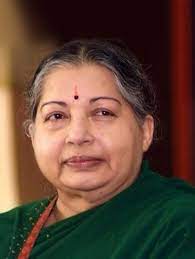
Jayalalithaa – Samooga Neethi Kaatha Veeranganai
It was similar to the untoward happenings during 1951, which prompted the state government under J. Jayalalitha passed a bill in the state assembly by citing the reference from directive principles of state policy (Article 31(c)).
The bill on 30.12.1993 was given consent by the President of India on 19.07.1994 by which 69% of reservations received the fullest legal protection.
To avert further filing of a suit against the Tamilnadu Government, it endeavoured to incorporate reservation policy in the IXth Schedule of the Indian Constitution.
Parliament passed the 76th Amendment in which the reservation policy of the Tamilnadu Government was incorporated in the IXth Schedule of the Indian Constitution. Further, it came into retrospective effect on November 16, 1992.
Reservation for different communities is a temporary effort to get a place in the power sector. To attain social change and social ideals, caste hierarchy has to be demolished and eternal equality to be established. One of the means to attain permanent equality is “Inter-Caste Marriages”.
Marriages happening within caste may further strengthen the caste system and serve as an obstacle for an equal society. Casteless marriages and lateral thinking are the best contrivances for making radical social change.
Promoting Social Justice
In order to achieve social justice, it is often suggested that reservation policy is an important tool. We must realize that reservation in education and in jobs is one of the methods to achieve ‘Social Justice’ and not the only method.
Social Justice must necessarily premise upon the idea of egalitarian philosophy that no one is inferior or superior to anyone by birth.
Those who have been benefitted extensively from the philosophy of ascriptive status (status based on birth) must realize that such status cannot be part of a modern world; to be a modern person what is more important is to have the consciousness of being equal to everybody around us.
Unfortunately ‘modern’ is being equated with the latest electronic items and luxury items we possess. Having the latest gadgets will not make us modern.
For India to become a modern nation, this radical transformation is required more than anything. That is why social justice is organically embedded in the idea of modern India.
The Government of India appointed the 2nd Backward Classes Commission in 1979. It was headed by B.P.Mandal. Hence it was popularly known as Mandal Commission.
It was asked to determine the criteria to identify the socially and educationally backward classes in our country and recommend steps to be taken for their advancement.
One of the recommendations was that 27 per cent of government jobs be reserved for the socially and economically backward classes. It was in December 1980 members of the Mandal Commission submitted their report to Zail Singh, the then Home Minister.
After submitting the report B.P.Mandal said, “I know much labour has gone into the writing of this report. But let me tell you that today we have performed its immersion (visarjan) ceremon.”
Next ten years, the report lay in the Home Ministry’s office. The report was dusted up by the then National Front Prime Minister Vishwanath Pratap Singh (1931 – 2008) for implementation in 1990. Mandal Commission report became the single-most burning topic of controversy and heated discussion.
There was total confusion in the national political arena and V.P. Singh was accused of indulging in the worst form of opportunism. No major political party supported the implementation of Mandal Commission recommendations.
Some sections of people and associations opposed to this order filed a number of cases in court. Eleven judges of the Supreme Court heard arguments of both sides and by a majority, the Supreme Court judges in 1992 declared that this was valid.
At the same time, the Supreme Court asked the government to modify its original order. It said that well-to-do persons among the backward classes should be excluded from getting the benefit of reservation. Accordingly, the Department of Personnel and Training issued another Office Memorandum on September 8, 1993. The dispute thus came to an end and this policy has been followed since then.
According to article 340 of the Indian Constitution, the President of India can appoint backward classes commission to identify socially and educationally backward groups and also submit recommendations related to their standards and states. constituted the backward classes commission.
Kaka Kalelkar Commission
The first backward class commission is Kaka Kalelkar Commission.
Kaka Kalelkar Commission was the first one constituted on 29/01/1953. There were 11 members including Chairman Jawaharlal Nehru who tabled the report submitted by this commission in the Parliament.
The aim of the Kaka Kalelkar Commission is to determine the criteria in considering whether there is any section of people in the Indian Territory in addition to SC and ST, as socially and educationally backward classes.
Note: Socially and Educationally Backward Classes, It is no socially or Educationally backward classes.
This section of people must be both Socially and Educationally Backward Classes. Using such criteria, the commission needs to prepare a list of such classes and their territorial distribution.
Mandal Commission
The second backward class commission is Mandal Commission.
Central Government under the Prime Minister-ship of Morarji Desai constituted Subindeswari Prasad Mandal Commission on 20.12.1978. This is the second such Commission established for the backward community.
S.S.Gill was appointed as the Secretary of this Commission. It is in order to identify the condition of the backward community; a group was constituted under the leadership of B.B.Mandal in 1978. The group traveled all over the nation.
This Commission on the basis of 11 basic reasons identified 3743 castes that come under backward communities. Castes were identified on the ground of peoples’ status in education and society.
Mandal has written in the preface of the report which reads, “Madras is a pioneer state in communal representation. It has given representation for backward classes”.
We may infer that Tamilnadu is the birthplace for Social Justice and serve as a great pioneer for all other states. 52% of the backward communities in India has to be provided with 27% reservation, remarked Mandal Report.
Conclusion
This reservation was implemented by V.P.Singh Government on 13.08.1990 in all Government (Central) Services. Due to this order, backward communities who are backward in social and educational sectors entered into central services.
Also known as Mandal Commission Case. In January 1979 under the Chairmanship of B.P.Mandal, the Second Backward Classes Commission under Article 340 was appointed by the Union Government headed by Prime Minister Morarji Desai.
One of the major recommendations made by the commission was that, besides the SCs and STs, for other backward classes which constitute nearly 52% of the population, 27% of government jobs are being reserved so that total reservation for all, SC, ST, and OBCs, amount to 50%.
No action was taken on the basis of the Mandal Report for long after it was submitted, except that it was discussed in the Houses of Parliament twice, once in 1982and again in 1983.
On August 13, 1990, the V.P.Singh Government at the Centre issued an office memorandum accepting the Mandal Commission recommendation and announcing 27% reservation for the socially and educationally backward classes in vacancies in civil posts and services under the Government of India.
By creating awareness among the people about the consequences of overpopulation.
Promotion of Child adoption.
Aiming for Single Child Families.
Changing social norms, some couples choose not to have a child.
Such couples must be supported by all of us.
Providing Tax Benefits or concessions to the family that has one or two children.
* * All the Notes in this blog, are referred from Tamil Nadu State Board Books and Samacheer Kalvi Books. Kindly check with the original Tamil Nadu state board books and Ncert Books.