I've done a Master of Engineering in Computer Science and B.Tech in Information Technology . Worked in a private IT company for 5 years. Currently preparing for the Civil Services Exam. My hobby is blogging in different Niches, especially technologies.
This notes is for Tnpsc exams covering Embryo development, fertilization, to the formation of human babies.
The Normal period of gestation or pregnancy is around 9 months and 40 weeks.
Human fetal development stages
First Trimester – It is from conception to 12 weeks. It is the first three months of pregnancy. During this period, the baby will change from a group of cells to a fetus and starts to have a baby’s characteristics.
Week 1 to 4 – During this period, the fertilized egg grows. These eggs would be filled with fluid and a watertight sac surrounds them. This sac is called Amniotic Sac and its purpose is to provide shock absorption to the developing embryo.
During this week, the Placenta develops, an early face forms with dark circles for the eyes, the blood cells forms and begin their circulation, the heartbeats 65 per minute and also mouth, and throat develops.
By the end of the first month, the baby’s size would be 1/4 inch.
Week 5 to 8 – During this period, the ear begins to take shape, tiny buds grow to arms and legs, and also form the toes and fingers.
The eyes also form. The nervous system consists of the brain, spinal cord and other neural tissue are well grown, also the digestive system and sensory organs are formed.
Then the cartilage gets replaced by bones. After the 8th week, this embryo is called a Fetus. It is usually 1 inch long and weighs 0.00094 kg.
Fertilization of Embryo
Initial Stages of Human Embryo Development. Picture By Zephyris – SVG version of ., CC BY-SA 3.0, https://commons.wikimedia.org/w/index.php?curid=10811330
The process of fusion of male and female gametes to form a diploid zygote is known as fertilization. The two types of fertilization are external fertilization and internal fertilization. The fusion of gametes that occurs outside the body of the animal is called external fertilization.
An example of external fertilization for frogs is echinoderms. The fusion of the gametes occurs within the body of the female known as internal fertilization. Examples of internal fertilization are reptiles, birds and mammals.
At the time of ovulation, the ovum is fully matured and enters the uterine tube called the infundibulum. Fertilization of the ovum occurs in the ampulla of the uterine tube. Only one spermatozoan pierces the membrane called zona pellucida. Polygamy, the entry of more sperms is prevented by the fertilization membrane around the ovum.
Human fetal development stages: Development of embryo
The fertilized ovum is called the zygote. The first phase of embryo development is called cleavage. As a result of cleavage, a ball of cells is formed known as a blastula. The outer surface forms the trophoblast and the embryo gets attached to the uterus wall, which is known as implantation.
The implanted embryo develops extra-embryonic membranes such as amnion, Allantois, Ohorion and yolk sac. The fluid medium of the developing embryo prevents desiccation called the amnion. The fusion of chorion and Allantois is called Placenta.
The exchange of gases between the mother and foetus and also their elimination of nitrogenous waste from the foetus are functions of the placenta. The embryo and the placenta are connected by an umbilical cord which is derived from the Allantois.
From the fertilization of the ovum to the birth of the baby of about 9 months during which the foetus remains inside the uterus is called the re-gestation period. the development of the foetus can be studied from the first, second and third trimesters.
The proliferation of cells takes place and gradually a single cell is transformed into the foetus is called the first trimester. Organogenesis takes place in the first trimester. Organogenesis means the formation of organs.
The foetus grows rapidly in the second trimester. The respiratory and circulatory systems become well developed and functional in the second trimester. The length and weight of the foetus increase very rapidly and development is completed in the third trimester.
The uterus begins to contract rhythmically under the influence of the oxytocin hormone. The contractions become stronger and more frequent called labour pain. With continued powerful contractions, the amnion ruptures and the fluid that flows out through the Female Reproductive System is amniotic.
The placenta breaks away from the uterus and is expelled after birth. The first milk that comes out from the mother’s mammary gland just after childbirth is Colestrum. Rich in proteins and nutrients and also containing antibodies to provide immunity for the newborn infant is Colestrum.
The secretion of the milk is stimulated by the pituitary hormone called prolactin. The best milk easily available clean, uncontaminated and sterile is mother’s milk. The milk contains antibodies that shield the body from external viral and bacterial infections in mother’s milk.
In rural areas, breast milk is used as eye drops for viral conjunctivitis. The calorific value of breastmilk is 70 per 100 ml of milk. The protein in breast milk that provides protection against intestinal and respiratory infections is lactoferrin.
The technique of in-vitro fertilization, fertilization and early development takes place in an artificial medium outside called test-tube babies. The invention of first test-tube baby is Steptoe and Edwards in the UK.
This post is about Human reproduction system both, the male and female reproduction system for Tnpsc exams
Reproduction in Human Male Reproduction System
The male reproductive system includes the primary sex organs and accessory organs. The primary sex organs are the testis. The accessory organs are seminal vesicles and prostate glands urethra and male sex organ.
The pair of the testis is located in the scrotal sac. Each testis contains a coiled mass of tubules known as seminiferous tubules. Seminiferous tubules produce sperms.
The process of the formation of sperms is known as spermatogenesis. The interstitial cells of the testis also secrete male sex hormones are called androgens. The appearance of male sexual characters such as the growth of beard, moustache, body hair, hoarse voice are controlled by androgens.
The cells of the testis provide nourishment to the developing sperms called Sertoli cells. The sperms are delivered through Vas Deference. Vas deferens which unites with the urethra.
The common passage for both sperms and urine is the urethra. The sperms are released in a fluid called seminal fluid. The fluid provides nutrition and helps in the transport of sperms.
Four parts of sperm are the head, neck, midpiece, and tail. The condensed nucleus contains a haploid set(n) of chromosomes and a terminal acrosome called the head. The acrosome is a Golgi apparatus.
The hyaluronidase and proteolytic enzymes are present in acrosomes. The neck contains near proximal and distal centriole. The distal centriole is continuous with the axial filament. The midpiece contains these spirally coiled mitochondria.
The remnants of cytoplasm that propel the sperm in a liquid medium are called the tail. The first to observe and draw sperm cells was Anton van Leeuwenhoek.
Human Male Reproduction System By Male_anatomy.png: alt.sex FAQderivative work: Tsaitgaist (talk) – *[[:File:Male_anatomy.png|Male_anatomy.png], CC BY-SA 3.0, https://commons.wikimedia.org/w/index.php?curid=6569849
Female reproductive system
human female reproductive system By BruceBlaus. When using this image in external sources it can be cited as:Blausen.com staff (2014). “Medical gallery of Blausen Medical 2014”. WikiJournal of Medicine 1 (2). DOI:10.15347/wjm/2014.010. ISSN 2002-4436. – Own work, CC BY 3.0, https://commons.wikimedia.org/w/index.php?curid=29600451
The female reproductive system consists of ovaries and accessory organs. Fallopian tubes, uterus, cervix, and Female reproductive organs are called accessory organs. The ovary produces an egg every 28 days. The production of the egg every 28 days is called the menstrual cycle.
The producers and female sex hormones come on oestrogen and progesterone. Each ovary consists of follicle cells that produce the ovum by a process known as oogenesis. A hollow thick-walled muscular organ formed of three layers called the uterus.
The fertilized ovum is embedded and harassed in the uterus. The muscular tube which connects the cervix and the external genitalia is called the Female reproductive organ. The female reproductive organ serves to receive sperms and also a birth canal.
The sex hormone responsible for oogenesis and for the appearance of female secondary sexual characters is oestrogen. The development of breasts, growth of hair, feminine voice, etc are secondary sexual characteristics.
The egg of a human is alecithal. Alecithal means egg without yolk. The human egg contains cortical granules and yolk platelets. The egg is surrounded by three membranes which are the Vitelline membrane, zona pellucida, and corona radiata.
The ovum is surrounded immediately by a thin transparent membrane called the Vitelline membrane. A thick transparent membrane above the vitelline membrane is called zona pellucida.
The outermost thick membrane formed by the follicle cells is called corona radiate. The rhythmic series of changes in the female sex organs that occur for about 28 days throughout the reproductive life of a woman from puberty to menopause is called my menstrual cycle.
after ovulation, the mature ovum is brought to the fallopian tube and get fertilized. When the ovum is not fertilized, the ovum along with the uterine wall is ruptured and discharged with blood by a process called mensuration.
The three-phase of the menstrual cycle are the 1st phase, 2nd phase, and 3rd phase. The first phase is known as the follicular phase. The menstrual cycle from the 5th day to the 14th day is known as the follicular phase.
The second phase is known as the premenstrual phase of the luteal phase. The menstrual cycle of the 15th day 28 th day is known as the premenstrual phase. The third phase is the menstrual phase.
The menstrual cycle from the first day to the fifth day is known as the menstrual phase. The follicular phase is initiated by the secretion of follicle-stimulating hormone(FSH) of the pituitary.
During the follicular phase, primary ovarian follicles begin to grow and the mature Graafian follicles burst and release to ovum into the fallopian tube called ovulation. The luteal phase is influenced by the Luteinising Hormone (LH) of the pituitary gland.
After the release of the ovum, the ruptured part of graffian follicle is transformed into a transitory endocrine gland called the Corpus luteum. The Corpus luteum secretes the pregnancy hormone called progesterone.
The thickness of the endometrium and prepare the uterus to receive fertilized ovum are the functions of the progesterone hormone. The decline in progesterone and oestrogen initiates the shedding of unfertilized egg and endometrium with severe bleeding in a process called mensun or menstruation.
At the termination of mensuration, the Corpus luteum is converted into a scar tissue called Corpus Albicans.
FAQ
What are the Accessory organs of the uterus?
Fimbriae, feathery ends of the fallopian tube and the ovaries are called Uterine Adnexa or accessory organ of the Uterus.
2. What are accessory organs of the female reproductive system?
The accessory organs of the female reproductive system are fallopian tubes (uterine tube or oviducts), uterus, and va-gina.
3. Is human eggs are alecithal or microlecithal?
The human egg is microlecithal. The fact is not an egg is alecithal that is the absence of yolk. As all eggs of all animals always carry yolk.
4.Alecithal Egg?
Alecithal Egg is the condition where the egg does not contain yolk. Eg: The egg of eutherian mammals.
Marathas rise and Shivaji’s contribution to the Maratha kingdom and administration. The Peshwa rule and administration and Maratha rule in Tamilnadu
Marathas
The Marathas are from Maharashtra. They are a group of castes that comprises peasants, landowners and warriors. The top layer of Marathas has surnames like Deshmukh, Bhonsle, More, Shirke, and Jadhave, and these were from the Warriors class called Kshatriyas.
The Rise of Marathas
There were different factors that contributed to the rise of Marathas in the 16th and 17th centuries. These include the physical environments of the Maratha country that gave peculiar qualities to the Marathas.
The Maratha Empire played a significant role in weakening and displacing the Mughal Empire by the 18th century.
Maratha general Venkoji who is the half brother of Shivaji established Maratha rule in Thanjavur by using Bijapur forces.
Their rule in Tamilnadu continued from 1674 to 1832 until the death of Serfoji-II.
Factors that made Marathas a great soldiers:
Marathas built forts on mountains.
The mountainous region and dense forest made them adopt guerilla tactics.
The spread of the Bhakti movement in Maharashtra created a spirit of religious unity among them.
The spiritual leaders such as Tukkaram, Ramdas, Vaman Pandit and Eknath fostered social unity.
Shivaji fostered political unity.
Due to the above factors, they held important positions in the military and administration of the Deccan Sultanates of Bijapur and Ahmadnagar.
Also, there were a number of influential Maratha families such as Mores and Nimbalkers.
But the credit establishment of the powerful Maratha empire goes to Shaji Bhonsle and his son Shivaji.
Shivaji
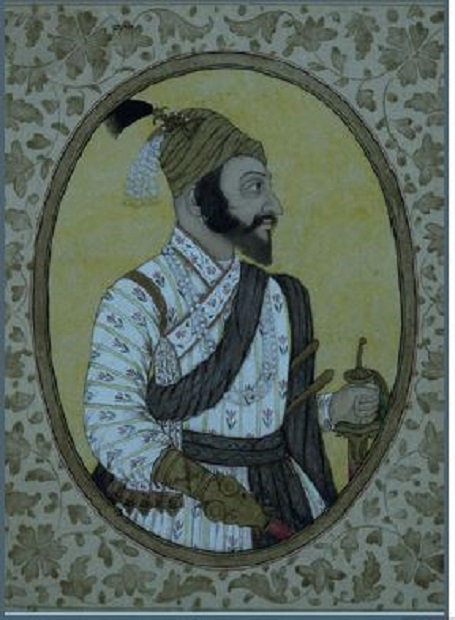
Shivaji was born at Shivner in 1627 to Shaji Bhonsle (Father) and Jija Bai (mother).
Conquest of Shivaji
Shivaji inherited the jagir of Poona from his father Shaji Bhonsle in 1637.
He assumed full charge of his Jagir after the death of his guardian, Dadaji Kondadev in 1647.
Even before taking charge of his Jagir, he conquered Raigarh, Kondana and Torna from the ruler of Bijapur.
He also captured Javli from a Maratha chief, Chanda Rao More, which made him the master of Mavala Region.
Then in, 1657, he attacked Bijapur Kingdon and captured a number of hill forts in the Konkan region.
After that incident, the Sultan of Bijapur sent Afzal Khal against Shivaji. But Afzal Khan was murdered by Shivaji in 1659.
Then Shivaji became popular and that invited attacks from Mughal emperor Aurangzeb.
Aurangzeb vs Shivaji
Aurangzeb sent the Mughal governor of Deccan, Shaista Khan. Shivaji was defeated to the Mughal forces and lost Poona.
But Shivaji attached Shaista Khan’s military camp at Poona in 1663 and killed his son. Also wounded Shaista Khan.
Then Shaista Khan was recalled by Aurangzeb.
Treaty of Purander
In 1664 Shivaji attacked Surat, an important port of the Mughal and plundered it.
Then Aurangzeb sent Raja Jai Singh of Amber. Raja Jai Singh defeated Shivaji and succeeded in besieging the Purander fort, where Shivaji lodged his family and treasure.
Then Shivaji opened negotiations with Jai Singh and the Treaty of Purander was signed.
According to the treaty, Shivaji had to surrender 23 forts to the Mughal out of 35 held by him.
The remaining 12 forts were to be given to Shivaji on condition of service and loyalty to the Mughal Empire.
Also, the Mughals recognized the right of Shivaji to have certain parts of the Bijapur Kingdom, as Shivaji asked to exempt him from personal service to the Mughals.
Also, his son Shambaji was granted a mansab of 5000.
Imprisonment of Shivaji and its consequences
Shivaji visited Agra in 1666 and he was imprisoned. He then escaped from prison and made military preparations for another four years.
He plundered Surat for the second time in 1670 and captured all the lost territories.
In 1674, he crowned himself at Raigarh and assumed the title Chatrapati. He then went into the Carnatic region and captured Ginjee and Vellore.
After the expedition of the Carnatic region, he died in 1680.
Administration of Shivaji
Shivaji was a great administrator. He was assisted by a council of ministers called Ashtapradhan.
Peshwa – Finance and general administration. Later he became the prime minister.
Sar-i-Naubat or Senapati – Military commander, a honorary post.
Amatya – Accountant General.
Waqenavis – Intelligence, posts and household affairs.
Sachiv – Correspondence.
Sumanta – Master of ceremonies.
Nyayadish – Justice.
Panditarao – Charities and religious administration
The administrative reform of Shivaji was in the Deccan Sultanates. For example, Peshwas was the Persian title.
The revenue system of Shivaji was based on Malik Amber of Ahmadnagar. Lands were measured using a measuring rod called Kathi.
Lands were classified into three categories – Paddy field, garden lands and hilly tracks.
Shivaji reduced the powers of the Deshmuks and Kulkarni.
Chault and Sardeshmukhi
Chaut and Sardeshmukhi were the taxes collected in the neighbouring territories such Mughal Empire or Deccan sultanates.
Chauth was one-fourth of the land revenue paid to the Marathas to avoid the Maratha raid.
Sardeshmukhi was an additional levy of ten per cent on those lands for which Marathas claimed hereditary rights.
Military of Shivaji
The regular army consisted of about 30,000 to 40000 cavalry supervised by Havaildars.
Malvi – foot soldiers played an important role.
Soldiers were given fixed salaries.
There were two divisions in the Maratha cavalry:
Bargirs – equipped and paid by the state.
Silahdars – Maintained by the nobles.
Forts played important role in military operations of the Marathas. Shivaji has about 240 forts.
Successors of Shivaji
There was war of succession after the death of Shivaji between his son Shambaji and Rajaram. Shambaji was successful and Rajaram was executed the Mughals.
Rajaram succeeded the throne but the Mughals made him flee to the Ginjee fort. He died at Satara.
Rajaram was succeeded by his minor son Shivaji -II with his mother Tara Bai as regent.
The next ruler was Shahu in whose reign the Peshwas rose to power.
Peshwas (1713-1818)
Balaji Viswanath (1713-1720)
Baji Rao-I (1720-1740)
Balaji Baji Rao (1740-1761)
Balaji Viswanath
Balaji Viswanath started as a small revenue official and became Peshwa in 1713.
He made his position the most important and powerful as well as hereditary.
He made Shahu as Maratha ruler after the civil war.
Balaji Vishwanath sought the support of all Maratha leaders for Shahu.
In 1719, he got certain rights from the Mughal emperor, Farukh Siyar. Then Mughal emperor recognized Shahu as the Maratha King.
Also allowed to collection of Chauth and Sardeshmukhi from the six Mughal provinces of Deccan including the Carnatic and Mysore.
Baji Rao I (1720-1740)
Baji Rao was the eldest son of Balaji Viswanath. The Maratha power reached its zenith under him.
He initiated the system of confederacy among the Marath chiefs.
System of confederacy
Under the system of the confederacy, each Maratha chief was assigned a territory, which could be administered autonomously.
This resulted many Maratha families became prominent and established their authority in different parts.
Prominent Maratha families of those include:
Gaekwad at Baroda
Bhonsle at Nagpur
Holkars at Indore
Scindias at Gwalior
Peshwas at Poona
Balaji Baji Rao (1740-1761)
Balaji Baji Rao succeeded his father as Peshwa at the young age of nineteen. The Maratha king Shahu died in 1749 without issue. His nominated successor Ramraja was imprisoned by the Peshwa Balaji Baji Rao at Satara.
The full control of the Maratha kingdom came under the Peshwa. Then Peshwa entered into an agreement with the Mughal Emperor in 1752.
According to the agreement, the Peshwa gave assurance to the Mughal Emperor that he would protect the Mughal Empire from internal and external enemies for which the Chauth of the northwest provinces and the total revenue of the Agra and Ajmer provinces would be collected by the Marathas.
Decline of Marathas
Thus when Ahmad Shah Abdali invaded India, it became the responsibility of the Marathas to protect India.
The Marathas fought very bravely against Ahmad Shah Abdali in the Third Battle of Panipat in 1761. But they got defeated. Many Maratha leaders and thousands of soldiers died in this battle.
Balaji Baji Rao also died on hearing the sad end of this battle. Also, this battle gave a death blow to the Maratha power.
Thereafter, the Maratha confederacy weakened due to internal conflicts among the Maratha chiefs. After the decline of the Mughal Empire, the Marathas emerged a great power in India.
But they could not succeed in preventing the establishment of British power in India.
The important causes for the downfall were that there was lack of unity among the Maratha chiefs like Holkar, Scindia and Bhonsle.
Also, the superiority of the British army and fighting method.
Maratha Empire family tree
Shivaji
Shaji Bhonsle (Father)
Jijabai
Sambhaji(elder son) and Rajaram (younger son)
Shivaji (Father)
Tarabai (First wife) and Raja Bai (Second wife)
Rajaram(Husband)
Shahu (Shivaji-II)
Sambhaji(Father)
Sambhaji-II
Raja Bai (Mother) and Rajaram (Father)
Rama Raja
Shahu (Father)
Shahu-II (Adopted Son)
Rama Raja (Father)
Pratap Singh
Shahu-II (Father)
Shaji-II (Shaji Appa Saheb)
Pratap Singh (Younger Brother)
Maratha empire kings
Shivaji
Sambhaji
Rajaram
Tara Bai (Rajaram wife)
Shahu(Sambhaji son)
Balaji Viswanath as Peshwa
Raja Bai (Second wife of Rajaram) and her son Sambhaji-II
This is notes for Tnpsc exams for blood and blood circulatory system, parts of heart, vein and capillary
Blood and blood circulation
Blood is a vital fluid that transports oxygen, nutrients, and hormones throughout the body. It comprises plasma, red blood cells (carrying oxygen), white blood cells (fighting infections), and platelets (aiding clotting). The circulatory system, powered by the heart, ensures efficient blood flow through arteries (carrying blood away from the heart), veins (carrying blood towards the heart), and capillaries (facilitating exchange of substances). This intricate system is crucial for maintaining homeostasis and overall bodily functions.
Note: This is a very brief overview. For TNPSC exams, you’ll need to study the topic in greater depth. Blood and blood circulation notes taken 10th Samacheer Science book as follows. Also attached 10th and 11th samacheer book pdf at the enad for your reference for the same topic.
Blood
Blood is the main circulatory medium in the human body. It is a red coloured fluid connective tissue.
Components of Blood
The blood consists of two main components. The fluid plasma and the formed elements (blood cells) which are found suspended in the plasma.
Plasma
It is slightly alkaline, containing non-cellular substance which constitutes about 55% of the blood. Organic substances like proteins, glucose, urea, enzymes, hormones, vitamins and minerals are present in the plasma.
Formed Elements of Blood
Blood corpuscles are of three types:
Red blood corpuscles (RBC) or Erythrocytes
White blood corpuscles (WBC) or Leucocytes
Blood platelets or Thrombocytes
Red blood corpuscles (Erythrocytes)
They are the most abundant cells in the human body. RBCs are formed in the bone marrow. The RBCs impart red colour to the blood due to presence of respiratory pigment haemoglobin.
Matured mammalian RBCs do not have cell organelles and nucleus. They are biconcave and disc-shaped. Their life span is about 120 days. RBC is involved in the transport of oxygen from lungs to tissues.
Why does mammalian RBC lack cell organelles and nucleus?
Mammalian RBC lack nucleus and makes the cells biconcave and increase surface area for oxygen binding, loss of mitochondria allows the RBC to transport all the oxygen to tissues, and loss of endoplasmic reticulum allows more flexibility for RBC to move through the narrow capillaries.
White blood corpuscles (Leucocytes)
WBC’s are colourless. They do not have haemoglobin and are nucleated cells. It is found in the bone marrow, spleen, thymus and lymph nodes. They are capable of amoeboid movement.
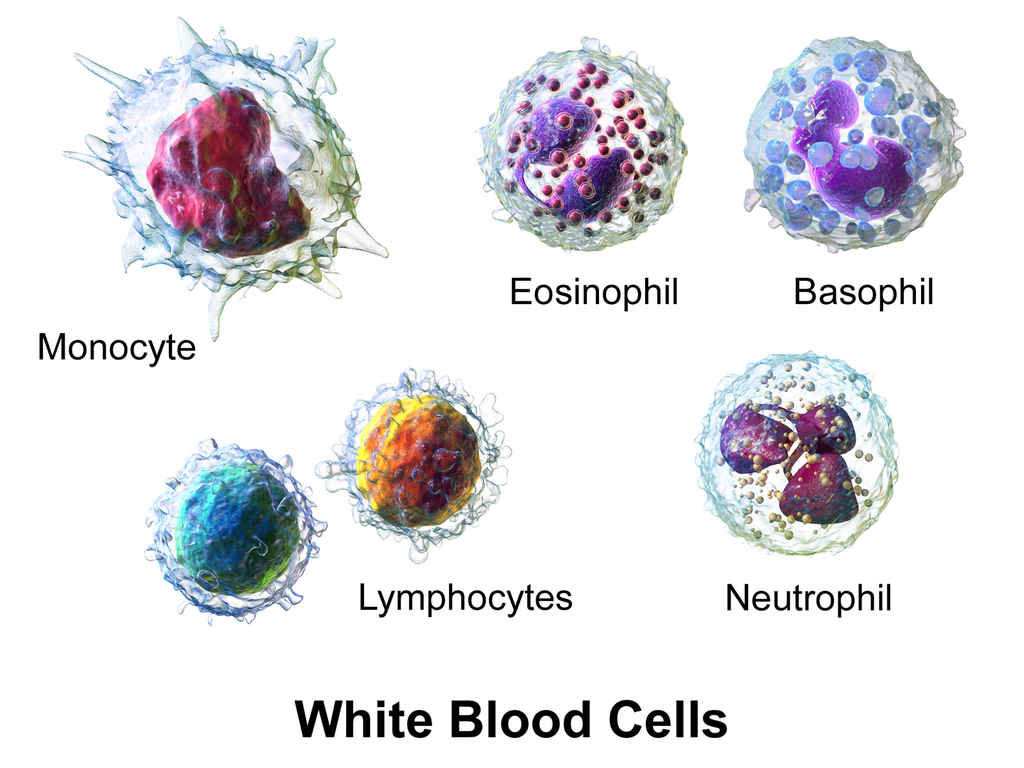
Types of white blood cells: neutrophils, lymphocytes, monocytes, eosinophils, basophils
The white blood corpuscles can be grouped into two categories:
Granulocytes
Agranulocytes
Granulocytes
They contain granules in their cytoplasm. Their nucleus is irregular or lobed. The granulocytes are of three types:
Neutrophils
Eosinophils
Basophils
Neutrophils
They are large in size and have a 2 – 7 lobed nucleus. These corpuscles form 60% – 65% of the total leucocytes. Their numbers are increased during infection and inflammation.
Eosinophils
It has a bilobed nucleus and constitute 2% – 3% of the total leucocytes. Their number increases during conditions of allergy and parasitic infections. It brings about detoxification of toxins.
Basophils
Basophils have lobed nucleus. They form 0.5-1.0% of the total leucocytes. They release chemicals during the process of inflammation.
Agranulocytes
Granules are not found in the cytoplasm of these cells. The agranulocytes are of two types:
Lymphocytes
Monocytes
Lymphocytes
These are about 20-25% of the total leucocytes. They produce antibodies during bacterial and viral infections.
Monocytes
They are the largest of the leucocytes and are amoeboid in shape. These cells form 5 – 6 % of the total leucocytes.They are phagocytic and can engulf bacteria.
Blood Platelets or Thrombocytes
These are small and colourless. They do not have nucleus. There are about 2,50,000 – 4,00,000 platelets / cubic mm of blood. Life span of platelets is 8–10 days. They play an important role in clotting of blood. Platelets form clot at the site of injury and prevent blood loss.
More to Know
Anemia: Decrease in number of erythrocytes. Leucocytosis: Increase in the number of leukocytes. Leukopenia: Decrease in number of leukocytes. Thrombocytopenia: Decrease in the number of thrombocytes.
Functions of blood
Transport of respiratory gases (Oxygen and CO2).
Transport of digested food materials to the different body cells.
Transport of hormones.
Transport of nitrogenous excretory products like ammonia, urea and uric acid.
It is involved in protection of the body and defense against diseases.
It acts as buffer and also helps in regulation of pH and body temperature.
It maintains proper water balance in the body.
Blood Vessels – Arteries and Veins
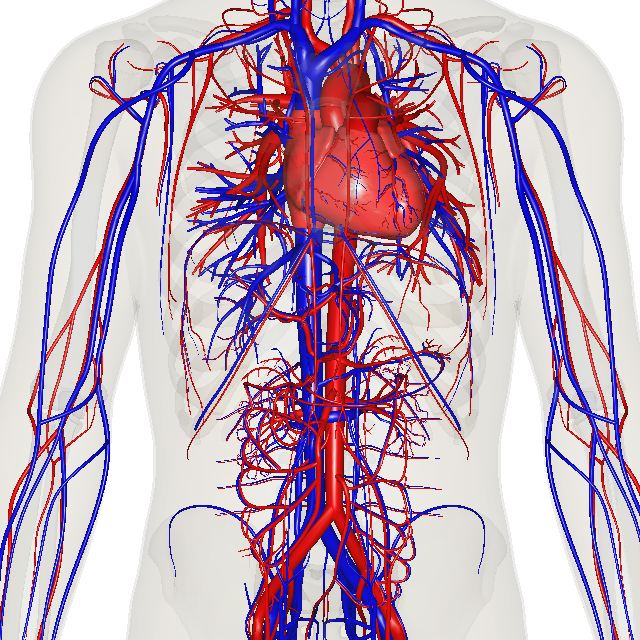
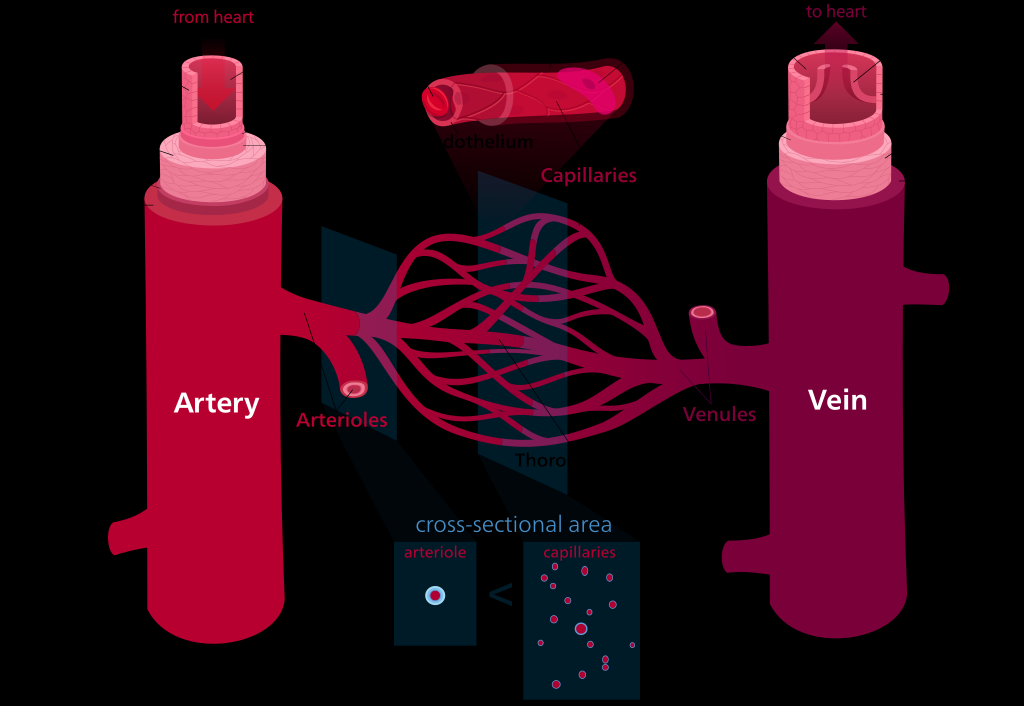
Blood vessels are a network of branched tubes that transport blood. There are three types of blood vessels namely arteries, veins and capillaries.
Arteries
They are thick and elastic vessels that carry blood away from the heart to various organs of the body. All arteries carry oxygenated blood except the pulmonary artery which carry deoxygenated blood to the lungs.
Veins
Veins are thin and non-elastic vessels that transport blood to the heart from the different organs. All veins carry de-oxygenated blood except the pulmonary vein which carry oxygenated blood from the lungs to the heart.
Capillaries
Capillaries are narrow tubes formed by branching of arterioles which then unite to form the venules and veins. They are about 8 µm in diameter. Capillaries are formed of single layer of endothelial cells.
S.No
Artery
Vein
1
Distributing vessel
Collecting vessel
2
Pink in colour
Red in colour
3
Deep location
Superficial in location
4
Blood flow with high pressure
Blood flow with low pressure
5
Wall of artery is strong, thick and elastic
Wall of vein is weak, thin and non-elastic
6
All arteries carry oxygenated blood except pulmonary arteries
All vein carry de-oxygenate blood except pulmonary veins
7
Internal valves are absent
Internal valves are present
Difference between Artery and Vein
Types of Circulatory System
Animals possess two types of circulatory system. They are
Open type
Closed type
Open type
In open type the blood is pumped by heart into blood vessels that open into blood spaces called as sinuses. These sinuses are the body cavities which are called haemocoel. Capillary system is absent. e.g. Arthropods, Molluscs and Ascidians.
Closed type
In closed type the blood flows in a complete circuit around the body through specific blood vessels. The blood flows from arteries to veins through small blood vessels called capillaries. e.g Vertebrates.
More to Know
Closed circulatory system was discovered by William Harvey (1628) who is regarded the Father of Modern Physiology.
Structure of Human Heart
Parts of Heart
Heart is a muscular pumping organ that pumps out the blood into the blood vessels. Human heart is situated between the lungs, slightly tilted toward the left and above the diaphragm in the thoracic cavity. The heart is made of specialized type of muscle called the cardiac muscle.
The heart is enclosed in a double walled sac called pericardium. It contains lubricating pericardial fluid which reduces friction during heart beat and protects it from mechanical injuries.
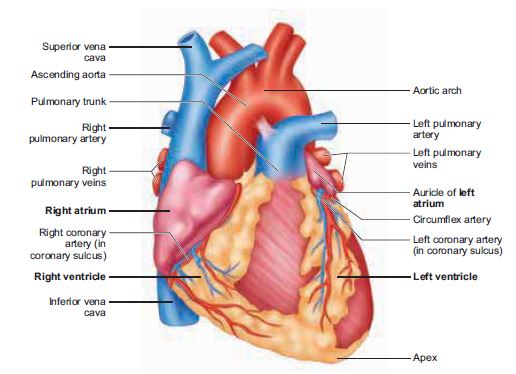
The human heart is four chambered. The two upper thin walled chambers of the heart are called auricle or atria (sing: atrium) and two lower thick walled chambers are called ventricles.
The chambers are separated by partition called septum. The septum between auricles and ventricles prevents the mixing of oxygenated and deoxygenated blood.
The two auricles are separated from each other by interatrial septum.The left atrium is smaller than the right atrium. The right atrium receives deoxygenated blood from different parts of the body through the main veins superior vena cava, inferior vena cava and coronary sinus.
Pulmonary veins bring oxygenated blood to the left atrium from the lungs. The right and left auricles pump blood into the right and left ventricles respectively.
The ventricles form the lower part of the heart. The two ventricles are separated from each other by an interventricular septum. The left and right ventricles have thick walls because the ventricles have to pump out blood with force away from the heart.
From the right ventricle arises the pulmonary trunk which bifurcates to form right and left pulmonary arteries. The right and left pulmonary arteries supply deoxygenated blood to the lungs of the respective side.
The left ventricle is longer and narrower than the right ventricle. The walls are about three times thicker than the right ventricle. The left ventricle gives rise to aorta. The oxygenated blood is supplied by the aorta to various organs of the body. The coronary arteries supply blood to the heart.
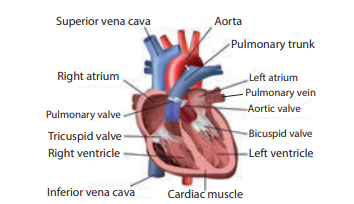
Internal structure of human heart
Valves
The valves are the muscular flaps that regulate the flow of blood in a single direction and prevent back flow of blood. The heart contains three types of valves.
Right atrioventricular valve
It is located between the right auricle and right ventricle. It has three thin triangular leaf like flaps and therefore called tricuspid valve. The apices of the flaps are held in position by chordae tendinae arising from the muscular projection of the ventricle wall known as papillary muscles.
Left atrioventricular valve
It is located between the left auricle and left ventricle. It has two cusps and therefore called bicuspid or mitral valve.
Semilunar valves
The major arteries (pulmonary artery and aorta) which leave the heart have semilunar valves which prevent backward flow of blood into the ventricles. They are the pulmonary and aortic semilunar valves.
More to Know
Heart chambers in vertebrate animals Two chambered: Fishes Three chambered: Amphibians Incomplete four chambered: Reptiles Four chambered: Aves, Mammals and Crocodiles (Reptile)
Types of Blood Circulation
The blood circulates in our body as oxygenated and deoxygenated blood. The types of circulation are:
Systemic circulation
Circulation of oxygenated blood from the left ventricle of the heart to various organs of the body and return of deoxygenated blood to the right atrium. Aorta carries oxygenated blood to all the organs of the body.
Pulmonary circulation
The path of pulmonary circulation starts in the right ventricle. Pulmonary artery arises from the right ventricle and reaches the lungs with deoxygenated blood. Pulmonary veins collect the oxygenated blood from the lungs and supplies it to the left atrium of the heart.
Coronary circulation
The supply of blood to the heart muscles (cardiac muscles) is called as coronary circulation. Cardiac muscles receive oxygenated blood from coronary arteries that originate from the aortic arch.
Deoxygenated blood from the cardiac muscles drains into the right atrium by the coronary sinuses.
When the blood circulates twice through the heart in one complete cycle it is called double circulation. In double circulation the oxygenated blood do not mix with the deoxygenated blood.
However, in some animals the oxygenated and deoxygenated blood are mixed and pass through the heart only once. This type of circulation is called single circulation. e.g., fishes, amphibians and certain reptiles.
Conclusion
In conclusion, the intricate interplay between Blood and blood circulation is fundamental for sustaining life. The heart’s relentless pumping propels blood through a vast network of vessels, ensuring the continuous delivery of oxygen and nutrients to every cell while efficiently removing waste products. Understanding the complex mechanisms of blood circulation is crucial for comprehending various physiological processes and their implications for human health.
Tnpsc exams notes for Palaeolithic culture existed in the India subcontinent .
About 4,00,000 BP(Before Present), lithic technology changed and the human ancestors diverged.
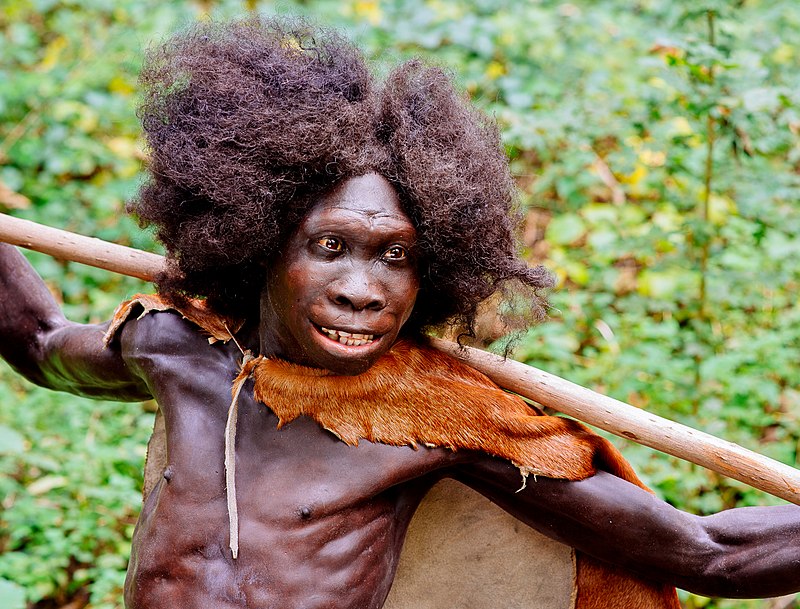
The Upright Man have existed in this period and tools of this period exhibited behavioral modernity.
The modern human might have arrived around 3,00,000 years ago.
In India, the Middle Palaeolithic phase was first found on the Pravara River at Nevasa by H.D. Sankalia and after the discovery, several sites were later found.
Most recently the Middle Palaeolithic sites were identified in Athirampakkam which belonged to 3.85-1.72 lakh years BP.
The Indian Middle Palaeolithic probably is as old as African Middle Palaeolithic culture and the Indian one ages 3,85,000 and 40,000 BCE , while the African age is associated with the Humans and Neanderthals in Europe and no Hominin fossil bones of these species were found in India Subcontinent.
The Middle Palaeolithic sites are found in Narmada, Godavari,Krishna, Yamuna and other river valleys.
Industies and tools
The tools of this period are knives on flakes,shouldered points, borers, choppers, hand axes etc. Flake industries was predominant. Scrapers were used for wood and skin works.
Ways of Life and Main Characteristics
The tools became smaller and decresed use of hand axes.
use of advanced technologies in stone tool production.
use of chert, jasper, chalcedony and quartz as raw materials.
Tnpsc Notes for the introduction to the Indian culture post Indus valley civilization
Features of Vedic Texts
Vedic text and rhymes were passed orally from one generation to the next. As there is no script during that period, no documents were written.
Even though there is a symbol used in the Indus valley civilization, it is still not deciphered. There are two different timelines related to Vedic culture. That is early Vedic and later Vedic.
The early Vedic period belongs to the Chalcolithic culture and the later Vedic period belongs to the Painted Grey ware or Iron age in North India.
A strong cultural foundation was laid during this period, and there is a noticeable development in cultural, agriculture, craft, and technological development.
More importantly, village settlements were found in this period.
Importance of Vedic literature
Several disciplines of philosophy, literature, and science were developed during the Vedic period. Also, several branches of literature, maths, ethics, astronomy, and grammar were developed.
But the education was limited to males. There was a teacher-pupil relationship developed through person-oriented training.
Several Vedic texts were developed and much importance was given to pronunciation and grammar. Several texts were orally transmitted. This suggested that there was training through utterances and memorization.
Memorization was a part of Vedic Education. Aranyakas are a priest who was in the forest.
Upnishads means “To sit nearby” were philosophical inquiries that were composed during this period. These are also referred to as Vedanta as these were attached to Vedic texts.
The famous Satyameva Jayate is from Mundaka Upanishad.
The Vedas lays stress on knowledge of self-realization or atman. Brahman is considered the supreme being.
Vedic literature stresses meditation, the cycle of birth, and death. This text conveys karma and good conduct, mercy, generosity, self-restraint as good virtues.
Conclusion
Vedic literature was ritual-dominated and is based on Vedic life. It has the pursuit of knowledge and virtuous conduct.
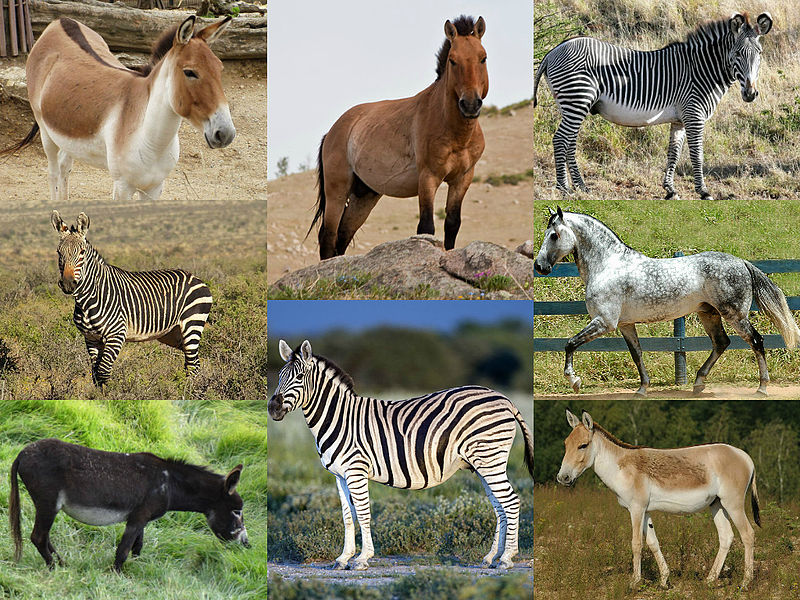
Eqquus refers to the genus of animals including horses and zebras.
Equus is a genus of mammals in the family Equidae, which includes horses, donkeys, and zebras. Within the Equidae, Equus is the only recognized extant genus, comprising seven living species.
Equus Genus Characteristics
Like Equidae more broadly, Equus has numerous extinct species known only from fossils. The genus most likely originated in North America and spread quickly to the Old World. Equines are odd-toed ungulates with slender legs, long heads, relatively long necks, manes (erect in most subspecies), and long tails.
All species are herbivorous, and mostly grazers, with simpler digestive systems than ruminants but able to subsist on lower-quality vegetation.
While the domestic horse and donkey (along with their feral descendants) exist worldwide, wild equine populations are limited to Africa and Asia.
Wild equine social systems are in two forms; a harem system with tight-knit groups consisting of one adult male or stallion, several females or mares, and their young or foals; and a territorial system where males establish territories with resources that attract females, which associate very fluidly.
In both systems, females take care of their offspring, but males may play a role as well. Equines communicate with each other both visually and vocally. Human activities have threatened wild equine populations.
This article is for Tnpsc exams in history part for Acheulian and sohanian culture which existed in India
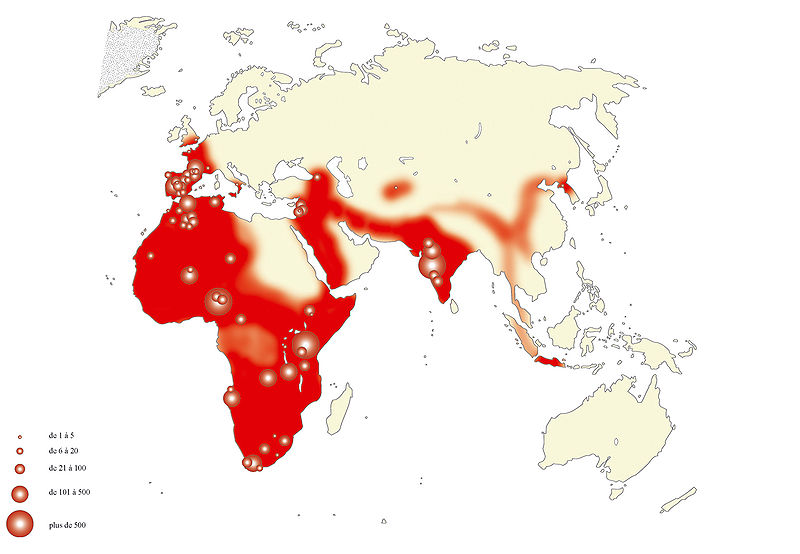
Two independent cultures or traditions of hand axe (Acheulian) and pebble flake (Sohanian) industries are found in India, based on research.
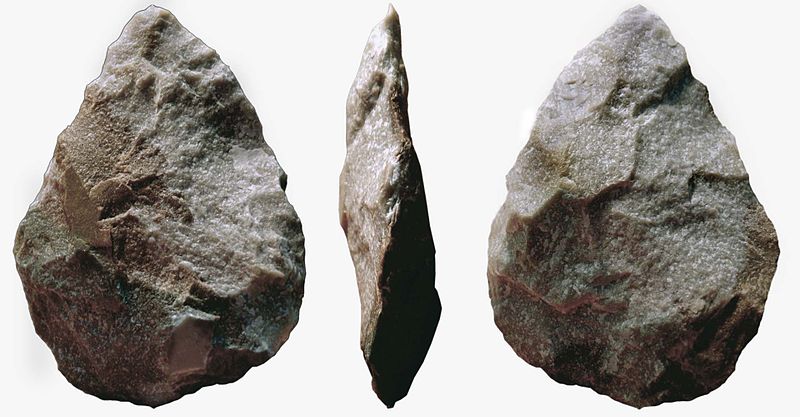
The Acheulian industry mainly has hand axes and cleavers, whereas the Sohan industry uses only choppers and chopping tools. The Sohan industry gets its name from the Sohan river valley of Pakistan.
According to the latest research, Acheulian and Sohanian are no different they are the same.
Acheulian culture distribution across Asia, Africa, and Europe By No machine-readable author provided. 120 assumed (based on copyright claims). – No machine-readable source was provided. Own work assumed (based on copyright claims)., CC BY-SA 3.0, https://commons.wikimedia.org/w/index.php?curid=652361
Sohanian Culture
Sohanian or Sohan culture is an archaeological culture that belongs to Lower Paleolithic. It is located in and around the Siwalik Hills.
Sohar sites are found in today’s India, Pakistan, and Nepal. The artifacts from Sohanian Culture were made of quartzite pebbles, cobbles, and boulders.
This raw material was derived from various fluvial sources found on the Siwalik landscapes. The things comprise choppers, discoid, scrapers, cores, and flakes of different types.
Acheulian culture in India
It is a lower Palaeolithic tool culture including the hand axe.
The Acheulian sites in India are densely found in central India and the southern part of the Eastern Ghats.
Sites are found in India are Western Rajasthan, Mewar Plain, Chota Nagpur Plateau, Saurashtra, and the Eastern Ghats near the north of Cauvery river.
FAQ
Where is the Acheulian culture site located?
This culture is found mostly from the Siwalik hills in North to near Chennai in the south in the coastal region, northeast India, and in the Gangal plains.
What is the Acheulean tradition?
This culture is the first standardized tradition of toolmaking of the Early Humans. These tool kits differ in tool types, which reflects the changing environment.
What is the typical tool of Soan culture?
The early soan main uses pebble tools. It is made of rounded pebbles. Also, minimum flaking is found on them to get the shape of a chopper.
Who were the makers of the Acheulian handaxes?
These were produced by two extinct species i.e H.Erectus and H.Heidelbergensis.
How long were Acheulean Handaxes used?
These were used between 1.6 million years ago to 100,000 years ago. This makes these Handaxes the most advanced technology developed by early humans.
How did the Acheulean toolmaking tradition get its name?
It got its name from a site named Saint-Acheul in northern France, which refers to a range of Lower Paleolithic tool-making traditions across Africa-Europe-Asia.
In India, the prehistoric period is divided into the Paleolithic (Old Stone Age), Mesolithic (Middle Stone Age), Neolithic (New Stone Age), and Metal Age. However, these periods were not uniform throughout the Indian subcontinent.
The dating of the prehistoric period is done scientifically. The technique of radiocarbon dating is commonly used for this purpose. It is based on measuring the loss of carbon in organic materials over a period of time.
Another dating method is known as dendro-chronology. It refers to the number of tree rings in wood. By counting the number of tree rings in the wood, the date the wood arrived at is determined.
Palaeolithic or Old Stone Age
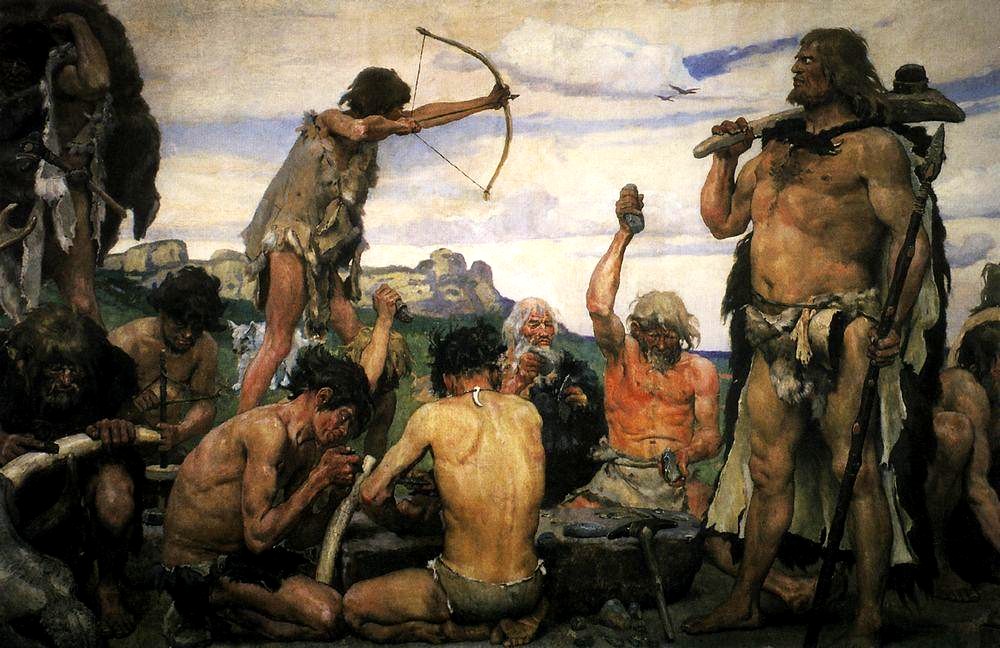
The Old Stone Age sites are widely found in various parts of the Indian subcontinent. These sites are generally located near water sources. Several rock shelters and caves used by the Paleolithic people are scattered across the subcontinent.
They also lived rarely in huts made of leaves. Some of the famous sites of the Old Stone Age in India are:
a. The Soan Valley and Potwar Plateau in northwest India. b. The Siwalik hills in north India. c. Bhimpetka in Madhya Pradesh. d. Adamgarh hill in Narmada valley. e. Kurnool in Andhra Pradesh and f. Attirampakkam near Chennai.
In the Old Stone Age, food was obtained by hunting animals and gathering edible plants and tubers. Therefore, these people are called hunter-gatherers. They used stone tools and hand-sized and flaked-off large pebbles for hunting animals.
Stone implements are made of a hard rock known as quartzite. Large pebbles are often found in river terraces. The hunting of large animals would have required the combined effort of a group of people with large stone axes.
We have little knowledge about their language and communication. Their way of life was modified with the passage of time, as they made attempts to domesticate animals, make crude pots, and grow some plants.
A few Old Stone Age paintings have also been found on rocks at Bhimbetka and other places. The period before 10000 B.C. is assigned to the Old Stone Age.
Mesolithic or Middle Stone Age
The next stage of human life is called the Mesolithic or Middle Stone Age which falls roughly from 10000 B.C. to 6000 B.C. It was the transitional phase between the Paleolithic Age and Neolithic Age.
Mesolithic remains are found in Langhanj in Gujarat, Adamgarh in Madhya Pradesh, and also in some places of Rajasthan, Utter Pradesh, and Bihar.
The paintings and engravings found at the rock shelters give an idea about the social life and economic activities of Mesolithic people. In the sites of the Mesolithic Age, different types of stone tools are found.
These are tiny stone artefacts, often not more than five centimetres in size, and therefore called microliths. The hunting-gathering pattern of life continued during this period. However, there seems to have been a shift from big animal hunting to small animal hunting and fishing.
The use of bow and arrow also began during this period. Also, there began a tendency to settle for longer periods in an area. Therefore, the domestication of animals, horticulture, and primitive cultivation started.
Animal bones are found in these sites and these include dogs, deer, boar, and ostrich. Occasionally, burials of the dead along with some microliths and shells seem to have been practiced.
Neolithic Age
Remarkable progress is noticed in human civilization in the Neolithic Age. It is approximately dated from 6000 B.C to 4000 B.C. Neolithic remains are found in various parts of India.
These include the Kashmir valley, Chirand in Bihar, Belan valley in Uttar Pradesh, and several places of the Deccan.
The important Neolithic sites excavated in south India are Maski, Brahmagiri, Hallur, and Kodekal in Karnataka, Paiyampalli in Tamil Nadu, and Utnur in Andhra Pradesh.
The chief characteristic features of the Neolithic culture are the practice of agriculture, domestication of animals, polishing of stone tools, and the manufacture of pottery.
In fact, the cultivation of plants and domestication of animals led to the emergence of village communities based on sedentary life. There was a great improvement in the technology of making tools and other equipment used by man.
Stone tools were now polished. The polished axes were found to be more effective tools for hunting and cutting trees.
Mudbrick houses were built instead of grass huts. Wheels were used to make pottery. Pottery was used for cooking as well as storage of food grains. Large urns were used as coffins for the burial of the dead.
There was also improvement in agriculture. Wheat, barley, rice, and millet were cultivated in different areas at different points in time. Rice cultivation was extensive in eastern India. Domestication of sheep, goats, and cattle was widely prevalent.
Cattle were used for cultivation and for transport. The people of the Neolithic Age used clothes made of cotton and wool.
Metal Age
The Neolithic period was followed by the Chalcolithic (copper-stone) period when copper and bronze came to be used. The new technology of smelting metal ore and crafting metal artefacts is an important development in human civilization.
However, the use of stone tools was not given up. Some of the micro-lithic tools continued to be essential items. People began to travel for long distances to obtain metal ores. This led to a network of Chalcolithic cultures and the Chalcolithic cultures were found in many parts of India.
Generally, Chalcolithic cultures had grown in river valleys. Most importantly, the Harappan culture is considered a part of Chalcolithic culture.
In South India, the river valleys of the Godavari, Krishna, Tungabhadra, Pennar, and Kaveri were settled by farming communities during this period.
Although they were not using metals at the beginning of the Metal Age, there is evidence of copper and bronze artefacts by the end of the second millennium B.C.
Several bronze and copper objects, beads, terracotta figurines, and pottery were found at Paiyampalli in Tamil Nadu.
The Chalcolithic Age is followed by the Iron Age. Iron is frequently referred to in the Vedas. The Iron Age of the southern peninsula is often related to Megalithic Burials. Megalith means Large Stone.
The burial pits were covered with these stones. Such graves are extensively found in South India. Some of the important megalithic sites are Hallur and Maski in Karnataka, Nagarjunakonda in Andhra Pradesh, and Adichchanallur in Tamil Nadu.
Black and red pottery, iron artefacts such as hoes and sickles, and small weapons were found in the burial pits.
The Mughal Empire, a once-mighty dynasty that spanned the Indian subcontinent, reached its zenith under the rule of illustrious emperors such as Akbar, Shah Jahan, and Aurangzeb. However, as the pages of history turned, the empire faced inevitable decline. In this blog post, we delve into the poignant story of the last Mughal ruler, Bahadur Shah II, and witness the fading glory of a dynasty that had once ruled with opulence and grandeur.
Rise and Fall of the Mughal Empire:
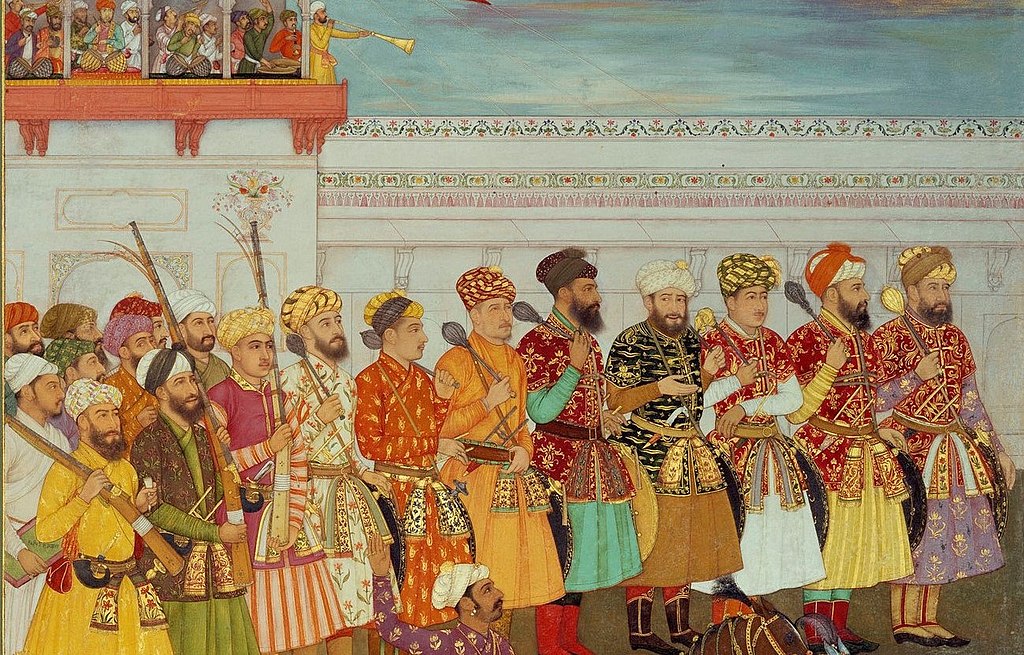
The Mughal Empire, founded by Babur in 1526, flourished for centuries, blending Persian, Turkish, and Indian cultures. The empire’s cultural richness, architectural marvels, and economic prosperity reached their pinnacle during the reign of Emperor Akbar. However, by the 19th century, the empire faced internal strife, external invasions, and the growing influence of European powers, particularly the British East India Company.
Bahadur Shah II: The Reluctant Emperor:
Born in 1775, Bahadur Shah II ascended to the throne in 1837, inheriting an empire in decline. The “Zafar,” as he was known, was a poet, an aesthete, and a man of letters rather than a military strategist. Despite his limited political power, Bahadur Shah II became a symbol of resistance against the encroaching British dominance.
The Revolt of 1857:
The year 1857 marked a turning point in the history of the Mughal Empire. The Indian Rebellion, often referred to as the Sepoy Mutiny, saw Bahadur Shah II reluctantly assume the role of a figurehead for the sepoys (Indian soldiers) and civilians who rebelled against British rule. The uprising, though ultimately unsuccessful, became a watershed moment in Indian history.
Trial and Exile:
The culmination of the rebellion led to the capture of Bahadur Shah II by the British. In 1858, he faced a trial for his alleged involvement in the uprising. Found guilty, the last Mughal ruler was exiled to Rangoon (present-day Yangon) in British-controlled Burma. The once-mighty emperor spent his final years in obscurity and solitude.
Legacy and Cultural Impact:
Despite his reluctant involvement in the events of 1857, Bahadur Shah II left an enduring cultural legacy. A prolific poet, he penned verses under the pen name “Zafar,” reflecting the beauty of Urdu poetry. His ghazals and compositions continue to be celebrated, and he is remembered as the last significant patron of the classical arts during the Mughal era.
Reflections on the Twilight of an Empire:
The story of the last Mughal ruler prompts reflection on the larger narrative of imperial decline and the clash of cultures during the 19th century. Bahadur Shah II, caught between tradition and the encroaching tide of colonialism, became a symbol of the struggles faced by once-mighty empires confronting inevitable decline.
Conclusion
The tale of Bahadur Shah II, the last Mughal ruler, is a poignant chapter in the annals of history. His reign witnessed the sunset of a once-glorious empire, overshadowed by the relentless march of colonial powers. The final years of Bahadur Shah II in exile symbolize the end of an era, marking the transition from Mughal dominance to British imperial rule in the Indian subcontinent. His legacy lives on through his contributions to Urdu poetry, serving as a reminder of the cultural richness that thrived even in the twilight of an empire.
* * All the Notes in this blog, are referred from Tamil Nadu State Board Books and Samacheer Kalvi Books. Kindly check with the original Tamil Nadu state board books and Ncert Books.