Whose woods these are I think I know.
His house is in the village though;
He will not see me stopping here
To watch his woods fill up with snow.
My little horse must think it queer
To stop without a farmhouse near
Between the woods and frozen lake
The darkest evening of the year.
He gives his harness bells a shake
To ask if there is some mistake.
The only other sound’s the sweep
Of easy wind and downy flake.
The woods are lovely, dark and deep.
But I have promises to keep,
And miles to go before I sleep,
And miles to go before I sleep.
Category: Civil Services Exam
The House on Elm Street Tnpsc
It sat alone.
What happened there is still today unknown.
It is a very mysterious place,
And inside you can tell it has a ton of space,
But at the same time it is bare to the bone.
At night the house seems to be alive,
Lights flicker on and off.
I am often tempted to go to the house,
To just take a look and see what it is really about,
But fear takes over me.
I drive past the house almost every day.
The house seems to be a bit brighter
On this warm summer day in May.
It plays with your mind.
To me I say, it is one of a kind.
Beside the house sits a tree.
It never grows leaves,
Not in the winter, spring, summer or fall.
It just sits there, never getting small or ever growing tall,
How could this be?
Rumors are constantly being made,
And each day the house just begins to fade.
What happened inside that house?
I really don't know.
I guess it will always be a mystery.
No Men are Foreign Tnpsc
Remember, no men are strange, no countries foreign
Beneath all uniforms, a single body breathes
Like ours: the land our brothers walk upon
Is earth like this, in which we all shall lie.
They, too, aware of sun and air and water,
Are fed by peaceful harvests, by war’s long winter starv’d.
Their hands are ours, and in their lines we read
A labour not different from our own.
Remember they have eyes like ours that wake
Or sleep, and strength that can be won
By love. In every land is common life
That all can recognise and understand.
Let us remember, whenever we are told
To hate our brothers, it is ourselves
That we shall dispossess, betray, condemn.
Remember, we who take arms against each other
It is the human earth that we defile.
Our hells of fire and dust outrage the innocence
Of air that is everywhere our own,
Remember, no men are foreign, and no countries strange.
Best books for upsc Prelims preparation in English

Conquering the UPSC Prelims can feel like an insurmountable challenge, but with the right resources and a dedicated approach, it’s entirely achievable. A well-curated library is your cornerstone, providing the foundation of knowledge and understanding crucial for navigating the vast syllabus.
This blog post will delve into the must-have books for UPSC Prelims preparation, covering key subjects like History, Geography, Polity, Economics, and Current Affairs. These carefully selected books offer comprehensive coverage, clarity of concepts, and engaging presentation, making your journey towards success more manageable and rewarding.
| Subject | Book Title | Author/Publisher | Key Features |
|---|---|---|---|
| History | India’s Ancient Past | R.S. Sharma | Covers Ancient Indian history in detail, focusing on Prelims-relevant topics. |
| History of Medieval India | Satish Chandra | Detailed coverage of Medieval Indian history. | |
| A Brief History of Modern India | Spectrum | Concise and to the point; ideal for Modern History. | |
| India’s Struggle for Independence | Bipan Chandra | A detailed narrative of the freedom struggle. | |
| Geography | Certificate Physical and Human Geography | G.C. Leong | Core concepts of physical and human geography. |
| Oxford Student Atlas for India | Oxford Publications | Essential for map-based questions. | |
| NCERT Geography Books (Class 6–12) | NCERT | Comprehensive understanding of fundamental geography concepts. | |
| Polity | Indian Polity for Civil Services Examinations | M. Laxmikanth | The most recommended book for Indian polity. |
| Economy | Indian Economy | Ramesh Singh | Detailed and updated content on the Indian economy. |
| NCERT Economics (Class 9–12) | NCERT | Fundamental economic concepts in simple language. | |
| Economic Survey & Union Budget | Government of India | For current economic trends and data. | |
| Environment | Environment By Shankar IAS | Shankar IAS Academy | Comprehensive coverage of environment and ecology. |
| NCERT Biology (Class 12 – Select Chapters) | NCERT | Important for understanding ecosystems and biodiversity. | |
| Science & Technology | Science and Technology for UPSC | Ravi P Agrahari | Covers key topics relevant for Prelims. |
| NCERT Science Books (Class 6–10) | NCERT | Basic science concepts for non-science background aspirants. | |
| Current Affairs | The Hindu or Indian Express (Newspaper) | – | Essential for daily updates and analysis. |
| Yojana and Kurukshetra Magazines | – | For socio-economic issues and government schemes. | |
| PIB (Press Information Bureau) | Government of India | Authoritative source for government policies and programs. |
Notes:
- NCERT Books: Start with NCERT books for basic conceptual clarity.
- Mock Tests: Practice with test series from institutes like Vision IAS, Insights IAS, etc., to enhance preparation.
- Updated Editions: Ensure you use the latest editions of all books.
Conclusion
The UPSC Prelims examination demands a comprehensive and in-depth understanding of a wide range of subjects. While this list provides a strong foundation, remember that consistent effort and a well-structured study plan are equally crucial. Regularly revise, practice mock tests, and stay updated with current affairs. Don’t get discouraged by setbacks, and maintain a positive and proactive approach. With dedication and the right resources, you can successfully navigate the challenges of the UPSC Prelims and take a significant step towards your dream of serving the nation.
Subscribe


Thirukkural Tnpsc
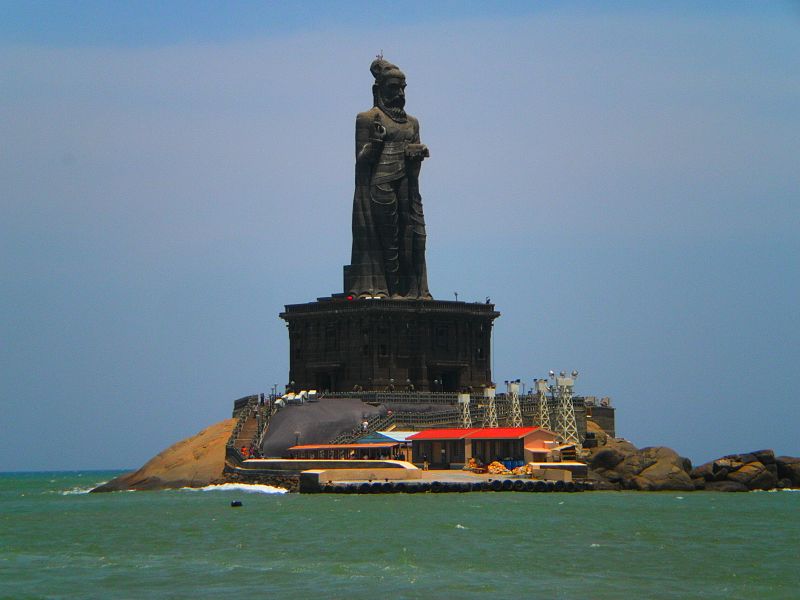
Significance as a Secular literature
Thirukkural is one of the most important pieces of secular literature available. It comprises worldly things. Also, it does not preach religious faiths, beliefs, or rituals.
It contains a set of 1330 couplets and is divided into three books and 133 chapters.
It is regarded as Universal and Secular as it has no relation to any religion, caste, language, worship, etc. It makes it applicable to people from all walks of life.
Also, two words are not mentioned in Thirukkural that make more secular. That is Tamil (Tamil Language in which Thirukkural is written) and Kadavul (God).
But Thirukkural is one among Eighteen Literary works (Pathinenkeezh Kanakku Nools), which is categorized as the works of Jains. Also, some scholars consider it a proponent of Jain principles and also show him as propounded of Christianity.
Relevance to Everyday Life
It emphasizes important principles such as non-violence, brotherhood, equality, vegetarianism, caste, friendship, love, sex, etc. These are the lessons that every human can draw as sources of inspiration in life. It is for all ages.
The Kural addresses three principles for living a meaningful life as Aram (Virtue), Porul (Wealth), and Inbam (Pleasure). Its best messages are seen in the first book which is on Aram(Virtue).
Impact of Thirukkural on Humanity
Thirukkural is an outstanding work, that is written in a poetic form. It is definitely is one of the greatest works on Ethics and Morality. Its couplets are based on the multi-facets of different types of people’s life.
Thiruvalluvar’s work shows the administrators good governance and bad governance. Also teaches normal men, women, and children to lead a meaningful life with moral values, righteousness, honesty, truth, compassion, love, etc.
It impacts humans as describes the life of normal people, such as Husbands, Wives, Children, friends, etc.
Tiruvalluvar formulated rules for individual success, and also for social harmony. These couplets also tell about non-violence, brotherhood, and vegetarianism.
These lessons that every human being can take the source of inspiration from it.
Thirukkural and Universal Values
Thirukkural teaches five Universal values such Love, Truth, Right Conduct, Peace, and Non-Violence.
Equality
Kural 972 – All human beings are equal by birth, but distinctions arise only because of the different qualities of their actions. (பிறப்பொக்கும் எல்லா உயிர்க்கும் சிறப்பொவ்வா செய்தொழில் வேற்றுமை யான்)
Rationalism
Kural 355 – Whatever be the apparent nature of things, it is wise to investigate their true nature (எப்பொருள் எத்தன்மைத் தாயினும் அப்பொருள் மெய்ப்பொருள் காண்பது அறிவு)
References
Green energy, its Types, and its benefits Tnpsc

Green Energy
Green Energy is an energy that is generated from natural resources such as Water, Wind, Waves, Sunlight, Volcanic Hot Spots, etc. Green energy is produced from renewable resources and also non polluting in nature.
Green Energy is those that use resources that are constantly being replenished such as Hydro Power, Wind Power, or Solar Energy.
Types of Green Energy
Hydropower
The power is generated from turbines installed in Dams. The force of the flowing water is utilized to run the turbines and in turn, it produces electricity.
Solar
Solar energy is the most common green energy. It utilizes the Sunlight and Solar PV cells to generate electricity. Solar is widely considered as the energy of the future.
Wind Power
Wind energy is the stellar renewable source of power. The moving wind is utilized to produce electricity and Wind Power Mills.
Geothermal
The hotspots in regions of volcano, is used to generate electricity by using natural hotwater from the ground.
Green Energy and its benefits
Green energy is renewable. It means it is produces little or no environmental impact. Also it does not release greenhouse gases into the atmosphere that contributes to global warming.
Current events for Tnpsc Exam
The best way to prepare for Current Affairs is to read the newspaper daily. The main section to read is Editorial Section is Hindu Paper.
Also, see Sansad TV, daily for current happenings in Lok Sabha and Rajya Sabha. Also, I’ll list down some famous and must-read books for current affairs.
- India 2021 – It is official book of Indian Government


2. Manorama – It is the most famous widely used for Upsc aspirants for Current Affairs.


3. Yojana – Yojana Magazine is a monthly magazine published by the Government of India. This book is about the economic development of the people. This magazine is essential as it gives a glimpse of schemes at ground level.


4 Competitive Success – This is yet another famous book amount Upsc aspirants. This book is similar to Manorama. Also one can get a yearbook in January.


Conclusion
One can get these books on Amazon and also get through a monthly subscription. But the monthly subscription is a better option as the Current affair needs to be prepared every day through newspapers and every month through these monthly magazines. This is because one cannot or possibly cover one year’s news and current affairs just a week or month before the exam.
Tnpsc Group 2 Syllabus 2022 and Study Material
UNIT-I: GENERAL SCIENCE


(i) Scientific Knowledge and Scientific temper – Power of Reasoning– Rote Learning Vs Conceptual Learning – Science as a tool to understand the past, present, and future.
(ii) Nature of Universe – General Scientific Laws – Mechanics – Properties of Matter, Force, Motion and Energy – Everyday application of the basic principles of Mechanics, Electricity and Magnetism, Light, Sound, Heat, Nuclear Physics, Laser, Electronics and Communications.
(iii) Elements and Compounds, Acids, Bases, Salts, Petroleum Products, Fertilizers, Pesticides.
(iv) Main concepts of Life Science, Classification of Living Organisms, Evolution, Genetics, Physiology, Nutrition, Health and Hygiene, Human diseases.


UNIT-II: CURRENT EVENTS
(iii) Geography – Geographical landmarks.
(iv) Economics – Current socio – economic issues.
(v) Science – Latest inventions in Science and Technology.
UNIT- III: GEOGRAPHY OF INDIA
(i) Location – Physical features – Monsoon, rainfall, weather, and climate – Water resources – Rivers in India – Soil, minerals, and natural resources – Forest and wildlife – Agricultural pattern.
(ii) Transport – Communication.
(iii) Social geography – Population density and distribution – Racial , linguistic groups, and major tribes.
(iv) Natural calamity – Disaster Management – Environmental pollution: Reasons and preventive measures – Climate change – Green energy.
UNIT – IV: HISTORY AND CULTURE OF INDIA
(i) Indus valley civilization – Guptas, Delhi Sultans, Mughals, and Marathas – Age of Vijayanagaram and Bahmani Kingdoms – South Indian history.
(ii) Change and Continuity in the Socio-Cultural History of India.
(iii) Characteristics of Indian culture, Unity in diversity – Race, language, custom.
(iv) India as a Secular State, Social Harmony.
UNIT-V: INDIAN POLITY
(i) Constitution of India – Preamble to the Constitution – Salient features of the Constitution – Union, State, and Union Territory.
(ii) Citizenship, Fundamental Rights, Fundamental Duties, Directive Principles of State Policy.
(iii) Union Executive, Union legislature – State Executive, State Legislature – Local governments, Panchayat Raj.
(iv) Spirit of Federalism: center-state Relationships.
(v) Election – Judiciary in India – Rule of law.
(vi) Corruption in public life – Anti-corruption measures – Lokpal and Lok Ayukta – Right to Information – Empowerment of women – Consumer protection forums, Human rights charter.
UNIT-VI: INDIAN ECONOMY
(i) Nature of Indian economy – Five-year plan models – an assessment – Planning Commission and Niti Ayog.
(ii) Sources of revenue – Reserve Bank of India – Fiscal Policy and Monetary Policy – Finance Commission – Resource sharing between Union and State Governments – Goods and Services Tax.
(iii) Structure of Indian Economy and Employment Generation, Land reforms and Agriculture – Application of Science and Technology in agriculture – Industrial growth – Rural welfare oriented
programmes – Social problems – Population, education, health, employment , poverty.
UNIT-VII: INDIAN NATIONAL MOVEMENT
(i) National renaissance – Early uprising against British rule – Indian National Congress – Emergence of leaders – B.R.Ambedkar, Bhagat Singh , Bharathiar , V.O.Chidambaranar , Jawaharlal Nehru, Kamarajar , Mahatma Gandhi, Maulana Abul Kalam Azad, Thanthai Periyar, Rajaji , Subash Chandra Bose , and others.
(ii) Different modes of Agitation: Growth of Satyagraha and Militant movements.
(iii) Communalism and partition.
UNIT- VIII : History, Culture, Heritage and Socio-Political Movements in Tamil Nadu
(i) History of Tamil Society, related Archaeological discoveries, Tamil Literature from Sangam age till contemporary times.
(ii) Thirukkural :
(a) Significance as a Secular literature
(b) Relevance to Everyday Life
(c) Impact of Thirukkural on Humanity
(d) Thirukkural and Universal Values – Equality, Humanism, etc
(e) Relevance to Socio – Politico-Economic affairs
(f ) Philosophical content in Thirukkural
(iii) Role of Tamil Nadu in freedom struggle – Early agitations against British Rule – Role of women in freedom struggle.
(iv) Evolution of 19th and 20th Century Socio-Political movements in Tamil Nadu – Justice Party , Growth of Rationalism – Self Respect Movement, Dravidian movement and Principles underlying both these movements, Contributions of Thanthai Periyar and Perarignar Anna.
UNIT – IX: Development Administration in Tamil Nadu
(i) Human Development Indicators in Tamil Nadu and a comparative assessment across the Country – Impact of Social Reform movements in the Socio-Economic Development of Tamil Nadu.
(ii) Political parties and Welfare schemes for various sections of people – Rationale behind Reservation Policy and access to Social Resources – Economic trends in Tamil Nadu – Role and impact of social welfare schemes in the Socio-economic development of Tamil Nadu.
(iii) Social Justice and Social Harmony as the Cornerstones of Socio-Economic development.
(iv) Education and Health systems in Tamil Nadu.
(v) Geography of Tamil Nadu and its impact on Economic growth.
(vi) Achievements of Tamil Nadu in various fields.
(vii) e-governance in Tamil Nadu.
Physical geography book for Upsc

If you want to understand better World Physical Geography for your department or competitive exams, then you need to take the help of good geography books to understand the concepts and revise well.
To help you get better marks in Geography here is a popular list of geography books that are available on online stores.
Best Physical Geography Books for UPSC Preparation – Affiliate Marketing Guide
| Book Title | Author(s) | Key Features | Affiliate Link |
|---|---|---|---|
| Certificate Physical and Human Geography | G.C. Leong | – Comprehensive coverage of physical and human geography. – Clear and concise language. – Numerous diagrams, maps, and charts. – Ideal for conceptual clarity and beginner level. | Buy on Amazon |
| Physical Geography | Savindra Singh | – In-depth analysis of physical geography topics. – Covers geomorphology, climatology, and oceanography. – Rich in diagrams and illustrative maps. | Buy on Amazon |
| Geography of India | Majid Husain | – Focuses on Indian geography with emphasis on physical geography. – Easy to follow with clear explanations. – Great for UPSC-specific topics on Indian landforms and climate. | Buy on Amazon |
| Fundamentals of Physical Geography | NCERT (Class 11) | – Foundation-level book. – Simple language and easy-to-understand concepts. – Covers core concepts like landforms, climate, and hydrology. – Perfect for beginners. | Buy on Amazon |
| Indian and World Geography | Khullar | – Focuses on Indian and world geography. – Clear explanations of global and Indian physical features. – Includes relevant maps and diagrams. | Buy on Amazon |
| Geography of India | D.R. Khullar | – Detailed chapter-wise analysis of Indian geography. – Focus on India’s physical characteristics. – Great for both GS Mains and optional geography papers. | Buy on Amazon |
| Environmental Geography | Savindra Singh | – Focus on environmental geography alongside physical geography. – Covers global and local environmental issues. – Useful for both Physical Geography and Environmental Issues sections in UPSC. | Buy on Amazon |
How to Use This Table for Affiliate Marketing:
Recommended Strategy for Physical Geography Books:
- Start with NCERTs: Begin with Fundamentals of Physical Geography (Class 11) for building foundational knowledge.
- In-depth Study: Use G.C. Leong, Savindra Singh, and Majid Husain for detailed understanding and for expanding knowledge on advanced topics.
- Map Practice: Incorporate practical map work using books that emphasize mapping and geographic features such as G.C. Leong and Savindra Singh.
These books, along with consistent practice, will provide a solid base for tackling the physical geography portion of the UPSC exam.
Conclusion
Before reading the above-mentioned Reference book, Kindly read “Fundamentals of Physical Geography” Ncert Textbook, to know the basics for Upsc related kinds of stuff.