Chennai has worrying air quality levels in Air Quality levels in year, with the city’s Air Quality Index (AQI) reaching 190 in January 2026. These numbers are placed in the ‘Unhealthy’ category according to the data.
Early this year, in January, the PM2.5 level stood at 119 µg/m³, and PM10 was measured at 146 µg/m³, which is four times higher than the safe limit recommended by the global health standards.
The data from December 2025 shows that air quality in Chennai is witnessing the poorest quality in the last six years, with an average AQI of 158.
Air Quality Index (AQI)
The Air Quality Index (AQI) is used to give the general people with an indication of air quality in local area. The AQI is an index for reporting daily air quality and give you how clear or polluted the air in the local area and what associated health effects might be concering for you.
Different nations have their own Air Quality criteria and indexes. Some of the benchmarks around the world are:
Air Quality Index, India
Nation Ambient Air Quality Standards(NAAQS)
Air Quality Health Index (AQHI), Canada
Air Quality Pollution Index (API), Malaysia
Air Quality Health Index (AQHI), Hong Kong
Comprehensive Air-Quality Index (CAI), South Korea
Daily Air Quality Index (DAQI), UK
Common Air Quality Index (CAQI), Europe
The Pollutants Standards Index (PSI), Singapore
For calculating AQI, five major air pollutants is taken into the account by National Ambient Air Quality Standards (NAAQS), USA. They are Particle pollution (also known as particulate matter), ground level ozone, carbon monooxide, sulfur dioxide and nitrogen dioxide.
Air Quality Index (AQI), India
National AQI, India is an index of outdoor air quality that takes air conditions throughout the country. The AQI India, index analyse eight major pollutants – PM10, PM2.5, Sulfur dioxide (SO2), Nitrogen dioxide (NO2), Carbon monoxide (CO), Ammonia (NH3), and Ozone (O3).
Based on the concentration of pollutants, AQI has been classified into six groups namely:
Good
Satisfactory
Moderately Polluted
Poor
Very Poor
Severe
Air Pollution
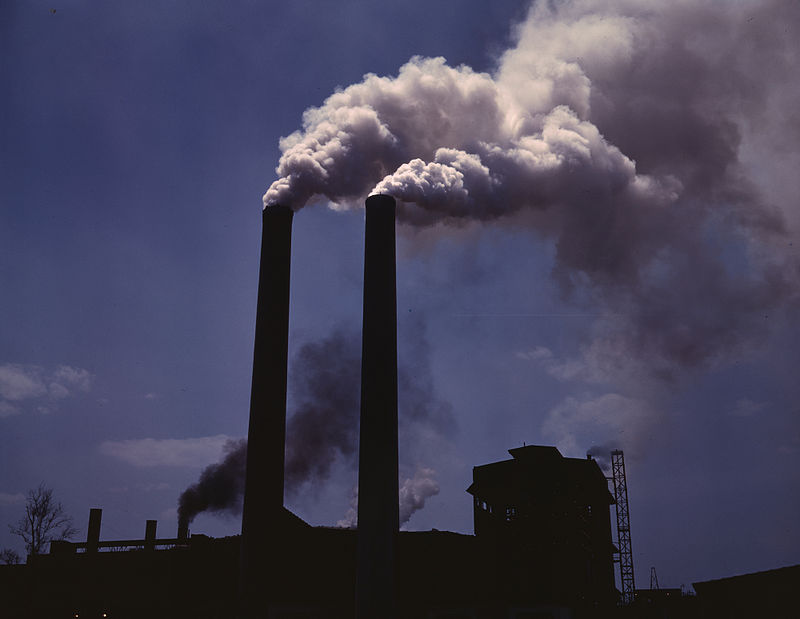
Air pollution from Industries by Alfred T. Palmer. Source: Wikipedia
Air pollution is the poisoning of air due to the addition of solid, liquid, or gaseous particles in a certain concentration, which may cause health hazards to Humans, Animals, Plants, etc, and also affects the environment or ecology in the long term.
In India, to prevent and control air pollution government of India enacted a law which is called the Air (Prevention and Control of Pollution) Act, 1981.
Types of Air Pollution
There are two types of Air Pollution: Indoor Air and Outdoor air pollution.
Indoor Air Pollution
It refers to the air pollution, we face daily in the Home workplace. It is caused by cooking, heating using traditional stoves, and burning of log woods that results in high air pollution inside the rooms.
Outdoor Air Pollution
It refers to outside of the home or workplace, ambient air. It is caused by Petrol, diesel vehicles, solid fuel burning, and industries such as thermal power plants, etc.
Causes of Air Pollution
Vehicle Exhaust
The burning of fuels by vehicles releases a high amount of carbon monoxide. A million vehicles operate on roads every day, leaving behind their own carbon footprint.
Thermal Power Plants
Power Plants use fossil fuels on a wide scale. That releases a lot of smoke into the environment. It also releases chemical waste such as Sulphur-di-oxide etc that travel and mix rapidly in the environment. These things react with water molecules and fall as acid rain.
Factories
Industrial plants and factories emit a wide range of air pollutants.
Construction
The construction site produces a lot of construction debris, dust particles, and gaseous emissions into the atmosphere.
Agricultural Activities
In agriculture, there is high usage of fertilisers. This releases byproducts of ammonia and other substances into the air.
Natural Causes
Even nature produces a lot of air pollutants. Examples are Volcano eruptions, Forest, Dust storms, etc. The scale of natural causes is larger than the man-made ones.
Household Activities
It includes cooking, cleaning using chemicals, mosquito repellants, pesticides, artificial fragrances, etc.
Effects of Air Pollution
Heart and Respiratory Problems
It creates several health hazards, including Heart and respiratory problems. In some cases, there is Cancer. Children and older people are highly vulnerable to air pollutants. The common diseases caused by air pollutants are Pneumonia, Asthma, chronic obstructive pulmonary disease (COPD) and other respiratory allergies.
Global Warming
Global warming creates environmental effects such as an increase in sea level, melting of Icebergs, loss of habitats, forest fires, etc.
Acid Rain
Acid rain is caused by gases such as nitrogen oxides and sulfur oxides that are released into the atmosphere. This reacts with water and falls as acid rain. This causes great damage to human beings, animals, and crops.
Effect on Wildlife
Can force wildlife species to move to new places and change their habitat.
Depletion of the Ozone layer
Ozone exists in the Earth’s atmosphere and is responsible for protecting humans from harmful ultraviolet (UV) rays. This layer depletes due to chlorofluorocarbons and hydrochlorofluorocarbons.
Human Health
Outdoor air pollution is the major cause of disease globally. The effect is an increase in admissions to hospitals and the risk of premature death. It is estimated that 4.2 billion premature death that occurs globally are linked to ambient air pollution.
WHO
Every day about 93% of the world’s children under the age of 15 (1.8 billion children) breathe polluted air that puts their health and development at serious risk
How to control air pollution?
Air pollution can be controlled to a certain limit by following the ways:
By establishing Industries away from areas of high human pollution. Such as constructing the Industries outside the cities, towns, etc.
By increasing the length of Chimneys in Industries. This may reduce the effect on the ground to a certain limit.
By planting more trees and plants.
Encouraging the Public to use Biogas, LPG, and CNG for their motor vehicles.
By using Public Transport, such as trains, buses, etc.
Avoid Air Travel as Aviation alone is responsible for 12% of CO2 emissions from all transport sources, compared to 74% from road transport.
A Temperate grassland food web shows the complex relationships within the Temperate grassland ecosystems. This food web primarily operates in a region where it receives only 30 to 51 centimetres of rain a year, with most of the rain falling during the summer. Winter brings cold, dry winds and occasional snow.
The temperate grasslands of the southern Hemisphere lie closer to the ocean than their northern counterparts, allowing for milder winters and a more even distribution of rainfall throughout the year. Without the tree of mountains to block or slow the moving masses of air, temperate grasslands experience almost constant wind.
These grasslands have smaller grasses and are less than the Savannas. The temperate grassland food web basically consists of grasses or shrubs. The energy captured by these autotrophs is systematically transferred to higher trophic levels, supporting a wide range of primary and secondary consumers.
Difference Between a Grassland Food Web and Food Chain
Plants -> Goat -> Humans is a food chain which occurs when goat eat grass and humans eat the rabbits. All food chains starts wih green plants because green plants are autotrops that is there are the producers. A food is as simple as this, because the consumers usually eat more that one food, and may themselves be eaten by several consumers.
Humans for example eats Rabits and others. But the rabbits are also consumed by foxes and hawks. In this way several food chains become connected together making which is called Food Webs.
Grasslands and Their Different Names
Grasslands are called different names in different regions. It is not just a difference in language that creates these names, but there is a difference in soil, humidity, and the life of plants and animals is unique to various locations.
The names of different grasslands are:
Savannas,
Steppes,
Prairies,
Veld,
Pampas,
Downs.
Out of the above list only Savannas are classified as tropical or subtropical grasslands.
Producers
The different species of grasses found in temperate grasslands include purple needlegrass, blue grama, buffalo grass, and galleta. Flowers include asters, blazing stars, coneflowers, goldenrods, sunflowers, clovers, psoraleas, and wild indigos.
Consumers
The dependence of Animals upon Plants. The distribution of animals over the world is closely related to the distribution of plants. All animals depend directly or indirectly upon plants for their food. Animals can move in search of food and water, and it is less likely to die in a bad season.
The Herbivorous consumers include bison, gazelles, zebras, rhinoceroses, wild horses, etc.
The carnivores found in these regions range from lions to wolves, etc.
The other animals found in these regions are Deer, prairie dogs, jackrabbits, coyotes, snakes, foxes, owls, badgers, blackbirds, sparrows, quails, and hawks.
Temperate grassland
Temperate grasslands found in the interior of the continents are characterised by large seasonal variations. It has warm summers and cool winters.
Vegetation
The predominant vegetation in this biome is grass or shrubs.
These grasslands strongly depend on precipitation. If there is higher precipitation, it leads to the tall and soft grass. If there is lower precipitation it leads to short and soft grass.
Climate
The climate is temperate and ranges from semi-arid to semi-humid. In winter, the temperature can go well beyond 0 degrees Fahrenheit and in summer, the temperature can reach above 90 degrees Fahrenheit.
The temperate grasslands produce low to moderate precipitation, ranging from 50 to 90 cm on average per year. Here, most of the precipitation falls in the form of snow in temperate grasslands in the Northern Hemisphere.
Location
This habitat type is known as Prairie in North America, Pampas in South America, Veld in Southern Africa, and Steppe in Asia.
Grasshoppers, wolves, bison, and prairie dogs are common in these areas. Temperate Grasslands are called by different names in different parts of the world.
These regions are good for wheat cultivation. Due to the lack of farm labour, mechanised agriculture is practised. The pastoral industry is the main source of occupation; animal slaughtering, meat, dairy products, etc., are industries here.
Examples of a Food Chain in a Temperate Grassland
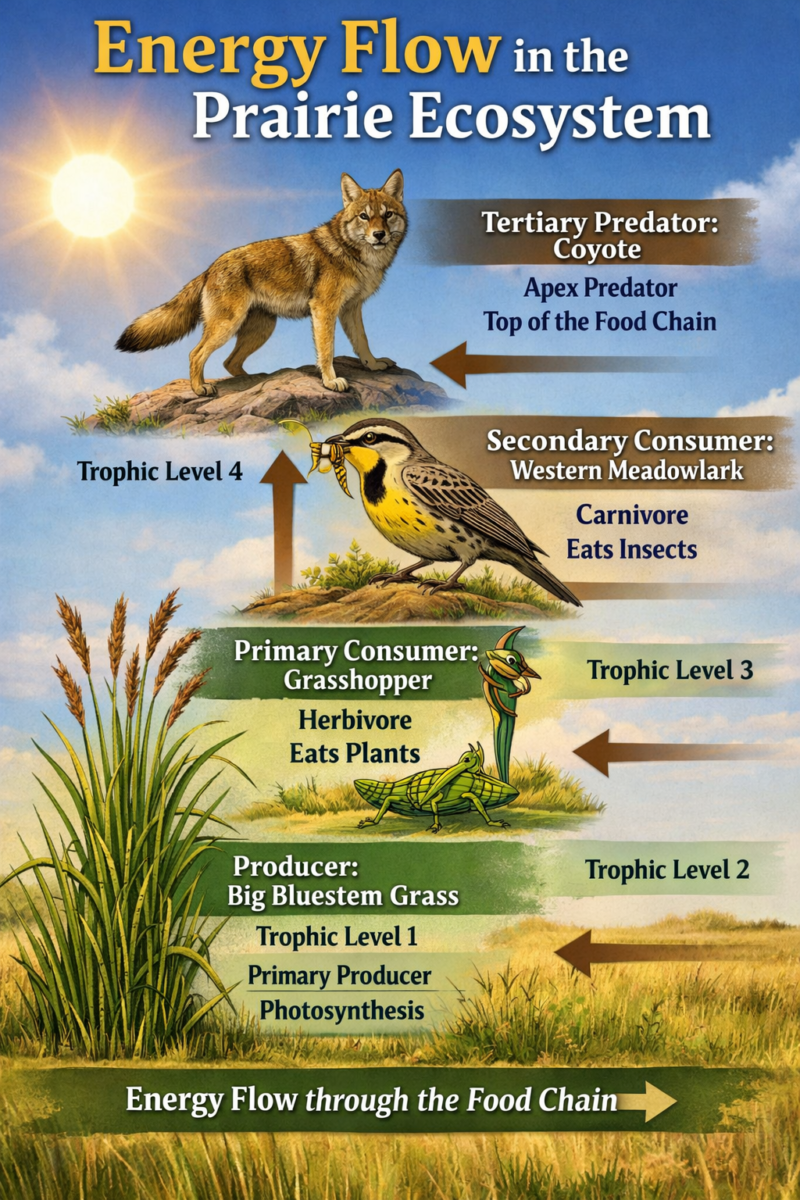
In a temperate grassland, energy flows from plants (producers) up to top predators. Because grasslands lack large trees, the food chains rely heavily on grasses and the herbivores that eat them. Here are examples from different famous grasslands around the world:
Grassland Region
Producer (Trophic Level 1)
Primary Consumer (Trophic Level 2)
Secondary Consumer (Trophic Level 3)
Tertiary / Apex Predator (Trophic Level 4)
North American Prairie
Big Bluestem Grass
Grasshopper
Western Meadowlark (Bird)
Coyote
South American Pampas
Pampas Grass
Pampas Deer
Geoffroy’s Cat
Puma
Eurasian Steppe
Feather Grass
Bobak Marmot
Steppe Eagle
Gray Wolf
Generic Grassland
Clover
Jackrabbit
Gopher Snake
Red-Tailed Hawk
Temperate grassland food webs across the world
Prairies
Prairies are infinite stretches of flat grassland with moderate temperature, rainfall, and few trees. These grasslands are usually known as the golden, wheat-covered land in the middle of North America.
Prairies Temperate grassland food web
The Prairie are grass formations in the cold temperate regions where there is enough moisture to induce a close formation. Prairies differ from Savannas in the the absense of trees. The high winds and very dry summer season prevent the growth of trees.
The prairie vegetation region in North America extends over the arid areas of the austral region east of the Rocky Mountains extending into western Texas and Kansas inthe south and northward extending as far as western Illinois.
Producers in the Prairies
The grasses in the prairie region are two types, Ist is “sod-formers”, that is long-stemmed grasses which make close formations, as the drop-seed(Sporobolus asperifolius), Koehleria cristata, Eatonia obtusata, Panicum scribnerianum.
Then the 2nd type is the “bunch” grasses, like buffalo-grass (Bulbilis dactvloides), beard grasses of broom-sedge (Andropogon furcatus and scoparius), grama-grass (Bouteloua oligostachya) etc.
Consumers in the Prairies
In the North American prairies there are burrowing owls, ground squirrels, woodchucks, marmots, gophers, and prairie dogs. Some of these animals use burrows for survival.
When an animal is too large to use a burrow (to dig a hole and hide) it has to be able to run. The runner of the North American Prairies are the bison, pronghorn etc.
Several brid species of Prairies have found to running that is alternative to flight. For example Road Runners, quails, and grouse.
Cactus are desert plants, they grow in dry places. They have the ability to store water, which keeps them alive. It is protected by sharp spines or needles. As soon as the sun rises, this plant starts making sugars.
These plants have succulent tissue, waxy skin and specialized roots to tackle the harsh ecosystems of deserts.
A number of animals consume cacti such as camels, beetles, jackrabbits, woodrats etc. The animals that consume cacti, developed some body mechanism to ensure they don’t get hurt from the toxicity or from its thorns.
Cactus – Producer in Desert By Rebutia_flavistylus_2.jpg: Otakar Sidaderivative work: Peter coxhead (talk) – This file was derived from: Rebutia flavistylus 2.jpg:, CC BY 3.0, https://commons.wikimedia.org/w/index.php?curid=18408976
Gourd Plants
Gourd Plants belong to the family Cucurbitaceae. Examples: Wild desert gourd or colocynth also called Bitter Apple, Egusi, Bitter cucumber etc. Although the fruit is not edible its flower is consumed by some animals.
Gourd plants in deserts By Ji-Elle – Own work, CC BY-SA 3.0, https://commons.wikimedia.org/w/index.php?curid=9452274
Shrubs
In deserts, the common shrub communities are mesquite, and creosote bushes. Also, Agave survives in deserts. The Larrea tridentata or creosote bush is found in the Mojave and Chihuahuan deserts.
Creosote bush in the Mojave Desert By Klokeid – Own work, Public Domain, https://commons.wikimedia.org/w/index.php?curid=4415482
Cactus, gourd plants, shrubs, date palms and also grasses.
Primary Consumer
Butterfly, camels, gazelles etc.
Secondary Consumer
Lizard
Tertiary Consumer
Snake
Decomposers in the desert
Decomposers in the desert include:
The dung beetle is an insect that feeds on animal faeces.
Fly that feeds over decaying matter and animal remains.
Millipede feeds on decaying plants.
Saharan silver ants feed on the animal remains.
Decomposers play a crucial role in ecosystems, including desert environments, by breaking down dead organic matter and recycling nutrients. While desert ecosystems may not be as biologically diverse as other ecosystems, they still have decomposers that contribute to nutrient cycling. Some common decomposers found in desert environments include:
Bacteria: Bacteria are microscopic organisms that can break down organic matter, such as dead plants and animals, into simpler compounds. In desert soils, bacteria are essential for decomposing organic material and releasing nutrients.
Fungi: Fungi, including molds and yeasts, are another group of decomposers found in deserts. They help break down organic matter by secreting enzymes that break down complex organic compounds.
Arthropods: Desert ecosystems are home to various arthropods like beetles, ants, and termites, which contribute to decomposition. For example, desert beetles are known to scavenge on dead animals, while ants and termites can break down dead plant material.
Vultures and Scavenging Birds: Although not microorganisms, scavenging birds like vultures play an important role in desert ecosystems by feeding on carrion (dead animals). They help clean up the desert landscape and accelerate the decomposition process.
Dung Beetles: In some desert regions, dung beetles are essential decomposers. They feed on and bury the dung of herbivorous animals, helping to break it down and improve soil fertility.
Detritivores: These are organisms that feed on detritus, which includes dead plant material, fallen leaves, and other organic debris. Desert detritivores include certain insects and arachnids that help recycle nutrients in the ecosystem.
In desert ecosystems, decomposers face unique challenges due to extreme conditions such as high temperatures, low moisture levels, and limited organic matter. Despite these challenges, they are adapted to their environment and contribute to the overall functioning and sustainability of the desert ecosystem by recycling nutrients and facilitating nutrient availability for plants and other organisms.
Nature of Desert Region
Deserts are usually found on the western margin of the continent between 20° and 30° N and S latitudes.
The annual rainfall is less than 25 cm.
Due to a lack of rainfall and arid conditions, these areas do not possess any vegetation but have a special vegetation type called Xerophytes.
The soil is sandy and saline, the deserts are agriculturally not fit. Drought-resistant thorny shrubs and bushes, palms are found in deserts.
Tribal people gather food and practice hunting. They move frequently in search of pastures and their temporary settlements.
Transportation is done by camels. Reptiles like snakes, lizards, and scorpions are commonly found.
Oasis is fertile fresh water, found in deserts and semi-arid regions. These are fed by springs.
Dates, figs, palms, citrus fruits, maize etc are cultivated near oases.
The Hunter-Gatherer Food Chain is associated with Pastoral farming, also known as ranching, grazing, or livestock farming. It aimed at livestock production rather than growing plants, crops, etc.
Examples are Raising cows for beef, milk, etc, raising sheep for wool, Goats for mutton, etc.
In a single farm, the livestock and crops are grown simultaneously, which is called Mixed Farming. These crops are grown purely for fodder for their livestock and sometimes the farmer sells them.
This kind of farming is common in Argentina, Australia, Brazil, Great Britain, Canada, Western United States, etc. This method is followed by humans for thousands of years for their survival all over the world. Also known as the Pastoral food chain.
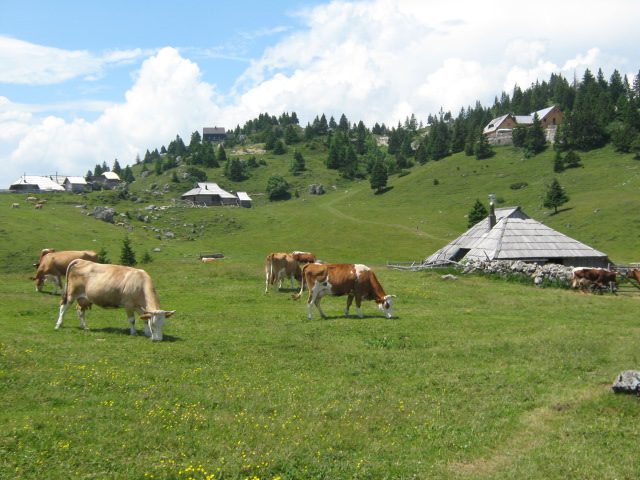
Pastorals By Molgreen – Own work, CC BY-SA 4.0, https://commons.wikimedia.org/w/index.php?curid=41936376
Pastoral food chain Levels
Similar to other food chains, this chain basically has two levels. Primary consumers consist of livestock such as Cow, Goat, Sheep, etc. That consumes the fodder cultivated in the farms and feeds to them and also the livestock’s allowed to graze the fields freely.
In this food chain, the secondary and tertiary consumers both are Humans, for most of it. The beef, milk from cows, wool for sheep, meat from goats, etc all are primarily consumed by the Human for his edible purpose and for his industrial purposes. By this, it can be also classified as an Industrial food chain.
Pastoral food chain depended Countries
Argentina
The Spanish people in 1532 found the open grasslands are good for their cattle and horses to graze. They grew and changed the environment into nutritious and fertile. Then large cattle population was used for economic prosperity.
This made Argentina, a land for pastoral farming. These farms were known as Estancias. Estancias were spread across 200 square kilometres, which supports 20,000 cattle and later in the 19th century, sheep were added to the estancias.
The Grasslands in Argentina are called Pampas, which saw a spike in the livestock population. Today Argentina’s livestock were categorized as Modernized and Communal. Currently, the sheep population is decreasing due to decreasing wool prices.
Most of the beef, milk, lamb produced in Argentina are consumed domestically.
Australia
Pastoral farming arrived in Australia in 1836. The sheep and other cattle were brought from New South Wales. As 70% of Australia’s land is arid or semi-arid, the Southern part of Australia is chosen for cattle grazing, since these lands are not suitable for Arable farming such as Wheat Production.
The South Australian farmer focused on Wool Production and succeeded in it. Since Australia is prone to serious droughts, Pastoral Farming was made to technological advancement.
Such as using water pumps and operating them with Wind Power and this water is used to farm crops in arid and semi-arid regions. Also, the area of the grazing land is reduced and the overall productivity is improved.
New Zealand
New Zealand’s pastorals consist of cattle, deer and sheep. In the 1920s, 90% of the country’s exports are pastoral products such as wool, cheese, meat and butter and this trend is continued till today.
Of every other pastoral, beef and sheep farming is the highest in New Zealand. Currently, Dairy production is also seeing its growth.
The dairy sector started in New Zealand in 1814 when two cows and a bull were brought to New Zealand, ever since it had grown rapidly. New Zealand is an excellent example of the Complete Pastoral Food Chain Country.
Hunter gatherer food chain pros and cons
Advantages
They have a much better diet and healthier bodies than the farmers. This is because they have more food intake and sufficient nutrients in their diets.
Disadvantages
Their food sources are not reliable and the Nomadic liver is more difficult. When these people do not find food, they need to stretch their food to survive.
One important one is being killed by animals while hunting.
The Lemongrass also called Citronella grass, which is a kind of flowering plant which is part of the grass family.
Citronella grass is found in tropical and subtropical areas. It grows well in sandy, loamy soils, well-drained, and fertile grounds and it requires a lot of rain during the growing season.
Lemongrass Savanna Adaptations
These are adapted to drought. Lemongrass has developed large stomata on either side of the leaves. Also, it has developed special guard cells to regulate the water and gas exchange, and these guard cells open and close the stomata.
These grasses have long tap roots to reach the deep water table making them drought resistant.
What eats lemongrass in the savanna?
Zebras,
Elephant,
Impala,
Common Warthog,
African buffalo,
Grant’s Gazelles
The secondary consumers in Savanna are Cheetah, hyena, and the Lion which also depends on the Lemongrass. Lemongrass is a nutritious and palatable grass that makes it as a popular food source for the herbivores in the Savanna.
This becomes a very important source of food especially in the dry season as other sources become scarce. Of all the above-mentioned animals, Elephants are particularly fond of lemongrass.
Lemon Grass Uses
Lemon Grass is used for the production of citronella oil. This citronella oil is used for manufacturing soaps, and insect repellents such as repellents for houseflies, mosquitoes etc. These repellants are made in the form of sprays and candles.
This oil is also used in aromatherapy. Citronella is basically an antiseptic due to its chemical composition, as it has geraniol, citronellol etc. Due to this property, it is used in the manufacturing of disinfectants, soaps etc.
Besides its industrial value, Citronella grass is also used for culinary purposes.
Lemongrass also helps to prevent erosion and maintain the fertility of soil, in the Savanna.
In India, the oil of lemongrass is primarily used for the isolation of citral for manufacturing Vitamin A.
The spent lemongrass is suitable for making paper and is also used as fuel for the distillation of grass.
Lemongrass is also used for mulching coffee.
Cymbopogon flexuosus
This East Indian Grass is also called Cochin grass or Malabar Grass. It is found in India, and other east Indian countries such as Vietnam, Laos, Cambodia etc. Also, there is a West Indian lemongrass called Cymbopogon citratus, which is native to maritime Southeast Asia. This is suitable for cooking.
C.citratus is used as a medical herbal and also used in making perfumes. Also used for making a special tea, for curing anxiety. This tea is used in the Caribbean after brewing to boost immunity. This is called Tanglad in the Philippines.
To study about the environment and ecology and components of environment such as biotic, abiotic components and biodiversity
Environment and Ecology
The environment is the condition in which we live, work etc. It is the natural world for example the land, air, and water in which animals, humans, plants etc live.
Ecology is the study of organisms and how these organisms interact with the environment around them. It studies the relationship between living things and their habitats.
Types of Ecology
The different levels of ecology are:
Organisms
Communities
Population
Ecosystem
Also can be classified as landscape ecology, behavioural ecology and population ecology. To know what the Biosphere is? To study the components, functions, and biodiversity of the ecosystem.
Learn about major biomes and the conservation of biomes. The biosphere is the life-supporting layer of the earth. This layer consists of the Lithosphere, Atmosphere, and Hydrosphere. It includes flora and fauna.
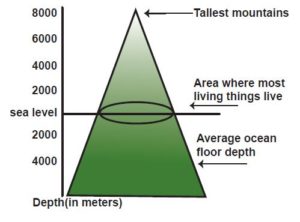
The range of the biosphere is approximately 20 km high from the surface of the sea to the troposphere. Most plants live in a very narrow part of about 1 km above and below the mean sea level (MSL).The biosphere is made up of various biomes and ecosystems. All living things are grouped called Species, irrespective of their numbers.
The area in which plants, animals, and microbes live is called Habitat. A variety of flora and fauna live in a particular habitat called Biodiversity.
The vertical range of the biosphere, where life is supported in the Tallest mountains at 8000* meters to the deepest part of the ocean
1. Ecosystem
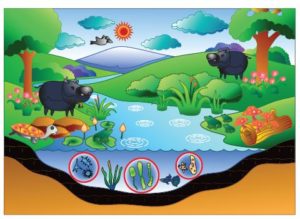
An Ecosystem is a community, where all living organism has a life and interact with one another and also with the non-living environment such as land, soil, air, water, etc.It ranges from a small unit such as the bark of a tree or ecosphere, for example, Cropland, Pond, Desert, forest, etc.
A biosphere consists of all ecosystems and sustains life forms including Humans.
An ecosystem is a community where all living and nonliving things interact and sustain life
1.1 Components of the Environment and Ecology or Ecosystem
It consists of Biotic, Abiotic, and Energy Components.
a. Abiotic Components
Abiotic components are the non-living parts of an ecosystem that influence the environment and the organisms within it. They include physical and chemical factors like sunlight, temperature, water, air, soil, and minerals. These factors vary across different ecosystems, shaping the unique conditions for life in each one.
All non-living things such as land, water, calcium, inorganic, physical, and chemical factors in the environment.
b. Biotic Components
Biotic components are the living organisms within an ecosystem. They encompass all plants, animals, and microorganisms. These living beings interact with each other in complex ways, forming food webs, competing for resources, and influencing the overall health and stability of the ecosystem.
All living things such as plants, animals, and microbes. Biotic Components are divided into three categories: Producers, Autotrophs, and Consumers.
Producers
Producers are the foundation of any ecosystem. They are organisms, primarily plants, that can create their own food through photosynthesis. This process uses sunlight to convert water and carbon dioxide into organic matter, such as sugars. Producers are essential because they provide the energy source for all other living things in the food chain.
Prepares its food, and self-nourishing components and are called Autotrophs. These can be found on both water and land. Examples: Plants, Algae, Bacteria, etc.
Consumers
Consumers are organisms that cannot produce their own food and must obtain energy by eating other living things. They play a vital role in the ecosystem by transferring energy through the food chain.
Those that consume the producer for nourishment directly or indirectly. These cannot produce their food. Also called Heterotrophs.
The consumer is divided into four main categories namely Primary consumers, Secondary consumers, Tertiary consumers, and Decomposers.
Primary consumers
Primary consumers, also known as herbivores, are organisms that occupy the second trophic level in a food chain. They obtain their energy by directly consuming producers, such as plants or algae. Examples include deer, rabbits, and insects.
These directly consume the Producers. Generally, these are herbivorous such as goats, Cows, etc.
Secondary Consumers
Secondary consumers, often carnivores, are organisms that feed on primary consumers (herbivores). They play a crucial role in the food chain by controlling herbivore populations and transferring energy to higher trophic levels. Examples include foxes, snakes, and many birds of prey.
These consume the herbivorous, called carnivorous. Eg. Lion, Snake, etc.
Tertiary consumers
Tertiary consumers, often at the top of the food chain, are carnivores that prey on secondary consumers. They play a vital role in regulating populations of both secondary and primary consumers, maintaining the ecological balance. Examples include lions, eagles, and some sharks.
These are top carnivores that consume both herbivores and carnivores. Eg: Owl, Crocodile, etc.
Decomposers
Decomposers are organisms, such as bacteria and fungi, that break down dead or decaying organic matter into simpler substances. This process recycles nutrients back into the ecosystem, making them available for producers (plants) to use again.
Some organisms that are incapable of producing their food live on dead and decaying plants and animals. These are called Saprotrophs. Eg. fungi, Mushrooms, etc.
c. Energy Components
The Sun is the ultimate source of energy. The energy from the Sun gets transformed into other forms of energy through the various components in the ecosystem.
The producers, consumers, and decomposers contribute a lot to the energy flow in the ecosystem.
1.2 Functions of an Environment and Ecology and Food Chain
The living organism forms an interacting set of flora and fauna which are organized into various trophic levels, food chains, and food webs. The pattern of energy flow affects the functioning of the ecosystem.
The distribution and circulation of organic and inorganic matter in the ecosystem depend on the pattern of energy flow. Energy flow commonly takes place in a systematic order in an ecosystem through various levels called Tropic Levels.
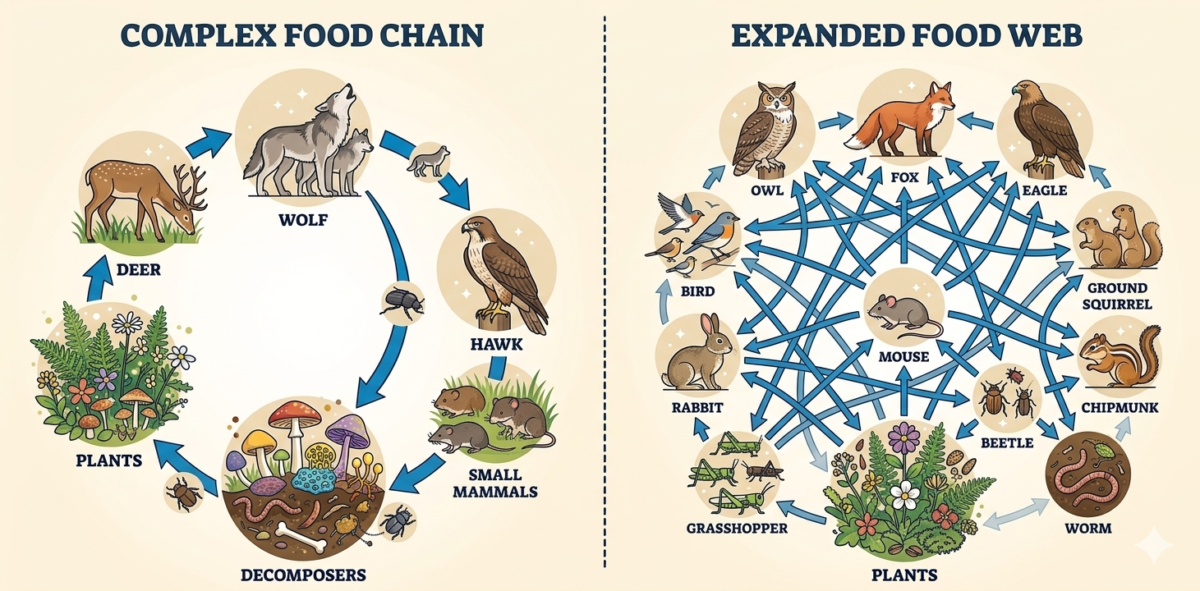
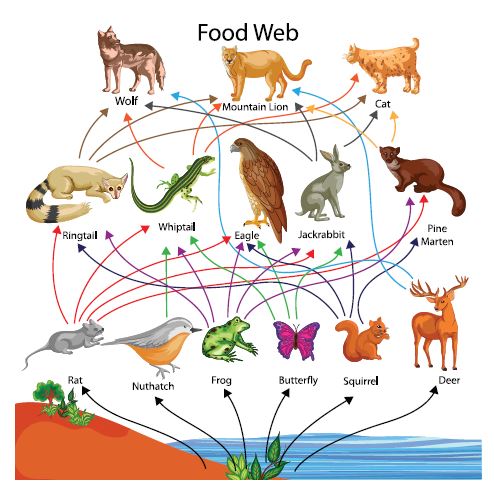
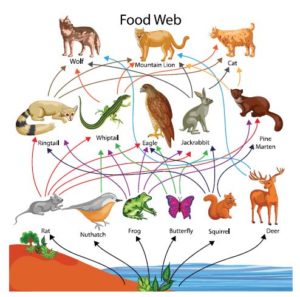
The chain of the flow of energy from one group of an organism to another via various trophic levels is called a Food Chain. A system of interlocking and interdependent food chains is called a Food Web.
Illustration of Food chain and Food Web in the ecosystem
2. Biodiversity
Biodiversity or biological diversity refers to a wide range of living organisms that exist in a habitat. Biodiversity is highly dependent on topography, climate, and human activities.
It also represents the strength of the biological resources of the earth.
In biodiversity, each species has an important role to play in the ecosystem irrespective of its size or number. It maintains ecological balance and adds social benefits such as education, research, etc over the area.
2.1 Loss of Biodiversity
The extinction of flora and fauna due to human and natural influences is called Loss of Biodiversity. It has a great impact on the Environment and Ecology and that includes mankind. It also affects land, water, etc.
Habitat destruction caused by population explosions, pollution, deforestation, and global warming is the most common causes of Loss of Biodiversity.
As a result of the Loss of Habitat, sometimes the species is permanently eliminated from the earth. A good ecosystem is one that provides clean water, good soil, food, etc. Hence a stable biosphere has to be conserved.
An ecological region where it has lost more than 70% of its original habitat is considered a Hotspot. Hotspots in India are the Indo-Burma Region, Sundaland, the Himalayas, and the Western Ghats.
3. Biomes
It is an ecosystem where all the plants and animals are collectively found in a geographically extensive area.
Biomes are defined by abiotic things such as relief, climate, soils, and vegetation. They are divided into Terrestrial Biomes and Aquatic biomes.
3.1 Terrestrial Biomes
It is a group of living organisms that live and interact with each other on land. These are determined by rainfall and temperature. Some major terrestrial biomes are Tropical Forest, Tropical Savanna, Desert, Temperate Grassland, and Tundra.
3.1.1 Tropical Forest Biomes
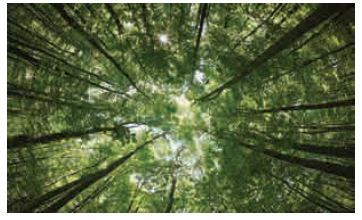
Tropical Forest Includes Evergreen Rainforest, Seasonal Deciduous Forest
Tropic forest consists of several sub-biomes such as evergreen rainforest, seasonal deciduous forest, etc. This biome ranges between 10° N and 10° S of the Equator. About half of the world’s tropical forest lies in Central and South America.
The climate shows little seasonal change with high annual rainfall and relatively constant, high temperatures. This unique weather favours a thick vegetative cover.
These forests have the highest biodiversity and primary productivity of any terrestrial biomes. The Indonesian Islands, Amazon Basin, and Congo Basin are the major regions of Tropical forests.
These regions have very dense forests and human settlements are scattered. Due to the humid nature of this biome, people get affected by tropical diseases such as Malaria, Yellow fever, etc.
The people of this biome live through food gathering, fishing, lumbering, and shifting cultivation. The main trees found in this biome are Rubber, Bamboo, ebony, etc.
Elephants, monkeys, pheasants, bats, jaguars, etc are important birds and animals.
The U.S National Cancer Institute found that 70% of plants for treating cancer are found only in rainforests. Eg. Lapacho.
3.1.2 Tropical Savanna food web (Grasslands) Biomes
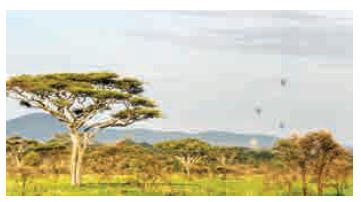
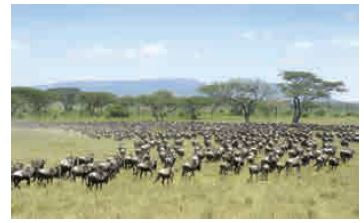
Savanna Grassland, where grass grows tall and sharp
Tropical grassland is found between tropical forests and deserts. The tropical Savanna or tropical grassland food web or biome is found between 10° to 20 ° N and S latitudes. These grasslands are generally flat and are found in the Sahel, south of the Sahara in East Africa and in Australia.
This biome is generally hot and dry and experiences moderate to low rainfall. As a result, the grass grows tall and sharp. The chief occupation of people is herding. The people here are basically nomadic. Savanna’s desert food web is characterized by grasses and trees spread over the grasslands.
The animals found here are lions, Leopards, tigers, deer, zebras, giraffes, etc. Flora like Rhodes grass, red oats grass, lemongrass, etc. Tertiary consumers in the savanna are Lions, Leopards, Cheetahs, Hyenas, Jackals, Wild dogs, snakes, etc.
3.1.3 Desert Biomes
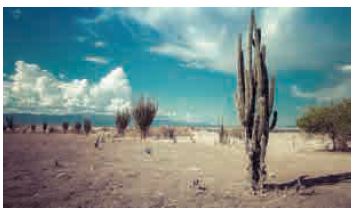
Xerophytes a special type of vegetation in deserts
Deserts are usually found on the western margin of the continent between 20° and 30° N and S latitudes. The annual rainfall is less than 25 cm.
Due to a lack of rainfall and arid conditions, these areas do not possess any vegetation but have a special vegetation type called Xerophytes. The soil is sandy and saline, the deserts are agriculturally not fit.
Drought-resistant thorny shrubs and bushes, palms are found in deserts. Tribal people gather food and practice hunting. They move frequently in search of pastures and their temporary settlements.
Transportation is done by camels. Reptiles like snakes, lizards, and scorpions are commonly found. Oasis is fertile fresh water, found in deserts and semi-arid regions. These are fed by springs.
Dates, figs, palms, citrus fruits, maize etc are cultivated near oases.
3.1.4 Temperate Grassland Biomes
Temperate grasslands depend upon precipitation
Temperate grasslands found in the interior of the continents are characterized by large seasonal variations. It has warm summers and cool winters. These grasslands strongly depend on precipitation. If there is higher precipitation it leads to tall and soft grass.
If there is lower precipitation it leads to short and soft grass. These regions are good for wheat cultivation. Due to the lack of farm labour, mechanized agriculture is practised.
The pastoral industry is the main source of occupation, animal slaughtering, meat, and dairy products, etc are industries here. Grasshoppers, wolves, bison, and prairie dogs are common in these areas. Temperate Grasslands are called by different names in different parts of the world.
Prairies- North America
Steppes- Eurasia
Pampas -Argentina and Uruguay
Veld- South Africa
Down- Australia and New Zealand
3.1.5 Tundra Biomes
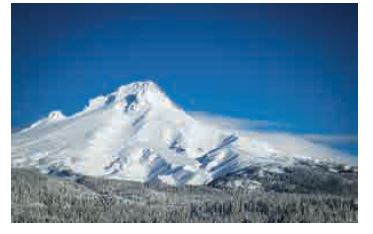
Tundra Biomes are frozen ground in the Arctic, Antarctic and Greenland
These are vast lowlands where the ground remains frozen. Northern parts of Asia, Canada, Europe, Greenland, the Arctic, and Antarctic regions fall in this biome. These regions are also called Barren Lands. Tundra experiences long severe winters and short cool summers.
Due to continued low temperatures and short growing seasons, the net primary productivity is very low. People are nomadic and their major occupation is fishing and hunting. There is a sparse population and they change their settlement frequently due to harsh weather.
People live in igloos in winter and tents in summer. Arctic moss, Arctic willow, and lichens are grown here. Polar bears, wolverines, reindeer, and snowy owls are found here.
3.2 Aquatic Biomes
These living organisms interact with each other and live in an aquatic environment. Similar to terrestrial biomes, aquatic biomes are influenced by a series of abiotic factors. It is classified into Freshwater biomes and marine biomes.
Freshwater Biomes
It consists of lakes, ponds, rivers, streams, wetlands, etc. Influenced by the volume of water, the composition of oxygen, water flow, temperature, etc. Human depends on freshwater for drinking, agriculture, etc. A common plant in freshwater is Lily, lotus, duckweed, etc.
Salmon, turtles, crocodiles, and trout are common animals in freshwater.
Marine Biomes
It is the largest and most continuous body of salt water and provides a wide range of habitats. Coral reefs are the second kind of marine biome. Coastal areas and estuaries are areas where saltwater and freshwater mix, which forms the third biome.
The nutrients are circulated more quickly to marine organisms, and water provides maximum mobility to the organisms. Kelp, phytoplankton, algae, etc grow in marine water. Marine is an important source of food for humans, animals, and plants.
Problems for marine biomes are pollution, overfishing, and a rise in sea level.
Scientist created artificial biosphere in Arizona, America called as Biosphere-2
The primary cause of loss of biodiversity is habitat alteration caused by humans. The increasing human population leads to the overexploitation of biological resources. Most places are heavily threatened by humans. It is the duty of everyone to preserve it.
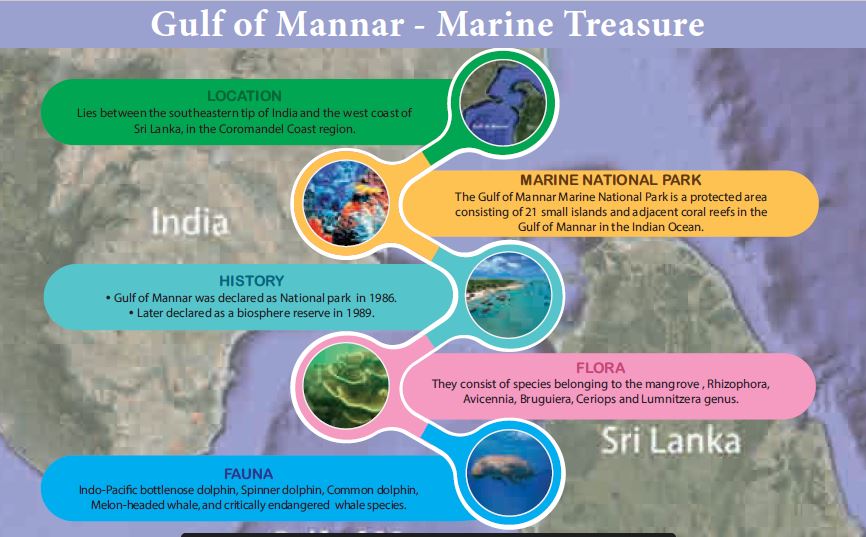
Gulf of Mannar biosphere
Conclusion
The biosphere includes Biotic and Abiotic components. The biotic component depends on other biotic components for food and nutrition. These together form an ecology. The transfer of nutrients from one level to another is explained through the Food chain and the food web.
The extensive ecosystem called Biomes and their types were noted with respect to the people, occupation, flora, and fauna. Also, the conservation of the biosphere is discussed.
What are your thoughts on conservation and how to protect the environment for the future?
International treaty on Plant Genetic Resources (ITPGRFA) – The 11th session of the governing body of the International treaty on Plant Genetic Resources for Food and Agriculture (ITPGRFA) was concluded in November 2025 at Lima, Peru. ITPGRFA is often called the Plant Treaty or Seed Treaty; it promotes conservation and sustainable use of crop genetic diversity.
As of 2014, there are 131 organization are parties to the ITPGRFA (130 countries and 1 intergovernmental organisation, the European Union). India signed and ratified the ITPGRFA in 2002.
Objectives of the 11th Session – Conservation and sustainable use of all plant genetic resources for food and agriculture. Fair and equitable sharing of the benefits, in harmony with the Convention on Biological Diversity, for sustainable agriculture and food security.
Operation Thunder 2025 – It is a large-scale global law enforcement operation targeting the illegal trafficking of wildlife and forest products held during September-October 2025. Law enforcement agencies from 134 countries (including India), including police, customs, border security, forestry and wildlife authorities.
The coordination of Operation Thunder was led by INTERPOL and the World Customs Organisation with support from the International Consortium on Combating Wildlife Crime (ICCWC).
* * All the Notes in this blog, are referred from Tamil Nadu State Board Books and Samacheer Kalvi Books. Kindly check with the original Tamil Nadu state board books and Ncert Books.