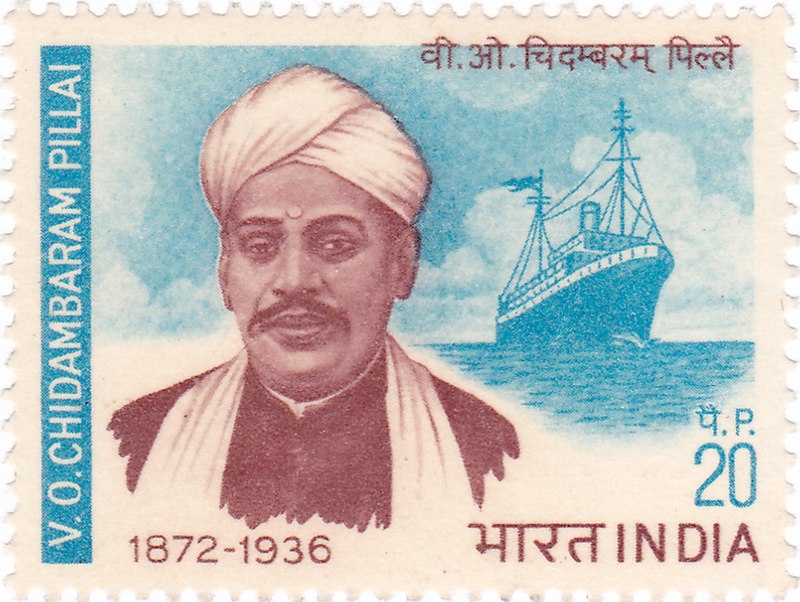
V.O.Chidambaram Pillai is remembered by Tamil as Sekkiluta Semmal, Kappalotiya Tamizhan. He was born in Ottapidaram on September 5, 1872.
He started his career as a lawyer at Tirunelveli and encouraged the formation of the Trade Guilds and workers associations.
He was the founder of the Swadeshi Dharma Sanga Weaving Association and Swadeshi Cooperative Stores at Tuticorin.
He formed the Swadeshi Steam Navigation Company and ran the service between Tuticorin and Colombo. The Partition of Bengal in 1905 dragged him into politics.
He organized a Coral mill strike in Tuticorin near the seashore that increased workers’ wages and reduction of working hours.
In 1907, he attended the Congress sessions held at surat, where congress split into Extremist and Moderates.
He followed the militant leader Bala Gangadhar Tilak and preached his philosophy. He was charged with sedition and sentenced to forty years of imprisonment.
National Renaissance (தேசிய மறுமலர்ச்சி) in India is a term used to mark the period of cultural and intellectual revival which took place from the late 18th century to the early 20th century.
This movement is led by various reformers. The important reformers are Raja Ram Mohan Roy, Swami Vivekananda etc. These reformers sought to modernise India while also preserving its cultural heritage.
Characteristics of the National Renaissance
A renewed interest in Indian culture and tradition.
Focus on modernisation and social reform.
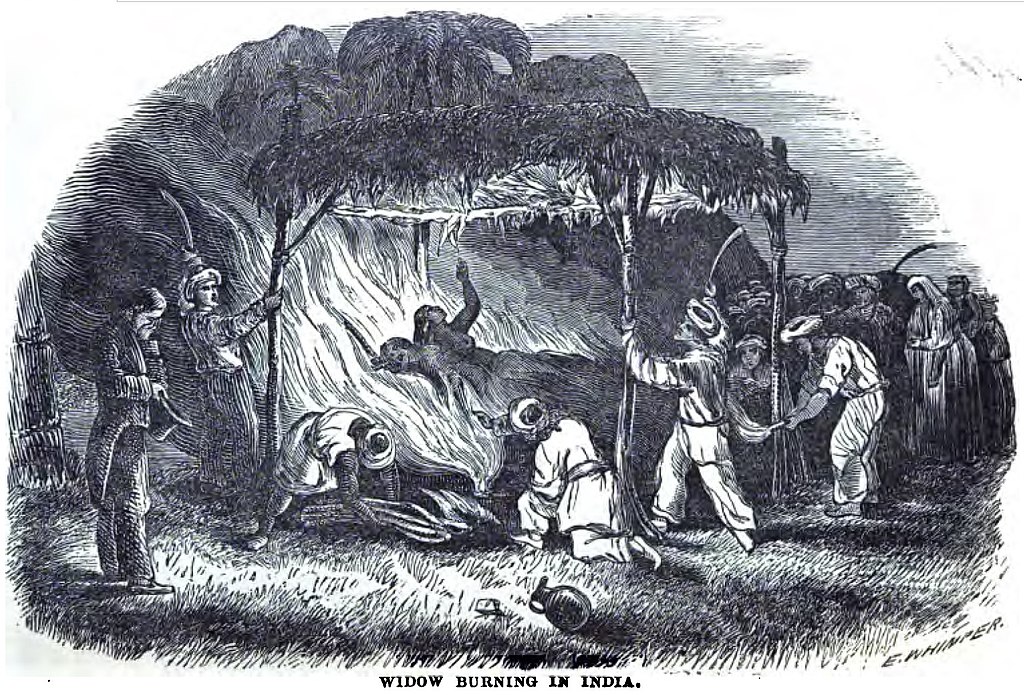
Abolition of caste, Sati, female infanticide, etc.
Encouraging Widow remarriage and Female education.
A rise of a new national literature and art.
Development of new educational institutions.
Brahmo samaj
Brahmo Samaj was founded by Raja Rammohan Roy in 1828 at Calcutta. Its idea was to purify Hinduism and preach monotheism.
In 1815, Raja Rammohan Roy established the Atmiya Sabha, which was later developed into the Brahmo Sabha in August 1828.
He combined the teachings of the Upanishads, the Bible and the Koran and preached the concept of only one God.
The work of Atmiya Sabha was carried on by Maharishi Debendranath Tagore (father of Rabindranath Tagore), who renamed it Brahmo Samaj.
Raja Rammohan Roy is remembered for helping Lord William Bentinck to declare the practice of Sati a punishable offence in 1829.
He adopted a Muslim boy. In 1817, he founded the Hindu College along with David Hare, a missionary. He also set up a school for girls.
He started the first Bengali weekly, Samvad Kaumudi and edited a Persian weekly, Mirat-ul-Akhbar. He died in Bristol, England, in 1833.
Brahmo Samaj Principles
He protested against child marriage and female infanticide. He supported widow remarriage, female education, and women’s right to property.
He supported intercaste marriages and preached monotheism, the concept of one god. All gods are the same.
Vivian Derozio’s young Bengal movement ideas, objectives and teaching
Henry Vivian Derozio was the founder of the Young Bengal movement. He was a teacher at Hindu College, Calcutta. He was born in Calcutta in 1809.
He died of Cholera in 1833. His followers were known as Derozians, and their movement is called the Young Bengal Movement.
The Young Bengal movement year in the late 1820s and early 1830s. Derozians attacked old traditions and decadent customs. They advocated for women’s rights and education.
They organised debates against idol worship, casteism, and superstitions.
Swami Dayanand Saraswathi and the Arya Samaj
Arya Samaj founded by Swami Dayanand Saraswathi at Bombay in 1875. Swami Dayanand Saraswathi believed that Vedas were the source of true knowledge.
His motto was “Back to the Vedas”. He was against idol worship, child marriage, and the caste system based on birth.
He encouraged inter-caste marriage and widow remarriage. He started the Suddi movement to bring back converted people back to Hinduism.
He wrote the book Satyartha Prakash which contains his ideas. Arya Samaj contributed much to education. The first Dayanand Anglo Vedic (DAV) School was founded in 1886 in Lahore.
Arya Samaj also spread nationalism.
Arya Samaj Marriage
Arya Samaj was against Child marriage. It encouraged intercaste marriage. Also, it encouraged widow remarriage.
Prarthana Samaj
Prarthana Samaj was established in 1867 in Bombay. Prarthana Samaj was founded by Dr.Atmaram Pandurang. It was an offshoot of Brahmo Samaj.
Prarthana Samaj Principles and Objectives
It tried to reform Hinduism. It mostly concentrated on social reforms like Inter Dining which is common dining of persons from various castes, religions, etc.
It encourages widow remarriage, intermarriage, upliftment of women, and depressed classes. Justice M.G. Ranade and R.G. Bhandarkar joined in 1870 and Justice Ranade promoted the Deccan Education Society.
Swami Vivekananda and Ramakrishna Mission
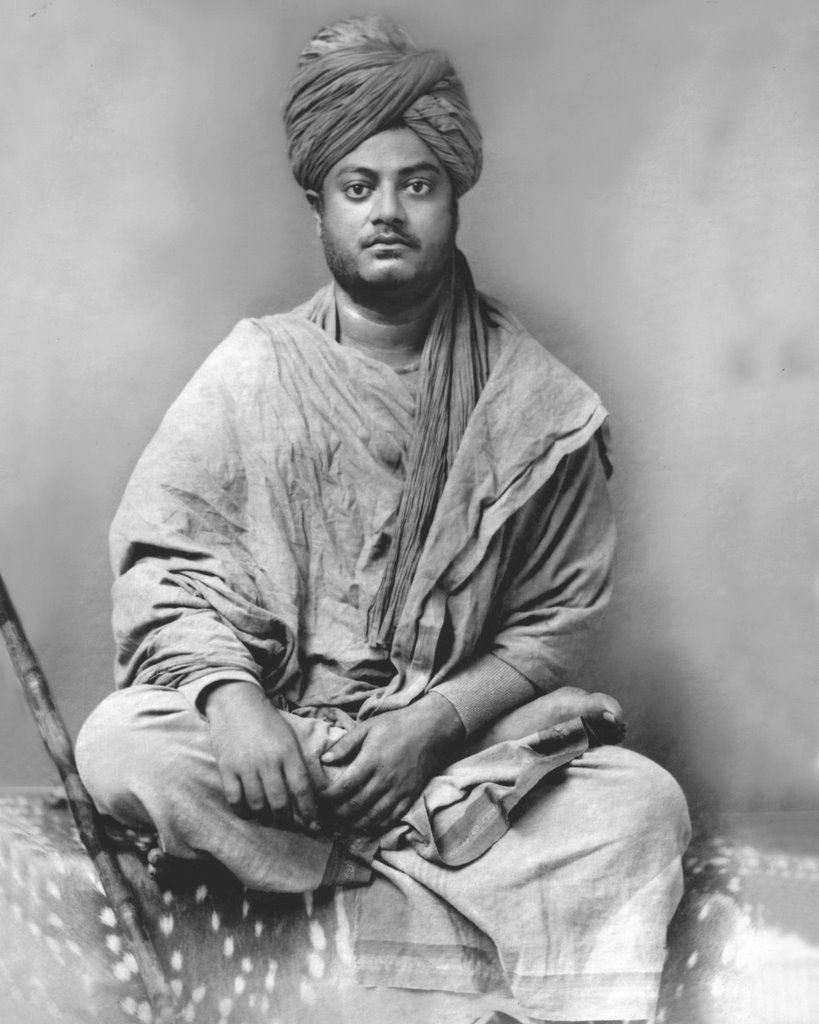
Ramakrishna Mission was founded by Swami Vivekananda. The original name of Vivekananda is Narendranath Dutta (1863-1902).
He was a disciple of Ramakrishna Paramahamsa. Educated in Scottish Church College Narendranath took the Sanyasa and was given the name, Vivekananda.
He preached Vedantic Philosophy. He was against the caste system and current Hindu emphasis on rituals and ceremonies.
He participated at the Parliament of Religions held in Chicago (USA) in September 1893 and talked about Hinduism. He founded the Ramakrishna Mission at Belur in Howrah in 1897.
Theosophical Society
It was founded in New York (USA) in 1875 by Madam H.P. Blavatsky, a Russian lady, and Henry Steel Olcott, an American colonel.
The main objective was to form a universal brotherhood of man without any distinction of race, colour, or creed and to promote the study of ancient religion and philosophies.
They established headquarters at Adyar in Madras in 1882. After the death of Olcott, Annie Besant took the leadership of society.
Annie Besant founded the Central Hindu School with Madan Malaviya at Benaras which later developed into the Benaras Hindu University.
Pandit Ishwar Chandra Vidyasagar
He was a great educator, humanist and social reformer. Born in 1820 in Midnapur Bengal. He was Head Pandit of the Bengali Department of Fort William College.
Vidyasagar founded many schools for girls. He helped J.D. Bethune to establish the Bethune School; he founded the Metropolitan Institution in Calcutta.
He protested against child marriage and favoured window remarriage which was legalized by the Widow Remarriage Act (1856).
He was given the title Vidyasagar, due to his support for the spread of education.
Jyotiba Phule
Belonging to a low-caste family in Maharashtra. He did life lifelong struggle against upper caste domination and Brahmanical supremacy.
He founded the Satyashodak Samaj in 1873, to fight against the caste system and he pioneered the widow remarriage movement in Maharashtra and worked for the education of women.
Jyotiba Phule and his wife established the first girl’s school at Poona in 1851.
Muslim Reform Movement
Muslim Reforms were started later because they avoided Western education in the beginning.
The first effort was in 1863 when the Muhammad Literary Society was set up in Calcutta, to popularize the study of English and Western sciences.
Aligarh Movement
This movement was started by Syed Ahmad Khan (1817-98). It is for the social and educational advancement of the Muslims in India.
He fought against medieval backwardness and advocated a rational approach toward religion.
In 1866, he started the Mohammadan educational conference as a general forum for spreading liberal ideas among Muslims. He founded the modern school at Aligarh to promote English education among Muslims.
This turned into Mohammadan Anglo-Oriental College and the Aligarh University.
Deoband School
Orthodox section of Muslims, Ulema organized the Deoband movement. It had two objectives one was to propagate pure teachings of the Koran and the Hadis to Muslims, another one was to keep alive the spirit of Jihad against the foreign rulers.
The new Deoband leader Mahmud-ul-Hasan (1851-1920) sought to impart political and intellectual content to the religious ideas of the school.
Sikh Reform Movement
Baba Dayal Das founded the Nirankari Movement, he insisted on the worship of God as Nirankar (formless).
Namdari Movement was founded by Baba Ram Singh and his followers wore white clothes and gave up meat-eating.
The Singh Sabhas were started in Lahore and Amritsar in 1870 and were aimed at reforming the Sikh society.
They helped to set up the Khalsa College at Amritsar in 1892. They also encourage Gurmukhi and Punjabi literature.
In 1920, the Akalis started a movement to remove the corrupt Mahants (priests) from the Sikh gurudwaras. Akalis organized themselves into a political party.
Parsi Reform Movement
The Parsi religious reform association was founded in Bombay in 1851 by Furduni Naoroji and SS Bengalee. They spread the value of women’s education.
They started to reform their marriage customs. Naoroji published a monthly journal, Jagat Mithra.
Saint Ramalinga
He was one of the foremost saints of Tamil Nadu in the 19th century. Developing a deep interest in spiritual life, moved to Karunguli in 1858 and settled as a saint.
His divine powers came to be recognized at the early age of eleven. In 1865 he founded the Samarasa Suddha Sanmargha Sangha for the promotion of ideals of establishing a casteless society.
He composed Tiru Arutpa, Manu Murai Kanda Vasagam, and Jeeva Karunyam and then started constructing the Satya Gnana Sabai in 1872.
He introduced the principle that God could be worshipped in the form of light.
Sri Vaikunda Swamigal
Sri Vaikunda Swamigal was born in 1809 at Swamithoppu in the Kanyakumari district of Tamil Nadu.
His original name was Mudichoodum Perumal and was called Muthukkuty. He preached against the caste system and untouchability.
He condemned religious ceremonies. Many came to his place to worship him and slowly his teachings came to be known as Ayyavazhi.
By the mid-19th century, Ayyavazhi came to be recognized as a separate religion and in the regions of South Travancore and South Tirunelveli.
After his death, the religion was spread based on his teachings and the religious books AkilattirattuAmmanai and Arul Nool. Hundreds of Nizhal Thangals (places of worship) were built across the country.
Self-Respect Movement and Periyar E.V.R.
Periyar E.V. Ramaswamy was a great social reformer. Furthermore, he cut down 1000 coconut trees on his farm during the anti-liquor campaign.
In addition in 1924, he took an active part in the Vaikam Satyagraha.
The objective of the Satyagraha was to secure for untouchables the right to use a road near a temple at Vaikom in Kerala.
E.V.R. opposed the Varnashrama policy followed in the V.V.S. Iyer’s Seranmadevi Gurugulam.
During 1920 – 1925, the Congrees Party stressed that Congress should accept communal representation. Subsequently, in 1925, he started the “Self-Respect Movement”.
The aims of the ‘Self-Respect Movement’ were to uplift the Dravidians and to expose the Brahminical tyranny and deceptive methods by which they controlled all spheres of Hindu life.
He denounced the caste system, child marriage, and enforced widowhood. Also, he encouraged inter-caste marriages.
He conducted many marriages without any rituals. Such a marriage was known as a “Self- Respect Marriage.”
He gave secular names to newborn babies. He attacked the laws of Manu, which he called the basis of the entire Hindu social fabric of caste.
He founded the Tamil journals Kudiarasu, Puratchi, and Viduthalai to propagate his ideals.
In 1938 at the Tamil Nadu Women’s Conference appreciating the noble service rendered by E.V.R. he was given the title “Periyar”.
On 27 June 1970, the UNESCO organization praised and adorned with the title “Socrates of SouthAsia”.
Conclusion
The National Renaissance was a multifaceted movement and its legacy is still being remembered. It has great impact on Indian society and helped to shape modern India.
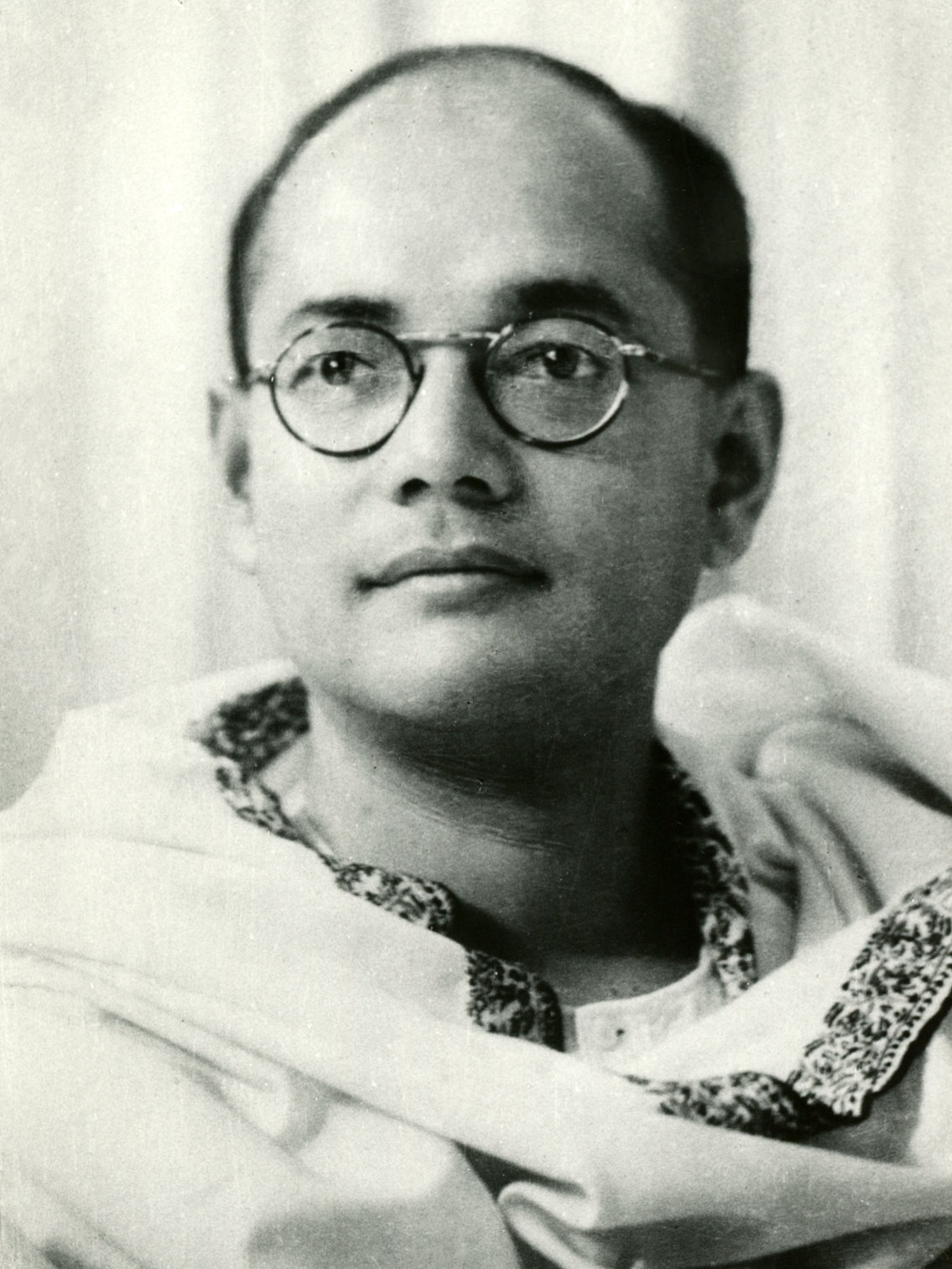
During the time of World War II, armed revolutionary activities continued. The role of Subhas Chandra Bose is incomparable.
On July 2, 1943, Netaji reached Singapore and gave the rousing war cry of ‘Dilli Chalo’. He was made the President of the Indian Independence League and soon became the supreme commander of the Indian National Army.
He gave the country the slogan “Jai Hind”. The name of the INA three Brigade was the Subhas Brigade, Gandhi Brigade, and Nehru Brigade.
The women’s wing was named after Rani Laxmi Bai. INA marched towards Imphal after registering its victory over Kohima.
After Japan surrendered in 1945, INA failed in its efforts. Then Netaji to Taiwan, on his way to Tokyo he died in the plane crash on 18-Aug-1945.
The trial of the soldiers of INA was held at Red Fort in Delhi. Pandit Jawaharlal Nehru, Bhulabhai Desai, and Tej Bahadur Sapru fought the case on behalf of the soldiers.
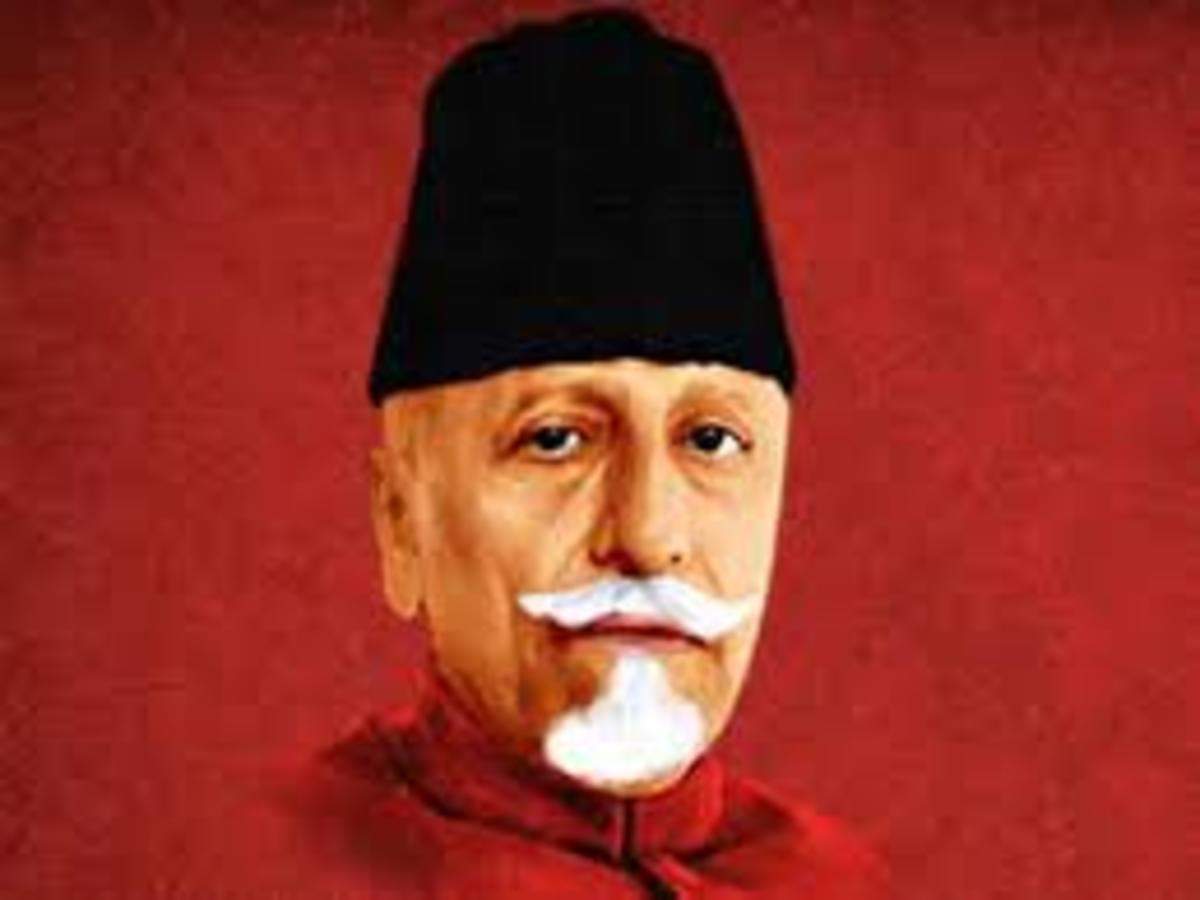
Moulana Abulkalam Azad
Moulana Abulkalam Azad
Moulana Abulkalam Azad, along with M.A. Ansari, Saifuddin Kitchlew, and the Ali brothers were prominent leaders behind the Khilafat Movement.
Moulana Abulkalam Azad along with Nehru was imprisoned in Ahmednagar Fort, as a precautionary measure by the government when the All India Congress party passed Quit India Resolution and Gandhi gave his call of ‘do or die’.
Moulana Abulkalam Azad as the congress president rejected the idea of composition in geographical terms as the region comprising the Muslim majority provinces of Bengal and Assam in the Northeast and the Punjab, Sind, and Baluchistan in teh North West.
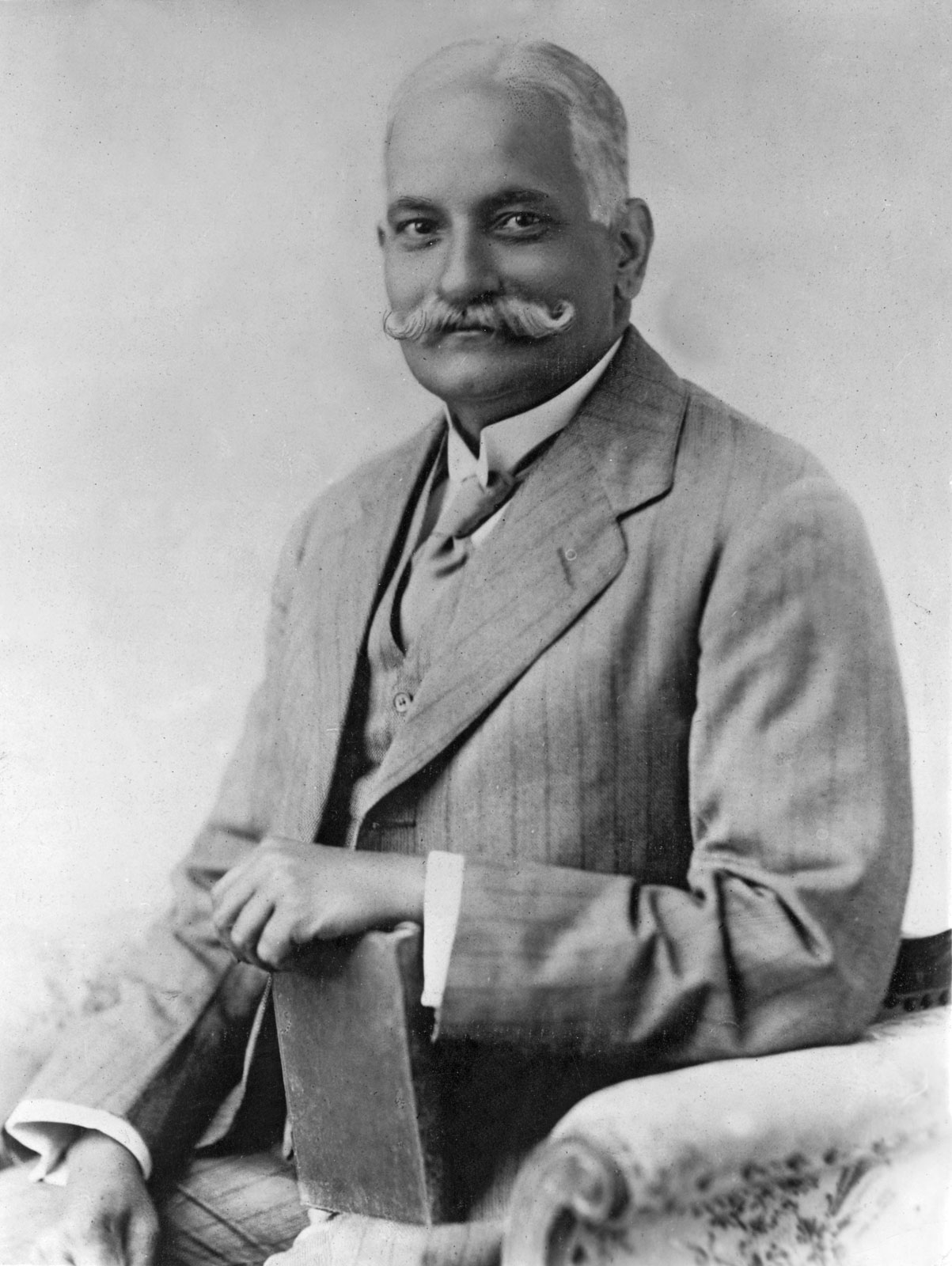
Motilal Nehru
Motilal Nehru
Motilal Nehru along with Chittranjan Das formed a separate group within the congress known as Swarat Party on 1 January 1923.
The Swaraj Party gained impressive successes, in the central Legislative council Motilal Nehru became the leader of the party.
Motilal Nehru also prepared a blueprint for the future constitution of India. The report published by the committee headed by Motilal Nehru was called as Nehru Report (1928).
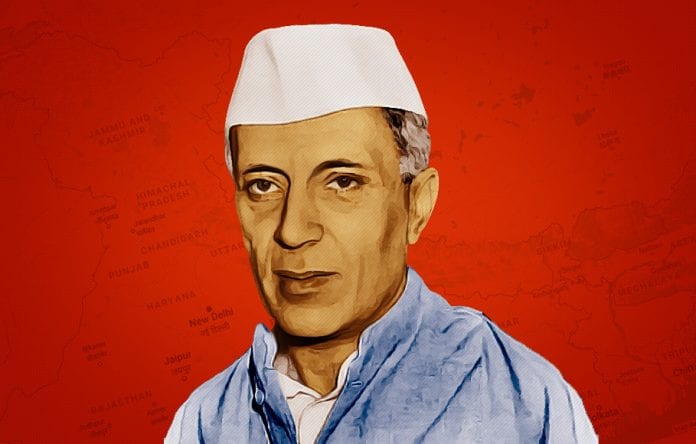
Jawaharlal Nehru
Jawaharlal Nehru
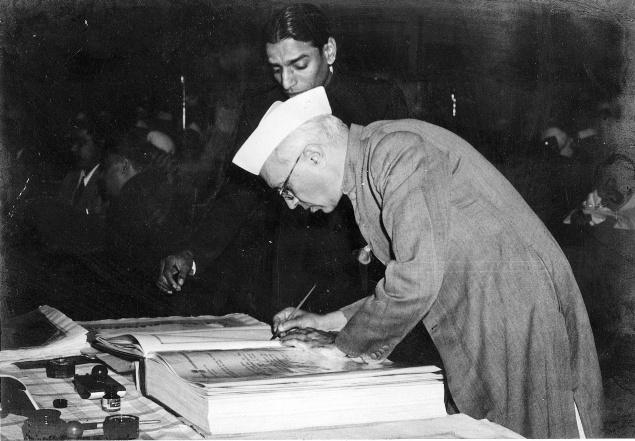
Jawaharlal Nehru who presided annual session of congress in Lahore in December 1929 passed the Poorna Swaraj resolution.
Jawaharlal Nehru was the second Satyagrahi and imprisoned for four months for Individual Satyagraha against the August offer.
Jawaharlal Nehru, Abul Kalam Azad, and other leaders were imprisoned in the Ahmednagar Fort as a precautionary measure after passing the Quit India Resolution.
As a part of the Cabinet’s mission plan (1946), An interim Government was formed under the leadership of Jawaharlal Nehru on 2 September 1946.
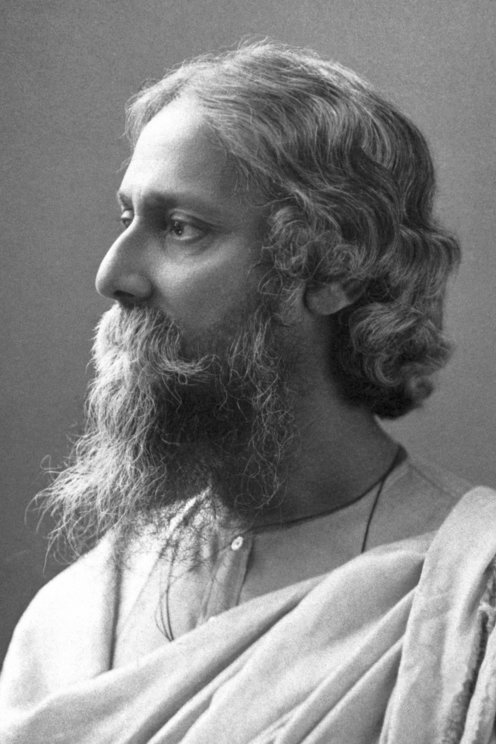
Tagore
Tagore
Rabindranath Tagore was one of the central figures who popularised ideas through his writings. He outlined the constructive programme of atmashakti (self-help).
Tagore called for economic self-development and insisted that education should be provided in swadeshi languages.
He also made the call for utilizing melas, or fairs to spread the message of atmashakti.
This became the creed of the whole of Bengal and swadeshi ships sprang all over the place selling textiles, handlooms, soaps, earthenware, matches, and leather goods.
He renounced his title knighthood immediately after the Jallianwalla Bagh massacre.
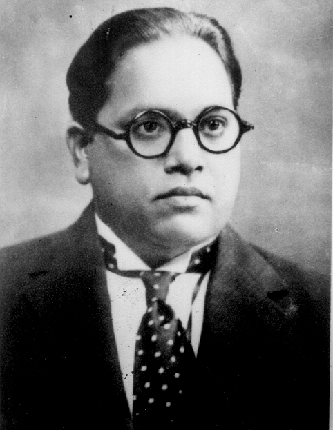
Ambedkar
Ambedkar
By 1930, Dr. Ambedkar has become national leader stature championing the cause of depressed people. In the first round table conference, Ambedkar demanded separate electorates for depressed people.
On 16 August 1932, British Prime Minister Ramsay MacDonald made an announcement regarding Communal Award.
As per communal award, depressed classes were considered as a separate community, and provisions were made for separate electorates for them.
Mahatma Gandhi protested against the Communal Award and went on a fast unto death in the Yeravada jail on 20 September 1932. Finally, an agreement was reached between Dr.Ambedkar and Gandhi, this agreement is called the Poona Pact.
Accordingly, 148 seats in different Provincial Legislatures were reserved for the Depressed Classed in place of 71 as provided in the communal award.
Dr.B.R.Ambedkar was appointed as the Chairman of the Drafting Committee, the constitution of India was finally adopted on 26 November 1949. The Constitution came into effect on 26 January 1950.
Ambedkar dedicated his entire life to the welfare of the downtrodden. In Bombay, he formed a Bahiskrit Hitkarini Sabha(Association for the welfare of excluded) in July 1924.
He also organized the Akhil Bharatiya Dali, Varg Sabha to fight against caste oppression and started a journal called Mook Nayak (leader of the dumb).
He launched the Mahad Satyagraha to establish the civic right of the untouchables to public tanks and wells and started the Independent Labour party in 1937 and the second Scheduled Caste Federation in 1942.
The colonial government made him a member of the Defence Advisory Committee in 1942 and a minister in the Viceroys cabinet.
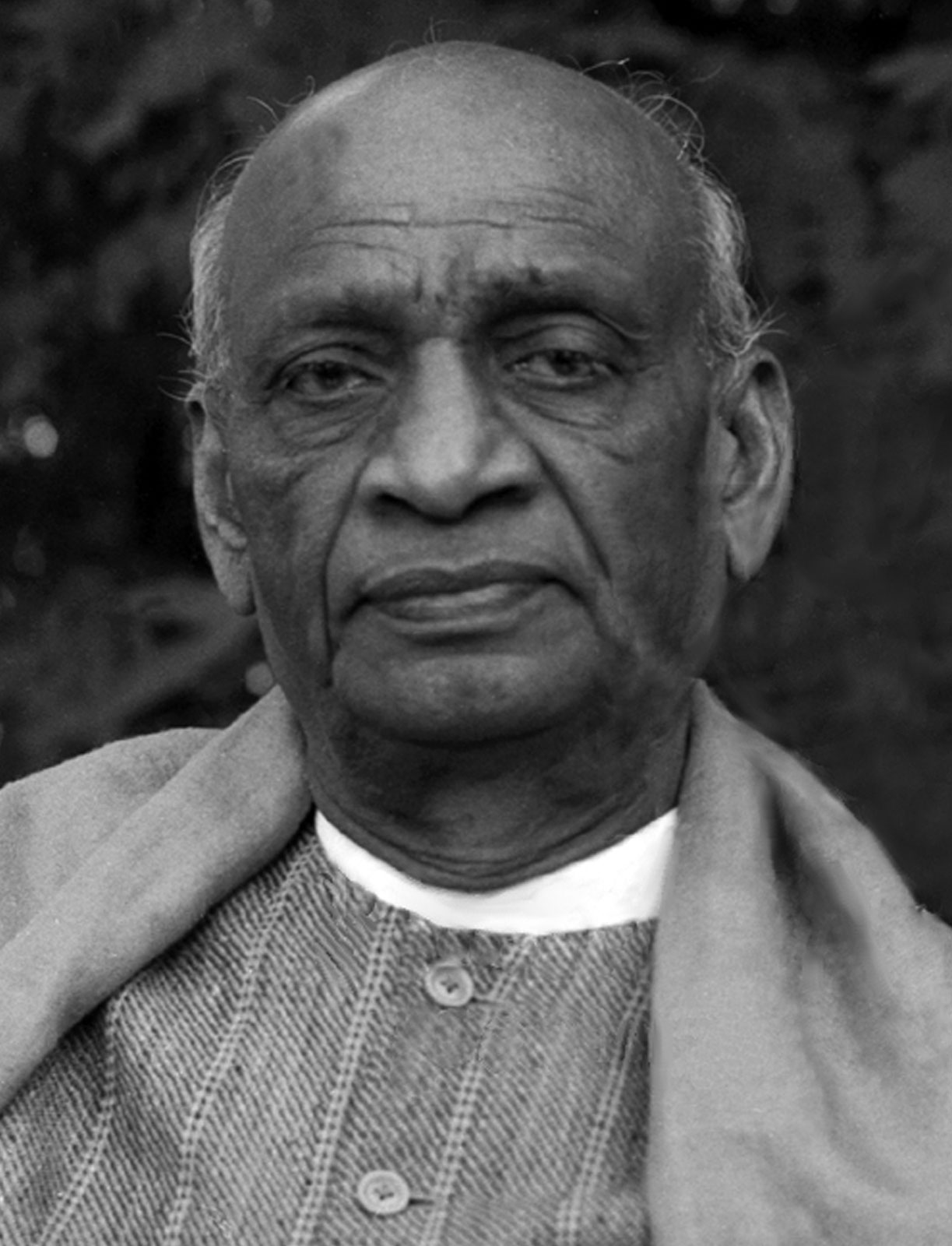
Patel
Patel
The Karachi session held in March 1931, presided over by Sardar Vallabh Bhai Patel, adopted a resolution on Fundamental Rights and Duties and provided an insight into the economic policy of an independent India.
Sardar Vallabhai Patel in Bombay took the initiative to bring the Royal Indian Navy Revolt to an end.
the viceroy issued invitations on 15 June 1946 to the 14 men to join the interim government, Patel was one invited.
Govind Ballabh Pant, accepting partition (Mountbatten plan), was approved. It required the persuasive powers of Nehru and Patel as well as the moral authority of Gandhi to get the majority in the AICC in favor of the resolution.
The task of integrating the Princely States into the Indian Union was achieved with such speed that by August 15, 1947, except Kashmir, Junagadh, and Hyderabad.
The rapid unification of India was ably handled and achieved by Sardar Vallabhai Patel, who was Home Minister in the Interim Cabinet.
This post is written for the topic “Communalism and Partition Tnpsc“.
In 1930, Md Iqbal for the first time suggested that the Frontier Province, Sind, Baluchistan, and Kashmir be made the Muslim state within the federation.
Chaudhary Rehmat Ali coined the term ‘Pakistan’ (later Pakistan).
The fear of Muslims being subjugated by Hindus in free India was realized by Jinnah and he demanded the creation of Pakistan.
Pakistan Resolution Muslim League first passed the proposal of separate Pakistan in its Lahore Session in 1940 (called Jinnah’s Two-Nation theory).
It was drafted by Sikandar Hayat Khan, moved by FazlulHaq, and seconded by Khaliquzzaman.
It rejected the federal scheme envisaged in the Government of India Act, 1935.
In the 1937 election, Congress won 7 out of 11 provinces and formed the largest party in three other. The Muslim league performance was dismal, it won only 4.8% of Muslim votes.
After the election, Congress has emerged as a mass secular party. Yet it is branded as a Hindu Organization by the Muslim League.
After seeing this dismal performance, the Muslim league was convinced that the only choice was to whip up emotion on communal lines in provinces like Bengal and Punjab.
Jinnah exploited the emotional campaign of ‘Islam in danger’ to gain mass Muslim support after the 1936-37 elections. A divisive cause in which Hindu Mahasabha came to their help through coalition ministries.
Observation of Day of Deliverance
The second World war broke out in 1939, India was announced as part of War by the Viceroy of India, Lord Linlithgow. Since this decision is made without any consultation with Congress.
The Congress Working Committee decided, that all congress ministries in the provinces would resign. After the resignation, the provincial governors took over the charge of provincial administration.
In December 1943, the Karachi Session of the Muslim League adopted the slogan-‘Divide and Quit’.
Muslim league celebrated the end of Congress rule as a day of deliverance on 22 December 1939. On the day the League passed resolutions in various places against Congress for its alleged atrocities against Muslims.
The demonstration of Nationalist Muslims was dubbed as Anti-Islamic by the Muslim league. Then the league passed its resolution on 26 March 1940 in Lahore demanding a separate nation for Muslims.
It was neither Jinnah nor Nawab Zafrullah Khan that considered the creation of a separate state for Muslims. But on March 23, 1940, the Muslim League formally adopted the idea by passing a resolution.
“Resolved that it is the concerted view of this session of the All India Muslim League that no constitutional scheme would be workable in this country or acceptable to Muslims unless it is designed on the following basic principles, viz. that geographically contiguous units are demarcated into regions which should be constituted with such territorial readjustments as may be necessary, that the area in which the Muslims are numerically in majority should be grouped to constitute Independent State.”
Muslim Leagues statement after passing the resolution
The Muslim league also resolved that the British government before leaving India should effect partition of the Indian Union, into India and Pakistan.
Direct Action Day
Throughout the early 1940s, Hindu Communalism and Muslim communalism fed on each other. The Muslim league openly boycotted the Quit India movement of 1942.
In 1946, General elections to the Constituent Assembly, Muslim League won all 30 seats reserved for Muslims in the Central Legislative Assembly and most of the reserved provincial seats as well.
The congress party was successful in gathering most of the general electorate seats but it is no longer effectively insisted that it spoke for the entire population of British India.
Congress-Muslim League Deadlock
In 1946, Pethick Lawrence, Secretary of State led a three-member Cabinet to New Delhi to resolve the deadlock between Congress and the Muslim League. And to transfer the British power to a single Indian administration.
Cripps Mission
Cripps was primarily responsible for drafting the Cabinet mission plan. This plan proposed a three-tier federation for India. It is integrated by a central government in Delhi, which is limited to handling foreign affairs, communications, defense, and finances of Union matters.
The subcontinent would be divided into three major groups of provinces: Group A includes Hindu majority provinces of Bombay Presidency, Madras Presidency, the United Provinces, Bihar, Orissa, and Central Provinces.
Group B contains the Muslim majority provinces of the Punjab, Sind, Northwest Frontier, and Baluchistan. Group C to include the Muslim majority Bengal and Hindu majority Assam.
The group government was Autonomous except in matters reserved to the centre.
Jinnah and Congress leaders accept the Cabinet Missions proposals. But on July 29, 1946, the Muslim League adopted a resolution rejecting the Cabinet Mission plan and called Muslims to observe a ‘Direct Action Day’ in protest on August 16.
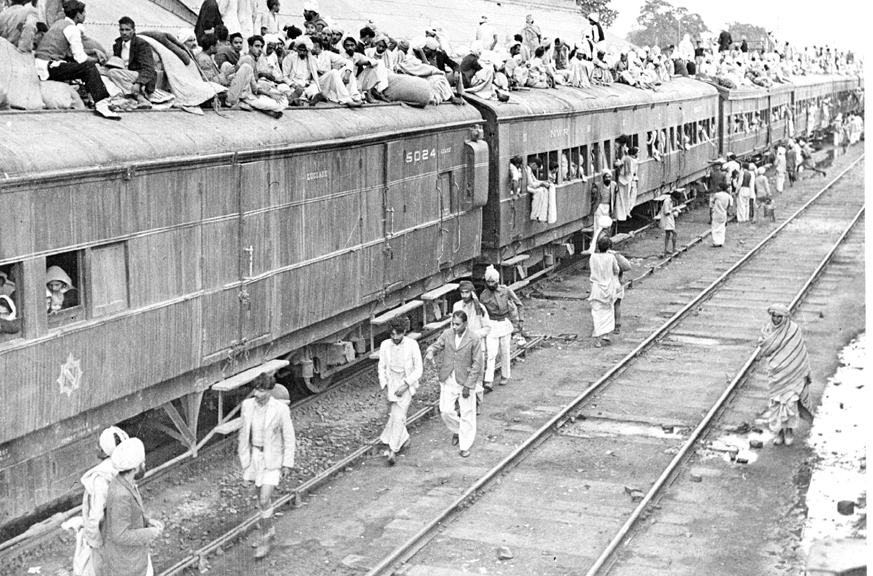
The riots took place for four days in Calcutta that led to terrible violence resulting in several thousand deaths.
Gandhi who was until then resisting any effort to vivisect the country had to accede to the demand of the Muslim League for the creation of Pakistan.
Mountbatten who succeeded Wavell came to India as Viceroy to effect the partition plan and transfer of power.
Points to Remember
Communalism in British India is traced to the religious reform movements, Arya Samaj and Theosophical Society representing Hinduism, and Wahabi and Khilafat movements representing Islam.
Hindu nationalism, Muslim nationalism, and secular nationalism competed with each other to politicize the people in their fight against British colonialism.
Cow Protection Associations and their attempt to prevent the killing of cows led to riots and the spread of communalism.
The use of religion in politics and its fallout in North India created an estrangement between Hindus and Muslims.
The government’s encouragement of communalisation of politics resulted in the formation of the All India Muslim League.
The granting of a separate electorate to Muslims encouraged it further to demand a separate state for Muslims.
Campaigns of Hindu Mahasabha for a Hindu Rashtra contributed to a total estrangement between Hindus and Muslims.
The latter celebrated the resignation of Congress ministries in provinces in the wake of the Second World War as a day of deliverance.
Jinnah’s obstinacy in arriving at a settlement based on Cabinet Mission Plan and his call for Direct Action Day in 1946 led to a civil war-like situation in Calcutta, ending in the partition of the country into India and Pakistan.
Changes in the constitution of the court of directors such as the term of the directors, eligibility for the right to vote etc and subjection of their actions to the British Government.
Government of Bengal to be carried on by a Governor-General of Fort William and his Council of 4 members (Warren Hastings –first Governor-General of Fort Williams).
The power of the Governor General-in-Council to supervise and control the Bombay and Madras Presidencies in matters of peace and war.
Establishment of a Supreme Court at Calcutta, with a Chief Justice (first Chief Justice –ElijaImpey) and three judges to administer justice (both civil and criminal) over all British subjects of Bengal Presidency.
Prohibition of receiving all presents and bribes by the servants of the Company.
Completion of the introduction of free trade in India by abolishing the company’s monopoly of trade in tea and trade with China.
Renaming the Governor General of Fort William as the Governor General of India (William Bentinck was the first Governor General of India as well as the Governor of Bengal Presidency).
Inclusion of a Law Member in the Council of the Governor General (Macaulay –the first Law Member).
Abolition of the legislative decentralization (i.e., the power of different Presidencies to make law for themselves) and giving the Governor General-in-council the power to make laws for all British India.
Charter Act of 1853
Appointment of a separate Lieutenant Governor for Bengal and making Dalhousie the first real Governor General of India (i.e. without any additional charge).
Depriving the company (Court of Directors) of its right to appoint and recall officials in India, and introduction of the system of direct recruitment to the I.C.S. through a competitive exam (Board of Control was to, do the recruitment).
Inclusion of additional members to the Governor General’s council, which was to act as the Legislative Council (total members –12).
Government of India Act of 1858
Abolition of the company’s rule and beginning of the rule by the British Crown.
Abolition of the Board of Control and the Court of Directors.
Appointment of a Secretary of State for India (who wouldbe a member of the British Cabinet) who would rule India with the aid of a Council, viz. India Council, consisting of 15 members. (Sir Charles Wood, the last President of the Board of Control, was made the first Secretary of State for India).
Making theGovernor General of India as Viceroy (Lord Canning –first Viceroy as well as the last Governor General of India) and increased control of British Home Government over the Viceroy (through the new Secretary of State for India) due to the establishment of direct telegraph link.
Indian Councils Act of 1861
Enlargement of the legislative wing of the Viceroy’s council (from now onwards known as the Imperial Legislative Council).
Introduction of the Portfolio System (based on Lord Canning’s rules of business) by which each member of the Viceroy’s Excecutive Council was put in change of a department.
Establishment of Legislative Councils in various provinces like Madras, Bombay and Bengal.
Indian Councils Act of 1892
Introduction of indirect elections for the non-official members of the Imperial and Provincial Legislative Councils: those of the former were to be nominated by the Bengal, Chamber of Commerce and the Provincial Legislative Councils: those of the latter by certain local bodies such as universities, district boards, municipalities, etc. Retention of the official majority at both levels.
The Councils at both levels were to have the power of discussing the budget (but not of voting) and of addressing questions to the executives.
Indian Councils Act of 1909 or the Morley –Minto Reforms
Introduction of an element of direct elections in the Legislative Councils.
Introduction of separate electorate for the Muslims (Communal Electorates).
Enlargement of the Provincial Legislative Councils and removal of official majority in them.
Retention of official majority in the Imperial Legislative Council.
Increase in the deliberative functions of the Councils at both levels.
Still majority of the non-official at both levels were indirectly elected.
Government of India Act of 1919 or the Montague-Chelmsford Reforms or Montford Reforms
Introduction of ‘Dyarchy’ in the provinces; division of the provincial subjects into ‘Reserved Subjects’ (like police, jails, land revenue, irrigation, forests, etc. to be administered by the Governor and his Executive Council) and ‘Transferred Subjects’ (like education, local self-government, public health and sanitation, agriculture, industries, etc., to be looked after by the Governor and his ministers).
Relaxation of central control over the provinces through ‘Devolution Rules’ which categorized the subjects of administration into two groups, viz, Central and Provincial. (This devolution of powers to the provinces should not, however, be mistaken for a federal distribution of powers for by way of delegation from the centre and not as constitutional division).
Making the Central Legislature bicameral (consisting of the Council of States and Legislative Assembly) and more representative by removing the official majority and increasing the non-official directly elected majority.
The salaries of the Secretary of State for India and his assistants to be paid out of the British revenues (hitherto they were paid out of Indian revenues).
Appointment of a High Commissioner of India at London, who was responsible to Indian Government and paid by it. His duties –to procure stores for Indian government, to supply trade information and promote commerce, and tolook after the education of Indian students in England.
Government of India Act of 1935
Provision for the establishment of an All India Federation to be based on a union of the provinces of British India and the Princely States (It did not come into existence since the Princely States did not give their consent for the union).
Division of powers into three lists –Federal, Provincial and Concurrent, Residuary Powers with the Governor-General.
Provincial Autonomy–the introduction of responsible government in the provinces and abolition of Dyarchy in them.
Provincial Legislatures were made bicameral, for the first time, in 6 provinces (Bengal, Madras, Bombay, Uttar Pradesh, Bihar and Assam).
Extension of the principle of separate electorates to Sikhs, Europeans, Indian Christians and Anglo-Indians.
‘Discretionary Powers’ of the Governor-General and the Governors.
Establishment of a Federal Court at Delhi (in 1937) with a Chief Justice and not more than 6 judges.
This article is also for the topic ‘Growth of militant movements Tnpsc‘.
Militant movements in India
There was an increase in unemployment among the Indians. Of them most were educated, people. Due to employment and poverty, these people went on become radical nationalists and led to the growth of militant nationalism in India.
These people were also inspired by several revolutions such as the French and Russian revolutions.
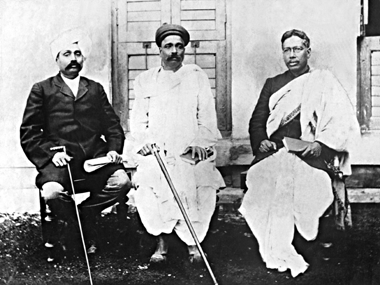
Bal Gangadhar Tilak was known as the father of militant nationalism in India.
Bal Gangadhar Tilak, Bipan Chandra Pal and the Lajpat Rai By Unknown author – http://www.sanatan.org/marathi/dainik/visheshank/lokmanya_tilak/#16, Public Domain, https://commons.wikimedia.org/w/index.php?curid=4882036
Nasik Conspiracy
Anant Laxman Kanhere, a 17-year-old student shot the district magistrate of Nasik. AMT Jackson, district magistrate died, while in drama theatre.
This was planned by the Abhinav Bharat Society, started by VD Savarkar. His brother Ganesh Savarkar along with other members were convicted.
The unjustified punishment meted out to Ganesh Savarkar (1909-10). As a result, 37 were jailed and out of them, 3 were hanged.
Alipore Conspiracy
This case is also referred to as the Muraripukur conspiracy or Manicktolla bomb conspiracy.
The police raided a bomb factory in Calcutta and recovered live bombs (1908). People involved are Barindar, Aurvindo, Hemchandra, Ullas Dutta, Upendra Banerjee.
This case says the trials of members of Indian militants of Anushilan Samiti. The changes were “Waging War against the Government”. This trial was held at Alipore Sessions Court from May 1908 to May 1909.
Chittaranjan Das founder of the Swaraj Party in Bengal defended Aurobindo Ghosh from the charges of the Alipore bomb case.
Howrah conspiracy
Howrah conspiracy case refers to the trials of 47 Indian Nationalists of the Anushilan Samiti against the murder of inspector Shamsul Alam in Calcutta.
Shamsul Alam was the was investigating the murder of Naren Gosain, who was a witness to the Alipore bomb case.
This also includes the murders of Ashutosh Biswas, the advocate handling the Gossain murder case, and also the murder of Naren Bannerjee, a police officer who arrested Khudiram Bose.
Shamsul Alam was handling all these cases and found Anushilan Samiti behind. Then he too was killed.
All these works are done by Jatindranath Mukherjee and Narendrath Bhattacharjee. Both were sentenced to one-year imprisonment.
Dacca Conspiracy
In July 1910, Pulin Behari Das along with 46 other members of Anusilan Samiti was arrested on the charges of sedition. Pulin Behari Das gets imprisonment for 7 years. After the trial was over, Pulin Behari Das got lifelong imprisonment and was transferred to Cellular Jail.
Delhi Conspiracy
Incident of bomb explosion aimed at killing Lord Hardinge (1915). The mastermind was Amirchand, Avadh Behari, Bhai Bal Mukund was sentenced to death.
Lahore conspiracy (1929-30)
Murder of Saunders. Sardar Bhagat Singh, Rajguru, and Sukhdev were hanged to death.
Benaras Conspiracy
Revolutionary activity (1915-1916). Sachindra Chandra Sanyal was deported to Andaman.
Victoria Conspiracy
Rouse public sentiments against the government due to the Kamagata Maru incident. Gurdutta Singh and Dalip Singh were sentenced to 4 and 2 years imprisonment.
Kakori
Looted the government cash carried in a train. Ram Prasad Bismil, Roshan Singh, AshfaqUllah, and Rajendra Lahri were awarded death punishment.
Punjab
Attempt on the life of the Governor of Punjab. Hari Krishnan was tried and hanged to death.
Tinnevelly Conspiracy Case
Collector Robert Ashe Murder By Sundar – Own work, CC BY-SA 4.0, https://commons.wikimedia.org/w/index.php?curid=3079181
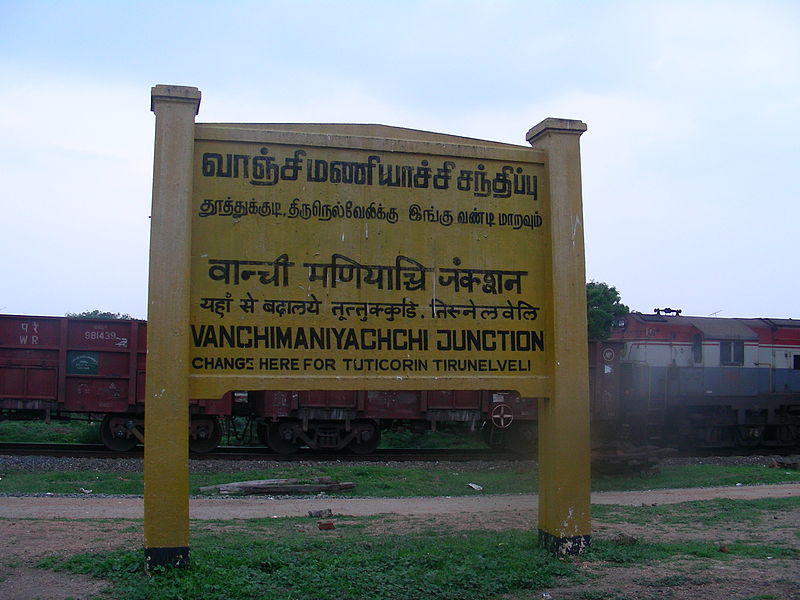
Vanchi Aiyar killed Mr. Ashe the District Magistrate of Tinnevelly. Ashe’s suppressive measures collapsed VOC Swadeshi Steam Navigation Company.
Robert Ashe was against untouchability and recognized the Dalits as equal in the caste-ridded society. He took several measures to uplift Dalits.
Also, only upper-caste members were allowed to take baths in the Courtalam waterfalls, other than Britons. All other caste people were not allowed to take baths in Courtalam waterfalls. Collector Ashe ended this system and allowed everyone to take bath in the waterfalls.
Also, Ash ensured equality in his office. Robert Ash was the first and only colonial official to be assassinated in South India.
Later Fourteen persons were charged in the Ashe murder case, which came to be known as the Tirunelveli conspiracy case.
South India History This note is written for the Tnpsc Exam for the topic “South Indian History“, which includes the history of Pallava, Cholas, Chalukyas, Rashtrakutas, their administration, and their culture. After the Sangam Age, Ancient Tamil Nadu was ruled by Kalabhra for about 250 Years. Here, then Pallava’s builds its kingdom in Tondaimandalam and … Continue reading “South Indian history Tnpsc | Pallavas, Cholas, Chalukyas, and Rashtrakutas”
South India History
This note is written for the Tnpsc Exam for the topic “South Indian History“, which includes the history of Pallava, Cholas, Chalukyas, Rashtrakutas, their administration, and their culture.
After the Sangam Age, Ancient Tamil Nadu was ruled by Kalabhra for about 250 Years. Here, then Pallava’s builds its kingdom in Tondaimandalam and kept its Capital at Kanchipuram and they ruled Ancient Tamil Nadu till early 10 Century AD, and later it was annexed by the Imperial Cholas.
Pallavas
There are several theories regarding the origin of Pallavas and one such theory is they related to Parthians, who ruled western India. And another theory is they are the Brahmin dynasty of the Vakatakas of the Deccan.
The third theory is that the Pallavas were descendants of Chola and Naga princesses who were natives of Manipallvam. But in General, the scholar accepts them as the Natives of Tondaimandalam.
Pallavas were similar to Pulindas, who were mentioned in the inscriptions of Ashoka. According to these inscriptions, the Pallavas because feudatories of Satavahanas when Tondaimandalam was captured.
And as the Satavahanas were declined during the 3rd century AD, Pallavas became independent.
Also, the earlier inscriptions of Pallavas were in Prakrit and Sanskrit due to the Satavahana connection and also they patronized Brahmanism.
Political History of Pallava Dynasty
The early Pallavas from 250 AD to 350 AD gave their Royal Charters in Prakrit Language. The earliest and prominent Pallava rulers were Sivaskandavarman and Vijayaskandavarman.
Next-generation, that is the second generation of Pallava rulers ruled from 350 AD to 550 AD and issued royal charters in Sanskrit. The most important second-generation ruler is Vishnugopa.
Vishnugopa defeated the Gupta empire Samudragupta during his South Indian expedition.
The rulers of the third line who ruled from 575 AD up to the fall of the kingdom in the 9th century AD, issued their charter both in Sanskrit and Tamil. Among all, the Pallava dynasty founder is considered to be Simhavishnu, he was the principal leader of this line.
Simhavishnu defeated the Kalabhras and made a strong Pallava rule in Tondaimandalam. Also, he crushed Cholas and stretched the Pallava rule up to the Kaveri region.
Other great Kings of this line are Mahendravarman-I, Narasimhavarman-I, and Narasimhavarman-II.
Mahendravarman I (600 – 630 A.D.)
A long Pallava-Chalukya conflict began during this period. King Pulakesin II marched against the Pallavas and captured the northern part of their kingdom.
Although a Pallava inscription refers to the victory of Mahendravarman-I at Pullalur, and not being able to recover the lost territory.
Also, King Mahendravarman-I was a follower of Jainism in his early days as a King. Then was converted to Saivism by the influence of the Saiva Saint, Thirunavukkarasar alias Appar.
Mahendravarman-I Constructed a Siva Temple at Tiruvadi. He assumed a number of titles like Gunabhara, Satyasandha, Chettakari (Builder of Temples), Chitrakarapuli, Vichitrachitta, and Mattavilasa.
Mahendravarman-I was a great builder of Cave temples. Mandagappattu inscription hails as Vichitrachitta who constructed a temple for Brahma, Vishnu, and Siva without the use of bricks, timber, metal, and mortar.
Mahendravarman-I, is responsible for the rock cut temples found in Vallam, Mahendravadi, Dalavanur, Pallavaram, Mandagappattu and Tiruchirappalli. He also authored Sanskrit Works Mattavilasa Prahasanam.
His title Chitrakarapuli reveals his talents in paintings and he was also regarded as an expert in Music. The music inscription at Kudumianmalai is ascribed to him.
Narasimhavarman I (630-668 A.D.)
Narasimhavarman-I was also known as Mamalla which means ‘great wrestler’. He wanted to revenge on Chalukyan ruler Pulakesin-II, because of his father.
He won over Pulakesin-II in the Battle of Manimangalam near Kanchi and this victory is mentioned in Kuram copper plates.
The Pallava army under General Paranjothi pursued the retreating Chalukya army, entered Chalukya territory, captured the capital Vatapi.
King Narasimhavarman-I assumed the title ‘Vatapikonda’. He regained the lost territory. Another notable achievement of Narasimhavarman-I was his Naval expedition to Sri Lanka.
Narasimhavarman restored the throne to his friend and Sri Lankan prince Manavarma. Hiuen Tsang, a Chinese Buddhist pilgrimage visited the Pallava capital Kanchipuram during his rule.
Hiuen Tsang Description about Kanchi
It is a big and beautiful city, six miles in circumference. Kanchi had 100 Buddhist monasteries, 10,000 Buddhist monks lived. The people of Kanchi esteemed great learning and the Ghatika at Kanchi served as a great centre of learning.
Narasimhavarman-I was the founder of Mamallapuram and monolithic rathas were erected during his rule.
Narasimhavarman II or Rajasimha (695 -722 A.D.)
Mahendravarman-II and Parameswarvarman succeeded Narasimhavarman-I. The Pallava-Chalukya conflict continued during their rule. Then Narasimhavarman-II became the ruler. He was also known as Rajasimha. He was very much interested in developing Art and Architecture.
Kailasanatha temple at Kanchipuram and Short Temple at Mamallapuram were built during this period. Dandin, a famous Sanskrit Scholar is said to have adorned his court. During his reign, he sends embassies to China and trade flourished via sea. Nandivarman-II and Parameswaravarman-II succeeded him.Pallava rule lasted till the end of the 9th century AD.
Aditya-I, Chola kind defeated the last Pallava ruler Aparajita and seized the Kanchi region. With the defeat of Aparajita, the Pallava rule came to an end.
Besides the Pallavas, the Western Chalukyas and therefore the Rashtrakutas within the Deccan constitute important political forces.
Both these kingdoms had their rivals in the far south, namely the Pallavas and later the Cholas. Their period has also been important within the history of India for his or her cultural contributions.
Chalukyas (543 – 755 A.D.)
The Western Chalukyas ruled over an in-depth area within the Deccan for about two centuries after which the Rashtrakutas became powerful. The family of Western Chalukyas had its offshoots just like the Eastern Chalukyas of Vengi and therefore the Chalukyas of Kalyani.
Pulakesin-I used to be the founding father of the Chalukya dynasty. He established a little kingdom with Vatapi or Badami as its capital.
Pulakesin II (608-642 A.D.)
The most important ruler of this dynasty was Pulakesin II. The Aihole inscription issued by him gives the small print of his reign. He fought with the Kadambas of Banavasi and the Gangas of Mysore and established his suzerainty.
Durvinita, the Ganga ruler accepted his overlordship and even gave his daughter in marriage to Pulakesin-II. Another notable achievement of Pulakesin II was the defeat of Harshavardhana on the banks of the river Narmada.
He put a check on the ambition of Harsha to overcome the south. In his first expedition against the Pallavas, Pulakesin II emerged victoriously. But he suffered a humiliating defeat at the hands of Narasimhavarman I near Kanchi. Subsequently, the Chalukya capital Vatapi was captured and destroyed by the Pallavas.
The most important event within the reign of Pulakesin II was the visit of Hiuen Tsang to his kingdom. The successor of Pulakesin II was Vikramaditya. He once more consolidated the Chalukya kingdom and plundered the Pallava capital, Kanchi.
Thus he had avenged his father’s defeat and death at the hands of the Pallavas. Kirtivarman-II was the last of the rulers of the Chalukyas. He was defeated by Dantidurga, the founding father of the Rashtrakuta dynasty.
Administration and Social Life under the Chalukyas
The Chalukya administration was highly centralized unlike that of the Pallavas and the Cholas. Village autonomy was absent under the Chalukyas. The Chalukyas had excellent maritime power. Pulakesin II had 100 ships in his navy. They also had a small army.
The Badami Chalukyas were Brahmanical Hindus but they gave reference to other religions. Importance was given to Vedic rites and rituals. The founding father of the dynasty Pulakesin I performed the asvamedha sacrifice.
A variety of temples in honor of Vishnu, Siva, and other gods were also built during this era. Hiuen Tsang mentioned the decline of Buddhism in western Deccan. But Jainism was steadily on the path of progress during this region. Ravikirti, the court poet of Pulakesin II who composed the Aihole inscription was a Jain.
The Rashtrakutas were of Kannada origin and the Kannada language was their mother tongue. Dantidurga was the founding father of the Rashtrakuta dynasty. He defeated the Gurjaras and captured Malwa from them. Then he annexed the Chalukya kingdom by defeating Kirtivarman II.
Thus, the Rashtrakutas became a paramount power within the Deccan. His successor Krishna-i used to be also an excellent conqueror. He defeated the Gangas and the Eastern Chalukyas of Vengi.
He built the magnificent rock-cut monolithic Kailasa temple at Ellora. The subsequent important king of this dynasty was Govinda III. He achieved victories over north Indian kingdoms. His successor Amoghavarsha I (815- 880 A.D.) ruled for an extended period of 64 years. He had lost control over Malwa and Gangavadi. Yet, his reign was popular for cultural development.
He was a lover of Jainism. Jinasena was his chief preceptor. He was also a patron of letters and he himself wrote the famous Kannada work, Kavirajamarga. He had also built the Rashtrakuta capital, the town of Malkhed or Manyakheda.
Among the successors of Amoghavarsha I, Krishna III (936- 968 A.D.) was famous for his expeditions. He marched against the Cholas and defeated them at Takkolam.
He marched further south and captured Tanjore. He went as far as Rameswaram and occupied it for some time. He built several temples within the conquered territories including the Krishneswara temple at Rameswaram.
Throughout his reign, he possessed the Tondaimandalam region including the capital Kanchi. After his death, the power of the Rashtrakutas declined.
After the decline of the Sangam period, the Cholas became feudatories in Uraiyur. They became prominent within the ninth century and established an empire comprising the major portion of South India. Their capital was Tanjore.
hey also extended their sway in Sri Lanka and therefore the Malay Peninsula. Therefore, they’re called because of the Imperial Cholas. Thousands of inscriptions found within the temples provide detailed information regarding the administration, society, economy, and culture of the Chola period.
The Imperial Chola dynasty founder was Vijayalaya. He captured Tanjore from Muttaraiyars in 815 A.D. and built a temple for Durga. His son Aditya put an end to the Pallava kingdom by defeating Aparajita and annexing Tondaimandalam.
Parantaka I was one of the important early Chola rulers. He defeated the Pandyas and therefore the ruler of Ceylon. But he suffered a defeat at the hands of the Rashtrakutas within the famous battle of Takkolam.
Parantaka I used to be an excellent builder of temples. He also provided the vimana of the famous Nataraja temple at Chidambaram with a golden roof.
The two famous Uttiramerur inscriptions that provide a detailed account of the village administration under the Cholas belong to his reign. After a niche of thirty years, the Cholas regained their supremacy under Rajaraja I.
Rajaraja I (985 – 1014 A.D.)
It was under Rajaraja I and his son Rajendra I that the Chola power reached its highest point of glory. His military conquests were:
The defeat of the Chera ruler Bhaskararavivarman within the battle of Kandalursalai and the destruction of the Chera navy.
The defeat of the Pandya ruler, Amarabhujanga, and the establishment of Chola authority within the Pandya country. The conquest of Gangavadi, Tadigaipadi, and Nolambapadi was located within the Mysore region.
The invasion of Sri Lanka was entrusted to his son Rajendra I. because the Sri Lankan king Mahinda V fled far away from his country, the Cholas annexed northern Sri Lanka. The capital was shifted from Anuradhapura to Polanaruva where a Shiva temple was built
The Chola victory over the growing power of the Western Chalukyas of Kalyani. Satyasraya was defeated and Rajaraja I captured the Raichur Doab, Banavasi, and other places. Hence the Chola power extended up to the river Tungabadhra.
The restoration of Vengi throne to its rulers Saktivarman and Vimaladitya by defeating the Telugu Chodas. Rajaraja gave his daughter Kundavai in marriage to Vimaladitya.
Rajaraja’s last military achievement was a naval expedition against the Maldives which were conquered.
By these conquests, the extent of the Chola empire under Rajaraja I included the Pandya, Chera, and therefore the Tondaimandalam regions of Tamil Nadu and therefore the Gangavadi, Nolambapadi and therefore the Telugu Choda territories within the Deccan and therefore the northern part of Ceylon and the Maldives beyond India.
Rajaraja assumed variety of titles like Mummidi Chola, Jayankonda and Sivapadasekara. He was a devout follower of Saivism.
He completed the development of the famous Rajarajeswara temple or Brihadeeswara temple at Tanjore in 1010 A.D. He also helped with the construction of a Buddhist monastery at Nagapattinam.
Rajendra I (1012-1044 A.D.)
Rajendra had demonstrated his military ability by participating in his father’s campaigns. He continued his father’s policy of aggressive conquests and expansion.
His important wars were:
Mahinda V, the king of Sri Lanka attempted to get over the Cholas the northern part of Ceylon. Rajendra defeated him and seized southern Sri Lanka. Thus the whole of Sri Lanka was made a part of the Chola Empire.
He reasserted the Chola authority over the Chera and Pandya countries.
He defeated Jayasimha II, the Western Chalukya king and therefore the river Tungabadhra was recognized because of the boundary between the Cholas and Chalukyas.
His most famous military enterprise was his expedition to North India. The Chola army crossed the Ganges by defeating a variety of rulers on its way. Rajendra defeated Mahipala I of Bengal.
To commemorate this successful north-Indian campaign Rajendra founded the town of Gangaikondacholapuram and constructed the STATUTE OF RAJA RAJA the famous Rajesvaram temple therein city.
He also excavated an outsized irrigation tank called Cholagangam on the western side of the town.
Another famous venture of Rajendra was his naval expedition to Kadaram or Sri Vijaya. It’s difficult to pinpoint the important object of the expedition.
Whatever its objects were, the naval expedition was an entire success. variety of places were occupied by Chola forces. But it had been only temporary and no permanent annexation of these places was contemplated. He assumed the title Kadaramkondan.
Rajendra I had put down all rebellions and kept his empire intact. At the death of Rajendra-I, the extent of the Chola Empire was at its peak.
The river Tungabadhra was the northern boundary. The Pandya, Kerala, and Mysore regions and also Sri Lanka formed a part of the empire.
He gave his daughter Ammangadevi to the Vengi Chalukya prince and further continued the matrimonial alliance initiated by his father.
Rajendra I assumed a variety of titles, the foremost famous being Mudikondan, Gangaikondan, Kadaram Kondan, and Pandita Cholan.
Like his father, he was also a devout Saiva and built a temple for that god at the new capital Gangaikondacholapuram.
He made liberal endowments to the temples and to the Lord Nataraja temple at Chidambaram. He was also tolerant towards the Vaishnava and Buddhist sects.
After Rajendra I, the greatness of the Chola power was preserved by rulers like Kulottunga I and Kulottunga III.
Kulottunga-i used to be the grandson of Rajendra I through his daughter Ammangadevi. He succeeded the Chola throne and thus united the Vengi kingdom with the Chola Empire.
During his reign Sri Lanka became independent. Subsequently, Vengi and therefore the Mysore region was captured by the western Chalukyas. Kulottunga I sent an outsized embassy of 72 merchants to China and maintained cordial relations with the dominion of Sri Vijaya.
Under Kulottunga III the central authority became weak. The increases of the feudatories just like the Kadavarayas and therefore the emergence of the Pandya power as a challenge to Chola supremacy contributed to the last word downfall of the Chola Empire.
Rajendra III was the last Chola king who was defeated by Jatavarman Sundarapandya II. The Chola country was absorbed into the Pandya Empire.
The Age of Vijayanagaram was a period of great cultural and economic prosperity in South India. It lasted from the 14th to the 17th centuries and was marked by the rise of the Vijayanagara Empire, which was the dominant power in the region for over 200 years.
The Vijayanagara Empire was founded in 1336 by Harihara I and Bukka Raya I, two brothers. The empire quickly expanded to cover much of South India, and its capital, Hampi, became a major centre of trade, commerce, and culture.
The Age of Vijayanagaram was a time of great artistic and architectural achievement. The empire was home to some of the most beautiful temples, palaces, and other structures in India. The empire also supported a thriving tradition of literature, music, and dance.
The empire’s economy was based on agriculture, trade, and commerce. The empire was a major producer of rice, cotton, and other agricultural products. It was also a major trading centre, with goods from all over India and the world being traded in its markets.
The Age of Vijayanagaram came to an end in the 17th century, when the empire was conquered by a coalition of Muslim sultanates. However, the legacy of the empire continues to be felt in South India today.
Major achievements of the Age of Vijayanagaram:
Political stability: The Vijayanagara Empire provided a period of political stability in South India, which allowed for economic and cultural development.
Economic prosperity: The empire was a major centre of trade and commerce, which led to economic prosperity for the region.
Cultural flowering: The empire was a major centre of art, architecture, literature, music, and dance.
Some of the most famous works of art and architecture from the Age of Vijayanagaram include:
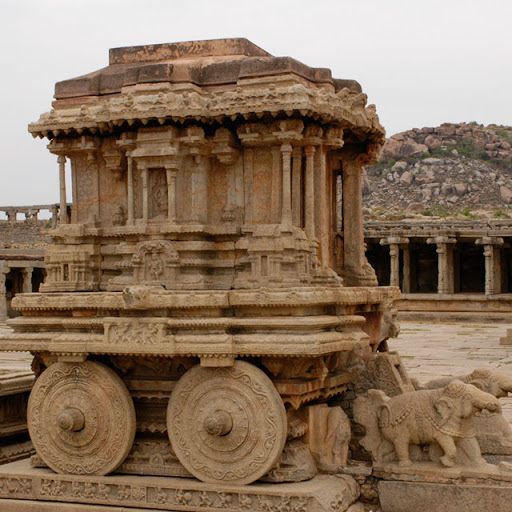
Hampi: The ruins of Hampi, the former capital of the Vijayanagara Empire, are a UNESCO World Heritage Site.
Virupaksha Temple: This temple is dedicated to Lord Virupaksha, a form of Lord Shiva. It is located in Hampi.
Vittala Temple: This temple is dedicated to Lord Vishnu. It is located in Hampi.
The Age of Vijayanagaram was a golden age for South India. It was a time of great cultural and economic prosperity, and its legacy continues to be felt today.
Vijayanagar empire History
The four dynasties such as Sangama, Saluva, Tuluva and Aravidu, ruled Vijayanagar from A.D. 1336 to 1672. The sources of history and other details about the Vijayanagar Kingdom are found in the works of Krishnadevaraya’s Amukthamalyada, Gangadevi’s Maduravijayam and Allasani Peddanna’s Manucharitam.
The Moroccan traveller, Ibn Battuta, Venetian traveller Nicolo de Conti, Persian traveller Abdur Razzak and the Portuguese traveller Domingo Paes left some details of life in Vijayanagar in their works.
The achievements of Vijayanagar rulers were known from copper inscriptions such as Srirangam copper platers of Devaraya II.
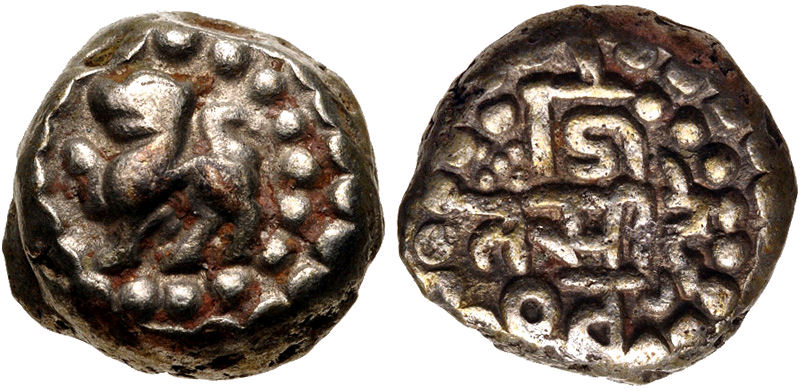
Hampi and other monuments provide great evidence of their cultural contributions and coins issued are the major source of information.
Political history
The Vijayanagar empire was founded in 1336 by Harihara and Bukka of the Sangama Dynasty. Harihara and Bukka were originally served under the Kakatiya rulers of Warangal. Then they went to Kampili and they were imprisoned and were converted to Islam.
Later by the advice of saint Vidyaranya, they were converted back to Shaivism (Hindu Religion). Then they proclaimed independence and founded a new city on the southern banks of the river Tungabhadra and named the new city Vijayanagar.
They expanded the empire as the Hoysala Kingdom was declining. By 1346, they brought the Hoysala kingdom under their control.
War and Conflict
There was a struggle between the Vijayanagar Empire and the Sultanate of Madurai, which lasted for about four decades.
Kumarakampana destroyed the Madurai Sultans and the whole of South India, that is up to Rameswaram went into the hands of the Vijayanagar empire. This expedition to Madurai was described in Maduravijayam.
The conflict between Vijayanagara and the Bahmani Kingdom lasted for many years. This is due to a dispute over Raichur Doab, the region between the rivers Krishna and Tungabhadra, and the fertile Krishna-Godavari delta.
The greatest ruler of the Sangama dynasty was Deva Raya II. Even he could not have any clear win against Bahmani Sultans.
After the death of Deva Raya II, the Sangama dynasty became weak and the next dynasty Saluva Dynasty founded Saluva Narasimha reigned for only a short period (1486-1509).
Krishna Deva Raya (1509-1530)
Krishna Deva Raya belonged to the Tuluva Dynasty. This dynasty was founded by Vira Narasimha.
Krishna Deva Raya possessed great military skills, an imposing personality and with high intellectual quality. As soon as he came into power, his first task was to check the Bahmani Kingdom. But by the time he came into the Bahmani Kingdom was went into control of the powerful Delhi Sultanates.
Now ruling Bahmani armies were defeated in the battle of Diwani. Then Krishna Deva Raya invaded the Raichur Doah. This resulted in a fight with the Sultan of Bijapur – Ismail Adil Shah. Krishna Deva Raya won and captured Raichur city in 1520 and captured Bidar in the battle.
Then he defeated Gajapathi ruler Prataparudra in Orissa and conquered the whole of Telungana.
He maintained friendly relations with the Portuguese and Portuguese governor for India’s possession, Albuquerque sent his ambassadors to Krishna Deva Raya.
Krishna Deva Raya was Vaishnavaite and he respected all religions and was a great patron of literature and art and was known as Andra Bhoja.
Eight eminent scholars known as Ashtadiggajas were at his royal court.
Allasani Peddanna was the greatest and he was called Andrakavita Pitamaga his greatest works include Manucharitam and Harikathasaram. Pingali Suranna and Tenali Ramakrishna were other important scholars.
Krishna Deva Raya himself authored Telugu work, Amukthamalyadha and Sanskrit work Jambavati Kalyanam and Ushaparinayam.
Krishna Deva Raya built the famous Vittalaswamy and Hazara Ramaswamy temples at Vijayanagar and also built a new city called Nagalapuram in memory of his queen Nagaladevi and also built several large Rayagopurams.
Final Days of the Dynasty
After the death of Krishna Deva Raya, Achutadeva and Venkata succeeded to the throne. Then Rama Raya came to power.
The combined forces of Bijapur, Ahmadnagar, Golkonda and Bidar defeated Rama Raya at the Battle of Talaikotta in 1565. This battle is known as Raksasa Thangadi. Rama Raya was imprisoned and executed and then the city of Vijayanagara was destroyed.
However, the Vijayanagar Kingdom existed under the Aravidu Dynasty for about another century. Thirumala, Sri Ranga and Venkata II were important rulers of this dynasty.
The last ruler of the Vijayanagar kingdom was Sri Ranga III.
Administration
The throne was hereditary, the king enjoyed absolute authority in executive, judicial and legislative matters and the king was the highest court of appeal.
The King was assisted by a council of ministers and the empire was divided into different administrative units called Mandalams, Nadus, Sthalas and Gramas.
The governor of Mandalam was called Mandaleswara or Nayak. Besides land revenue, tributes and gifts from vassals and feudal chiefs, customs collected at the ports, and taxes on various professions were other sources of income.
Land Revenue was fixed generally one-sixth of the produce. The top-grade officers of the army were known as Nayaks or Poligars and they were given granted land in place of their services and these granted lands were called Amaram.
Soldiers were usually paid in cash.
Sometimes usurpation to the throne took place as Saluva Narasimha came to power by ending the Sangama Dynasty.
Cultural contribution
Their style of temple building is called as Vijayanagar style and it is characterized by the Dravida Style with unique features.
In the pillars of their temple, horses were the most common animal found and the temple had an open pavilion called Mandapam over a raised platform which is meant for deity seating on special occasions.
Vijayanagar temples also have Kalyana Mandapam with carved pillars. The important temples are Hampi, Vitthalaswamy and Hazara Ramaswamy are fine examples.
The presence of Raya Gopuram, or towers in different corners of the empire and as usual, Garbhagriha was the central part, where the main deity was placed.
Literature
Vijayanagar Empire literature was composed in many languages such as Sanskrit, Telugu, Tamil and Kannada. Their literature reached a zenith during the Krishna Deva Raja period.
For his contribution to the literature, he was called Andhra Bhoja.
Famous scholars are Srinatha, Pothana, Jakkama and Duggana, who translated Sanskrit and Prakrit works into Telugu.
Maduravijayam
Gangadevi wrote MaduraVijayam, during Bukka-I. Mahantaka Sudhanidhi and a commentary on the Brahmasutras of Badrayana are Sanskrit works of Devraya-II.
Point to Remember
Manucharitam – It is written by Allasani Peddana, who was one of eight poets of Krishnadevaraya court, commonly referred to as Ashtadiggajalu. Manucharitam is one of the greatest works of Allasani Peddana, which provides us with an account of the caste system of the Vijayanagar empire.
Jambavati Kalyanam – It is a Sanskrit written by the king Krishna Deva Raya, is based on Jambavti daughter of Jambavan. Jambavan was a bear king who helped Lord Ram in the war against Tamil King Ravana.
Vijayanagar dynasty rulers
Harihara I (1336-1356 AD)
Bukka I (1356 AD- 1377 AD)
Harihara Raya II (1377-1404 AD)
Virupaksha Raya (1404-1405 AD)
Deva Raya I (1406-1422 AD)
Vira Vijaya Bukka Raya (1422-1424 AD)
Deva Raya II (1424-1446 AD)
Praudha Raya (1485 AD)
Conclusion
In this article, we have discussed the History of the Vijayanagar Empire, their religion, culture, and their art and architecture.
Preparing for the history section of the UPSC examination can be daunting, but with a structured approach and reliable resources, it becomes manageable. Here’s a detailed guide to help aspirants streamline their preparation for this crucial subject.
1. Understanding the Syllabus
The UPSC syllabus for history can be broadly divided into three categories:
Ancient History
Prehistoric cultures in India
Indus Valley Civilization
Vedic Age and Later Vedic Age
Religious movements (Buddhism and Jainism)
Mauryan and Post-Mauryan periods
Medieval History
Delhi Sultanate
Mughal Empire
Regional kingdoms and their significance
Bhakti and Sufi movements
Modern History
Advent of Europeans in India
British policies and their impact
Socio-religious reforms in the 19th century
Nationalist movements and independence struggle
World History (for GS Paper I, Mains)
Industrial Revolution
World Wars
Colonization and decolonization
Cold War and its impact
2. Resources for History Preparation
To effectively prepare, you need standard and comprehensive resources:
Books:
Ancient History: India’s Ancient Past by R.S. Sharma
Medieval History: History of Medieval India by Satish Chandra
Modern History: India’s Struggle for Independence by Bipan Chandra
World History: Mastering Modern World History by Norman Lowe
NCERT Textbooks:
Class VI to XII History books for a solid foundational understanding.
Reference Books:
A Brief History of Modern India by Spectrum Publications (Modern History)
Themes in Indian History (Part I, II, III) NCERT
Online Resources:
Websites like PIB, NIOS, and IGNOU materials
Online video lectures and platforms like Unacademy, BYJU’s, and YouTube channels dedicated to UPSC preparation
Mock Tests and Previous Years’ Question Papers:
Solve past 10 years’ question papers to understand trends.
Enroll in mock tests to assess your preparation.
3. Approach to Study History
Integrated Approach:
Link topics from Ancient, Medieval, and Modern history to current affairs.
Relate historical events to cultural and political developments.
Chronological Understanding:
Prepare a timeline of major events to connect the dots between periods.
Thematic Preparation:
Group topics under themes like political, economic, social, and cultural history.
Focus on reforms, revolutions, and key personalities.
Answer Writing Practice:
Write concise and structured answers for Mains.
Use maps, diagrams, and flowcharts to enhance presentation.
Revision:
Revise regularly and consolidate notes.
Highlight key points for quick reference before the exam.
4. Tips for Effective History Preparation
Focus on Conceptual Clarity:
Understand the “why” and “how” behind events, not just the “what.”
Memorization Techniques:
Use mnemonic devices and storytelling methods for better retention.
Interlinking with Other Subjects:
History overlaps with polity, geography, and culture. Leverage these overlaps to reduce the burden.
Current Affairs Linkage:
Relate historical events to contemporary issues (e.g., colonial policies and their impact on current governance).
5. Sample Study Plan
Week 1-3:
Complete NCERTs for Ancient and Medieval history.
Week 4-6:
Focus on Modern history with Bipan Chandra’s books and Spectrum.
Week 7-8:
Cover World History topics using Norman Lowe.
Week 9-10:
Revise using self-made notes and solve previous years’ papers.
Continuous:
Dedicate weekends to mock tests and answer writing.
Conclusion
History for the UPSC Civil Services Examination demands a comprehensive and nuanced understanding of the past. This necessitates a structured approach, diligent resource utilization, and consistent practice. By focusing on foundational textbooks, supplementing with specialized sources, and engaging in regular answer writing and mock tests, aspirants can develop a strong grasp of historical concepts and effectively communicate their knowledge in the examination.
1. Sources Archaeological sources :
Exploration, excavation, epigraphy, numismatics, monuments.
Literary sources:
Indigenous: Primary and secondary; poetry, scientific literature, literature, literature in regional
languages, religious literature.
Foreign account: Greek, Chinese and Arab writers
2. Pre-history and Proto-history :
Geographical factors; hunting and gathering (paleolithic and mesolithic); Beginning of agriculture
(neolithic and chalcolithic).
3. Indus Valley Civilization :
Origin, date, extent, characteristics-decline, survival and significance, art and architecture.
4. Megalithic Cultures :
Distribution of pastoral and farming cultures outside the Indus, Development of community life,
Settlements, Development of agriculture, Crafts, Pottery, and Iron industry.
5. Aryans and Vedic Period :
Expansions of Aryans in India :
Vedic Period: Religious and philosophic literature; Transformation from Rig Vedic period to the
later Vedic period; Political, social and economical life; Significance of the Vedic Age; Evolution of
Monarchy and Varna system.
6. Period of Mahajanapadas :
Formation of States (Mahajanapada): Republics and monarchies; Rise of urban centres; Trade
routes; Economic growth; Introduction of coinage; Spread of Jainism and Buddism; Rise of
Magadha and Nandas.
Iranian and Mecedonian invasions and their impact.
7. Mauryan Empire :
Foundation of the Mauryan Empire, Chandragupta, Kautilya and Arthashastra; Ashoka; Concept
of Dharma; Edicts; Polity, Administration, Economy; Art, architecture and sculpture; External
contacts; Religion; Spread of religion; Literature.
Disintegration of the empire; sungas and Kanvas.
8. Post-Mauryan Period (Indo-Greeks, Sakas, Kushanas, Western Kshatrapas) :
Contact with outside world; growth of urban centres, economy, coinage, development of religions,
Mahayana, social conditions, art, architecture, culture, literature and science
9. Early State and Society in Eastern India, Deccan and South India:
Kharavela, The Satavahanas, Tamil States of the Sangam Age; Administration, Economy, land
grants, coinage, trade guilds and urban centres; Buddhist centres; Sangam literature and culture;
Art and architecture.
10. Guptas, Vakatakas and Vardhanas:
Polity and administration, Economic conditions, Coinage of the Guptas, Land grants, Decline of
urban centres, Indian feudalism, Caste system, Position of women, Education and educational
institutions; Nalanda, Vikramshila and Vallabhi, Literature, scientific literature, art and
architecture.
11. Regional States during Gupta Era:
The Kadambas, Pallavas, Chalukyas of Badami; Polity and Administration, Trade guilds,
Literature; growth of Vaishnava and Saiva religions. Tamil Bhakit movement, Shankaracharya;
Vedanta; Institutions of temple and temple architecture; Palas, Senas, Rashtrakutas, Paramaras Polity and administration; Cultural aspects. Arab conquest of Sind; Alberuni, The Chaluky as of
Kalyana, Cholas, Hoysalas, Pandyas; Polity and Administration; Local Government; Growth of art
and architecture, religious sects, Institution of temple and Mathas, Agraharas, education and
literature, economy and society.
12. Themes in Early Indian Cultural History:
Languages and texts, major stages in the evolution of art and architecture, major philosophical
thinkers and schools, ideas in Science and Mathematics.
13. Early Medieval India, 750-1200:
Polity: Major political developments in Northern India and the peninsula, origin and the
rise of Rajputs.
The Cholas: administration, village economy and society “Indian Feudalism”.
Agrarian economy and urban settlements.
Trade and commerce.
Society: the status of the Brahman and the new social order.
Condition of women.
Indian science and technology.
14. Cultural Traditions in India,
Philosophy: Skankaracharya and Vedanta, Ramanuja and Vishishtadvaita, Madhva and
Brahma-Mimansa.
Religion: Forms and features of religion, Tamil devotional cult, growth of Bhakti, Islam
and its arrival in India, Sufism.
Literature: Literature in Sanskrit, growth of Tamil literature, literature in the newly
developing languages, Kalhan’s Rajtarangini, Alberuni’s India.
Art and Architecture: Temple architecture, sculpture, painting
15. The Thirteenth Century:
Establishment of the Delhi Sultanate: The Ghurian invasions – factors behind Ghurian
success.
Economic, Social and cultural consequences.
Foundation of Delhi Sultanate and early Turkish Sultans.
Consolidation: The rule of Iltutmish and Balban.
16. The Fourteenth Century:“The Khalji Revolution”.
Alauddin Khalji: Conquests and territorial expansion, agrarian and economic measure.
Muhammad Tughluq: Major projects, agrarian measures, bureaucracy of Muhammad
Tughluq.
Firuz Tugluq: Agrarian measures, achievements in civil engineering and public works,
decline of the Sultanate, foreign contacts and Ibn Battuta’s account.
17.Society, Culture and Economy in the Thirteenth and Fourteenth Centuries:
— Society: composition of rural society, ruling classes, town dwellers, women, religious
classes, caste and slavery under the Sultanate, Bhakti movement, Sufi movement.
— Culture: Persian literature, literature in the regional languages of North India, literaute in
the languages of South India, Sultanate architecture and new structural forms, painting,
evolution of a composite culture.
— Economy: Agricultural Production, rise of urban economy and non-agricultural
production, trade and commerce.
18. The Fifteenth and Early Sixteenth Century-Political Developments and Economy:
— Rise of Provincial Dynasties : Bengal, Kashmir (Zainul Abedin), Gujarat.
— Malwa, Bahmanids.
— The Vijayanagara Empire.
— Lodis.
— Mughal Empire, first phase : Babur, Humayun.
— The Sur Empire : Sher Shah’s administration.
— Portuguese colonial enterprise, Bhakti and Sufi Movements.
19. The Fifteenth and Early Sixteenth Century- Society and culture:
— Regional cultures specificities.
— Literary traditions.
— Provincial architectural.
— Society, culture, literature and the arts in Vijayanagara Empire.
20. Akbar:
— Conquests and consolidation of empire.
— Establishment of jagir and mansab systems.
— Rajput policy.
— Evolution of religious and social outlook. Theory of Sulh-i-kul and religious policy.
— Court patronage of art and technology.
21. Mughal Empire in the Seventeenth Century:
— Major administrative policies of Jahangir, Shahjahan and Aurangzeb.
— The Empire and the Zamindars.
— Religious policies of Jahangir, Shahjahan and Aurangzeb.
— Nature of the Mughal State.
— Late Seventeenth Century crisis and the revolts.
— The Ahom kingdom.
— Shivaji and the early Maratha Kingdom.
22. Economy and society, in the 16th and 17th Centuries:
— Population Agricultural and craft production.
— Towns, commerce with Europe through Dutch, English and French companies : a trade
revolution.
— Indian mercantile classes. Banking, insurance and credit systems.
— Conditions of peasants, Condition of Women.
— Evolution of the Sikh community and the Khalsa Panth.
23. Culture during Mughal Empire:
— Persian histories and other literature.
— Hindi and religious literatures.
— Mughal architecture.
— Mughal painting.
— Provincial architecture and painting.
— Classical music.
— Science and technology.
24. The Eighteenth Century:
— Factors for the decline of the Mughal Empire.
— The regional principalities: Nizam’s Deccan, Bengal, Awadh.
— Maratha ascendancy under the Peshwas.
— The Maratha fiscal and financial system.
— Emergence of Afghan power Battle of Panipat, 1761.
— State of, political, cultural and economic, on eve of the British conquest.
PAPER-II
1. European Penetration into India:
The Early European Settlements; The Portuguese and the Dutch; The English and the French
East India Companies; Their struggle for supremacy; Carnatic Wars; Bengal-The conflict
between the English and the Nawabs of Bengal; Siraj and the English; The Battle of Plassey;
Significance of Plassey.
2. British Expansion in India:
Bengal-Mir Jafar and Mir Kasim; The Battle of Buxar; Mysore; The Marathas; The three
Anglo-Maratha Wars; The Punjab.
3. Early Structure of the British Raj:
The Early administrative structure; From diarchy to direct contol; The Regulating Act (1773);
The Pitt’s India Act (1784); The Charter Act (1833); The Voice of free trade and the changing
character of British colonial rule; The English utilitarian and India.
4. Economic Impact of British Colonial Rule:
(a) Land revenue settlements in British India; The Permanent Settlement; Ryotwari Settlement;
Mahalwari Settlement; Economic impact of the revenue arrangements; Commercialization of agriculture; Rise of landless agrarian labourers; Impoverishment of the rural society.
(b) Dislocation of traditional trade and commerce; De-industrialisation; Decline of traditional
crafts; Drain of wealth; Economic transformation of India; Railroad and communication
network including telegraph and postal services; Famine and poverty in the rural interior;
European business enterprise and its limitations.
5. Social and Cultural Developments:
The state of indigenous education, its dislocation; Orientalist-Anglicist controversy, The
introduction of western education in India; The rise of press, literature and public opinion;
The rise of modern vernacular literature; Progress of Science; Christian missionary activities
in India.
6. Social and Religious Reform Movements in Bengal and Other Areas:
Ram Mohan Roy, The Brahmo Movement; Devendranath Tagore; Iswarchandra Vidyasagar;
The Young Bengal Movement; Dayanada Saraswati; The social reform movements in India
including Sati, widow remarriage, child marriage etc.; The contribution of Indian renaissance
to the growth of modern India; Islamic revivalism-the Feraizi and Wahabi Movements.
7. Indian Response to British Rule:
Peasant movement and tribal uprisings in the 18th and 19th centuries including the Rangpur
Dhing (1783), the Kol Rebellion (1832), the Mopla Rebellion in Malabar (1841-1920), the
Santal Hul (1855), Indigo Rebellion (1859-60), Deccan Uprising (1875) and the Munda
Ulgulan (1899-1900); The Great Revolt of 1857 —Origin, character, casuses of failure, the
consequences; The shift in the character of peasant uprisings in the post-1857 period; the
peasant movements of the 1920s and 1930s.
8. Factors leading to the birth of Indian Nationalism; Politics of Association; The Foundation of
the Indian National Congress; The Safety-valve thesis relating to the birth of the Congress;
Programme and objectives of Early Congress; the social composition of early Congress
leadership; the Moderates and Extremists; The Partition of Bengal (1905); The Swadeshi
Movement in Bengal; the economic and political aspects of Swadeshi Movement; The
beginning of revolutionary extremism in India.
9. Rise of Gandhi; Character of Gandhian nationalism; Gandhi’s popular appeal; Rowlatt
Satyagraha; the Khilafat Movement; the Non-cooperation Movement; National politics from
the end of the Non-cooperation movement to the beginning of the Civil Disobedience
Movement; the two phases of the Civil Disobedience Movement; Simon Commission; The
Nehru Report; the Round Table Conferences; Nationalism and the Peasant Movements;
Nationalism and Working class movements; Women and Indian youth and students in Indian
politics (1885-1947); the election of 1937 and the formation of ministries; Cripps Mission;
the Quit India Movement; the Wavell Plan; The Cabinet Mission.
10. Constitutional Developments in the Colonial India between 1858 and 1935.
11. Other strands in the National Movement.
The Revolutionaries: Bengal, the Punjab, Maharashtra, U.P. the Madras Presidency, Outside
India.
The Left; The Left within the Congress: Jawaharlal Nehru, Subhas Chandra Bose, the Congress
Socialist Party; the Communist Party of India, other left parties.
2. Politics of Separatism; the Muslim League; the Hindu Mahasabha; Communalism and the
politics of partition; Transfer of power; Independence.
13. Consolidation as a Nation; Nehru’s Foreign Policy; India and her neighbours (1947-1964);
The linguistic reorganisation of States (1935-1947); Regionalism and regional inequality;
Integration of Princely States; Princes in electoral politics; the Question of National Language.
14. Caste and Ethnicity after 1947; Backward Castes and Tribes in post-colonial electoral politics;
Dalit movements.
15. Economic development and political change; Land reforms; the politics of planning and rural
reconstruction; Ecology and environmental policy in post-colonial India; Progress of Science.
16. Enlightenment and Modern ideas:
(i) Major Ideas of Enlightenment : Kant, Rousseau.
(ii) Spread of Enlightenment in the colonies.
(iii) Rise of socialist ideas (up to Marx); spread of Marxian Socialism.
17. Origins of Modern Politics :
(i) European States System.
(ii) American Revolution and the Constitution.
(iii) French Revolution and Aftermath, 1789-1815.
(iv) American Civil War with reference to Abraham Lincoln and the abolition of slavery.
(v) British Democratic politics, 1815-1850 : Parliamentary Reformers, Free Traders, Chartists.
18. Industrialization :
(i) English Industrial Revolution : Causes and Impact on Society.
(ii) Industrialization in other countries : USA, Germany, Russia, Japan.
(iii) Industrialization and Globalization.
19. Nation-State System :
(i) Rise of Nationalism in 19th century.
(ii) Nationalism : State-building in Germany and Italy.
(iii) Disintegration of Empires in the face of the emergence of nationalities across the World.
20. Imperialism and Colonialism :
(i) South and South-East Asia.
(ii) Latin America and South Africa.
(iii) Australia.
(iv) Imperialism and free trade: Rise of neo-imperialism.
21. Revolution and Counter-Revolution :
(i) 19th Century European revolutions.
(ii) The Russian Revolution of 1917-1921.
(iii) Fascist Counter-Revolution, Italy and Germany.
(iv) The Chinese Revolution of 1949.
22. World Wars :
(i) 1st and 2nd World Wars as Total Wars : Societal implications.
(ii) World War I : Causes and Consequences.
(iii) World War II : Causes and Consequences.
23. The World after World War II:
(i) Emergence of Two power blocs.
(ii) Emergence of Third World and non-alignment.
(iii) UNO and the global disputes.
24 . Liberation from Colonial Rule :
(i) Latin America-Bolivar.
(ii) Arab World-Egypt.
(iii) Africa-Apartheid to Democracy.
(iv)South-East Asia-Vietnam.
25. Decolonization and Underdevelopment :
(i) Factors constraining Development ; Latin America, Africa.
26. Unification of Europe :
(i) Post War Foundations ; NATO and European Community.
(ii) Consolidation and Expansion of European Community
(iii) European Union.
27. Disintegration of Soviet Union and the Rise of the Unipolar World :
(i) Factors leading to the collapse of Soviet Communism and Soviet Union, 1985-1991.
(ii) Political Changes in East Europe 1989-2001.
(iii) End of the Cold War and US Ascendancy in the World as the lone superpower.
* * All the Notes in this blog, are referred from Tamil Nadu State Board Books and Samacheer Kalvi Books. Kindly check with the original Tamil Nadu state board books and Ncert Books.