Dravidian movement in Tamilnadu Tnpsc

Dravidian movement in Tamilnadu

The Dravidian movement started with the formation of Justice by C.Natesa Mudaliar, T.M.Nair, P.Theagaraya Chetty on 20 November 1916.

Dravidian movements consist of:

  • Abolition of Devadasi System
  • Self Respect Movement
  • Justice Party
  • Dravidar Kazhagam
  • DMK and ADMK

To know about the Dravidian movement in Tamilnadu, it is important to know about its history.
Compared to the rest of India, Tamil Nadu has good administration and political culture, and stable economic life. The Madras Presidency was formed in 1801 AD.

The Madras presidency consisted of the Present states of Andra Pradesh, the Malabar region of Kerala, Southern Karnataka, the Southernmost part of Odisha, and the Union Territory of Lakshadweep.

Madras Presidency politics in the early 20th century was dominated by Brahmin and Non-Brahmin conflicts.

By understanding the conflict between Brahmins and Non-Brahmins is necessary to understand South India Politics and Society.
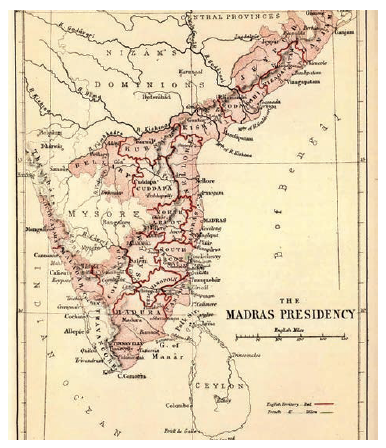
madras presidency map
madras province map

Madras Presidency

Very few people of Non-Brahmin Caste groups got employment in industries, commercial enterprises, etc.

A significant part of non-brahmin groups has migrated to urban, to ascertain their identity as Tamil and Dravidians challenged the monopoly of Brahmins in Politics, administration, and society.

The word ‘Dravidian’ was used by scholars and non-Tamil to identify non-Aryan Tamil-speaking people.

At the same time, Brahmin was identified as Aryans and the custodians of Sanskrit civilization.

Non-Brahmins were considered as Dravidians and the custodians of Tamil Language, culture, and civilization.

The emergence of the Dravidian movement in Tamilnadu

The Dravidian movement was started in order to protect and promote the Tamil identity, culture, socio-political and economic interest of non-brahmins.

Dravidian and Non-Brahmin Identity

Madras Presidency was formed by the British regime as a multilingual province in 1801.

Madras presidency had people of various languages such as Tamil, Telugu, Malayalam, Kannada, and Tulu.

The diversity of India can be noticed from the political developments of the Madras Presidency.

In North India and in Bengal, Sanskrit and Vedic centred Indian culture was promoted and Indo-Aryan or Indo-German groups of languages were promoted.

Cultures other than Vedic and languages other than Sanskrit were not given recognition.

James Principe deciphered Brahmi script in 1837, Ellis in 1816, and Caldwell in 1856 researched South Indian Languages and established that Indian culture was not homogeneous.

Francis Whyte Ellis

Ellis, a Tamil lover praised by Tamil enthusiasts. He had done research on Valluvar, Kural, and so on. He tried to show Valluvar as Jain and tried to promote the “Thomas Myth” in India.

He was born in the United Kingdom on 7th May 1814 and died in Kodaikanal, British India on 28 August 1891.

Robert Caldwell

In India, Dravidian and Buddhist traditions existed. The Madras Presidency, which has multilingual people, particularly the non-brahmin has asserted the Dravidian Identity as a result of a Dravidian group of languages theory and Dravidian cultural heritage.

In India, Brahmins claimed superiority over the Non-Brahmins and Brahmin monopolizing educational and employment opportunities, this made Non-Brahmin transform to the Dravidian Identity.

Mahatma Jyotiba Rao Phule in Maharashtra launched a Non-Brahmin movement, similar to Dravidian in Madras Presidency.

The non-brahmins of the Madras Presidency thought that nationalist leaders never worked for the Non-Brahmin Issues.

Gangalu Lakshmi Narash expressed this grievance, broke up the British Indian Association, and formed a new association named Madras Native Association.

Non-brahmin leaders fought for social reforms rather than political reforms.

After the Minto-Morley reforms in 1909, the non-brahmin started to protest for inadequate representation in education and employment.

Sir Alexander Gordon Cardew, a member of the Governor’s Executive Council submitted statistical details in 1913, to prove that the Brahmin who are 3% of the population have taken most of the opportunities.

Justice Party

Periyar E.V. Ramasamy

Self Respect Movement

The self-respect movement is a political movement in Tamil Nadu. It is the iconic movement of the Dravidian movement that aimed at achieving equality, Women’s Rights, Equal rights for backward castes, etc.

Salem Conference, 1944

In the Salem conference held under the leadership of Periyar, in 1944. A Historic resolution passed, that the name of the Justice Party was changed to Dravidar Kazhagam (DK).

Periyar then organized the Dravida Nadu conference and demanded an independent nation for Dravidians.

He pronounced a slogan, Dravida Nadu for Dravidians at the conference. He also announced, Dravidar Kazhagam wanted to establish a casteless society, condemning religious rituals, traditions, and superstition.

Dravidar Kazhagam went very popular in many rural and urban areas, many non-brahmins and students have changed their names reflecting Tamil Identity.

By Article 313 of the Indian constitution, Hindi was made the official language of the Indian Union on 26 January 1965.

The Dravida Munnetra Kazhagam (DMK)observed 26th January 1965 as a “Day of Mourning”.

Tamil Nadu witnessed a large Anti-Hindi Agitation.

The Anti-Hindi agitation gained momentum among the students and the congress party lost its base and support in Tamil Nadu.

Meanwhile, DMK had withdrawn its demand for “Dravida Nadu” and concentrated in electoral politics, and became a ruling party in the state.

Dravidian Movement during the Second World War and after:

In 1939, Congress resigned from the ministry after the governments involved India in World War II.

In Madras, Presidency Rajaji resigned the post, but Periyar raised the demand for Dravida Nadu on the ground that Independence prior to socio-cultural equality would be injurious to Tamil Interest.

Dravidar Kazhagam was splitted Dravida Munnetra Kazhagam was formed in 1949. In 1951, the Supreme Court struck down the communal reservation in higher education.

Periyar launched an agitation to restore communal reservation.

Thereby the first constitutional amendment act passed in the parliament in favor of reservation for socially and educationally backward classes.

Dravidian Parties Rule

Dravidian Movement is incomplete with mentioning the Dravidian parties rule, that shaped Modern Tamil Nadu. The rule of DMK and ADMK has made Tamil Nadu top in various aspects such as Economy, Health, Education, Social Welfare, etc.
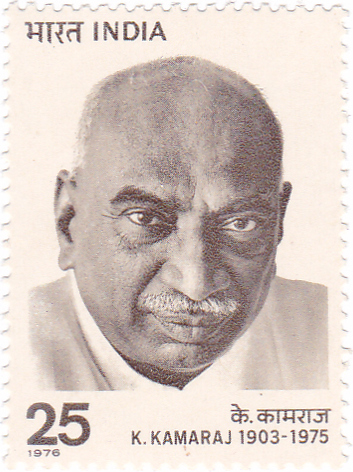
Kamarajar Tnpsc notes

Kamarajar Life History

He was born on 15th July 1903 at Virudupatti now known as Virudhunagr, Madras Presidency, British India. Kamarajar was one of the greatest freedom fighters of India from Tamil Nadu.

His political guru is S.Satyamurti . Kamarajar entered into the freedom movement of India by taking part in Vaikam Satyagraha in 1924.

He enrolled himself as a full-time worker of the Congress Party in 1929. Under the leadership of Rajagopalachari, he participated in the Salt Satyagraha march in Vedarangyam in 1930.

Kamarajar was imprisoned for two years in Alipore Jail for participating in Vedarangyam Salt march.

As a result of the Gandhi-Irwin Pact of 1931, he was released from prison. In 1940, he went to Wardha to meet Gandhiji to get approval for the list of Sathyagrahis.

He was arrested and sent to Vellore jail as he participated in Quit India Movement in 1942. Then sentenced to three years of jail in Amaravathi Prison. Kamarajar hoisted the India National flag in Satyamurti’s house in 1947.

He served as Chief Minister of Tamil Nadu for nine years and introduced various welfare schemes.

Kamarajar Kalvi Pani (Achievement in Education)

He opened many new schools and made education more accessible to poor and rural children.

Kamaraj abolished the Modified Scheme of Elementary Education, increased manifold the number of schools and Kamaraj introduced the noon-meal scheme for school children.

Kamarajar Achievements

He built a number of dams for improving irrigation, provided more industrial estates, ensured astonishing industrial growth in the state.

Kamaraj as King Maker

In 1963, Kamaraj resigned (Kamaraj Plan) his chief ministership to become the President of Indian National Congress and M.Bhaktavatchalam took over the government.

The Food shortage and anti-Hindi agitation caused the unpopularity of his ministry. The scholars refer to him as “King Maker”, as he made Lal Bahadur Sastri the Prime Minister of India in 1964 and Mrs. Indira Gandhi in 1966 after the death of Sastri.

He died on October 2nd, 1975. The K-Plan is the famous policy framed by him.

The people affectionately call him ‘Perum Thalaivar’ means ‘Great Leader’.

Prehistoric period and culture in India Upsc

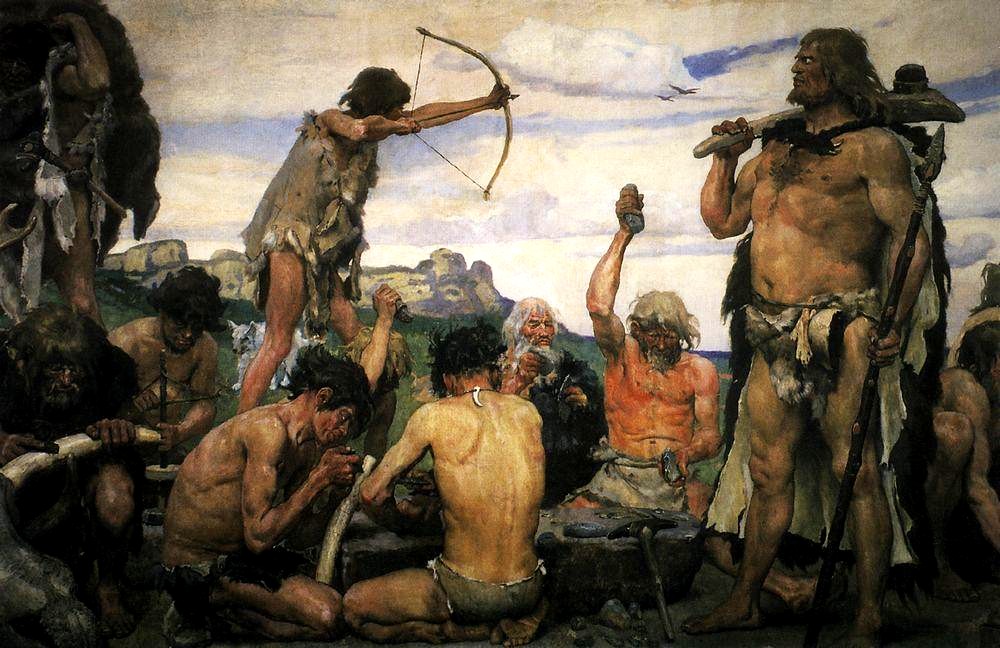
In India, the prehistoric period is divided into the Paleolithic (Old Stone Age), Mesolithic (Middle Stone Age), Neolithic (New Stone Age), and Metal Age. However, these periods were not uniform throughout the Indian subcontinent.

The dating of the prehistoric period is done scientifically. The technique of radiocarbon dating is commonly used for this purpose. It is based on measuring the loss of carbon in organic materials over a period of time.

Another dating method is known as dendro-chronology. It refers to the number of tree rings in wood. By counting the number of tree rings in the wood, the date the wood arrived at is determined.

Palaeolithic or Old Stone Age

The Old Stone Age sites are widely found in various parts of the Indian subcontinent. These sites are generally located near water sources. Several rock shelters and caves used by the Paleolithic people are scattered across the subcontinent.

They also lived rarely in huts made of leaves. Some of the famous sites of the Old Stone Age in India are:

a. The Soan Valley and Potwar Plateau in northwest India.
b. The Siwalik hills in north India.
c. Bhimpetka in Madhya Pradesh.
d. Adamgarh hill in Narmada valley.
e. Kurnool in Andhra Pradesh and
f. Attirampakkam near Chennai.

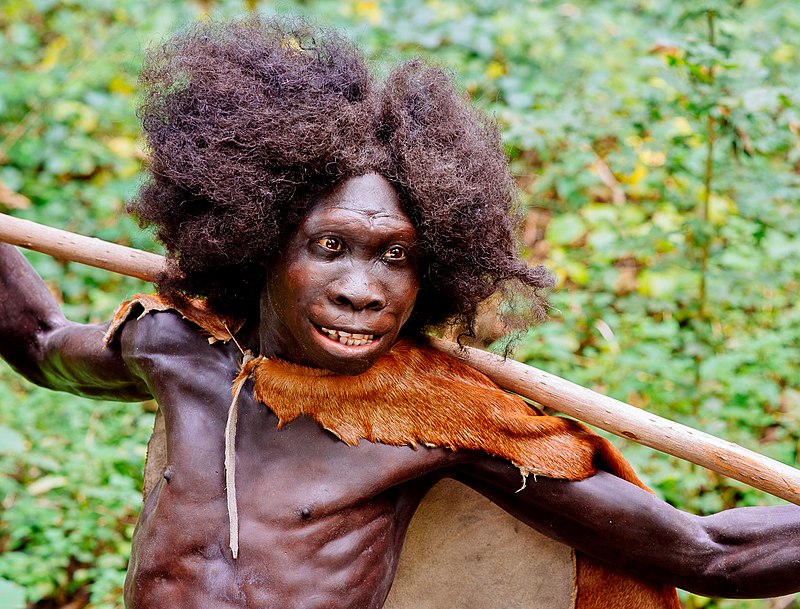
In the Old Stone Age, food was obtained by hunting animals and gathering edible plants and tubers. Therefore, these people are called hunter-gatherers. They used stone tools and hand-sized and flaked-off large pebbles for hunting animals.

Stone implements are made of a hard rock known as quartzite. Large pebbles are often found in river terraces. The hunting of large animals would have required the combined effort of a group of people with large stone axes.

We have little knowledge about their language and communication. Their way of life was modified with the passage of time, as they made attempts to domesticate animals, make crude pots, and grow some plants.

A few Old Stone Age paintings have also been found on rocks at Bhimbetka and other places. The period before 10000 B.C. is assigned to the Old Stone Age.

Mesolithic or Middle Stone Age

The next stage of human life is called the Mesolithic or Middle Stone Age which falls roughly from 10000 B.C. to 6000 B.C. It was the transitional phase between the Paleolithic Age and Neolithic Age.

Mesolithic remains are found in Langhanj in Gujarat, Adamgarh in Madhya Pradesh, and also in some places of Rajasthan, Utter Pradesh, and Bihar.

The paintings and engravings found at the rock shelters give an idea about the social life and economic activities of Mesolithic people. In the sites of the Mesolithic Age, different types of stone tools are found.

These are tiny stone artefacts, often not more than five centimetres in size, and therefore called microliths. The hunting-gathering pattern of life continued during this period. However, there seems to have been a shift from big animal hunting to small animal hunting and fishing.

The use of bow and arrow also began during this period. Also, there began a tendency to settle for longer periods in an area. Therefore, the domestication of animals, horticulture, and primitive cultivation started.

Animal bones are found in these sites and these include dogs, deer, boar, and ostrich. Occasionally, burials of the dead along with some microliths and shells seem to have been practiced.

Neolithic Age

Remarkable progress is noticed in human civilization in the Neolithic Age. It is approximately dated from 6000 B.C to 4000 B.C. Neolithic remains are found in various parts of India.

These include the Kashmir valley, Chirand in Bihar, Belan valley in Uttar Pradesh, and several places of the Deccan.

The important Neolithic sites excavated in south India are Maski, Brahmagiri, Hallur, and Kodekal in Karnataka, Paiyampalli in Tamil Nadu, and Utnur in Andhra Pradesh.

The chief characteristic features of the Neolithic culture are the practice of agriculture, domestication of animals, polishing of stone tools, and the manufacture of pottery.

In fact, the cultivation of plants and domestication of animals led to the emergence of village communities based on sedentary life. There was a great improvement in the technology of making tools and other equipment used by man.

Stone tools were now polished. The polished axes were found to be more effective tools for hunting and cutting trees.

Mudbrick houses were built instead of grass huts. Wheels were used to make pottery. Pottery was used for cooking as well as storage of food grains. Large urns were used as coffins for the burial of the dead.

There was also improvement in agriculture. Wheat, barley, rice, and millet were cultivated in different areas at different points in time. Rice cultivation was extensive in eastern India. Domestication of sheep, goats, and cattle was widely prevalent.

Cattle were used for cultivation and for transport. The people of the Neolithic Age used clothes
made of cotton and wool.

Metal Age

The Neolithic period was followed by the Chalcolithic (copper-stone) period when copper and bronze came to be used. The new technology of smelting metal ore and crafting metal artefacts is an important development in human civilization.

However, the use of stone tools was not given up. Some of the micro-lithic tools continued to be essential items. People began to travel for long distances to obtain metal ores. This led to a network of Chalcolithic cultures and the Chalcolithic cultures were found in many parts of India.

Generally, Chalcolithic cultures had grown in river valleys. Most importantly, the Harappan culture is considered a part of Chalcolithic culture.

In South India, the river valleys of the Godavari, Krishna, Tungabhadra, Pennar, and Kaveri were settled by farming communities during this period.

Although they were not using metals at the beginning of the Metal Age, there is evidence of copper and bronze artefacts by the end of the second millennium B.C.

Several bronze and copper objects, beads, terracotta figurines, and pottery were found at Paiyampalli in Tamil Nadu.

The Chalcolithic Age is followed by the Iron Age. Iron is frequently referred to in the Vedas. The Iron Age of the southern peninsula is often related to Megalithic Burials. Megalith means Large Stone.

The burial pits were covered with these stones. Such graves are extensively found in South India. Some of the important megalithic sites are Hallur and Maski in Karnataka, Nagarjunakonda in Andhra Pradesh, and Adichchanallur in Tamil Nadu.

Black and red pottery, iron artefacts such as hoes and sickles, and small weapons were found in the burial pits.

Download

Prehistoric period and culture in India Upsc Pdf

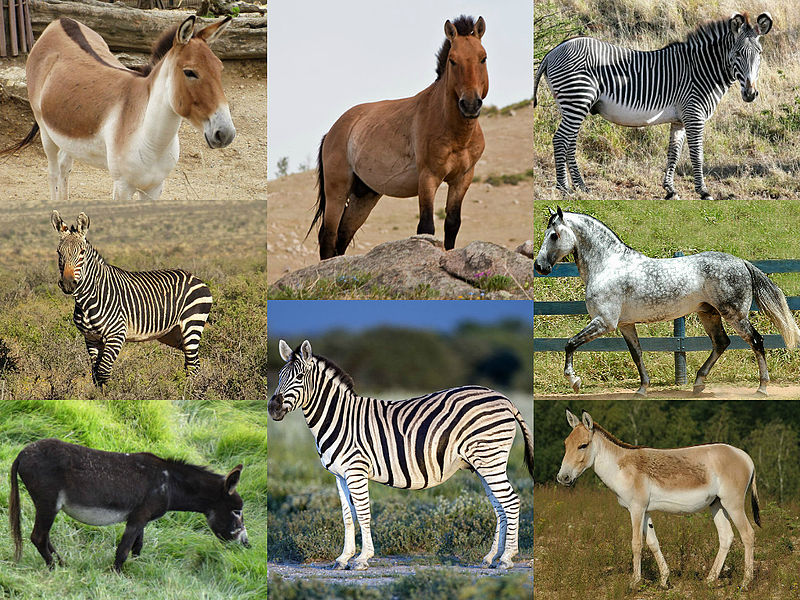
Equus Genus Characteristics

Equus

Eqquus refers to the genus of animals including horses and zebras.

Equus is a genus of mammals in the family Equidae, which includes horses, donkeys, and zebras. Within the Equidae, Equus is the only recognized extant genus, comprising seven living species.

Equus Genus Characteristics

Like Equidae more broadly, Equus has numerous extinct species known only from fossils. The genus most likely originated in North America and spread quickly to the Old World. Equines are odd-toed ungulates with slender legs, long heads, relatively long necks, manes (erect in most subspecies), and long tails.

All species are herbivorous, and mostly grazers, with simpler digestive systems than ruminants but able to subsist on lower-quality vegetation.

While the domestic horse and donkey (along with their feral descendants) exist worldwide, wild equine populations are limited to Africa and Asia.

Wild equine social systems are in two forms; a harem system with tight-knit groups consisting of one adult male or stallion, several females or mares, and their young or foals; and a territorial system where males establish territories with resources that attract females, which associate very fluidly.

In both systems, females take care of their offspring, but males may play a role as well. Equines communicate with each other both visually and vocally. Human activities have threatened wild equine populations.

Features of Vedic Literature Upsc

Tnpsc Notes for the introduction to the Indian culture post Indus valley civilization

Features of Vedic Texts

Vedic text and rhymes were passed orally from one generation to the next. As there is no script during that period, no documents were written.

Even though there is a symbol used in the Indus valley civilization, it is still not deciphered. There are two different timelines related to Vedic culture. That is early Vedic and later Vedic.

The early Vedic period belongs to the Chalcolithic culture and the later Vedic period belongs to the Painted Grey ware or Iron age in North India.

A strong cultural foundation was laid during this period, and there is a noticeable development in cultural, agriculture, craft, and technological development.

More importantly, village settlements were found in this period.

Importance of Vedic literature

Several disciplines of philosophy, literature, and science were developed during the Vedic period. Also, several branches of literature, maths, ethics, astronomy, and grammar were developed.

But the education was limited to males. There was a teacher-pupil relationship developed through person-oriented training.

Several Vedic texts were developed and much importance was given to pronunciation and grammar. Several texts were orally transmitted. This suggested that there was training through utterances and memorization.

Memorization was a part of Vedic Education. Aranyakas are a priest who was in the forest.

Upnishads means “To sit nearby” were philosophical inquiries that were composed during this period. These are also referred to as Vedanta as these were attached to Vedic texts.

The famous Satyameva Jayate is from Mundaka Upanishad.

The Vedas lays stress on knowledge of self-realization or atman. Brahman is considered the supreme being.

Vedic literature stresses meditation, the cycle of birth, and death. This text conveys karma and good conduct, mercy, generosity, self-restraint as good virtues.

Conclusion

Vedic literature was ritual-dominated and is based on Vedic life. It has the pursuit of knowledge and virtuous conduct.

Middle Palaeolithic Culture in India

Tnpsc exams notes for Palaeolithic culture existed in the India subcontinent .

About 4,00,000 BP(Before Present), lithic technology changed and the human ancestors diverged.

The Upright Man have existed in this period and tools of this period exhibited behavioral modernity.

The modern human might have arrived around 3,00,000 years ago.

In India, the Middle Palaeolithic phase was first found on the Pravara River at Nevasa by H.D. Sankalia and after the discovery, several sites were later found.

Most recently the Middle Palaeolithic sites were identified in Athirampakkam which belonged to 3.85-1.72 lakh years BP.

The Indian Middle Palaeolithic probably is as old as African Middle Palaeolithic culture and the Indian one ages 3,85,000 and 40,000 BCE , while the African age is associated with the Humans and Neanderthals in Europe and no Hominin fossil bones of these species were found in India Subcontinent.

The Middle Palaeolithic sites are found in Narmada, Godavari,Krishna, Yamuna and other river valleys.

Industies and tools

The tools of this period are knives on flakes,shouldered points, borers, choppers, hand axes etc. Flake industries was predominant. Scrapers were used for wood and skin works.

Ways of Life and Main Characteristics

  • The tools became smaller and decresed use of hand axes.
  • use of advanced technologies in stone tool production.
  • use of chert, jasper, chalcedony and quartz as raw materials.

The Last Mughal Ruler: A Tale of Empire’s Twilight

Last Mughal Ruler

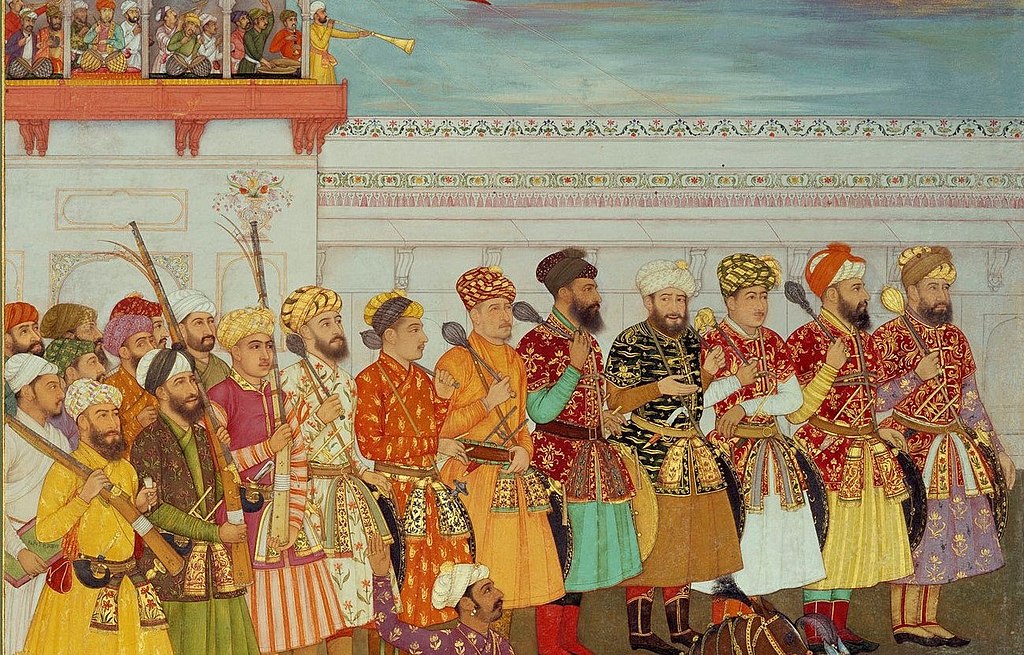
The Mughal Empire, a once-mighty dynasty that spanned the Indian subcontinent, reached its zenith under the rule of illustrious emperors such as Akbar, Shah Jahan, and Aurangzeb. However, as the pages of history turned, the empire faced inevitable decline. In this blog post, we delve into the poignant story of the last Mughal ruler, Bahadur Shah II, and witness the fading glory of a dynasty that had once ruled with opulence and grandeur.

  1. Rise and Fall of the Mughal Empire:
    • The Mughal Empire, founded by Babur in 1526, flourished for centuries, blending Persian, Turkish, and Indian cultures. The empire’s cultural richness, architectural marvels, and economic prosperity reached their pinnacle during the reign of Emperor Akbar. However, by the 19th century, the empire faced internal strife, external invasions, and the growing influence of European powers, particularly the British East India Company.
  2. Bahadur Shah II: The Reluctant Emperor:
    • Born in 1775, Bahadur Shah II ascended to the throne in 1837, inheriting an empire in decline. The “Zafar,” as he was known, was a poet, an aesthete, and a man of letters rather than a military strategist. Despite his limited political power, Bahadur Shah II became a symbol of resistance against the encroaching British dominance.
  3. The Revolt of 1857:
    • The year 1857 marked a turning point in the history of the Mughal Empire. The Indian Rebellion, often referred to as the Sepoy Mutiny, saw Bahadur Shah II reluctantly assume the role of a figurehead for the sepoys (Indian soldiers) and civilians who rebelled against British rule. The uprising, though ultimately unsuccessful, became a watershed moment in Indian history.
  4. Trial and Exile:
    • The culmination of the rebellion led to the capture of Bahadur Shah II by the British. In 1858, he faced a trial for his alleged involvement in the uprising. Found guilty, the last Mughal ruler was exiled to Rangoon (present-day Yangon) in British-controlled Burma. The once-mighty emperor spent his final years in obscurity and solitude.
  5. Legacy and Cultural Impact:
    • Despite his reluctant involvement in the events of 1857, Bahadur Shah II left an enduring cultural legacy. A prolific poet, he penned verses under the pen name “Zafar,” reflecting the beauty of Urdu poetry. His ghazals and compositions continue to be celebrated, and he is remembered as the last significant patron of the classical arts during the Mughal era.
  6. Reflections on the Twilight of an Empire:
    • The story of the last Mughal ruler prompts reflection on the larger narrative of imperial decline and the clash of cultures during the 19th century. Bahadur Shah II, caught between tradition and the encroaching tide of colonialism, became a symbol of the struggles faced by once-mighty empires confronting inevitable decline.

Conclusion

The tale of Bahadur Shah II, the last Mughal ruler, is a poignant chapter in the annals of history. His reign witnessed the sunset of a once-glorious empire, overshadowed by the relentless march of colonial powers. The final years of Bahadur Shah II in exile symbolize the end of an era, marking the transition from Mughal dominance to British imperial rule in the Indian subcontinent. His legacy lives on through his contributions to Urdu poetry, serving as a reminder of the cultural richness that thrived even in the twilight of an empire.

Harappan civilization tools: Indus valley civilization (TNPSC Notes)

Indus Valley civilization

Around 3BCE, a civilisation around the current northwest part of India, Pakistan region, collectively known as the Indus Valley Civilization also known as the Harappan Civilisation. It is also called the Harappan Civilisation since it was first identified.

This region appeared in different phase histories such as Early Harappan, which existed from 3000 to 2600 BCE, Mature Harappan from 2600 to 1900 BCE, and Late Harappan raging from 1900 to 1700 BCE.

The age of this civilisation dates back to the Neolithic villages of 7000 BCE. The urban phase started existing in the Mature Harappan period and declined after that.

Charles Mason first visited this civilization in 1826 and Alexander Burnes visited Amri in the place where railway line construction destroyed the archaeological site from Lahore to Multan.

The first ASI(Archeological Survey of India) surveyor Alexander Cunningham got a seal from this site. He visited this site earlier in 1853,1856 and in 1875. The importance of this site was not realized until Sir John Marshal’s arrival.

Sir John Marshal was the Director-General of ASI and started archaeology research. Mortimer Wheeler in 1940, started research in the Harappan sites. During the India-Pakistan partition during the independence, many sites went to Pakistan.

The Indian sites of this Civilization are Kalibangan, Lothal, Rakhi Garhi, and Dholavira, these sites were excavated during that period.

Geographical Area

  • Near 1.5 million square kilometres area in India and Pakistan covered the culture of Indus Civilization.
  • The boundaries of Indus Civilization are Sutkagen-dor in Pakistan-Iran border in the west, Daimabad in Maharastra India in the south, Shortugai in Afghanistan in the North, and Alamgirpur in Uttar Pradesh in the east.
  • Pakistan, Gujarat, Rajasthan, and Haryana are the core areas of Harappa civilization in India.

Early Beginnings

  • Agriculture and animal domestication began earlier in Mehrgarh. There is no evidence related to the continuity of the Neolithic age and Indus Civilization.
  • The development of villages and towns started in the early Harappan phase and they developed urban centres in the Mature Harappan phase.

Town Structure

The major cities of Harrapa time are:

  1. Harappa in Punjab, Mohejo-Daro in Sindh (Pakistan)
  2. Dholavira, Lothal, Surkotada (Gujarat)
  3. Kalibangan, Banawali (Rajasthan)
  4. Rakhigarhi (Haryana)
  • The characteristics of Harappan towns are planned fortification, Geometrical streets, and Lanes, Drainages. The towns are of the grid structure. The well-planned structure of the town gives the impression of the presence of civic authority in the planning of structures of the cities.
  • These people used baked and unbaked bricks and stones for the construction. The house has over one floor, built of mud bricks, and they built drainages of burnt bricks. The site of Mohenjo Daro is a well-planned town built on a platform and has two distinct areas, one is the Citadel and the other one is the lower town.
  • The houses of Mohenjo Daro had bathrooms built with burnt bricks and had a proper drainage system. Some houses had a staircase indicating the existence of multiple floor structures. These houses had multiple rooms and most of the houses had a central courtyard with room around.
  • The citadel area is meant for some special occasions. We identify a warehouse in Mohenjo-Daro. In the courtyard a Great Bath a kind of tank is situated, they lay bricks watertight with gypsum mortar and it had drainage and might be used as either granary or ritual bath.
  • The corridors were present on all four sides and stairs are seen on the northern and southern sides and it was well-paved with several adjacent rooms. Some granary structures are identified.

Agriculture and Animal Domestication in the Indus Valley Civilization

  • Agriculture was the prime source of food and occupation for the Harappans and they cultivated crops like chickpeas, sesame, various millets, wheat, barley, lentils, etc. and they practised a double cropping system.
  • The ploughed field found in Kalibangan shows the Harappan practised Ploughs and also used Canal and Well Irrigation. Pastoralism is yet another occupation practised by Harappans, they domesticated sheep, goats, and fowl also they reared other animals such as buffalo, pigs, elephants, etc.
  • But the Horse was not known to the Harappans. The Harappan cattle are called Zebu, they represent it in Seal. Harappan also ate fish and birds. There are pieces of evidence of boar, gharial, and deer in the Harappan sites.

Craft and Pottery

  • Major crafts of Harappans are Bead, Ornament production, shell bangle, and metalworking. They make these of Carnelian, Jasper, Crystal, Steatite, metals like copper, bronze, gold, and shell, faience and terracotta, or burnt clay.
  • They exported the ornaments to various Biblical places such as Mesopotamia. Some areas specialized in certain crafts. Such as Shell in Nageshwar and Balakot, Lapis Lazuli in Shortughai, Carnelian in Lothal, Steatite in south Rajasthan, and Copper crafts in Rajasthan and Oman.
  • The Harappans made well-fired pottery, these were deep red slips including black paintings. The pottery is shaped like dish-on-stands, storage jars, perforated jars, bowls, S-shaped jars, plates, dishes, bowls, and pots.
  • We notice the painted motifs or themes on the pottery such as pipal leaves, fish-scale design, intersecting circles, zigzag lines, horizontal bands, and geometrical designs with plants and animal forms.

Harappan civilisation tools, Metal and Weapons

  • The Harappan Civilisation belongs to the Bronze Age, and these people were well-versed in Copper and Bronze tools. They used these tools in agriculture and craft production
  • Some tools are Chisels, Points, Needles, Fishhooks, weighing pans, mirrors, a razor, and Antimony rods.
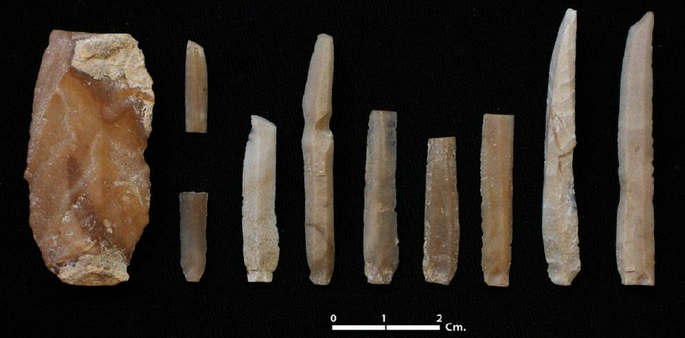
  • The chert blades made from Rohrichert(a fine-grained sedimentary rock found near Rohri in Pakistan, used by the Harappans for making stone blades and tools) were utilised by the Harappans.
rohrichert - Indus valley civilization Tnpsc
Rohri chert blades are considered a testimony to the Harappan efficiency in long-distance trade and craft production
  • Ancient weapons of this civilisation are arrowheads, spearheads, celts, and axes.
  • Harappan did not have an awareness of Iron.

Textiles and Ornaments

  • The Harappans were civilized enough to wear clothes, they also wore metal and ornaments made of stones.
  • A figure depicting Priest wearing shawl-like cloth with floral decorations shows that the Harappans had knowledge of silk and cotton.

Harappan civilization ornaments

  • Terracotta Models or statues of women wearing ornaments, the dancing girl found at Mohenjodaro wearing bangles show these ornaments might be made of Carnelian, gold, and copper.
  • Some ornaments had etched designs, and they exported these ornaments to Mesopotamia. Faience, stoneware, and bangles made of shells were also used by the Harappans.

Business

  • As said earlier, the Harappans had a business relationship with Mesopotamians. Also, seals of Harappa are found in Sumerian sites in Oman, Iran, Iraq, and Bahrain.
  • The cuneiform inscription (earliest writing method of Sumerians) of Mesopotamia says Economic relations with the Harappans. “Meluhha”, a reference in the Cuneiform inscription is the Indus region.
  • In Oman, we find Harappan Jars.
harappan jar found in oman
harappan jar found in Oman
  • In Mesopotamia, Harappan seals, weights, dice, and beads are found. Carnelian, Lapis Lazuli, Copper, Gold, and different woods were exported to Mesopotamia. Harappan got raw materials from these regions are made various craftworks, tools, etc.

Scripts and Artworks of the Indus Valley Civilization

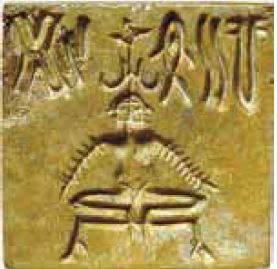
  • The seals made of Steatite, terracotta, ivory, and copper are found in these sites. These seals hold the text of about 26 signs, which are not deciphered to date. Some scholar suggests that these texts are from the Dravidian family.
  • These seals might have been the Identity market to show authority for the goods transported.
  • The terracotta figure, bronze images, copper mirrors, and paintings on the pottery found in Harappa, Priest-King of Steatite, and dancing girls statue made of copper found in Mohenjo-Daro, are important some important artworks of these people.
  • Also, toys are found such as Toy Carts, rattles, wheels, marbles, etc. These also used proper weights and measures, as they were involved in trade and business they used standard weights.
  • Cubical weights have been discovered from these sites and found in the ratio of weights of 1:2:4:8:16:32. The smallest weight is the 16th ratio weighs 13.63 grams.
  • They also used measuring scales in which one inch was approximately 1.75 cm. Weights made of chert were cubical in shape.
  • They used the binary numbering system (1, 2, 4, 8,16, 32, etc.) that is used for weighing jewellery and precious metals.

Religion Practices

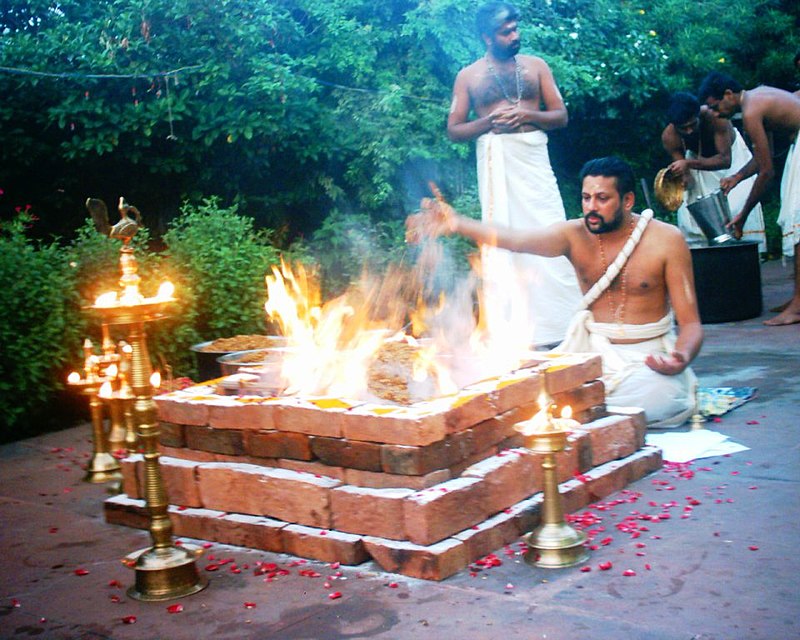
  • The people of this civilization worshipped Nature, Pipal Tree. The terracotta figure of the woman deity found denotes the Mother Goddess. In Kalibangan, we have found a Fire altar.
  • The bodies are buried with rich rituals, as burial is found with Pottery, Jewellery, a copper mirror, beads, Goat skeletons, etc., as these people believed in the Afterlife.

Politics

  • The seals, weights, and bricks exhibited uniformity that revealed authority and power.

Cultures Existed elsewhere during the Indus Civilization

  • There were large communities of farmers, pastoral people, etc. living throughout the subcontinent from Kashmir to Kanyakumari and Arunachal Pradesh to Gujarat in the same period of the Harappan civilization.
  • These communities are also important as they contribute to Indian Culture.
  • The northern parts of Karnataka and Andra are connected to the Neolithic period and might have a connection with the Indus civilization but there is evidence to prove it.
  • Similarly, Chalcolithic culture is found in Deccan and Western India, and Neolithic culture found in Kashmir, Ganga Valley, and central, eastern India might also have a connection with the Indus Civilization but there is no evidence.
  • As the Indus people are found to be well versed in watercraft they might have connected these areas through waterways.

Decline of the Indus Civilization

  • The Indus Civilization declined after the Mature Harappan in 1900CE.
  • The causes of the decline might be drastic changes in climate, fall of trade with Mesopotamia, the river changing its course or dried or continuous drought The people moved to the Southern and eastern direction of the Indus river regions.

Relationship between Indus Valley Civilization and Tamil Civilization

  • The Indus Civilization is considered the first urbanization and its real origin is still unknown as the Script used in their works is still not deciphered.
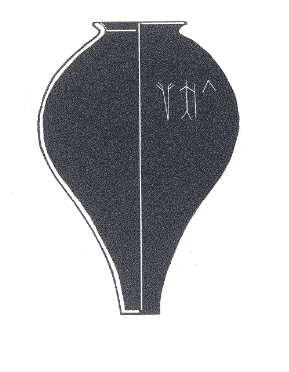
  • One cannot ignore that there some many similarities between the Tamil Civilization to the Indus such as graffiti found in Megalithic burial pots of South India and the names of places that have a relation with the Indus.
  • Ancient towns such as Arikamedu, Keezhadi, and Uraiyur town in South India differ from Indus cities.

Downloads

Indus valley civilization tnpsc notes pdf (Tn History Book Old)

Indus valley civilization tnpsc notes pdf (Tn History New book)

References

  1. R.S.Sharma, India’s Ancient Past. Oxford University Press, 2005.
  2. Upinder Singh. A History of Ancient and Early Medieval India. Pearson, 2008.

Bahmani kingdom Tnpsc pdf Notes

Bahmani Kingdom History

Bahmani Kingdom’s History starts with Hasan Gangu. The Bahmani kingdom was founded by Hasan Gangu also known as Alauddin Bahman Shah in 1347 and it was ruled by fourteen sultans.

Capital of Bahmani Kingdom

The capital of bahmani dynasty is Gulbarga. Then the capital was shifted from Gulbarga to Bidar by Ahmad Wali Shah. During Muhammad Shah III, the power of the Kingdom reached its zenith.

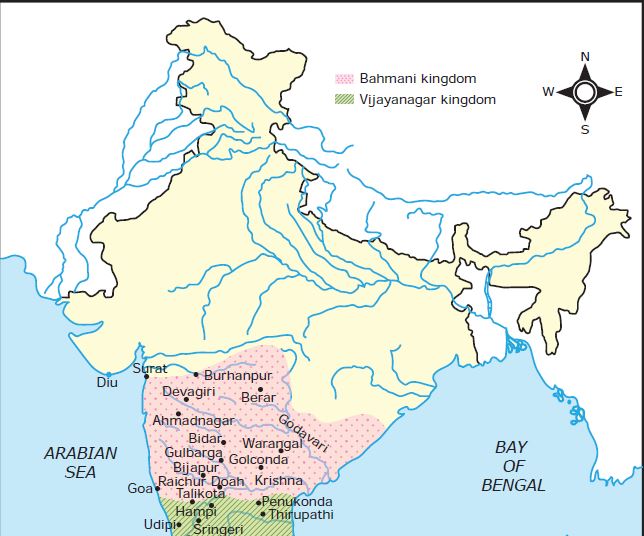
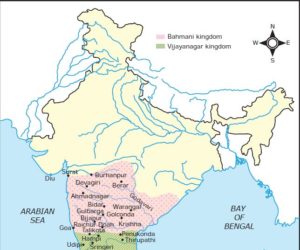
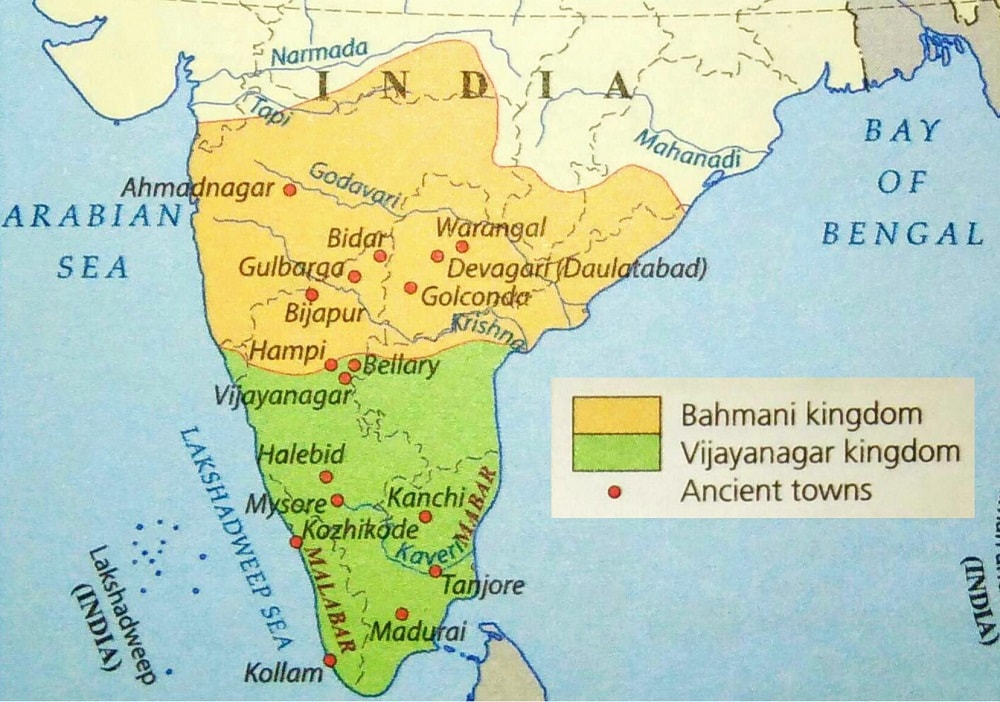
The kingdom extended from the Bay of Bengal to the Arabian Sea. In the west, the kingdom extended from Goa to Bombay. On the east, the kingdom extended from Kakinada to the mouth of the river Krishna.

By the directions and services of minister Mahmud Gawan, Muhammad Shah was very success full.

Bahmani kingdom and its territories
Bahmani kingdom map

Services of Mahmud Gawan to the Bahmani Kingdom

The Bahmani kingdom reached its peak of power and territories under to services of Mahmud Gawan. Mahmud Gawan was a Persian merchant who joined the services of the Bahmani Kingdom when came to India age of Forty Two.

Due to his personal qualities, loyalty to the kingdom, simple life, etc Mahmud Gawan slowly became Chief Minister. Mahmud Gawan was a learned scholar and had great knowledge of Mathematics.

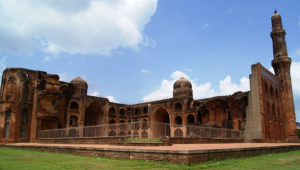
He made donations or endowments to build a college in the Persian style of architecture in Bidar. Mahmud Gawan a military genius, led the successful war campaign against the Vijayanagar kingdom, Orissa, and pirates on the Arabian sea.

His conquest also includes Konkan, Goa, and Krishna-Godavari Delta. Mahmud Gawan’s administrative reforms were aimed to increase the control of the sultan over the nobles and provinces.

Royal officers were appointed to each province to make Sultan have power over the provinces. Most of the forts were under the control of the Royal Officers.

Allowances of the nobles were reduced who are doing the responsibilities properly. Deccani nobles who were against Mahmud Dawan decided to plot against Mahmud Dawan.

Sultan punished him to death and the Bahmani kingdom began to decline. Weak ruler succeeded Muhammad Shah, and the provincial governor declared their independence.

Bahmani kingdoms

By 1526, Bahmani Kingdoms were divided into pieces, Ahmadnagar, Bijapur, Berar, Golkonda, and Bidar. This five-kingdom were collectively known as Deccan Sultanates.

Note: The about notes is taken from old Tamil State Board Books for Tnpsc exams

The Bahmani Kingdom founder – Alauddin Hasan Bahman Shah

Between Krishna and Tungabhadra rivers, There is Raichur which is a fertile area. To capture Raichur, there was a war happened between Bahmani and Vijayanagar Kingdom. The war went almost two centuries.

These wars started in the Bahamni Kingdom. East of Warangal and Orissa rules also faced conflict with Bahman Shah.

For administration purposes, Delhi Sultan divided the area under his rule into four divisions. These territorial divisions are called  Tarafs. The divided four-division was appointed with one governor in each administrative division.

These governors were responsible for the command over the army. These divisions are Gulbarga, Daulatabad, Bidar, and Berar. These governors were also responsible for the administration, tax collection, etc.

This governance method worked well for good kings and went into danger by the inefficient kings. For almost eleven years Bahman Shah ruled well for effectively controlling his enemies.

Bahman Shah took efforts to collect revenue from Warangal and Reddy’s Rajamundry, Kondavidu that led to many wars. In all the wars Bahman Shah won. To remember all his victories, he minted coins in the name himself as the second alexander.

The Second Bahmani Rule – Mohammed I 

His era is from 1358 to 1375. After Bahman Shah, Mohammed I came to the rule. He fought long wars with the Vijayanagar empire. Even after so many wars and so many losses between the two sides, nobody is fully able to control that region. He leads to two massive wars, but there is no benefit for him.

In 1363, he took a war on Warangal and captured it. The Warangal gave him massive resource loss but it fetched him Golconda fort, with treasures and precious gems. The turquoise throne from Golconda fort became the Bahmani king’s throne.

Bahmani kingdom administration under Mohammed I

Mohammed-I followed good governance. He followed governance and administration similar to the Delhi Sultanate, this system of governance inspired Marathas in the future. He created a system of eight ministers to take care of the governance.

Administration of Bahmani kingdom

  • Vakil-us-sultana is Chief of the Army, he is subordinate to the government.
  • Waziri-Kull is one who supervises the other ministers.
  • Amir-i-Jumla is the finance minister.
  • Wasir-i-ashraf is the external affairs minister, government affairs, and responsible for government ceremonies.
  • Nazir is subordinate to the Finance minister.
  • Peshwa is a lieutenant of the government forces.
  • Kotwal is the head of the Police department and judge or magistrate in the capital.
  • Sadr-i-Jahan is the Chief Justice and Religious department minister.

Administrative Measures

Mohammed-I took strong measures against the robbery on the highways. He laid a strong foundation for the kingdom by strengthening the institution and consolidation of the land or the territories.

Then he raised two mosques in Gulbarga, one of the completed by 1367. It was a great one. After Mohammed Shah I, some sultans ruled the kingdom but they do not have strong rules and were involved in constant wars.

In 1425 Warangal and its territories in the east were captured by Orissa rulers. Due to this loss, the capital was shifted from Gulbarga in 1429 to Bidar. After that Mohammed-III came to the rule from 1463 to 1482, who got great minister and statement Mohammed Gawan.

Mohammed Gawan or Mahmud Gawan

Mohammed Gawan was born in Persia had good knowledge of Islam, Persian, Maths, and was a good poet and writer. He started a madrasa in Bidar, and he constructed a very large library inside it.

The library contained 3000 manuscripts inside it. It shows his mastery of writing and knowledge. Mahmud Gawan as Prime minister of the Bahmani Kingdom gave good governance to Mohammed-III.

Mohammad Gawan also led a successful war campaign against the rulers of Konkan, Orissa, Vijayanagar kingdoms. Gawan learned the explosive technology from the Persian scientists and used it in wars.

He used explosives or gunpowder against the Vijayanagar kingdom at Belgaum. Mahmud Gawan by his skills controlled the governors and laid the foundation of good governance to the Bahmani kingdom.

He divided the Bahmani kingdom into eight provinces for easy governance for the kingdom. The easy area is well defined with the boundaries and the territories, the governor was appointed for each province.

Gawan brought some districts under his direct control. He also reduced the military powers of the governors. Mahmud Gawan reduced the number of forts. Because of it, only one fort is assigned to each governor. The rest of the forts came under the control of the Bahmani Sultanate.

The government officers were paid with land in place of salaries. The schemes introduced by Gawan, increase the efficiency of the Bahmani Kingdom. But the power of the provincial chiefs was reduced. These provincial chiefs were mostly from the Deccan.

Deccani pardesi conflict

Already there were two groups in the Deccan, one Deccan Muslims and other Muslims who were foreigners or called Pardesi. The conflict between these groups, paved the way to a fall in administration and governance.

This conflict killed Mohammed Gawan. These Deccan chiefs were jealous of Gawan, created a plot to kill Gawan. They wrote a letter to the Bahmani Sultan that Mohammad Gawan is planning to kill the Bahmani Sultan.

Already, Sultan was unhappy with the domination of Gawan over him. Gawan tried to convince the sultan by apologizing for the happenings. But the sultan was not ready to forgive him.

Finally, Gawan was killed, by false allegation to kill the Sultan.

The Decline of Bahmani Kingdom

After Gawan’s death, the Mohammed-III kingdom started to fall. Bahmani kingdom fell after the death of Mohammed III. After his death Mohammed III, a descendant ruled the kingdom.

The break-up of Bahmani kingdom

Then the Bahmani kingdom was divided into four independent kingdoms namely Bijapur, Ahmednagar, Berar, and Golconda. Last and fifth kingdom formed in Bidar. After some time, Bijapur emerged as a strong kingdom. Then Bidar, Berar was joined to Bijapur.

In the battle of Talikota or Rakshashi-Tangradi in 1565, all the five Bahmani Kingdoms fought against the Vijaya Nagar Kingdom. The result is the Vijayanagar Kingdom was defeated brutally.

But after the Talakota war, all the Deccan sultanates were annexed with the Mughal emperor.

// Note: This note is taken from Tamilnadu Samacheer Kalvi’s book. Useful for Tnpsc Exams and other Public service exams.

Some Extra Information about the Bahmani Kingdom

bahmani
Bahmani Kingdom map

Bahmani Sultanate is one of the important Indian Kingdoms during medieval India. The Bahmani sultanate was from Deccan or South India. It is a Muslim state of Persian background.

It got split into five independent kingdoms known as Deccan Sultanates. After the battle with the Vijayanagara Empire, at Raichur in 1520, the last Bahmani kingdom was separated from the main kingdom.

This sultanate was formed by Alauddin Bahman Shah. It is established after the Bahman Shah fought with Muhammad-bin-Tughlaq from the Delhi Sultanate. Bahman Shah was succeeded by his son. His name was Mohammed Shah I.

In 1429, Bidar was chosen as the capital for the Bahmani Kingdom. The other guys who came to power are Humanyun Shah, Nizamuddin Ahmad-3, Muhammad Shah-3 Lashkari. All three of them ascended the thorn at a very young age.

Muhammad Shah was assisted from a young age to a mature age by a Wise man named Mahmud Gawan and was a great scholar. He built a religious school called Mahmud Gawan Madrasa, where the teaching is both religious and secular.

mohammed gawan madrasa

Gawan was sentenced to death by Muhammad Shah-3, for sedition. After the death of Mahmud Gawan, the Bahmani sultanate started to decline. The last strong ruler was Mahmood Shah Bahmani-2 who succeeded his father Muhammad Shah II.

The later rulers were only King for the namesake, they were in the control of Prime Ministers of Barid Shahi. It was broken one by one after 1518. It was broken into five Kingdoms. These five kingdoms were collectively called Deccan Sultanates.

Bahmani Kingdom History started to decline after this.

The five states of Deccan Sultanates:

  1. Adil Shahi of Bijapur
  2. Nizamshahi of Ahmednagar
  3. Barid Shahi of Bidarm Qutb Shahi of Golconda
  4. Imad Shahi of Berar.

Krishnadevaraya of Vijayanagara gave the final blow to the Bahmani Kingdom then it became part of the Mughals.

Download Bahmani Kingdom History Notes for Tnpsc and Upsc

1.Bahmani Kingdom History Tnpsc Pdf download

2.Bahmani kingdom upsc pdf notes (New TN State board Book)

3.Bahmani Kingdom History Upsc pdf note (Old TN State Board Book)

Delhi sultanate Tnpsc notes pdf

Delhi Sultanate (1206 AD-1526 AD)

  • Muslim invasion led to the establishment of the Delhi Sultanate from 1206 AD to 1526 AD. The first sultan of Delhi was Qutub-ud-din Aibak.
  • There are five different dynasties- The slave, Khalji, Tughlaq, Sayyids and Lodis. Their rule extended throughout north India and penetrated Deccan and south India too.
  • The official language of the Delhi sultanate is Persian and the language of administration under the Delhi sultans is Persian.
  • The last ruler of the Delhi Sultanate was Ibrahim Lodi.
  • Delhi Sultanate period, 1206 AD to 1526
DynastyRulerReign (CE)
Mamluk (Slave) DynastyQutb-ud-din Aibak1206–1210
Aram Shah1210–1211
Iltutmish1211–1236
Rukn-ud-din Firuz1236
Razia Sultana1236–1240
Muiz-ud-din Bahram1240–1242
Ala-ud-din Masud1242–1246
Nasir-ud-din Mahmud1246–1266
Ghiyas-ud-din Balban1266–1287
Muiz-ud-din Qaiqabad1287–1290
Khilji DynastyJalal-ud-din Khilji1290–1296
Alauddin Khilji1296–1316
Qutb-ud-din Mubarak Shah1316–1320
Khusro Khan1320
Tughlaq DynastyGhiyas-ud-din Tughlaq1320–1325
Muhammad bin Tughlaq1325–1351
Firoz Shah Tughlaq1351–1388
(Later weak rulers)1388–1414
Sayyid DynastyKhizr Khan1414–1421
Mubarak Shah1421–1434
Muhammad Shah1434–1445
Alam Shah1445–1451
Lodi DynastyBahlul Lodi1451–1489
Sikandar Lodi1489–1517
Ibrahim Lodi1517–1526
Rulers of the Delhi Sultanate (1206–1526)

Slave Dynasty

  • Also called the Mamluk dynasty. Mamluk is the Quranic term for Slaves. They ruled Delhi from 1206 AD to 1290 AD.
  • Three dynasties were established during this period: one was the Qutbi dynasty by Qutbuddin Aibak (1206-1211), the second was the IIbari dynasty by Iltutmish (1211-1266), and the third was the IIbari dynasty by Balban(1266-129.

Founder of the slave dynasty: Qutbuddin Aibak(1206-1210)

  • The slave of Muhammad Ghori was made the governor of the Indian possessions. He set up military headquarters at Indraprastha, near Delhi.
  • Then he raised an army and controlled north India during the lifetime of Ghori. After the death of Ghori in 1206, Aibak became independent.
  • Aibak founded the slave dynasty and Delhi sultanate and assumed the title of sultan and made Lahore as capital and his rule lasted only for four years.
  • Muslim scholars called him Aibak Lakh Baksh or giver of lakhs as scholars received a lot of donations.
  • He patronized the great scholar Hasan Nizami. Then started construction of Qutb Minar, named after Sufi saint Khwaja Qutbuddin Bakthiyar, later it was completed by Iltutmish.
  • Died while playing Chaugan (Horse Polo) in 1210. Aibak was succeeded by his son Aram Baksh and replaced by Iltutmish after eight months.

Iltutmish Dynasty (1211-1236)

  • Iltutmish belonged to the IIbari tribe and was named as Ilbari dynasty. His half-brother sold Iltutmish to Aibak as a slave.
  • Iltutmish made son-in-law by Aibak. Aibak appointed Iltutmish as iqtadar of Gwalior. Iltutmish defeated Aram Baksh and became sultan. Iltutmish changed Lahore and made Delhi the capital.
  • Temujin or Chengiz Khan, the leader of the Mongols started invading central Asia. Chengiz Khan defeated Jalaluddin Mangabarni, ruler of Kwarizam.
  • Mangabarni sought asylum from Iltutmish after crossing the river Indus and Iltutmish refused due to fear of Chengiz Khan.
  • Iltutmish was fortunate, Chengiz Khan returned, without entering India. Mongol policy of Iltutmish saved India from Chengiz Khan. Iltutmish gained control over Bengal and Bihar.
  • Annexed Multan and Sind. Iltutmish suppressed Ranthampur, Jalor, Ajmir, and Gwalior. Iltutmish expedition was a failure against the Paramaras of Malwa.
  • Iltutmish was a statement and received the Mansur, the letter of recognition from the Abbasid Caliph in 1229, and became the legal sovereign ruler of India.
  • Nominated Raziya as successor. Iltutmish patronized many scholars and a number of Sufi saints Nizam-ul-Mulk, Muhammad Janaidi, Malik Qutb-ud-din, Taj-ud-din, Minhaj-us-Siraj, and Fakhrul Mulk Isami.
  • Iltutmish completes Qutb Minar at Delhi, the mosque at Ajmer. Introduced Arabic coinage and silver tanka weighing 175 grams became standard coins in India and the basis of the Modern Indian rupee.
  • Iltutmish also had forty(Turkish Nobles) powerful military leaders.

Raziya (1236-1240)

  • The Qazi of Delhi and Wazir put Ruknuddin Feroz on the throne even though Iltutmish nominated his daughter Raziya.
  • Governor of Multan revolted, and Ruknuddin fought against Governor Multan using this opportunity Raziya with the support of Amirs of Delhi seized the throne of the Delhi Sultanate.
  • Raziya appointed Yakuth as the master of royal horses. Raziya discarded female apparel and face unveiled.
  • Raziya even went hunting and led the army. The activities of Raziya provoked Turkish nobles.
  • In 1240, the governor of Bhatinda, Altunia revolted against Raziya. Raziya went in person to suppress Altunia and Altunia killed Yakuth and took Raziya as a prisoner.
  • The Turkish noble Bahram put another son of Iltutmish in the thorn. Raziya married Altunia and proceeded to Delhi for the throne but Raziya was defeated and killed.
  • The forty became powerful after Raziya’s death. Bahram and Masud ruled Delhi for the next 6 years.
  • Fight for the thorn between Sultan and nobles, but in 1246 Balban put younger son Iltutmish named Nasiruddin as Delhi Sultan.

The Era of Balban(1246-1287)

  • Ghiyasuddin Balban (Ulugh Khan) served as Naid or regent to Sultan Nasiruddin Mahmud. Made Sultan Nasiruddin Mahmud as a son-in-law by giving his daughter.
  • In 1266 Nasiruddin Mahmud died and Balban ascended the throne. Faced threat from the Turkish Nobbles called the forty. Balban introduced strict court discipline and made kissing the sultan’s feet to prove his superiority.
  • Introduced the Persian festival Nauroz to people and nobles. Balban did not share power with other nobles. Indian Muslims did not get an important post in government.
  • Balban monitored the nobles using spies. Then he broke the power of forty by fair and foul means.
  • The governor of Badaun, Malik Baqbaq, was publicly flogged for his cruelty towards his servants.
  • The governor of Oudh, Haybat Khan, was also punished for killing a man who was drunk. The governor of Bhatinda, Sher Khan was poisoned. Balban paid more attention to the law and order, rather than expanding the kingdom.
  • He established a separate military department, Diwan-i-arz.
  • Mewatis, who was involved in robberies on the outskirts of Delhi was mercilessly punished and roads safe for travellers. In 1279 Tughril Khan, the governor of Bengal revolted against Balban and was killed.
  • Balban sent Prince Mahmud against Mongols in the northwest and Prince Mahmud was killed in the war gave a big blow to the Balban. Balban was unable to prevent the Mongols completely from India’s invasion.
  • Kaiqubad, one of the grandsons of Balban succeeded the throne and after four years of rule, Jalaluddin Khalji captured Delhi in 1290.

Khalji Dynasty(1290-1320)

  • Founded by Jalaluddin Khalji, 70 years after he came to power. Jalaluddin Khaljji allowed Malik Chhajju, nephew of Balban to be governor of Kara.
  • Jalaluddin Khaljji was generous and lenient, as he allowed Balban’s nephew in the governor’s post, he pardoned Chhajju who revolted against him and set the thugs(robbers) after capture.
  • When Malik Chhajju revolted for the second, he was replaced by his son-in-law Alauddin Khalji.
  • Alauddin Khalji took an expedition to Devagiri and returned to Kara. During the reception, Alauddin Khalji murdered Jalaluddin Khalji.

Alauddin Khalji(1296-1316)

  • Alauddin Khalji gave enormous gifts to nobles and amirs of Delhi to control them. Those who opposed were severely punished.
  • Framed regulations to control nobles by checking the general prosperity of nobles, intermarriages between noble families, spy system, and drinking liquor which were reasons for the rebellions.
  • Confiscated the properties belonged to the Nobles. An intelligent system to check the secret activities of Nobles was reported to the Sultan.
  • Patronized poets Amir Khusrau and Amir Hasan. Built a famous gateway known as Alai Darwaza and constructed a new capital at Siri.

Reforms of Alauddin Khalji

  • The public sale of liquor and drugs was prohibited. Social gatherings and festivals were subjected to the permission of the Sultan. These measures made the country free from rebellions.
  • Maintained a large standing army, 4,75000 cavalrymen paid them in cash from the royal treasury. Introduced branding of horses called Dagh.
  • Prepared a descriptive list of soldiers called Huliya. Strict reviewing of the Army was carried out to ensure maximum efficiency.
  • Paying salaries to the soldiers led to price regulation of market prices for commodities popularly known as Market Reforms.

Market reforms of Alauddin Khilji

  • Khalji established four separate markets in Delhi. The first market for grains. The second market is for cloth, sugar, dried fruits, butter, and oil. Third for horses, slaves, and cattle
  • The fourth market for miscellaneous commodities. Shahna-i-Mandi is the high officer to controls the market.
  • The grain was held in stock in Government storehouses to ensure the supply of grain in all situations. Naid-i-Riyasat was the officer to controlled a separate department called Diwani Riyasat, every merchant was registered under this market department.
  • Munhiyans, secret agents were sent to report the functioning of these markets and sent slave boys to check the prices of various commodities.
  • Harsh punishment was given to the traders who violated market regulations, cheated by false measures in quantity and quality, and sold commodities at a higher price.
  • Even during the famine, the price of commodities did not increase, the Sultan ensured stable prices and continuity in supply in all situations.
  • Market reforms were applied to the provincial capital and towns. Land reform was made by Sultan, Alauddin Khilji who was the first of the Delhi Sultans to have ordered to measure the land.
  • Even the big landlords paid taxes to the government. The land revenue was paid in cash to the government, which was used to pay the government officials and soldiers in cash.
  • The land revenue system was the basis of the land reforms of Akbar and Sher Shah Suri.
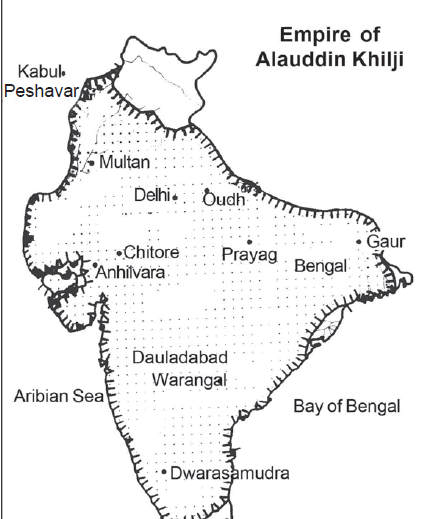
Delhi Sultans Empire under Alauddin Khilji map of India
Alauddin Khilji Empire map

Military Campaigns of Alauddin Khalji

  • Alauddin was successful in defeating the Mongols. Alauddin Khalji sent the army six times against the Mongols, The first two times were successful.
  • The third time was unsuccessful but managed to defend the capital city. The next three Mongols were severely defeated and thousands of Mongols were killed.
  • The northwest was fortified by Gazi Malik, who was appointed as warden of Marches to protect the North-West frontier.
  • Sent Nusrat Khan and Ulugh Khan to capture Gujarat in 1299, and the King and his daughter escaped while the queen was captured and sent to Delhi.
  • Kafur, a eunuch was also taken and made the Malik Naib- Military commander. In 1301, Alauddin captured Ranthampur and after a three-month fight, Rajput women committed Jauhar or self-immolation including Rani Padmini.
  • Chittor Fort was captured in 1303, a powerful fort in Rajasthan after several months of fights, Raja Ratan Singh and his soldiers found and later surrendered.
  • Alauddin sent Malik Kafur against Devagiri ruler Ramachandra Deva but submitted rich booty.

Alauddin Khilji campaign in South India

  • In 1309 Malik Kafur sent against Warangal and its ruler Pratabarudra Deva was defeated and rich booty was collected.
  • Hoysala ruler Vira Ballala III was defeated and rich booty was taken to Delhi. Vira Pandya of Madurai was defeated, Pandya escaped from Madurai, and rich booty was taken to Delhi.
  • Alauddin Khalji died in 1316. The successors of Alauddin Khalji were Mubarak Shah and Khusru Shah.

Tughlaq Dynasty (1320-1414)

  • The governor of Dipalpur, Ghazi Malik killed Sultan Khusu Shah and ascended the throne in 1320 under the title Ghiyasuddin Tughlaq.
  • Ghiyasuddin Tughlaq became the founder of the Tughlaq Dynasty. He sent his son Juna Khan to fight the Pratabarudra of Warangal and returned with rich booty.
  • Ulugh Khan killed his father and ascended as Sultan in the name of Muhammad bin Tughlaq in 1325.

Muhammad Bin Tughlaq (1325-1351)

  • He was tolerant in religious matters, and an attractive character, and his ambitious schemes and experiments were ahead of time and failed miserably.
  • Maintained diplomatic relations with distant countries like Egypt, China, and Iran. Introduced many liberal and beneficial reforms.
  • He was the only Delhi Sultan who received a comprehensive literary, religious and philosophical education. Transferred his capital to make Devagiri as second capital to control South India better.
  • In 1327, he prepared to transfer of royal household, ulemas, and Sufis from Delhi to Devagiri which was renamed Daulatabad.
  • Many people died during the travel during the summer of distance 1500 km. After two years, the sultan abandoned the transfer of capital.

Token Currency

  • Muhammad bin Tughlaq introduced token currency in 1329-30. Due to the shortage of silver throughout the world in the 14th century, Kublai Khan issued paper currency in China.
  • Muhammad bin Tughlaq issued copper coins at the same value as the silver Tanka coins. Goldsmiths began to forge the token currency and soon copper was not acceptable in the market.
  • Then Muhammad bin Tughlaq stopped the circulation of token currency and exchanged it with silver coins. Many people exchanged copper coins for silver coins as a result the treasury became empty.

Taxation in Doab

  • Due to the failure of Token currency and change in capital, the treasury went almost empty.
  • In order to overcome the financial problems, Mohammed Bin Tuglaq increased the revenue of farmers who were between the Ganga and Yamuna rivers.
  • And to add fuel to the farmer’s misery, there came famine, that forced the farmer to evacuate the villages. There were even several revolts done by the farmers.
  • Muhammad bin Tughlaq had several harsh measures and stopped the revolt and farmers from escaping the villages.

Agriculture Reforms by Muhammad bin Tughlaq

  • Sultan realized that only by bringing agriculture reforms, we can improve the financial solution. He launched Takkavi loans which are loans for cultivation, for buying seeds, etc.
  • Diwan-i-kohi is a department for agriculture that was established. A model farm was created by the state with an area of 64 square miles, by spending 70 Lakh Tankas.
  • This experiment was continued by Firoz Tughlaq.

Rebellions against Mohammed bin Tuglaq

  • Nobles and provincial governors revolted against Muhammad bin Tughlaq’s rule. Hasan Shah a rebellion established Madurai Sultanate.
  • Then Vijayanagar was founded in 1336, and the Bahmini Kingdom was established in 1347. The governors of Oudh, Multan, and Sind revolted against the authority of Muhammad bin Tughlaq.
  • In Gujarat, Taghi rose against the sultan, Muhammad bin Tuglaq died in 1351 after his health became worse.

Firoz Tughlaq (1351-1388)

  • Firoz Tughlaq ascended the throne after Muhammad bin Tuglaq. He was chosen by the nobles as Sultan.
  • He appointed Khan-i-Jahan Maqbal as Prime Minister (Wazir), who was a converted from Telugu Brahmin. Wazir helped in administration.

Military Campaigns of Firoz Tughlaq

  • He tried to stop breaking the Delhi Sultanate. He concentrated his authority over the North rather than the South and Deccan. Led two expeditions to Bengal but failed.
  • Bengal went on to become from Delhi Sultanate. He led a military campaign against Jajnagar (Orissa) and came with rich booty from the temples.
  • He made the ruler of Nagarkot pay tributes. He translated 1300 Sanskrit Manuscripts to Persian which were collected from the Jawalamukhi temple library.
  • He crushed the revolt in the Sind region created by Thatta.

Administrative Reforms of Firoz Tughlaq

  • He strictly followed Ulema’s advice in administration. The Iqta system was not only revived and made hereditary. He levied taxes based on Islamic law.
  • Jiziya was imposed on non-Muslims. He was the first sultan to impose an irrigation tax. He dug irrigation canals and wells. There were about 1200 fruit gardens in and around Delhi yielding more revenue.
  • He abolished the taxon 28 items that were against Islamic law. Thousands of slaves were employed in royal factories called Karkhanas. And 300 new towns were built.
  • The famous one among them was Fizozabad near Red Fort in Delhi now called Firoz Shah Kotla. He repaired Jama Masjid and Qutb-Minar.
  • To take care of widows and orphans he created a new department called Diwan-i-Khairat. He also established free hospitals and marriage bureaus for poor Muslims.
  • He patronized scholars like Barani and Afif and was intolerant towards Shia and Sufis.
  • He was the precursor of Sikander Lodi and Aurangazeb, as he treated Hindus as second-grade citizens and imposed Jiziya. He increased slaves and reportedly had one lakh eighty thousand slaves.
  • He died in 1388, in the following year Delhi Sultanate disintegrated. Then Malwa and Gujarat declared their independence.
  • After the Timur invasion in 1398 worsened the situation, as there was no opponent, he looted Delhi for three days and murdered thousands. Timur’s invasion gave a death blow to the Tughlaq dynasty.

Sayyids

  • Timur appointed Khizr Khan as governor of Multan before leaving India. Khizr Khan captured Delhi and founded the Sayyid dynasty in 1414.
  • He tried to consolidate the Delhi Sultanate but failed. Khizr Khan died in 141 and was succeeded by his Mubarak Shah.
  • Muhamad Shah lost control over his nobles. Buhlul Khan Lodi dominated everything. Muhammad Shah died in 1445 and was succeeded by his son Alam Shah (1445-1451), the weakest of Sayyid kings.
  • He handed over the throne to Buhlul Lodi and retired to Badaun.

Lodis (1451-1526)

  • Lodis were Afghans. Buhlul Lodi was the first Afgan ruler while his predecessors were all Turks.
  • Buhlul Lodi died in 1489 and his son Sikander Lodi ascended the throne.

Sikander Lodi (1489-1517)

  • He was the greatest among the three Lodi sovereigns. He defeated Rajput chiefs and brought the whole of Bihar under his control.
  • He defeated the Bengal ruler and forced him to sign a treaty and extend the empire from Bihar to Punjab.
  • Sikander Lodi was a good administrator. He built roads, and irrigation facilities, and provided benefits to the farmers.
  • He was a bigot, he destroyed temples and imposed restrictions on Hindus. He made the Sultanate powerful.
  • He was succeeded by Ibrahim Lodi, his son.

Ibrahim Lodi

  • He was arrogant and insulted nobles openly in court. Also killed the nobles who revolted against him. Then own uncle Alauddin revolted. Daulat Khan Lodi, governor of Punjab was insulted.
  • The Daulat Khan Lodi invited Babur to invade India. Babur went to Delhi and killed Ibrahim Lodi in the first battle of Panipat (1526). The last ruler of the Lodi dynasty of the Delhi Sultanate was Ibrahim Lodi.
  • The Afghan Kingdom lasted only 75 years.

Impact of the Mongol invasions on the Delhi Sultanate

  • Mongols attacked Delhi during the rule of Alauddin Khalji and Muhammad Tughluq. To tackle this, the Mongol Delhi Sultanate founded new Garrison towns and had to maintain a large standing army.
  • The agricultural produce from the Ganga and Yamuna regions is collected as tax to feed the army. The soldiers were also fed with salaries.
  • This drained the Delhi Sultanate’s salary and eventually weakened the Delhi Sultanate.

Conclusion

The Delhi Sultanate, a legacy spanning over three centuries, marked a significant chapter in Indian history. Established by Qutub-ud-din Aibak in 1206, this period witnessed a fascinating blend of Islamic and Indian cultures. The dynasty saw a succession of rulers, each leaving their unique imprint on the subcontinent. From the architectural marvels of Qutub Minar and the administrative reforms of Alauddin Khilji to the religious tolerance of Firoz Shah Tughlaq, the Delhi Sultanate left a lasting impact on India’s socio-political landscape. However, the dynasty’s decline began with the eccentric rule of Muhammad bin Tughlaq, leading to its eventual dissolution in 1526 with the advent of the Mughal Empire. The Delhi Sultanate, though brief, remains a crucial period in Indian history, shaping the course of events that followed

Delhi Sultanate tnpsc & Upsc notes pdf

1.Delhi Sultanate Tnpsc Notes Old Tamil Nadu book

2.Delhi Sultanate Tnpsc Notes New Tamil Nadu book

3.Delhi Sultanate Ncert Upsc Notes Part-I

4.Delhi Sultanate Ncert Upsc Notes Part-II

* * All the Notes in this blog, are referred from Tamil Nadu State Board Books and Samacheer Kalvi Books. Kindly check with the original Tamil Nadu state board books and Ncert Books.