The Mughal Empire, spanning from the early 16th to the mid-19th century, remains an indelible chapter in the annals of Indian history. Known for its opulence, architectural marvels, and cultural synthesis, the Mughal dynasty was equally distinguished by its administrative brilliance. In this blog post, we embark on a journey to unravel the intricacies of the Mughal administration, a system that blended military might with bureaucratic finesse.
Village Administration
The Muqaddam, the privileged headman of the village, formed the Panch (Panchayat), an administrative organ of the village.
The Panch was responsible for the collection and maintenance of accounts at the village level. The Panch allotted the unoccupied lands of the village to artisans, menials, and servants for their service to the village.
The middle class consisted of small Mansabdars, petty shopkeepers, hakims (doctors), musicians, artists, and petty officials of the Mughal administration.
There was a salaried class that received grants called Madad-i-Mash from the Mughal emperor, local rulers, and zamindars. This section often became part of the rural gentry and a link between the village and the town.
Officials
It is estimated that during the reign of Akbar over 15% of the nobility consisted of Rajputs. Raja Man Singh, Raja Todar Mal, and Raja Birbal were Rajput nobles of repute during Akbar.
The Rajputs appointed Kayasths and Khatris for various positions in government administration. Jahangir, Shah Jahan, and Aurangzeb employed Marathas in their nobility.
For example, Shaji, the father of Shivaji, served Shah Jahan for some time. There were continuous migrations from Central Asia as there were better career prospects in India.
These migrations led to the enrichment of culture through the assimilation of diversity.
Foundations of Mughal Administration
1. Centralized Authority:
At the apex of the Mughal administrative structure was the emperor, wielding centralized authority. The emperor’s decisions permeated through the hierarchy, reflecting the autocratic nature of Mughal rule.
2. Mansabdari System:
Akbar, the third Mughal emperor, introduced the Mansabdari system, a unique military-cum-civilian administrative framework. Under this system, officials, known as Mansabdars, were appointed based on their military ranks (Mansabs), which determined both their military command and administrative roles.
3. Provincial Administration:
The empire was divided into provinces (subas), each governed by a Subedar appointed by the emperor. This administrative decentralization allowed for efficient governance across diverse regions.
Administrative Innovations under Akbar
1. Din-i Ilahi:
Akbar’s reign witnessed attempts at religious syncretism, including the creation of Din-i Ilahi, an eclectic religious doctrine aiming to integrate elements of various faiths. While short-lived, it showcased Akbar’s innovative approach to governance.
2. Revenue Reforms:
Akbar implemented significant revenue reforms, including the introduction of the Zabt system, which aimed to fix revenue demands on agricultural produce. This stable revenue system contributed to economic prosperity.
3. Judicial Reforms:
The emperor established a fair and efficient judicial system. Qazis (judges) administered justice based on Islamic law, ensuring a degree of uniformity in legal proceedings.
Decline and the Later Mughals:
1. Administrative Challenges:
The later years of the Mughal Empire witnessed administrative challenges, including corruption, weak successors, and increased regional autonomy. The decline of administrative efficiency contributed to the empire’s gradual weakening.
2. Aurangzeb’s Rule:
Aurangzeb’s ascension to the throne marked a departure from the syncretic policies of his predecessors. His more orthodox rule contributed to increased religious tensions and administrative challenges.
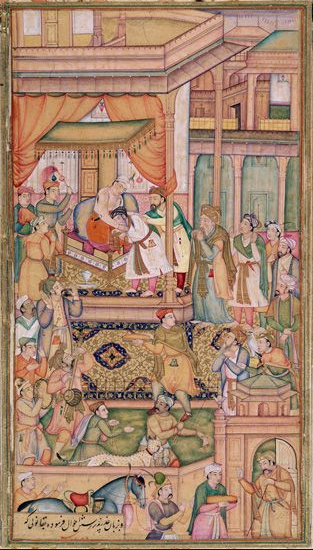
Akbar was succeeded by his son Salim with the title Nur-ud-din Jahangir.
He was Akbar’s son by a Rajput wife. His ascension was challenged by his eldest son Prince Khusrau who staged a revolt with the blessings of Sikh Guru Arjun Dev.
Prince Khusrau was defeated, captured, and blinded, while Guru Arjun Dev was executed.
Jahangir also tamed the rebel Afghan Usman Khan in Bengal.
Mewar, which had defied Akbar under Rana Udai Singh and his son Rana Pratap Singh, was brought to terms by Jahangir after a military campaign led by his son Prince Khurram (later to become Emperor Shah Jahan) against Rana Amar Singh, the grandson of Rana Udai Singh.
They concluded a treaty whereby Rana Amar Singh could rule his kingdom after accepting the suzerainty of Jahangir.
In 1608 Ahmad Nagar in the Deccan had declared independence under Malik Ambar. Several attempts by prince Khurram to conquer Ahmad Nagar ended in failure.
Prince Khurram had conquered the fort of Kangra after a siege of 14 months.
Kandahar, conquered by Akbar from the Persians in 1595, was retaken by the Persian King Shah Abbas in 1622.
Jahangir wanted to recapture it. But he could not achieve it due to the rebellion of Prince Khurram.
Jahangir’s reign witnessed the visit of two Englishmen – William Hawkins and Sir Thomas Roe.
While the former could not get the consent of the Emperor for establishing an English factory in India, the latter, sent as ambassador by King James I, succeeded in securing permission to establish a British factory at Surat.
Jahangir was more interested in art and painting and gardens and flowers than in government.
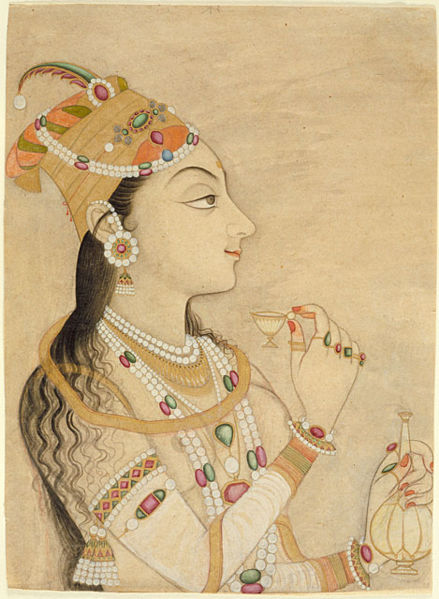
His Persian wife Mehrunnisa, renamed as Nur-Jahan by Jahangir became the real power behind the throne.
The political intrigues that prevailed because of Nur-Jahan, led Prince Khurram to rebel against his father but due to the efforts of Mahabat Khan, a loyal general of Jahangir, the rebellion could not be fruitful.
Prince Khurram had to retreat to the Deccan.
The intrigues of Nur-Jahan also made Mahabat Khan rise in revolt which was effectively handled by Nur-Jahan. Mahabat Khan also retreated to Deccan to join Prince Khurram.
Immediately after the death of Jahangir, Nur-Jahan wanted to crown her son-in-law Shahryar Khan but due to the efforts of Nur-Jahan’s brother and Prince Khurram’s father-in-law Asaf Khan, Prince Khurram succeeded as the next Mughal emperor with the title Shah-Jahan.
Nur-Jahan, who ruled the empire for ten years, lost her power and influence after Jahangir’s death in December 1645.
Bairam Khan was Akbar’s guardian and was an extraordinary military general who served Humayun, the father of Akbar. He had a great contribution to expanding the Mughal empire.
He was also a powerful statesman and regent at the court of the Mughal emperor. Bairam Khan served as guardian, chief mentor, adviser, teacher and trusted ally of Akbar. As a result, Akbar honoured Bairam khan as Khan-i-Khanan, which means king of kings.
Akbar and Bairam Khan
As a conqueror, Akbar triumphed all over North India. The first four years of Akbar’s rule saw the expansion of the Mughal empire from Kabul to Jaunpur, including Gwalior and Ajmer, under his regent Bairam Khan.
Soon Bairam Khan began to behave haughtily towards his fellow nobles. Akbar, enraged by his behaviour issued a Farman dismissing Bairam Khan.
This led to Bairam Khan’s revolt which was ably dealt with by Akbar. Bairam Khan, finally agreeing to submit himself to Akbar, proceeded to Mecca.
Bairam khan Death
But on his way, he was murdered by an Afghan. The family of Bairam khan was brought to Delhi and his son Abdur Rahim became one of the luminaries of Akbar’s court with the title Khan-e-Khanan.
FAQ
1.Why did Akbar dismiss Bairam Khan?
Bairam Khan was a Shia Muslim and was disliked by Sunni Turkic nobles. And also Bairam Khan was highly authoritative and Akbar removed him to become top of authority.
Akbar laid the foundation for a great empire through his vast conquests. Malwa was conquered in 1562 by Baz Bahadur who was made a mansabdar in Akbar’s court. The Gondwana region of central India was annexed after a fierce battle with Rani Durgavati and her son Vir Narayan in 1564.
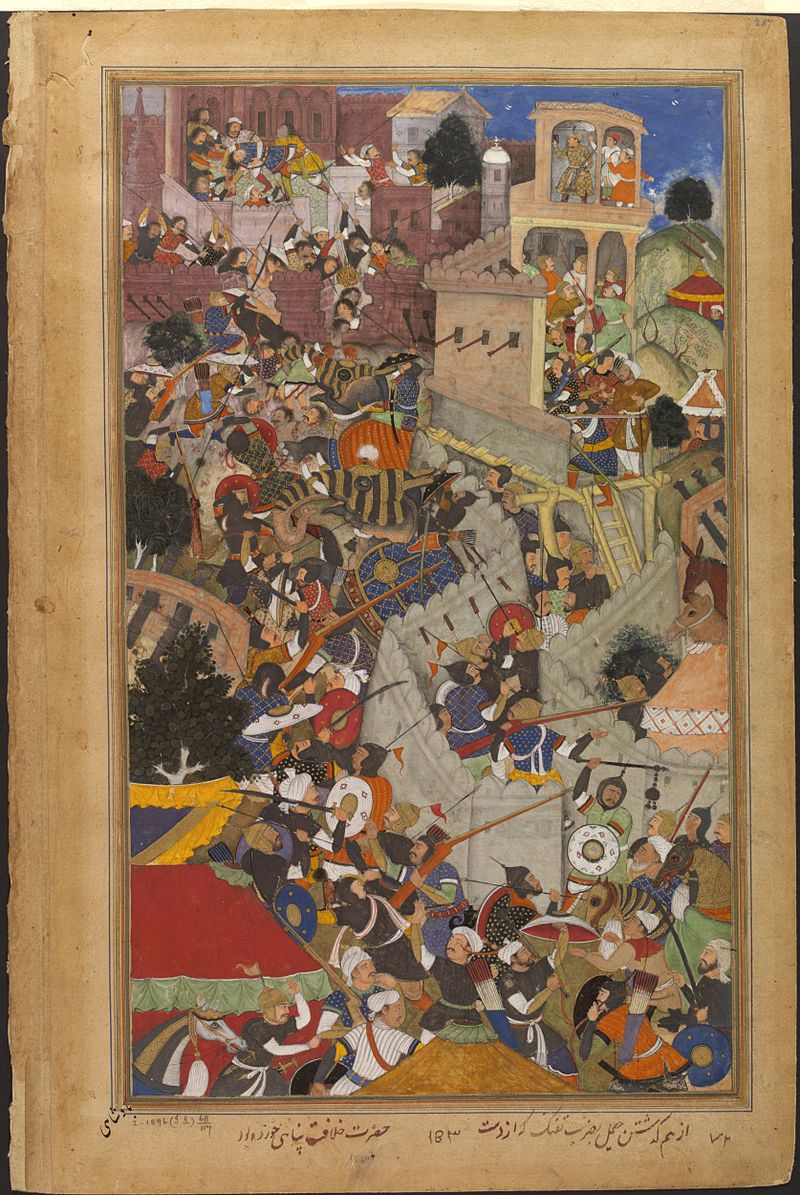
The ruler of Mewar, Rana Udai Singh, put up a great fight before losing Chittor, which was conquered by Akbar after a siege of six months.
Rana Udai Singh retreated to the hills. Yet his generals Jaimal and Patta carried on their fight. Finally, the generals, along with 30,000 Rajputs were killed. Out of admiration for the gallant Jaimal and Patta.
Akbar honored them by erecting statues to their memory outside the chief gate of the Agra fort. The capture of Chittor was followed by the surrender of Rajput states like Ranthambhor, Kalinjar, Bikaner, Jodhpur, and Jaisalmer.
After subordinating the regions of central India, Akbar turned his attention to Gujarat, a wealthy province renowned for its maritime commerce.
Akbar conquered Gujarat from Muzaffar Shah in 1573. Gujarat became a launchpad for the annexation of Deccan. After defeating Daud Khan, the Afghan ruler of Bihar and Bengal, both provinces were annexed to the Mughal empire in 1576.
Akbar defeated Mirza Hakim of Kabul with the help of Raja Man Singh and Bhagwan Das. His conquest of Kashmir (1586) and Sindh (1591) consolidated the empire in the northwest. After achieving the political integration of North India Akbar turned his attention to the Deccan.
Akbar’s forces had occupied Khandesh region in 1591.
In 1596 Berar was acquired from Chand Bibi, who, as the regent of her nephew Muzaffar Shah, the Nizam Shahi ruler of Ahmednagar, valiantly defended Ahmednagar against the Mughal forces of Akbar.
By 1600 parts of Ahmed Nagar had fallen into the hands of Mughal forces. Akbar fell sick in September 1604 and died on 27 October 1605.
Akbar took great efforts to win the goodwill of the Hindus. He abolished the Jizya (poll tax) on non-Muslims and the tax on Hindu pilgrims. The practice of Sati by Hindu widows was also abolished.
Marriage Alliance with Rajputs
The practice of making slaves of war prisoners was also discontinued. His conciliatory Rajput policy included matrimonial alliances with Rajput princely families and according to Rajput nobles high positions in the Mughal court.
A tolerant religious policy ensured the cultural and emotional integration of the people. Even before Akbar, many Muslim kings had married Rajput princesses. But Akbar with his broadminded nature was instrumental in these matrimonial alliances becoming a synthesizing force between two different cultures as he maintained close relations with the families.
Akbar had married Harkha Bhai (also referred to as Jodha in popular accounts), the daughter of Raja Bhar Mal (also known as Bihari Mal) of Amber. He also married the Rajput princesses of Bikaner and Jaisalmer. Prince Salim who was born of Harkha Bhai married the daughter of Raja Bhagwan Das. Raja Man Singh, son of Bhagwan Das, became the trusted general of Akbar.
Even the Rajputs who chose not to have any matrimonial alliances were bestowed great honors in Akbar’s court.
Rajputs Appointed as Officials
His Rajput policy secured the services of great warriors and administrators for the empire.
Raja Todar Mal is an expert in revenue affairs and rose to the position of Diwan. Birbal was a companion of Akbar. Mewar and Marwar were Rajput Kingdoms that defied the Mughal empire.
After the death of Rana Udai Singh, his son Rana Pratap Singh refused to acknowledge Akbar’s suzerainty and fought against the Mughals till his death in 1597.
The Battle of Haldighati in 1576 was the last battle between the Mughal forces and Rana Pratap Singh. In Marwar (Jodhpur), the ruler Chandra Sen, Son of Maldeo Rathore, resisted the Mughals tills his death in 1581, though his brother fought for the Mughals.
Udai Singh the brother of Chandra sen was made the ruler of Jodhpur by Akbar. Akbar’s capital was Agra in the beginning. Akbar’s capital was Fatehpur Sikri, where he build a new city. This city is deserted now but is a beautiful mosque and great Buland Darwaza and many other buildings.
Mughal rajput relations
The relationship between the Mughals and the Rajputs was complex and varied over time. Akbar, the third Mughal emperor, implemented a policy of tolerance towards the Hindu religion and sought to establish alliances with Rajput princely families through matrimonial alliances. This policy aimed at fostering cultural and emotional integration among the people.
Akbar himself married several Rajput princesses, including Harkha Bhai of Amber, as well as princesses from Bikaner and Jaisalmer. These marriages played a significant role in bringing together the Mughal and Rajput cultures. The Rajputs who did not opt for matrimonial alliances were also honored in Akbar’s court.
The Rajputs, in turn, were appointed to high positions in the Mughal administration. Notable examples include Raja Todar Mal, who became an expert in revenue affairs and rose to the position of Diwan, and Birbal, who was a trusted companion of Akbar.
However, it is important to note that not all Rajput kingdoms accepted Mughal suzerainty. Rana Pratap Singh of Mewar and Chandra Sen of Marwar (Jodhpur) both resisted the Mughal empire and fought against it. Despite these instances of resistance, the Mughals were able to secure the services of many Rajput warriors and administrators for their empire.
Akbar and rajputs
Akbar and the Rajputs had a complex relationship that evolved over time. Akbar, the third Mughal emperor, implemented a policy of tolerance towards the Hindu religion and sought to establish alliances with Rajput princely families. This was done through matrimonial alliances, where Akbar married several Rajput princesses, including Harkha Bhai of Amber, princesses from Bikaner, and Jaisalmer.
These marriages played a significant role in fostering cultural integration between the Mughals and the Rajputs. Akbar’s inclusive approach also extended to honoring Rajputs who chose not to have matrimonial alliances in his court. Additionally, Rajputs were appointed to high positions in the Mughal administration, such as Raja Todar Mal, who became an expert in revenue affairs and rose to the position of Diwan.
However, it is important to note that not all Rajput kingdoms accepted Mughal suzerainty. Rana Pratap Singh of Mewar and Chandra Sen of Marwar (Jodhpur) both resisted the Mughal empire and fought against it. These instances of resistance highlight the complexity of the relationship between the Mughals and the Rajputs.
Overall, the relationship between Akbar and the Rajputs was characterized by a combination of matrimonial alliances, diplomatic efforts, and occasional conflicts, reflecting the complex political dynamics of that period.
Rajput policy of mughals
The Rajput policy of the Mughals refers to the diplomatic and strategic approach adopted by the Mughal emperors towards Rajput princely states and their rulers. This policy aimed to consolidate Mughal rule and ensure the loyalty and cooperation of the Rajputs.
The Rajputs were known for their martial skills and valor, and the Mughals recognized the importance of incorporating them into their empire. The policy included several key elements:
Tolerance towards Hindu religion: The Mughal emperors, particularly Akbar, implemented a policy of religious tolerance towards the Hindus. They abolished the poll tax (Jizya) on non-Muslims and the tax on Hindu pilgrims. The practice of Sati by Hindu widows was also abolished. This policy aimed to win the goodwill of the Hindu population, including the Rajputs.
Matrimonial alliances: One of the key aspects of the Mughal Rajput policy was the establishment of matrimonial alliances with Rajput princely families. The Mughal emperors, especially Akbar, married Rajput princesses, which helped to create political and cultural ties between the Mughals and the Rajputs. These alliances were seen as a means to foster cultural integration and ensure the loyalty of the Rajputs to the Mughal empire.
Political and administrative appointments: The Mughals appointed Rajputs to high positions in the Mughal administration. This included positions such as revenue administrators (Diwans) and other important administrative roles. Notable Rajput nobles, such as Raja Todar Mal and Birbal, played significant roles in the Mughal court. These appointments aimed to utilize the administrative and military skills of the Rajputs for the benefit of the Mughal empire.
Recognition and honors: Even Rajputs who did not opt for matrimonial alliances with the Mughals were often bestowed with great honors and treated with respect in the Mughal court. This recognition was seen as a way to maintain friendly relations and ensure the support of the Rajput rulers.
However, it is important to note that not all Rajput kingdoms accepted Mughal suzerainty. Some Rajput rulers, such as Rana Pratap Singh of Mewar and Chandra Sen of Marwar (Jodhpur), resisted the Mughals.
Mughal rajput war
The Mughal-Rajput wars were a series of conflicts that took place between the Mughal Empire and various Rajput kingdoms during the Mughal era in India. These wars were characterized by political and territorial disputes, as well as clashes over control and authority.
The Mughal emperors sought to expand their empire and establish their suzerainty over the Rajput kingdoms, while the Rajputs, known for their fierce independence and valor, resisted Mughal domination.
One of the most significant conflicts was the Battle of Haldighati in 1576, which took place between the Mughal forces under the command of Raja Man Singh of Amber and the Rajput forces led by Rana Pratap Singh of Mewar. Although the Mughals emerged victorious in this battle, Rana Pratap Singh continued to resist Mughal rule and fought against them until his death in 1597.
Another notable conflict was the resistance put up by Chandra Sen, the ruler of Marwar (Jodhpur), against the Mughal empire. Despite the Mughals’ efforts to establish their authority, Chandra Sen fought against them until his death in 1581.
These instances of resistance by the Rajputs highlight their determination to maintain their independence and sovereignty. However, over time, some Rajput kingdoms, such as Jodhpur, eventually accepted Mughal suzerainty and entered into alliances with the empire.
The Mughal-Rajput wars were complex and varied in nature, and the outcomes differed from one conflict to another. Some Rajput rulers were able to maintain their independence, while others eventually submitted to Mughal authority. These conflicts played a significant role in shaping the political landscape of medieval India and contributed to the overall historical narrative of the Mughal era.
Conclusion
Overall, the relationship between the Mughals and the Rajputs was characterized by a combination of matrimonial alliances, diplomatic efforts, and occasional conflicts, reflecting the complexity of political dynamics during that period.
Akbar started as an orthodox Muslim and then he adopted an accommodative approach due to the influence of Sufism. He was keen to learn the doctrines of all religions and propagated the philosophy of Sulh-i-Kul, which means peace to all.
Badauni, a contemporary author, who did not like Akbar’s inter-religious interests, accused him of forsaking Islam.
Badauni
Akbar established a hall of worship called Ibadat Khana, where initially Muslim clerics gathered to discuss the issues related to spirituality.
Later he invited Christians, Zoroastrians, Hindus, Jains, and even atheists to discussions. In 1582, he discontinued the debates in the Ibadat Khana as it led to bitterness among different religions. However, he did not give up his attempt to know the Truth.
Akbar discussed personally with the leading lights of different religions like Purushotam and Devi (Hinduism), Meherji Rana (Zoroastrianism), the Portuguese Aquaviva, Monserrate (Christianity), and Hira Vijaya Suri (Jainism) to ascertain the Truth.
Because of the discussions, he felt that behind the multiplicity of names, there was but one God. The exact word used by Akbar and Badauni to illustrate the philosophy of Akbar is Tauhid-i-Ilahi namely Din Ilahi. Tauhid-i-Ilahi literally meant divine monotheism.
It can be considered a Sufistic order but not a new religion. He had become a Pir (Sufi Guru) who enrolled Murids (Sufi disciples) who would follow a set pattern of rules ascribed by the Guru. Thousands of disciples enrolled as his disciples.
Akbar’s intention was to establish a state based on the concept of secular principles, equal tolerance, and respect for all sections irrespective of their religious beliefs. He set up a big translation department for translating works in Sanskrit, Arabic, Greek, etc, into Persian.
The Ramayana, Mahabharata, the Atharva Veda, the Bible, and the Quran were translated into Persian. The Din Ilahi ceased to exist after Akbar.
Akbar possessed a system and centralized system of administration. He introduced the Mansabdari system. In the Mansabdar system, the nobles, civil and military officials combined into one single service with each other and received the title of Mansabdar.
The Mansabdar rank was divided into Zat and Sawar. The Zat determined the number of soldiers each Mansabdar received that ranges from 10 to 10,000.
The Sawar determined the number of horses under a Mansabdar. Every officer could rise from the lowest to the highest ranks.
The promotions and demotion were done by the addition or reduction of Mansabs. The Mansabdari system of Akbar has a diversified ethnic base. Before the introduction of the Mansabdari system, Central Asians or Persians were exclusively Nobles.
But after the introduction of the Mansabdari system, the nobles were also Rajputs and Indian Muslims called Shaikhzadas. The Mansabdar salary was fixed in cash but was paid by assigning him a Jagir. Jagir is money from an estate assigned to the Mansabdar, where he gets money from those estates as salary.
This was subjected to regular transfer. The rank of Mansabdar was not hereditary and returned to the state after his death.
FAQ
Mansabdari System
It is a military unit within the administrative system of the empire. This system was introduced by Akbar. The system is the rank and status of the empire’s official and military generals. The Mughals administrative system had at its apex.
Mansabdari System is a system that is military combined with bureaucratic apparatus that was responsible for looking after the civil and military affairs of the state. Some of the Mansabdars were paid in cash called Naqdi. But most of them were paid in Jagirs. They were also transferred periodically.
All the holders of government offices held ranks called Mansabs. It comprises two numerical designations. One is Zat, which was an indicator of position, in the imperial hierarchy.
The salary of the official or Mansabdar, and Sawar, indicated the number of horsemen he was required to maintain in service.
And during 17th century, Mansabdars of 1000 Jats or above were ranked as Nobles such as Umara
Humayun, a cultured and learned person, was not a soldier like his father. He was faced with the problems of a weak financial system and .
Bahadur Shah, the ruler of Gujarat, also posed a great threat. Humayun’s brother Kamran who was in charge of Kabul and Kandahar extended his authority up to Punjab. Humayun remembering the promise he had made to his father on the eve of his death that he would treat his brothers kindly, agreed to Kamran’s suzerainty over Punjab to avoid a civil war.
The growth of Afghan power in the regions around Bihar and Uttar Pradesh under the leadership of Sher Khan (later Sher Shah) made Humayun initiate action. Defeating the Afghans at Daurah in 1532 Humayun besieged the powerful fort of Chunar.
After a period of four months, Humayun, believing the word of Sher Shah that he would be loyal to the Mughals, withdrew the siege. This turned out to be a great mistake.
Humayun spent the succeeding years of his life constructing a new city in Delhi, Dinpanah, while his enemies were strengthening themselves.
Realizing the ensuing danger from Bahadur Shah who had annexed Rajasthan and instigated and provided refuge to all anti-Mughal elements, Humayan marched against him. He captured Gujarat and Malwa and left them under the control of his brother Askari.
Unable to put down the rebellions of the Gujarati people, Askari decided to proceed to Agra. This alarmed Humayun stationed at Mandu, for he was afraid that Askari would take Agra for himself.
Hence, abandoning Gujarat and Malwa Humayun pursued his brother. Both the brothers reconciled after a meeting at Rajasthan.
When Humayun was deeply engrossed in the affairs of Bahadur Shah, Sher Khan had strengthened himself by defeating the ruler of Bengal. Sher Khan captured the fort of Rohtas and Bengal.
After capturing Chunar Humayun marched to Bengal to confront Sher Khan. When Humayun reached Gaur or Gauda he received information on the rebellion of Hindal, his younger brother. Humayun proceeded to Agra to quell the rebellion.
Sher Khan who had been quiet all this time started attacking the army of Humayun. When Humayun reached Chausa with great difficulty there was a full-fledged battle.
Achievements of humayun By LACMA – https://collections.lacma.org/node/172754, Public Domain, https://commons.wikimedia.org/w/index.php?curid=7908166
Battle of Chausa (1539)
The Battle of Chausa was won by Sher Khan.
Humanyun was defeated.
His 7000 Men were killed.
Humayun himself had to run for his life by swimming across the Ganga.
Humayun who had arrived at Agra assembled his army with the support of his brothers Askari and Hindal to counter Sher Khan.
The final encounter took place at Kanauj.
Battle of Kanauj (1540)
This battle was won by Sher Khan and Humayun’s army was completely routed, and he became a prince without a kingdom.
Sher Shah and Sur Dynasty
From the time Humayun abandoned the throne in the Battle of Kanauj to his regaining of power in 1555 Delhi was ruled by Sher Shah of the Sur Dynasty. Born in the family of a Jagirdar and named Farid, he received the title of Sher Khan after killing a tiger (sher in Hindi).
When he ascended the throne, he was called Sher Shah. Through his ability and efficiency, he emerged as the chief of Afghans in India. His military capability and diplomacy made him victorious over Humayun and many other Rajput rulers.
Malwa fell without a fight. Rana Uday Singh of Mewar surrendered without resistance. Sher Shah’s next venture to capture Kalinjar failed as a gunshot caused his death in 1545.
Sher Shah was succeeded by his second son Islam Shah who ruled till 1553. His death at a young age led to a state of confusion about succession. Humayun used this opportunity to regain Delhi and Agra from the Sur rulers.
Sher Shah’s Reforms
When Sher Shah was pursuing Humayun, he had left Khizr Khan as the Governor of Bengal. Khizr Khan married the daughter of the former ruler of Bengal, Sultan Mahmud, and started behaving like a king.
On his return, Sher Shah ordered him to be put in chains. As one familiar with the problem of provincial insubordination, he thought that the real solution to the problem would be to set up a strong administrative system.
So he made his government highly centralized. The local administrative structure of the Delhi Sultanate was followed with certain changes. The village headmen who were made responsible for the goods stolen within the area under their control became vigilant.
The welfare of the peasants was a prime concern. When the peasant is ruined, Sher Shah believed, the king is ruined. Sher Shah took great care that the movements of the army did not damage crops.
He followed a flexible revenue system. The land was surveyed and revenue settled according to the fertility of the soil. In some areas, the jagirdari and zamindari systems were allowed to continue.
In yet other places he arranged to collect only a portion of the gross produce. Sher Shah showed the same concern while dealing with traders. In order to encourage trade, he simplified trade imposts, collecting taxes only at the point of entry and the point of sale.
The standardization of the metal content of gold, silver, and copper coins also facilitated trade. His currency system continued through the entire Mughal period and became the basis of the coinage under the British.
For the enhancement of trade and commerce, Sher Shah maintained a robust highway system by repairing old roads and laying down new roads. Apart from repairing the Grand Trunk road from the Indus in the west to Sonargaon in Bengal, he also built a road connecting Gujarat’s seaports with Agra and Jodhpur.
A road was laid connecting Lahore with Multan. The highways were endowed with a large network of sarais, rest houses, where the traders were provided with food and accommodation, ensuring brisk commerce.
Some of the sarais constructed by Sher Shah still survive. This sarais also ensured the growth of towns in their vicinity. Sher Shah practiced charity on a large scale.
He gave stipends from the treasury to destitute people. Sher Shah was an orthodox and devout Sunni.
He is said to have dispensed justice without bias, punishing the oppressors even if they were nobles or his relatives. Through stern punishments to rebellious zamindars and nobles and to thieves and robbers, he ensured effective maintenance of law and order in the empire.
The fiscal administration for which Akbar and Todar Mal have been so highly praised was largely based on the methods of Sher Shah. During his short rule, Sher Shah did not have much time for building new cities and palaces.
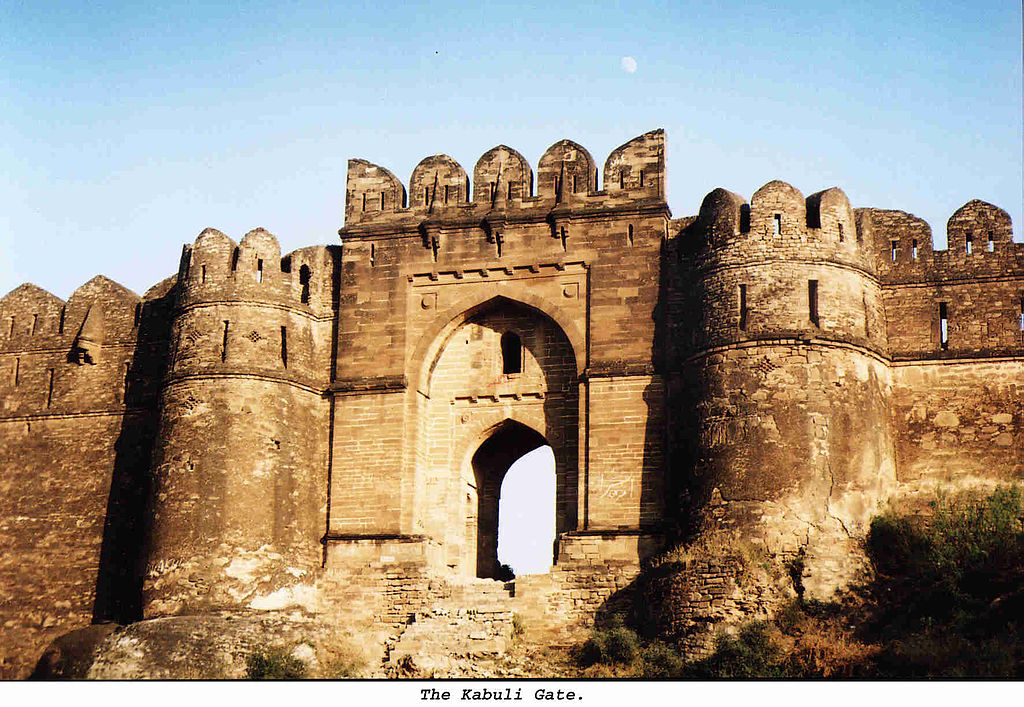
Raja Todal Mal – ally of Sher Shar Suri constructed the Rohtas Fort to check Humayun By Omar mukhtar – http://en.wikipedia.org/wiki/File:Rohtas_Fort_Magnificent_Kabuli_Gate.jpg, CC BY-SA 3.0, https://commons.wikimedia.org/w/index.php?curid=10561813
He started building a new walled city in Delhi, which later came to be known as Purana Qila (Old Fort). He built his own mausoleum in Sasaram.
Jagirdari
It is a land tenure system developed during the Delhi Sultanate. Under the system, the collection of the revenue of an estate and the power of governing it were bestowed upon an official of the state.
Zamindari
The term refers to another land tenure system. The word zamindar means landowner in Persian. In Mughal times the zamindars were drawn from the class of nobles.
Akbar granted land to the nobles as well as to the descendants of old ruling families and allowed them to enjoy it hereditarily. Zamindars collected revenue from the tenants and cultivators and remitted a fixed amount to the state.
Humayun’s Return from Exile
After Sher Shah’s death in 1545, his weak successors ruled for ten years. Humayun, who had fled after his defeat at Kanauj, had taken asylum in Persia. Humayun then went to Afghanistan with Persian troops.
He succeeded in capturing Kandahar and Kabul. But his brother Kamran did not allow him to hold them in peace. The struggle between the brothers intensified, and yet in the end Kamran had to seek a compromise with Humayun.
Meanwhile, the Sur empire had fragmented, and so Humayun’s invasion became easy. The Afghan forces in Punjab, on the approach of Mughals, began to flee.
Humayun became the Emperor once again. He died very soon after regaining Delhi when he slipped down the stairs of the library in the fort at Delhi.
In the colorful words of Lane Poole, “Humayun stumbled out of his life, as he has stumbled through it.”
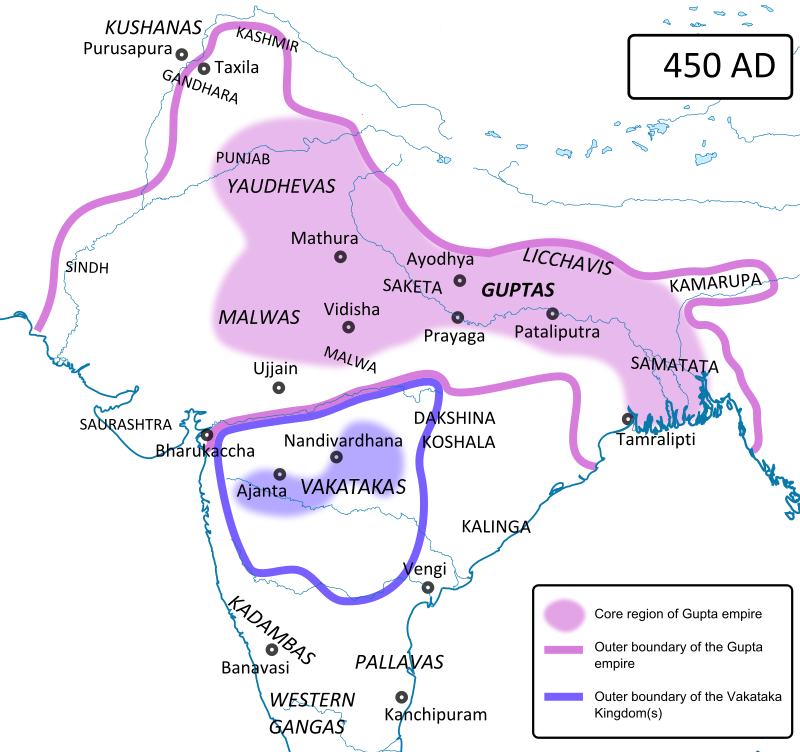
In the Gupta’s administrative system, the political hierarchies are identified by the their adopted titles.
The kings had such as:
Maharajadhiraja
Parama-Bhattaraka
Parameshvara
They also connected their titles with deities such Parama-Daivata meaning foremost worshipper of gods and Parama-Bhagavata meaning foremost worshipper of Vasudeva Krishna.
Some kings even had divine status such as Samudragupta who was compared to Purusha (Supreme Being).
Ministers and Officials
In the Administration of Gupta empire the seal and inscription are mentioned the official ranks and designations.
Kumaramatya – A High ranking officer connected with Adikarana, an office of his own.
Amatya and Kumaramatya – Equivalent to princes of royal blood. Kumaramatya is connected to King, Prince, revenue department, and province.
Kumaramatya also been in charge of the maintenance of the holy crowning tank of the Lichchavis.
Example of Kumaramatya are Harisena, who was the composer of Allahabad Prashasti.
The Guptas were assisted Ministers known as Mantrins. An Assembly or council is known as Sabha. The Minister for peace and war, Sandhivigrahika or Mahasandhivigrahika held various high ranks.
Dandanayakas and Mahadandanayakas were highly ranked judicial or military officers. Example: Agnigupta, mentioned in one of the seals.
Most of the post was Hereditary, Allahabad Prashasti mentions three Mahadandanayakas.
The Guptas period made great progress in the field of art, culture, and architecture. Some people called the Gupta empire architecture a golden age and period of renaissance.
Both Nagara and Dravidian styles of architecture evolved during this period and most of the architecture was destroyed during the Huns.
Temple at Deogarh near Jhansi and temple sculpture at Garhwal near Allahabad are important remains of Gupta Architecture and had no influence on the Gandhara style.
Standing Buddha at Mathura has Greek style. Skandagupta’s Bhitari monolithic pillar is also a great example. Metallurgy has great progress during the Gupta period, an example was casting metal statues and pillars.
The copper statue of Buddha found at Sultanganj now in Birmingham museum is nearly half a ton and seven and a half feet in height.
Delhi Iron pillar is an excellent example of scientific advancement during the Gupta period at it is still not affected by rust.
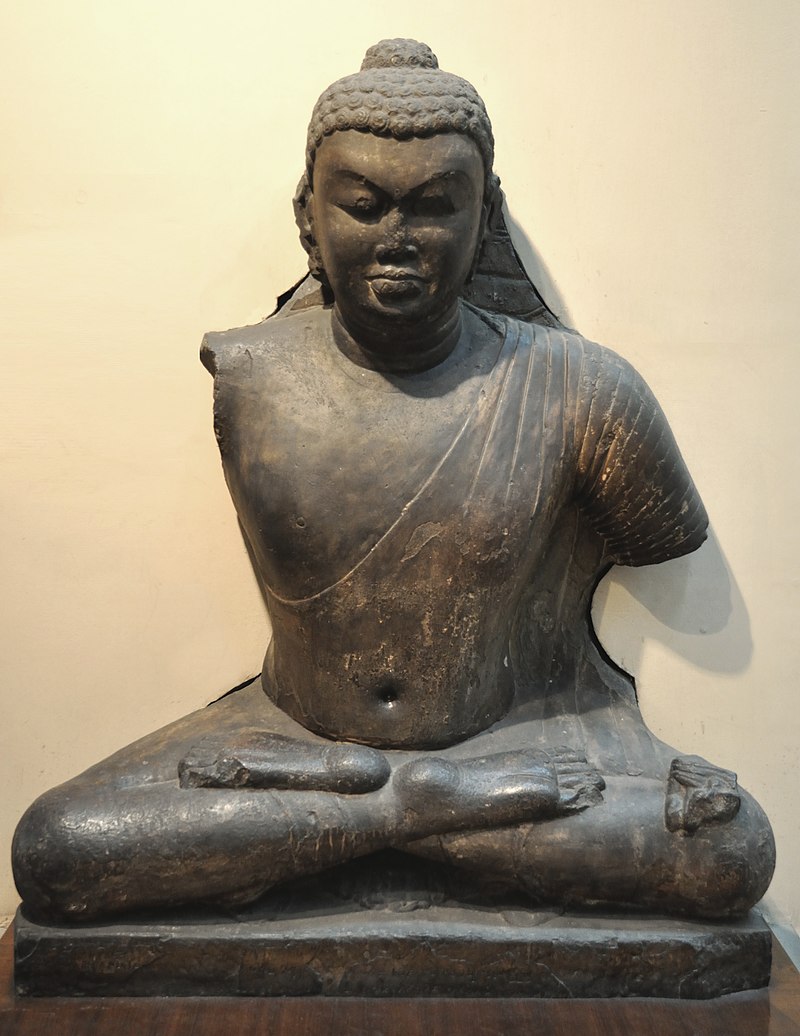
Buddha statue from Gupta Period By Biswarup Ganguly – This file has been extracted from another file: Bodhisattva – Kushana Gupta – 385 AD – Bodhgaya – Bihar – Indian Museum – Kolkata 2012-11-16 1967.JPG, CC BY 3.0, https://commons.wikimedia.org/w/index.php?curid=84442972
Bhitari monolithic pillar
It is located in Bhitari, Saidpur, Ghazipur in Uttar Pradesh and it dates to Empire Skandagupta around 455 -467 AD.
It was emperor Ashoka who erected this pillar. The inscriptions in the Bitari pillar suggest that Skandagupta restored the Gupta power by defeating the foreign invaders.
Golden age gupta empire paintings
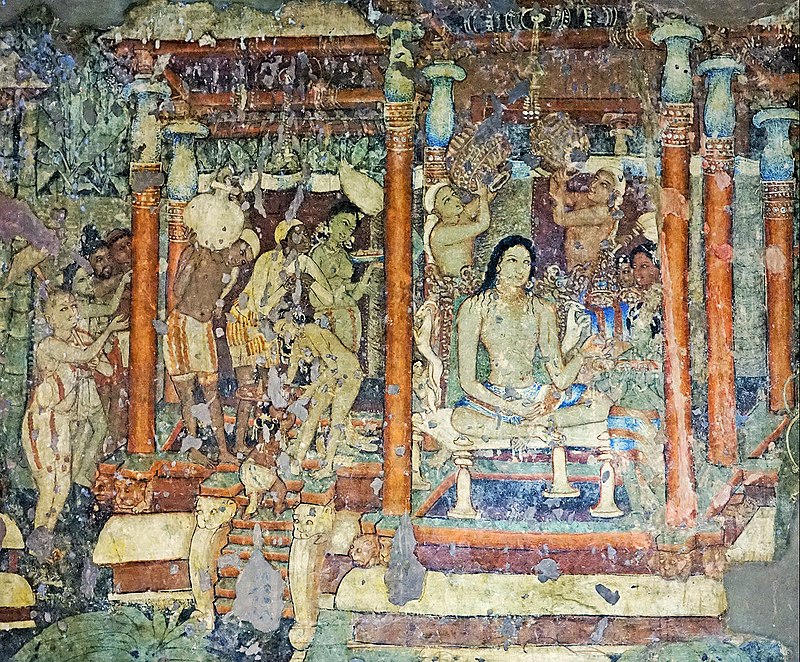
Paintings of the Guptas period were found at Bagh caves near Gwalior. The mural painting of Ajanta illustrates the Jataka stories of Buddha.
Sigiriya paintings of Sri Lanka were influenced by the Mural painting of Ajanta.
Samudraguptas issued eight types of Gold coins and Chandragupta II and his successor also issued different varieties of gold, copper, and silver coins.
Rock Cut and Structural Temples
There are changes in the ornamentation of the facade and in the designs of pillars and the interiors. The most important ones are rock-cut caves at Ajanta, Ellora (Maharashtra), and Bagh Caves (Madhya Pradesh). Also Udayagiri caves (Orissa).
The structural temples have the following characteristics:
Flat roofed square temple with a vimana (second storey)
Flat roofed square temple
Square temple with a curvilinear tower (shikara)
rectangular temple
circular temple
Stupa
The stupas were built in large numbers. The best on are Samat at Uttar Pradesh, Ratnagiri at Orissa, and Mirpur Khas at Sind.
Sculpture
A number of good stone structures such well known erect of Buddha from Sarnath, puranic images such as the great Boar (Varaha) at the entrance of the cave at Udayagiri.
Metal Statues
The casting metal statues technology was practiced on a large scale by the craftsmen during the Gupta era. Examples are:
a copper image of Buddha about 18 feet high at Nalanda in Bihar.
Sultanganj Buddha of seven and a half feet height.
Painting
Painting is more in demand than stone sculpture during the Gupta period. The Mural painting of this period is found at Ajanta, Bagh, Badami, and other places.
The surfaces of these paintings were done in a very simple way and the mural painting of Ajanta are not true frescoes. The frescoes are painted while the plaster is still damp. The murals of Ajanta were made after the plaster is set.
The art of Ajanta and Bagh shows the Madhyadesa school of painting at its best.
Terracotta and Pottery
Clay figurines were used both for religious and secular purposes. Some of the figurines are Vishnu, Karttikeya, Durga, Naga, and other gods and goddesses.
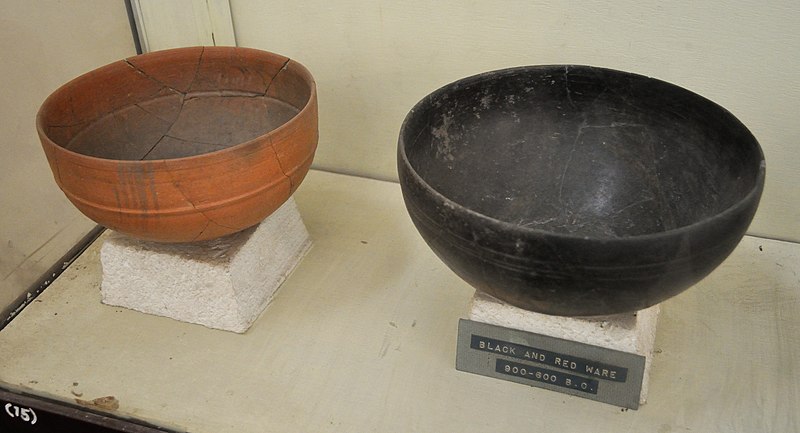
These pottery remains were found at Ahchichhatra, Rajgarh, Hastinapur, and Bashar which are great examples of excellent pottery. The most important class of pottery during the Gupta period is “Red Ware”.
Red Ware Pottery By Biswarup Ganguly, CC BY 3.0, https://commons.wikimedia.org/w/index.php?curid=30364725
Sanskrit Literature
The Guptas made Sanskrit the official language and their inscriptions were written in it. This Gupta period also saw the last phase of the Smriti literature.
Smritis
These are religious texts that covers wide range of subjects such as ethics, politics, culture and art. Dharmasastras and puranas forms this core of the body of the literature.
Sanskrit Grammar
This period also saw the growth of Sanskrit Grammar. Panini wrote Astadhyayi and Patanjali wrote Mahabhashya, both were Sanskrit grammar works.
The Gupta period was also memorable for the compilation of the Amarakosa which is a thesaurus in Sanskrit which was written by Amarasimha.
Chandragomia, a Buddhist scholar from Bengal composed a book on Sanskrit grammar called Chandravyakaranam.
Puranas and Ithihasas
Puranas which we knew today was during this time by the Brahmins. They were originally composed by bards/professional storytellers having priestly hands and then they were rewritten in classical Sanskrit.
The details on Hindu sects, rites, and customs were added to these documents to make them religious. The Mahabharata and the Ramayana got their final shape which we have today, are the work done during this period.
The 18 Major Puranas are:
Brahma Purana
Padma Purana
Vishnu Purana
Skanda Purana
Shiva Maha Purana
Markendeya Purana
Agni Purana
Bhavishya Purana
Matsya Purana
Shrimad Bhagavat Purana
Buddhist Literature during Guptas
Arya Deva and Arya Asanga were the most notable writers. The first regular Buddhist work on logic was written by Vasubandhu. Vasubandhu’s disciple, Dignaga also did several works on Literature.
Jaina Literature during Guptas
Vimala produced a Jaina version of Ramayana and Siddasena Divakara laid the foundation of logic among the Jainas.
Secular Literature
Samudragupta is also known as Kaviraja, this title is established by himself. His court is had celebrated Navaratnas like Kalidasa, Amarasimha, Visakadatta and Dhanvantri.
The dramas written by Kalidasa are Sakunthalam, Malavikagnimitram, and Vikramaurvashiyam. The works of Sudraka are Mrichchhakatika, works of Visakhadatta are Mudraraksasa and Devichandraguptam.
During this period the elite spoke in Sanskrit and the common people spoke Prakrit.
Prakrit Language and Literature
This period witnessed the evolution of many Prakrit forms such as Suraseni used in Mathura and its vicinity, Ardh Magadhi spoken in Awadh, Bundelkhand, and Magadhi, which is in modern Bihar.
Conclusion
In this, we have discussed the Art, Literature, and Architecture during the period of Gupta rule. Also, art and culture were glorified during their reign. This post is useful for Upsc, Tnpsc, SSC, and other government exams.
* * All the Notes in this blog, are referred from Tamil Nadu State Board Books and Samacheer Kalvi Books. Kindly check with the original Tamil Nadu state board books and Ncert Books.