Early Revolts against British rule in Tamil Nadu Tnpsc Notes

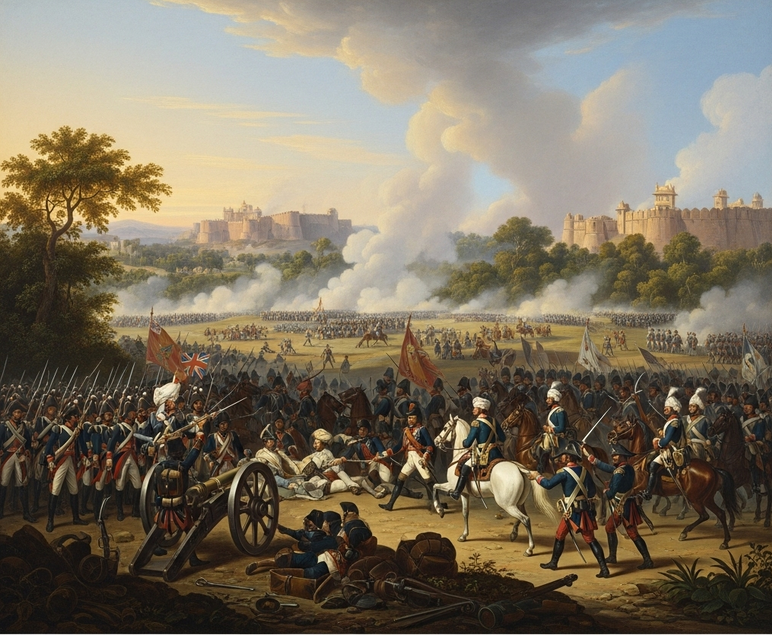
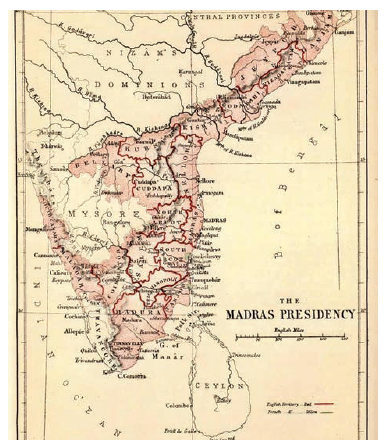
The East India Company started to consolidate and extend its power in India after defeating the French and their Indian allies in three Carnatic Wars. But the local kings and chieftains resisted. The first resistance to East India Company came from Puli Thevar of Nerkattumseval in Tirunelveli.

Followed by Velunachiyar, Veerapandiya Kattabomman, Marudhu Brothers, and Dheeran Chinnamalai. Commonly referred to as Palayakarar Wars, the highest war in Tamil Region is the Vellore Revolt of 1806. These are some of the examples of early uprisings against British Rule.

Resistance of Regional Powers against the British

(a) Palayams and Palayakkarars

“Palayam” means Military Camp or little kingdom. Britishers referred Palayakkarars as Poligars. Under this system, Palayam was given to any individual for his valuable military service. This system was practiced under the rule of Prataba Rudhra of Warangal in the Kakatiya Kingdom.

This system was practiced in Tamil Region by Viswanatha Nayaka, Nayak of Madurai in 1529, under the support of his minister Ariyanathar. Traditionally there used to be 72 Palayakkarars. The Palayakkarars were free to collect the taxes, administer the territory assigned to them, settle disputes between the parties, and maintain law and order.

Palayakkarars, police duties were called Padikaval or Arasu Kaval. Several times the Palayakarars helped Nayak rule to restore kingdoms to them. The relationship between the king and Palayakkarars made this system last for about two hundred years from Nayaks of Madurai till British rule.

There were Eastern and Western Palayams. The eastern Palayams were Sattur, Nagalapuram, Ettayapuram and Panchalamkurichi. The western Palayams were Uthumalai, Thalavankottai, Naduvakurichi, Singampatti, Seithur.

Palayakarar influenced Tamil Regional politics in the 17th and 18th centuries. They operated as Independent sovereign authorities with their Palayams.

Revenue Collection Authority to the Company Rule

The Nawab of Arcot had borrowed money from the East India Company for Carnatic Wars. When his debts exceeded his capacity to repay, the land revenue collection dues from the southern Palayakarar were given to the East India Company.

Many Palayakkarars refused to pay taxes to the company officials. The company branded the defiant Palayakarar as rebels and accused them of disturbing the peace of the country. This led to conflict between the East India Company.

Palayakkarars’ Revolt 1755-1801

(a) Revolt of Puli Thevar 1755–1767

 Mahfuzkhan (brother of the Nawab of Arcot) was sent with a contingent of the company army under Colonel Heron to Tirunelveli in march 1755. Madurai fell into their hands. Then colonel Heron urged to deal with Puli Thevar.

Puli Thevar had much influence over the western palyamkkarars. For want of cannon and of supplies and pay to soldiers, Colonel Heron abandoned the plan and retired to Madurai. Heron was recalled and dismissed from service.

Confederacy and Alliance with Enemies of the Britishf

Three Pathan officers, Nawab Chanda Sahib’s agents, named Mianah, Mudimiah, and Nabikhan Kattak commanded the Madurai and Tirunelveli regions. They supported the Tamil playakkarars against Arcot Nawab Mohamed Ali. Puli Thevar had established close relationships with them.

Puli Thevar also formed a confederacy of the Palayakkars to fight the British. With the exception of the Palayakkarars of Sivagiri, all other Maravar Palayams supported him. Ettayapuram and Panchalamkurichi also did not join this confederacy.

Further, the English succeeded in getting the support of the rajas of Ramanathapuram and Pudukottai. Puli Thevar tried to get the support of Hyder Ali of Mysore and the French. Hyder Ali could not help Puli Thevar as he was already locked in a serious conflict with the Marathas.

Kalakadu Battle

The Nawab sent an additional contingent of sepoys to Mahfuzkhan and the reinforced army proceeded to Tirunelveli. Besides the 1000 sepoys of the Company, Mahfuzkhan received 600 more sent by the Nawab. He also had the support of cavalry and foot soldiers from the Carnatic.

Before Mahfuzkhan could station his troops near Kalakadu, 2000 soldiers from Travancore joined the forces of Puli Thevar. In the battle at Kalakadu, Mahfuzkhan’s troops were routed.

Yusuf Khan and Puli Thevar

The organized resistance of the palayakkarars under Puli Thevar gave an opportunity to the English to interfere directly in the affairs of Tirunelveli. Aided by the Raja of Travancore, from 1756 to 1763, the palyakkarars of Tirunelveli led by Puli Thevar were in a constant state of rebellion against the Nawab’s authority.

Yusuf Khan (also known as Khan Sahib or, before his conversion to Islam, Marudhanayagam) who had been sent by the Company was not prepared to attack Puli Thevar unless the big guns and ammunition from Tiruchirappalli arrived.

As the English were at war with the French, as well as with Hyder Ali and Marathas, the artillery arrived only in September 1760. Yusuf Khan began to batter the Nerkattumseval fort and this attack continued for about two months.

On 16 May 1761 Puli Thevar’s three major forts (Nerkattumseval, Vasudevanallur and Panayur) came under the control of Yusuf Khan. In the meantime, after taking Pondicherry the English had eliminated the French from the picture.

As a result of this, the unity of palyakkarars began to break up as French support was not forthcoming. Travancore, Seithur, Uthumalai, and Surandai switched their loyalty to the opposite camp. Yusuf Khan who was negotiating with the palayakkarars, without informing the Company administration, was charged with treachery and hanged in 1764.

Fall of Puli Thevar

After the death of Khan Sahib, Puli Thevar returned from exile and recaptured Nerkattumseval in 1764. However, he was defeated by Captain Campbell in 1767. Puli Thevar escaped and died in exile.

Ondiveeran

Ondiveeran led one of the army units of Puli Thevar. Fighting by the side of Puli Thevar, he caused much damage to the Company’s army. According to oral tradition, in one battle, Ondiveeran’s hand was chopped off and Puli Thevar was saddened.

But Ondiveeran said it was a reward for his penetration into the enemy’s fort causing many heads to roll.

(b) Velunachiyar (1730–1796)

Gopala Nayak, the Palayakkarar of Virupachi. Gopala Nayak spearheaded the famous Dindigul League, which was formed with Lakshmi Nayak of Manaparai and Poojai Nayak of Devadanapatti. He drew inspiration from Tipu Sultan who sent a deputation to show his camaraderie.

He led the resistance against the British from Coimbatore and later joined Oomaidurai, Kattabomman’s brother. He put up a fierce fight at Aanamalai hills where the local peasants gave him full support. But Gopala Nayak was overpowered by the British forces in 1801.

(c) Rebellion of Veerapandya Kattabomman 1790-1799

Veerapandya Kattabomman became the Palayakkarar of Panchalamkurichi at the age of thirty on the death of his father, Jagavira Pandya Kattabomman. The Company’s administrators, James London and Colin Jackson had considered him a man of peaceful disposition. However, soon several events led to conflicts between Veerapandya Kattabomman and the East India Company.

The Nawab, under the provisions of a treaty signed in 1781, had assigned the revenue of the Carnatic to the Company to be entirely under their management and control during the war with Mysore Sultan. One-sixth of the revenue was to be allowed to meet the expenses of Nawab and his family.

The Company had thus gained the right to collect taxes from Panchalamkurichi. The Company appointed its Collectors to collect taxes from all the palayams. The Collectors humiliated the palayakkarars and adopted force to collect the taxes. This was the bone of contention between the English and Kattabomman.

Confrontation with Jackson

The land revenue arrear from Kattabomman was 3310 pagodas in1798. Collector Jackson, an arrogant English officer, wanted to send an army to collect the revenue dues but the Madras Government did not give him permission. On 18 August 1798, he ordered Kattabomman to meet him in Ramanathapuram.

But Kattbomman’s attempts to meet him in between proved futile, as Jackson refused to give him audience both in Courtallam and Srivilliputhur. At last, an interview was granted and Kattabomman met Jackson in Ramanathapuram on 19 September 1798.

It is said that Kattabomman had to stand for three hours before the haughty Collector Jackson. Sensing danger, Kattabomman tried to escape, along with his minister Sivasubramanianar. Oomaithurai suddenly entered the fort with his men and helped the escape of Kattabomman.

At the gate of the Ramanathapuram fort, there was a clash, in which some people including Lieutenant Clarke were killed. Sivasubramanianar was taken, prisoner.

Appearance before Madras Council

On his return to Panchalamkurichi, Kattabomman represented to the Madras Council about how he was ill-treated by the collector Jackson. The Council asked Kattabomman to appear before a committee with William Brown, William Oram and John Casamajor as members.

Meanwhile, Governor Edward Clive ordered the release of Sivasubramanianar and the suspension of the Collector Jackson. Kattabomman appeared before the Committee that sat on 15 December 1798 and reported on what transpired in Ramanathapuram.

The Committee found Kattabomman was not guilty. Jackson was dismissed from service and a new Collector S.R. Lushington appointed. Kattabomman cleared almost all the revenue arrears leaving only a balance of 1080 pagodas.

Kattabomman and the Confederacy of Palayakkarars

In the meantime, Marudhu Pandiyar of Sivagangai formed the South Indian Confederacy of rebels against the British, with the neighboring palayakkars like Gopala Nayak of Dindigul and Yadul Nayak of Aanamalai. Marudhu Pandiyar acted as its leader.

The Tiruchirappalli Proclamation had been made. Kattabomman was interested in this confederacy. Collector Lushington prevented Kattabomman from meeting the Marudhu Brothers. But Marudhu Brothers and Kattabomman jointly decided on a confrontation with the English.

Kattabomman tried to influence Sivagiri Palayakkarars, who refused to join. Kattabomman advanced towards Sivagiri. But the Palayakkarars of Sivagiri was a tributary to the Company. So the Company considered the expedition of Kattabomman as a challenge to their authority. The Company ordered the army to march on to Tirunelveli.

The Siege of Panchalamkurichi

In May 1799, Lord Wellesley issued orders from Madras for the advance of forces from Tiruchirappalli, Thanjavur, and Madurai to Tirunelveli. Major Bannerman commanded the troops. The Travancore troops too joined the British. On 1 September 1799, an ultimatum was served on Kattabomman to surrender.

Kattabomman’s “evasive reply” prompted Bannerman to attack his fort. Bannerman moved his entire army to Panchalamkurichi on 5 September. They cut off all the communications to the fort. Bannerman deputed Ramalinganar to convey a message asking Kattabomman to surrender.

Kattabomman refused. Ramalinganar gathered all the secrets of the Fort, and on the basis of his report, Bannerman decided the strategy of the operation. In a clash at Kallarpatti, Sivasubramanianar was taken, prisoner.

Execution of Kattabomman

Kattabomman escaped to Pudukottai. The British put a price on his head. Betrayed by the rajas of Ettayapuram and Pudukottai Kattabomman was finally captured. Sivasubramanianar was executed at Nagalapuram on 13 September.

Bannerman made a mockery of a trial for Kattabomman in front of the palayakarars on 16 October. During the trial, Kattabomman bravely admitted all the charges leveled against him. Kattabomman was hanged from a tamarind tree in the old fort of Kayathar, close to Tirunelveli, in front of the fellow Palayakkars.

Thus ended the life of the celebrated Palayakkarars of Panchalamkurichi. Many folk ballads on Kattabomman helped keep his memory alive among the people.

(d) The Marudhu Brothers

Periya Marudhu or Vella Marudhu (1748–1801) and his younger brother Chinna Marudhu (1753-1801) were able generals of Muthu Vadugar of Sivagangai. After Muthu Vadugar’s death in the Kalaiyar Kovil battle, the Marudhu brothers assisted in restoring the throne to Velunachiyar.

In the last years of the eighteenth-century Marudhu Brothers organized resistance against the British. After the death of Kattabomman, they worked along with his brother Oomathurai. They plundered the granaries of the Nawab and caused damage and destruction to Company troops.

Second palayakarar war

The second palayakarar war was referred to by British records done by Marudu Brothers (1800-1801). After defeating Kattabomman in 1799, revolt once again broke out in 1800. This rebellion was directed Marudhu Pandiyan of Sivagangai, Gopala Nayak of Dindugal, Kerala Verma of Malabar, and Krishnaappa Nayak Dhoondaji of Mysore.

This combination met at Virupachi in April 1800 and decided to organize a revolt against the company. This revolt initially broke out in Coimbatore in June 1800 and soon spread to Madurai and Ramanathapuram. Then the company declares war against Krishnappa Nayak of Mysore, Kerala Verma, and others.

Palayakars of coimbatore, Sathyamangalam and Tarapuram were hanged. Then two brothers of Kattabomman, Oomathurai and Sevathaiah escaped from Palayamkottai jail in February 1801. They went to Kamudhi from where Chinna Marudhu took them to Siruvayal his capital.

Then Panchalamkurichi fort was constructed. Colin Macaulay and his troops captured the fort in April and the Marudhu brothers went to Sivagangai. English asked Oomathurai and Sevathaiah from Marudhu Pandyas. But they refused.

Colonel Agnew and Colonel Innes marched into Sivagangai. Then in June 1801, Maruthu Pandyas issued the Proclamation of Independence called the Tiruchirappalli Proclamation.

Tiruchirappalli proclamation of 1801

Tiruchirappalli’s proclamation of 1801 was an early call to unite all Indians against the British. Proclamation of 1801 was pasted on the walls of the Nawab’s palace in Tiruchirappalli fort and temple walls of Srirangam.

Chinna Maruthu made 20,000 men fight against the English. English forces rushed from Bengal, Ceylon, and Malaya and the raja of Pudukkottai, Ettayapuram, and Thanjavur stood by the British. Palayakkarars were separated by the British divide and rule policy.

Fall of Sivagangai

In May 1801, the English attacked the rebels in Thanjavur and Tiruchirappalli. The rebels went to Piranmalai and Kalayarkoil. They were again defeated by the forces of the English. In the end, the superior military strength and the able commanders of the English Company prevailed.

The rebellion failed and Sivagangai was annexed in 1801. The Marudhu brothers were executed in the Fort of Tirupathur near Ramanathapuram on 24 October 1801. Oomathurai and Sevathaiah were captured and beheaded at Panchalamkurichi on 16 November 1801.

Seventy-three rebels were exiled to Penang in Malaya. Though the palayakkarars fell to the English, their exploits and sacrifices inspired later generations. Thus the rebellion of the Marudhu brothers, which is called the South Indian Rebellion, is a landmark event in the history of Tamil Nadu.

Carnatic Treaty, 1801

The suppression of the Palayakkarars rebellions of 1799 and 1800–1801 resulted in the liquidation of all the local chieftains of Tamilnadu. Under the terms of the Carnatic Treaty of 31 July 1801, the British assumed direct control over Tamilagam and the

Palayakarar system came to an end with the demolition of all forts and disbandment of their army.

(e) Dheeran Chinnamalai(1756–1805)

Born as Theerthagiri in 1756 in the Mandradiar royal family of Palayakottai , Dheeran was well trained in silambu, archery, horse riding, and modern warfare. He was involved in resolving family and land disputes in the Kongu region. As this region was under the control of the Mysore Sultan, tax was collected by Tipu’s Diwan Mohammed Ali.

Once, when the Diwan was returning to Mysore with the tax money, Theerthagiri blocked his way and confiscated all the tax money. He let Mohammed Ali go by instructing him to tell his Sultan that “Chinnamalai”, who is between Sivamalai and Chennimalai, was the one who took away taxes.

Thus he gained the name “Dheeran Chinnamalai”. The offended Diwan sent a contingent to attack Chinnamalai and both the forces met and fought at the Noyyal river bed. Chinnamalai emerged victoriously.

Trained by the French, Dheeran mobilised the Kongu youth in thousands and fought the British together with Tipu. After Tipu’s death, Dheeran Chinnamalai built a fort and fought the British without leaving the place.

Hence the place is called Odanilai. He launched guerrilla attacks and evaded capture. Finally, the English captured him and his brothers and kept them in prison in Sankagiri. When they were asked to accept the rule of the British, they refused.

So they were hanged at the top of the Sankagiri Fort on 31 July 1805.

Vellore Revolt 1806

Before reducing all palayakkarars of south Tamilnadu into submission the East India Company had acquired the revenue districts of Salem, Dindigul at the conclusion of the war with Tipu in 1792. Coimbatore was annexed at the end of the Anglo-Mysore War in 1799.

In the same year, the Raja of Thanjavur whose status had been reduced to that of a vassal in 1798 gave up his sovereign rights over that region to the English. After the suppression of the resistance of Kattabomman (1799) and Marudhu Brothers (1801), the British charged the Nawab of Arcot with disloyalty and forced a treaty on him.

According to this Treaty of 1801, the Nawab was to cede the districts of North Arcot, South Arcot, Tiruchirappalli, Madurai and Tirunelveli to the Company and transfer all the administrative powers to it.

(a) Grievances of Indian Soldiers

But the resistance did not die down. The dispossessed little kings and feudal chieftains continued to deliberate on the future course of action against the Company Government. The outcome was the Vellore Revolt of 1806. The objective conditions for a last-ditch fight existed on the eve of the revolt.

The sepoys in the British Indian army nursed a strong sense of resentment over low salary and poor prospects of promotion. The English army officers’ scant respect for the social and religious sentiments of the Indian sepoys also angered them.

The state of the peasantry from which class the sepoys had been recruited also bothered them much. With new experiments in land tenures causing unsettled conditions and famine breaking out in 1805 many of the sepoys’ families were in dire economic straits.

The most opportune situation comes with the sons and the family members of Tipu being interned in Vellore Fort. The trigger for the revolt came in the form of a new military regulation notified by the Commander-in-Chief Sir John Cradock.

According to the new regulations, the Indian soldiers were asked not to wear caste marks or earrings when in uniform. They were to be cleanly shaven on the chin and maintain uniformity about how their mustache looked. The new turban added fuel to fire.

The most objectionable addition was the leather cockade made of animal skin. The sepoys gave enough forewarning by refusing to wear the new turban. Yet the Company administration did not take heed.

(b) Outbreak of the Revolt

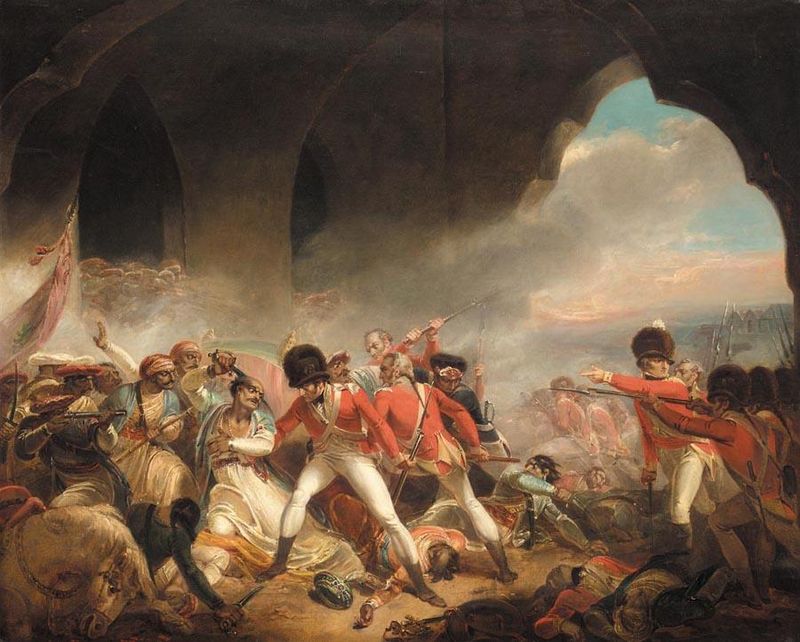
On 10 July 1806, in the early hours, guns were booming and the Indian sepoys of the 1st and 23rd regiments raised their standard of revolt. Colonel Fancourt, who commanded the garrison, was the first victim.

Colonel MeKerras of the 23rd regiment was killed next. Major Armstrong who was passing the Fort heard the sound of firing. When he stopped to enquire he was showered with bullets. About a dozen other officers were killed within an hour or so.

Among them, Lt. Elly and Lt. Popham belonged to His Majesty’s battalion.

Gillespie’s Brutality

Major Cootes, who was outside the Fort, informed Colonel Gillespie, the cavalry commandant in Arcot. Gillespie reached the fort along with a squadron of cavalry under the command of Captain Young at 9.00 am. In the meantime, the rebels proclaimed Fateh Hyder, Tipu’s eldest son, as their new ruler and hoisted the tiger flag of Mysore sultans in the Fort.

But the uprising was swiftly crushed by Col. Gillespie, who threw to winds all war ethics. In the course of suppression, according to an eyewitness account, eight hundred soldiers were found dead in the fort alone. Six hundred soldiers were kept in confinement in Tiruchirappalli and Vellore awaiting Inquiry.

(c ) Consequences of Revolt

Six of the rebels convicted by the Court of Enquiry were blown from the guns; five were shot dead; eight hanged. Tipu’s sons were ordered to be sent to Calcutta. The officers and men engaged in the suppression of the revolt were rewarded with prize money and promotion.

Col. Gillespie was given 7,000 pagodas. However, the commander-in-chief Sir John Cradock, the Adjutant General Agnew and Governor William Bentinck were held responsible for the revolt, removed from their office, and recalled to England.

The military regulations were treated as withdrawn.

(d) Estimate of Revolt

The Vellore Revolt failed because there was no immediate help from outside. Recent studies show that the organizing part of the revolt was done perfectly by Subedars Sheik Adam and Sheik Hamid and Jamedar Sheik Hussain of the 2nd battalion of 23rd regiment and two Subedars and the Jamedar Sheik Kasim of the 1st battalion of the 1st regiment.

Vellore Revolt had all the forebodings of the Great Rebellion of 1857. The only difference was that there was no civil rebellion following the mutiny. The 1806 revolt was not confined to Vellore Fort. It had its echoes in Bellary, Walajabad, Hyderabad, Bengaluru, Nandydurg, and Sankaridurg.

Download

1.Early Revolts against British rule in Tamil Nadu Tnpsc Pdf Notes (Samacheer Kalvi)
Early uprising against British rule Tnpsc

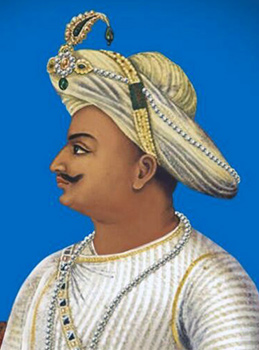
TipuSultanPic
By Source, Fair use, https://en.wikipedia.org/w/index.php?curid=58139588

The conquest of territories, expansion policy, agrarian relations, land revenue system, judicial administration, and the disrupted agrarian economy made people restless. People from all classes, from deposed kings and their descendants to zamindars, palayakarars, peasants, tribals, artisans, etc to revolt against the East India Company. In this article, we are going to see revolts or early uprisings against British rule before the great revolt of 1857.

Mysore Sultans and Their Resistance

Haider Ali

  • Mysore was a small feudal kingdom under the Vijayanagar Empire. Vijayanagar fell in 1565; the Wodeyars, the ruling dynasty, asserted their independence, and Raja Wodeyar took the throne in 1578. Srirangapatnam was made the capital of Mysore in 1610. The Wodeyar dynasty continued to rule until 1760. The real power went to Haider Ali, who was the Dalwai or Prime Minister.
  • Fateh Muhammad, who was the father of Haider Ali, was the Faujdar or Garrison commander of Kolar. After the death of Fateh Muhammad, Haider Ali’s military qualities helped him to rise through the military ranks.
  • In 1755, Haider secured a powerful military rank, commanding 100 horsemen and 2000 infantrymen. Haider Ali restored the Mysore Kingdom occupied by the Marathas. He received the title “Fateh Haider Bahadur” or “the brave and victorious Lion”.
  • In 1760, Haider allied with the French at Pondicherry against the English, but was endangered by the Marathas at his home.
  • Haider Ali handled the situation successfully, and he became not only Dalawai but the de facto ruler of Mysore. In 1770, Nanjaraja, king of Mysore, was poisoned to death, and Haider was suspected. Thereafter, the Wodeyar Kings functioned only as nominal rulers; the real authority was in the hands of Haider.
Early uprising against British rule Tnpsc

Haider and the British

  • The company had to safeguard its territories after obtaining the Diwani rights of Bengal, Bihar and Orissa from the Mughal ruler. The company was not strong, and it avoided the internal affairs of Indian states. Warren Hastings maintained buffer states to live within a “Ring Fence”.
  • But the company interfered with the internal politics of the Carnatic ruler Nawabs after his successive struggles.
  • The English trader saw the struggles of the Nawabship as a great opportunity to interfere in the internal politics of India. But the two strong powers of Haider Ali and the Nizam of Hyderabad were seen as a threat to the Company.

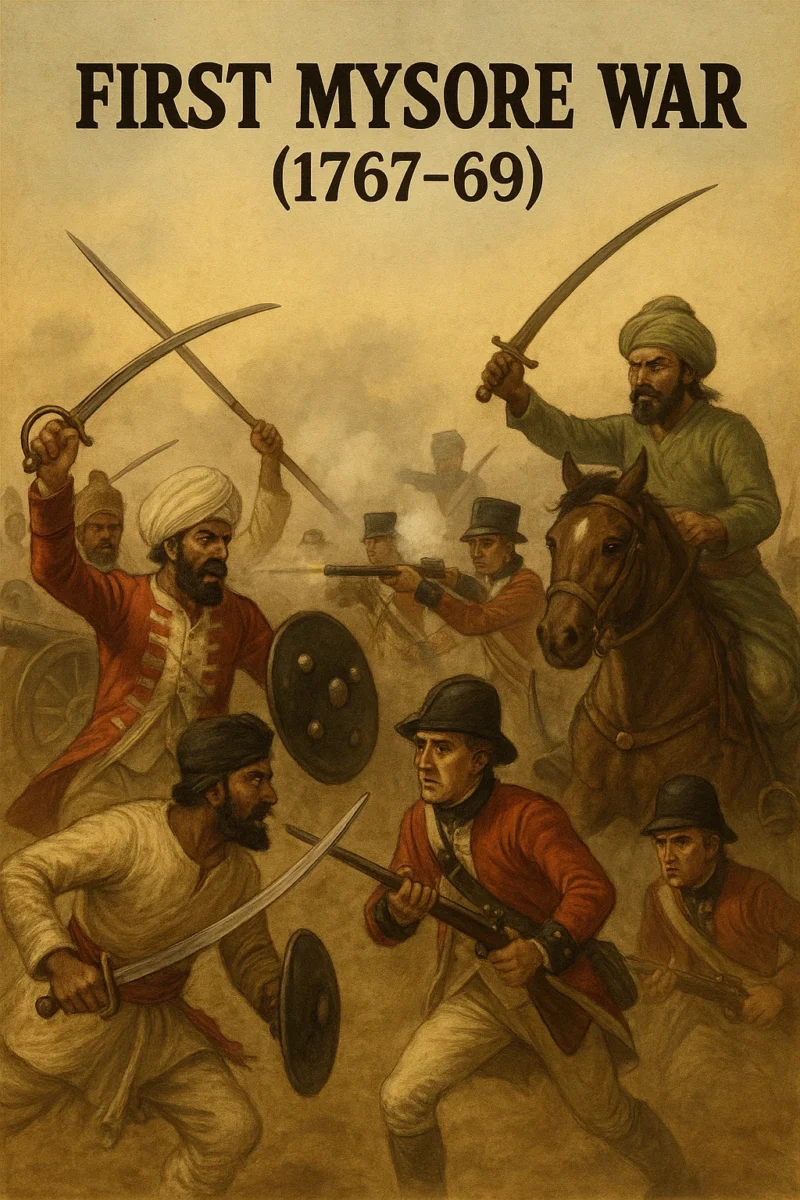
First Mysore War (1767-69)

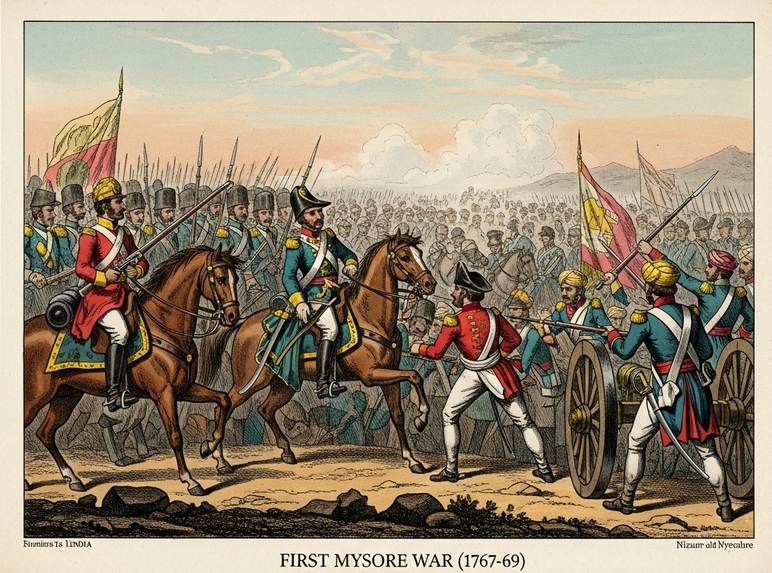
First Mysore War (1767-69)
  • Masulipatnam was captured in 1759 by Colonel Forde in the Third Carnatic War by conducting the forces from Bengal. With this victory, the Company led to a treaty with Salabad Jung, who ceded the Northern Sarkars to the Company.
  • The districts of Ganjam, Vizagapatnam, Godavari, Krishna and Guntur went to the English as a result of a treaty with Salabad Jung.
  • The acquisition of the Northern Sarkars was legalised by the Treaty of Allahabad in 1765 by the Mughal emperor. Even after the Treaty of Allahabad, these areas faced trouble from Nizam Ali, who also acquiesced to the session.
  • In return, the English promised Nizam Ali to help in case of any danger from the enemies. This laid the foundation for the Subsidiary System. Despite the treaty with the English, Nizam and Haider reached an understanding in 1767.
  • Therefore, the British declared war against Haider. This is called the First Mysore War or the First Anglo-Mysore War. A British army from Bombay captured Mangalore and the West Coast surrounding places, but later Haider recovered both.
First Mysore war against Haider ali vs British
  • The English failed to capture Mangalore. In 1768, Haider captured Baramahal (Salem) and Karur and Erode by defeating Captain Nixon.
  • In the meantime, Haider’s general Fazalullah Khan marched on Madurai and Tirunelveli. Haider marched to Thanjavur and from there to Cuddalore. Even though Haider was successful against the English, he was forced to negotiate with the English due to the invasion of the Marathas.
  • Haider and the English made the Treaty of Madras. As per the Treaty of Madras, the conquered territories were to be given back to the English except for Karur.
  • This meant the English would help Haider against the Marathas. But when assistance from the English was not forthcoming, Haider turned against the English.

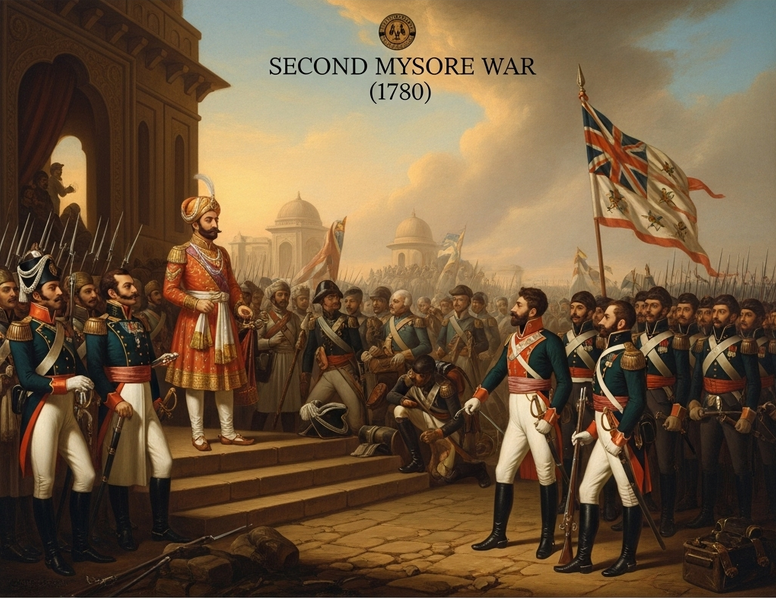
Haider and the Second Mysore War (1780)

  • After the American War of Independence, France had signed a treaty of friendship with America (1778), and so Britain declared war against France. In a similar context, Spain reached an agreement with America and was thereby dragged into the war against England (1779); England remained isolated.
  • In India, the coming together of the Nizam and the Marathas, supported by the French, aggravated the situation further. Haider Ali wanted to turn England’s difficulty to his advantage and marched on Karnataka.
  • Colonel Baillie, who was to join the force led by Hector Munro, was badly wounded in a sudden attack by Haider.
  • This forced Munro to move to Madras. Haider captured Arcot (1780). Now, on request from the Madras government, Sir Eyre Coote, the victor of the Battle of Wandawashi, was sent from Calcutta to besiege Madras by sea. Having scored a victory against Haider, Coote proceeded to Pondicherry. Haider, in the meantime, overran the kingdom of Thanjavur.
Second Mysore war 1780
  • Coote reached Porto Novo and won a decisive victory over Haider. Haider narrowly escaped capture. Colonel Braithwaite was thoroughly defeated near Kumbakonam by Haider’s son Tipu and taken prisoner.
  • To divert the attention of the Mysore Sultan, an expedition was undertaken by General Mathews to capture Mangalore. Expectedly, Tipu abandoned Karnataka and moved to the West Coast.
  • The death of Haider due to cancer in 1782, the signing of the Treaty of Paris (1783) at the end of the American War of Independence, and the protracted siege of Mangalore enabled the English to be aggressive against Tipu.
  • Karur and Dindigul were captured by Colonel Lang; Colonel Fullerton seized Palghat and Coimbatore, but this advance on Srirangapatnam was pre-empted by Tipu with his peace proposal.
  • The Treaty of Mangalore was signed in March 1784, according to which both parties agreed to give up their conquests and release the prisoners.

Third Mysore War (1790-92)

  • In the meantime, Lord Cornwallis had become Governor-General. Cornwallis wanted to deal with Tipu in a vengeful manner. The two great southern powers, the Nizam of Hyderabad and the Maratha confederacy, supported the British as their allies.
  • The Nizam of Hyderabad supplied resources and even troops for the British. The Marathas, who had signed the Treaty of Salbai with the English after the First Anglo-Maratha War in 1782, also joined the British.
  • The British position was thus greatly strengthened. Tipu sent an embassy to Constantinople and another in 1787 to Paris. These diplomatic efforts of Tipu were intended to strengthen him against the English. The French Monarch Louis XVI was hospitable, but could give only vague promises of support to the Sultan.
Third Mysore war 1790-92
  • Tipu’s attack on Travancore, which was an ally of the British and his capture of Cranganore were treated as a declaration of war on the Company government. Hence, the third Anglo-Mysore War broke out. Colonel Hartley defeated Tipu’s general Husain Ali at Calicut.
  • In response, Tipu captured Tiruvannamalai. His effort to get the support of the French Pondicherry Governor did not materialise. Cornwallis himself marched from Vellore and reached Bangalore.
  • On his way, he encountered Tipu and defeated him near Srirangapatnam. But lack of provisions compelled Cornwallis to retreat. At this juncture, the Marathas helped the British in supplying the required provisions. The reinforced army of the English marched on Srirangapatnam again and besieged it. Unable to withstand the onslaught of the British forces, Tipu offered peace and accepted the terms imposed by Cornwallis.
  • According to the treaty of Srirangapatnam, Tipu was to give up half of his dominions, pay three crores of rupees as indemnity, and pledge two of his sons as hostages. The allies were given equal shares of the indemnity and of the ceded territories.
  • The English got Malabar, Dindigul and Baramahal. Tipu lost Coorg (Kudagu), whose raja became a feudatory to the Company.
  • Tipu’s power was greatly reduced. And after their stay at Madras as hostages, the boys returned to Srirangapatnam on 29 May 1794 when their father had paid all the dues to the English. Tipu could hardly forget his humiliation and the heavy territorial and monetary losses he suffered.
  • The Mysore king Chamaraj IX died in 1796. Tipu resolved not to observe the formality of appointing a king. Synchronising with this resolve came the announcement of the French Colonial Governor of Mauritius, General Malartic, that after obtaining French help, he would declare war on the English.
  • In July 1798, Tipu’s correspondence with the French Directory and later with Napoleon and his evasiveness in his correspondence with Wellesley, led to his declaration of war against Tipu.

Fourth Mysore War (1799)

  • Tipu made every effort to strengthen his military and financial resources. In 1796, Tipu sent emissaries to Paris again. In 1797, he received a French emissary to confirm French support from Mauritius.
  • A Jacobin club was started in Srirangapatinam, and the flag of the French Republic was hoisted to mark the cordiality established between the French and the Sultan of Mysore.
  • Irked by Tipu’s alliance with the French, Wellesley, now the new Governor-General, insisted on a standing army at Mysore under the Subsidiary System.
  • Tipu turned down Wellesley’s proposal, and the British declared the fourth Anglo-Mysore War in 1799. General David Baird stormed Srirangapatnam.
  • Tipu’s offer of peace was rejected, and in the eventual battle, Tipu was wounded and soon after shot dead by a European Soldier.
  • The elimination of Tipu and the restoration of the old Wodeyar dynasty to the Mysore kingdom marked the real beginning of Company rule in South India.
  • The sons of the slain Tipu were interned first at Vellore, and later, after the Vellore Revolt of 1806, shifted to Calcutta. Thus ended the valiant fight of the Mysore Sultans against the British.

Early Resistance of Southern Palayakkarars against the British

Origin of Palayams and Palayakkarars

  • After the decline of the Vijayanagara Empire, Nagama Nayak, who arrived as a viceroy to Madurai and his son Viswanatha Nayak asserted themselves as independent rulers of Madurai and Tirunelveli.
  • Under the able guidance of Prime Minister Ariyanayaga Mudaliyar, all the little kingdoms of the former Pandian Empire were classified and converted into 72 palayams.
  • Viswanatha Nayak constructed a formidable fort around Madurai city, which consisted of seventy-two bastions. Each of them was placed under a chief.
  • A Palayakkarar was bound to pay a fixed annual tribute or supply troops to the king and to keep order and peace over a particular area.
  • In order to enable him to perform these duties and attend to other services, a certain number of villages were granted for revenue collection.
  • In addition, he was presented with several titles and privileges. Palayakkarars had judicial powers and dispensed justice over civil and criminal cases.
  • Based on the topographical distribution, they are classified as western palayams and eastern palayams.
  • The Palayams held by Maravar chieftains were mostly in the western parts of Tirunelveli.
  • The settlement of Telugu migrants in the black soil tracts, lying in the eastern part of Tirunelveli, left those parts under Nayak Palayakkarars.

Revolt of Palayakkarars

  • The Nawab of Arcot, who had borrowed heavily by pledging the villages in several parts of Tamil Nadu, entrusted the task of collecting land revenue arrears to the Company administration.
  • Yusuf Khan, remembered as Khan Sahib, had been employed as commander of the Company’s Indian troops. He was entrusted not only with the command of the forces but also with the collection of revenue.
  • At the request of the Nawab, a force of 500 Europeans and 200 sepoys was (1755) ordered to proceed into the “countries of Madurai and Tirunelveli” to assist him.
  • The encroachment of the East India Company administration into Palayakkarar’s authority aroused stiff resistance. Mafuzkhan (Arcot Nawab’s elder brother) was appointed by the Nawab as his representative in those territories.
  • Mafuzkhan, along with Colonel Heron, proceeded towards Tirunelveli. They easily took Madurai.
  • An expedition was sent to reduce Kattabomman, the palayakkarar of Panchalamkurichi, but had to be recalled. While returning, Colonel Heron was urged to storm the fort of Nel-Kattum-Seval.
  • Its Palayakkarar, Puli Thevar, wielded enormous influence over the western palayakkarars. For want of cannon, supplies and pay to soldiers, the attack of Colonel Heron had to be abandoned, and the force retired to Madurai.
  • Three Pathan officers, Nawab Chanda Sahib’s agents, named Mianah, Mudimiah, and Nabikhan Kattak, commanded the Madurai and Tirunelveli regions. They supported Tamil palayakkarars against Arcot Nawab Mohamed Ali. Puli Thevar had established close relationships with them.
  • The palayakkarars of Uthumalai, Surandai, Thalaivankottai, Naduvakurichi, Singampatti, Urkad, Seithur, Kollamkondan and Wadakarai joined Puli Thevar’s confederacy.
  • With the promise of restoring Kalakkadu, Puli Thevar had already won over the ruler of Travancore to his confederacy.
  • Nawab, on his side, sent an additional contingent of sepoys to Mahfuzkhan, and the reinforced army proceeded to Tirunelveli. Besides the 1000 sepoys of the Company, Mahfuzkhan received 600 more sent by the Nawab. He also had the support of cavalry and foot soldiers from the Carnatic.
  • Before Mafuskhan could station his troops near Kalakadu, 2000 soldiers from Travancore joined the forces of Puli Thevar. In the battle of Kalakadu, Mahfuzkhan’s troops were trounced.
  • The organised resistance of the palayakkarars under Puli Thevar gave an opportunity to the British to interfere directly in the affairs of Tirunelveli.
  • From 1756 to 1763, aided frequently by Travancore, the palyakkarars of Tirunelveli, led by Puli Thevar, were in a constant state of rebellion against the authority of the Nawab.
  • Yusuf Khan, who had been sent by the Company, would not venture to attack Puli Thevar unless the big guns and ammunition from Tiruchirappalli arrived.
  • As the English were involved in a war with the French, as well as with Haider Ali and the Marathas, big guns arrived only in September. Yusuf Khan began to batter the Nerkattumseval fort, and this attack continued for about two months.
  • On 16 May 1761, Puli Thevar’s three major forts, namely Nerkattumseval, Vasudevanallur and Panayur, came under the control of Yusuf Khan. After taking Pondicherry, the English commanded respect, as they had eliminated the French from the picture.
  • Consequently, the unity of palyakkarars began to break up as French support was not forthcoming. Travancore, Seithur, Uthumalai and Surandai switched their loyalty.
  • Yusuf Khan, who was negotiating with the palayakkarars without informing the Company administration, was charged with treachery and hanged in 1764.
  • Puli Thevar, who had taken asylum elsewhere after the forts were taken over by Yusuf Khan, returned and began to organise against the British. Captain Campbell, who was sent this time by the British, laid siege and captured Nerkattumseval in 1767. Nothing is known about the last days of Puli Thevar.

Velu Nachiyar

  • The Sethupathys ruled the area that covered Ramanathapuram, Sivagangai, Virudhunagar, and Pudukkottai districts of the present day.
  • Velu Nachiyar was the daughter of Chellamuthu Sethupathy, the raja of Ramanathapuram. She married Muthu Vadugar Periyaudayar, the Raja of Sivagangai, and had a daughter named Vellachi Nachiyar.
  • When her husband was killed by the Nawab’s forces, Velu Nachiyar escaped with her daughter and lived under the protection of Haider Ali at Virupachi near Dindigul for eight years.
  • During this period, she organised an army and succeeded in securing an alliance with Gopala Nayaker and Haider Ali. In 1780, Rani Velu Nachiyar fought the British, with military assistance from Gopala Nayaker and Haider Ali and won the battle.
  • The Nawab of Arcot placed many obstacles to the advancement of the Rani’s troops. However, she overcame all the hurdles and entered Sivagangai.
  • The Nawab of Arcot was defeated and taken captive. Velu Nachiyar recaptured Sivagangai and was again crowned queen with the help of the Marudu brothers.
  • After ascending the throne, Velu Nachiyar appointed Chinna Marudu as her adviser and Periya Marudu as commander. In 1783, the English forces invaded Sivaganagai again.
  • This time, the Marudu Pandiyan saved the place with some diplomatic moves. In 1790, Vellachi Nachiyar, daughter of Velu Nachiyar, who was married to Vengan Periya Udaya Thevar, who became the king of Sivagangai state due to a compromise formula of the Englishmen, died under mysterious circumstances. Velu Nachiyar became sick and died three years later in 1796.

Veera Pandiya Kattabomman

  • While Velu Nachiyar was fighting the British and engaging their complete attention on Ramanathapuram and Sivagangai, Veera Pandiya Kattabomman’s resistance against the British was in progress. Kattabomma Nayak was the playakkarar of Panchalamkurichi. Kattabomman Nayak was a family title.
  • The chieftain of Colonel Heron’s time was Jagaveera Kattabomman Nayak, the grandfather of Veera Pandiya Kattabomman. Veera Pandiya Kattabomman, born in 1761, became the palayakkarar on the death of his father, Jagaveera Pandiya Kattabomman.
  • The collection of tribute continued to be a problem as there was a constant tussle between the Company and the southern palayakkarars.
  • In September 1798, as the tribute from Panchalamkuriuchi fell into arrears, Collector Jackson wrote to Veera Pandiyan in his characteristic arrogance.
  • The country experienced a severe drought, in consequence of which the palayakkarars found it difficult to collect taxes. Collector Jackson wanted to send an expedition to punish Veera Pandiyan, but the Madras administration did not agree.
  • The Company had already withdrawn its forces from Tirunelveli to be employed in the war against Tipu Sultan of Mysore, and did not desire to risk a conflict in the far south at this juncture. It directed the collector to summon the Palayakkarar at Ramanathapuram and hold a discussion.
  • Accordingly, on 18 August 1798, Jackson dispatched an order directing Veera Pandiyan to meet him at Ramanathapuram within two weeks.
  • After sending the summons, the collector started on a tour of Tirunelveli. When Jackson halted at Chokkampatti, Sivagiri, Sattur and Srivilliputhur to receive tribute from the Palayakkarars, Veera Pandiyan sought an interview but was told that he could meet the collector only at Ramanathapuram.
  • Despite this humiliation, Kattabomman followed the Englishman for twenty-three days over 400 miles through the latter’s route and reached Ramanathapuram on 19 September.
  • An interview was granted the same day, and the collector expressed his satisfaction that the Palayakkarar had behaved properly and thereby “saved himself from ruin”.
  • Upon a verification of accounts, Jackson was convinced that Kattabomman had cleared most of the arrears, leaving only 1080 pagodas as a balance to be settled.
  • Denied courtesy, the palayakkarar and his minister, Sivasubramania Pillai, had to stand before the arrogant collector. Finally, he directed them to stay inside the Ramanathapuram fort.
  • Now, a few sepoys appeared, apparently to arrest Kattabomman. But they escaped. At the gate of the fort, a clash occurred, in which some, including Lieutenant Clarke, were killed. Siva Subramania Pilai was taken prisoner, but Kattabomman made his escape.
  • After his return to Panchalamkurichi, Kattabomman wrote to the Madras Council, blaming the attitude of Jackson for the scuffle. In the meantime, Governor Edward Clive had issued a proclamation, inviting the palayakkarar to submit to the authority of the Company.
  • In the event of surrender, he assured a fair investigation into the Ramanathapuram incident. If he refused, he threatened Kattabomman with dire consequences.
  • In response, Kattabomman appeared before the committee, which acquitted him of the charges of rebellion and condemned the conduct of the collector.
  • S.R. Lushington was appointed collector in the place of Jackson, who was eventually dismissed from service.
  • However, Kattabomman remained irreconciled. At this time, Marudu Pandiyan of Sivagang, along with Gopala Nayak of Dindigul and Yadul Nayak of Anamalai, were engaged in organising a Confederacy against the British. Given the identity of interest, Kattabomman and Marudu Pandiyan came closer.
  • Kattabomman also established contact with the Sivagiri palayakkarar. While Panchalamkurichi was situated in an open plain and appeared vulnerable, the strategic location of the fort of Sivagiri at the foot of the Western Ghats and the formidable barriers around it rendered it eminently suited both for offensive and defensive operations.
  • Thus, in a bold attempt to strengthen his position, an armed column consisting of the followers of Veera Pandiyan, the son of the Palayakkarar of Sivagiri and other allied chiefs, led by Dalawai Kumaraswami Nayak, moved towards the west.
  • As the Palayakkarar of Sivagiri was a tributary to the Company, the Madras Governor’s Council considered this a challenge to its authority and ordered the march of the army.
  • In May 1799, Lord Wellesley issued orders for the advance of forces from Trichinopoly, Thanjavur and Madurai to Tirunelveli. The Travancore troops joined the British.
  • Major Bannerman, armed with extensive powers, effectively commanded the expedition. On 1 June 1799, Kattabomman, attended by 500 men, proceeded to Sivaganga. At Palayanur, Kattabomman held deliberations with Marudu. Subsequently, joined by 500 armed men of Sivaganga, Kattabomman returned to Panjalamkurichi.
  • The Palayakkarars of Nagalapuram, Mannarkottai, Powalli, Kolarpatti and Chennulgudi had already formed themselves into a combination due to the efforts of the Marudu brothers.
  • They asserted their rights to collect taxes from certain villages in the Company’s territory. Kattabomman proceeded to join this league to take up its leadership by the influence that he wielded and the resources he possessed. Determined to strengthen this league, he persuaded the chieftains of Satur, Yezhayirampannai, Kadalgudi and Kulathoor to join it.
  • On 1 September 1799, Major Bannerman served an ultimatum directing Kattabomman to see him at Palayamkottai. As Kattabomman dodged, the Bannerman decided on military action.
  • The Company army reached Panchalamkurichi on 5 September. Kattabomman’s fort, 500 feet long and 300 feet broad, was constructed entirely of mud.
  • The Company forces cut off the communications of the fort. Kattabomman’s forces fought gallantly, and successive attacks were repulsed.
  • Colonel Welsh recorded in his memoirs the gallantry of Kattabomman’s soldiers. The English ordered the arrival of more troops. On 16 September, reinforcements arrived from Palayamkottai.
  • As the broken walls appeared vulnerable, the garrison evacuated and reached Kadalgudi. In a clash at Kalarpatti, Kattabomman’s minister Sivasubramonia Pillai was taken prisoner.
  • The British forces followed up their victory with the reduction of Nagalapuram and other strongholds of the defiant chiefs to submission. On the appearance of the army, the western Palayakkarars too surrendered.
  • Vijaya Ragunatha Tondaiman, Raja of Pudukottai, captured Kattabomman from the jungles of Kalapore and handed him over to the enemy.
  • Upon the fall of the Palayakkarar into the hands of the enemy, his followers fled to Sivaganga and from there to the hills of Dindigul to take service with Marudu Pandiyan and Gopala Nayak.
  • The bannerman brought the prisoners to an assembly of the Palayakkarars and, after a mockery of a trial, sentenced them to death. On 16 October, Veera Pandiya Kattabomman was tried before an assembly of Palayakkarars at Kayatar. Unmindful of impending death, Kattabomman admitted all the charges levelled against him.
  • He declared that he did send his armed men against Sivagiri and that he did fight the British troops in the battle at Panchalamkurichi.
  • On 17 October, Kattabomman was hanged to death at a conspicuous spot near the old fort of Kayatar. Kattabomman’s heroic exploits were the subject of many folk ballads, which kept his memory alive among the people.
  • By the treaty of 1772, the Arcot Nawab had authorised the Company to collect the Stalam Kaval and Desakaval. This affected the Kaval chiefs in both the Palayakkarar and non-Palayakkarar territories.
  • The aggrieved kavalkarars and their chiefs had joined the palayakkarars in their fight against the Nawab and the Company.
  • In Sivagangai, Vella Marudu and Chinna Marudu, who had taken over the administration from Periya Udaya Tevar, who died in battle against the Nawab’s forces, expelled the forces of the Nawab and proclaimed Vellachi, daughter of Periya Udaya Tevar and Velu Nachiyar, as the queen of Sivagangai. The Marudus assumed the charge of the ministers.
  • The temple of Kalayarkoil in the heart of the then Sivagangai forest became the rallying point of the rebels. When Umathurai reached Kamudhi after the execution of his brother Veera Pandiya Kattabomman, Chinna Marudu took him to Siruvayal, his capital.
  • Now, Nawab Mohammad Ali released Muthuramalinga Thevar from jail and enthroned him as the Setupati of Ramanathapuram. But the rebels proclaimed Muthu Karuppa Thevar as their ruler. They occupied the southern and northern regions of the kingdom. The soldiers made their entry into Madurai too.
  • In July, Umathurai led his followers to Palayanad in Madurai and captured it. In 180,1 both the Sivagangai and Ramanathapuram forces joined together under the command of Shevatha Thambi, the son of Chinna Marudu, and marched along the coast towards Thanjavur.
  • Thereupon, the distressed peasants in Thanjavur also joined the force of Shevatha Thambi. Captain William Blackburne, the resident of Thanjavur, collected a force and defeated Shevatha Thambi near Mangudi. Serfoji, the raja of Thanjavur, stood firmly by the British. Yet the fighters could elude the pursuit of the British troops by rapid movements, while laying the entire region waste.

South Indian Rebellion 1801

  • The victory over Tipu and Kattabomman had released British forces from several fronts to target the fighting forces in Ramanathapuram and Sivagangai.
  • Thondaiman of Pudukottai had already joined the side of the Company. The Company had also succeeded in winning the support of the descendant of the former ruler of Sivagangai, named Padmattur Woya Thevar.
  • Woya Thevar was recognised by the Company as the legitimate ruler of Sivagangai. This divisive strategy split the royalist group, eventually demoralising the fighting forces against the British.
  • In May 1801, a strong detachment under the command of P.A. Agnew commenced its operations. Marching through Manamadurai and Partibanur, the Company forces occupied the rebel stronghold of Paramakudi.
  • In the clashes that followed, both sides suffered heavy losses. But the fighters’ stubborn resistance and the Marudu brothers’ heroic battles made the task of the British formidable.
  • In the end, the superior military strength and the able commanders of the British army won the day. Following Umathurai’s arrest, the Marudu brothers were captured from the Singampunary hills, and Shevathiah from Batlagundu and Doraiswamy, the son of Vellai Marudu, from a village near Madurai.
  • Chinna Marudu and his brother Vellai Marudu were executed at the fort of Tiruppatthur on 24 October. Umathurai and Shevathiah, with several of their followers, were taken to Panchalamkurichi and beheaded on 16 November 1801. Seventy-three rebels were banished to Penang in Malaya in April 1802.

Theeran Chinnamalai

  • The Kongu country, comprising Salem, Coimbatore, Karur and Dindigul, formed part of the Nayak kingdom of Madurai but had been annexed by the Wodayars of Mysore.
  • After the fall of the Wodayars, these territories, together with Mysore, were controlled by the Mysore Sultans.
  • As a result of the Third and Fourth Mysore Wars, the entire Kongu region passed into the hands of the English.
  • Theeran Chinnamalai was a palayakkarar of Kongu country who fought the British East India Company. He was trained by the French and Tipu.
  • In his bid to launch an attack on the Company’s fort in Coimbatore (1800), Chinnamalai tried to take the help of the Marudu brothers from Sivagangai.
  • He also forged alliances with Gopal Nayak of Virupatchi; Appachi Gounder of Paramathi Velur; Joni Jon Kahan of Attur Salem, Kumaral Vellai of Perundurai and Varanavasi of Erode in fighting the Company.
  • Chinnamalai’s plans did not succeed as the Company stopped the reinforcements from the Marudu brothers.
  • Also, Chinnamalai changed his plan and attacked the fort a day earlier. This led to the Company army executing 49 people.
  • However, Chinnamalai escaped. Between 1800 and July 31, 1805, when he was hanged, Chinnamalai continued to fight against the Company.
  • Three of his battles are important: the 1801 battle on the Cauvery banks, the 1802 battle in Odanilai and the 1804 battle in Arachalur.
  • The last and final one was in 1805. During the final battle, Chinnamalai was betrayed by his cook, Chinnamalai and was hanged in Sivagiri fort.

Vellore Revolt (1806)

  • Vellore Revolt 1806 was the culmination of the attempts of the descendants of the dethroned kings and chieftains in South India to throw off the yoke of British rule.
  • After the suppression of the revolt of the Marudu brothers, they made Vellore the centre of their activity. The organisers of an Anti-British Confederacy continued their secret moves, as a result of which no fewer than 3,000 loyalists of Mysore sultans had settled either in the town of Ellore or its vicinity.
  • The garrison of Vellore itself consisted of many aggrieved persons, who had been reduced to dire straits as a sequel to loss of positions or whose properties had been confiscated or whose relatives were slain by the English.
  • Thus, the Vellore Fort became the meeting ground of the rebel forces of South India. The sepoys and the migrants to Vellore held frequent deliberations, attended by the representatives of the sons of Tipu.

Immediate Cause of Vellore Revolt

  • In the meantime, the English enforced certain innovations in the administration of the sepoy establishments. They prohibited all markings on the forehead which were intended to denote caste and religion, and directed the sepoys to cut their moustaches to a set pattern.
  • Added to these, Adjutant General Agnew designed and introduced under his direct supervision a new model of turban for the sepoys.
  • The most obnoxious innovation in the new turban, from the Indian point of view, was the leather cockade. The cockade was made of animal skin. Pig skin was anathema to Muslims, while upper caste Hindus shunned anything to do with the cow’s hide.
  • To make matters worse, the front part of the uniform had been converted into a cross.
  • The order regarding whiskers, caste marks and earrings, which infringed the religious customs of both Hindu and Muslim soldiers, was justified because, although they had not been prohibited previously by any ormal order, it had never been the practice in any well-regulated corps for the men to appear with them on parade.
  • The first incident occurred in May 1806. The men in the 2nd battalion of the 4th regiment at Vellore refused to wear the new turban.
  • When the matter was reported to the Governor by Col. Fancourt, commandant of the garrison, he ordered a band of the 19th Dragoons (Cavalry) to escort the rebels, against whom charges had been framed, to the Presidency for a trial.
  • The 2nd battalion of the 4th regiment was replaced by the 2nd battalion of the 23rd regiment of Wallajahbad.
  • The Court Martial tried 21 privates (a soldier of lower military rank)– 10 Muslims and 11 Hindus–for defiance. In pursuance of the Court Martial order, two soldiers (a Muslim and a Hindu) were sentenced to receive 900 lashes each and to be discharged from service.
  • Despite signals of protest, the Government decided to go ahead with the change, dismissing the grievances of Indian soldiers.
  • Governor William Bentinck also believed that the ‘disinclination to wear the turban was becoming more feeble.’ Though it was initially claimed that the officers on duty observed nothing unusual during the night of July 9, it was later known that the English officer on duty did not go on his rounds and asked one of the Indian officers to do the duty and Jameder Sheik Kasim, later one of the principal accused, had done it.
  • The leaders of the regiment, who were scheduled to have a field day on the morning of 10 July, used it as a pretext to sleep in the Fort on the night of 9 July.
  • The Muslim native adjutant contrived to post as many of his followers as possible as guards within the Fort. Jamal-ud-din, one of the twelve princes of the Tipu family, who was suspected to have played a key role in the revolt, kept telling them in secret parleys that the prince only required them to keep the fort for eight days, before which time ten thousand would arrive to their support.
  • He disclosed to them that letters had been written to dispossessed palayakkarars seeking their assistance. He also informed that there were several officers in the service of Purniah (Tipu’s erstwhile minister) who were formerly in the Sultan’s service and would undoubtedly join the standard.

Outbreak of the Vellore Revolt

  • At 2:00 a.m. on 10 July, the sentry at the main guard informed Corporal Piercy that a shot or two had been fired somewhere near the English barracks. Before Piercy could respond, the sepoys made a near-simultaneous attack on the British guards, the British barracks and the officers’ quarters in the Fort.
  • In the European quarters, the shutters were kept open, as they were the only means of ventilation from the summer heat. The rebels could easily fire the gun through the barred windows at the Europeans, lying unprotected in their beds.’
  • Fire was set in the European quarters. Detachments were posted to watch the dwellings of the European officers, ready to shoot anyone who came out. A part of the 1st regiment took possession of the magazines (a place where gun powder and ball cartridges are stored).
  • A select band of the 1st Regiment was making their rounds to massacre the European officers in their quarters.
  • Thirteen officers were killed, in addition to several European conductors of ordnance. In the barracks, 82 privates died, and 91 were wounded. Major Armstrong of the 16th native infantry was passing outside the Fort when he heard the firing.
  • He advanced to the glacis and asked what the firing meant. He was answered by a volley from the ramparts, killing him instantly. Major Coates, an officer of the English regiment who was on duty outside the Fort, on hearing of the revolt, tried to enter the Fort.
  • As he was unable to make it, he sent off an officer, Captain Stevenson of the 23rd, to Arcot with a letter addressed to Colonel Gillespie, who commanded the cavalry cantonment there. The letter reached Arcot, some 25 km away, at 6 a.m.
  • Colonel Gillespie set out immediately, taking with him a squadron of the 19th dragoons under Captain Young, supported by a strong troop of the 7th cavalry under Lieutenant Woodhouse.
  • He instructed Colonel Kennedy to follow him with the rest of the cavalry, leaving a detachment to protect the cantonment and to keep up the communication.
  • When Colonel Gillespie arrived at the Vellore Fort at 9 a.m., he thought it prudent to await the arrival of the guns, since there was continuous firing.
  • Soon, the cavalry under Kennedy came from Arcot. It was about 10 o’clock. The gate was blown open with the galloper guns of the 19th Dragoons under the direction of Lieutenant Blakiston. The troops entered the place, headed by a squadron of cavalry under Captain Skelton.
  • The Gillespie’s men were met by a severe crossfire. In the ensuing battle, Colonel Gillespie himself suffered bruises. The sepoys retreated. Hundreds escaped over the walls of the Fort, or threw down their arms and pleaded for mercy.
  • Then the cavalry regiment assembled on the parade ground and resolved to pursue the fleeing soldiers, who were exiting towards the narrow passage of escape afforded by the sally port.
  • A troop of dragoons and some native horsemen were sent round to intercept the fleeing soldiers. All the buildings in the Fort were searched, and mutineers found in them pitilessly slaughtered.
  • Gillespie’s men wanted to enter the building and take revenge on the princes, the instigators of the plot; but Lt. Colonel Marriott resisted the attempt of the dragoons to kill Tipu’s sons.
  • Colonel Gillespie is said to have brought the Fort under the possession of the English in about 15 minutes. Col. Harcourt (Commanding Officer at Wallajahbad) was appointed to the temporary command of Vellore on July 11 Harcourt assumed command of the garrison on 13 July, 1806 and clamped martial law.
  • It was believed that the prompt and decisive action of Gillespie put an end to ‘the dangerous confederacy, and had the fort remained in the possession of the insurgents but a few days, they were certain of being joined by fifty thousand men from Mysore.’
  • But the obnoxious regulations to which the soldiers objected were withdrawn. The Mysore princes were ordered to be sent to Calcutta, as, according to the Commission of Inquiry, their complicity could not be established. They were removed from Vellore on 20 August 1806.
  • The higher tribunals of the Home Government held the chief authorities of Madras, namely the Governor, the Commander-in-Chief, and the Deputy Adjutant General, responsible for the bungling and ordered their recall.
  • Vellore had its echoes in Hyderabad, Wallajahbad, Bangalore, Nandydurg, Palayamkottai, Bellary and Sankaridurg. Vellore Revolt had all the forebodings of the Great Rebellion of 1857, if the word cartridge is substituted by cockade, and Bahadur Shah and Nana Sahib could be read for Mysore Princes.

Peasant and Tribal Revolts

  • In the late eighteenth and early nineteenth centuries, the land tenures and revenue settlements of the Company’s government had fundamentally disrupted the Indian rural society and affected the peasantry in an unprecedented manner.
  • In the early days of the revenue farming system, the peasantry was oppressed by the revenue contractors and company officials who imposed high revenue demands and collected them forcibly. Initially, the peasants sent a petition to the Company’s government asking for redress.
  • But when their appeal for justice went unheeded, they organised themselves and resorted to direct action. They attacked the local cutchery (revenue collector’s office), looted grain stores and refused to pay revenue.

The Mappillas Uprising

  • A peasant movement of the 1840s and 1850s was the Malabar rebellion in present-day Kerala. The Mappillas were the descendants of Arab traders who had settled in this region and had married the Malabar women. Gradually, the Mappillais became dependent on agriculture and turned into a community of cultivating tenants, landless labourers, petty traders and fishermen.
  • When the British took over Malabar in 1792, they sought to revamp the land relations by creating individual ownership in land.
  • The traditional system provided for an equal sharing of the net produce of the land by the janmi (holder of janmam tenure), the kanamdar (holder of kanam tenure), and the cultivator.
  • The British system upset this arrangement by recognising the janmi as absolute owners of land, with the ight to evict tenants, which did not exist earlier.
  • Apart from that, over-assessment, a huge burden of illegal cesses and a pro-landlord attitude of the judiciary and the police led the peasants to live in conditions of extreme poverty.
  • A series of incidents therefore occurred in Malabar throughout the nineteenth century. Three serious incidents occurred in Manjeri in August 1849, in Kulathur in August 1851 – both in south Malabar – and in Mattannur in the north in January 1852.
  • British armed forces were deployed to suppress the revolt. The repressive measures restored peace for about twenty years, but then the Mappillas rose again in 1870, and the events followed a similar course.
  • Some of the rebellions in pre-1857 India were of the tribals, whose autonomy and control over local resources were threatened by the establishment of British rule and the advent of its non-tribal agents.
  • The tribal people, spread over a large part of India, rose in hundreds of insurrections during the 19th century. These uprisings were marked by immense courage on their part and brutal suppression on the part of the rulers.

The Kol Uprising (1831-32)

  • Kols as tribals inhabited in Chotanagpur and Singbhum regions of Bihar and Orissa. The immediate cause of their uprising was the action of the Raja of Chotanagpur in leasing several villages to the nontribals.
  • The Kols of Sonepur and Tamar took the initiative in organising a revolt against the thikadars (tax collectors). The forms of rebellion consisted of attacks on the properties of the outsiders, but not on their lives. Plunder and arson were the chief modes of peasant protest. Sonepur pargana of Chotanagpur was raided, plundered and burnt down by a body of seven hundred insurgents on 20 December 1831.
  • By 26 January 1832, the Kols had taken complete possession of the whole of Chotanagpur. The revolt against the British had ended up in a war against the Company government. Buddha Bhagat, the leader of the Kol insurrection, was killed in a pitched battle.
  • A sum of one thousand rupees was distributed among officers and soldiers as their reward for delivering Bhagat’s severed head to the authorities.
  • Bhindrai Manki, who inspired the revolt, surrendered on 19 March 1832 and with his surrender, the revolt of Kols came to a tragic end.

Santhal Hool (rebellion) 1855-56

  • Santhal, also called Manji, lived scattered in various forest regions of Bengal, Bihar, and Orissa. Driven from their homeland, they cleared the area around the Rajmahal Hills and called it Damin-i-koh (land of Santhals). They were gradually driven to a desperate situation as tribal lands were leased out to non-Santhal zamindars and moneylenders.
  • To this was added the oppression of the local police and the European officials engaged in railroad construction. This penetration of dikus (outsiders) completely destroyed their familiar world, and forced them into action to take possession of their lost territory.
  • In July 1855, when their ultimatum to the zamindars and the government went unheeded, several thousand Santhals, armed with bows and arrows, started an open insurrection “against the unholy trinity of their oppressors-the zamindars, the mahajans and the government.”
  • At the battle of Maheshpur, many of the Manjis were dressed in red clothes. Later this garment became an assertion of authority. In the first week of the rising a party of ten men attacked and burnt down the village of Monkaparrah. The rebels included a number of women.
  • Initially their leader was Sido. After his arrest the revolt was led by Kanoo. At the later stage of the revolt, the peasants also joined. Several thousand peasants raided on Charles Maseyk’s indigo factory and pillaged.
  • This invited brutal counter-insurgency measures; the army was mobilized and Santhal villages were burnt one after another with vengeance.
  • According to one calculation, out of thirty to fifty thousand rebels, fifteen to twenty thousand were killed before the insurrection was finally suppressed.

Munda Rebellion

  • The rebellion (ulgulan) of the Munda tribesmen led by Birsa Munda occurred during 1899-1900. Mundas were a prominent tribe in the Bihar region.
  • During the British rule, their system of common land holdings was destroyed. Jagirdars, thikadars (revenue farmers) and moneylenders grabbed the land owned by them.
  • Birsa, born in a poor share-cropper household in 1874, declared himself a divine messenger to drive away the British and establish Munda rule in the region.
  • Under his influence, the Mundas strongly opposed non-tribals occupying tribal lands. He urged the Munda cultivators not to pay rent to the zamindars. Birsa Munda led a revolt in the Chota Nagpur region.
  • The indiscriminate slaughter of Munda women at Sail Rakab did not deter the followers of Birsa. The British authorities issued a warrant for Mirsa’s arrest and put up a reward for his capture.
  • Birsa became a martyr in Ranchi jail (9 June 1900). His name continues to inspire the tribals of the region.

Great Rebellion 1857

  • 1857 has been a subject of much debate among historians, both British and Indian. British imperialist historians dismissed it as a mutiny, an outbreak among soldiers.
  • Indian historians who explored the role of the people in converting a military outbreak into a rebellion raised two questions to which the imperial historians have had no answer. If it were only a military outbreak, how to one explain the revolt of the people even before the sepoys at those stations mutinied?
  • Why was it necessary to punish the people with a fine and hanging for complicity in acts of rebellion? Col. Mallesan, the Adjutant General of the Bengal army, in a pamphlet titled The Making of the Bengal Army, remarked, ‘a military mutiny…speedily changed its character and became a national insurrection’.
  • The historian Keene attributed the outbreak to the operation of a variety of factors: to the grievances of princes, soldiers and the people, produced largely by the annexation and reforming zeal of Dalhousie.
  • The greased cartridge affair merely ignited the combustible matter which had already accumulated. Edward John Thompson described the event as largely a real war of independence. V.D. Savarkar, in his The War of Indian Independence, published in 1909, argued that what the British had till then described as merely mutiny was, in fact, a war of independence, much like the American War of Independence.
  • Despite the fact that the English-educated middle class played no role in the rebellion, nationalist historians championed this argument as the First War of Indian Independence.

Causes of the Rebellion

Territorial Aggrandisement

  • The annexation of Oudh and Jhansi by Dalhousie, employing the Doctrine of Lapse and the humiliating treatment meted out to Nana Sahib, the last Peshwa’s adopted son, produced much dissatisfaction.
  • In the wake of the Inam Commission (1852), appointed by the Bombay government to enquire into the cases of “land held rent-free without authority,” more than 21,000 estates were confiscated.
  • The land settlement in the annexed territories, particularly in Oudh, adversely affected the interests of the talukdars, who turned against the British.
  • Moreover, in Oudh, thousands of inhabitants who depended on the royal patronage and traders who were dealing in rich dresses and highly ornamented footwear and expensive jewellery lost their livelihood. Thus, Dalhousie, through his expansionist policy, created hardship for a number of people.

Oppressive Land Revenue System

  • The rate of land revenue was heavy when compared with former settlements. Before the British, Indian rulers collected revenue only when land was cultivated.
  • The British treated land revenue as a rent and not a tax. This meant that revenue was extracted whether the land was cultivated or not, and at the same rate.
  • The prices of agricultural commodities continued to crash throughout the first half of the nineteenth century, and in the absence of any remission or relief from the colonial state, small and marginal farmers as well as cultivating tenants were subject to untold misery.

Alienation of the Muslim Aristocracy and Intelligentsia

  • Muslims depended largely on public service. Before the Company’s rule, they had filled the most honourable posts in former governments.
  • As commandant of cavalry, some of them received high incomes. But under the Company’s administration, they suffered. The English language and Western education pushed the Muslim intelligentsia into insignificance. The abolition of the Persian language in the law courts and admission into public service by examination decreased the Muslims’ chances of official employment.

Religious Sentiments

  • The Act of 1856, providing for the enrolment of high caste men as sepoys in the Bengal army, stipulated that future recruits give up martial careers or their caste scruples. Apart from acts such as the abolition of sati, the legalisation of remarriage of Hindu widows, and the prohibition of infanticide were viewed as interference in religious beliefs.
  • In 1850, to the repugnance of orthodox Hindus, the Lex Loci Act was passed permitting converts to Christianity to retain their patrimony (right to inherit property from parents or ancestors).
  • Further, the religious sentiments of the sepoys – Hindus and Muslims – were outraged when information spread that the fat of cows and pigs was used in the greased cartridges.
  • The Indian sepoys were to bite them before loading the new Enfield rifle. This was viewed as a measure to convert people to Christianity.
  • In every sense, therefore, 1857 was a climactic year. The cartridge affair turned out to be a trigger factor for the rebellion. The dispossessed, discontented rajas, ranis, zamindars and tenants, artisans and workers, the Muslim intelligentsia, priests, and the Hindu pandits saw the eruption as an opportunity to redress their grievances.

Course of the Revolt

  • The rebellion first began as a mutiny in Barrackpore (near Calcutta). Mangal Pandey murdered his officer in January 1857, and a mutiny broke out there.
  • In the following month, at Meerut, of the 90 sepoys who were to receive their cartridges only five obeyed orders. On 10 May, three sepoy regiments revolted, killed their officers, and released those who had been imprisoned. The next day, they reached Delhi, murdered Europeans, and seized that city. The rebels proclaimed Bahadur Shah II as emperor.
  • By June, the revolt had spread to Rohilkhand, where the whole countryside was in rebellion. Khan Bahadur Khan proclaimed himself the viceroy of the Emperor of India.
  • Nearly all of Bundelkhand and the entire Doab region were up in arms against the British. At Jhansi, Europeans were massacred, and Laxmi Bai, aged 22, was enthroned. In Kanpur, Nana Sahib led the rebels.
  • About 125 English women and their children, along with English officers, were killed and their bodies were thrown into a well. Termed as the Kanpur massacre, this incident angered the British and General Henry Havelock, who was sent to deal with the situation, defeated Nana Sahib the day after the massacre.
  • Neill, who was left there, took terrible vengeance, and those whom he regarded as guilty were executed. Towards the close of November, Tantia Topi seized Kanpur, but it was soon recovered by Campbell.
  • The Lucknow residency, defended by Henry Lawrence, fell into the hands of rebels. Havelock marched towards Lucknow after defeating Nana Sahib, but he had to retire.
  • By the close of July, John Nicholson, sent by John Lawrence to capture Delhi, succeeded in capturing Delhi. The Mughal emperor Bahadur Shah II became a prisoner, and his two sons and grandson were shot dead after their surrender.
  • Resistance in Oudh was prolonged because of the involvement of talukdars as well as peasants in the revolt.
  • Many of these taluqdars were loyal to the Nawab of Awadh, and they joined Begum Hazrat Mahal (the wife of the Nawab Wajid Ali Shah) in Lucknow to fight the British.
  • Since a vast majority of the sepoys were from peasant families in the villages of Oudh, the grievances of the peasants had affected them. Oudh was the nursery of the Bengal Army for a long time. The sepoys from Oudh complained of low levels of pay and the difficulty of getting leave.
  • They all rallied behind Begum Hazrat Mahal. Led by Raja Jailal Singh, they fought against the British forces and seized control of Lucknow, and she declared her son, Birjis Qadra, as the ruler (Wali) of Oudh. Neill, who wreaked
  • terrible vengeance in Kanpur, was shot dead in the street fighting at Lucknow. Lucknow could be finally captured only in March 1858.
  • Hugh Rose besieged Jhansi and defeated Tantia Topi early in April. Yet, Lakshmi Bai audaciously captured Gwalior and forced pro-British Scindia to flee. Rose with his army directly confronted Lakshmi Bai.
  • In this battle, Lakshmi Bai died fighting admirably. Rose described Lakshmi Bai as the best and bravest military leader of the rebels. Gwalior was recaptured soon.
  • In July 1858, Canning announced the suppression of the “Mutiny” and restoration of peace. Tantia Topi was captured and executed in April 1859.
  • Bahadur Shah II, captured in September 1857, was tried and declared guilty. He was exiled to Rangoon
  • (Myanmar), He died in November 1862 at the age of 87. With his death, the Mughal dynasty came to an end.

Effects of the Great Rebellion

  • Queen’s Proclamation 1858 A Royal Durbar was held at Allahabad on November 1, 1858. The proclamation issued by Queen Victoria was read at the Durbar by Lord Canning, who was the last Governor General and the first Viceroy of India.
  • Hereafter, India would be governed by and in the name of the British Monarch through a Secretary of State. The Secretary of State was to be assisted by a Council of India consisting of fifteen members.
  • As a result, the Court of Directors and the Board of Control of the East India Company were abolished, and the Crown and Parliament became constitutionally responsible for the governance of India.
  • The separate army of the East India Company was abolished and merged with that of the Crown. „„Proclamation endorsed the treaties made by the Company with Indian princes, promised to respect their rights, dignity and honour, and disavowed any ambition to extend the existing British possessions in India. „„
  • The new council of 1861 was to have Indian nomination, since the Parliament thought the Legislative Council of 1853 consisted of only Europeans who had never bothered to consult Indian opinion and that led to the crisis.
  • „„The Doctrine of Lapse and the policy of annexation were to be given up. A general amnesty (pardon) is to be granted to the rebels, except those who were directly involved in killing the British subjects. „
  • The educational and public works programmes (roads, railways, telegraphs, and irrigation) were stimulated by the realisation of their value for the movement of troops in times of emergency.
  • Hopes of a revival of the past diminished, and the traditional structure of Indian society began to break down. A Westernised English-educated middle class soon emerged with a heightened sense of nationalism.

Conclusion

The resistance of Haider and Tipu against the Company government, leading to the four Anglo-Mysore Wars, is dealt with. The rebellions of Puli Thevar, Veera Pandiya Kattabomman, Velu Nachiyar, Marudu Brothers, all southern palayakkarars, and Theeran Chinnamalai in the Kongu region are explained. „„The last-ditch battle of southern palayakkarars in association with the dethroned kings and rulers in South India under the aegis of Tipu’s surviving sons interned in Vellore Fort is highlighted. „„The 1857 rebellion of the displaced kings, Jagirdars, Zamindars, and peasants that shook the foundation of the British Empire is discussed in detail. „„The transfer of India to the British Crown with the Queen’s Proclamation of 1858 and its salient features are examined.

Indigo revolt and Deccan riots 1875 Upsc

Peasant Revolts under Crown or British Rule

Indigo Revolt (1859-60)

Indigo Rebellion 1859

Before chemical dyes, natural indigo dye was of high value around the world. Many Europeans tried to become indigo planters in India.

The Europeans employed local farmers to grow the Indigo. These Indigo plants were processed into dye at the planter factories. The dye produced in these factories was then exported to various European countries.

During the early 19th century, India supplied the highest Indigo to Great Britain. The System of Indigo cultivation is very oppressive.

The peasants were forced to grow the Indigo crop rather than the food crop. The British planter gave the cultivators, a cash advance to help them pay the rent of the land and other farming expenses.

This advance cash is to be repaid with interest. The amount earned by the farmer was not enough to pay the cash advance with interest, as a result, they fell into debt.

Then the farmers against forced to enter into another contract to grow indigo. As a result, the peasant was never able to clear the loans.

The loans and debts were passed on from the father to the son. The Indigo Revolt started in 1859. The revolt started as a strike, as the farmers of a village in Nadia District in Bengal refused to grow Indigo plants.

This news quickly speaks to the other indigo-growing districts of Bengal. This revolt then became Violent.

The peasants from the Hindu and Muslim religions, along with the women participated in the revolt. The Indian journalists in Calcutta wrote about the brutality of the planters.

The play Nil Darpan (Mirror of the Indigo) by Dina Bandhu Mitra drew attention in India and Europe. The indigo industry quickly declines in Bengal.

By the end of the 19th century, chemical blue dyes came into use as a result natural Indigo dye declined

Result of indigo revolt

Due to the indigo revolt, the English government appointed the Indigo Commission in 1860. Then a notification was issued stating, that the farmers should not be forced to Indigo.

(b) Deccan Riots 1875

After the power transfer from the company to the crown, deindustrialization forced workers out of the land. Heavy taxation affected agriculture.

The deaths due to famine increased. The Deccan peasant uprising first recorded rioting incident against the moneylenders in the Deccan occurred in May 1875 in Supa, a village near Poona.

Also, some cases of riots were reported from almost 30 villages in Poona and Ahmadnagar. The rioting mostly happened against Gujarat moneylenders.

Under British rule, peasants were forced to pay revenue directly to the government. Also, under a new law moneylenders were allowed to attach the mortgaged land of the defaulters and auction it off.

This made a transfer of lands from the cultivators to the non-cultivating classes. The cultivators were trapped in the vicious cycle of debt and unable to pay the remaining amount, as a result, the cultivator was forced to abandon cultivation.

Deccan riots commission was set up after the revolt. It submitted its report to the British Parliament in 1878. The Agriculture Relief Act was passed in 1979.

Accordingly, the farmer could not be arrested if they were unable to pay their taxes or debts.

Dravidian movement in Tamilnadu Tnpsc

Dravidian movement in Tamilnadu

The Dravidian movement started with the formation of Justice by C.Natesa Mudaliar, T.M.Nair, P.Theagaraya Chetty on 20 November 1916.

Dravidian movements consist of:

  • Abolition of Devadasi System
  • Self Respect Movement
  • Justice Party
  • Dravidar Kazhagam
  • DMK and ADMK

To know about the Dravidian movement in Tamilnadu, it is important to know about its history.

Compared to the rest of India, Tamil Nadu has good administration and political culture, and stable economic life. The Madras Presidency was formed in 1801 AD.

The Madras presidency consisted of the Present states of Andra Pradesh, the Malabar region of Kerala, Southern Karnataka, the Southernmost part of Odisha, and the Union Territory of Lakshadweep.

Madras Presidency politics in the early 20th century was dominated by Brahmin and Non-Brahmin conflicts.

By understanding the conflict between Brahmins and Non-Brahmins is necessary to understand South India Politics and Society.

madras presidency map
madras province map

Madras Presidency

Very few people of Non-Brahmin Caste groups got employment in industries, commercial enterprises, etc.

A significant part of non-brahmin groups has migrated to urban, to ascertain their identity as Tamil and Dravidians challenged the monopoly of Brahmins in Politics, administration, and society.

The word ‘Dravidian’ was used by scholars and non-Tamil to identify non-Aryan Tamil-speaking people.

At the same time, Brahmin was identified as Aryans and the custodians of Sanskrit civilization.

Non-Brahmins were considered as Dravidians and the custodians of Tamil Language, culture, and civilization.

The emergence of the Dravidian movement in Tamilnadu

The Dravidian movement was started in order to protect and promote the Tamil identity, culture, socio-political and economic interest of non-brahmins.

Dravidian and Non-Brahmin Identity

Madras Presidency was formed by the British regime as a multilingual province in 1801.

Madras presidency had people of various languages such as Tamil, Telugu, Malayalam, Kannada, and Tulu.

The diversity of India can be noticed from the political developments of the Madras Presidency.

In North India and in Bengal, Sanskrit and Vedic centred Indian culture was promoted and Indo-Aryan or Indo-German groups of languages were promoted.

Cultures other than Vedic and languages other than Sanskrit were not given recognition.

James Principe deciphered Brahmi script in 1837, Ellis in 1816, and Caldwell in 1856 researched South Indian Languages and established that Indian culture was not homogeneous.

Francis Whyte Ellis

Ellis, a Tamil lover praised by Tamil enthusiasts. He had done research on Valluvar, Kural, and so on. He tried to show Valluvar as Jain and tried to promote the “Thomas Myth” in India.

He was born in the United Kingdom on 7th May 1814 and died in Kodaikanal, British India on 28 August 1891.

Robert Caldwell

In India, Dravidian and Buddhist traditions existed. The Madras Presidency, which has multilingual people, particularly the non-brahmin has asserted the Dravidian Identity as a result of a Dravidian group of languages theory and Dravidian cultural heritage.

In India, Brahmins claimed superiority over the Non-Brahmins and Brahmin monopolizing educational and employment opportunities, this made Non-Brahmin transform to the Dravidian Identity.

Mahatma Jyotiba Rao Phule in Maharashtra launched a Non-Brahmin movement, similar to Dravidian in Madras Presidency.

The non-brahmins of the Madras Presidency thought that nationalist leaders never worked for the Non-Brahmin Issues.

Gangalu Lakshmi Narash expressed this grievance, broke up the British Indian Association, and formed a new association named Madras Native Association.

Non-brahmin leaders fought for social reforms rather than political reforms.

After the Minto-Morley reforms in 1909, the non-brahmin started to protest for inadequate representation in education and employment.

Sir Alexander Gordon Cardew, a member of the Governor’s Executive Council submitted statistical details in 1913, to prove that the Brahmin who are 3% of the population have taken most of the opportunities.

Justice Party

Periyar E.V. Ramasamy

Self Respect Movement

The self-respect movement is a political movement in Tamil Nadu. It is the iconic movement of the Dravidian movement that aimed at achieving equality, Women’s Rights, Equal rights for backward castes, etc.

Salem Conference, 1944

In the Salem conference held under the leadership of Periyar, in 1944. A Historic resolution passed, that the name of the Justice Party was changed to Dravidar Kazhagam (DK).

Periyar then organized the Dravida Nadu conference and demanded an independent nation for Dravidians.

He pronounced a slogan, Dravida Nadu for Dravidians at the conference. He also announced, Dravidar Kazhagam wanted to establish a casteless society, condemning religious rituals, traditions, and superstition.

Dravidar Kazhagam went very popular in many rural and urban areas, many non-brahmins and students have changed their names reflecting Tamil Identity.

By Article 313 of the Indian constitution, Hindi was made the official language of the Indian Union on 26 January 1965.

The Dravida Munnetra Kazhagam (DMK)observed 26th January 1965 as a “Day of Mourning”.

Tamil Nadu witnessed a large Anti-Hindi Agitation.

The Anti-Hindi agitation gained momentum among the students and the congress party lost its base and support in Tamil Nadu.

Meanwhile, DMK had withdrawn its demand for “Dravida Nadu” and concentrated in electoral politics, and became a ruling party in the state.

Dravidian Movement during the Second World War and after:

In 1939, Congress resigned from the ministry after the governments involved India in World War II.

In Madras, Presidency Rajaji resigned the post, but Periyar raised the demand for Dravida Nadu on the ground that Independence prior to socio-cultural equality would be injurious to Tamil Interest.

Dravidar Kazhagam was splitted Dravida Munnetra Kazhagam was formed in 1949. In 1951, the Supreme Court struck down the communal reservation in higher education.

Periyar launched an agitation to restore communal reservation.

Thereby the first constitutional amendment act passed in the parliament in favor of reservation for socially and educationally backward classes.

Dravidian Parties Rule

Dravidian Movement is incomplete with mentioning the Dravidian parties rule, that shaped Modern Tamil Nadu. The rule of DMK and ADMK has made Tamil Nadu top in various aspects such as Economy, Health, Education, Social Welfare, etc.

Kamarajar Tnpsc notes

Kamarajar Life History

He was born on 15th July 1903 at Virudupatti now known as Virudhunagr, Madras Presidency, British India. Kamarajar was one of the greatest freedom fighters of India from Tamil Nadu.

His political guru is S.Satyamurti . Kamarajar entered into the freedom movement of India by taking part in Vaikam Satyagraha in 1924.

He enrolled himself as a full-time worker of the Congress Party in 1929. Under the leadership of Rajagopalachari, he participated in the Salt Satyagraha march in Vedarangyam in 1930.

Kamarajar was imprisoned for two years in Alipore Jail for participating in Vedarangyam Salt march.

As a result of the Gandhi-Irwin Pact of 1931, he was released from prison. In 1940, he went to Wardha to meet Gandhiji to get approval for the list of Sathyagrahis.

He was arrested and sent to Vellore jail as he participated in Quit India Movement in 1942. Then sentenced to three years of jail in Amaravathi Prison. Kamarajar hoisted the India National flag in Satyamurti’s house in 1947.

He served as Chief Minister of Tamil Nadu for nine years and introduced various welfare schemes.

Kamarajar Kalvi Pani (Achievement in Education)

He opened many new schools and made education more accessible to poor and rural children.

Kamaraj abolished the Modified Scheme of Elementary Education, increased manifold the number of schools and Kamaraj introduced the noon-meal scheme for school children.

Kamarajar Achievements

He built a number of dams for improving irrigation, provided more industrial estates, ensured astonishing industrial growth in the state.

Kamaraj as King Maker

In 1963, Kamaraj resigned (Kamaraj Plan) his chief ministership to become the President of Indian National Congress and M.Bhaktavatchalam took over the government.

The Food shortage and anti-Hindi agitation caused the unpopularity of his ministry. The scholars refer to him as “King Maker”, as he made Lal Bahadur Sastri the Prime Minister of India in 1964 and Mrs. Indira Gandhi in 1966 after the death of Sastri.

He died on October 2nd, 1975. The K-Plan is the famous policy framed by him.

The people affectionately call him ‘Perum Thalaivar’ means ‘Great Leader’.

Bharathiyar Tnpsc Notes – Role of Bharathiyar in freedom struggle

Subramaniya Bharathiyar life history (1882 – 1921)

  • He was from Tamil Nadu and was a poet, freedom fighter and social reformer. He was referred to as Mahakavi Bharathiyar.
  • Mahakavi means a great poet. His patriotic songs inspired people to participate in the freedom movement in Tamil Nadu.

Bharathiyar: A poet and a Nationalist

  • He composed songs that are classified as short lyrical on patriotism, devotional and mystic. Bharathiyar basically a lyrical poet.
  • Bharathiyar’s writings are “Kannan Pattu”, “Nilavum Vanminum Katrum”, “Panchali Sabatam”, “Kuyil Pattu”.
  • He was considered a national poet as he composed a lot of songs on the Indian freedom movement, patriotism, nationalism etc. He also outlined his vision for free India in his songs.
  • He published an astonishing “Sudesa Geethangal” in 1908. Bharathiyar’s work Panchali Sabatham depicted India as Draupadi, the British as Kauravas and the freedom fighters as Pandavas.
  • In Panchali Sabatham, Draupadi is portrayed as Mother India struggling under English rule.

He organised a huge public meeting in Madras in 1908 to celebrate ‘Swaraj Day’ and distributed free prints of his poems named ‘Vande Mataram’, ‘Enthayum Thayum’, and ‘Jaya Bharath’.

Bharathi as a Journalist

  • He spent most of his life in journalism. He began his career as a sub-editor in Swadesamitran in November 1904. A newspaper named “India”, in May 1906 declared three slogans of the French Revolution -Liberty, Equality and Fraternity.
  • This ignited Tamil Journalism. Inspired by the French Revolution, Bharathi was printed in Red Paper weekly. “India” was the first paper in Tamil Nadu to publish political cartoons. A Tamil daily named Vijaya was also edited and published by Bharathi.
  • He also published an English monthly named Bala Bharatha and a local weekly of Pondicherry named Suryothayam. The police issued an arrest warrant against Bharathi for his work in “India”.
  • Bharathiyar escaped to Pondicherry, a French territory to stay underground and publish the “India”.In Pondicherry, he met Sister Nivedita, a Disciple of Swami Vivekananda, he added Women’s rights to his policies along with several social issues.
  • There he took the Symbolism of Shakthi as the image of modern women who are powerful, strong, independent and equal to men.

Early Days of Bharathiyar

  • He was born on 11th December 1882 in Ettayapuram in Tirunelveli. His childhood name was Subbiah. His father’s name was Chinnaswamy and his mother’s name was Lakshmi Ammal.
  • He started writing Tamil poems at the age of 7. At the age of 11, he won a debate competition where the ruler of Ettayapuram was present. This was a memorable moment in his life. Thereafter, he was referred to as “Ettayapuram Subbiah” by Bharathi.
  • Afterwards, he was respectfully referred to as Bharathiyar by Nationalist and Tamil lovers. At the age of fifteen, in 1897, Bharathi was married to Chellammal. Bharathi then left to Benaras also known as Kashi Varanasi.
  • He then spent two years with his aunt Kuppammal and her husband Krishna Sivan. There he learnt Sanskrit, Hindi and English, and also passed the Entrance examination of Allahabad University.
  • The Banaras stay changed Bharathi’s personality, where he changed his appearance with a Sikh turban and acquired a bold swing in his walk.

Bharathi During Exile

  • During his exile, he met many leaders such as Aurobindo, Lajpat Rai and V.V.Subramaniam who them also sought asylum in Pondicherry. The good years of Bharathi’s life were the ten years he spent in Pondicherry.
  • From Pondicherry, he guided several Tamil youths to the path of Nationalism. This created anger in the British towards Bharathi’s writings.

Bharathi After Exile

  • He met Gandhi at Rajaji’s home in Madras in 1919. Bharathi entered British India near Cuddalore in November 1918 and he was arrested. In prison, he wrote poems on freedom, nationalism and countries’ welfare.
  • In his youth day, he had good friendships with V.O. Chidambaram, Subramanya Siva, Mandayam Thirumalachariar and Srinivasachari. They used to discuss the problems faced by the country because of British rule.
  • He used to attend the Annual session of the Indian National Congress and discuss national issues with extremist leaders like Bipin Chandra Pal, B.G. Tilak and V.V. Subramaniam. His role in the Benaras Session in 1905 and the Surat Session in 1907 of INC impressed many national leaders.

Thus Bharati played an important role in the freedom struggle.

Bharathiyar as a social reformer

  • He was against the caste system and declared there were only two castes, one is men and the other is women. He himself removed his Sacred thread (“poonool” in Tamil). Bharathiyar also adorned many Scheduled caste people with Poonool.
  • He consumed tea sold in Muslim tea shops. He along with his family attended Church at all festivals. He also fought for Temple entry for Dalits. For all these activities he faced a backlash from his community and neighbours.
  • Bharathi had a clear India until Indians unite as children of Mother India, they will not achieve freedom. He also believed in women’s rights and gender equality. He believed in women’s emancipation. He opposed child marriage and supported widow remarriage.
  • He opposed the dowry system.

Bharathiyar – A Visionary

His dream of independent India came true two and a half decades after his death. His vision of the post-independence era is taking its shape. Bharathi never thought of himself, he always thought of people and country.

That’s why he was referred to as Bharathiyar. Bharathiyar stands as a symbol of freedom and nationalism. He passed away on 11th September 1921, only 14 people attended his funeral due to caste expel from the community and fear of the government.

Conclusion

This article is written for the Tnpsc Exam for the topic “Bharathiyar”, alias “Subramania Bharati”. He was a Tamil writer, poet, journalist, social reformer, women’s rights activist and Indian freedom activist. His poems on nationalism and freedom inspired masses to support the Indian independence movement across Tamil Nadu.

Bharathiyar tnpsc notes pdf

Middle Palaeolithic Culture in India

Tnpsc exams notes for Palaeolithic culture existed in the India subcontinent .

About 4,00,000 BP(Before Present), lithic technology changed and the human ancestors diverged.

The Upright Man have existed in this period and tools of this period exhibited behavioral modernity.

The modern human might have arrived around 3,00,000 years ago.

In India, the Middle Palaeolithic phase was first found on the Pravara River at Nevasa by H.D. Sankalia and after the discovery, several sites were later found.

Most recently the Middle Palaeolithic sites were identified in Athirampakkam which belonged to 3.85-1.72 lakh years BP.

The Indian Middle Palaeolithic probably is as old as African Middle Palaeolithic culture and the Indian one ages 3,85,000 and 40,000 BCE , while the African age is associated with the Humans and Neanderthals in Europe and no Hominin fossil bones of these species were found in India Subcontinent.

The Middle Palaeolithic sites are found in Narmada, Godavari,Krishna, Yamuna and other river valleys.

Industies and tools

The tools of this period are knives on flakes,shouldered points, borers, choppers, hand axes etc. Flake industries was predominant. Scrapers were used for wood and skin works.

Ways of Life and Main Characteristics

  • The tools became smaller and decresed use of hand axes.
  • use of advanced technologies in stone tool production.
  • use of chert, jasper, chalcedony and quartz as raw materials.

Prehistoric period and culture in India Upsc

In India, the prehistoric period is divided into the Paleolithic (Old Stone Age), Mesolithic (Middle Stone Age), Neolithic (New Stone Age), and Metal Age. However, these periods were not uniform throughout the Indian subcontinent.

The dating of the prehistoric period is done scientifically. The technique of radiocarbon dating is commonly used for this purpose. It is based on measuring the loss of carbon in organic materials over a period of time.

Another dating method is known as dendro-chronology. It refers to the number of tree rings in wood. By counting the number of tree rings in the wood, the date the wood arrived at is determined.

Palaeolithic or Old Stone Age

The Old Stone Age sites are widely found in various parts of the Indian subcontinent. These sites are generally located near water sources. Several rock shelters and caves used by the Paleolithic people are scattered across the subcontinent.

They also lived rarely in huts made of leaves. Some of the famous sites of the Old Stone Age in India are:

a. The Soan Valley and Potwar Plateau in northwest India.
b. The Siwalik hills in north India.
c. Bhimpetka in Madhya Pradesh.
d. Adamgarh hill in Narmada valley.
e. Kurnool in Andhra Pradesh and
f. Attirampakkam near Chennai.

In the Old Stone Age, food was obtained by hunting animals and gathering edible plants and tubers. Therefore, these people are called hunter-gatherers. They used stone tools and hand-sized and flaked-off large pebbles for hunting animals.

Stone implements are made of a hard rock known as quartzite. Large pebbles are often found in river terraces. The hunting of large animals would have required the combined effort of a group of people with large stone axes.

We have little knowledge about their language and communication. Their way of life was modified with the passage of time, as they made attempts to domesticate animals, make crude pots, and grow some plants.

A few Old Stone Age paintings have also been found on rocks at Bhimbetka and other places. The period before 10000 B.C. is assigned to the Old Stone Age.

Mesolithic or Middle Stone Age

The next stage of human life is called the Mesolithic or Middle Stone Age which falls roughly from 10000 B.C. to 6000 B.C. It was the transitional phase between the Paleolithic Age and Neolithic Age.

Mesolithic remains are found in Langhanj in Gujarat, Adamgarh in Madhya Pradesh, and also in some places of Rajasthan, Utter Pradesh, and Bihar.

The paintings and engravings found at the rock shelters give an idea about the social life and economic activities of Mesolithic people. In the sites of the Mesolithic Age, different types of stone tools are found.

These are tiny stone artefacts, often not more than five centimetres in size, and therefore called microliths. The hunting-gathering pattern of life continued during this period. However, there seems to have been a shift from big animal hunting to small animal hunting and fishing.

The use of bow and arrow also began during this period. Also, there began a tendency to settle for longer periods in an area. Therefore, the domestication of animals, horticulture, and primitive cultivation started.

Animal bones are found in these sites and these include dogs, deer, boar, and ostrich. Occasionally, burials of the dead along with some microliths and shells seem to have been practiced.

Neolithic Age

Remarkable progress is noticed in human civilization in the Neolithic Age. It is approximately dated from 6000 B.C to 4000 B.C. Neolithic remains are found in various parts of India.

These include the Kashmir valley, Chirand in Bihar, Belan valley in Uttar Pradesh, and several places of the Deccan.

The important Neolithic sites excavated in south India are Maski, Brahmagiri, Hallur, and Kodekal in Karnataka, Paiyampalli in Tamil Nadu, and Utnur in Andhra Pradesh.

The chief characteristic features of the Neolithic culture are the practice of agriculture, domestication of animals, polishing of stone tools, and the manufacture of pottery.

In fact, the cultivation of plants and domestication of animals led to the emergence of village communities based on sedentary life. There was a great improvement in the technology of making tools and other equipment used by man.

Stone tools were now polished. The polished axes were found to be more effective tools for hunting and cutting trees.

Mudbrick houses were built instead of grass huts. Wheels were used to make pottery. Pottery was used for cooking as well as storage of food grains. Large urns were used as coffins for the burial of the dead.

There was also improvement in agriculture. Wheat, barley, rice, and millet were cultivated in different areas at different points in time. Rice cultivation was extensive in eastern India. Domestication of sheep, goats, and cattle was widely prevalent.

Cattle were used for cultivation and for transport. The people of the Neolithic Age used clothes
made of cotton and wool.

Metal Age

The Neolithic period was followed by the Chalcolithic (copper-stone) period when copper and bronze came to be used. The new technology of smelting metal ore and crafting metal artefacts is an important development in human civilization.

However, the use of stone tools was not given up. Some of the micro-lithic tools continued to be essential items. People began to travel for long distances to obtain metal ores. This led to a network of Chalcolithic cultures and the Chalcolithic cultures were found in many parts of India.

Generally, Chalcolithic cultures had grown in river valleys. Most importantly, the Harappan culture is considered a part of Chalcolithic culture.

In South India, the river valleys of the Godavari, Krishna, Tungabhadra, Pennar, and Kaveri were settled by farming communities during this period.

Although they were not using metals at the beginning of the Metal Age, there is evidence of copper and bronze artefacts by the end of the second millennium B.C.

Several bronze and copper objects, beads, terracotta figurines, and pottery were found at Paiyampalli in Tamil Nadu.

The Chalcolithic Age is followed by the Iron Age. Iron is frequently referred to in the Vedas. The Iron Age of the southern peninsula is often related to Megalithic Burials. Megalith means Large Stone.

The burial pits were covered with these stones. Such graves are extensively found in South India. Some of the important megalithic sites are Hallur and Maski in Karnataka, Nagarjunakonda in Andhra Pradesh, and Adichchanallur in Tamil Nadu.

Black and red pottery, iron artefacts such as hoes and sickles, and small weapons were found in the burial pits.

Download

Prehistoric period and culture in India Upsc Pdf

Equus Genus Characteristics

Equus

Eqquus refers to the genus of animals including horses and zebras.

Equus is a genus of mammals in the family Equidae, which includes horses, donkeys, and zebras. Within the Equidae, Equus is the only recognized extant genus, comprising seven living species.

Equus Genus Characteristics

Like Equidae more broadly, Equus has numerous extinct species known only from fossils. The genus most likely originated in North America and spread quickly to the Old World. Equines are odd-toed ungulates with slender legs, long heads, relatively long necks, manes (erect in most subspecies), and long tails.

All species are herbivorous, and mostly grazers, with simpler digestive systems than ruminants but able to subsist on lower-quality vegetation.

While the domestic horse and donkey (along with their feral descendants) exist worldwide, wild equine populations are limited to Africa and Asia.

Wild equine social systems are in two forms; a harem system with tight-knit groups consisting of one adult male or stallion, several females or mares, and their young or foals; and a territorial system where males establish territories with resources that attract females, which associate very fluidly.

In both systems, females take care of their offspring, but males may play a role as well. Equines communicate with each other both visually and vocally. Human activities have threatened wild equine populations.

Features of Vedic Literature Upsc

Tnpsc Notes for the introduction to the Indian culture post Indus valley civilization

Features of Vedic Texts

Vedic text and rhymes were passed orally from one generation to the next. As there is no script during that period, no documents were written.

Even though there is a symbol used in the Indus valley civilization, it is still not deciphered. There are two different timelines related to Vedic culture. That is early Vedic and later Vedic.

The early Vedic period belongs to the Chalcolithic culture and the later Vedic period belongs to the Painted Grey ware or Iron age in North India.

A strong cultural foundation was laid during this period, and there is a noticeable development in cultural, agriculture, craft, and technological development.

More importantly, village settlements were found in this period.

Importance of Vedic literature

Several disciplines of philosophy, literature, and science were developed during the Vedic period. Also, several branches of literature, maths, ethics, astronomy, and grammar were developed.

But the education was limited to males. There was a teacher-pupil relationship developed through person-oriented training.

Several Vedic texts were developed and much importance was given to pronunciation and grammar. Several texts were orally transmitted. This suggested that there was training through utterances and memorization.

Memorization was a part of Vedic Education. Aranyakas are a priest who was in the forest.

Upnishads means “To sit nearby” were philosophical inquiries that were composed during this period. These are also referred to as Vedanta as these were attached to Vedic texts.

The famous Satyameva Jayate is from Mundaka Upanishad.

The Vedas lays stress on knowledge of self-realization or atman. Brahman is considered the supreme being.

Vedic literature stresses meditation, the cycle of birth, and death. This text conveys karma and good conduct, mercy, generosity, self-restraint as good virtues.

Conclusion

Vedic literature was ritual-dominated and is based on Vedic life. It has the pursuit of knowledge and virtuous conduct.

* * All the Notes in this blog, are referred from Tamil Nadu State Board Books and Samacheer Kalvi Books. Kindly check with the original Tamil Nadu state board books and Ncert Books.