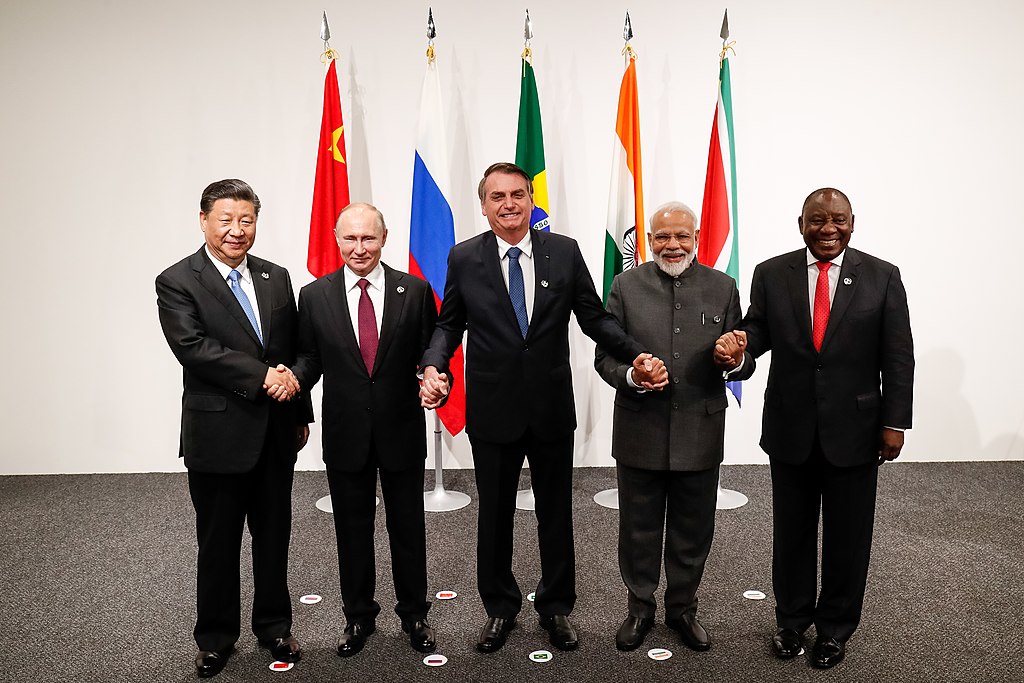
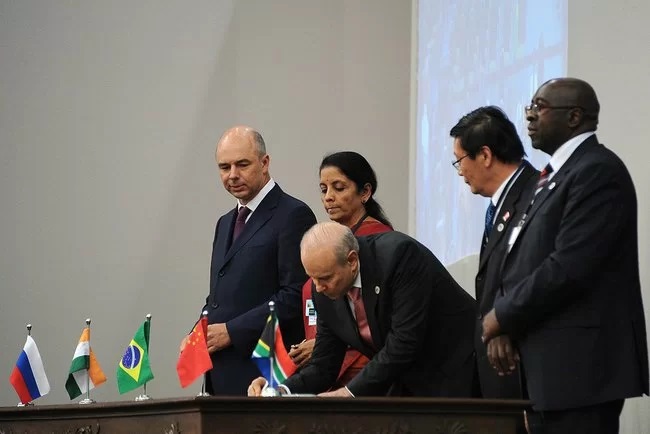
Brics full form is Brazil Russia India China South Africa. These are Brics country that is associated with. It was formulated in 2001 by economist Jim O’Neill of Goldman Sachs, in a report on growth prospects for the economies of Brazil, Russia, India and China which accounts for lions shared in World’s Production and Population.
What is Brics?
It is an association of Five emerging economies that includes Brazil, Russia, India, China and South Africa.
Its purpose aims to promote peace, security, development and cooperation and also to contribute significantly to the development of a fair and equitable world.
The first Brics summit held in Moscow, Russia and Originally this association is called BRIC and later changes to Brics after the association of South Africa in 2010.
And Since 2009, Annual summits were were conducted and the Brics headquaters is in Shanghai, China. This association developed a bank for its purpose called as Brics development and later the changed to New Development Bank(NDB).
India hosted fourth and Eight summit in 2012 and 2016 respectively.
How powerful is Brics?
BRICS members make 21% of world GDP, they reached this position in the past 15 years.
BRICS members have 43% of the World’s Population.
BRICS members have foreign reserves of $4.4 Trillion.
Why is Brics important to India?
It provides a platform for India to fight against terrorism by working with Russian and also with others and also to promote international peace and security and to preserve the India’s territorial integrity and independence.
And India’s Foreign Policy will surely help for achieving though its Brics cooperation as India’s plays a major role in it.
BRICS and India foreign policy
Ideally India’s foreign policy is set of some primary goals that includes:
to protect India from traditional and non-traditional threats
to create an external environment that is conducive for inclusive development of India so that the benefits of growth can reach the poorest of the poor in the country
to ensure that India’s voice is heard on global forums and that India is able to influence world opinion on issues of global dimensions such as terrorism, climate change, disarmament, reforms of institutions of global governance
to engage and protect the Indian Diaspora.
Also the main pillar of the India’s foreign policy is Anti Colonialism and Non Alignment towards any any powers.
Aim of BRICS
Making an exclusive trade block to increase trade co-operation.
To encourage the use of currencies other than the US dollar.
To develop regional co-operation.
To achieve inclusive growth, minimize trade issues, create global governance, shared prosperity, and ensuring international peace and security.
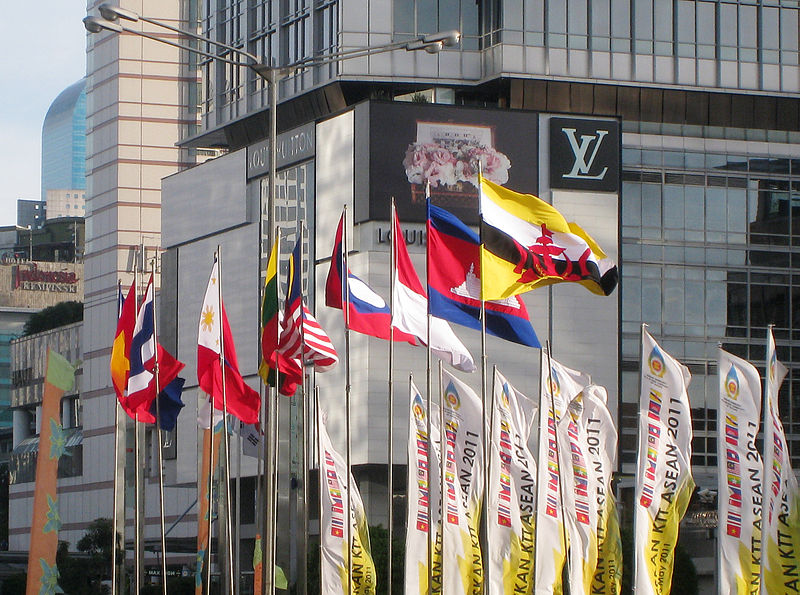
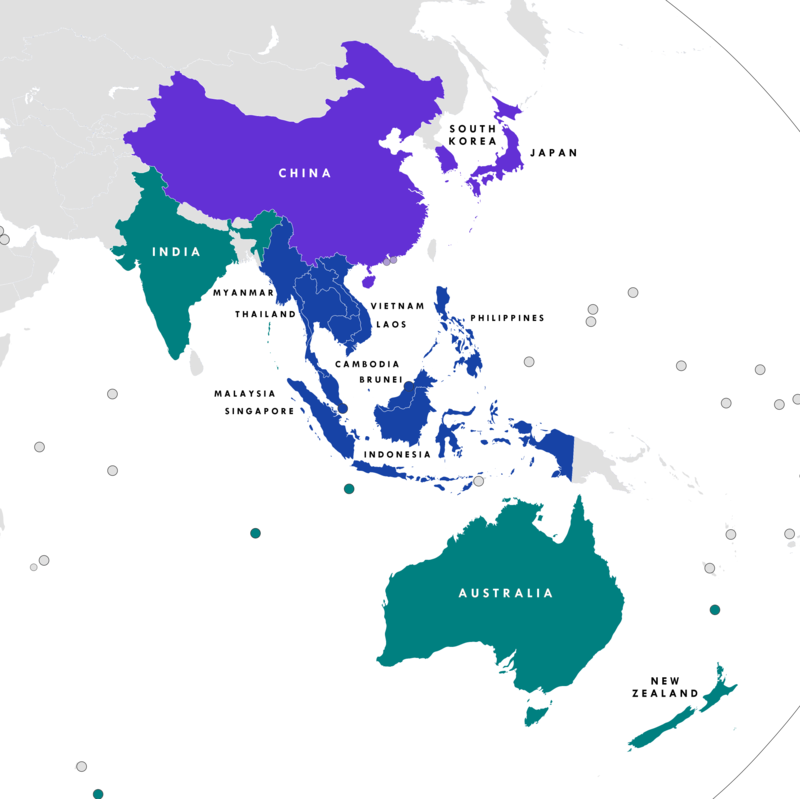
ASEAN is a regional grouping that promotes economic, political, and security cooperation among its ten members:
It was established in 1967 on August 8 by five countries Indonesia, Malaysia, Philippines, Singapore, and Thailand.
It was formed to create a common front against the spread of communism and promote political, and economic stability amid rising tensions in the Asia Pacific.
Then Cambodia, Myanmar, Brunei, Vietnam, and Laos joined this group. There six dialogue partners joined the ASEAN, China, Japan, India, New Zealand, Australia, and India.
The ASEAN Countries expect to gain from FTA, as it reduces tariff and non-tariff barriers. Foreign trade is vital for these Countries following Globalisation.
This group meeting is held once in three years. The Heads of Government of members are the highest forum for cooperation. The ministerial meeting of Foreign ministers is the next highest decision-making body.
India’s relationship with this grouping started in 1992. India became the “Sectoral Dialogue Partner” of ASEAN. The geographic structure of these countries with India helps faster exports and low-cost freights.
ASEAN was formed to accelerate economic growth. For social progress and cultural development in the region. These can be done through joint endeavours in the spirit of equality and partnership.
Purpose and Aim of its Declarations
To make faster economic growth and social and cultural development in this region.
For region peace and security.
Adherence to United Nations Charter principles.
Exchange of knowledge and experience in public sector auditing.
Research, Training and education facilities among members
Exchange of information between members with International organizations.
Functions
To promote the free movement of goods, services, and investment like the European Union.
Improving business competitiveness between businesses from different countries.
Narrow development gaps between member countries.
Make opportunities for market and investments for member nations.
ASEAN Countries
Economics
This community envision ASEAN as a single market and production base. By adoption of ASEAN vision 2020 by the leader of this group in 1997, has further envisaged these countries as highly competitive regions with a free flow of goods, investments, and equitable economic development.
Also to reduce poverty and socio-economic disparities.
Hanoi Plan of Action (HPA)
In the year 1998 Leaders of ASEAN adopted the Hanoi Plan of Action (HPA). According to this plan, it chartered a set of initiatives for economic integration to realize ASEAN vision 2020.
ASEAN Concord II
Then the leaders declared, the Declaration of ASEAN Concord II in 2003, which sets out to establish of community that was earlier targeted for 2020, and was accelerated to be formed in 2022.
This declaration consists of three pillars
India Relations
India became a sectoral dialogue partner in the year 1992 and also became a member of the ARF ( ASEAN Regional Forum) in the year 1996.
This group in India holding meetings at the summit level since 2002 on an annual basis. Also, India signed FTA( Free trade Agreement) with Thailand, which is also a member of this group.
Japan’s Relation with ASEAN
Japan and this group have had to build a cooperative partnership for the peace and development of both parties for more than 30 years. Also, there was a joint declaration signed between the both for the Cooperation to combat terrorism and Transnational Crime in the year 2014.
FAQ
Who are the 10 ASEAN countries?
Brunei, Cambodia, Indonesia, Laos, Malaysia, Myanmar, the Philippines, Singapore, Thailand, and Vietnam.
What is the term ASEAN way used for?
“ASEAN has sought to manage the diverse needs of its members by a process known as ‘the ASEAN way’. This means seeking to make a consensus on several problems and adhering to principles of non-interference in the internal affairs of its members.
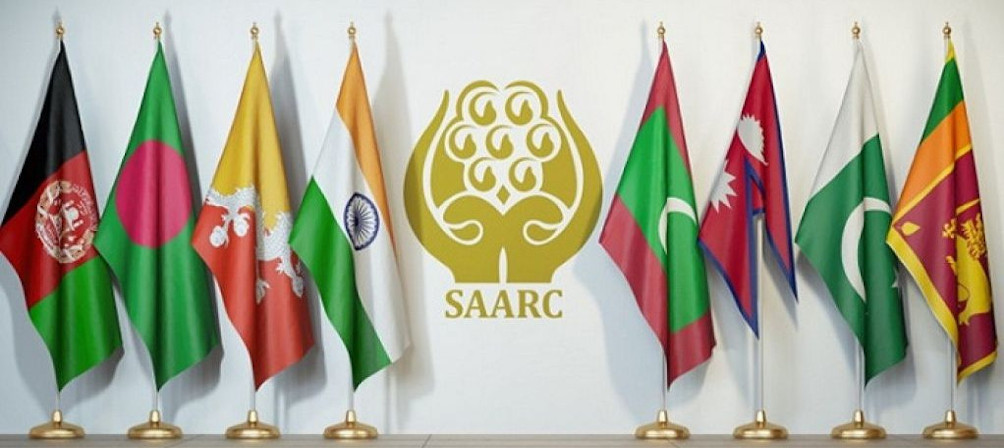
The SAARC or South Asian Association for Regional Co-operation is an organization of South Asian Nations established on Dec 8, 1985. It is established for the promotion of economic and social progress, cultural development within its members.
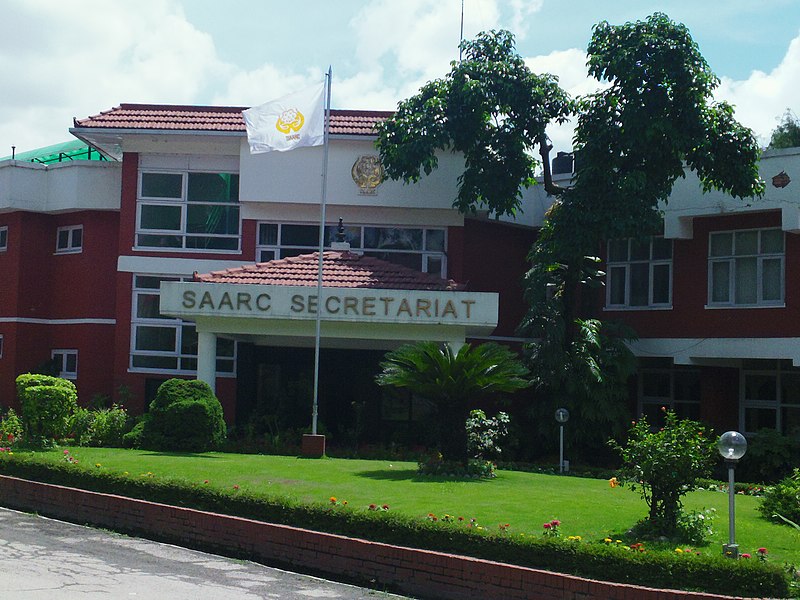
The members are India, Bangladesh, Bhutan, Maldives, Nepal, Pakistan, and Sri Lanka. In April 2007, Afghanistan joined this association. The primary aim is to increase the process of economic and social development of its member states. Its first summit was held in Dhaka in 1985 and its secretariat is in Kathmandu(Nepal).
It meets once in two years and was recently held in 2018 in Sri Lanka. Saarc comprises 3% of the area of the world and 21% of the world’s population and its economy is 4.21% of the economy of the world as of 2019.
Secretariat of the SAARC in Kathmandu Nepal By सृजना – Own work, CC BY-SA 3.0, https://commons.wikimedia.org/w/index.php?curid=24402342
Functions of SAARC
Maintenance of Cooperation in the region, Prevention of common problems between the associate nations, Improving the relationship between member nations. Removal of poverty through various programmes, Prevention of terrorism in its regions, etc
Achievements
SAPTA (SAARC Preferential Trading Agreement), for reduction of Tariff and non-traffic barriers on imports. Establishing technical committees for economic cooperation between its members in the field of Education, Health, Agriculture, etc.
Poverty reduction through various programmes passed in its member nation, a three-tier mechanism established for exchanging information. SAIC (SAARC Agricultural Information centre) was established in 1988, for fisheries, forestry, and agriculture, etc.
SADF(South Asian Development Fund) for Human Resource Development and infrastructure projects.
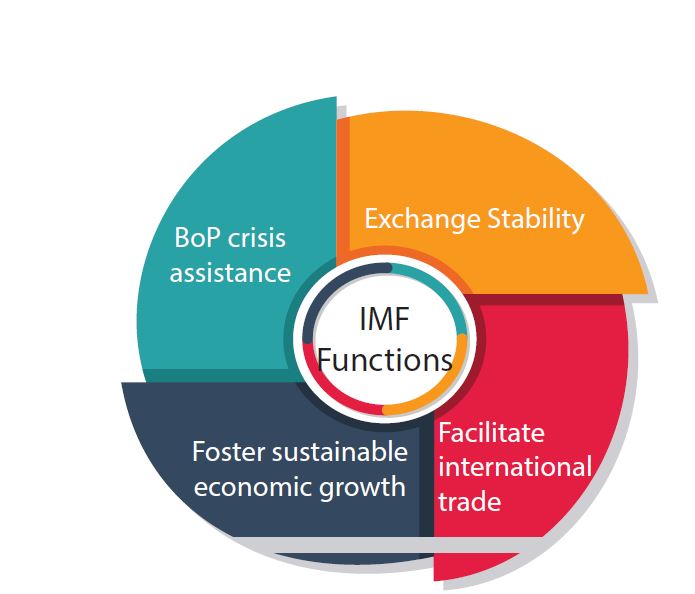
The aim of the IMF(International Monetary Fund) is to promote economic and financial cooperation between its members. It is established to assist its member nation over the BOP(Balance of Payments) disequilibrium in a short time.
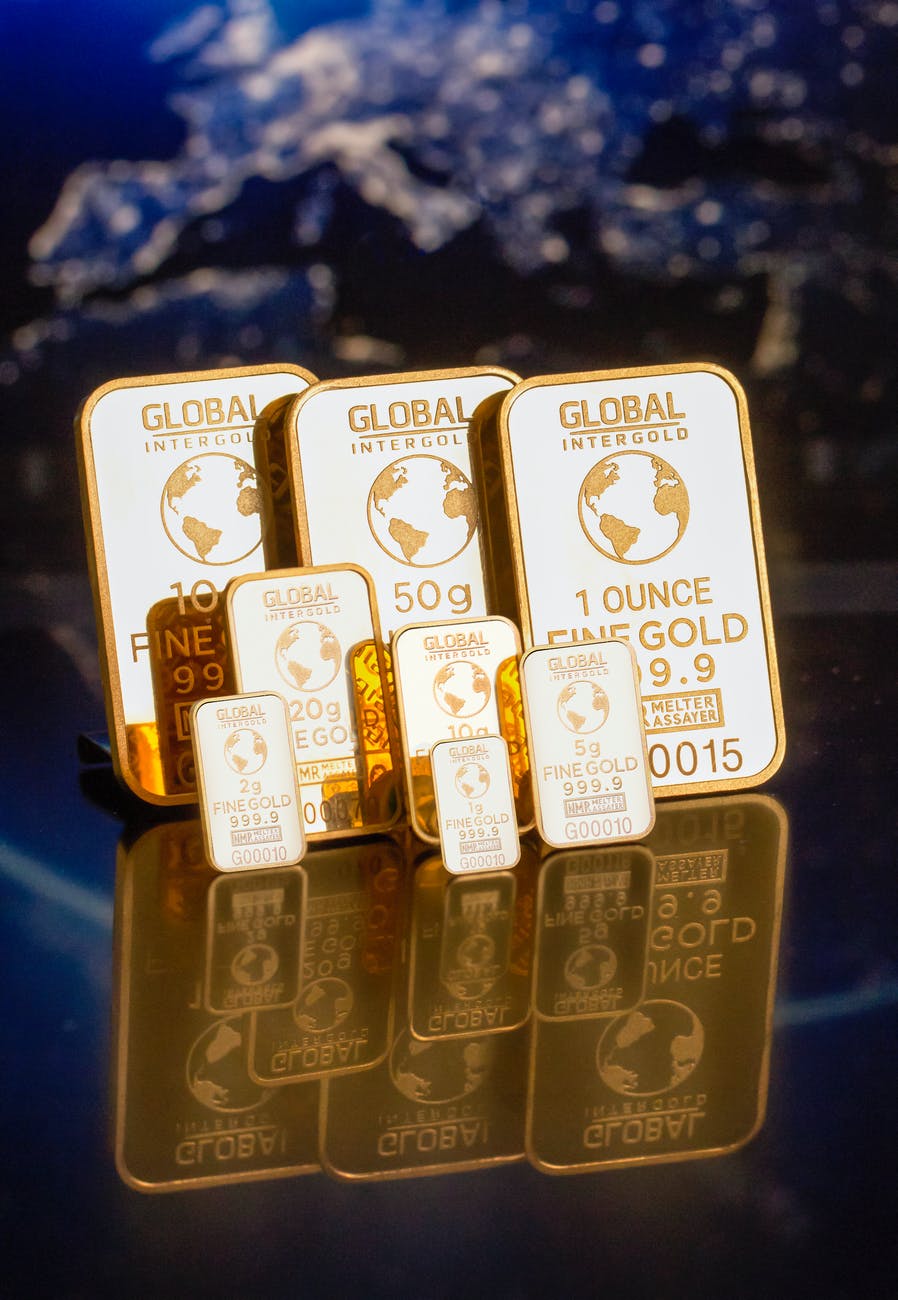
It has a currency of 189 members and the Republic of Nauru joined in 2016. IMF gold tranche – Gold Tranche or Reserve Tranche, represents a part of a member country’s quota with the IMF which exists in form of gold or foreign exchange.
For any member country, 25% of the total quota should be paid in the form of gold or foreign currency.
To increase monetary cooperation between its member nations.
Faster and balanced growth of trade internationally.
Curbing the competitive exchange depreciation to ensure exchange rate stability.
Ensuring smooth trade between its members by eliminating or reducing exchange controls.
Promoting investment in developing countries by developed countries.
To solve the international liquidity crisis.
Role of IMF in international liquidity
Imf offers borrowing facilities to its member nations to meet their deficits in Bop(Balance of Payments). Such borrowing facilities are useful when there is a problem with liquidity.
IMF is maintaining exchange rate stability. It emphasizes devaluation criteria.
It restricts its members to opt for multiple exchange rates. It also restricts its member to buy or sell gold at prices other than the declared par value.
2. Correcting BoP (Balance of Payments) Disequilibrium
International Monetary Fund helps countries in minimizing or eliminate the short period of BoP disequilibrium by lending or selling foreign currencies to the member nations.
3. Determining Par Value
International Monetary Fund determines the par value of the currencies of the member nations.
Every nation has to declare the par value of its currency in terms of the US Dollar or Gold, as per the articles of the Agreement of IMF.
By this Agreement, the IMF controls the international monetary system, in favour of some developed nations.
4. Balancing Demand and Supply of Currencies
International Monetary Fund’s import function is maintaining a balance between the demand and supply of different currencies.
It can declare a currency scarcely (Insufficient) that is in great demand.
It can increase scarce currency supply by getting it from a respected country or purchasing the same currency in exchange for gold.
Ex: If the Indian rupee has great demand in the international market, IMF either gets Indian Rupee from India or buys India Rupee in exchange for Gold.
5. Reducing Trade Restrictions
IMF also promotes reducing trade barriers such as reducing Tariffs ( Custom Duties/ Taxes) imposed by other member countries.
Also, aim to remove restrictions on the remittance of funds ( Funds coming from outside the country).
And also to avoid discriminating trade practices.
6. Providing Credit Facilities
IMF provides different lending and credit facilities to help its member countries.
It includes a basic credit facility for a period of 3 years, compensatory financing and a structural adjustment facility.
Other Functions of the International monetary fund
1. Financial
Balance of Payment assistance to short and medium-term.
2. Regulatory
Code of Conduct between its members
3. Consultative
Counselling and Technical consultancy.
International Monetary Fund offers Six Types of Facilities
1. Basic Credit Facility
IMF provides financial facilities such as assistance to the member when the country faces a Balance of Payments(Bop) by purchasing the fund in other currencies or Special Drawing Rights (SDR), which exchange its own currencies.
The loan is paid back to the members when the member repurchases its own currency or SDRs.
IMF allows its members to borrow unconditionally up to 25% of its quota it is called Reserve Tranche.
2. Extended Fund Facility
An additional borrowing facility of up to 140% of the regular member’s quota is given at a low-interest rate and limited up to a period of 3 years.
3. Compensatory Financing Facility
Compensatory financial assistance to the countries in which primary producing countries face a shortfall in export earnings. It was established in 1963. From 1981, the coverage was extended to the payment problem also.
This payment problem is caused due to cost fluctuations in cereal inputs.
Compensatory financing refers to international financial assistance to countries whose export earnings are impacted due to the decline in primary commodity prices. This system was instituted in 1963 by IMF.
This compensatory and contingency financing facility (CCFF), gives temporary finance to those countries that suffer from export receipts or temporary overrun in cereal import costs.
4. Buffer Stock Facility
It was started in 1969, the aim is to help agriculture-based countries with a financial contribution to buffer stock for the stabilization of prices of primary products.
buffer stock financing facility is designed to finance the member’s contribution to buffer stock arrangements in commodity agreements approved by the UN.
The Drawing under this method is permitted up to 50% of the Quota of the respective country.
5. Supplementary Financing Facility
The member countries suffer from payment problems due to the present quota size of borrowings etc, IMF provides supplementary financial assistance.
6. Structural Adjustment Facility
It was established in March 1986. Provides additional Balance of Payments (BoP) assistance on concessional terms to poorer members.
To assist low-income countries, In Dec 1987, Enhanced Structural Adjustment Facility (ESAF) was established.
The primary objective of SAF and ESAF is to force low-income members to make strong macroeconomic and structural programs to improve the balance of payment status and improve economic growth.
International Monetary Fund’s Achievements
1. Monetary Reserve Fund Establishment
The IMF funds are part of the sizeable stock of national currencies of different countries. IMF uses its stock to meet the foreign exchange requirements of its member nations.
2. Monetary discipline and Cooperation
IMF provides assistance only to those nations that take dedicated efforts to solve their problems.
3. Under Development Countries Problems
International Monetary Fund has taken many efforts and special interest by providing Financial assistance, overcoming BoP problems, etc.
In spite of all these efforts by the IMF, Under Developed countries continue to Under Developed, while developed countries develop more.
Relationship between India and IMF
India stood fifth in getting funds till 1970. India has good power to appoint the permanent Executive Director of the IMF.
India is one of the major beneficiaries of the IMF, in getting fund assistance. It is regularly paying its debt back to various agencies, and India is creditworthy.
India’s quota of Special Drawing Rights (SDR) is 5821.5 Million. India’s shareholding is 2.44% at the IMF, it is 3th largest.
Reports by IMF UPSC
Global Financial Stability Report
World Economic Outlook
Conclusion
IMF promotes international financial stability and monetary cooperation. It aimed to promote sustainable economic growth and reduce global poverty. IMF is governed by and is accountable to its 190 member nations.
Foreign direct investment (FDI) is a type of controlling ownership in a business entity in another country. It is differentiated from the Foreign Portfolio Investment by the notion of direct control.
FDI is an investment that is either inorganically by buying a company in a foreign country or expanding the operation of an existing business in another country. Example: Amazon Expanding its business in India, as Amazon is a US firm.
Also, FDI also includes mergers and acquisitions, constructing new facilities, intra-company loans, etc.
FDI is basically defined as constructing a new facility and having 10% or more voting stock in a company in economy, other than the investor in a foreign country.
FDI = Equity Capital + Long Term Capital + Short Term Capital
Foreign direct investment is involved in the participation in management, joint venture, transfer of technology, etc.
Foreign Direct Investment in India
FDI is one of the major monetary sources of development for India. The foreign player, investors, etc invest in growing private organizations. They also invest due to cheap labor and potentially high growth of the Indian economy.
The Foreign Direct Investment in India steadily increased since the economic liberalization after facing an economic crisis in 1991. Due to that, more than one crore direct and indirect jobs were generated.
Post Covid 19
To protect the Indian companies from the acquisition of foreign players, India changed its FDI policy post-Covid-19. As per the Department for Promotion of Industry and Internal Trade, there is no restriction on the FDI but now they will be scrutinized by the Ministry of Commerce and Industry, to protect the Indian companies.
Types of Foreign Direct Investment
There are four types of FDI, they are Horizontal, Vertical, Conglomerate, and Platform FDI.
a.Horizontal
In this FDI, an entity expands its operation in another country.
b.Vertical
In this FDI, the entity expands into another county by moving to a different level of the supply chain. That is the companies do different activities in the foreign countries but these works are related to their main business.
Ex: Monisha which is making Phones in the USA which is its main business but it develops its Software in India.
c.Conglomerate
In this FDI, a company is doing business in a foreign country that is completely unrelated to its main business in its own country. This type of FDI is uncommon.
Example: Revathi Makes TVs in the USA but it is making Ice Cream in India.
d.Platform
In this FDI, a business entity expands its operation into another country and its output is then exported to a third country.
Example: Sameksha is a Korean company, that makes cars in India and exports them to the USA.
Routes of Foreign Direct Investment
There are two routes of FDI’s in India. One is the Automatic route and the other is the Government route.
Automatic Route
In this route, FDI is allowed without the approval of RBI and the government of India.
Government Route
In this route, FDI is allowed after prior approval by the government and RBI. This application is processed by Foreign Investment Facilitation Portal.
IBRD is the Previous version of the present World Bank. IBRD full form is International Banks for Reconstruction and Development and it is the largest source of funding for developing countries globally.
In Bretton Woods Conference, July 22 1944, the term world bank was used in an economist article.
The object of the world bank is through its five institutions to reduce poverty, increase economic growth and quality of life in poor countries.
The five institutions of World Banks are:
International Bank for Reconstruction and Development
International Development Association
International Finance Corporation
Multilateral Investment Guarantee Agency
International Centre for Settlement of Investment Disputes
The world bank is operated by its member countries who are either lenders, borrowers, or donors.
Many developing countries use the World Bank’s help such as loans and grants, technical assistance, and policy advice.
The Banks work with various agencies such as Government agencies, civil society organizations, and other private sectors.
Recently the world bank changed some of its policies based on the current economic context. Some of the Achievements of IBRD with respect to the world bank are as follows.
By increasing the voting power of developing countries and increasing seats in the Board of directors for Sub-Saharan African countries, the world bank improves the representation and influence of developing nations in the bank group.
The most challenging task of the World Bank is to deal with Governance and corruption across sectors and countries.
This is for reducing poverty because the only capable and accountable states will create opportunities for everyone to develop themselves.
Increasing Transparency, Accountability and Access to Information
The world shares its information and experiences with a wide audience to increase the quality of operations about projects and programs ever before.
Modernizing the World bank
Since the bank stated in 1946, there were only 38 members, after the colony countries became independent and joined the World Bank and now the member has increased.
In order to make the bank a better series of reforms are taken, such modernizing its products and services, serve better to reduce poverty, improving the information sharing from within and outside the organization.
To provide better service five institutes were made part of the World Bank.
1.International Bank for Reconstruction and Development (IBRD)
It is established in 1945 and currently has 184 members.
The main aim of IBRD is to reduce the poverty of middle-income nations and creditworthy low-income nations by improving Sustainable Development by giving Loans, guarantees, and advisory services.
In the fiscal year of June 2018, IBRD’s net income and allocable income were $698 Billion.
Achievements of Ibrd includes providing financial services as well as strategic coordination and information services to its member countries that borrow from it.
It also provides financial risk management products such as foreign exchange swaps, currency conversion, interest rate swaps, commodity swaps, interest rate caps and floors.
It also provides protection to its borrowers against catastrophes and other special risk. It is providing finance after a natural disaster or declared state of emergency. It issues catastrophe bonds which transfers catastrophic risk from borrowers to investors.
The other four members of world bank that helps in the Achievements of Ibrd are IDA, IFC, MIGA, ICSID.
2.International Development Association (IDA)
It is established in 1960.
Internation Development Association provides support to the poorest nations by giving interest-free credits/loans and grants given by its member nations.
In the fiscal year of June 2018, its total finance was about $24 Billion.
3.International Finance Corporation(IFC)
It is started in 1956 with 176 members.
Internation Finance Corporation helps economic development in developing countries by giving loans to the private sector.
Its investment in 2018 is $23.3 Billion.
4.Multilateral Investment Guarantee Agency(MIGA)
It was established in 1988 with 164 members.
It encourages private companies to start a business in developing nations by giving a guarantee against a breach of contract, conflict, war, and currency inconvertibility.
Its business in 2018 was $5.3 billion.
5.International Centre for Settlement of Investment Disputes(ICSID)
It is established in 1966 with 140 members.
It encourages foreign investment in developing nations by giving facilities for arbitration (நடுவர்) of investment disputes.
Finance Commission of India is a quasi judicial body established to define the fiscal relationship between the state and the centre.
Finance Commission of India
The Finance Commission of India is established in 1951 to define the financial framework between the central government and state governments, it is a quasi-judicial body set up under Article 280.
The first Finance commission was established in 1951 under The Finance Commission (Miscellaneous Provisions) Act 1951. It aims to minimize the fiscal imbalance such as vertical and horizontal imbalances between the Centre and the states.
The finance commission of India is set up every five years and normally constituted two years before the period.
According to the constitution, the Finance committee will consist of a Chairman and four other members.
It is a temporary body and it is an autonomous body governed by the Government of India. The 14th finance commission was formed in 2013 and its recommendations were valid from 1st April 2015 to 31 March 2020.
The 15th Finance commission was formed in November 2017 and its recommendations will be implemented from 1 April 2020. The Current Chairman is N.K.Singh(2017).
Objectives and Function of Finance Commission of India
Article 280 (3) is about the functions of the finance commission of India.
It is the duty of the Finance Commission of India to make recommendations to the president of India as:
The Distribution of Taxes among the Centre and States, also the percentage of share of tax between the states.
As per Article 275, to determine the quantum of grants-in-aid to be given by the central government to the states and to define rules governing the eligibility of the state for getting such grants.
The distribution of taxes between the states and central is defined every five years by the Finance Commission of India.
The 15th Finance commission will begin in April 2020. Any other issues such as debt reliefs, financing of calamity relief of states, additional excise duties, etc are referred to the president of India by the commission.
Allocation of resources to the local bodies such as Panchayat and Municipalities.
History of Finance Commission of India
India is a Union of States, it suffers from Fiscal imbalances.
Fiscal imbalances between the state and centre result from states ( state and central) revenue and its expenditure.
This fiscal imbalance usually widens over time. To address the fiscal imbalances, then the law minister of India, B.R.Ambedkar established the Finance Commission in 1951.
Already there are several Articles mentioned in the constitution of India regarding resource sharing between the states and centre. They are:
Article – 269
Article -268
Article -270
Article -275
Article -282
Article -293
In addition to the above provisions, the Finance Commission of India acts as an institutional framework for resource sharing between states and centre.
Qualifications of its Chairman and Members
A Judge of High Court or one qualified same as Judge of High Court. One who has specialized knowledge of Finance and Accounts of Government.
One who has knowledge in administration and financial expertise or special knowledge of economics.
FAQ
Why finance commission is quasi judicial?
It is because it has all power of civil court by Code of Civil Procedure (1908) in matters of summoning & enforcing attendance and requisitioning any public record from any court of office.
And Finance Commission shall be deemed to be a civil court for purposes of sections 480 and 482 of the CrPC provided under Finance Commission Act”.
The finance commission works as an arbitrator, it means to distribute taxes among unions and states. Therefore it is called a Quasi-Judicial body.
Fiscal Policy is very popular among modern-day governments as we use it as an instrument of macroeconomic policy.
Fiscal policy has its importance because of the Great Depression and the introduction of ‘New Economics’ by Keynes.
What is Fiscal Policy?
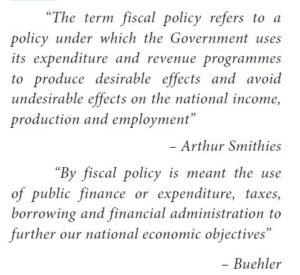
Fiscal policy definition
Fiscal Policy is nothing but changes in government expenditure and taxes to achieve macroeconomic policy goals such as Growth, Employment, and Investments,.
fiscal policy definition
Fiscal Instruments
It is a tool to implement the Fiscal Policy. We also call it Fiscal tools or Fiscal levers. Fiscal tools are Government expenditure, taxation, and borrowings.
Taxation
We must raise Taxation during inflation and taxed much decreased during the Depression. Taxes are of two types, Direct and Indirect Taxes.
Public Expenditure
Raising wages and salaries of the employees and controlling the aggregate demand for goods and services.
We raise public expenditure to control recession and we reduce public expenditure to control inflation.
Public Debt
The government gets money from the Public, for example, the Provident Fund (PF), etc and the government needs to pay to the public at the time of maturity.
Objectives of fiscal policy
Adequate Employment
To create employment opportunities for the public. Ex MGNREGS
Price Stability
The mismatch between Aggregate demand and aggregate supply causes Price Instability.
Inflation is caused because of an increase in demand for goods. If this is caused by Government expenditure, an excellent method to control inflation is to cut down public expenditure.
Taxation is another method to control inflation if inflation is caused by private spending as taxation reduces disposable income and aggregate demand.
Economic Growth
Tax is used to increase investment. Tax holidays and tax rebates for new industries increase investments.
In the areas where the private show’s interest in investment, the public sector invests in it.
When there is insufficient money for the government, it borrows from internal sources example Indian Banks, Reserve Banks, and external sources such as World Bank, IMF, etc
Equitable Distribution
A progressive taxation rate helps to reduce the gap between rich and poor.
Welfare schemes for weaker sections of society such as Noon meals in schools, subsidies, and free education.
Exchange Stability
Fluctuations in the international market cause movement in international exchanges. Tax benefits and subsidies to exports will boost the exports of domestic manufacturers.
Imposing import duties to non-essential items may benefit local producers. The reduction in the import duties of raw materials and machinery will make a reduction in production cost and make exports more competitive.
Capital Formation
By giving tax benefits to the economy lower people will increase their savings and increase their spending. Here there is capital formation.
Capital formation is important for economic development. Infrastructure developments such as power and transport increase private investments.
Regional Balance
Government expenditure was used to start Industries to make industrial activities increase in industrially backward regions.
Difference between monetary policy and fiscal policy
Monetary policy refers to the actions of the Reserve Bank to achieve macroeconomic policy. For example Price Stability. On the other Fiscal policy refers to the tax and spending policies of the Central Government.
Monetary policy is managed by the Reserve bank of India and whereas Fiscal policy is managed by the Ministry of finance.
Monetary policy is determined by the interest rate, for borrowing and injecting money into the economy. On the other hand, Fiscal policy is determined by capital expenditure and taxes.
In India, the Monetary Policy majorly deals with money, currency, and interest rates. On the other hand, under the fiscal policy, the government deals with taxation and spending by the Centre.
Monetary policy targets and tries to control inflation. But the fiscal policy does not have any specific targets.
Tools of fiscal policy in India
Tools of fiscal policy in India are Budget, Taxation, Public Expenditure, public revenue, Public Debt, and Fiscal Deficit in the economy.
In this, the primary tools are government expenditure and taxation.
Fiscal policy in India is taxation and spending. The main objectives of fiscal policy are full employment, economic growth, control debt, control inflation, re-distribution, etc.
Tools of Monetary Policy
Reserve bank of India has four primary monetary tools for managing the money supply. These are the reserve requirement, open market operations, the discount rate, and interest on excess reserves.
Fiscal policy is a critical component of economic management in India, serving as a powerful tool for achieving macroeconomic objectives. For UPSC aspirants, understanding the nuances of fiscal policy is essential to comprehending India’s economic strategy.
Definition and Fundamental Concept
Fiscal policy refers to the government’s use of taxation, public expenditure, and borrowing to influence the country’s economic landscape. It is fundamentally designed to guide economic growth, stabilize prices, and address socio-economic challenges.
Key Objectives of Fiscal Policy
The primary objectives of fiscal policy in India include:
Economic Growth
Maintaining a steady economic growth rate
Creating conditions for sustainable development
Price Stability
Controlling inflation
Regulating price levels to protect consumers and economic actors
Employment Generation
Aiming to achieve full or near-full employment
Investing in social and economic infrastructure to create job opportunities
Reducing Economic Inequality
Implementing progressive taxation
Providing tax exemptions to vulnerable classes
Imposing higher taxes on luxury goods
Types of Fiscal Policy
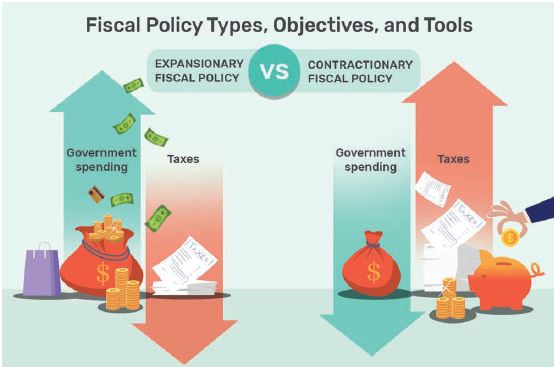
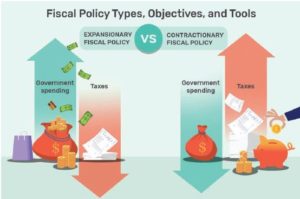
1. Expansionary Fiscal Policy
Increases government spending
Reduces taxes
Aims to stimulate economic growth and boost aggregate demand
2. Contractionary Fiscal Policy
Reduces government spending
Increases taxes
Designed to control inflation and manage fiscal deficit
3. Neutral Fiscal Policy
Maintains economic status quo
Aims to keep the economy stable
May cause moderate inflation
Tools of Fiscal Policy
The government employs several key instruments to implement fiscal policy:
1. Public Expenditure
Includes subsidies, welfare programs, public works projects
Directly influences economic activity by adjusting spending levels
2. Taxation
Modifies tax rates to impact economic behavior
Reduces or increases taxes to stimulate or cool down economic growth
3. Public Borrowing
Finances expenditures exceeding tax revenues
Uses instruments like bonds and national savings certificates
Legal Framework: FRBM Act
The Fiscal Responsibility and Budget Management Act (FRBMA) of 2003 provides a structured approach to fiscal management, focusing on:
Reducing fiscal and revenue deficits
Achieving macroeconomic stability
Ensuring transparency in fiscal operations
Conclusion
Fiscal policy in India is a dynamic and complex mechanism that plays a crucial role in steering the nation’s economic trajectory. By strategically using taxation, spending, and borrowing, the government aims to create a balanced and progressive economic environment. For UPSC aspirants, a deep understanding of fiscal policy is crucial to comprehending India’s economic challenges and strategies for sustainable development.
sustainable development goals is aimed at improving the living quality keeping nature in mind is the single minded goal of all nation and world bodies.
Sustainable DevelopmentGoalsTagets aim to address issues like poverty, water, health, sanitation, education, etc. The 2030 Agenda for the UN Sustainable Development Goals was adopted by all UN Members in 2015. It provides shared planning and blueprints for peace and prosperity for the people around the globe today and tomorrow.
To propose the Sustainable Development Goals (SDGs), the General Assembly set up a 30-member Open Working Group in 2013.
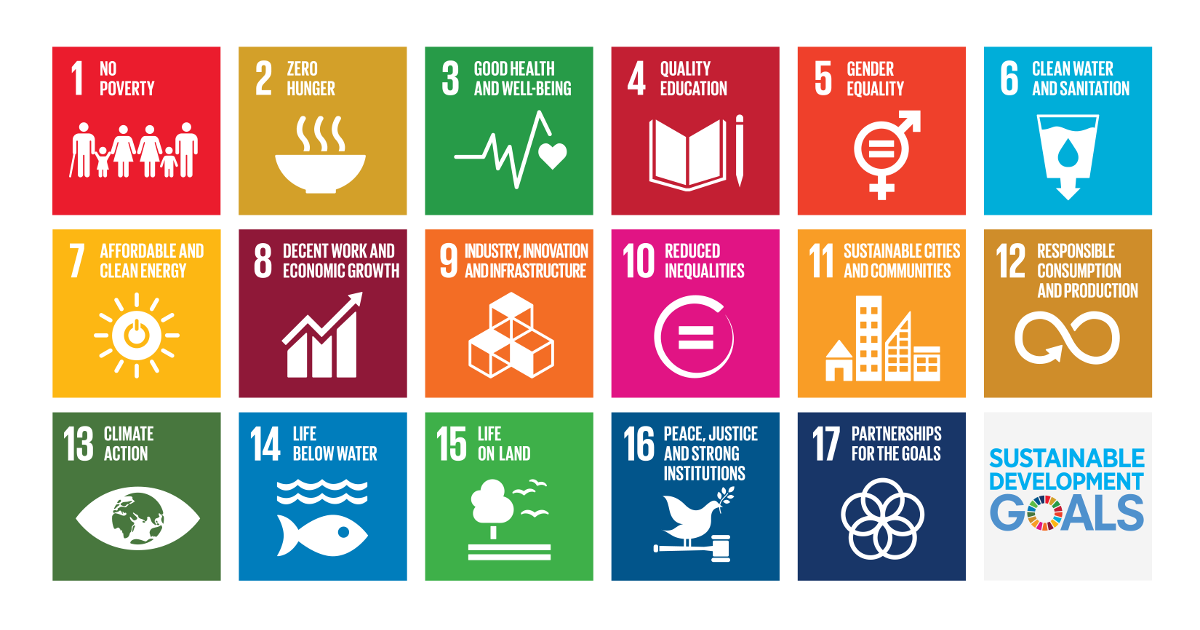
17 Sustainable Development Goals targets
Need for sustainable development
The need for sustainable development starts with the average global temperature and the climate change that caused it. As per the World Meteorological Organisation (WMO), the year 2016 was the warmest year, with a temperature of 1° C more than the pre-industrial era, and this is due to El Niño and warming by greenhouse gases.
This has been increasing since the Industrial Revolution. According to the International Energy Agency report of 2015, the concentration of CO2 in 2014 was greater than in the 1800s. The energy sector was the largest contributor to greenhouse gas emissions, and Co2 has the largest share.
The global emission profile shows that the distribution is very unequal among different nations. For example, the emission of carbon dioxide from the USA, EU, and China is the greatest among all the countries. India, with 39gt of carbon dioxide emissions, is comparatively less than the USA 232 gt, the European Union (190.2 gt, and China (176.2 gt. Know more about air pollution.
In both absolute and per capita emissions, India is way behind the three major carbon dioxide emitters. The composition pattern reflects different varieties for different countries; for example, India and China are from the manufacturing industry, which emits CO2. On the other hand, CO2 emissions are large in fuel combustion for electricity in the USA and EU.
SDG Goals
The UN General Assembly in the 17th session in September 2015 announced 17 Sustainable Development Goals and 169 targets.
These 17 goals and 169 targets for the next 15 years.
This replaces the Millennium Development Goals (MDGs) ending in 2015 and tries to address the areas that were not completed.
These goals were proposed at the United Nations conference Rio+20 on sustainable development in July 2012.
These sustainable development goals will be effective from 2016 to 2030.
Major highlights of the Sustainable Development Goals.
Eradicating poverty and combating inequalities.
Women and girls’ empowerment and promoting gender equality.
Improving health and education, and making cities much more sustainable.
Combating climate change, protecting the oceans and the forests.
Integrating social, economic and environmental dimensions.
Sustainable development with global partnership.
Effective follow-up and review architecture
Enhancing the capacities of stakeholders for better quality assessment.
Sustainable development using a compilation of data and information.
Purpose of SDG goals, targets and indicators?
The Sustainable Development Goals are the blueprint to achieve a sustainable and better future for all.
The SDGs try to address all-around global challenges such as poverty, inequality, climate change, degradation of the environment, justice, peace, etc.
The 2030 Agenda for Sustainable Development provides a blueprint for peace, prosperity, and dignity for the people of today and for the future.
The number of SDG goals, targets and indicators?
The 17 SDGs are defined in a list of 169 SDG targets.
Progress towards these 169 targets is agreed to be tracked by 232 unique indicators.
SDG Background
1: No Poverty.
2: Zero Hunger.
3: Good Health and Well-being.
4: Quality Education.
5: Gender Equality.
6: Clean Water and Sanitation.
7: Affordable and Clean Energy.
8: Decent Work and Economic Growth
9: Industry, Innovation, and Infrastructure
10: Reduced Inequalities
11: Sustainable Cities and Communities
12: Responsible Consumption and Production
13: Climate Action
14: Life Below Water
15: Life on Land
16: Peace, Justice and Strong Institutions
17: Partnerships for the Goals
SDG Cross-Cutting SDG Issues
Conclusion
SDG goals, targets and indicators aspire to ensure the health and well-being of people, animals, nature, etc. It is a bold commitment to end epidemics such as TB, Malaria, Aids etc by 2030. It also tries to achieve universal health coverage, to provide safe and effective access to medicine and vaccines for all people and animals. This is what is mentioned in SDG3.
By eradicating poverty, health issues, women and child abuse, racial abuse and abuse of the environment, we could achieve the dream of the Sustainable Development Goals.
India’s Progress on Sustainable Development Goals 2025-2026 in the News
PACT FOR FUTURE
India has reaffirmed its commitment to the ‘Pact for the Future’ during a recent United Nations dialogue. About the ‘Pact for the Future ’ ● It is a historic international agreement adopted at the United Nations Summit of the Future in September 2024. ● It is designed as a wide-ranging, action-oriented pact to make the international system more inclusive, effective, and fit to address 21st-century global challenges. The Pact includes comprehensive commitments on peace and security, sustainable development, climate change, digital cooperation, human rights, gender equality, youth empowerment, and the transformation of global governance.
Key aspects of the Pact for the Future include:
● Strengthening multilateralism and international cooperation to tackle global issues. Specific pledges to accelerate progress towards the Sustainable Development Goals (SDGs) and climate action under the Paris Agreement. ● A Global Digital Compact to enhance digital cooperation and close digital divides, ensuring technology benefits all societies. A Declaration on Future Generations, committing nations to act responsibly for the welfare of people yet to be born. ● Promises to advance peace, human rights, gender equality, youth participation, and inclusivity. Calls for reforms in the UN system, including Security Council reform and strengthening UN bodies to make global governance more effective. ● Focus on sustainable development financing, food security, international peace, climate change, and technological innovation.
UN-India Global Capacity-Building Initiative
India has launched projects with the United Nations under the Global Capacity Building Initiative for countries in Asia, Africa, and the Caribbean.
About the Global Capacity Building Initiative (Launched in 2023) ● The Global Capacity Building Initiative is a collaborative effort between India and the United Nations aimed at strengthening the capacities of countries in the Global South to achieve the Sustainable Development Goals (SDGs). ● The implementation is carried out through the UN India SDG Country Fund and the Indian Technical and Economic Cooperation Programme (ITEC).
2nd World Summit for Social Development (WSSD)
The 2nd World Summit for Social Development (WSSD) was held in Doha, Qatar, with India represented by the Union Minister of Labour and Employment, Dr Mansukh Mandaviya.
About the World Summit for Social Development (WSSD) ● The WSSD is a United Nations–convened series of summits aimed at advancing global social development, poverty eradication, and social justice. ● The first WSSD, held in Copenhagen in 1995, marked a global consensus on people-centred development. ● It resulted in the adoption of the Copenhagen Declaration on Social Development and its Programme of Action. ● The second summit, held in Doha in November 2025, focused on accelerating progress towards the Sustainable Development Goals (SDGs) by addressing persistent challenges such as inequality and limited social protection.
DAKSHIN (Development and Knowledge Sharing Initiative)
Launched during the 1st Voice of Global South Summit (2023) by the Government of India.
Aims to mobilise the Global South towards human-centric and sustainable development.
Functions as an accelerator for achieving Agenda 2030 and the UN Sustainable Development Goals (SDGs).
* * All the Notes in this blog, are referred from Tamil Nadu State Board Books and Samacheer Kalvi Books. Kindly check with the original Tamil Nadu state board books and Ncert Books.