Fertilizers and pesticides tnpsc notes

Manures and Fertilizers

Manures are decomposed and organic matter that is derived from animals and plants. As it supplies nutrients to the crops and plants, it is also beneficial in different ways.

Manures also enhance the biological activities in the soil, aeration and also improve the water holding capacity of the soil. As these Manures decompose slowly and release the nutrients slowly they can be used as organic fertilizers in agriculture.

Classification of Organic Manures

It is classified into three groups. One is of plant origin, and another is of animal origin. The third one is composite derived from both plants and animals.

1.Manures of Plant Origin

Oil Cake such as Edible oil cakes. Example: Groundnut cake, linseed cake, rapeseed cake, sesamum cake, etc. Non Edible cake includes Karanj cake, neem cake, castor cake, etc.

Also plant residues such as Straw, husks, stalks, sawdust, and would ask.

Green Manures: These are crops that are raised and converted into manures. Examples: Dhaincha and Sunn Hemp etc

2. Manures of Animal Origin

These manures are made from Animals, Poultry, or Fish leftovers. It includes animal’s settled sludge, (dry) dried blood, night soil and sludge manure, fish manure bonemeal, cattle dung and urine mixed, sheep dung and urine mixed, pig manure, poultry manure, etc.

3. Composite Manures

These are manures of both plant and animal origin. These are made using sugarcane trash, paddy straw, plant debris, weeds, etc.

4. Vermicompost

It is developed using earthworms. When earthworms consume organic matter and excrete it as cast and these casts are rich in plant nutrients. This is called Vermicompost.

Fertilisers

These are alternatives to Manures that are manufactured commercially from inorganic chemicals. It is ready to use and contains a high amount of nutrients than manures.

Chemical fertilizers are a source of single nutrients and therefore it is also called Sole Fertilizers.

Such fertilizers which provide more than one nutrient are called Mix or Complex fertilizers.

Advantages of Fertilizers

It is easily available and only a less or calculated amount of fertilizer can be used to get maximum benefit and it is cheaper.

It is available in different formulations and can be easily transported to different parts.

It is highly efficient and contains a lot of nutrition, that can be used even in arid regions such as deserts, etc, and can get maximum output.

Types of Fertilizers

Sole Fertilizers – It contains only a single nutrient. Ex:

Nitrogenous Fertilizers – Nitrogenous Fertilizers such as Urea, Ammonium sulphate, calcium ammonium nitrate, etc.

Phosphorus or Phosphatic fertilizers – Single superphosphate, triple superphosphate, dicalcium phosphate.

Potassic Fertilisers – Potash, and Potassium sulphate.

Mixed Fertilizers – It is also called complex fertilizers as these fertilizers are with a source of more than one macronutrient for the plant.

Example: di-ammonium phosphate (18:46:0), nitro-phosphate (20:20:0), ammonium phosphate (28:0:0), ammonium phosphate sulphate (16:20:0), calcium ammonium nitrate (8% Ca and 21–27% N), etc.

References

https://ncert.nic.in/vocational/pdf/kefc105.pdf

Physical quantities standards and units Tnpsc

SI Unit

For having uniform measurements across the world, scientists, engineers, mathematicians, etc all over the world adopted a common set of units to express measurements. This system is called SI units or the International System of units.

SI Units for common things

  • Lenght – Metre
  • Mass – KG (Kilogram)
  • Time – Second
  • Area of Surface – m2
  • Volume of Soild – m3
prefixes and abbreviation for si units
prefixes and abbreviations for si units

Lenght

The distance between one end and the other end is called length. The standard unit of length is ‘Metre’ which is represented by ‘m’.

Very small lengths can be measured in mm(millimetre) and cm(centimetre).

Longer length can be measured by kilometre(m).

  • 1km = 1000m
  • 1m=100cm
  • 1cm=10mm

Volume

Volume of Solids

Length is a fundamental quantity and it cannot be expressed in any other quantities.

By using length, one can find Area and volume.

The area is measured using two lengths. The area of the square is l x l as the length of both the sides are equal and the Area of the rectangle is l x b, as length and breadth are different and always length is greater than the breath.

Volume

The volume of Cube = m3 (As Length, breath and Height are equal)

Volume of Cuboid =w x h x l

Volume of Liquid

Volume measurements of liquid using a beaker, graduated cylinder etc By Unknown author – The New Student’s Reference Work, Public Domain, https://commons.wikimedia.org/w/index.php?curid=12677669

A liquid takes the shape of the container, it is easy to measure the volume of the liquid. To measure the volume of liquid, the liquid is poured into the container such as cylinder, beaker, burettes, pipettes, etc.

Nowadays, Graduated cylinders, beakers, pipettes, burettes are available with exact measurements to measure the volume of the liquid.

The volume of the liquids is usually measured in litres.

Volume of Gas

Unlike liquids, gases expand to fill the container. Also, gases get compressed when filling the container. As a result, it is not easy to measure the volume of the gas like measuring the volume of liquid.

Therefore the pressure at which the gases are kept in the container is taken into consideration. But the gases are measured in a cubic metre m3.

1 m3 = 1 kilolitre (kl or kL)
1 cm3 = 1 millilitre (ml or mL)
1 mm3 = 1 microlitre (µl or µL)

Mass and Weight

Mass is the measure of the amount of matter in an object. Whereas Weight is the gravitational pull experienced by the mass of the object.

SI Unit of Mass is kilogram and it’s represented by ‘KG”.

  • 1000 milligram = 1 gram
  • 1000 gram = 1 kilogram
  • 1000 kilogram = 1 tonne

Instruments used to measure the Mass are Beam Balance and Electronic Balance.

Beam balance works by comparing test objects with standard mass. Electronic balance works using different sensors calibrated to provide the accurate mass of a test object.

Time

Clocks are used to measure time. In earlier days people used instruments such as Sand clocks to measure time.

  • 1 Seconds = 1000
  • 1 Minutes = 60 seconds
  • 1 Hour = 60 Minutes or 3600 Seconds
  • 1 Day = 24 Hours
  • 1 Year = 52.1786 Weeks / 12 Months / 365.25 Days / 366 Days every 4 years

Atomic clocks provide the most accurate time and frequency standards are used as basic standards for international time distribution services.

Aqua derivatives, Alchemical symbols for elements, derivatives with Keyboard Unicode

Symbols for Aristotelian elements

Keyboard Code (Alt+x) Alchemical Symbol Elements
1F700🜀QUINTESSENCE
1F704🜄WATER
1F701🜁AIR
1F702🜂FIRE
1F703🜃EARTH
Symbols for Aristotelian elements

Symbols for important solvents

1F705🜅AQUAFORTIS
1F706🜆AQUA REGIA
1F707🜇AQUA REGIA-2
1F708🜈AQUA VITAE = spiritus vin
1F709🜉AQUA VITAE-2
1F70A🜊VINEGAR
1F70B🜋VINEGAR-2 (Distilled Vinegar)
1F70C🜌VINEGAR-3
Symbols for important solvents

Symbols for sulfur and mercury

1F70D🜍SULFUR
1F70E🜎PHILOSOPHERS
SULFUR
1F70F🜏BLACK SULFUR
1F710🜐MERCURY
SUBLIMATE
1F711🜑MERCURY
SUBLIMATE-2
1F712🜒MERCURY
SUBLIMATE-3
1F713🜓CINNABAR
Symbols for sulfur and mercury

Symbols for salt, vitriol, and nitre

1F714🜔SALT
1F715🜕NITRE
1F716🜖VITRIOL
1F717🜗VITRIOL-2
1F718🜘ROCK SALT
1F719🜙ROCK SALT-2
Symbols for salt, vitriol, and nitre

Symbols for gold and silver

1F71A🜚GOLD
1F71B🜛SILVER
Symbols for gold and silver

Symbols for iron, iron ore and derivatives

1F71C🜜IRON ORE
1F71D🜝IRON ORE-2
1F71E🜞CROCUS OF IRON
1F71F🜟REGULUS OF IRON
Symbols for iron, iron ore and derivatives

Symbols for copper, copper ore and derivatives

1F720🜠COPPER ORE
1F721🜡IRON-COPPER ORE
1F722🜢SUBLIMATE OF COPPER
1F723🜣CROCUS OF COPPER
1F724🜤CROCUS OF COPPER-2
1F725🜥COPPER ANTIMONIATE
1F726🜦SALT OF COPPER ANTIMONIATE
1F727🜧SUBLIMATE OF SALT OF COPPER
1F728🜨VERDIGRIS
Symbols for copper, copper ore and derivatives

Symbols for tin and lead ore

1F729🜩IN OR
1F72A🜪LEAD OR
Symbols for tin and lead ore

Development of science and technology in India after independence upsc

Development of science and technology in India after independence

Independent India has also witnessed tremendous growth in the sphere of science and technology. After 1947, Nehru became aware of the significant role of scientific research and technology in the progress of India.

India’s first national laboratory, the National Physical Laboratory was established in 1947. It was followed by seventeen such national laboratories specializing in different areas of research.

Nehru himself assumed the chairmanship of the Council of Scientific and Industrial Research. In 1952, the first Indian Institute of Technology, on the model of Massachusetts Institute of Technology, was set up at Kharagpur.

Subsequently, IITs were set up at Madras, Bombay, Kanpur, and Delhi. The expenditure on scientific research and science-based activities has increased year by year.

There are about 200 research laboratories in India carrying out research in different areas. The Department of Science and Technology (DST) which was set up in 1971 has been assigned the responsibility of formulating science policy.

Atomic Energy

India was one of the first countries in the world to recognize the importance of nuclear energy.

The Atomic Energy Commission was set up in August 1948 under the chairmanship of Homi J. Baba to formulate a policy for all atomic energy activities in the country.

The Department of Atomic Energy (DAE) was set up in 1954 as the executive agency for implementing the atomic energy programmes.

In 1956, India’s first nuclear reactor in Trombay near Bombay (first in Asia also) began to function.

Research and development work in the field of atomic energy and allied fields are carried out at three research centres, namely the Bhabha Atomic Research Center at Trombay, the Indira Gandhi Centre for Atomic Research, Kalpakkam, Tamil Nadu, and the Center for Advanced Technology, Chennai.

Space Research

India has also evinced interest in space research. The Indian National Committee for Space Research was set up in 1962. Side by side, a Rocket Launching Facility at Thumba came up.

The first generation Indian National Satellite System (INSAT-1) represents India’s first step towards implementing national requirements.

The INSAT – 1A and INSAT – 1B served the country’s needs in the field of telecommunications and meteorological earth observations. The ISRO [Indian Space Research Organization] looks after the activities in space science, technology, and applications.

The Vikram Sarabhai Space Centre at Trivandrum, the largest of the ISRO centres, is primarily responsible for indigenous launch vehicle technology. The ISRO Satellite Centre, Bangalore is the satellite technology base of the Indian space programme.

The SHAR Centre, encompassing the Sriharikota Island in Andhra Pradesh on the east coast of India is the main operational base of ISRO which is the satellite launching range.

Elements present in baking powder, its properties, and Uses

Baking Powder

Baking powder is a dry leavening agent used in baking to produce a light and fluffy texture. It is a mixture of sodium bicarbonate (NaHCO3), an acid, and a starch. The acid and starch help to keep the sodium bicarbonate from reacting until it is mixed with a liquid, such as water or milk. When the sodium bicarbonate reacts with the liquid, it produces carbon dioxide gas. It is a mix of carbonate or bicarbonate and a weak acid.

The reaction between the Acid and base present in the Baking Powder is prevented by including a buffer such as cornstarch. This gas is what makes baked goods rise.

Elements present in baking powder

The Elements present in baking powder are:

  • Sodium
  • Hydrogen
  • Carbon
  • Oxygen

There are four elements present in Baking Powder. The Baking Powder is chemically called Sodium Bicarbonate and its IUPAC name is Sodium Hydrogen Carbonate.

Baking powder formula

Its chemical formula is NaHCO₃.

Uses

  • Used for Baking, to increase the volume and lighten the texture of baked goods.
  • Acts as a raising agent in Cakes, Bread, and Biscuits
  • Frying: Baking powder can be used to make a light and airy batter for frying, such as tempura or fish and chips.
  • Tenderizing meat: Baking powder can be used to tenderize meat by breaking down the muscle fibers.
  • Cleaning: Baking powder can be used as a mild abrasive to clean surfaces, such as sinks and bathtubs.
  • Deodorizing: Baking powder can be used as a natural deodorizer to eliminate odors from refrigerators, garbage cans, and shoes.
  • Gardening: Baking powder can be used as a fungicide to prevent and control fungal diseases on plants.

Working on Baking Powder

As mentioned earlier, Baking Powder is used to lighten the texture and increase the volume of baked goods. this is done by relating carbon dioxide to the dough or batter by the acid-base reaction.

This acid-base reaction causes bubbles in the batter or dough, makes them expand and leaves the mixture. It even releases carbon dioxide at room temperature as soon as it is dampened (To make something a litter wet).

Baking Powder vs Yeast

Baking powder and Yeast, both of them do the same job. But Baking power is used in some end products where the fermentation flavors are undesirable.

Also to speed up the production of baked goods. This is because the carbon dioxide is released at a quicker rate than through the fermentation of yeast. After introducing baking soda into the market, it revolutionized by reducing the time and labor involved in Baking.

Also, it led to the creation of new food products such as Cakes, biscuits, Cookies, etc.

References

https://en.wikipedia.org/wiki/Baking_powder

Uses of Isotopes in Daily life

It is used daily in the home, school, everywhere, and even in our food.

Uses of Nuclear Physics

The application of Nuclear Physics is Power production and military defense. And apart from it has a wide range of applications in Medicine, Agriculture, Carbon dating in Archeology, and also in several industries.

Agriculture

Radio Isotope of Phosphorous (P-32) helps in the productivity of crops. The radiation from isotopes helps to helps to kill pests and insects.

Some perishable cereals when exposed to controlled radiation. Its shelf-life gets increased. Small doses of radiation control sprouting and spoilage of Onions, Potatoes, and grams.

Applications of Nuclear Physics
Nuclear Application – Power Production By Avda – Own work, CC BY-SA 3.0, https://commons.wikimedia.org/w/index.php?curid=26894741

Medicine

Applications of Nuclear Physics in medicine using radioactivity are divided into two types: One is Diagnosis and another is therapy. The radioisotopes are used to treat the circulatory disorders of the blood, defects of bone metabolism, locate tumors, etc.

Example of radioisotopes used for medical diagnosis is hydrogen, carbon, nitrogen, sulfur, etc.

  • Na24 – Sodium Isotope used for the effective functioning of the heart.
  • Fe24–Iron Isotope used for anaemia diagnosis and treatment.
  • P32–Phosphorous isotope used to treat skin diseases.
  • Co60 (Cobalt) and Au198 (Gold)–Cobalt and Gold Isotopes used in the treatment of Skin Cancer.

Nuclear Radiation is used to sterilize medical equipment and devices.

Applications of nuclear physics in Industries

Radioactive Isotopes are used as tracers to detect manufacturing defects like cracks, leaks, Packaging faults.

Gauges with radioactive sources are used to check the level of gases, liquids, and solids in industries.

CF252 (Californium) – The Isotope of Californium is used in Airlines to detect explosives in the luggage.

Am241 (Americium)–Americium Isotope a smoke detector.

Archeological Research

Radiocarbon dating is used to find the age of historical objects such as fossils, paintings,.

Helium-Neon Laser Construction and Working

Helium-Neon Laser

Helium-Neon Laser or He-Ne Laser is a gas laser. That uses Helium and Neon. It operates at a wavelength of 632.8 nm in the red part of the visible spectrum. And it is the first continuous wave (CW) laser constructed.

Helium Neon Laser construction and working

A continuous and strong laser beam can be produced by gas lasers. Helium-Neon Laser Consists of a quartz discharge tube with helium and neon gas in the ratio of 1:4. That is One part of Helium with four parts of Neo gas. There is total pressure of 1 torr insides a small electrical discharge.

The gases filled in the quartz tube at the ratio of 1mm of mercury (Hg). Similar to a ruby laser, one end of the tube is a fully reflecting mirror and another end of the tube is partially reflecting error.

A strong radiofrequency generator is used to produce a discharge in gas. This is done to excite helium atoms to a higher energy level. The energy level diagram for the Helium-Neon laser system is shown in Figure.

Working of Helium Neon Laser

energy level diagram of he ne laser

When an electric discharge passes via the gas, the electron in the quartz discharge tube strike with the Helium and Neon atoms. This excites the Helium and Neon atoms and makes them move to the metastable states of energy 20.61 eV for Helium and 20.66 eV for Neon, above the ground state.

Here high voltage DC is used a pump source. This high voltage DC produces high energetic electrons that travels through the gas mixture.

Some of the exciting Helium atoms pass their energy to unexcited  Neon atoms by collision. Thereby Helium atoms induce a population inversion in Neon atoms.

When an exited Neon atom falls suddenly from the metastable state at the energy level of 20.66 eV to the ground state at the energy level of 18.70 eV it emits radiation of 6328 Å photon in the visible spectrum.

This photon travel via the gas mixture, it gets reflected again and again inside the quartz tube due to mirrors placed at the end.It stimulates excited neon atoms and emits a fresh 6328 Å  photon that is in phase with the stimulating photon. The transition from 20.66 eV to 18.7 eV level is the stimulated laser transition.

In Helium-Neon laser, the gain is an inverse function of the radius of the gas tube. This is due to the lower level of the laser transition is depopulated by the collisions of neon atoms with walls.

The part of output radiation escapes from the partially transparent (reflecting) mirror on the other side. The neon atoms fall from 18.7 eV level to lower state E via sudden emission of incoherent light.

For this phase E, the Neon atoms are taken down to the ground state by colliding with the wall of the tube. Thereby the end transition becomes radiationless.

The visible output of the He-Ne Laser has a long coherence length and excellent spatial quality which makes it a good source for holography and also as a wavelength reference for spectroscopy.

Applications

He-Ne lasers have a large number of industrial and scientific uses. It is used in lab demonstrations in optics. It is because of its low operation cost compared to other lasers, and also it produces beams of similar quality in terms of spatial coherence and long coherence length.

It is once used in Pioneer LaserDisc players and discontinued later. The barcode scanners in the supermarket once used red He-Ne lasers and were later discontinued.

Also, a stabilized Helium-Neon laser is used as a benchmark system for the definition of the meter.

Conclusion

This article is for the topic ‘Laser’ for the Tnpsc exam. We have discussed the Construction and working Helium-Neon Laser. And also its applications in daily life. Also, check its continuation from the below links.

References

Ruby laser construction and working short notes

Ruby laser construction and working

ruby laser construction and working
ruby laser diagram

The Ruby laser was developed in 1960 by T.Maiman. It is made of a single-crystal of ruby rod. The dimensions are 10cm in length and 4.4 cm in Radius (8.8 cm diameter).

Ruby is nothing but a crystal of Aluminium oxide Al2O3. In this system, Al3+ ions are replaced by Cr3+ ions. Where Al is aluminium, and Cr is Chromium.

The end of the rod is parallel and flat. One end is the Ruby rod is fully silvered. Another end is semi-transparent and partially silvered.

 The ruby is surrounded by a tube of Xenon Flash, to provide Photo energy to excite chromium ions to the upper energy level.

In Xenon Flash tube, flashes are produced that last for several milliseconds and with each flash few thousand joules are consumed.

Principle of Ruby Laser

ruby laser energy level diagram
energy level diagram of ruby laser

The above diagram indicates an energy level diagram of chromium ions in a ruby laser that shows the excitation and decay of atoms.

The Chromium ions are in the grounded state E1 in the Normal state. When the ruby rod is illuminated by Xenon Flash, the 5500 Å Radiation (green colour)  photons are absorbed by chromium ions pumped to the excited state E3.

The exited ion provides some energy to the crystal lattice and decays without giving radiation to the metastable state E2. As the state E2 has a longer lifetime (10-3 s), the number of ions increases in this stage.

In the stage between the states E2 and E1, the population inversion is achieved. When the excited ion in the metastable state E2 falls suddenly to the ground state E1, it emits a photon of wavelength 6943 Å.

This photon goes via the ruby rod and is reflected back and forth by the silvered ends til it stimulates other excited ions and makes them emit a fresh photon in phase with the stimulating photon.

Thus the reflections create more stimulated emission this is called amplification by stimulated emission.

This stimulated emission is laser beam producing. Finally, a laser beam of red light of wavelength 6943 Å comes out via the partially silvered end of the crystal.

Application of ruby laser

It is mainly used for research, Drilling holes in hard materials, and Tatoo removal, Due to its low power own output, it is used in Toys.

It is used in high-speed photography.

Drawbacks of the ruby laser

It is difficult to maintain the population inversion. Also, it requires a high power source. The output is not continuous, it gives output only for a few duration.

Ruby laser produces a low output, as a result, it has fewer applications. In some applications, water coolant is necessary for laser output stability.

Stem cell therapy for knee cartilage regeneration in India Upsc

Stem Cell Therapy

 stem cell therapy for the knee
Stem Cell Therapy for the Knee in India

Before seeing Stem Cell Therapy for the Knee, we need to what is stem cell therapy?

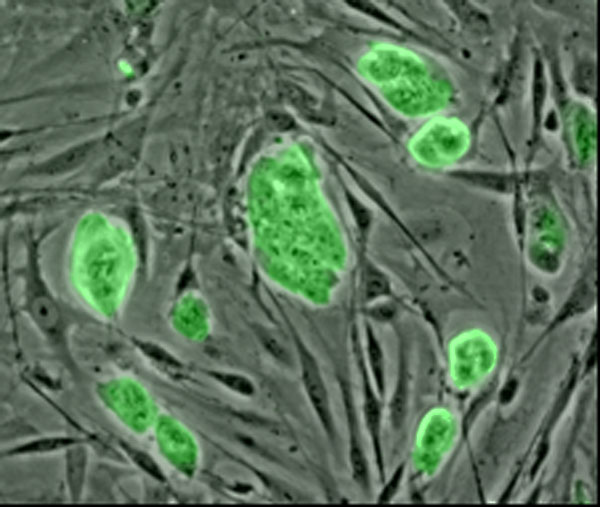
This therapy uses stem cells to treat a medical condition (disease). Earlier there was only Hematopoietic stem cell transplantation available, it is usually taken from bone marrow transplantation.

Now several types of research are being carried out to find new sources of these cells to treat neurodegenerative diseases. Also for diabetes and heart disease.

Stem Cell Therapy for the Knee

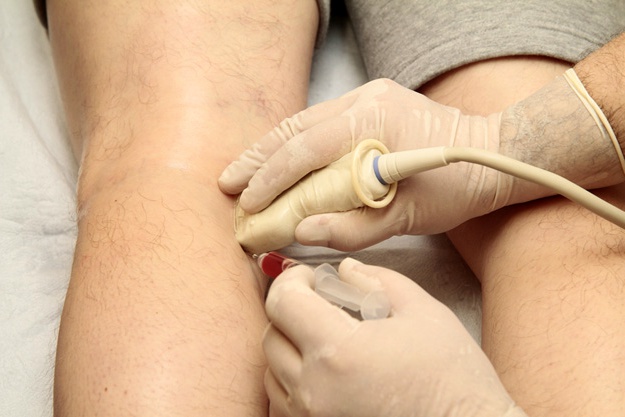
osteoarthritis stem cell treatment involves injecting the stems cells into the knee with Osteoarthritis. Injecting stem cells directly into the joint manipulates endogenous cells to increase the regenerative capacity.

Injections for knees

 Osteoarthritis will cause damage to the cartilages and it will result in pain, inflammation, etc as the damage to cartilage lead to friction increase. As you know, the cartilages cover the bone ends to make them glide smoothly against each other with minimal friction.

The idea here is to use the body’s own healing mechanism to repair the cartilage using Stem Cell Therapy. By this, the prime aim is to repair the damaged cartilage, which results in decreased pain and inflammation.

By doing so we could possibly prevent knee cap replacement surgery or postpone it. Stem Cell Therapy for Knee treatment involves, taking little blood, concentrating them together, and injecting them into the knee.

Based on research, the results were in favor of this treatment, where it improves the arthritis symptoms of the knees. This has shown positive results for six months to several years.

This treatment does not result in cartilage regrowth. Also, it has an advantage over knee replacement as the recovery time can last for several months. The best therapy for knees used by Doctors are the Mesenchymal stem cells (MSCs) 

Side Effects Stem Cell Therapy for the Knee

It has no or minimal side effects. However, some people have experienced pain and inflammation. And also it is too early to determine the effects as it is the latest addition to the medical field.

Conclusion

Research into this therapy for the Knee is ongoing. Most of the results also are positive and it is too early to determine its success rate and side effects. The success rate is almost 75%.

FAQ

  1. Can stem cells treatment regrow the knee cartilage?

Statistically, a simple stem cell injection into the joints that do not want surgery provided good results.

2. Can stem cell therapy replace cartilage?

RECLAIM cartilage repair technique mixes chondrons from debrided tissue with donor autologous stem cells to create a biologic filler for the repair of damaged knee cartilage. This procedure can be completed in a single surgery.

3. What is the success rate of stem cell therapy for knees?

These ortho-biologic injections reduce knee pain by as much as 75% based on the study.

4. How long do stem cell knee injections last?

Stem cells as a treatment for arthritis have shown lasting results anywhere from six months to several years based on several studies.

5. Can Stem Cells Regrow Bone?

Bone regeneration is a hot topic in regenerative medicine. The bone regeneration process may improve effectively and quickly when stem cells are used.

For this stem cells are used with biomaterials or scaffolds and growth factors to speed up the bone healing at the fracture site.

References

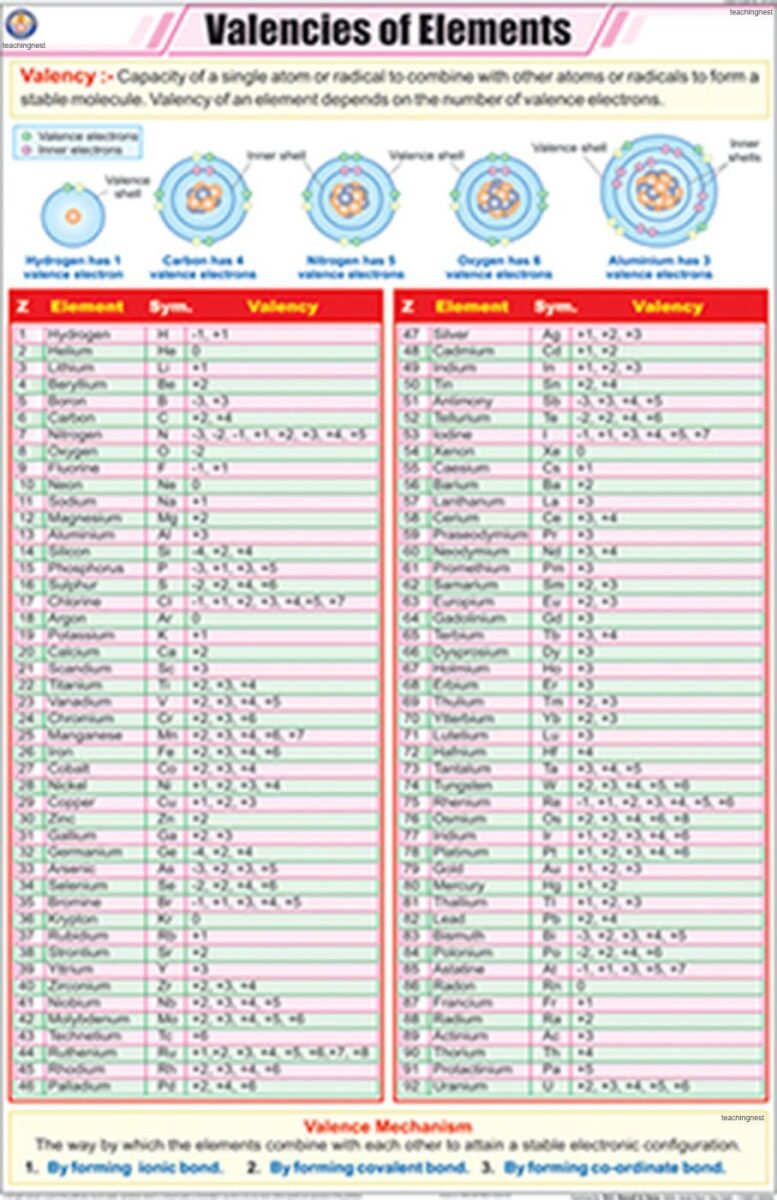
Valencies of all 118 elements and valency chart

Valencies of all 118 elements

118 elements with symbols and valencies Pdf download

Valencies of all 118 elements and valency chart
NoSYMBOLELEMENTVALENCE          
1HHydrogen10-1        
2HeHelium0          
3LiLithium1-1         
4BeBeryllium2          
5BBoron321        
6CCarbon4321-1-2-4    
7NNitrogen543210-1-2-3  
8OOxygen210-1-2      
9FFluorine0-1         
10NeNeon0          
11NaSodium1-1         
12MgMagnesium2          
13AlAluminum31         
14SiSilicon4321-1-2-4    
15PPhosphorus543210-1-2-3  
16SSulfur6543210-1-2  
17ClChlorine6543210-1-2  
18ArArgon0          
19KPotassium1-1         
20CaCalcium2          
21ScScandium321        
22TiTitanium4320-1-2     
23VVanadium543210-1-2   
24CrChromium6543210-1-2-3-4
25MnManganese76543210-1-2-3
26FeIron6543210-1-2  
27CoCobalt543210-1    
28NiNickel643210-1    
29CuCopper43210      
30ZnZinc210        
31GaGallium321        
32GeGermanium4321       
33AsArsenic532-3       
34SeSelenium6421-2      
35BrBromine754310-1    
36KrKrypton20         
37RbRubidium1-1         
38SrStrontium2          
39YYttrium32         
40ZrZirconium43210-2     
41NbNiobium543210-1-3   
42MoMolybdenum6543210-1-2  
43TcTechnetium76543210-1-3 
44RuRuthenium876543210-2 
45RhRhodium6543210-1   
46PdPalladium420        
47AgSilver3210       
48CdCadmium21         
49InIndium321        
50SnTin42-4        
51SbAntimony53-3        
52TeTellurium65421-2     
53IIodine75310-1     
54XeXenon864320     
55CsCesium1-1         
56BaBarium2          
57LaLanthanum32         
58CeCerium432        
59PrPraseodymium432        
60NdNeodymium432        
61PmPromethium3          
62SmSamarium32         
63EuEuropium32         
64GdGadolinium321        
65TbTerbium431        
66DyDysprosium432        
67HoHolmium32         
68ErErbium3          
69TmThulium32         
70YbYtterbium32         
71LuLutetium3          
72HfHafnium4321       
73TaTantalum54321-1-3    
74WTungsten6543210-1-2-4 
75ReRhenium76543210-1-3 
76OsOsmium876543210-2 
77IrIridium6543210-1   
78PtPlatinum65420      
79AuGold753210-1    
80HgMercury21         
81TlThallium31         
82PbLead42         
83BiBismuth531-3       
84PoPolonium642-2       
85AtAstatine7531-1      
86RnRadon20         
87FrFrancium1          
88RaRadium2          
89AcActinium3          
90ThThorium432        
91PaProtactinium543        
92UUranium65432      
93NpNeptunium765432     
94PuPlutonium765432     
95AmAmericium765432     
96CmCurium65432      
97BkBerkelium432        
98CfCalifornium5432       
99EsEinsteinium432        
100FmFermium432        
101MdMendelevium321        
102NoNobelium32         
103LrLawrencium32         
104RfRutherfordium43         
105DbDubnium54         
106SgSeaborgium654        
107BhBohrium76543      
108HsHassium87432      
109MtMeitnerium654321     
110DsDarmstadtium654321     
111RgRoentgenium3-1         
112CnCopernicium21         
113NhNihonium1          
114FlFlerovium2          
115McMoscovium31         
116LvLivermorium42         
117TsTennessineunknown          
118OgOganesson8642       
Tatvo ki Sanyojakta ka chart (Valency chart)

1 to 30 elements with symbols and valency

NoSYMBOLELEMENTVALENCE
1HHydrogen10-1
2HeHelium0
3LiLithium1-1
4BeBeryllium2
5BBoron321
6CCarbon4321-1-2-4
7NNitrogen543210-1-2-3
8OOxygen210-1-2
9FFluorine0-1
10NeNeon0
11NaSodium1-1
12MgMagnesium2
13AlAluminum31
14SiSilicon4321-1-2-4
15PPhosphorus543210-1-2-3
16SSulfur6543210-1-2
17ClChlorine6543210-1-2
18ArArgon0
19KPotassium1-1
20CaCalcium2
21ScScandium321
22TiTitanium4320-1-2
23VVanadium543210-1-2
24CrChromium6543210-1-2-3-4
25MnManganese76543210-1-2-3
26FeIron6543210-1-2
27CoCobalt543210-1
28NiNickel643210-1
29CuCopper43210
30ZnZinc210
* * All the Notes in this blog, are referred from Tamil Nadu State Board Books and Samacheer Kalvi Books. Kindly check with the original Tamil Nadu state board books and Ncert Books.