Uy Scuti vs Sun is the most discussed topic in recent years. So we try to answer all the possible comparisons and questions arising out of it. First, we want to know What is Uy Scuti? It is a supergiant star that is present in the constellation Scutum.
It is currently the largest star by radius discovered by Humans. When uy scuti is compared to the Sun, its volume is almost 5 billion times that of the Sun. It is very big, and if it is replaced with that of the Sun in the Solar system, its photo-sphere would engulf Jupiter.
This supergiant star was first catalogued in 1860 at Bonn Observatory by German Astronomers.
The characteristics of Uy Scuti are: It is a bag of dust enshrouded bright red supergiant star and it is classified as a semiregular variable with a pulsation period of 740 days(approx). It is calculated that its brightness is 100,000 times more than the Sun.
It is the most luminous star out of the three-star present in the Galactic Center region. The other two are AH Scorpii and KW Sagittarii.
Uy Scuti
UY Scuti (BD-12°5055), is a star that is categorised as an extreme red hypergiant or supergiant star in the Scutum constellation. It has a radius that is 1700 times larger than the radius of the sun.
This red hypergiant star is approximately a distance of 9500 light years away from the earth.
Now let us compare Uy Scuti vs Earth and How big is Uy Scuti?
How big is uy scuti?
The radius of Earth is 6371 km and the radius Uy Scuti is 1.188×10⁹ km. That size earth so small compared to it, that is you can 4 quadrillion Earth into Uy Scuti.
It is 1700 times bigger than the Sun and it’s mass 30 times Heavier than our Sun. Its size is 8 times the AU of Sun and Ear. (1 AU = Distance from Sun to Earth = 149,597,870.7 km)
Uy Scuti is a star and our Earth Planet. That means our earth does not produce or emit light.
Also Earth is solid, it is built by rocks where as Uy Scuti is a star made of gases.
Earth is present in the solar and it is present in constellation Scutum in the the milky way.
By JoeyPknowsalotaboutthat – Own work, CC BY-SA 4.0, https://commons.wikimedia.org/w/index.php?curid=63075349
Can Uy scuti be seen from Earth?
As it is located in the our milky way at distance of about 5219 light years from the earth, it can be seen.
It can be seen since it is a pulsating star that changes its brightness regularly.
What would happen if Earth orbited Uy scuti?
If we put Earth in orbit of Uy Scuti, that is 1.5 trillion km away from it. The reason we place 1.5 trillion km away from it because our planet has life and this distance is best to be habitable.
Our earth would take about 10,000 years to complete one revolution. Then comparing to that revolution, each season on the earth would last 2500 years.
What is the lifespan of Uy scuti?
It has completed its 90% of its lifespan. Only 10% is left , than means it has only few million years.
Why is Uy scuti so big?
It is currently classified as a red hypergiant variable star, that is it is on the verge of dying. Star usually grow big during its last stages of its lifespan.
Based on its size scientist belive that it is no longer in its younger day or in its main sequence. This is the probable reason for its big size.
UY Scuti distance from Earth
The distance between them is more than 5,100 light years.
How long will it take to get to Uy scuti?
Using a Space Probe for example New Horizon that would take little under 20000 years to travel just one light-year if it travels at a speed of 47 Mach or 58536.669 Kmph.
By Considering the distance of Uy Scuti from the earth which is 5100 light-years, the New Horizon space probe might take somewhere around 102000000 Year to UY Scuti.
Conclusion
We compared Uy Scuti vs Earth according to it size, locating, nature, distance etc. If any question arise to its relation, kindly mention in the comment section, we’ll try to answer it.
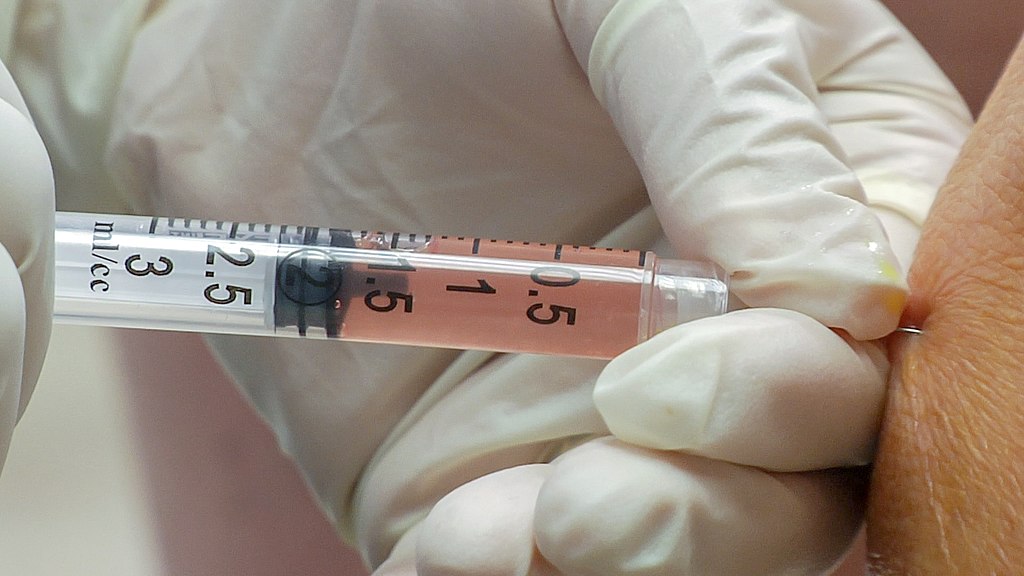
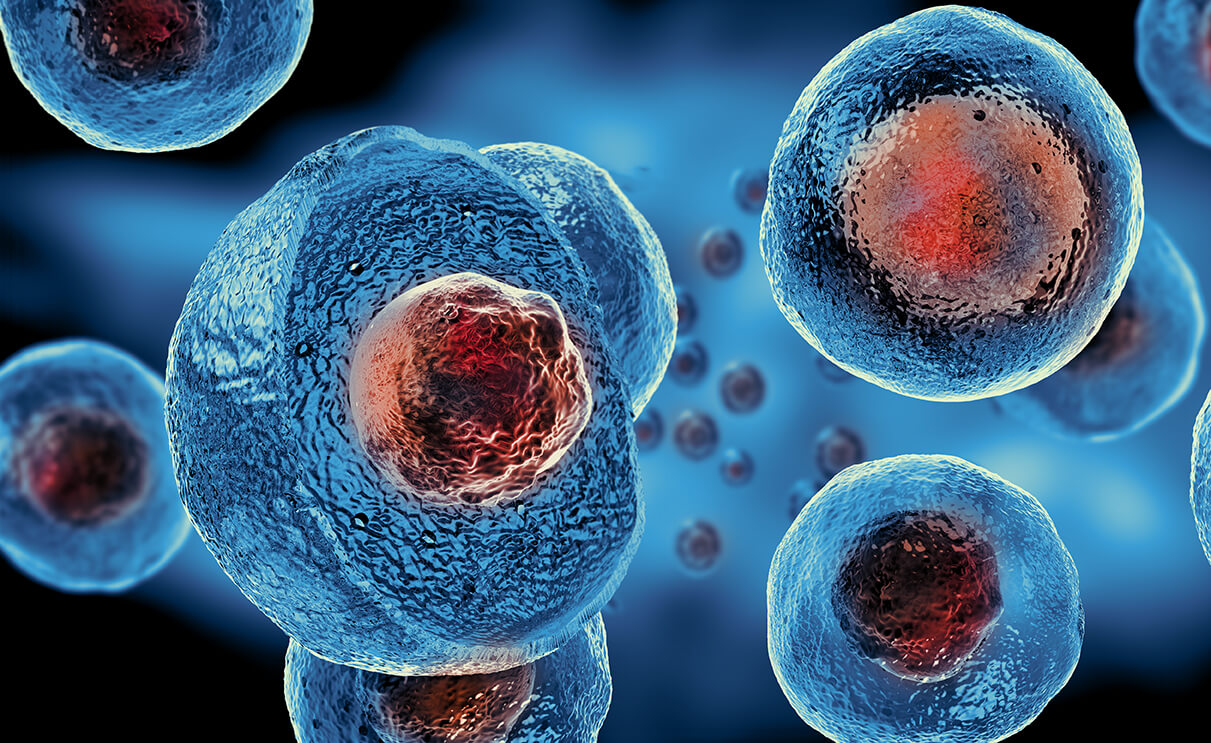
Stem Cell Therapy is also called Regenerative medicine. Stem Cell Therapy encourages the repair response of injured tissues, diseased tissue or dysfunctional tissue using stem cells.
The success rate of Stem Cell Therapy
The stem cell treatment has gained popularity significantly due to its effectiveness and high success rate up to 70 to 80%. This is due to the most advanced and latest regenerative medical treatment that uses a biological component that is stem cells.
This therapy also comes with negative effects such as treatment some patients have come up with problems such as Mucositis, Nausea, vomiting etc.
Types of Stem Cell
Primarily there are five types of Stem Cell
Totipotency
Pluripotency
Multipotency
Oligopotency
Unipotency
Stem Cell Therapy
Totipotency
Totipotency or Toti-Total – It is the ability of a single cell to divided and produce all of the differentiated cells in an organism.
Pluripotency
Pluripotency or Pluri-several refers to a stem cell that has the potential to differentiate into any of the three germ layers-ectoderm, endoderm, and mesoderm.
Multipotency
Multipotency or multi-many refers to the stem cell that can differentiate into various types of cells that are related.
Example – Blood stem cells can differentiate into lymphocytes, monocytes, Neutrophils etc.
Oligopotency
Oligopotency or Oligo-Few refers to stem cells that can differentiate into few cell types.
For Example Lymphoid or Myeloid stem cells can differentiate into B and T cells but not RBC.
Unipotency
Unipotency or Uni-Single refers to the ability of the stem cells to differentiate into only one cell type.
Stem Cells Technology
The stem cell might come from the donor or the patient themselves.
The stem cell is undifferentiated cells found in most multicellular animals. These cells maintain their undifferentiated state even after undergoing numerous mitotic divisions.
It also has the potential to revolutionize the future of medicine with the ability to regenerate damaged and diseased organs.
Also, it is capable of self-renewal and exhibits ‘Cellular Potency’.
Differentiation of Stem Cells
The stem cell is differentiated into all types of cells, which are derived from any three germ layers such as ectoderm, endoderm, and mesoderm.
Mammals have two main types of stem cells. They are embryonic stem cells (ES Cells) and Adult Stem Cells.
Embryonic Stem Cells
ES cells are pluripotent and can produce all three germ layers.
ES cells are isolated from the Epiblast tissue of the inner cell mass of a blastocyst.
When stimulated ES can develop into more than 200 cell types of the adult body.
ES cells are immortal that is they can proliferate in a sterile culture medium and maintain their undifferentiated state.
Adult Stem Cells
Adult stem cells are found in various tissues of children as well as adults.
An adult stem cell or somatic stem cell can divide and create another cell similar to it.
Most adult stem cells or somatic stem cells can divide and create another cell similar to it.
Most of the adult stem cells are multipotent and can act as a repair system of the body, replenishing adult tissues.
The red bone marrow is a rich source of adult stem cells.
The most important and potential application of human stem cells is the generation of cells and tissues that could be used for cell-based therapies. Human stem cells could be used to test new drugs.
Conditions commonly treated are Knee, blood cancers, burns, damaged corneas, Autism, etc. However, there is no clear scientific evidence that supports the best type of stem cell therapy for autism and it is not recommended as therapy for Autism.
The type of cancer currently used in stem cell therapy are leukaemia and lymphoma. This may also be used for neuroblastoma and multiple myeloma. Other types of cancer, that involve cell transplants are under study in clinical trials.
Stem cell Therapy Cure List
Spinal Cord Injuries
Type 1 Diabetes
Parkinson’s Disease
Amyotrophic Lateral Sclerosis
Alzheimer’s Disease
Heart Disease
Stroke
Burns
Cancer
Osteoarthritis
Stem cell Banks
Stem cell Banks are the extraction, processing, and storage of stem cells.
These will be used for treatment in the future.
An amniotic cell bank is a facility that stores stem cells derived from amniotic fluid for future use.
Stem cells are stored in banks specifically for use by the individual from whom such cells have been collected and the banking cost are paid.
Cord Blood Banking collects stem cells from the umbilical cord during children.
While the umbilical cord and cord blood are the most popular sources of stem cells, the placenta, amniotic sac, and amniotic fluid are also rich in stem cells.
Cord Blood Banking
It is the process of collecting life-saving stem cells from the placenta and umbilical cord and them storing them for use in the future.
These banks store and maintain these cord blood for future use and they charge the price for it. Depending upon the plans for storage, they charge annually or Long term fee. For example, long-term fees for 21 years are about 40000 to 60000, or yearly fees about 4000-6000, etc.
Here is a table summarizing the organs of the human digestive system and their respective functions:
Organ
Function
Mouth
Chewing breaks down food into smaller pieces. Saliva contains enzymes (amylase) that begin the digestion of starches.
Esophagus
Transports food from the mouth to the stomach through peristalsis (muscular contractions).
Stomach
Secretes gastric juices (hydrochloric acid, enzymes) that further break down food. Also, stores food and mixes it with digestive enzymes.
Small Intestine
Primary site of nutrient absorption. Enzymes from the pancreas and bile from the liver further digest food. Nutrients are absorbed into the bloodstream.
Liver
Produces bile, which helps in the digestion and absorption of fats. Also, detoxifies harmful substances, stores glycogen, and processes nutrients.
Gallbladder
Stores and concentrates bile produced by the liver, releasing it into the small intestine to aid in fat digestion.
Pancreas
Produces digestive enzymes (lipase, amylase, proteases) and bicarbonate to neutralize stomach acids in the small intestine.
Large Intestine
Absorbs water and electrolytes from undigested food, forming solid waste (feces). Houses beneficial bacteria that aid in digestion.
Rectum
Stores fecal matter before elimination.
Anus
The opening through which feces are expelled from the body.
Digestive System
The digestive system includes the gastrointestinal tract which is from mouth to anus and the glandular organs. The digestive system serves to transfer organic molecules, salts, and water from the external environment to the body’s internal environment.
Most of the food taken into the mouth are large particles containing macromolecules such as polysaccharides and proteins. As such they cannot be absorbed by the intestinal wall.
These must be dissolved and broken down into smaller molecules. This process is known as digestion. Digestion is accomplished by substances called Enzymes produced from the digestive glands. The enzymes are biocatalysts in the food breakdown process.
The Process of Digestion
Mouth
The digestion starts with chewing, in the mouth. Chewing breaks up large pieces of food into smaller particles that can be swallowed without choking. Chewing is done by teeth, tongue, jaws, and saliva.
Chewing is controlled by the somatic nerves to the skeletal muscles of the mouth and jaw.
Rhythmic chewing motions are reflex activated by the pressure of food against the gums, hard palate at the roof of the mouth and tongue.
Saliva
The saliva is secreted by three pairs of exocrine glands, namely: Parotid, Submandibular, and Sublingual. The daily secretion of saliva ranges from 1000 to 1500ml and it contains Amylase and Mucin, which are organic substances.
The salivary amylase or ptyalin can act on starch and converts cooked starch into the disaccharide, maltose. Mucin is a glycoprotein that helps in the lubrication of food.
The lubricated, swallowable form of food is called a bolus. The salivary secretion is controlled by reflex activities.
Swallowing
Swallowing is complex reflex activity. Swallowing is controlled by the swallowing centre in the medulla oblongata. During swallowing the soft palate is elevated, the larynx gets raised.
The tongue forces the food back into the pharynx, the epiglottis closes the glottis and the food slowly passes into the oesophagus. The oesophageal phase begins with relaxation of the upper oesophageal sphincter.
In the oesophagus, the food is moved towards the stomach by a progressive wave of muscle contractions that proceeds down to the stomach. Such waves of contraction in the muscle layer surrounding a tube are known as Peristaltic waves.
In the oesophagus one peristaltic wave takes about 9 seconds to reach the stomach. Due to peristaltic waves, swallowing can occur even when the person is upside down.
The Stomach
The stomach is a wide chamber, located below the diaphragm. The size and shape of the stomach depend on the food inside it. The stomach volume during feeding may increase up to 1.5 litres.
The stomach’s primary contractile action will produce peristaltic waves. Each wave starts in the body of the stomach and proceeds towards the pyloric region. The initial wave influences the muscles to close the pyloric sphincter, a ring of smooth muscles between the stomach and the duodenum.
The inner wall of the stomach is lined with gastric glands. There are nearly 40 million glands engaged in producing gastric juice. The chief cells of the lining of the stomach secrete enzymes and the parietal cells (oxyntic cells) produce HCL to create an acidic medium for enzymes.
The enzymes of the stomach are pepsin and rennin. Pepsin is secreted in an inactive precursor form known as Pepsinogen. The activity due to Hcl converts pepsinogen into pepsin.
Pepsin hydrolysis the proteins into short polypeptide chains and peptones. It is most effective in an acidic environment. Rennin acts on soluble milk protein caesinogen and converts it into insoluble casein.
In the presence of calcium ions, casein is precipitated as an insoluble calcium-casein compound (curds). Repeated peristaltic waves in the stomach help to soften the food.
The frequency of contraction is determined by the basic electrical rhythm and remains essentially constant. It is also aided by neutral and hormonal influences.
The food leaves the stomach in the form of chyme and enters the upper small intestine at periodic intervals.
Small Intestine
It is about 5-7 meters long. It is divided into three segments namely the initial short segment the duodenum, the jejunum, and the longest segment the ileum.
The food is propelled down into the duodenum due to the peristaltic action of the stomach wall.
The Pyloric sphincter located at the junction of the stomach and duodenum regulates the movement of the chyme. The food in the small intestine is mixed with three juices namely bile, juice, pancreatic juice, and intestinal juice.
Bile Juice
Bile Juice is a brownish-green, alkaline secretion of the liver. It is stored in the gall bladder and poured into the duodenum via the bile duct. The bile contains water, mucus, inorganic salts, cholesterol, and bile salts.
The bile salts emulsify fats and help enzymes like lipase to act upon fats. During emulsification, the bile salts convert bigger fat particles into smaller fat globules.
Pancreatic Juice
Pancreatic Juice is an alkaline fluid of pH 7 to 8. It is transported to the duodenum through the pancreatic duct. It contains water, mineral salts, and a variety of enzymes like trypsin, Chymotrypsin which are secreted in the form of inactive precursors trypsinogen and chymotrypsinogen.
The precursors are activated by enterokinase of the intestinal juice, the amylytic enzyme amylase, the pancreatic lipase (steapesin), carboxypeptidase, and nuclease.
The enzyme trypsin hydrolysis proteins into polypeptides and peptones. Chymotrypsin hydrolysis peptide bonds are associated with specific amino acids like phenylalanine, tyrosine, or tryptophan. It results in large peptides.
Carboxypeptidase
Carboxypeptidase is an exopeptidase. It attacks the peptide bonds at the carboxyl end of the polypeptide chain resulting in di, tripeptides, and amino acids. The pancreatic amylase converts starch into maltose.
The lipase acts on emulsified fat (triglycerides) and hydrolysis them into free fatty acids and monoglycerides. Monoglycerides may be further hydrolyzed to fatty acid and glycerol.
Intestinal Juice (Succus Entericus)
Absorption and Assimilation
Due to digestion, all macromolecules of food are converted into their corresponding monomeric units. Carbohydrates are broken into monosaccharides such as glucose and fructose. Proteins are hydrolyzed into amino acids.
Lipids get broken into glycerol and fatty acids. The simpler organic molecules along with minerals, vitamins, and water enter into body fluids through the villi. The villi are small microscopic finger-like projections.
Each villus is an absorbing unit consisting of a lacteal duct in the middle surrounded by a fine network of blood capillaries. While the fatty acids are absorbed by the lymph duct, other materials are absorbed either actively or passively by the capillaries of the villi.
From the lumen of the alimentary canal absorbed food materials are carried to the liver through the hepatic portal vein. From the liver, materials are transported to all other regions of the body for utilization. This conversion of food into energy and cellular organization is called assimilation.
Nutrition and dietetics is the science of food and how it affects human health. It is a wide field that includes the study of nutrients, food, and the body’s metabolism.
In addition, for Tnpsc it is good to have an understanding of the following:
Government policies and schemes on nutrition and dietetics
Role of nutritionist or dietetic in society
Latest news in the field of nutrition and dietetics
Basics of Nutrition
The seven elements of nutrition are:
Carbohydrates
Proteins
Fats
Vitamins
Minerals
Fibre
Water
Nutrition
The life of all living organisms is due to several types of nutrition processes. The process of nutrition involves ingestion, digestion, absorption and assimilation of food. The composition of nutrients differs in different types of feeding. But for every living organism, the nutrient consists of organic and inorganic components.
The components of nutrients are carbohydrates, proteins, lipids, vitamins, minerals and water. Each of these nutrient components has a specific function. A good nutrient intake depends on several factors such as the stage of growth, sex, health condition, body activities and environment.
Classification of Nutrition
Carbohydrates
Carbohydrates that is Poly Hydroxyaldehydes or Ketones are composed of Carbon, Hydrogen, and Oxygen in the ratio of 1:2:1 (CH2 O)n. Carbohydrates are of three types, they are monosaccharides, disaccharides and Polysaccharides.
Monosaccharides
Monosaccharides are the simplest form of carbohydrates composed of a single organic molecule. Based on the number of carbon atoms, Monosaccharides are classified into trioses, tetroses, pentoses and hexoses.
The trioses that are C3H6O3 are common intermediary products in carbohydrate metabolic processes and play a vital role in the interconversion of biomolecules. An example is Glyceraldehydes.
Pentoses that are C5H10O5 like ribose and deoxyribose are an important part of RNA and DNA molecules. The Hexoses (C6 H12 O6) such as glucose, fructose and galactose are commonly consumed food components.
Carbohydrates provide energy for the cells. The energy metabolism happens through the glycolytic process that involves an oxidative, citric acid cycle. The liberated energy is stored in ATP(Adenosine triphosphate) form.
Every gram of carbohydrate could give energy equivalent to 4.1 calories.
Disaccharides
Disaccharides are the carbohydrates formed by the condensation of two monosaccharide monomers. Found in Milk and Sugar. Common Disaccharides are Maltose, Sucrose and Lactose.
Disaccharides have the following composition:
Maltose (In germinating cereals) – Glucose + Glucose
Sucrose (Cane Sugar) – Glucose + Fructose
Lactose (Milk) – Glucose + Galactose
Polysaccharides
Polysaccharides are complex carbohydrates formed by the polymerisation of a large number of monosaccharides. In nature, there are a lot of Polysaccharides. Several polysaccharides are structural components in nature such as Chitin, and Cellulose.
Starch molecules serve as storage of food materials trapping huge quantities of energy. It is available as pectin and amylopectin molecules in food grains. A polysaccharide found in muscles and the liver as Glycogen.
Proteins
Protein (Polypeptides) are nitrogen compounds made of carbon, hydrogen, oxygen and nitrogen. It also contains Sulphur. Protein plays an important role in the structural organisation of living beings.
Example: Cells Membrane, nails, muscles, hair. Many proteins serve as Enzymes and are named functional proteins. Amino Acids are the building block of proteins. Types of Amino Acids are Glycine, alanine, serine, valine, leucine, proline etc.
The amino acids are classified into essential and non-essential amino acids. Our body cannot synthesise or produce essential amino acids. The essential amino acids must be taken through food. The essential amino acids are Arginine, valine, histidine, isoleucine, leucine, lysine, methionine, phenylalanine, threonine and tryptophan.
Non-essential amino acids can be produced in our bodies using other compounds. A protein or a polypeptide chain is made of several amino acids linked with peptide bonds. This linear arrangement is termed the primary organisation of proteins.
The amino acid sequence and organisation are determined genetically. Therefore the genome plays an important role due to the capability to produce some type of proteins for bringing genetic characteristics.
The daily intake of protein as ICMR and WHO is 1gm per kg body weight. Protein deficiency is Kwashiorkor, Marasmus etc.
Vitamin
Vitamins are complex organic compounds, whose presence in very small amounts in food is essential for physiological activities and essential growth. Vitamins do not have any energy value.
However, Vitamins are essential for controlling energy-yielding processes. Vitamins are classified as A, B, C, D, E and K. Out of these Vitamins, B and C are water-soluble.
Vegetables or Fruits containing Vitamin B and C when washed in water after cutting may lose all the vitamins contained in them. Some vitamins such as A, D, E and K when consumed more than required may cause defects called Vitaminosis.
We use Vitamin-D or Calciferol when our body is exposed to Sunlight, produced by our body by a lipid compound called Ergosterol, which is found below the skin.
Hence Vitamin-D is called Sunshine Vitamin.
Important Functions of Vitamins
Physiological Processes
Vitamin A has an important role in Visual perception.
Vitamin E for fertility in animals.
Vitamin K for Blood clotting in animals.
Vitamin C for immunity against infections and also supports processes of growth.
Maintenance of Body Tissue
The epithelial tissues in animals are maintained by vitamin A and B2.
Vitamin D is for the growth of bones.
Vitamin E for rejuvenation of tissues.
Vitamin B1 for nourishment to nerve cells.
Vitamin B12 for the maturation of erythrocytes.
Metabolic Processes
The process of calcium and phosphorus metabolism work in the presence of vitamin D.
Vitamin E remains an antioxidant.
Vitamin B1 remains a coenzyme in tissue metabolism and is useful in the oxidation of glucose in the CNS.
Vitamin B2 is essential for carbohydrate metabolism.
Vitamin B which is Niacin has an important role as a coenzyme and is essential for oxidation and reduction reactions.
Normal metabolism of amino acids and fat is because of Vitamin B6.
Vitamin B which is Biotin serves as a coenzyme and cofactor in oxidative metabolism.
Vitamin C activates certain intra-cellular enzymes.
Vitamin Deficiency Ailments
Vitamin A Deficiency Ailments
Atrophy of lacrimal glands of the eye and reduction in tear secretion.
Corneal epithelium becomes red and dries called Xerosis.
Corneal epithelium becomes wrinkled and Keratinised called Xerophthalmia.
The appearance of Bitot’s spot in the cornea might occur.
Cornea gets necrosed and infected called Keratomalacia.
Can cause night blindness called Nyctalopia.
Vitamin D Deficiency Ailments
Affects the calcification of bones.
Vitamin D deficiency causes rickets in growing children.
Osteomalacia in adults.
Vitamin E Deficiency Ailments
Rare in Humans, cause sterility issues in experimental animals.
Vitamin K Deficiency Ailments
Vitamin-K deficiency can lead to a defect in blood coagulation.
In humans, Vitamin-K deficiency can lead to hemorrhagic manifestation.
Vitamin B1 Deficiency Ailments
Vitamin B1 deficiency can lead to a condition known as BeriBeri that affects the nervous and cardiovascular systems.
Vitamin B2 Deficiency Ailments
Loss of appetite.
Other gastrointestinal symptoms, soreness and burning of lips, mouth and tongue.
Fissures appear at the edges of the mouth.
Vitamin Niacin Deficiency Ailments
Vitamin Niacin deficiency leads to pellagra.
Pellagra symptoms are mental changes, dementia or dermatitis and stomatitis.
The tongue becomes smooth, red and painful.
Vitamin B6 Deficiency Ailments
In humans, pyridoxine deficiency causes dermatitis around the eyes, nose and behind the ears.
Fissures appear above the lips and angles of the mouth.
Vitamin B12 Deficiency Ailments
Its deficiency causes pernicious anaemia, that is sore tongue and many neurological problems related to the spinal cord.
Vitamin C Deficiency Ailments
Vitamin C Deficiency leads to Scurvy.
Its symptoms are bleeding gums, loosening and falling of teeth.
Intramuscular haemorrhages.
Minerals
Certain elements in small concentrations are necessary for some functions of the body.
They are Sodium, Calcium, Potassium, Magnesium, Phosphorus, Sulphur and Chlorine, these must be present with great concentration.
The minerals that are needed in small concentrations are iron, copper, zinc, cobalt, manganese, iodine and fluorine.
Calcium, Magnesium and Phosphorus are needed in large concentrations for bodybuilding activities such as the formation of bones and teeth.
Trace elements such as Manganese, copper, and zinc are needed for physiological activities such as oxygen transport (Iron), Iodine Hormone synthesis and manganese, copper, and zinc for intermediary metabolism.
Chlorine, Sodium and Potassium form constituents of body fluids.
Magnesium, sodium and potassium for neuromuscular irritability.
Calcium for blood clotting.
Calcium and potassium for cardiac function.
Water
The proportion of water in lean body mass (body fat content) is constant at around 71 to 78% in animals and humans.
The total body water concentration varies with sex, age, and body weight.
For a newborn child, water content is around 85 to 90%.
For adults, the water content is 55 to 60%.
⅔ body water is found as intracellular fluid (ICF).
⅓ body water found as extracellular fluid (ECF)
25% of ECF is found in the plasma of blood.
The average water intake is around 2500ml per day and exits from the body as water 1400ml.
Water loss happens through Urine (1400ml), expiration (400ml), through the skin(600ml) and loss in faeces of about 100ml.
The function of water in the body
Essential constituents of cells.
Transport medium for nutrients and excretory products.
Serves as a site for chemical reactions.
Solvent for electrolytes, enzymes, hormones and vitamins.
Maintenance of body temperature.
Maintain the form and texture of tissues.
Conclusion
Nutrition and dietetics is the field of science which deals with food and how it affects the health of humans. It studies nutrients, food and the body’s metabolism.
In Physics, the objects which change their position are said to be motion. Similarly, an object which does not change its position is said to be rest. Even stationary object moves along with the speed of the earth.
Any object under the influence of force is said to be in rest or in motion.
Example of Motion
Car, bus moving road.
Train running on rails.
Blades rotating in fans.
Ball hit by a batsmen in cricket.
Flying bird, kite, jet etc.
Kinematics is a branch of mechanics that deals with the motion of objects without force.
Types of Motion
Based on the direction of movement the motion is classified into different types. There are various types of motion in physics are Linear, Circular, Rotational and Vibratory motion.
Linear Motion
A thing is said to be linear motion if it moves in a straight line. Example – A person running in a straight line, A object falling towards the ground. The movement of coins on a carrom board is an example of rectilinear motion.
Circular Motion
A movement described by an object traveling in a circular path is called Circular motion. Example: The rotation of a stone attached to a thread, rotation of the earth around the sun.
Rotational Motion
Anything that moves in a rotation about an axis is called rotation. An example is the Rotation of Disc, Spinning of the Earth on its axis.
Vibratory Motion
If an object undergoes to and fro movement in a fixed point it is said to be in vibratory or oscillatory motion. An example is the Vibration of string on a guitar, Movement of a swing.
Also, there is Elliptical and helical motion.
Motion in One, Two and Three Dimension
Motion in One Dimension
“1-D motion is the movement of a particle moving in a straight line”.
Example- running of the train in a straight track, an apple falling from a tree in a straight line.
Motion in Two Dimension
“If a particle is moving along a curved path in a plane, then it is said to be in two-dimensional motion”.
An example of 2-d motion is the Movement of the coin in carrom board, insect crawling in the wall
Motion in Three Dimension
A particle moving in a common three-dimensional space has three-dimensional motion.
Example: Flying bird, the movement of gas molecules, etc.
Distance and Displacement
Distance is the actual path length traveled by an object in a given interval of time during the motion. Distance is a scalar quantity. Displacement is the difference between the final and initial positions of the object in a given interval of time.
Displacement is a vector quantity.
Momentum
Momentum is simply the product of mass with velocity. Momentum is a vector quantity. The direction of momentum is also in the direction of velocity and the magnitude of momentum is equal to the product of mass and speed of the particle.
P = mv.
The momentum of the particle plays a vital role in Newton’s laws. The unit of momentum is kg ms-1.
Accelerated Motion
The velocity of an object is not constant but changes from time to time and such movement is called accelerated motion. In accelerated motion, if the change in velocity of an object per unit is the same then the object is said to be moving with uniformly accelerated motion.
If the change in velocity per unit time is different at different times, then the object is said to be moving with non-uniform accelerated motion. Acceleration is a vector quantity.
Its SI unit is ms-2. Acceleration is positive if velocity is increasing and is negative if the velocity is decreasing. The negative acceleration is called Retardation or deceleration.
Movement Under Gravity
A straight line motion with constant acceleration is the motion of an object near the surface of the earth. The acceleration due to gravity ‘g’ is constant.
“The motion of a body falling towards the Earth from a small altitude (h << R), purely under the force of gravity is called free fall”. Where R is the radius of Earth.
Galileo concluded that in a vacuum all objects fall with the same acceleration g and reach the ground at the same time.
Projectile
When an object is thrown in the air with some initial velocity and then allowed to move under the action of gravity alone, the object is known as a projectile. The path followed by the particle is called a trajectory.
Examples of Projectile are:
A thing or object dropped from moving car.
A Bullet fired from a gun.
A ball is thrown to the keeper by a fielder.
A batsman hitting a six.
The projectile moves under the combined effect of two velocities:
A uniform velocity in the horizontal direction, will not change provided there is no air resistance. A uniformly changing velocity (i.e increasing or decreasing) in the vertical direction.
There are two types of projectile:
The projectile is given an initial velocity in the horizontal direction (horizontal projection). The projectile is given an initial velocity at an angle to the horizontal (angular projection).
To study projection:
Air resistance is neglected. The effect due to the rotation of Earth and the Curvature of Earth is negligible. The acceleration due to gravity is constant in magnitude and direction at all points of the motion of the projectile.
Time of Flight
“The time taken for the projectile to complete its trajectory or time taken by the projectile to hit the ground is called Time of flight”.
Angular Displacement
“The angle described by the particle about the axis of rotation in a given time is called Angular Displacement”.
Angular Velocity (ω)
“The rate of change of angular displacement is called Angular Velocity”.
Angular Acceleration (𝜶)
“The rate of change of angular velocity is called Angular Acceleration”.
Circular Motion
When a point object is moving on a circular path with constant speed, it covers equal distances on the circumference of the circle in equal intervals of time. Then the object is said to be a uniform circular motion.
In a uniform circular motion, the velocity always changes with speed remains the same. If the velocity changes in both speed and direction during the circular motion, we get non-uniform circular motion.
Centripetal Acceleration
The acceleration is acting towards the centre of the circle is called Centripetal acceleration.
Physics laws of motion
Aristotle’s Idea of Motion – To maintain motion, force is required.
Galileo’s concept of Motion – To maintain motion, force is not required.
Newton’s First Law – every object continuously has its state of rest or state of motion, until the external force acts on it.
Newton’s Second Law – Force is equal to the rate of change of momentum.
Both newton’s first law and second law, are valid only in inertial frames.
Inertial frames are the ones in which if there is no force acting on the object, the object moves at a constant velocity.
Newtons Third Law – For every action, there is an equal and opposite reaction.
Lami’s theorem – If an object is in equilibrium under the concurrent force then the ratio of each force with the sine of the corresponding opposite angle is the same.
An impulse acting on a body is equal to the change in momentum of the body. Whenever a force acts on the object for short time, it gets difficult to calculate the force but the impulse can be measured.
Friction – It is a resistance offered by one surface when rubbing against another surface.
Static Friction – It is a force that opposes the movement of the object from rest.
If the object starts to move, kinetic friction comes into effect. To move an object with constant velocity, the external force must be applied to overcome kinetic friction. Rolling friction is less than static and kinetic friction. An example is Rolling Suitcase.
The origin of friction is electromagnetic interaction between the atoms of two surfaces that touch each other. In a uniform circular motion, the centripetal force acts at the centre of the circle.
In sun’s gravitational force acts as centripetal force. When the moon orbits the earth, it encounters a gravitational force as a centripetal force. When a stone is attached to the thread, and rotated, the centripetal force is given by the string.
Centrifugal force arises when the motion is measured from a rotation frame. Centrifugal force is pseudo force. The inertial motion of the object appears to the centrifugal force in the rotating frame. The centripetal force acts towards the centre of the circular motion and centrifugal force appears to acts in the opposite direction to centripetal force.
Bibliography
Tamil Nadu Text Book Corporation. Physics. vol. Volume-I, Department of School Education, 2018. 2 vols. Department of School Education Government of Tamilnadu, http://tnschools.gov.in/textbooks.
The early communication systems were developed by J.C. Bose, G. Marconi, and Alexander Graham Bell, etc.
The communication industry is one of the oldest, it is since telegraph(1844), telephone(1876) and Radio (1887).
The current communication technology is Global positioning System (GPS), satellite, mobile and optical communications.
The Elements of An Electronic Communication System
The elements of an electronic communication system are Information, Input transducer, Transmitter, Transmitting antenna, Communication channel, Noise, Receiver, Repeater, Output transducer, Attenuation, Range.
Information (Baseband or Input Signal)
Information or data can be in the form of sound, picture, video, text, etc is given as input to the input transducer.
Input Transducer
A transducer is a device that converts the change in a physical quantity such as pressure, temperature, sound to an electrical signal or vice versa.
The transducer converts the information which is in the form of sound, music, pictures or computer data to electrical signals.
The microphone is an example of a transducer that converts sound energy into electrical energy.
Transmitter
It provides the electrical signal from the transducer to the communication channel. It is made of circuits such as an amplifier, oscillator, modulator, and power amplifier.
Amplifier
Used to amplify the weak signal from the transducer.
Oscillator
Oscillators generate high-frequency carrier waves which are generally sine waves for long distances transmission.
Modulator
Modulator used to superimpose or modulate the baseband signal with the carrier signal to give a modulated signal(FM, AM, etc).
Power Amplifier
Power Amplifiers are used to raise the power level of the electrical signal in order to reach a great distance.
Transmitting Antenna
It throws away the radio signal into space or air in all directions. The radio signal travels with the speed of light i.e 3 x 10⁸ ms-1.
Communication Channel
The electrical signal is carried from the transmitter to the receiver using the communication channel with less noise or distortion. There are two types of communication medium, they are wireline communication and wireless communication.
Wireline communication is a point-to-point connection that uses mediums such as wires, cables, and optical fibres. As they are physically connected, Wireline communication cannot be used for long-distance communication. Examples are Telephone, Intercom and Cable TV.
Wireless communication does not need physical connectivity, it uses free space as a communication medium. A wireless communication signal is transmitted by electromagnetic waves using a transmitting antenna.
Consequently, wireless communication is adopted for long-distance transmission. Examples of Wireless communication are mobile, radio, or TV broadcasting, and satellite communication.
Noise
It is the unwanted electrical signal that interferes with the transmitted signal. Noise decreases the quality of the transmitted signal.
The noise may be created by man-made automobiles, welding machines, electric motors, etc, or natural such as lightning, radiation from sun and star, and environmental effects. Noise cannot be totally reduced but it can be minimized using different procedures.
Receiver
Signals are received with the help of receiving antenna and fed to the receiver. The receiver consists of electronic circuits like a demodulator, amplifier, detector, etc. The demodulator obtains the baseband signal from the carrier signal.
Then the baseband signal is identified and amplified using amplifiers. Finally, it is supplied to the output transducer.
Repeater
Repeaters are used to raise the range or distance of the transmitting signal. It consists of a transmitter and receiver.
The signals are received, amplified, and retransmitted with a carrier signal of a different frequency to the destination. Example: Communication satellite, Wifi Repeater in Home.
Output Transducer
Output Transducer converts the electrical signal to its original forms such as sound, music, pictures, or data. Examples of output transducers are loudspeakers, picture tubes, computers, monitors, etc.
Attenuation
The loss of power of a signal while propagating via a medium is known as attenuation.
Range
It is the highest distance between the source and the destination up to which the signal is acquired with enough strength.
Bandwidth
“The frequency range over which the baseband signals or the information signals such as voice, music, pictures etc is transmitted is known as bandwidth”. (Tamil Nadu Text Book Corporation #)
Every signal has different frequencies. The type of communication system depends on the nature of the frequency band for a given signal.
Bandwidth gives the difference between the upper and lower frequency limits of the signal. It can also be defined as the portion of the electromagnetic spectrum occupied by the signal.
If v1 and v2 are lower and upper-frequency limits of a signal then the bandwidth BW = v2 – v1.
The bandwidth of Transmission System
“The range of frequencies required to transmit a piece of specified information in a particular channel is called channel bandwidth or the bandwidth of the transmission system”. (Tamil Nadu Text Book Corporation #)
This corresponds to the spectrum that is allotted to be used by the system. For example, AM requires a channel bandwidth of 10kHz to broadcast a 5 kHz signal, whereas a single-sideband system requires only a 5kHz channel bandwidth for the same 5 kHz signal.
This is because, in amplitude modulation, the channel bandwidth is twice the signal frequency. Hence, it is needed to decrease the channel bandwidth to support more channels in the available electromagnetic spectrum.
Antenna Size
The antenna is used at both transmitter and receiver end. Antenna height is an important thing.
The height of the antenna should a multiple of ƛ/4. That is h = ƛ/4 where ƛ = c/v, where c is the velocity of light and v is the frequency of the signal to be transmitted.
The story of electronics started with the invention of vacuum diodes by J.A. Fleming. It was succeeded by a vacuum triode executed by Lee De Forest to Amplify electrical signals. This started to form the foundation of tetrode and pentode tubes.
Consequently, the transistor age started with the invention of bipolar junction transistors by Bardeen, Brattain, and Shockley in 1948 they won the Nobel prize in 1956. The development of Germanium and Silicon semiconductor substances made transistors famous and used in various electronic circuits.
The invention of IC’s (Integrated Circuit) embedded different electronic components on a single chip that was small and less price. In 1969, Intel introduced Microprocessors which revolutionized computers from room size to the size of a palm.
Electronics is a subsidiary of physics with the technology of designing the circuit employing transistors and microchips. Electronics deal with active and passive components.
The active components are the ones that can generate power in the circuit. Examples are transistors, diodes, IC, and sensors. The passive electronic components are the ones that cannot generate power in a circuit. Examples are resistors, inductors, capacitors, and transformers.
Energy Band Diagram
In a separated or an isolated atom, the electronic energy level is broadly separated and is distant apart. The energy of the electron is determined by the orbit in which it orbits around the nucleus.
But for solids, the atoms are closely aligned, thereby the electrons in the outermost energy levels of nearby atoms affect every other. This shapes the characteristics of the electron movement in solids.
The valence electrons in an atom are in charge of its binding nature. Consider an atom with one electron in the outermost orbit, which means there is only one valence electron.
When two such atoms are brought closer, the valence orbitals are split into two. Similarly, the empty orbitals of every atom will likewise divide into two.
The electrons have the option of preferring any one of the orbitals as the energy of both the orbitals is the same. Meanwhile, the third atom of the same element is induced to this system, the valence orbitals of all three atoms are divided into three.
The empty or unoccupied orbitals are also divided into three. In fact, a solid is built up of millions of atoms. When millions of atoms get close together, the valence orbitals and the unoccupied orbitals are divided according to the number of atoms.
When the energy levels are nearly aligned it will be hard to distinguish the orbitals of one atom from the other and look like a band.
This band of an extremely huge number of tightly separated energy levels in a very tiny energy range is called the energy band. The energy band developed by the valence orbitals is called the valence band.
The energy band formed by the unoccupied orbitals is called the conduction band. “The energy gap between the valence band and the conduction band is called the forbidden energy gap” and electrons never exist in the forbidden energy gap (Tamilnadu Textbook Corporation #).
From the above diagram, Ec represents the minimum energy of the conduction band. The energy gap between the conduction band and valence band, Eg = EC – Ev.
The kinetic energy of the electron rises from bottom to top and the potential energy drops symbolizing that the electrons in the orbitals near the nucleus are bound with enormous potential energy.
Hence, the electrons nearer to the nucleus need a lot of energy to be exited.
A p-n junction is formed by joining n-type and p-type semiconductor materials. The P side has a high hole concentration.
The N side has a high electron concentration. This causes diffusion current which exists because of the difference in concentration of atoms.
Junction Potential or barrier Potential
The power of the electric potential difference across the depletion region keeps building with the crossing of each electron until equilibrium is reached. At this point, the internal repulsion of the depletion layer stops further diffusion of free electrons across the junction.
This difference in potential across the depletion layer is called barrier potential. At 25° C, this barrier potential is nearly equal to 0.7 V for silicon and 0.3 V for Germanium.
P-N Junction Diode
A p-n junction diode is formed bt p-type and n-type semiconductors fused together.
Biasing a Diode
“Biasing means providing external energy to charge carriers to overcome the barrier potential and make them move in a particular direction”. (Tamilnadu Textbook Corporation #)
The charge carriers either move towards the junction or away from the junction. The external voltage applied to the p-n junction is called Bias Voltage. There are two types of biasing, one is forward bias and another one is reverse bias.
Forward Bias
When the positive terminal is connected to the p-side and the negative terminal to the n-side, is called Forward biased.
Reverse Bias
When the positive terminal is connected to the n-side and the negative terminal to the p-side is called Reverse Biased.
When a reverse bias is applied to a p-n junction, at some point the junction breaks down and the reverse current rises sharply. The voltage at which this happens is called the breakdown voltage.
A normal p-n junction diode is damaged at this point and specially designed diodes like Zener diodes can operate at this point. Zener diode is used for rectification
A bipolar junction transistor is a semiconductor device of two NPN and PNP. To operate the transistor in the active region, the emitter-base must be forward biased and the collector-base must be reverse biased.
A BJT can be operated in three different configurations: Common base, Common Emitter, Common Collector. The forward current gain in a common base configuration 𝞪 gives the ratio of the collector current to emitter current.
The forward current gain in common emitter configuration 𝜷 gives the ratio of the collector current to the base current. The BJT connected in common emitter configuration functions as a switch.
The BJT connected in a common emitter configuration can be used as an amplifier. There exists a phase reversal of 180° between the input signal and the amplified output signal.
The current electricity is the study of the flow of electric charges.
Alessandro Volta (1745 – 1827) invented the electric battery that generated the first steady flow of electric current.
Electric Current
The matter is made of atoms.
Each atom consists of a positively charged nucleus with negatively charged electrons revolving around the nucleus.
Atoms in metals hold one or more electrons which remain loosely attached to the nucleus.
These electrons are called free electrons which are easily detached from the atoms.
The movement or flow of electric charges or electrons over a conductor such as copper wire will constitute an electric current.
The electric current moves from the positive terminal to the negative terminal via the of a battery.
The positive terminal is called the higher electric potential and the negative terminal is also called lower electric potential.
The object or substance that has an abundance of free electrons are called conductors.
These free electrons move randomly throughout the conductors at a given temperature.
But there is no net transfer of charges from one end to another end of the conductor, therefore there is no current.
When the potential difference is applied by the battery across the ends of the conductor, the electrons drift towards the positive terminal of the battery, producing a net electric current (flow of charges).
Thereby, there is no flow of charges or current in conductor until the potential difference is applied by an external power source such as battery etc.
Electric Current – Definition
The Electric current is termed as Current generally and has the symbol ‘I’. Therefore ‘I” means electric current.
The Electric current is said to the rate of flow of charges in a conductor or wire.
The electric current is the amount of charge moving in any cross-section of a conductor such as a wire in a unit time.
The net charge ‘Q’ passes via any cross-section of a conductor (wire) in time ‘t’, then the current flowing via the conductor is: I = Q/t.
SI unit of Electric Current
The SI unit is ampere (A).
The current passing via a wire is supposed to be one ampere if a charge of one coulomb flows over any cross-section of a wire in one second.
1 ampere = 1 coulomb/1 second.
The electric current is a scalar quantity.
Conventional Current
Flows of electrons in the circuit
In an electric circuit, arrows are used to show the direction of the flow of current.
By convention, the current flow in the electric circuit should be from the positive terminal to the negative terminal of the power source such as a battery.
The current that is conventional current or simply current which flows in the direction in which positive test charge would move.
Generally, in circuits, the charges flow are electrons from the negative terminal to the positive terminal of the battery.
Thereby, the flow of electrons and the direction of conventional current are in the opposite direction.
Numerically a transfer of positive charge is the equivalent as a transfer of negative charge which points in the opposite direction.
Electric Circuit
An electric circuit is a closed conducting loop or path, which has a network of electrical components such as resistor, capacitor, inductor, bulb etc through which electrons flow.
A simple diagram of an electric circuit has a battery, resistor, electric bulbs, and a switch.
Simple electrical circuit
Symbols of Components of a circuit
Resistor – Used to resist the current, or control the current flowing through a circuit.
Variable resistor or Rheostat – Used to choose the quantity of the current through a circuit.
Rheostat or Variable resistor Symbol
Rheostat or Variable resistor Symbol
Ammeter – Used to estimate the current in the electric circuit.
Ampere Symbol
Voltmeter – Used to estimate the potential difference in the electric circuit.
Voltmeter Symbol
Galvanometer – Used to show the direction of the current in the electric circuit.
Galvanometer Symbol
Diode- Diode has various applications, mostly used in semiconductors.
Diode Symbol
Light Emitting Diode (LED) – LED used to emit light.
Led Symbol
Ground Connection – Used to give protection to the electrical components and also works as a reference point to estimate the electric potential.
Electrical Ground Symbol
If the switch is ‘on’, the bulb glows.
If the switch is ‘off’, the bulb does not glow.
The potential difference needed for the flow of charges is supplied by the battery.
The electrons pass from the negative terminal to the positive terminal of the battery.
“By convention, the direction of current is taken as the direction of flow of positive charge (or) opposite to the direction of flow of electrons” (Samacheer Kalvi Book #)
Accordingly, the electric current passes in the circuit from the positive end to the negative end.
Electric Potential and Potential Difference
A variation in electric potential is required for the movement of electric charges in a wire or conductor.
In the conductor, the charges will flow from higher electric potential to a lower electric potential.
Electric Potential
The electric potential at a point is described as the amount of work done in driving a unit positive charge from infinity to that point against the electric force.
Electric Potential Difference
“The electric potential difference between two points is termed as the amount of work done in moving a unit positive charge from one point to another point against the electric force”(Samacheer Kalvi Book #)
.
Potential difference across two terminals
Let us consider, charge Q moved from a point A to another point B.
Let ‘W’ be the work done for the movement of charge from position A to B.
The potential difference between the points A and B is V = W/Q
Where V is the potential difference, W is work done and Q is the charge.
Potential difference is equivalent to the difference in the electric potential of these two points A and B.
If VA is the electric potential of A and VB is the electric potential of B.
Then, the potential difference between point A and B is given by:
V = VA – VB when VA is more than VB
V = VB – VA when VB is more than VA
Volt
Electric potential or potential difference’s SI unit is volt (V).
The potential difference between two points is one volt if one joule of work is done in moving one coulomb of charge from one point to another against the electric force.
1 Volt = 1 Joule/ 1 Coulomb
Ohm’s Law
A German Physicist, Georg Simon Ohm established the relation between the potential difference and current, which is called Ohm’s Law.
Electrical circuit that demonstrates ohms law
By Ohm’s law, at a constant temperature, the steady current ‘I’ flowing via a conductor is directly proportional to the potential difference ‘V’ between the two ends of the conductor.
I ∝ V. Hence, I / V = constant.
The value of proportionality constant is 1/R
Therefore, I = (1/R) V
V = IR (By Ohm’s Law)
R is a constant for a given material (Nichrome) at a given temperature and is known as resistance.
The Resistance of a Material
Resistance is the property of a material to oppose the flow of charges and the passage of the current through it.
“Resistance is different for different materials”.
From Ohm’s Law, V/I = R.
“The resistance of a conductor is the ratio between the potential difference across the ends of the conductor and the current flowing through the conductor” (Samacheer Kalvi Book #)
Unit of Resistance
Ω or Ohm is the SI unit of resistance.
“The resistance of a conductor is one ohm when one ampere current flows through it when a one-volt potential difference is maintained across its ends.” (Samacheer Kalvi Book #)
1 ohm = 1 volt / 1 ampere
Electrical Resistivity & Electrical Conductivity
The resistance of any conductor ‘R’ is directly proportional to the length of the conductor ‘L’ and is inversely proportional to cross-section area ‘A’.
R ∝ L, R ∝ 1/A,
Hence, R ∝ L/A
Therefore, R= ⍴ L/A
Where ⍴(rho) is a constant, called Electrical Resistivity or Specific Resistance of the Material of the conductor.
Accordingly, the electrical resistivity of a substance is the resistance of a conductor of unit length and unit area of cross-section and unit is ohm metre.
Electrical resistivity of a conductor is a measure of the resisting capacity of a specified material to the passage of an electric current.
It is a constant of a given material.
Nichrome has the highest resistivity equal to 1.5 x 10⁻⁶ Ωm.
Nichrome is used in making heating elements.
Conductance and Conductivity
The conductance of the object is numerically expressed as the reciprocal of its resistance R.
Thereby, the conductance ‘G’ of a conductor is given by G=1/R and its unit is ohm-1
It is also denoted as ‘mho’.
The reciprocal of electrical resistivity is called electrical conductivity.
𝝈 = 1/⍴
Conductivity unit is ohm-1 metre-1 or mho metre-1.
The conductivity is constant for the given material. That means conductance of Iron is the same for all irons whether it is from India or the US.
Some substances or materials are very good conductors of electricity. Such as Metals.
Example: Copper, Aluminium, etc
Some materials are bad conductors of electricity. Such as Non-Metals, Plastic.
Example: Glass, Rubber, Plastic, Paper, Wood etc.
Conductivity is more for conductors than the insulator.
Resistivity is more for an insulator than the conductor.
Type of Material
Material
Resistivity (Ωm) at 20°C
Conductor
Copper
1.62 × 10⁻⁸
Nickel
6.84 x 10⁻⁸
Chromium
12.9 x 10⁻⁸
Insulator
Glass
1010 x 1014
Rubber
1013 x 1016
Pure water
2.5 x 10⁵
NaCl
-1014
Fused Quartz
-1016
Semiconductor
Germanium
0.46
Silicon
640
Resistivity table of Materials such as Conductors, Insulators, and Semiconductor
Resistors
The resistor is a passive electrical component that has two terminals which provide electrical resistance in the circuit.
Combination of Resistors or System of Resistors
The combination of the resistors is called the System of Resistors or Grouping of Resistors.
There are two primary methods in a combination of resistors one series Connection and another one is Parallel Connection
Series Connection of Resistor
Diagram of Resistors connected in series
If the resistor is connected end to end, the same current passes through each one of them when connected in series.
The resistors are connected one after another to form a ‘single-loop’.
If any part of the circuit is broken, no current passes through. The circuit gets broken as there is only one path.
Series connection is used in torchlight where one battery is placed after another.
The sum of the potential difference across the ends of each resistor is given by:
Rs = R1 + R2 + R3
The total resistance in the circuit is the sum of resistances of the individual resistors.
The equivalent resistance in a series connection is higher than the highest of the single resistances.
Example there are three resistors. R1 = 1, R2 = 2 , R3 = 3. In a series connection, the total resistance is the sum of individual resistors.
Comparison between Series and Parallel connections
S.No
Criteria
Series
Parallel
1
Equivalent Resistance
More than the highest resistance
Less than the lowest resistance
2
Amount of current
Current is less as effective resistance is more
Current is more as effective resistance is less
3
Switching ON/OFF
If one device is disconnected others, do not work
If one device is detached, others will work separately
Differences between Series and Parallel connection of resistors
Carbon Resistors
Carbon resistors have a ceramic core, over which a thin coating of crystalline carbon is deposited.
Colour Code for Carbon Resistors
Diagram of resistor with color rings for resistivity calculation
Carbon resistor consists of a ceramic core on which a thin layer of crystalline carbon is deposited.
These resistors are inexpensive, stable and compact in size.
Colour rings are used to indicate the value of the resistance as per certain rules.
Three coloured rings are employed to symbolise the values of a resistor, the first two rings are important values of resistances, the third ring means the decimal multiplier after them.
The fourth colour, silver or gold, shows the tolerance of the resistor at 10% or 5%.
If the fourth ring is absent then the tolerance is 20%.
Below is the colour-coding table for the resistors
Colour
Number
Multiplier
Tolerance
Black
0
1
Brown
1
101
Red
2
102
Orange
3
103
Yellow
4
104
Green
5
105
Blue
6
106
Violet
7
107
Gray
8
108
White
9
109
Gold
10-1
5%
Silver
10-2
10%
Colourless
20%
Color value of Resistors
When reading the value of the resistor, hold the resistor with colour bands to your left.
Resistor reading never starts with a metallic band on the left.
For the above resistor, let’s calculate its resistance from its colour code.
The first digit is 5 (green), the second is 6 (blue), the decimal multiplier is 103 (orange) and tolerance is 5% (gold).
Thereby, the value of resistance is 56 x 103 Ω or 56 kΩ with tolerance value 5%.
Temperature dependence of Resistivity
The resistivity of the material is dependent on temperature.
The resistivity of a conductor increases with the increase in temperature.
When the temperature of a conductor increases, the average kinetic energy of electrons in the conductor increases. This increases frequent collisions and hence the resistivity increases.
There also exist non-linear regions at very low temperatures. The resistivity approaches some finite value as the temperature nears absolute zero.
The conductance increases with increase in temperature for semiconductors.
This is because as the temperature increases, more electrons will be liberated from their atoms.
Hence, the current increases and thereby the resistivity decreases.
A semiconductor with a negative temperature coefficient of resistance is called a thermistor.
Below table is the values of temperature coefficients of various materials are given:
Materials
Temperature Coefficient ɑ [°(C)-1]
Silver
3.8 x 10⁻³
Copper
3.9 x 10⁻³
Gold
3.4 x 10⁻³
Aluminium
3.9 x 10⁻³
Tungsten
4.5 x 10⁻³
Iron
5.0 x 10⁻³
Platinum
3.92 x 10⁻³
Lead
3.9 x 10⁻³
Nichrome
0.4 x 10⁻³
Carbon
-0.5 x 10⁻³
Germanium
-48 x 10-3
Silicon
-75 x 10-3
Temperature Coefficient of Various Materials
The resistivity of materials is:
Inversely proportional to the number density (n) of the electrons.
Inversely proportional to the average time between the collision (𝞃 ).
In metals, if the temperature increases, the average time between the collision (𝞃 ) decreases and n is independent of temperature.
In semiconductor when temperature increase, n increases and 𝞃 decrease, but an increase in n is dominant than decreasing 𝞃, so overall resistivity decreases.
Superconductivity
The ability of certain metals, their compounds and alloys to conduct electricity with zero resistance at very low temperature is called superconductivity.
The materials which exhibit this property are called superconductors.
The phenomenon of superconductors was first observed by Kammerlingh Onnes in 1911 when mercury showed zero resistance at 4.2 K.
The first theoretical explanation of superconductivity was given by Bardeen, Cooper and Schrieffer in 1957 and it is called the BCS theory.
The temperature at which electrical resistivity of the material suddenly drops to zero and the material changes from normal conductor to a superconductor is called the transition temperature or critical temperature TC.
At the transition temperature, the electrical resistivity drops to zero, the conductivity becomes infinity and the magnetic flux lines are excluded from the material.
Applications of Superconductors
A superconducting generator that small in size and weight can be made for energy savings.
Superconducting magnets used in bullet trains to levitate the trains above its, which makes trains less heavy, thereby high speed is achieved.
Used to launch satellite without using rockets, by using superconducting magnetic propulsion.
High power ore separating machine to be built in future using superconducting magnets that can be used separate tumour cells by high gradient magnetic separation method.
The superconducting wire can be used for transmission of electricity.
Can be used as memory devices in electronic devices.
What is the heating effect of electric current?
Electrical current can generate a potential difference over a resistor, which is connected to that source.
This potential difference develops a current over the resistor.
For the constant drawing of current, the source has to continuously use its power.
A portion of the current from the source can be turned into working and remaining will be turned into heat energy.
Hence the passage of electric current over wire issues in the generation of heat.
This event is called the heating effect of current.
Electric Heater, the Iron box uses this phenomenon to work.
The heating element used in the electric stove is made of Nichrome.
Picture of user uses the electrical heater where nichrome is used for heating
Joule’s Law of Heating
Let ‘I’ be the current passing over a resistor of resistance R, and V be the potential difference over the resistor.
The charge passing over the circuit for a time interval t is Q.
The work done in transferring the charge Q across the ends of the resistor with a potential difference of V is VQ.
This energy used by the source gets spent in the resistor as heat.
Thus, the heat generated in the resistor is:
H = W = VQ
As we know the connection in the charge and current is Q = It.
H = V I t. For Ohm’s law V= IR Therefore we get H = V I t.
This is understood as Joule’s law of heating.
Joule’s law of heating states that heat generated in any resistor is:
“Directly proportional to the square of the current passing through the resistor”. (Samacheer Kalvi Book #)
“Directly proportional to the resistance of the resistor”. (Samacheer Kalvi Book #)
“Directly proportional to the time for which the current is passing through the resistor”. (Samacheer Kalvi Book #)
Application of Heating Effect
Electric Heating Device:
The heating effect due to electric current is utilised in several purposes such as electric iron, electric oven, electric heater, geyser, electric toaster etc.
These electric heating devices use an alloy of Nickel and Chromium.
Nickel and Chromium are used because of their high resistivity, high melting point and these cannot be easily oxidized.
Fuse Wire
The fuse wire is connected in series in an electric circuit.
When a massive current passes over the circuit, the fuse wire fuses (melts) because of Joule’s heating effect and the circuit gets cut.
The circuit and the electrical appliances are saved from damage.
The fuse wire is made of wire with a low melting point. Example: Tin and Lead Alloy.
Filament in Bulb
In an electric bulb, where a small spring-like wire is used which is called Filament.
The filament is made of a material that has a high melting point.
When a current is passed over this wire, heat is produced. As the melting point is very high and it gets heavily heated.
This heated element produces Light.
Mostly Tungsten is used in an electric bulb.
Electric Power
The electric power is defined as the rate of use of electrical energy.
It expresses the rate at which the electrical energy is transformed into some other kind of energy.
Assume a current ‘I’ passes over a wire of resistance R for time t, then the potential difference over the two ends of the wire is V.
The work done ‘W’ to move the charge over the ends of the wire is given by:
W = V I t , Power P = Work / Time = VIt/t
P = VI
Thus the electric power is the product of the current and potential difference.
Unit of Electric Power
Watt is the SI unit of electric power.
Consider a current of 1 Ampere flow over the end of the wire or conductor, with a potential difference of 1 volt, then the electric power is:
P = 1 Volt x 1 ampere = 1 watt
Thereby, “one watt is the power consumed when an electric device is operated at a potential difference of one volt and it carries a current of one ampere”. (Samacheer Kalvi Book #)
Commonly used SI unit of Electric Power is Kilowatt.
Horse Power (hp) is a unit in the foot-pound-second (fps) or English System. One horsepower is equal to 746 watts.
Electromotive Force and Internal Resistance
The emf of a battery or cell is the voltage provided by the battery when no current flows in the external circuit.
The electromotive force determines the amount of work a battery or cell does to move a certain amount of charge around the circuit.
It is denoted by Symbol ξ, pronounced as Xi.
An Ideal battery has zero internal resistance and the potential difference across the battery equal to its emf.
Practically, the battery is made of electrodes and electrolyte, there will be resistance to the flow of charge within the battery. This resistance is called Internal resistance r.
For a real battery, the terminal voltage is not equal to the emf of the battery.
A brand new has low internal resistance and increases with ageing.
Cell in Series
Several cells can be connected to form a battery.
In a series connection, the negative terminal of one cell is connected to the positive terminal of the second cell.
Then the negative terminal of the third cell and so on.
The free positive terminal of the first cell and free negative terminal of the last cell becomes the terminal of the battery.
Suppose n cells, each of emf ξ volts and internal resistance r ohms is connected in series with an external resistance R.
Series connection of cells is advantageous only when the effective internal resistance of the cells is negligibly small compared with R.
Cells in Parallel
In Parallel connection, all the positive terminals of the cells are connected to one point and all the negative terminals to a second point.
These two points form the positive and negative terminals of the battery.
The current to the whole battery is the same for the connection of the Parallel cells.
Hence it is advantageous to connect cells in parallel when the external resistance is very small compared to the internal resistance of the cells.
Kirchhoff’s Rule
Ohm’s law is useful only for simple circuits.
For complex circuits, Kirchhoff’s rules are used to find current and voltage.
There are two Kirchhoff rules: one is Kirchhoff’s current rule and another one Kirchhoff’s voltage rule.
Kirchhoff’s First Rule (Current Rule or Junction Rule)
It states that the algebraic sum of the currents at any junction of a circuit is zero.
All the charges that enter a given junction in a circuit must leave that junction.
Current entering the junction is taken as positive and current leaving the junction is taken negatively.
Kirchhoff’s Second Rule (Voltage Rule of Loop Rule)
It states that in a closed circuit the algebraic sum of the products of the current and resistance of each part of the circuit is equal to the total emf included in the circuit.
This rule follows from the law of conservation of energy for an isolated system.
The energy supplied by the emf sources is equal to the sum of the energy delivered to all resistors.
The product of current and resistance is taken as positive when the direction of the current is followed.
Kirchhoff voltage rule has to be applied only when all currents in the circuit reach a steady-state condition (the current in various branches are constant).
Wheatstone’s Bridge
Circuit diagram of Wheatstone Bridge with resistors and galvanometer
It is one of the important applications of Kirchhoff rules.
It is used to compare the resistance and also helps in determining the unknown resistances in the electrical network.
The bridge consists of four resistances P, Q, R and S.
A galvanometer G is connected between points B and D.
The battery is connected between points A and C.
The current through the galvanometer is IG and its resistance is G.
The Wheatstone bridge equation is P/Q = R/S
Meter Bridge
It is another form of Wheatstone’s Bridge
Potentiometer
It is used to measure the potential difference.
Seebeck Effect
A Pictorial representation of Seebeck Effect
Seebeck discovered that in a closed circuit consisting of two dissimilar metals when the junctions are maintained at a temperature and potential difference (emf) is developed.
The current that flows due to the emf developed is called thermoelectric current.
The two dissimilar metals connected to form two junctions are known as a thermocouple.
If the hot and cold junctions are interchanged, the direction of current also reverses. Hence the effect is reversible.
The magnitude of the emf developed in a thermocouple depends on the nature of metals forming the couple and temperature difference between the junctions.
Application of Seebeck Effect
The Seebeck effect is used in thermoelectric generators or Seebeck generators. These thermoelectric generators are used in power plants to convert waste heat into electricity.
This effect is utilized in automobiles as automotive thermoelectric generators for increasing fuel efficiency.
Seeback effect is used in thermocouples and thermopiles to measure the temperature difference between the two objects.
Peltier Effect
Application of Seebeck Effect
In 1834, Peltier discovered, When an electric current is passed through a circuit of a thermocouple, heat is evolved at one junction and absorbed at the other junction.
This effect is called the Peltier Effect.
Thomson Effect
If two points in a conductor are at different temperatures, the density of electrons at these points will differ and as a result, the potential difference is created between these points.
The Thomson effect is irreversible.
The Positive Thomson effect is observed in Sb, Ag, Zn, Cd etc.
And the Negative Thomson effect is observed in Pt, Bi, Co, Ni, Hg etc.
In the case of lead, the Thomson effect is nil.
Thomson Coefficient (𝝈)
The amount of heat energy absorbed or evolved when one-ampere current flows for one second (one coulomb) in metal between two points which differ in temperature by 1°C is called the Thomson coefficient.
It is denoted by 𝝈. Its unit is volt per °C.
Magnetic Effect of Current
In 1820, Danish Physicist, Hans Christian Oersted observed that current through a wire caused a deflection in a nearby magnetic needle.
This indicates that the magnetic field is associated with a current-carrying conductor.
Magnetic Induction due to an infinitely long straight conductor carrying current is B = 𝞵0 I / 2𝞹a.
If the conductor is placed in a medium of permeability, 𝞵
B = 𝞵I / 2𝞹a.
Drift Velocity and Mobility
Drift Velocity is the velocity with which free electrons get drifted towards the positive terminal when an electric field is applied.
If ꞇ is the average time between two successive collisions and the acceleration experienced by the electrons be a, then the drift velocity is given by,
Vd = a ꞇ
𝝁 = eꞇ / m is the mobility and is defined as the drift velocity acquired per unit electric field.
Its SI unit is m2V-1s-1.
The drift velocity of electrons is proportional to the electric field intensity.
It is very small and is of the order of 0.1 cm s-1.
Current Density
Current density at a point is defined as the quantity of charge passing per unit time through the unit area, taken perpendicular to the direction of flow of charge at that point.
The current density J for a current I flowing across a conductor having an area of cross-section A is: J = (q/t) / A
J = I / A
Current density is a vector quantity and expressed in Am-2.
Tangent Galvanometer
Tangent Galvanometer is a device used for measuring current.
It needs to be adjusted to be between 30° and 60° since the tangent galvanometer is most sensitive at a deflection of 45°.
Pointer type moving coil Galvanometer
The suspended coil galvanometers are very sensitive. It can measure the current of the order of 10-8 ampere.
Conversion of Galvanometer into an Ammeter
A Galvanometer is a device used to detect the flow of current in an electrical circuit.
However, a galvanometer is converted into an ammeter by connecting a low resistance in parallel with it.
As a result, when large current flows in a circuit, only a small fraction of the current passes through the galvanometer and the remaining larger portion of the current passes through the low resistance.
The low resistance connected in parallel with the galvanometer is called shunt resistance.
The scale is marked in Ampere.
Ra is very low and this explains why an ammeter should be connected in series.
When connected in series, the ammeter does not appreciably change the resistance and current in the circuit.
Hence the ideal ammeter is one which has zero resistance.
Conversion of Galvanometer into Voltmeter
A Galvanometer can be converted into a voltmeter by connecting a high resistance in series with it.
The scale is calibrated in volt.
RV is very large, and hence a voltmeter is connected in parallel in a circuit as it draws the least current from the circuit.
Samacheer Kalvi Book. Standard Ten – Science. First Edition ed., vol. I, Government of Tamil Nadu – Department of School Education, 2019. Department of School Education, http://tnschools.gov.in/textbooks. Accessed 29 10 2020.
The strength of the magnet is natural,l and it is difficult to change.
These are made by man, which is a definite shape based on the usage.
They are used in day-to-day applications.
Natural Magnets are long-lasting, i.e that does not lose their magnetic power.
It loses magnetic strength with time
They have less usage
They are usage day to day applications.
The difference between a natural magnet and an artificial magnet
Magnetism Tnpsc
This note is written for the Tnpsc for the topic “Magnetism”, in the general studies.
This note is prepared from the Tamil Nadu, Samacheer Kalvi Books.
Natural magnet and Artificial magnet
Magnets are materials such as stone, tools,s or metal that have the property of attracting metals such as Nickel, Iron, or cobalt. This attractive property of materials is called Magnetism.
Magnetism is of two types: Induced or Natural.
The branch of physics that studies the properties of a magnet is also called Magnetism. The usage of the earliest Magnet was found in Asia Minor, called Magnesia.
It is believed the Chinese knew about the Magnets as early as 200 BC. The Chinese also used a magnetic compass for navigation in 1200 A.D.
Today, magnets are used everywhere, from electricity production to engines, elevators, speakers, etc.
Magnetised Materials
Classification of Magnets
There are two kinds of Magnets: Natural magnets and Artificial magnets.
Natural Magnets
The magnets that are found naturally are termed natural magnets. Natural magnets are Permanent Magnets, which means they do not lose their magnetic power.
Loadstone (Natural Magnet) attracting Nails.
Natural Magnets are found in different places, such as sandy deposits. The strongest natural magnet is Lodestone, called Magnetite or Iron oxide, which is the ore of iron.
Some other natural magnets are Minerals such as Pyrrhotite or Iron Sulphide, Ferrite, and Columbite. There are three types of Iron ores: hematite (69% of Iron), Magnetite (72.4% of Iron), and Siderite (48.2% of Iron).
Among the Iron ores, Magnetite (Fe2O4)has the strongest Magnetic property.
A Natural Magnet (Loadstone) attracting nails
Artificial Magnets
Magnets that are man-made in labs or companies are called Artificial Magnets or Man-Made Magnets. Artificial magnets normally have stronger magnetic fields than Natural Magnets. There are various shapes, and artificial magnet examples are made, such as bar magnets, U-Shaped Magnets, Horsehoe Magnets, Cylindrical Magnets, disc magnets, ring magnets, and electromagnets.
The artificial magnets are made of Nickel, cobalt, steel, iron, etc, and made of alloys such as Neodynium and Samarium.
Artificial magnet. From Wikipedia Author: Hannes Grobe
Magnetic Field
The magnetic field is defined as the space around a magnet in which its magnetic effect or influence is noticed, and it is measured in units of tesla or gauss ( 1 tesla = 10,000 gausses).
Tracing the magnetic field
A compass needle, also known as a plotting compass or magnetic needle consist of a tiny pivoted magnet in the form of a pointer that rotates freely in the horizontal plane.
The ends of the compass approximately point towards the North-South Direction.
Magnetic Materials
Materials that are attracted to Magnetic forces are called Magnetic materials, and materials that are not attracted toward Magnetic forces are called non-magnetic materials.
Magnetic materials can be magnetised to form Permanent magnets. Magnetic materials are of two types: magnetically soft materials and magnetically hard materials. Magnetically hard materials require a strong magnetic field to get magnetised.
It is because the different atomic structures behave differently when placed in a magnetic field.
Classification of magnetic materials
Materials are classified based on their behaviour in the magnetic fields, such as:
Diamagnetic
Paramagnetic
Ferromagnetic
Classification of Magnetic materials: Natural magnet and Artificial magnet
Diamagnetic Materials
The Diamagnetic materials have the following characteristics:
Diamagnetic materials, when suspended in an external uniform magnetic field, will align perpendicular to the direction of the magnetic field.
Diamagnetic have a tendency to move away from the stronger part to the weaker part when it’s suspended in a non-uniform magnetic field. Diamagnetic materials get magnetised in the direction opposite to the magnetic field.
Examples: Bismuth, Copper, Mercury, Gold, Water, Alcohol, Air, and Hydrogen. The magnetic character of the Diamagnetic materials does not get affected by the external temperature.
Paramagnetic Materials
Paramagnetic materials have the following characteristics:
When a Paramagnetic Material is placed freely suspended in a uniform magnetic field, it will align itself parallel to the magnetic field. They have the tendency to move from the weaker part to the stronger part when placed in a non-uniform magnetic field.
Paramagnetic materials get magnetised in the direction of the field.
Example: Aluminium, Platinum, Chromium, oxygen, manganese, solutions of salts of nickel and iron. The magnetic character of Paramagnetic materials gets affected by external temperature.
Ferromagnetic Materials
When a suspended Ferromagnetic Material is placed in a uniform magnetic field, it will align itself in parallel to the direction of the magnetic field.
When a suspended Ferromagnetic Material is placed in a non-uniform magnetic field, it will move quickly towards the stronger part from the weaker part.
Ferromagnetic Material strongly gets magnetised in the direction of the field. Examples: Iron, Cobalt, Nickel, Steel, and its alloys.
The magnetic character gets affected by the external temperature. Ferromagnetic Material, when heated, becomes Paramagnetic Material.
The temperature at which Ferromagnetic materials become paramagnetic materials is called the Curie Temperature. (2)
Artificial Magnets
These are man-made magnets, made from magnetic materials. These are commonly made by magnetising iron or steel alloys electrically.
“Artificial magnets are made by stroking a magnetic material with magnetite or with other artificial magnets”. (Wikipedia) (Tamil Nadu Government #)
These kinds of processes are called Magnetisation.
“The magnetisation is a process in which an object is turned into a permanent or temporary magnet by exposing it to an external maternal magnetic field”.
Depending upon their magnetic power retaining nature, the artificial magnets are classified into two types: one temporary and another one is a permanent magnet.
Temporary Magnets
Temporary Magnets are made by an external magnetic field. Temporary Magnets lose their magnetic property as soon as the external magnetic field is removed.
Temporary Magnets are made from soft iron. Soft iron acts as a magnet by the influence of an external magnetic field produced in a coil of wire carrying electricity.
Soft iron loses its magnetic property as soon as the electricity is stopped.
Examples: Magnets used in a crane, an electric bell.
Permanent Magnets
Permanent Magnets are artificial magnets that retain their magnetic property even after the external magnetic field is removed. The Permanent magnets are made from hardened steel and alloys of some metals.
Generally, the alloy used to make permanent magnets is ALNICO (An alloy of aluminium, nickel, and cobalt).
Examples of Permanent Magnet usage are a refrigerator, a bar magnet, a speaker magnet, a fridge, a magnetic compass, etc.
Neodymium magnets are the strongest magnets on Earth. Alnico cow magnets are used to attract sharp iron objects such as wire, nails, and are ingested by animals grazing, which also damages their digestive tract.
Cow magnets facts
It is used by farmers to prevent Hardware disease called Bovine Traumatic Reticuloperitonitis, as Cow might swallow nails, wire etc. This magnet of the size of the finger is placed inside a bolus gun and it is essentially a long tube that ensures the magnet goes down the cow’s throat. This magnet settles inside the reticulum collecting any pieces of metals.
Cow Magnet By Wormcast – Own work, CC BY-SA 3.0, https://commons.wikimedia.org/w/index.php?curid=9661556
The Magnetic properties are lost in the following ways:
Leaving the magnet unused for a long time. The endless hammering of the magnetic material. Releasing a magnet from a height. Roasting magnet to great temperature. Giving a variable current in a coil that encircles the magnet. Incorrect storage of the magnet.
Uses of Magnet
In ancient days, magnets were used as a ‘Direction Stone’, used for Navigation. Used to dynamos, to generate electricity. Electromagnets are used in electric bells, etc. Used in Motors. Used in speakers, microphones, etc
The powerful electromagnet used in Maglev trains. In industries, magnetic conveyor belts are used to sort magnetic substances from scraps. Used in computers as storage devices, such as hard disks.
Used in Atm card, Magnetic strips are made of tiny iron-based magnetic particles in a thin plastic film. MICR number printed on the cheque in Banks. Tip the screwdriver with a magnet to attract the screw.
MRI (Magnetic Resonance Imaging) is used to scan the internal organs in hospitals.
Other Facts on Magnetism
Pigeons have magnetite in their beak, which helps in navigation by sensing the magnetic field of the earth, a sense is called magneto-reception.
The most powerful magnet in the universe is a Neutron Star called Magnetar (Magnetic Neutron star) in the Milky Way, with a diameter of 20km and a mass of 2 to 3 times that of the Sun.
How is an artificial magnet prepared from a natural magnet?
The method for making artificial magnets is known as simple touching. Simple touching is performed by rubbing the entire length of the steel bar with the end of a magnet loadstone only in one direction.
In 1745, Dr.Knight invented a method by which two bar magnets are held obliquely and placed with their opposite poles close together, upon the middle of the steel bar. Both magnets are then drawn backwards upon a bar, and this method is repeated. This method has provided more intense inductive effects produced by the coupling action between the opposite poles of the magnets.
Duhamel Method of Making Magnets
A parallelogram is formed of two steel bars connected by two short bars of soft iron, and each of the steel bars is then rubbed in the same manner with two bundles of magnets instead of single magnets, as in the case of the Knights’ method.
This method gave better results than the Knights method due to the reaction of the induced magnetism of the soft iron bars or armatures and the greater power of a number of magnets when combined.
Epinus Method
In this method the bars are arranged in the method of Duhamel. But in this case the steel magnets are substituted by soft iron armatures, which form the ends of the parallelogram. Each of the bars is then rubbed backwards and forwards with the opposite poles of two magnets separated by a small piece of cork, and inclined so as to form an angle of 140° with each other and angles of 20° with the bar to be magnetized.
Double Touch
This method was invented by Mitchell, where the steel bars to be magnetized are place end to end in a straight line and then rubbed with a horse shoe magnet or with the opposite poles of two powerful bar-magnets, slightly separated from each other. In this process care must be taken not to reverse the direction of the magnetizing forces by changing the relative position and motion of the poles of the horse shoe magnet.
Bibliography
Tamil Nadu Government. 8th Science Book. First Edition ed., vol. III, Chennai, Tamil Nadu Text Book Corporation, 2019. 3 vols. Samacheer Kalvi, http://tnschools.gov.in/media/textbooks/8th_Science_EM_Combined_05-03-2020.pdf. Accessed 27 10 2020.
Britannica, and Gloria Lotha. “Curie point.” Britannica, Encyclopædia Britannica, Inc, 20 July 1998, https://www.britannica.com/science/Curie-point. Accessed 28 10 2011.
This article is written for the Tnpsc exam for the topic ‘Heat’, in General studies. Science part (Physics). This note is for quick revision purpose only, kindly refer to Samacheer Kalvi Book.
The measurement of warmness(hotness) or coldness of a substance or object is called its temperature. Temperature is also a measure of the average kinetic energy of particles in an object.
Temperature is related to how fast the atoms in a substance/object are moving.
Figure 1: Kinetic energy during a change in temperature in gases
Temperature Units
Degree Celsius, Fahrenheit, Kelvin
Degree Celsius
It is written as °C and read as Degree. Ex 43° C, Celsius is also called Centigrade.
Fahrenheit
Fahrenheit is written as °F. For Example 70 °F.
Kelvin
Kelvin is written as K, For example, 175 K, SI unit of Kelvin is K.
Measuring Temperature
The temperature of the object is approximated with the kinetic energy of the substances. The high temperature means molecules inside objects move at a faster rate.
Molecules in any substance are very small to analyze and calculate their Kinetic energy to measure the temperature.
There is a need to use an indirect method to calculate the temperature. Any objects expand when heated, shrink when cooled using this property temperature of objects is calculated. This principle is employed in thermometers.
Thermometer
The liquid inside the thermometer expands when heated and contracts when cooled using this property, the thermometer is used to measure the temperature.
There are various kinds of a thermometer, the common one is a thin glass tube with some liquid.
Fahrenheit Scale
It is termed after the name of German Physicist Daniel Gabriel Fahrenheit. In the Fahrenheit Scale, the Freezing point of water is taken as 32°F and a boiling point of 212 °F.
Thermometers that use Fahrenheit are calibrated from 32°F to 212 °F. Fahrenheit is mostly used to measure human body temperature.
Kelvin Scale
This scale is termed after Lord Kelvin. Kelvin is the S.I unit of measuring temperature. Kelvin is written as K also called as Absolute Scale as it is from absolute zero temperature.
“Kelvin is defined as 1/273.16 of the triple point temperature”.
Conversion of Celcius into Fahrenheit and Kelvin
(F – 32)/ 9 = C / 5, where F – Fahrenheit, C- Celsius, K-Kelvin
K = 273.15 +C
Temperature
Celsius Scale (°C)
Farenheit Scale(°F)
Kelvin Scale (K)
Boiling Point of Water
100
212
373.15
Freezing Point of Water
0
32.00
273.15
Mean Temperature of the Human Body
37
98.6
310.15
Room Temperature(Average)
72
23
296.15
Some Facts on Heat and Temperature
The average body temperature of humans is 37 °C. The maximum and minimum temperature of the previous day is reported by a thermometer called Maximum-Minimum thermometer in weather Stations.
1032 Kelvin is the earliest temperature during Big Bang.
“373.15 Kelvin is the boiling point of water”.
329.85 Kelvin is the hottest temperature ever recorded on earth naturally.
310.15 Kelvin is the average human temperature.
273.15 Kelvin is the freezing point of water.
178.45 Kelvin is the coldest natural temperature ever recorded on the earth.
1 Kelvin is the temperature Boomerang Nebula maintains which is the coldest known temperature on earth.
0 Kelvin is the absolute zero temperature.
The conversation of Celsius to Kelvin is easy but the conversation of Fahrenheit to Kelvin is not easy. To solve this issue Rankine Scale.
R = F + 459.67
Effects of Heat
Each molecule exerts a force of attraction on other molecules and possesses potential energy.
This sum of the kinetic and potential energy is called the internal energy of the molecules. This internal energy when flowing out is called Heat Energy.
This energy is more in hot objects and less in cold objects.
When a substance is heated things happen are Expansion, Change in temperature, Change in the state, Chemical change, etc.
Expansion
When heated molecules gain energy and vibrate and force other molecules apart due to this expansion takes place.
This is the reason some gap is left between railway tracks. During summer the tracks expand by heating. Expansion is maximum in Gases followed by liquids and then solids.
Change in Temperature
When heat energy is added to the substance, the kinetic energy of the particles increases, and particles move at higher speed causes a temperature rise.
When cooled, heat is removed and the molecules slow down and lose heat, and the temperature falls.
Change in State
When a solid is heated turns into liquid and then gas. Example: Ice Cube when heated turns into water and then water vapor.
Reverse in the state when the heat is removed.
Chemical Changes
Heat plays a major role in Chemical reactions as heat is a form of energy. Some chemical reaction needs heat to begin and continue.
Such as Cooking, burning of wood, etc.
“Heat increases the speed of the chemical reaction”.
Transfer of Heat
Heat does not stay in one place or the place we put. Heat goes from one place to another.
The cold thing gets hot and hot things get cold. Heat gets transferred from one place to another till its temperature reaches equilibrium.
The heat gets transferred from the object of higher temperature to the object of lower temperature. Heat transfer takes place in three ways as Conduction, Convection, and Radiation.
Specific Heat Capacity
The land is cool in the morning and hot during the day. But water in the lake or sea is almost during the whole day as well in the afternoon.
Both the land and water bodies such as lakes or sea are subjected heat of the Sun, Uniformly but they react to the heat differently.
It is because of the difference in their properties. The conclusion we come to know is the amount of heat energy absorbed or lost by the object or body is determined by:
Mass of the body, Change in temperature of the body, and Nature of the material of the body.
Q α mΔT
Q = mCΔT, Where Q is the quantity of heat energy, ΔT is the temperature change, C is the specific heat capacity and m is the mass of the body.
“The Specific heat capacity of a substance is represented the quantity of heat needed to increase the temperature of 1kg of the substance by 1°C or 1K.”
Jkg-1 K-1 is the SI unit of Specific Heat Capacity.
Among all the substances, water has the highest specific heat capacity and its value is 4200 J/Kg0 C.
Due to the highest specific heat capacity of water, it absorbs large heat to get heated. Due to this property water is used as a coolant in car radiators and factories to keep the machinery and spare parts cool.
It is the same reason that water stays cool throughout the day in the sea or lake.
Water in various forms has different specific heat capacities. Liquid Water = 4200 JKg-1 K-1 , Solid Water or Ice = 2100 JKg-1 K-1 , Gaseous Water or Steam = 460 JKg-1 K-1
Substance
Specific heat capacity in JKg-1 K-1
Lead
130
Mercury
139
Brass
380
Zinc
391
Copper
399
Iron
483
Glass (flint)
504
Aluminum
882
Kerosene
2100
Ice
2100
Sea Water
3900
Water
4180
Heat Capacity or Thermal Capacity
“Heat capacity or thermal capacity is defined as the quantity of heat energy needed to increase the temperature of the body by 1°C”.
Heat Capacity or Thermal Capacity = Quantity of heat required / Rise in temperature.
C’= Q/t, Where C is the heat capacity, Q is the quantity of heat required and t is the temperature rise.
SI unit of heat capacity is J/K. It is also expressed in cal/°C, kcal/oC or J/°C.
Note: Specific heat capacity is represented by C and Heat Capacity is represented by C’. And also this C is not Celcius, it is Capacity.
Change of State
Three forms of matter are solid, liquid and Gas. The things in the universe exist in these three forms.
The Change of state is defined as change from Solid to liquid, liquid to gas, gas to a liquid, liquid to solid, etc. The change of state depends on temperature, pressure, transfer of heat.
Figure 6: Change of State of Water
Melting-Freezing
The process in which a solid is converted to a liquid by absorbing heat is called melting or fusion. The temperature at which solid changes to liquid is called Melting Point.
The reverse of Freezing is Melting. The process in which liquid changes to solid is called Freezing.
The temperature at which liquid changes to solid is called Freezing Point. The Melting point and Freezing point of water is 0 °C.
Boiling-Condensation
The process in which liquid is converted into gas is called boiling or vaporization. The temperature at which liquid changes to gas is called the Boiling point.
The process in which gas is converted into a liquid by releasing heat is called condensation. The temperature at which a vapor changes liquid is called the condensation point.
The boiling point and condensation point of water is 100 °C.
Sublimation (solid turns to gas)
The process in which solid directly convert to gas, without being converted to a liquid state is called Sublimation. Examples of Sublimation are Iodine, Dry Ice, Naphthalene Balls, etc.
Simply,
Solid to Gas is Sublimation
Gas to Liquid is Condensation
Liquid to Solid is Freezing
Gas to Solid is Deposition
Water is the only substance on the earth which is found in all the states such as solid, liquid and gas.
What is latent heat?
Latent Heat is called Hidden Heat. Ice till becomes liquid has a temperature of 0°C when heated.
Water, till becomes vapors, has a temperature of 100°C when heated.
“Latent heat is the quantity of heat energy absorbed or released by a substance when there is a change in its physical state without any change in its temperature”.
Latent heat of fusion and vaporization
Latent Heat of Fusion definition
Heat energy is absorbed by solid during melting, and an equal amount of heat energy is released by the liquid when freezing, without any temperature change is called the latent heat of fusion.
Latent Heat of Vaporization definition
A liquid absorbs the heat energy during vaporization, and an equal amount of heat energy is liberated by the vapor during condensation, without any temperature change is called the latent heat of vaporization.
Figure 7: Latent heat of fusion and vaporization
Specific Latent Heat
Amount of heat energy absorbed or released by a unit mass of substance during a change of state without causing any temperature change.
SI is J/Kg.
Some point to know about Heat
The technique used to measure the amount of heat involved in a physical or a chemical process is known as calorimetry.
The calorimeter is a device used to measure the quantity of heat absorbed or released by a substance. The calorimeter is used to measure the heat capacity of liquids.
The first ice-calorimeter was used in 1782 by Antoine Lavoisier and Pierre-Simon Laplace to calculate the heat generated by different chemical changes.
The thermostat is used various electrical appliances as a sensor or controller, that used a switch on or switch off when the device or the thermal environment reaches a certain temperature.
The thermostat is used in appliances such as refrigerators, Air conditioners, Oven, Room Heater, etc.
Thermos Flask or Vaccum Flask is insulating storage used to keep contents such as tea or coffee hot or cold.
Figure 8:Thermostat
Vacuum Flask is thermal insulated, has double walls where is the gap between two walls is the vacuum. The inner wall of the flask is silvered. The vacuum prevents conduction and convection the substance does not lose its temperature.
Figure 9:Vaccum Flask
Isothermal Process
The Process that causes a change in the system and change to the system such as evaporation, melting, etc, at a constant temperature. i.e. there is no change in the temperature of the system.
Isothermal process example in daily life
The reaction inside the refrigerator, Melting of Ice at zero degree Celsius, evaporation of rivers, seas, etc
* * All the Notes in this blog, are referred from Tamil Nadu State Board Books and Samacheer Kalvi Books. Kindly check with the original Tamil Nadu state board books and Ncert Books.