Blood and blood circulation Tnpsc – Organs diagrams and its functions

This is notes for Tnpsc exams for blood and blood circulatory system, parts of heart, vein and capillary

Blood and blood circulation

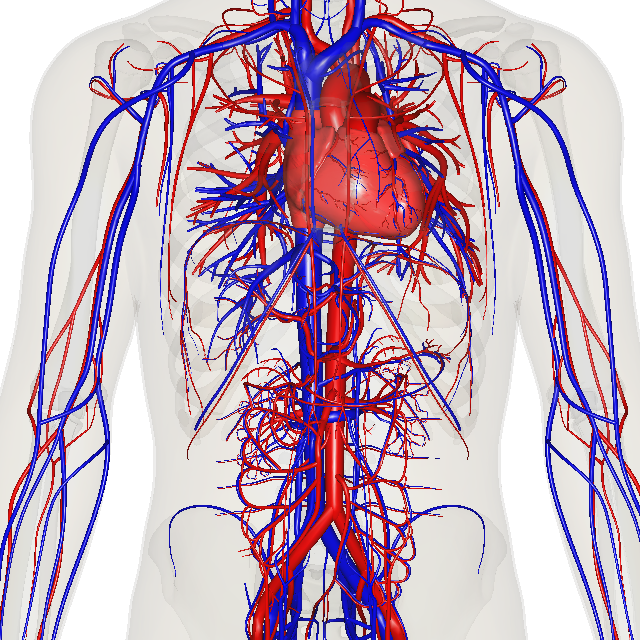
Blood is a vital fluid that transports oxygen, nutrients, and hormones throughout the body. It comprises plasma, red blood cells (carrying oxygen), white blood cells (fighting infections), and platelets (aiding clotting). The circulatory system, powered by the heart, ensures efficient blood flow through arteries (carrying blood away from the heart), veins (carrying blood towards the heart), and capillaries (facilitating exchange of substances). This intricate system is crucial for maintaining homeostasis and overall bodily functions.

Note: This is a very brief overview. For TNPSC exams, you’ll need to study the topic in greater depth. Blood and blood circulation notes taken 10th Samacheer Science book as follows. Also attached 10th and 11th samacheer book pdf at the enad for your reference for the same topic.


Blood

Blood is the main circulatory medium in the human body. It is a red coloured fluid connective tissue.

Components of Blood

The blood consists of two main components. The fluid plasma and the formed elements (blood cells) which are found suspended in the plasma.

Plasma

It is slightly alkaline, containing non-cellular substance which constitutes about 55% of the blood. Organic substances like proteins, glucose, urea, enzymes, hormones, vitamins and minerals are present in the plasma.

Formed Elements of Blood

Blood corpuscles are of three types:

  1. Red blood corpuscles (RBC) or Erythrocytes
  2. White blood corpuscles (WBC) or Leucocytes
  3. Blood platelets or Thrombocytes

Red blood corpuscles (Erythrocytes)

They are the most abundant cells in the human body. RBCs are formed in
the bone marrow. The RBCs impart red colour to the blood due to presence of respiratory pigment haemoglobin.

Matured mammalian RBCs do not have cell organelles and nucleus. They are
biconcave and disc-shaped. Their life span is about 120 days. RBC is involved in the transport of oxygen from lungs to tissues.

Why does mammalian RBC lack cell organelles and nucleus?

Mammalian RBC lack nucleus and makes the cells biconcave and increase surface area for oxygen binding, loss of mitochondria allows the RBC to transport all the oxygen to tissues, and loss of endoplasmic reticulum allows more flexibility for RBC to move through the narrow capillaries.

White blood corpuscles (Leucocytes)

WBC’s are colourless. They do not have haemoglobin and are nucleated cells. It is found in the bone marrow, spleen, thymus and lymph nodes. They are capable of amoeboid movement.
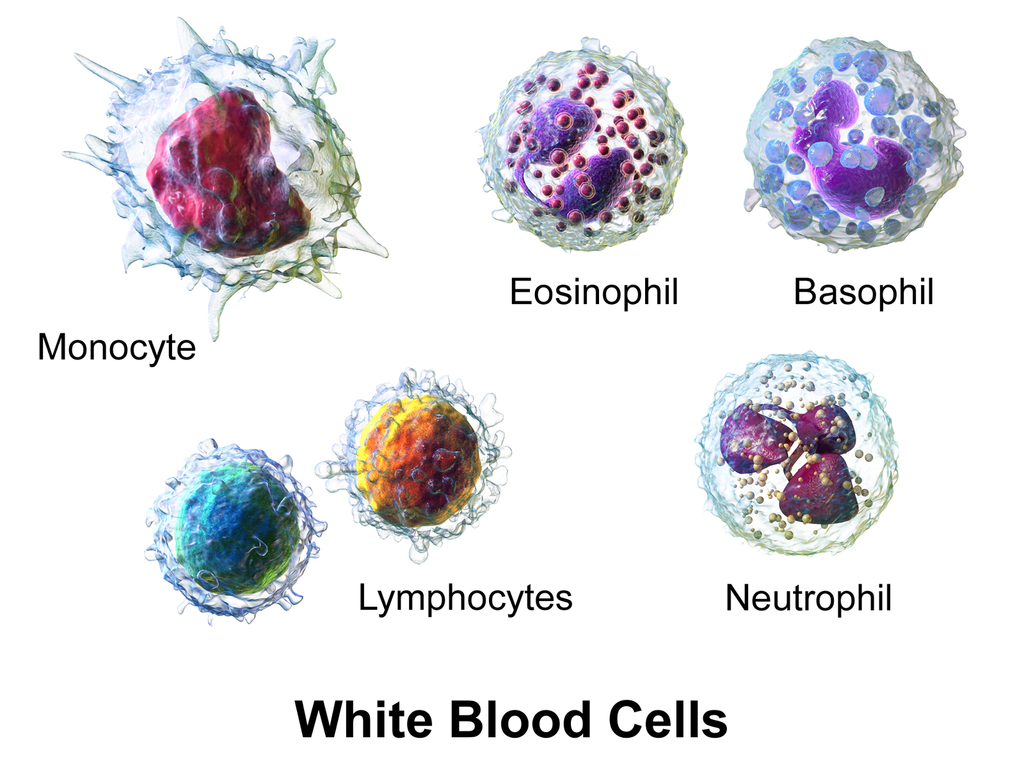
Blood and blood circulation Tnpsc - Types of white blood cells: neutrophils, lymphocytes, monocytes, eosinophils, basophils
Types of white blood cells: neutrophils, lymphocytes, monocytes, eosinophils, basophils

The white blood corpuscles can be grouped into two categories:

  1. Granulocytes
  2. Agranulocytes
Granulocytes

They contain granules in their cytoplasm. Their nucleus is irregular or lobed. The granulocytes are of three types:

  1. Neutrophils
  2. Eosinophils
  3. Basophils
Neutrophils

They are large in size and have a 2 – 7 lobed nucleus. These corpuscles form 60% – 65% of the total leucocytes. Their numbers are increased during infection and inflammation.

Eosinophils

It has a bilobed nucleus and constitute 2% – 3% of the total leucocytes. Their number increases during conditions of allergy and parasitic infections. It brings about detoxification of toxins.

Basophils

Basophils have lobed nucleus. They form 0.5-1.0% of the total leucocytes. They release chemicals during the process of inflammation.

Agranulocytes

Granules are not found in the cytoplasm of these cells. The agranulocytes are of two types:

  1. Lymphocytes
  2. Monocytes
Lymphocytes

These are about 20-25% of the total leucocytes. They produce antibodies during bacterial and viral infections.

Monocytes

They are the largest of the leucocytes and are amoeboid in shape. These cells form 5 – 6 % of the total leucocytes.They are phagocytic and can engulf bacteria.

Blood Platelets or Thrombocytes

These are small and colourless. They do not have nucleus. There are about 2,50,000 – 4,00,000 platelets / cubic mm of blood. Life span of platelets is 8–10 days. They play an important role in clotting of blood. Platelets form clot at the site of injury and prevent blood loss.

More to Know

Anemia: Decrease in number of erythrocytes.
Leucocytosis: Increase in the number of leukocytes.
Leukopenia: Decrease in number of leukocytes.
Thrombocytopenia: Decrease in the number of thrombocytes.

Functions of blood

  1. Transport of respiratory gases (Oxygen and CO2).
  2. Transport of digested food materials to the different body cells.
  3. Transport of hormones.
  4. Transport of nitrogenous excretory products like ammonia, urea and uric acid.
  5. It is involved in protection of the body and defense against diseases.
  6. It acts as buffer and also helps in regulation of pH and body temperature.
  7. It maintains proper water balance in the body.

Blood Vessels – Arteries and Veins

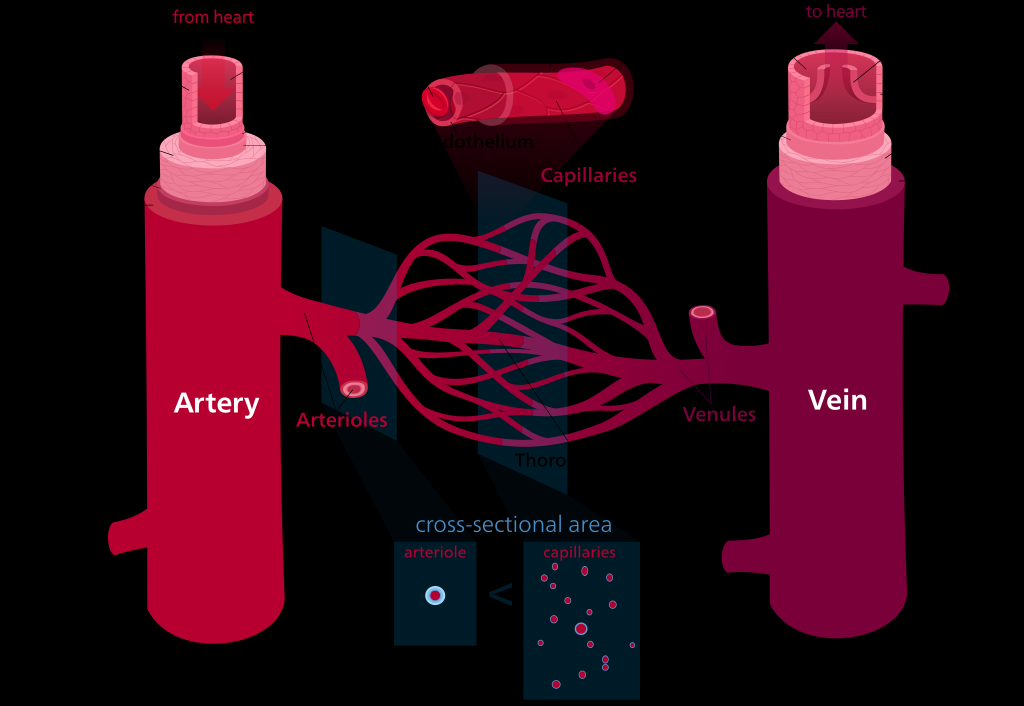
Blood vessels are a network of branched tubes that transport blood. There are three types of blood vessels namely arteries, veins and capillaries.

Arteries

They are thick and elastic vessels that carry blood away from the heart to various organs of the body. All arteries carry oxygenated blood except the pulmonary artery which carry deoxygenated blood to the lungs.

Veins

Veins are thin and non-elastic vessels that transport blood to the heart from the different organs. All veins carry de-oxygenated blood except the pulmonary vein which carry oxygenated blood from the lungs to the heart.

Capillaries

Capillaries are narrow tubes formed by branching of arterioles which then
unite to form the venules and veins. They are about 8 µm in diameter. Capillaries are formed of single layer of endothelial cells.

S.NoArteryVein
1Distributing vesselCollecting vessel
2Pink in colourRed in colour
3Deep locationSuperficial in location
4Blood flow with high pressureBlood flow with low pressure
5Wall of artery is strong, thick and elasticWall of vein is weak, thin and non-elastic
6All arteries carry oxygenated blood except pulmonary arteriesAll vein carry de-oxygenate blood except pulmonary veins
7Internal valves are absentInternal valves are present
Difference between Artery and Vein
Structure of blood vessel

Types of Circulatory System

Animals possess two types of circulatory system. They are

  1. Open type
  2. Closed type

Open type

In open type the blood is pumped by heart into blood vessels that open into blood spaces called as sinuses. These sinuses are the body cavities which are called haemocoel. Capillary system is absent. e.g. Arthropods, Molluscs
and Ascidians.

Closed type

In closed type the blood flows in a complete circuit around the body through specific blood vessels. The blood flows from arteries to veins through small blood vessels called capillaries. e.g Vertebrates.

More to Know

Closed circulatory system was discovered by William Harvey (1628) who is regarded the Father of Modern Physiology.

Structure of Human Heart
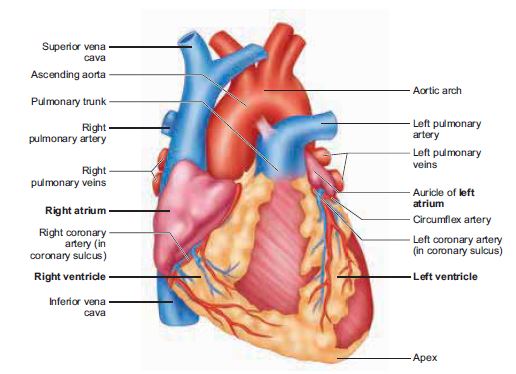
Human heart and blood circulatory system
Parts of Heart

Heart is a muscular pumping organ that pumps out the blood into the blood vessels. Human heart is situated between the lungs, slightly tilted toward the left and above the diaphragm in the thoracic cavity. The heart is made of specialized type of muscle called the cardiac muscle.

The heart is enclosed in a double walled sac called pericardium. It contains lubricating pericardial fluid which reduces friction during heart beat and protects it from mechanical injuries.

The human heart is four chambered. The two upper thin walled chambers of the heart are called auricle or atria (sing: atrium) and two lower thick walled chambers are called ventricles.

The chambers are separated by partition called septum. The septum between
auricles and ventricles prevents the mixing of oxygenated and deoxygenated blood.

The two auricles are separated from each other by interatrial septum.The left atrium is smaller than the right atrium. The right atrium receives deoxygenated blood from different parts of the body through the main veins superior vena cava, inferior vena cava and coronary sinus.

Pulmonary veins bring oxygenated blood to the left atrium from the lungs. The right and left auricles pump blood into the right and left ventricles respectively.

The ventricles form the lower part of the heart. The two ventricles are separated from each other by an interventricular septum. The left and right ventricles have thick walls because the ventricles have to pump out blood with force away from the heart.

From the right ventricle arises the pulmonary trunk which bifurcates to
form right and left pulmonary arteries. The right and left pulmonary arteries supply deoxygenated blood to the lungs of the respective side.

The left ventricle is longer and narrower than the right ventricle. The walls are about three times thicker than the right ventricle. The left ventricle gives
rise to aorta. The oxygenated blood is supplied by the aorta to various organs of the body. The coronary arteries supply blood to the heart.
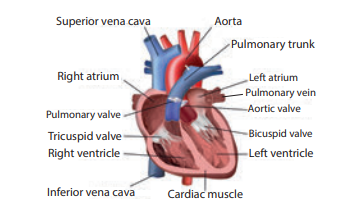
Internal structure of human heart

Valves

The valves are the muscular flaps that regulate the flow of blood in a single
direction and prevent back flow of blood. The heart contains three types of valves.

Right atrioventricular valve

It is located between the right auricle and right ventricle. It has three thin triangular leaf like flaps and therefore called tricuspid valve. The apices of the
flaps are held in position by chordae tendinae arising from the muscular projection of the ventricle wall known as papillary muscles.

Left atrioventricular valve

It is located between the left auricle and left ventricle. It has two cusps and therefore called bicuspid or mitral valve.

Semilunar valves

The major arteries (pulmonary artery and aorta) which leave the heart have semilunar valves which prevent backward flow of blood into the ventricles. They are the pulmonary and aortic semilunar valves.

More to Know

Heart chambers in vertebrate animals
Two chambered: Fishes
Three chambered: Amphibians
Incomplete four chambered: Reptiles
Four chambered: Aves, Mammals and Crocodiles (Reptile)

Types of Blood Circulation

The blood circulates in our body as oxygenated and deoxygenated blood.
The types of circulation are:

Systemic circulation

Circulation of oxygenated blood from the left ventricle of the heart to various organs of the body and return of deoxygenated blood to the right atrium. Aorta carries oxygenated blood to all the organs of the body.

Pulmonary circulation

The path of pulmonary circulation starts in the right ventricle. Pulmonary artery arises from the right ventricle and reaches the lungs with deoxygenated blood. Pulmonary veins collect the oxygenated blood from the lungs and supplies it to the left atrium of the heart.

Coronary circulation

The supply of blood to the heart muscles (cardiac muscles) is called as coronary circulation. Cardiac muscles receive oxygenated blood from coronary
arteries that originate from the aortic arch.

Deoxygenated blood from the cardiac muscles drains into the right atrium by the coronary sinuses.

When the blood circulates twice through the heart in one complete cycle it is called double circulation. In double circulation the oxygenated blood do not mix with the deoxygenated blood.

However, in some animals the oxygenated and deoxygenated blood are mixed and pass through the heart only once. This type of circulation is called single circulation. e.g., fishes, amphibians and certain reptiles.

Conclusion

In conclusion, the intricate interplay between Blood and blood circulation is fundamental for sustaining life. The heart’s relentless pumping propels blood through a vast network of vessels, ensuring the continuous delivery of oxygen and nutrients to every cell while efficiently removing waste products. Understanding the complex mechanisms of blood circulation is crucial for comprehending various physiological processes and their implications for human health.
Download

1.Blood and blood circulation tnpsc pdf

2.Circulatory system Notes pdf

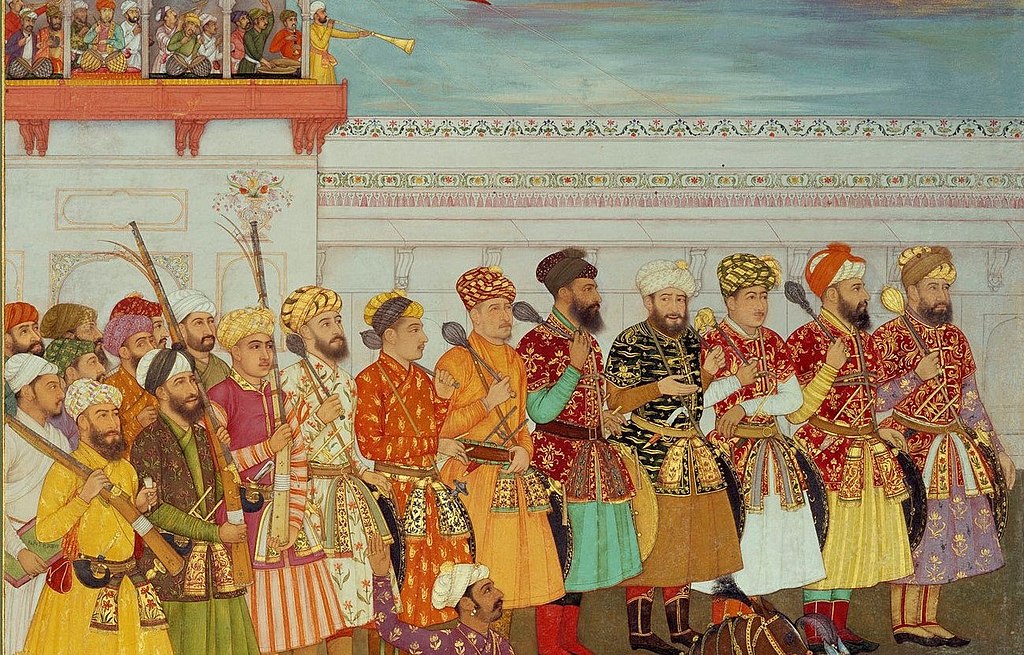
The Last Mughal Ruler: A Tale of Empire’s Twilight

Last Mughal Ruler

The Mughal Empire, a once-mighty dynasty that spanned the Indian subcontinent, reached its zenith under the rule of illustrious emperors such as Akbar, Shah Jahan, and Aurangzeb. However, as the pages of history turned, the empire faced inevitable decline. In this blog post, we delve into the poignant story of the last Mughal ruler, Bahadur Shah II, and witness the fading glory of a dynasty that had once ruled with opulence and grandeur.

  1. Rise and Fall of the Mughal Empire:
    • The Mughal Empire, founded by Babur in 1526, flourished for centuries, blending Persian, Turkish, and Indian cultures. The empire’s cultural richness, architectural marvels, and economic prosperity reached their pinnacle during the reign of Emperor Akbar. However, by the 19th century, the empire faced internal strife, external invasions, and the growing influence of European powers, particularly the British East India Company.
  2. Bahadur Shah II: The Reluctant Emperor:
    • Born in 1775, Bahadur Shah II ascended to the throne in 1837, inheriting an empire in decline. The “Zafar,” as he was known, was a poet, an aesthete, and a man of letters rather than a military strategist. Despite his limited political power, Bahadur Shah II became a symbol of resistance against the encroaching British dominance.
  3. The Revolt of 1857:
    • The year 1857 marked a turning point in the history of the Mughal Empire. The Indian Rebellion, often referred to as the Sepoy Mutiny, saw Bahadur Shah II reluctantly assume the role of a figurehead for the sepoys (Indian soldiers) and civilians who rebelled against British rule. The uprising, though ultimately unsuccessful, became a watershed moment in Indian history.
  4. Trial and Exile:
    • The culmination of the rebellion led to the capture of Bahadur Shah II by the British. In 1858, he faced a trial for his alleged involvement in the uprising. Found guilty, the last Mughal ruler was exiled to Rangoon (present-day Yangon) in British-controlled Burma. The once-mighty emperor spent his final years in obscurity and solitude.
  5. Legacy and Cultural Impact:
    • Despite his reluctant involvement in the events of 1857, Bahadur Shah II left an enduring cultural legacy. A prolific poet, he penned verses under the pen name “Zafar,” reflecting the beauty of Urdu poetry. His ghazals and compositions continue to be celebrated, and he is remembered as the last significant patron of the classical arts during the Mughal era.
  6. Reflections on the Twilight of an Empire:
    • The story of the last Mughal ruler prompts reflection on the larger narrative of imperial decline and the clash of cultures during the 19th century. Bahadur Shah II, caught between tradition and the encroaching tide of colonialism, became a symbol of the struggles faced by once-mighty empires confronting inevitable decline.

Conclusion

The tale of Bahadur Shah II, the last Mughal ruler, is a poignant chapter in the annals of history. His reign witnessed the sunset of a once-glorious empire, overshadowed by the relentless march of colonial powers. The final years of Bahadur Shah II in exile symbolize the end of an era, marking the transition from Mughal dominance to British imperial rule in the Indian subcontinent. His legacy lives on through his contributions to Urdu poetry, serving as a reminder of the cultural richness that thrived even in the twilight of an empire.

Harappan civilization tools: Indus valley civilization (TNPSC Notes)

Indus Valley civilization

Around 3BCE, a civilisation around the current northwest part of India, Pakistan region, collectively known as the Indus Valley Civilization also known as the Harappan Civilisation. It is also called the Harappan Civilisation since it was first identified.

This region appeared in different phase histories such as Early Harappan, which existed from 3000 to 2600 BCE, Mature Harappan from 2600 to 1900 BCE, and Late Harappan raging from 1900 to 1700 BCE.

The age of this civilisation dates back to the Neolithic villages of 7000 BCE. The urban phase started existing in the Mature Harappan period and declined after that.

Charles Mason first visited this civilization in 1826 and Alexander Burnes visited Amri in the place where railway line construction destroyed the archaeological site from Lahore to Multan.

The first ASI(Archeological Survey of India) surveyor Alexander Cunningham got a seal from this site. He visited this site earlier in 1853,1856 and in 1875. The importance of this site was not realized until Sir John Marshal’s arrival.

Sir John Marshal was the Director-General of ASI and started archaeology research. Mortimer Wheeler in 1940, started research in the Harappan sites. During the India-Pakistan partition during the independence, many sites went to Pakistan.

The Indian sites of this Civilization are Kalibangan, Lothal, Rakhi Garhi, and Dholavira, these sites were excavated during that period.

Geographical Area

  • Near 1.5 million square kilometres area in India and Pakistan covered the culture of Indus Civilization.
  • The boundaries of Indus Civilization are Sutkagen-dor in Pakistan-Iran border in the west, Daimabad in Maharastra India in the south, Shortugai in Afghanistan in the North, and Alamgirpur in Uttar Pradesh in the east.
  • Pakistan, Gujarat, Rajasthan, and Haryana are the core areas of Harappa civilization in India.

Early Beginnings

  • Agriculture and animal domestication began earlier in Mehrgarh. There is no evidence related to the continuity of the Neolithic age and Indus Civilization.
  • The development of villages and towns started in the early Harappan phase and they developed urban centres in the Mature Harappan phase.

Town Structure

The major cities of Harrapa time are:

  1. Harappa in Punjab, Mohejo-Daro in Sindh (Pakistan)
  2. Dholavira, Lothal, Surkotada (Gujarat)
  3. Kalibangan, Banawali (Rajasthan)
  4. Rakhigarhi (Haryana)
  • The characteristics of Harappan towns are planned fortification, Geometrical streets, and Lanes, Drainages. The towns are of the grid structure. The well-planned structure of the town gives the impression of the presence of civic authority in the planning of structures of the cities.
  • These people used baked and unbaked bricks and stones for the construction. The house has over one floor, built of mud bricks, and they built drainages of burnt bricks. The site of Mohenjo Daro is a well-planned town built on a platform and has two distinct areas, one is the Citadel and the other one is the lower town.
  • The houses of Mohenjo Daro had bathrooms built with burnt bricks and had a proper drainage system. Some houses had a staircase indicating the existence of multiple floor structures. These houses had multiple rooms and most of the houses had a central courtyard with room around.
  • The citadel area is meant for some special occasions. We identify a warehouse in Mohenjo-Daro. In the courtyard a Great Bath a kind of tank is situated, they lay bricks watertight with gypsum mortar and it had drainage and might be used as either granary or ritual bath.
  • The corridors were present on all four sides and stairs are seen on the northern and southern sides and it was well-paved with several adjacent rooms. Some granary structures are identified.

Agriculture and Animal Domestication in the Indus Valley Civilization

  • Agriculture was the prime source of food and occupation for the Harappans and they cultivated crops like chickpeas, sesame, various millets, wheat, barley, lentils, etc. and they practised a double cropping system.
  • The ploughed field found in Kalibangan shows the Harappan practised Ploughs and also used Canal and Well Irrigation. Pastoralism is yet another occupation practised by Harappans, they domesticated sheep, goats, and fowl also they reared other animals such as buffalo, pigs, elephants, etc.
  • But the Horse was not known to the Harappans. The Harappan cattle are called Zebu, they represent it in Seal. Harappan also ate fish and birds. There are pieces of evidence of boar, gharial, and deer in the Harappan sites.

Craft and Pottery

  • Major crafts of Harappans are Bead, Ornament production, shell bangle, and metalworking. They make these of Carnelian, Jasper, Crystal, Steatite, metals like copper, bronze, gold, and shell, faience and terracotta, or burnt clay.
  • They exported the ornaments to various Biblical places such as Mesopotamia. Some areas specialized in certain crafts. Such as Shell in Nageshwar and Balakot, Lapis Lazuli in Shortughai, Carnelian in Lothal, Steatite in south Rajasthan, and Copper crafts in Rajasthan and Oman.
  • The Harappans made well-fired pottery, these were deep red slips including black paintings. The pottery is shaped like dish-on-stands, storage jars, perforated jars, bowls, S-shaped jars, plates, dishes, bowls, and pots.
  • We notice the painted motifs or themes on the pottery such as pipal leaves, fish-scale design, intersecting circles, zigzag lines, horizontal bands, and geometrical designs with plants and animal forms.

Harappan civilisation tools, Metal and Weapons

  • The Harappan Civilisation belongs to the Bronze Age, and these people were well-versed in Copper and Bronze tools. They used these tools in agriculture and craft production
  • Some tools are Chisels, Points, Needles, Fishhooks, weighing pans, mirrors, a razor, and Antimony rods.
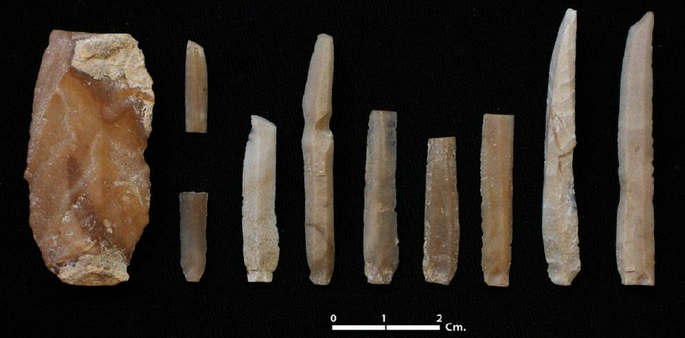
  • The chert blades made from Rohrichert(a fine-grained sedimentary rock found near Rohri in Pakistan, used by the Harappans for making stone blades and tools) were utilised by the Harappans.
rohrichert - Indus valley civilization Tnpsc
Rohri chert blades are considered a testimony to the Harappan efficiency in long-distance trade and craft production
  • Ancient weapons of this civilisation are arrowheads, spearheads, celts, and axes.
  • Harappan did not have an awareness of Iron.

Textiles and Ornaments

  • The Harappans were civilized enough to wear clothes, they also wore metal and ornaments made of stones.
  • A figure depicting Priest wearing shawl-like cloth with floral decorations shows that the Harappans had knowledge of silk and cotton.

Harappan civilization ornaments

  • Terracotta Models or statues of women wearing ornaments, the dancing girl found at Mohenjodaro wearing bangles show these ornaments might be made of Carnelian, gold, and copper.
  • Some ornaments had etched designs, and they exported these ornaments to Mesopotamia. Faience, stoneware, and bangles made of shells were also used by the Harappans.

Business

  • As said earlier, the Harappans had a business relationship with Mesopotamians. Also, seals of Harappa are found in Sumerian sites in Oman, Iran, Iraq, and Bahrain.
  • The cuneiform inscription (earliest writing method of Sumerians) of Mesopotamia says Economic relations with the Harappans. “Meluhha”, a reference in the Cuneiform inscription is the Indus region.
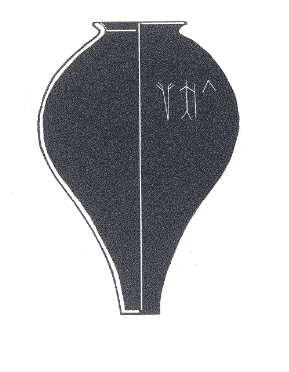
  • In Oman, we find Harappan Jars.
harappan jar found in oman
harappan jar found in Oman
  • In Mesopotamia, Harappan seals, weights, dice, and beads are found. Carnelian, Lapis Lazuli, Copper, Gold, and different woods were exported to Mesopotamia. Harappan got raw materials from these regions are made various craftworks, tools, etc.

Scripts and Artworks of the Indus Valley Civilization

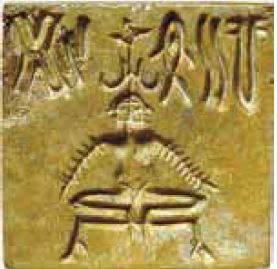
  • The seals made of Steatite, terracotta, ivory, and copper are found in these sites. These seals hold the text of about 26 signs, which are not deciphered to date. Some scholar suggests that these texts are from the Dravidian family.
  • These seals might have been the Identity market to show authority for the goods transported.
  • The terracotta figure, bronze images, copper mirrors, and paintings on the pottery found in Harappa, Priest-King of Steatite, and dancing girls statue made of copper found in Mohenjo-Daro, are important some important artworks of these people.
  • Also, toys are found such as Toy Carts, rattles, wheels, marbles, etc. These also used proper weights and measures, as they were involved in trade and business they used standard weights.
  • Cubical weights have been discovered from these sites and found in the ratio of weights of 1:2:4:8:16:32. The smallest weight is the 16th ratio weighs 13.63 grams.
  • They also used measuring scales in which one inch was approximately 1.75 cm. Weights made of chert were cubical in shape.
  • They used the binary numbering system (1, 2, 4, 8,16, 32, etc.) that is used for weighing jewellery and precious metals.

Religion Practices

  • The people of this civilization worshipped Nature, Pipal Tree. The terracotta figure of the woman deity found denotes the Mother Goddess. In Kalibangan, we have found a Fire altar.
  • The bodies are buried with rich rituals, as burial is found with Pottery, Jewellery, a copper mirror, beads, Goat skeletons, etc., as these people believed in the Afterlife.

Politics

  • The seals, weights, and bricks exhibited uniformity that revealed authority and power.

Cultures Existed elsewhere during the Indus Civilization

  • There were large communities of farmers, pastoral people, etc. living throughout the subcontinent from Kashmir to Kanyakumari and Arunachal Pradesh to Gujarat in the same period of the Harappan civilization.
  • These communities are also important as they contribute to Indian Culture.
  • The northern parts of Karnataka and Andra are connected to the Neolithic period and might have a connection with the Indus civilization but there is evidence to prove it.
  • Similarly, Chalcolithic culture is found in Deccan and Western India, and Neolithic culture found in Kashmir, Ganga Valley, and central, eastern India might also have a connection with the Indus Civilization but there is no evidence.
  • As the Indus people are found to be well versed in watercraft they might have connected these areas through waterways.

Decline of the Indus Civilization

  • The Indus Civilization declined after the Mature Harappan in 1900CE.
  • The causes of the decline might be drastic changes in climate, fall of trade with Mesopotamia, the river changing its course or dried or continuous drought The people moved to the Southern and eastern direction of the Indus river regions.

Relationship between Indus Valley Civilization and Tamil Civilization

  • The Indus Civilization is considered the first urbanization and its real origin is still unknown as the Script used in their works is still not deciphered.
  • One cannot ignore that there some many similarities between the Tamil Civilization to the Indus such as graffiti found in Megalithic burial pots of South India and the names of places that have a relation with the Indus.
  • Ancient towns such as Arikamedu, Keezhadi, and Uraiyur town in South India differ from Indus cities.

Downloads

Indus valley civilization tnpsc notes pdf (Tn History Book Old)

Indus valley civilization tnpsc notes pdf (Tn History New book)

References

  1. R.S.Sharma, India’s Ancient Past. Oxford University Press, 2005.
  2. Upinder Singh. A History of Ancient and Early Medieval India. Pearson, 2008.
Rural welfare oriented programmes in India Tnpsc pdf

Rural welfare oriented programmes aimed at the improvement of the rural economy, people and Healthcare and also the reasons for rural poverty and unemployment.

The rural welfare oriented programmes in India understand the need to develop rural areas. The problems faced by the villages and initiatives taken by the governments to improve the conditions are also discussed.

This welfare-oriented strategy seeks to promote the well-being of the rural population in general and the rural poor in particular, through large-scale social programmes like the Minimum Needs Programme (MNP), Applied Nutrition Programme(ANP), Mid-day Meals Programme (MMP), National Old Age Pension Programme (NOAPP) and so on.

The primary means used in this strategy are free provision/distribution of goods, services and civic amenities in rural areas. The critical assumptions of this strategy are that people are not competent to identify and resolve their problems and that government specialists can identify their needs and meet them with the financial and administrative resources available to the government.

The performance of the programmes is judged by the quantity of goods, services and civic amenities delivered. The rural welfare oriented programmes present a mixed picture; the rural poor have benefited significantly through some programmes in a few areas, but not in others.

List of Rural welfare oriented programmes

  1. Mahatma Gandhi National Rural Employment Guarantee Act (MGNREGA)
  2. PRADHAN MANTRI AWAS YOJANA- GRAMIN – PMAY (G)
  3. Pradhan Mantri Gram Sadak Yojana (PMGSY)
  4. Deen Dayal Upadhyaya Grameen Kaushalya Yojana (DDU-GKY)
  5. Mission Antyodaya
  6. National Social Assistance Programme (NSAP)
  7. Saansad Adarsh Gram Yojana (SAGY)
  8. Aajeevika – National Rural Livelihoods Mission (NRLM)
  9. SHYAMA PRASAD MUKHERJI RURBAN MISSION (SPMRM)

1. Mahatma Gandhi National Rural Employment Guarantee Act (MGNREGA)

Rural welfare oriented programmes -Mahatma Gandhi National Rural Employment Guarantee Act beneficiaries

The vision of Mahatma Gandhi NREGA is to enhance the livelihood security of rural households across the country by providing at least 100 days of guaranteed wage employment in a financial year to every rural household whose adult members volunteer to do unskilled manual work. Mahatma Gandhi NREGA recognises the importance of strengthening the livelihood resource base of the poor by reaching the most vulnerable sections of rural areas, including Scheduled Castes, Scheduled Tribes, women-headed households, and other marginalised groups.

The scheme encourages a sense of community and collective responsibility by strengthening Panchayat Raj institutions. Mahatma Gandhi NREGA promotes a bottom-up approach to planning and execution, empowering local communities to take charge of their development. Through the creation of productive assets of prescribed quality and durability, the scheme addresses immediate economic needs while laying the foundation for long-term prosperity.

Mahatma Gandhi NREGA prioritises sustainable development and environmental stewardship, striving to create a greener, more sustainable future for generations to come by prioritising works that contribute to ecological conservation and rural infrastructure development. Central to the scheme’s vision is a commitment to transparency and accountability, ensuring that funds are utilised efficiently and beneficiaries’ rights are upheld through mechanisms such as social audits, grievance redressal, and proactive public disclosure.

MGNREGA in Tamilnadu

Scheme Highlights MGNREGA

Employment Guarantee

MGNREGA provides a legal guarantee for 100 days of employment per year to every rural household in India. This ensures that eligible households have access to a minimum level of employment, helping alleviate poverty and providing a safety net during periods of economic distress.

Focus on Rural Development

The primary objective of MGNREGA is to enhance the livelihood security of rural households by promoting sustainable rural development. The program emphasises the creation of productive assets such as water conservation structures, rural roads, and other infrastructure projects that contribute to the overall development of rural areas.

Inclusive and Demand-Driven

MGNREGA is designed to be demand-driven, meaning that employment opportunities are created in response to the expressed demand from the rural community. The beneficiaries have the right to demand work, and the government is obligated to provide employment within 15 days of such a demand.

Women’s Participation

The act promotes the active participation of women in the workforce. One-third of the beneficiaries are women, and efforts are made to ensure that at least 50% of the workers are women. This not only contributes to women’s empowerment but also addresses gender disparities in rural employment.

Transparency and Accountability

MGNREGA emphasises transparency in the implementation of projects and financial transactions. Social audits are conducted to ensure accountability and enable local communities to actively participate in monitoring the implementation of projects. Information about the scheme, including work details, wages, and funds allocated, is made available to the public through various channels.

Electronic Fund Management

The use of technology is encouraged for efficient implementation and monitoring. An Electronic Fund Management System (e-FMS) is employed to transfer wages directly to the bank accounts of the workers, reducing leakages and ensuring timely payments. This helps in minimising corruption and improving the efficiency of the program.


2. PRADHAN MANTRI AWAS YOJANA- GRAMIN – PMAY (G)

Social Sector Problems

1. Village Economics

It deals with the application of principles of economics and the development of the lives of people in rural areas. Village economy refers to the economy of the communities or people who live in villages.

The problems faced by the villages are low employment opportunities, poverty, backwardness in agriculture, poor infrastructure, illiteracy, poor labour productivity, surplus labour forces, population, high dependency on natural resources, etc.

As per 2011 population census 6,40,867 villages in India and out 121 crore people 68.84% of people live in villages.

1.2 Features of Rural Economy

a. Village as an Institution

It is a primary institution, and it satisfies all the basic needs of rural people and their communities. These people have a feeling of belonging and a great sense of unity towards each other.

b. Dependence on Agriculture

Most people are dependent on natural resources, agricultural activities, and allied services of agriculture.

c. Life of Village People

The lifestyles of these people are generally simple; they rely on faith, superstition, and traditional cultural practices. Basic public services such as education, transport, banking, hospitals, etc, are very limited and mostly unavailable. Most of the people are economically poor.

In terms of production, the social organisation of the rural sector is extremely weak, and in recent years, alcohol drinking and caste killings have gone up. The people of the so-called High, Middle Caste live in the village mainland as a single group, and SC or so-called lower caste people are forced to live outside the village mainland.

d. Population Density

Population density is generally lower in villages, and houses are scattered in villages. Village people generally live in groups and colonies.

e. Employment

Unemployment is common in villages. There exists seasonal and underemployment in villages. Unemployment is a situation where people with abilities and willingness do not find any work. Underemployment is the excess of people employed over and above the requirement. Disguise Unemployment is where people work and there is no increase in production.

Underemployment and Disguised Unemployment both exist in village areas.

f. Poverty

It is a condition where basic needs such as food, shelter, and clothing are not met. According to the 2011-2012 economic survey, about 22 crore villages, people are below the poverty line.

g. Indebtedness

Village people are highly indebted owing to poverty and underemployment. This is due to a lack of agriculture and non-agriculture job opportunities, seasonal employment, low-wage employment, poor production, poor marketing networks, etc.

Since there were no formal loan facilities available to the villagers, they had no choice but to lend money to the moneylenders who squeezed the villagers.

As a result of these parasites (money lenders), villagers commit suicide.

” An India farmer is born in debt, lives in debt and dies in debt ” stated by a British writer Sir Malcolm Darling (1925)

h. Village Income

The village economy is not vibrant enough to provide work consistently or self-employment opportunities. A large number of labourers and skilled people are underemployed, and the scope of increase of income is limited.

1.3 Rural Development

Rural development is an overall improvement in the social and economic well-being of villagers.

As per World bank, “Rural Development is a strategy designed to improve the economic and social life of
a specific group of people – rural poor”

http://documents.worldbank.org/curated/en/522641468766236215/Rural-development

In brief, rural development is a process of improving the village areas, their people, and their living.

1.4 Need for Rural Development in India

It is essential for the overall growth and development of the Indian economy due to the following reasons.

  • Most of the population lives in the village, and their contribution is essential for nation-building.
  • By keeping villages backwards, India cannot be developed.
  • The backwardness of villages has a significant impact on the National economy, as it provides essential commodities such as milk, food and raw materials.
  • Improving the village areas in areas of education, health and sanitation can avoid Urban problems such as begging, rack picking and slumming due to migration from villages.
  • Food production and rural employment can be increased by developing agriculture and allied activities in rural areas.
  • Rural development reduces the evils of brain drain and urban migration.
  • Underutilised resources can be utilised by improving the village’s economy.
  • PURA by former President Abdul Kalam. In terms of infrastructure facilities, the gap between Rural and Urban areas must be reduced through rural development.
  • The Human Development Index (HDI), Women Empowerment Index (WEI), Gender Disparity Index (GDI), Physical Quality of Life Index (PQLI) and Gross National Happiness Index (GNHI), are an economic indicator that needs to be addressed to improve the national status globally.

10.5 Problems of Rural Development in India

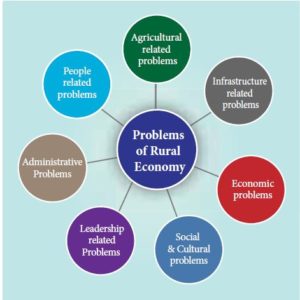
Rural economy
Problems of the rural economy
  • People Related Issues– Sentiment and Beliefs, illiteracy, lack of technical knowledge, etc, are some of the problems.
  • Agriculture– Agricultural problems include knowledge, unavailability of inputs, poor marketing of agricultural products, small land holdings, fragmentation of land holdings, absence of infrastructure to stay and work in villages, low adoption of modern technologies, lack of investment in both public and foreign investments, and fixing the price of own agricultural goods.
  • Infrastructure– lack of electricity, water, health, storage, banking and insurance, educational institutions, etc, in rural areas.
  • Economics- Inability to adapt to technology and inputs, low-income, underprivileged rural industries, indebtedness and inequality in land holding and assets. Also, feed landlords owning large areas.
  • Leadership- Rural people are in the hands of leaders who are incompetent, self-interested and politically biased.
  • Administration- Low wages, improper utilisation of budget, lack of a monitoring body for rural development programmes.

1.6 What is Rural Poverty?

On the basis of food consumption, a person taking less than 2400 calories per day in a rural area is considered rural poverty.

As the Planning Commission estimates, 54.1 % of people live below the poverty which accounts for 33.8 % during 2009-2010. Poverty is high among the Scheduled Castes (SC) and the Scheduled Tribes (ST) in rural areas.

In 2005, SC and ST people accounted for 80 % of the poor in rural although their share in the total rural population is much smaller.

In 2015, 80 crores or more lived in villages, and 22 crores people are below the poverty line, which is one quarter.

India is home to 22% of the world’s poor.

1.6.1 Causes of Rural Poverty
  • Landless agricultural labour, they work on others land to support their families.
  • Lack of Non-farm Employment- Many workers are hired for lower wages due to the lack of non-farm employment.
  • Lack of Public Sector Investment- This is the root cause of poverty in rural areas, as the Public sector lacks investment in human resource development.
  • Inflation- Increases in price affect the power of purchasing power in rural areas.
  • Low Productivity- Many people are employed for less demanding work and hence paid less, resulting in less productivity.
  • Unequal Benefits of Growth- Urban rich enjoy economic development, but due to a poor economic structure, contributions of the poor are not accounted for in property, and their hard work does not improve their financial status.

Ministry of Rural Development in India

These are the Rural Welfare Oriented Programmes that are given by the Ministry of Rural Development. It is one of the ministries of the government of India for planning and providing faster growth in the village or rural areas.

  1. Shyama Prasad Mukherji Rurban Mission

It is a centrally sponsored scheme, which was launched in 2016 that is developed to accelerate rural growth. The funding is shared by the state government and central government in the ratio of 40:60. That is 60% by the centre and 40% by the state.

For the Himalayan state and NE state, it is 90% by the centre and 10% by the state.

Under this mission, the Union government at the centre will coordinate with the district administration to develop urban cities with proper civic amenities for villages and gram panchayats.

Social Welfare Programmes

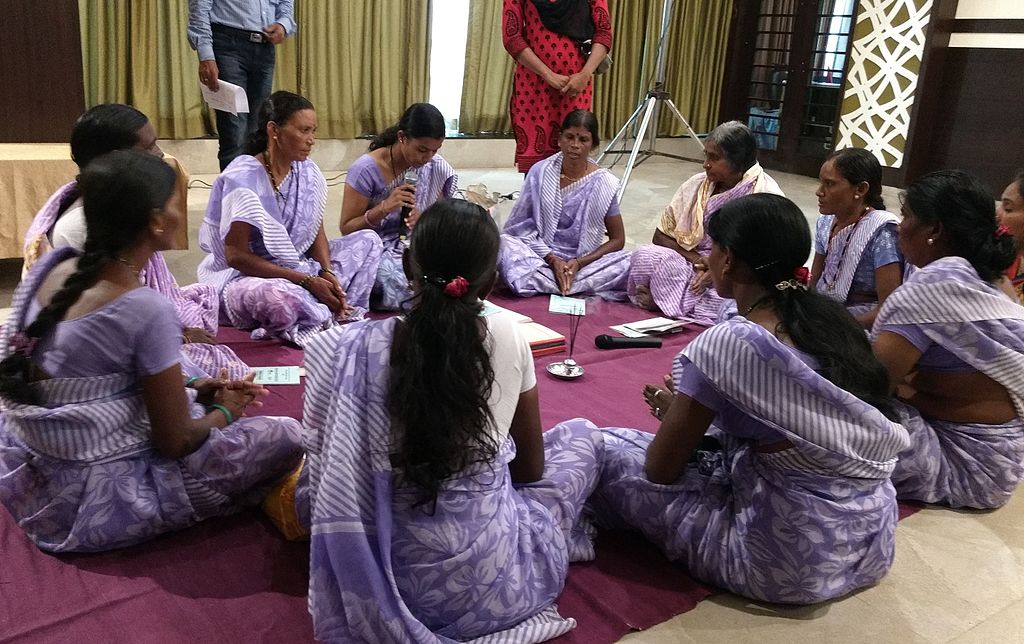
rural development in India using the model self-help group among rural women's
SHG – Self-Help Groups

Ministry of Agriculture and Farmer Welfare

  • Pradhan Mantri Fasal Bima Yojana
  • Soil Health Card (SHC) Scheme
  • Pradhan Mantri Kisan Samman Nidhi (PM-KISAN)
  • Pradhan Mantri Kisan Maan Dhan Yojana (PM-KMY)
  • Participatory Guarantee Scheme (PGS)
  • Schemes to support organic farming in-country

There are three major criticisms of rural welfare oriented programmes, that is:

  • It has created dependence.
  • It requires resources that are beyond the means of governments.
  • It has opened the doors for large-scale corruption among those responsible for delivering welfare benefits.

Conclusion

Several ministries of the Union Government of India design different development schemes to improve the benefits or welfare of the people. Some such schemes are the National Rural Livelihood Mission, MGNREGA, etc.

Downloads

1.Rural welfare oriented programmes Tnpsc pdf

Environment and ecology tnpsc pdf

To study about the environment and ecology and components of environment such as biotic, abiotic components and biodiversity

Environment and Ecology

The environment is the condition in which we live, work etc. It is the natural world for example the land, air, and water in which animals, humans, plants etc live.

Ecology is the study of organisms and how these organisms interact with the environment around them. It studies the relationship between living things and their habitats.

Types of Ecology

The different levels of ecology are:

  • Organisms
  • Communities
  • Population
  • Ecosystem

Also can be classified as landscape ecology, behavioural ecology and population ecology. To know what the Biosphere is? To study the components, functions, and biodiversity of the ecosystem.

Learn about major biomes and the conservation of biomes. The biosphere is the life-supporting layer of the earth. This layer consists of the Lithosphere, Atmosphere, and Hydrosphere. It includes flora and fauna.

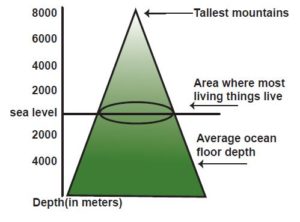
The range of the biosphere is approximately 20 km high from the surface of the sea to the troposphere. Most plants live in a very narrow part of about 1 km above and below the mean sea level (MSL).The biosphere is made up of various biomes and ecosystems. All living things are grouped called Species, irrespective of their numbers.

The area in which plants, animals, and microbes live is called Habitat. A variety of flora and fauna live in a particular habitat called Biodiversity.

Environment and Ecology - Verticle range of biosphere on earth
The vertical range of the biosphere, where life is supported in the Tallest mountains at 8000* meters to the deepest part of the ocean

1. Ecosystem

An Ecosystem is a community, where all living organism has a life and interact with one another and also with the non-living environment such as land, soil, air, water, etc.It ranges from a small unit such as the bark of a tree or ecosphere, for example, Cropland, Pond, Desert, forest, etc.

A biosphere consists of all ecosystems and sustains life forms including Humans.

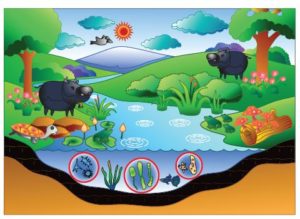
Environment and Ecology
An ecosystem is a community where all living and nonliving things interact and sustain life

1.1 Components of the Environment and Ecology or Ecosystem

It consists of Biotic, Abiotic, and Energy Components.

a. Abiotic Components

Abiotic components are the non-living parts of an ecosystem that influence the environment and the organisms within it. They include physical and chemical factors like sunlight, temperature, water, air, soil, and minerals. These factors vary across different ecosystems, shaping the unique conditions for life in each one.

All non-living things such as land, water, calcium, inorganic, physical, and chemical factors in the environment.

b. Biotic Components

Biotic components are the living organisms within an ecosystem. They encompass all plants, animals, and microorganisms. These living beings interact with each other in complex ways, forming food webs, competing for resources, and influencing the overall health and stability of the ecosystem.

All living things such as plants, animals, and microbes. Biotic Components are divided into three categories: Producers, Autotrophs, and Consumers.

Producers


Producers are the foundation of any ecosystem. They are organisms, primarily plants, that can create their own food through photosynthesis. This process uses sunlight to convert water and carbon dioxide into organic matter, such as sugars. Producers are essential because they provide the energy source for all other living things in the food chain.

Prepares its food, and self-nourishing components and are called Autotrophs. These can be found on both water and land. Examples: Plants, Algae, Bacteria, etc.

Consumers

Consumers are organisms that cannot produce their own food and must obtain energy by eating other living things. They play a vital role in the ecosystem by transferring energy through the food chain.

Those that consume the producer for nourishment directly or indirectly. These cannot produce their food. Also called Heterotrophs.

The consumer is divided into four main categories namely Primary consumers, Secondary consumers, Tertiary consumers, and Decomposers.

Primary consumers

Primary consumers, also known as herbivores, are organisms that occupy the second trophic level in a food chain. They obtain their energy by directly consuming producers, such as plants or algae. Examples include deer, rabbits, and insects.

These directly consume the Producers. Generally, these are herbivorous such as goats, Cows, etc.

Secondary Consumers

Secondary consumers, often carnivores, are organisms that feed on primary consumers (herbivores). They play a crucial role in the food chain by controlling herbivore populations and transferring energy to higher trophic levels. Examples include foxes, snakes, and many birds of prey.

These consume the herbivorous, called carnivorous. Eg. Lion, Snake, etc.

Tertiary consumers

Tertiary consumers, often at the top of the food chain, are carnivores that prey on secondary consumers. They play a vital role in regulating populations of both secondary and primary consumers, maintaining the ecological balance. Examples include lions, eagles, and some sharks.

These are top carnivores that consume both herbivores and carnivores. Eg: Owl, Crocodile, etc.

Decomposers

Decomposers are organisms, such as bacteria and fungi, that break down dead or decaying organic matter into simpler substances. This process recycles nutrients back into the ecosystem, making them available for producers (plants) to use again.

Some organisms that are incapable of producing their food live on dead and decaying plants and animals. These are called Saprotrophs. Eg. fungi, Mushrooms, etc.

c. Energy Components

The Sun is the ultimate source of energy. The energy from the Sun gets transformed into other forms of energy through the various components in the ecosystem.

The producers, consumers, and decomposers contribute a lot to the energy flow in the ecosystem.

1.2 Functions of an Environment and Ecology and Food Chain

The living organism forms an interacting set of flora and fauna which are organized into various trophic levels, food chains, and food webs. The pattern of energy flow affects the functioning of the ecosystem.

The distribution and circulation of organic and inorganic matter in the ecosystem depend on the pattern of energy flow. Energy flow commonly takes place in a systematic order in an ecosystem through various levels called Tropic Levels.

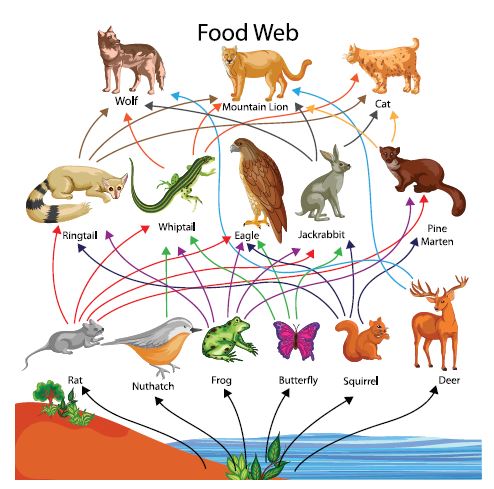
The chain of the flow of energy from one group of an organism to another via various trophic levels is called a Food Chain. A system of interlocking and interdependent food chains is called a Food Web.

Environment and Ecology - Food chain and Food Web
Illustration of Food chain and Food Web in the ecosystem

2. Biodiversity

Biodiversity or biological diversity refers to a wide range of living organisms that exist in a habitat. Biodiversity is highly dependent on topography, climate, and human activities.

It also represents the strength of the biological resources of the earth.

In biodiversity, each species has an important role to play in the ecosystem irrespective of its size or number. It maintains ecological balance and adds social benefits such as education, research, etc over the area.

2.1 Loss of Biodiversity

The extinction of flora and fauna due to human and natural influences is called Loss of Biodiversity. It has a great impact on the Environment and Ecology and that includes mankind. It also affects land, water, etc.

Habitat destruction caused by population explosions, pollution, deforestation, and global warming is the most common causes of Loss of Biodiversity.

As a result of the Loss of Habitat, sometimes the species is permanently eliminated from the earth. A good ecosystem is one that provides clean water, good soil, food, etc. Hence a stable biosphere has to be conserved.

An ecological region where it has lost more than 70% of its original habitat is considered a Hotspot. Hotspots in India are the Indo-Burma Region, Sundaland, the Himalayas, and the Western Ghats.

3. Biomes

It is an ecosystem where all the plants and animals are collectively found in a geographically extensive area.

Biomes are defined by abiotic things such as relief, climate, soils, and vegetation. They are divided into Terrestrial Biomes and Aquatic biomes.

3.1 Terrestrial Biomes

It is a group of living organisms that live and interact with each other on land. These are determined by rainfall and temperature. Some major terrestrial biomes are Tropical Forest, Tropical Savanna, Desert, Temperate Grassland, and Tundra.

3.1.1 Tropical Forest Biomes

Environment and Ecology - Tropical Forest Biomes
Tropical Forest Includes Evergreen Rainforest, Seasonal Deciduous Forest

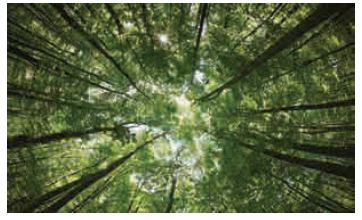
Tropic forest consists of several sub-biomes such as evergreen rainforest, seasonal deciduous forest, etc. This biome ranges between 10° N and 10° S of the Equator. About half of the world’s tropical forest lies in Central and South America.

The climate shows little seasonal change with high annual rainfall and relatively constant, high temperatures. This unique weather favours a thick vegetative cover.

These forests have the highest biodiversity and primary productivity of any terrestrial biomes. The Indonesian Islands, Amazon Basin, and Congo Basin are the major regions of Tropical forests.

These regions have very dense forests and human settlements are scattered. Due to the humid nature of this biome, people get affected by tropical diseases such as Malaria, Yellow fever, etc.

The people of this biome live through food gathering, fishing, lumbering, and shifting cultivation. The main trees found in this biome are Rubber, Bamboo, ebony, etc.

Elephants, monkeys, pheasants, bats, jaguars, etc are important birds and animals.

The U.S National Cancer Institute found that 70% of plants for treating cancer are found only in rainforests. Eg. Lapacho.

3.1.2 Tropical Savanna food web (Grasslands) Biomes

Environment and Ecology - Tropical savanna grassland biomes
Savanna Grassland, where grass grows tall and sharp

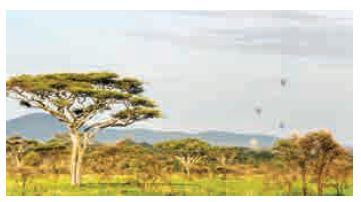
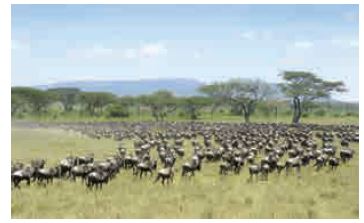
Tropical grassland is found between tropical forests and deserts. The tropical Savanna or tropical grassland food web or biome is found between 10° to 20 ° N and S latitudes. These grasslands are generally flat and are found in the Sahel, south of the Sahara in East Africa and in Australia.

This biome is generally hot and dry and experiences moderate to low rainfall. As a result, the grass grows tall and sharp. The chief occupation of people is herding. The people here are basically nomadic. Savanna’s desert food web is characterized by grasses and trees spread over the grasslands.

The animals found here are lions, Leopards, tigers, deer, zebras, giraffes, etc. Flora like Rhodes grass, red oats grass, lemongrass, etc. Tertiary consumers in the savanna are Lions, Leopards, Cheetahs, Hyenas, Jackals, Wild dogs, snakes, etc.

3.1.3 Desert Biomes

Environment and Ecology - Desert Biomes
Xerophytes a special type of vegetation in deserts

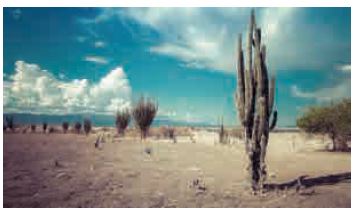
Deserts are usually found on the western margin of the continent between 20° and 30° N and S latitudes. The annual rainfall is less than 25 cm.

Due to a lack of rainfall and arid conditions, these areas do not possess any vegetation but have a special vegetation type called Xerophytes. The soil is sandy and saline, the deserts are agriculturally not fit.

Drought-resistant thorny shrubs and bushes, palms are found in deserts. Tribal people gather food and practice hunting. They move frequently in search of pastures and their temporary settlements.

Transportation is done by camels. Reptiles like snakes, lizards, and scorpions are commonly found. Oasis is fertile fresh water, found in deserts and semi-arid regions. These are fed by springs.

Dates, figs, palms, citrus fruits, maize etc are cultivated near oases.

3.1.4 Temperate Grassland Biomes

Environment and Ecology - Temperate Grassland Biomes
Temperate grasslands depend upon precipitation

Temperate grasslands found in the interior of the continents are characterized by large seasonal variations. It has warm summers and cool winters. These grasslands strongly depend on precipitation. If there is higher precipitation it leads to tall and soft grass.

If there is lower precipitation it leads to short and soft grass. These regions are good for wheat cultivation. Due to the lack of farm labour, mechanized agriculture is practised.

The pastoral industry is the main source of occupation, animal slaughtering, meat, and dairy products, etc are industries here. Grasshoppers, wolves, bison, and prairie dogs are common in these areas. Temperate Grasslands are called by different names in different parts of the world.

Prairies- North America

Steppes- Eurasia

Pampas -Argentina and Uruguay

Veld- South Africa

Down- Australia and New Zealand

3.1.5 Tundra Biomes

Environment and Ecology - Tundra Biomes
Tundra Biomes are frozen ground in the Arctic, Antarctic and Greenland

These are vast lowlands where the ground remains frozen. Northern parts of Asia, Canada, Europe, Greenland, the Arctic, and Antarctic regions fall in this biome. These regions are also called Barren Lands. Tundra experiences long severe winters and short cool summers.

Due to continued low temperatures and short growing seasons, the net primary productivity is very low. People are nomadic and their major occupation is fishing and hunting. There is a sparse population and they change their settlement frequently due to harsh weather.

People live in igloos in winter and tents in summer. Arctic moss, Arctic willow, and lichens are grown here. Polar bears, wolverines, reindeer, and snowy owls are found here.

3.2 Aquatic Biomes

These living organisms interact with each other and live in an aquatic environment. Similar to terrestrial biomes, aquatic biomes are influenced by a series of abiotic factors. It is classified into Freshwater biomes and marine biomes.

Freshwater Biomes

It consists of lakes, ponds, rivers, streams, wetlands, etc. Influenced by the volume of water, the composition of oxygen, water flow, temperature, etc. Human depends on freshwater for drinking, agriculture, etc. A common plant in freshwater is Lily, lotus, duckweed, etc.

Salmon, turtles, crocodiles, and trout are common animals in freshwater.

Marine Biomes

It is the largest and most continuous body of salt water and provides a wide range of habitats. Coral reefs are the second kind of marine biome. Coastal areas and estuaries are areas where saltwater and freshwater mix, which forms the third biome.

The nutrients are circulated more quickly to marine organisms, and water provides maximum mobility to the organisms. Kelp, phytoplankton, algae, etc grow in marine water. Marine is an important source of food for humans, animals, and plants.

Problems for marine biomes are pollution, overfishing, and a rise in sea level.

Scientist created artificial biosphere in Arizona, America called as Biosphere-2

https://biosphere2.org/

Conservation

The primary cause of loss of biodiversity is habitat alteration caused by humans. The increasing human population leads to the overexploitation of biological resources. Most places are heavily threatened by humans. It is the duty of everyone to preserve it.

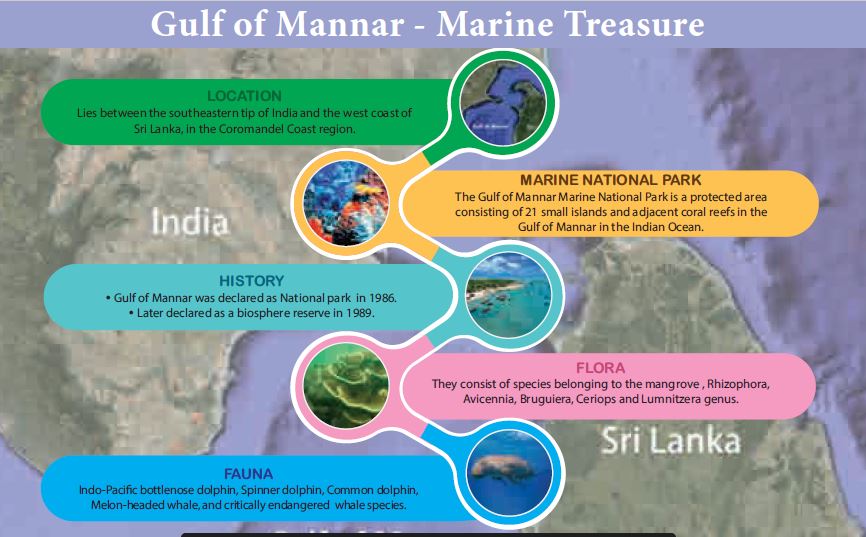
Environment and Ecology - gulf of mannar biosphere
Gulf of Mannar biosphere

Conclusion

The biosphere includes Biotic and Abiotic components. The biotic component depends on other biotic components for food and nutrition. These together form an ecology. The transfer of nutrients from one level to another is explained through the Food chain and the food web.

The extensive ecosystem called Biomes and their types were noted with respect to the people, occupation, flora, and fauna. Also, the conservation of the biosphere is discussed.

What are your thoughts on conservation and how to protect the environment for the future?

Download

1.Environment and Ecology Tnpsc 9th std Samacheer Kalvi Notes

2.Environment and Ecology Tnpsc (Ncert Notes) pdf

3.Environment Ncert Notes for Upsc pdf

4.Ecosystem Ncert Notes for Upsc Pdf

Environment in the latest News

2025-2026

  1. International treaty on Plant Genetic Resources (ITPGRFA) – The 11th session of the governing body of the International treaty on Plant Genetic Resources for Food and Agriculture (ITPGRFA) was concluded in November 2025 at Lima, Peru. ITPGRFA is often called the Plant Treaty or Seed Treaty; it promotes conservation and sustainable use of crop genetic diversity.
    • As of 2014, there are 131 organization are parties to the ITPGRFA (130 countries and 1 intergovernmental organisation, the European Union). India signed and ratified the ITPGRFA in 2002.
    • Objectives of the 11th Session – Conservation and sustainable use of all plant genetic resources for food and agriculture. Fair and equitable sharing of the benefits, in harmony with the Convention on Biological Diversity, for sustainable agriculture and food security.
  2. Operation Thunder 2025 – It is a large-scale global law enforcement operation targeting the illegal trafficking of wildlife and forest products held during September-October 2025. Law enforcement agencies from 134 countries (including India), including police, customs, border security, forestry and wildlife authorities.
    • The coordination of Operation Thunder was led by INTERPOL and the World Customs Organisation with support from the International Consortium on Combating Wildlife Crime (ICCWC).

To be continued on the next page

Classification of living organisms Tnpsc

Early classification of organisms were based on only two criteria, beneficial or harmful animals. An ancient classification system recognized 5 animal groups – domestic, wild, creeping, flying and
sea animals.

Initially the classification was based on organism’s fundamental characteristics such as the habitat and morphology only.

Aristotle (384 to 322 BC), was the first to classify all animals in his History of Animals (Historia Animalium in Latin). He attempted a basic classification of all living organisms into Plants and Animals. Animals were classified based on locomotion; walking (terrestrial), flying (aerial) and swimming (aquatic).

Based on the presence or absence of red blood he classified the animals into two as Enaima with blood and those without blood as Anaima.

Aristotle’s classification system had limitations and many organisms were not fitting into his classification. For example, the tadpoles of frogs are born in water and have gills but when they metamorphosed into adult frogs they have lungs and can live both in water and on land.

How to classify frogs and where to place them? Aristotle classified organisms based on locomotion, hence, birds, bats, and flying insects were grouped together just by observing one single characteristic feature, the flying ability.

On the contrary to the above said example, the ostrich, emu and penguin are all birds but cannot fly. So Aristotle would not have classified them as birds. In spite of these limitations Aristotle’s classification system was followed for more than 2000 years upto 1700.

After Aristotle, his student Theophrastus (372-287 BC) continued his research on the classification of plants, and he was known as the “Father of Botany.”

There was a huge gap till 16th century, then the English naturalist John Ray (1627–1705) wrote several important works through his life. His most important contribution was the establishment of species as the ultimate unit of taxonomy.

In 1682 he published the Methodus Plantarum Nova, which contained about 18,000 plant species, a result of a relatively narrow species concept.

His complicated classification was based on many combined characters, as opposed to earlier taxonomists. John Ray also aimed at publishing a complete system of nature, which included works
on mammals, reptiles, birds, fishes and insects.

The Swedish biologist Carolus Linnaeus (1707 – 1788) father of modern taxonomy and founder of modern systematics developed a scientific system of taxonomy and binomial nomenclature, which is still (with modifications) in use.

Aristotle to Linnaeus employed easily observable single to few traits for classification of organisms. With increased knowledge of the several biological domains, many characters were considered for classifying organisms.

This represented the phase of classical taxonomy which was based on overall similarities or affinities derived from morphology, anatomy and embryology of organisms. A modification of this system is the numerical taxonomy, which evolved in the 1950s.

This system evaluates the resemblances and differences through statistical methods followed by computer analyses to establish the numerical degree of relationship among individuals.

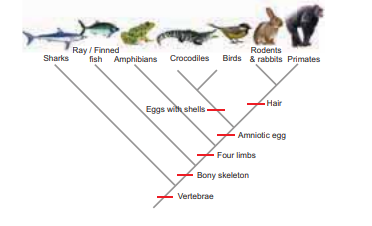
Later on biologists initiated studies on the evolutionary and genetic relationships among organisms, which led to the emerge of phylogenetic classification or cladistics. It is an evolutionary classification based on how a common ancestry was shared. Cladistic classification summarizes the genetic differences between all species in the ‘phylogenetic tree’.

Ernst Haeckal introduced the method of representing evolutionary relationships with the help of a tree diagram known as cladogram.

This system of classification takes into account ancestral characters (traits of basic body design which would be in the entire group) and derived characters (traits whose structure and functions differs from those of ancestral characters).

One or more derived characters which appeared during evolution resulted in the formation of new subspecies. In a cladogram each evolutionary step produces a branching and all the members of the branch would possess the derived character which will not be seen in organisms below the particular branch point.

Arranging organisms on the basis of their similar or derived characters which differ from the ancestral characters .produced a phylogenetic tree or cladogram.

Example of a cladogram

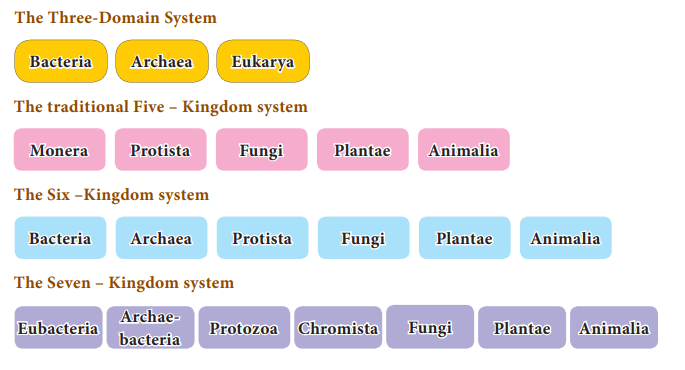
Depending on the system of classification, organisms were classified into two or three kingdoms. Later into four, five, six and now into seven kingdoms.

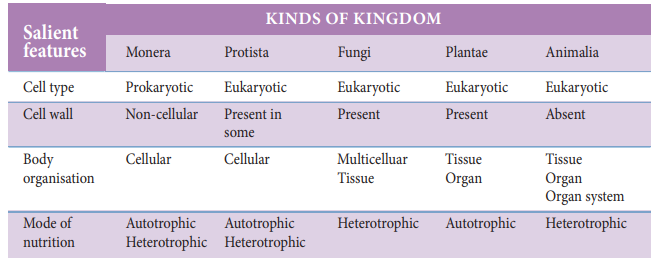
R.H.Whittaker (1969) proposed the Five kingdom Classification, the Kingdoms defined by him were Monera, Protista, Fungi, Plantae, and Animalia based on the cell structure, mode of nutrition, mode of reproduction and phylogenetic relationships.

Below table gives a comparative account of different characteristics of the five kingdoms.

Comparative account of different characteristics of the five kingdom

Classification has come a long way and now takes into an account even molecular level DNA and RNA identification. The advancement in molecular techniques and biochemical assays has led to a new classification – The “Three Domain” classification.

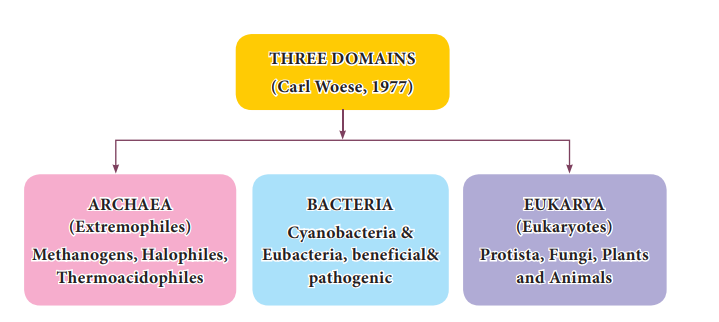
Three Domain classification

Three Domains of Life

Three domain classification was proposed by Carl Woese (1977) and his co- workers. They classified organisms based on the difference in 16S rRNA genes. The three domain system adds the taxon ‘domain’ higher than the kingdom.

This system emphasizes the separation of Prokaryotes into two domains, Bacteria and Arachaea, and all the eukaryotes are placed into the domain Eukarya.

Archaea appears to have more in common with the Eukarya than the Bacteria. Archaea differ from bacteria in cell wall composition and differs from bacteria and eukaryotes in membrane composition and rRNA types.

1.Domain Archaea

Th is domain includes single celled organisms, the prokaryotes which have the ability to grow in extreme conditions like volcano vents, hot springs and polar ice caps, hence are also called extremophiles.

Th ey are capable of synthesizing their food without sunlight and oxygen by utilizing hydrogen sulphide and other chemicals from the volcanic vents.

Some of the them produced methane (methanogens), few live in salty environments (Halophiles) and are thermoacidophiles which thrive in acidic environments and at high temperatures.

2.Domain Bacteria

Bacteria are prokaryotic, their cells have no definite nucleus and DNA exists as a circular chromosomes and do not have histones associated with it. They do not possess membrane bound organelles except for ribosome (70S type).

Their cell wall contains peptidoglycans. Many are decomposers, some are photo-synthesizers and few cause diseases. There are benefi cial probiotic bacteria and harmful pathogenic bacteria which are diversely populated.

Cyanobacteria are photosynthetic blue green algae which produce oxygen. Th ese had played a key role in the changes of atmospheric oxygen levels from anaerobic to aerobic during the early geologic periods.

3.Domain Eukarya (Eukaryotes)

Eukaryotes are animals which have true nucleus and membrane bound organelles. DNA in the nucleus is arranged as a linear chromosome with histone proteins, ribsosomes of 80S type in the cytosol and 70S type in the chloroplast and mitochondria.

Animals in this domain are classifi ed under kingdoms, namely, Protista, Fungi, Plantae and Animalia.

In 1987, Cavalier-Smith revised the six kingdom system to Seven Kingdom system. The concept of super kingdom was introduced and revised to seven kingdom classification.

The classification is divided into two Super Kingdoms (Prokaryota and Eukaryota) and seven kingdoms, two Prokaryotic Kingdoms (Eubacteria and Archaebacteria) and five Eukaryotic Kingdoms (Protozoa, Chromista, Fungi, Plantae and Animalia).

Three Domain System, Traditional Five-Kingdom system, Six-Kingdom system, Seven-Kingdom System

Taxonomic Hierarchy

In biological classification, the taxonomical hierarchy includes seven major categories namely kingdom, phylum, class, order, family, genus and species and other intermediate categories such as subkingdom, grade, division, subdivision, subphylum, superclass, subclass, superorder, suborder, superfamily, subfamily and subspecies.

Species

Species is the basic unit of classification in the taxonomic hierarchial system. It is a group of animals having similar morphological features (traits) and is reproductively isolated to produce fertile offspring.

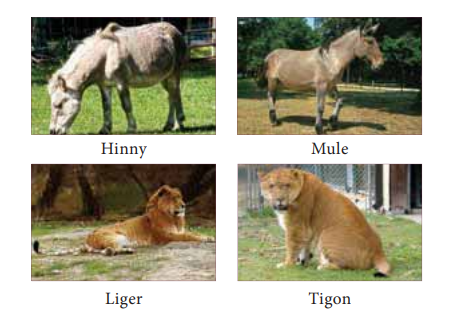
There are some exceptional animals which can produce sterile offspring because of mating with closely related species.

Sterile offspring

Genus

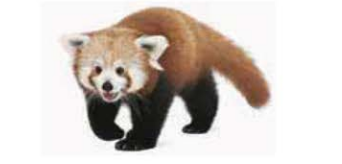
It is a group of closely related species which have evolved from a common ancestor. It some genus there is only one species which is called as monotypic genus such as Red panda is the only species in the genus Ailurus: Ailurus fulgens.

It there are more than one species in the genus it is known as polytypic genus, for example ‘cats’ come under the Genus Felis, which has a number of closely related species, Felis domestica (domestic cat) ,Felis silvestris (wild cat).

Family

It is a taxonomic category which includes a group of related genera with less similarity as compared to genus and species. For example, the family Felidae includes the genus Felis (cats) and the genus Panthera (lions, tigers, leopards).

Order

This category includes an assemblage of one or more related families which show few common features. One or more similar families are grouped together to form an order. For example, family Canidae and Felidae are placed in the order Carnivora.

Class

This category includes one or more related orders with some common characters. For example order Primata comprising monkeys, apes and man is placed in the Class Mammalia, along with the order Carnivora which includes dogs and cats.

Phylum

The group of classes with similar distinctive characteristics constitute a phylum. The classes Pisces, Amphibia, Reptilia, Aves and Mammalia constitute the next higher category, phylum Chordata.

These classes share some common features like presence of a notochord and a dorsal tubular nerve cord hence included in the phylum Chordata.

Kingdom

The group of classes with similar distinctive characteristics constitute a phylum. The classes Pisces, Amphibia, Reptilia, Aves and Mammalia constitute the next higher category, phylum Chordata.

These classes share some common features like presence of a notochord and a dorsal tubular nerve cord hence included in the phylum Chordata.

Kingdom

All living animals belonging to various phyla are included in the Kingdom Animalia and it is the top most of the taxonomic hierarchy.

Downloads

1.Classification of living organisms tnpsc pdf (Samacheer Kalvi)

Monsoon rainfall weather and climate in India Tnpsc

Climate of India primarily categorised as Winter during January to february, Pre-Monsoon or Summer during March to May, Southwest monsoon during June to September and Northeast Monsoon during October to December

This post for the Tnpsc exam in geography from the topic ‘Monsoon, rainfall, weather, and climate’. It is referenced from the Samacheer Kalvi book.

It covers Monsoon winds in India such as Southwest monsoon, north-west monsoon, the direction of retreating monsoon in India, and weather and climate.

Weather and Climate in India

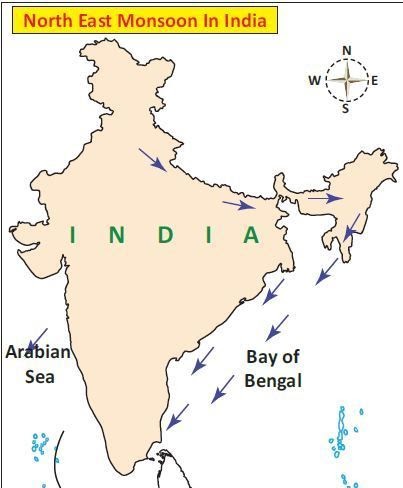
The word Monsoon is derived from the word Mausim, an Arabic word. It is used by Arabic navigators to describe the seasons of the shores of the Indian Ocean. The winds blow from southwest to northeast during summer. Similarly, the wind blows from northeast to southwest during winter. Different concepts by Meteorologists surrounding this complex phenomenon.

By Dynamic concept, Monsoon wind originates due to seasonal migration of planetary winds and pressure belts following the position of the sun. During summer solstice ‘June 21’, the sun rays fall vertically over the tropic of cancer.

Thereby all the pressure and wind belts of the globe shift northwards. At this time, Inter-Tropical Convergence Zone (ITCZ) also moves northwards and a major part of the Indian landmass comes under the influence of southeast trade winds.

While crossing the equator this wind gets deflected and takes the direction of south-west and becomes south-west monsoon. During winter, the pressure and wind belts shift southward, thereby establishing the northeast monsoon(trade winds) over this region. This phenomenon of systematic change in the direction of the planetary winds is known as the monsoon.

Types of monsoon in India or Seasons of India

According to the experts, there are four main Monsoon seasons in India namely:

  1. Winter or Cold weather season (January – February)
  2. Pre-Monsoon or summer or hot weather season (March-May)
  3. Southwest Monsoon or rainy season (June – September)
  4. Northeast monsoon season (October – December)

Winter or cold-weather season or Winter Season in India

During this season, Sun’s vertical rays fall over the tropic of Capricorns which is far away from India. As a result, India receives slanting sun rays that result in low temperatures.The cold season is characterized by clear skies, fine weather, low humidity, light northerly winds, and large daytime variations of temperature.

High pressure develops in North India and a north-westerly wind blows down the Indus and Ganges valleys.In South India, the general direction of the wind is from east to west.The mean temperature increases from North to south, the decrease is sharp as moving towards northwards in the north-western part of the country.

The minimum temperature in the south is 22 degrees Celsius and 10 degrees Celsius in the Northern plains, 6 degrees Celsius in Punjab.The rain generally falls in the Western Himalayas, Tamil Nadu, and Kerala in this season.

Western disturbances and associated troughs in the west are the main precipitation systems in the northern part of the country.The jet stream plays a dominant role in bringing these disturbances in India. These disturbances cause rain precipitation in Himachal Pradesh Punjab, Haryana and snowfall in the hills of Jammu and Kashmir. This rainfall is used for the cultivation of Winter Wheat.

Pre Monsoon or hot weather season (March-May) or Summer Season in India

In this season the vertical rays of the sun fall over peninsular India and there is a steady increase in temperature from South to North.It is almost hot and dry in most of the country in the initial part of the season.

The weather over the land areas of the country is influenced by thunderstorms associated with rain and sometimes with hail mostly in the middle and later part. During this season, the temperature increases in all parts of the country, and in April the interior part of the southern part of India, the temperature daily mean will be 30 to 35 degrees Celsius.

In the central part of India, the mean temperature would reach up to 40 degrees in most parts. Some parts of India, such as Gujarat, North Maharashtra, Rajasthan, and North Madhya Pradesh experience high day temperatures and low night temperatures.

Because of the atmospheric pressure, the wind blows from the southwest to the northeast direction in the Arabian Sea and Bay of Bengal. This brings pre-monsoon showers to the west coast during May month called summer monsoon in India.

There are showers also called ‘Mango Showers that helps in the quick ripening of mangoes along the Kerala and Karnataka coast. Northwesters or Kalbaisakhis are local severe storms associated with strong thunderstorms, winds, and short-duration rains.

Kalbaisakhis occurs over the eastern and northeastern parts of Bihar, West Bengal, and Assam during April and May and approaches from the Northwesterly directions.

Southwest Monsoon Or Rainy Season

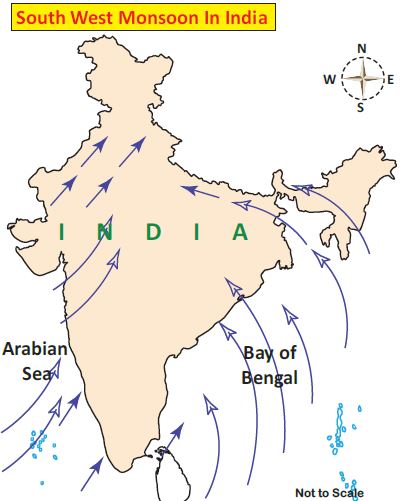
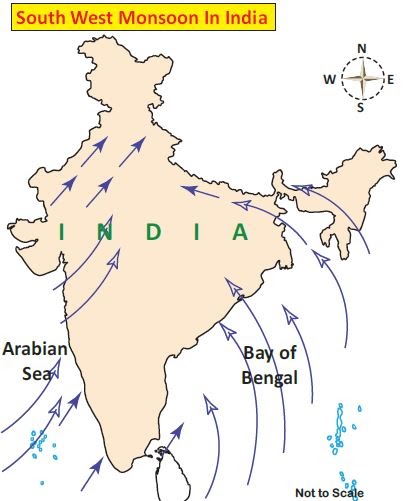
direction of south west monsoon in india
Direction of the southwest monsoon over India

South west monsoon in India

The southwest monsoon is the most important feature of the Indian climate. It takes place in the Southern Tip of India Peninsula normally by the first week of June. South-West monsoon advances along the Konkan coast during starting of June and it covers the whole country by July 15.

The global phenomenon El Nino influences the South West Monsoon. In North India, the temperature reaches almost 46-degree Celsius before the southwest monsoon or rainy season. There occurs a “Burst of Monsoon”, which is termed as Break, which is a sudden approach of monsoon wind over southern India with Thunder Showers. This show reduces the temperature of the country.

South West Monsoon Winds

The monsoon wind that is the southern tip of India’s landmass gets separated into two branches. One branch starts from the Arabian Sea and Another Branch starts from the Bay of Bengal. The one from the Arabian sea provides heavy showers to the west coast of India and is located on the west ghats windward side.

The other part towards the north hits the Himalayan Mountains and brings heavy rainfall in the North. Rajasthan and western parts get rain from these winds as the direction of the wind is parallel to the Aravali mountains and there is nothing to hold or intrude the wind.

Direction of South West monsoon in India

The Bay of Bengal wind moves to northeast India, Myanmar and this wind is trapped by mountain groups such as Khasi, Garo, and Jaintia. This results in the heaviest rainfall in the world, that is Mawsynram located in Meghalaya. Then it moves to the west, which results in a rainfall decrease from east to west.

The southwest monsoon winds in India are responsible for 75% of the Indian rainfall. Tamil Nadu that is located on the leeward side receives less rainfall from this wind.

Post Monsoon or Retreating or Northeast Monsoon in India

north east monsoon winds
North East Monsoon in India

The southwest monsoon starts in North India by the end of the second half of September because of the southward shifting of pressure belts. This wind gets backs from the Indian peninsula and blows towards the Bay of Bengal.

The Coriolis forces deflect this wind and make this wind blow from the Northeast and it is known as North-East Monsoon or Post Monsoon season. The Northeast Monsoon in India is connected with the formation of the North-Easterly wind system over the Indian subcontinent.

From this season, the states such as Tamil Nadu, Andhra Pradesh, Kerala, and south interior Karnataka get good rainfall that almost 35% of its annual rainfall. The Retreating monsoon creates a large-scale loss of life during the storms that occur frequently in Tamil Nadu, Andra Pradesh, and some parts of Karnataka.

During these seasons, strong winds and storms hit the coastal regions, and the daytime temperature falls rapidly all over the country. The average temperature over North-west India shows a decreasing trend from 38 and falling to 28-degree celsius in November.

Distribution of Rainfall

About 118 cm is the average rainfall of India. The spatial distribution of the rainfall in the country is uneven. About 11% area receives over 200 cm,21% area receives 125 to 200 cm, 37 % area receives 75 to 125, 24 % area gets 35 to 75 cm and 7% area gets less than 35 cm of rainfall annually.

Rajasthan, Punjab, Haryana, west and south-west Uttar Pradesh, Western Madhya Pradesh, and the entire Deccan Trap or Plateau region east of Western Ghats except for a narrow strip along Tamil Nadu coast receive less than 100 cm rainfall annually.

The rest of the country receives 100 to 200 cm of rainfall.

Areas of High Rainfall

The west coast has the highest rainfall. The western Ghats, Himalayan areas in the northeast, and hills of Meghalaya. In these areas, the rainfall exceeds 200 cm. In parts of Khasi and Jaintia Hills, the rainfall exceeds 1000 cm. But in the Brahmaputra valley and its adjoining hills receives less than 200 cm.

Areas of Medium Rainfall

The southern parts of Gujarat, east Tamil Nadu, Northeastern Peninsula covering Odisha, Jharkhand, Bihar, eastern Madhya Pradesh, Northern Ganga Plain along the sub-Himalayas and Cachar valley and Manipur receives rainfall between 100-200 cm.

Area of Low Rainfall

Western Uttar Pradesh, Delhi, Haryana, Punjab, Jammu and Kashmir, eastern Rajasthan, Gujarat, and Deccan Plateau receives rainfall around 50-100 cm.

Areas of Inadequate Rainfall

Some parts of the Peninsula, especially in Andra Pradesh, Karnataka and Maharashtra, Ladakh, and most of western Rajasthan receive less than 50cm of rainfall.

Snowfall occurs only in Himalayan regions.

Conclusion

This article takes about the Monsoon and four primary seasons of the country concerning the precipitation and temperature change as drafted by the India Meteorological Department. Also provided with data of the distribution of rainfall in the Indian subcontinent.

Download

1.Climate of India UPSC PDF (Ncert)

2.Monsoon rainfall weather and climate tnpsc pdf

3.Pre monsoon season and post monsoon season in India pdf (Ncert)

Bahmani kingdom Tnpsc pdf Notes

Bahmani Kingdom History

Bahmani Kingdom’s History starts with Hasan Gangu. The Bahmani kingdom was founded by Hasan Gangu also known as Alauddin Bahman Shah in 1347 and it was ruled by fourteen sultans.

Capital of Bahmani Kingdom

The capital of bahmani dynasty is Gulbarga. Then the capital was shifted from Gulbarga to Bidar by Ahmad Wali Shah. During Muhammad Shah III, the power of the Kingdom reached its zenith.

The kingdom extended from the Bay of Bengal to the Arabian Sea. In the west, the kingdom extended from Goa to Bombay. On the east, the kingdom extended from Kakinada to the mouth of the river Krishna.

By the directions and services of minister Mahmud Gawan, Muhammad Shah was very success full.

Bahmani kingdom and its territories
Bahmani kingdom map

Services of Mahmud Gawan to the Bahmani Kingdom

The Bahmani kingdom reached its peak of power and territories under to services of Mahmud Gawan. Mahmud Gawan was a Persian merchant who joined the services of the Bahmani Kingdom when came to India age of Forty Two.

Due to his personal qualities, loyalty to the kingdom, simple life, etc Mahmud Gawan slowly became Chief Minister. Mahmud Gawan was a learned scholar and had great knowledge of Mathematics.

He made donations or endowments to build a college in the Persian style of architecture in Bidar. Mahmud Gawan a military genius, led the successful war campaign against the Vijayanagar kingdom, Orissa, and pirates on the Arabian sea.

His conquest also includes Konkan, Goa, and Krishna-Godavari Delta. Mahmud Gawan’s administrative reforms were aimed to increase the control of the sultan over the nobles and provinces.

Royal officers were appointed to each province to make Sultan have power over the provinces. Most of the forts were under the control of the Royal Officers.

Allowances of the nobles were reduced who are doing the responsibilities properly. Deccani nobles who were against Mahmud Dawan decided to plot against Mahmud Dawan.

Sultan punished him to death and the Bahmani kingdom began to decline. Weak ruler succeeded Muhammad Shah, and the provincial governor declared their independence.

Bahmani kingdoms

By 1526, Bahmani Kingdoms were divided into pieces, Ahmadnagar, Bijapur, Berar, Golkonda, and Bidar. This five-kingdom were collectively known as Deccan Sultanates.

Note: The about notes is taken from old Tamil State Board Books for Tnpsc exams

The Bahmani Kingdom founder – Alauddin Hasan Bahman Shah

Between Krishna and Tungabhadra rivers, There is Raichur which is a fertile area. To capture Raichur, there was a war happened between Bahmani and Vijayanagar Kingdom. The war went almost two centuries.

These wars started in the Bahamni Kingdom. East of Warangal and Orissa rules also faced conflict with Bahman Shah.

For administration purposes, Delhi Sultan divided the area under his rule into four divisions. These territorial divisions are called  Tarafs. The divided four-division was appointed with one governor in each administrative division.

These governors were responsible for the command over the army. These divisions are Gulbarga, Daulatabad, Bidar, and Berar. These governors were also responsible for the administration, tax collection, etc.

This governance method worked well for good kings and went into danger by the inefficient kings. For almost eleven years Bahman Shah ruled well for effectively controlling his enemies.

Bahman Shah took efforts to collect revenue from Warangal and Reddy’s Rajamundry, Kondavidu that led to many wars. In all the wars Bahman Shah won. To remember all his victories, he minted coins in the name himself as the second alexander.

The Second Bahmani Rule – Mohammed I 

His era is from 1358 to 1375. After Bahman Shah, Mohammed I came to the rule. He fought long wars with the Vijayanagar empire. Even after so many wars and so many losses between the two sides, nobody is fully able to control that region. He leads to two massive wars, but there is no benefit for him.

In 1363, he took a war on Warangal and captured it. The Warangal gave him massive resource loss but it fetched him Golconda fort, with treasures and precious gems. The turquoise throne from Golconda fort became the Bahmani king’s throne.

Bahmani kingdom administration under Mohammed I

Mohammed-I followed good governance. He followed governance and administration similar to the Delhi Sultanate, this system of governance inspired Marathas in the future. He created a system of eight ministers to take care of the governance.

Administration of Bahmani kingdom

  • Vakil-us-sultana is Chief of the Army, he is subordinate to the government.
  • Waziri-Kull is one who supervises the other ministers.
  • Amir-i-Jumla is the finance minister.
  • Wasir-i-ashraf is the external affairs minister, government affairs, and responsible for government ceremonies.
  • Nazir is subordinate to the Finance minister.
  • Peshwa is a lieutenant of the government forces.
  • Kotwal is the head of the Police department and judge or magistrate in the capital.
  • Sadr-i-Jahan is the Chief Justice and Religious department minister.

Administrative Measures

Mohammed-I took strong measures against the robbery on the highways. He laid a strong foundation for the kingdom by strengthening the institution and consolidation of the land or the territories.

Then he raised two mosques in Gulbarga, one of the completed by 1367. It was a great one. After Mohammed Shah I, some sultans ruled the kingdom but they do not have strong rules and were involved in constant wars.

In 1425 Warangal and its territories in the east were captured by Orissa rulers. Due to this loss, the capital was shifted from Gulbarga in 1429 to Bidar. After that Mohammed-III came to the rule from 1463 to 1482, who got great minister and statement Mohammed Gawan.

Mohammed Gawan or Mahmud Gawan

Mohammed Gawan was born in Persia had good knowledge of Islam, Persian, Maths, and was a good poet and writer. He started a madrasa in Bidar, and he constructed a very large library inside it.

The library contained 3000 manuscripts inside it. It shows his mastery of writing and knowledge. Mahmud Gawan as Prime minister of the Bahmani Kingdom gave good governance to Mohammed-III.

Mohammad Gawan also led a successful war campaign against the rulers of Konkan, Orissa, Vijayanagar kingdoms. Gawan learned the explosive technology from the Persian scientists and used it in wars.

He used explosives or gunpowder against the Vijayanagar kingdom at Belgaum. Mahmud Gawan by his skills controlled the governors and laid the foundation of good governance to the Bahmani kingdom.

He divided the Bahmani kingdom into eight provinces for easy governance for the kingdom. The easy area is well defined with the boundaries and the territories, the governor was appointed for each province.

Gawan brought some districts under his direct control. He also reduced the military powers of the governors. Mahmud Gawan reduced the number of forts. Because of it, only one fort is assigned to each governor. The rest of the forts came under the control of the Bahmani Sultanate.

The government officers were paid with land in place of salaries. The schemes introduced by Gawan, increase the efficiency of the Bahmani Kingdom. But the power of the provincial chiefs was reduced. These provincial chiefs were mostly from the Deccan.

Deccani pardesi conflict

Already there were two groups in the Deccan, one Deccan Muslims and other Muslims who were foreigners or called Pardesi. The conflict between these groups, paved the way to a fall in administration and governance.

This conflict killed Mohammed Gawan. These Deccan chiefs were jealous of Gawan, created a plot to kill Gawan. They wrote a letter to the Bahmani Sultan that Mohammad Gawan is planning to kill the Bahmani Sultan.

Already, Sultan was unhappy with the domination of Gawan over him. Gawan tried to convince the sultan by apologizing for the happenings. But the sultan was not ready to forgive him.

Finally, Gawan was killed, by false allegation to kill the Sultan.

The Decline of Bahmani Kingdom

After Gawan’s death, the Mohammed-III kingdom started to fall. Bahmani kingdom fell after the death of Mohammed III. After his death Mohammed III, a descendant ruled the kingdom.

The break-up of Bahmani kingdom

Then the Bahmani kingdom was divided into four independent kingdoms namely Bijapur, Ahmednagar, Berar, and Golconda. Last and fifth kingdom formed in Bidar. After some time, Bijapur emerged as a strong kingdom. Then Bidar, Berar was joined to Bijapur.

In the battle of Talikota or Rakshashi-Tangradi in 1565, all the five Bahmani Kingdoms fought against the Vijaya Nagar Kingdom. The result is the Vijayanagar Kingdom was defeated brutally.

But after the Talakota war, all the Deccan sultanates were annexed with the Mughal emperor.

// Note: This note is taken from Tamilnadu Samacheer Kalvi’s book. Useful for Tnpsc Exams and other Public service exams.

Some Extra Information about the Bahmani Kingdom

bahmani
Bahmani Kingdom map

Bahmani Sultanate is one of the important Indian Kingdoms during medieval India. The Bahmani sultanate was from Deccan or South India. It is a Muslim state of Persian background.

It got split into five independent kingdoms known as Deccan Sultanates. After the battle with the Vijayanagara Empire, at Raichur in 1520, the last Bahmani kingdom was separated from the main kingdom.

This sultanate was formed by Alauddin Bahman Shah. It is established after the Bahman Shah fought with Muhammad-bin-Tughlaq from the Delhi Sultanate. Bahman Shah was succeeded by his son. His name was Mohammed Shah I.

In 1429, Bidar was chosen as the capital for the Bahmani Kingdom. The other guys who came to power are Humanyun Shah, Nizamuddin Ahmad-3, Muhammad Shah-3 Lashkari. All three of them ascended the thorn at a very young age.

Muhammad Shah was assisted from a young age to a mature age by a Wise man named Mahmud Gawan and was a great scholar. He built a religious school called Mahmud Gawan Madrasa, where the teaching is both religious and secular.

mohammed gawan madrasa

Gawan was sentenced to death by Muhammad Shah-3, for sedition. After the death of Mahmud Gawan, the Bahmani sultanate started to decline. The last strong ruler was Mahmood Shah Bahmani-2 who succeeded his father Muhammad Shah II.

The later rulers were only King for the namesake, they were in the control of Prime Ministers of Barid Shahi. It was broken one by one after 1518. It was broken into five Kingdoms. These five kingdoms were collectively called Deccan Sultanates.

Bahmani Kingdom History started to decline after this.

The five states of Deccan Sultanates:

  1. Adil Shahi of Bijapur
  2. Nizamshahi of Ahmednagar
  3. Barid Shahi of Bidarm Qutb Shahi of Golconda
  4. Imad Shahi of Berar.

Krishnadevaraya of Vijayanagara gave the final blow to the Bahmani Kingdom then it became part of the Mughals.

Download Bahmani Kingdom History Notes for Tnpsc and Upsc

1.Bahmani Kingdom History Tnpsc Pdf download

2.Bahmani kingdom upsc pdf notes (New TN State board Book)

3.Bahmani Kingdom History Upsc pdf note (Old TN State Board Book)

Consumer protection forums in India and forms of consumer exploitation Tnpsc

To Learn about Consumer Protection Forums, ways in which consumer gets exploited, COPRA, Public Distribution system, RTI and consumer protections systems across the world.

This article deal with Consumer Protection, Consumer Rights and way in which consumer is exploited. The consumer is one who gives the final user of commodity, consumer pay for product or service. Sometimes the consumer gets cheated by the seller or company by providing a poor quality product or poor service or changes price higher than the actual.

consumer protection
Consumer Exploitation and Consumer Rights

Forms of Consumer Exploitation

tamil nadu nugarvor kavasam
Tamil Consumer Protection / Tamil Nadu nugarvor kavasam

The consumer got many services in the economy such as insurance, transport, electricity, finance, and banking.The demand for services and good are influenced mainly by advertisement. The companies spend a lot of capital towards advertisement to attract consumers and feed the information to the customer about the products but not information consumer needs to know.

When the consumer does not proper information about the product or service, the consumer gets exploited and harassed at times by the business people.

Consumers are exploited by traders and manufacture in different ways, which are as follows:

  • Goods not measured or weighted Properly, Goods are off sub-standard quantity, Selling the medicine beyond expiry date.
  • Defective home appliances are sold, Pricing the goods and services higher than the retail price, Selling duplicate products in the name of the original.
  • These are some common ways by which the customer gets exploited. The right of the consumer is protected by enacting certain rules and regulations established by Indian law.

Consumer Protection and Rights

Right to be protected against the marketing of goods and services that are dangerous to life and property. Proper information regarding the quantity, quality, potency, purity, adherence to national and international standards, and price of goods.

Assurance of access to goods and services at a competitive price. In the case of a single supplier, the right to quality and service at a fair price. The consumer’s interests should receive due consideration at appropriate forums relating to the consumer’s welfare.

To seek redresses against unfair trade practices and exploitation, when the consumer gets affected and the customer has the right to a fair settlement.

RTI Act

The Right to information act was passed on 12th October 2005, as a fundamental right of the citizen to access information from all public bodies.

The main objective of the RTI Act

To promote accountability and transparency to citizens to the information of public bodies. RTI covers all levels of Governments such as State, Central, District, Local Self Governments, etc. It also all NGOs, VO, and other private bodies that are partially or fully financed with public funds. Every information or record held by these bodies is accessible to every citizen via the RTI act.

RTI is not mentioned in the fundamental right of the constitution. But the parliament passed the Act to enable as a fundamental right to all the citizens.

Consumer Protection Measures

The government adopted three strategies to protect the consumers, Legislative measure-Enactment of consumer Protection Act, Administrative measure Distributing essential commodities through Public Distribution systems(PDS) and Technical measure Standardization of the product.

a. Legislation Concerning Consumer Rights

Consumer Protection act in 1986

The Consumer Protection act in 1986 was enacted by the government. According to this act, setting up separate Departments of Consumer affairs in Central and state governments.

That act exclusively focuses on consumer protection as enacted by the government. A most important feature of the act is the three-tier system known as the Consumer court at national, state, and district levels.

Consumer protection act 2019

The Consumer Protection Act, 2019 was enacted in India to enhance consumer rights and establish a robust framework for resolving consumer disputes. This Act replaces the previous Consumer Protection Act of 1986, addressing modern challenges posed by e-commerce and digital transactions.

Key features of the Act include:

  • Expanded Definition of Consumer: The definition now encompasses individuals purchasing goods or services online, thus broadening the scope to include various transaction methods, including direct selling and multi-level marketing.
  • Central Consumer Protection Authority (CCPA): This regulatory body is empowered to investigate violations, enforce consumer rights, and impose penalties on misleading advertisements and unsafe products.
  • Consumer Rights: The Act emphasizes six fundamental rights, including the right to safety, information, choice, representation, redressal, and education. These rights aim to protect consumers from hazardous goods and unfair trade practices.
  • E-Filing and Mediation: Consumers can file complaints electronically, and mediation is encouraged as an alternative dispute resolution method, facilitating quicker resolutions.
  • Product Liability: The Act introduces provisions for holding manufacturers accountable for defective products or services, enhancing consumer protection against substandard goods.

National Level

National consumer commission in Delhi, Apex court under the Consumer Protection Act 1986

State Level

At the state level, it is State consumer commission

District Level

At the district level, it is the District forum.

Legal formalities for filing a complaint

There are no legal formalities for filing a complaint. Anyone can file a complaint themselves if they are found cheated or exploited by a trader or manufacturer in the consumer court.

The consumer needs to write a complaint on white paper and attach the supporting documents such as guarantee or warranty card, cash invoice, etc along with the complaint and submit this to the district consumer court.

There is no necessity to go to a Lawyer or professional for legal assistance, the consumer themselves can plead the case.

b. Public Distribution System

The primary purpose of the Public Distribution System is to ensure food security for the poor. As a part of the administrative measure, the Public distribution system needs to be strengthened. Ill practices of traders such as hoarding, black marketing, and overcharging need to be prevented and enforced by law.

c. Standardization of Products

As a part of consumer protection from lack of quality and varying standards, government-created institutions, or bodies to make standards for goods and services and also enforcing them.

  • This Government of India created the institution name BIS(Bureau of Indian Standards) and Agmark. BIS frames standards for industrial and consumer goods. Agmark provides standards for agricultural products.
  • For International level standardization, an institution called ISO (International Organization for Standardization) which is located in Geneva serves to provide common reference standards.
  • ISO is a non-governmental organization established in 1947, published International standards based on international agreements.
  • For the International standard in Foods and Beverages, there is a standard called Codex Alimentation Commission.
  • Codex Alimentation Commission was created by the Food and Agriculture Organization (FAO) and the World Health Organization (WHO) located in Rome Italy.
  • It develops guidelines and standards for production and practices in international trade in food items.

India is observation 24th December as National Consumers Day to remember the day Consumer Protection Act passed in the parliament in 1986.

On the other hand World, Consumer Day is being observed on March 15, to remember the day in 1962 when the “Bill for Consumer Rights” moved in the US Congress.

The Father of the Consumer Movement is Ralph Nader, a consumer activist.

ralph nader consumer rights
Father of the Consumer Movement is Ralph Nader

Birth of COPRA

It is Magna Carta of consumer, which is the Consumer Protection Act (COPRA) in 1986.

Government of Tamil Nadu measure for Consumer Protection

Establishment of consumer clubs in educational institutions. Providing education through Women Self Help groups, Panchayat level federation for Rural masses.

Urban people through Resident Welfare Associations. General awareness through sectoral workshops and seminars.

By “Tamil Nadu Nugarvor Kavasam” magazine. Government advertisement through Radio, Television, and short video films.

Consumer Protection and Rights in Various Countries

United States

The USA passed various laws both at the federal and state levels.

Among them are the Federal Fair Debt Collection Practices Act, the Fair Credit Reporting Act, and Truth in Lending Act, etc.

United Kingdom

As a member of the European Union (EU), in 2016. UK is bound by consumer protection directives of the EU.

It also acts as UK’s official consumer and competition watchdog.

Germany

A minister of the federal cabinet is responsible for consumer rights and protection.

Uses of Consumer Act

To create Awareness, Social Concern- to make sure the products and services do not harm anyone and Environmental Concern

Causes due to Lack of Awareness

Consumers are exploited by attractive advertisements. Seller takes advantage of a lack of awareness of customers such as providing a scheme of exchange, gift, lotteries, etc. If the loss occurs the consumer cannot approach the court.

The people have no awareness of their rights and products.

Downloads

1.Consumer protection forums upsc ncert pdf notes

2.Consumer protection right upsc ncert pdf

Agricultural pattern and cropping seasons in India Tnpsc

The agricultural pattern in India or cropping seasons in India refers to three different agricultural seasons, namely Kharif, Rabi, and Zaid. The Kharif season is started by the Southwest Monsoon, which helps produce tropical crops such as rice, cotton, bajra, jowar, etc.

Similarly, the Rabi season starts in October. The agriculture and allied sectors include dairy, sheep, goat, poultry, piggery, fisheries, horticulture, sericulture, etc.

India has three cropping Seasons namely:

  • Rabi
  • Kharif
  • Zaid

Cropping seasons in India

Rabi

The Rabi season is one of the main cropping seasons in India, corresponding to the winter months. It follows the Kharif season and precedes the Zaid season. The Rabi season typically spans from October to March, and crops cultivated during this period are known as Rabi crops. Here are some key features of the Rabi season:

Rabi crop in India includes wheat, barley etc
Rabi crops or rabi harvest, also known as winter crops, are crops that are sown in winter and harvested in the spring in India, Pakistan, and Bangladesh.

Timing: The Rabi season starts with the onset of winter and continues until early spring. It is characterized by relatively cool temperatures, making it suitable for the cultivation of certain crops.

Crops: Rabi crops are predominantly winter crops that include cereals, pulses, and oilseeds. Some of the major Rabi crops include wheat, barley, mustard, gram (chickpea), linseed, and various fruits and vegetables such as carrots, peas, and tomatoes.

Water Availability: Rabi crops are often grown in areas where irrigation facilities are available. In regions with dependable water sources, farmers can cultivate Rabi crops even in the absence of significant rainfall.

Crop Rotation: The Rabi season is an important period for crop rotation and diversification. It allows farmers to vary the types of crops they cultivate, helping in soil fertility management and pest control.

Geographic Distribution: Rabi crops are cultivated in different parts of India, with their distribution influenced by climatic conditions and water availability. Wheat, for example, is a major Rabi crop in states like Punjab, Haryana, and Uttar Pradesh.

Importance: Rabi crops contribute significantly to India’s food grain production. Wheat, in particular, is a staple food for a large portion of the population. The cultivation of pulses and oilseeds during the Rabi season helps meet the demand for protein and cooking oil.

Government Initiatives: Various government policies and initiatives are implemented to support Rabi crop cultivation, including providing subsidies, credit facilities, and promoting better agricultural practices.

Harvesting Time: Harvesting of Rabi crops usually occurs in late winter or early spring, depending on the specific crop. The harvested crops are important for both domestic consumption and as a source of income for farmers.

The Rabi season is a crucial component of India’s agricultural calendar, contributing significantly to the country’s overall food production and economic well-being. It complements the Kharif season by providing a diverse range of crops and maintaining a continuous agricultural cycle throughout the year.

Kharif

The Kharif season is one of the two main cropping seasons in India, the other being Rabi. Kharif crops are sown in the monsoon season and harvested in the autumn. The Kharif season typically starts with the onset of the southwest monsoon, which generally occurs from June to September. Here are some key features of the Kharif season:

Kharif crop in India includes rice, cotton , sugarcane
Kharif crops, also known as monsoon crops or autumn crops, are domesticated plants that are cultivated and harvested in India, Pakistan and Bangladesh during the Indian subcontinent’s monsoon season.

Timing: The Kharif season corresponds to the monsoon period in India, starting with the arrival of the southwest monsoon winds around June and extending until September. The exact timing varies across different regions of the country.

Crops: Kharif crops are predominantly summer crops, and they include a variety of cereals, pulses, oilseeds, and cash crops. Some major Kharif crops include rice, maize, millets (jowar, bajra), pulses (moong, urad), oilseeds (soybeans, groundnuts), cotton, sugarcane, and various fruits and vegetables.

Rainfall Dependence: Kharif crops are heavily dependent on adequate rainfall, as the monsoon provides the primary source of water for cultivation during this season. Regions with good monsoon rains are more suitable for Kharif crop cultivation.

Geographic Distribution: Kharif crops are cultivated across different agro-climatic zones in India. Rice, for example, is a major Kharif crop in states like West Bengal, Odisha, and Andhra Pradesh, where conditions are conducive to its growth.

Importance: Kharif crops play a vital role in India’s food security and agricultural economy. They contribute significantly to the country’s overall food grain production and provide livelihoods to a large number of farmers.

Crop Diversity: The Kharif season allows for the cultivation of a diverse range of crops, reflecting the varied agro-climatic conditions in different parts of the country. The choice of crops depends on factors such as soil type, water availability, and local climate.

Sowing Period: Sowing of Kharif crops typically begins with the onset of the monsoon, and the timing varies based on the specific crop and regional conditions. For example, rice is often sown early in the Kharif season.

Harvesting Time: Harvesting of Kharif crops usually occurs in the autumn months, depending on the specific crop. The timing of harvesting is crucial to ensure optimal yield and quality of the produce.

The success of Kharif crops is closely linked to the monsoon rains, and variations in rainfall patterns can impact agricultural productivity. Government policies and initiatives, such as providing irrigation facilities, crop insurance, and subsidies, aim to support farmers during the Kharif season and enhance overall agricultural resilience.

Zaid Season

Zaid is a term used in Indian agriculture to describe a short-duration cropping season that typically occurs during the summer months, from March to June. This season falls between the Rabi (winter) and Kharif (monsoon) seasons. The Zaid crops are generally grown in regions where there is adequate water availability for summer cultivation, often with the help of irrigation.

Zaid season
Bitter Gourd flower, the bitter Gourd is cultivated and Harvested in Zaid season

Key features of the Zaid season include:

Timing: Zaid crops are planted during the summer months when temperatures are relatively high. The season begins after the Rabi crops have been harvested.

Crops: Zaid crops primarily consist of quick-growing and short-duration crops, especially vegetables. Common Zaid crops include cucumber, watermelon, muskmelon, pumpkin, bitter gourd, and other vegetables. Some fodder crops may also be cultivated during this season.

Water Management: Irrigation plays a crucial role in Zaid farming because the summer months in India are often characterized by high temperatures and lower rainfall. Farmers rely on irrigation systems, including wells, tube wells, and canals, to provide the necessary water for crop growth.

Geographic Distribution: Zaid crops are grown in regions where the climate and water availability are suitable for summer cultivation. These areas may include parts of North India, Western India, and other regions with access to water sources.

Crop Rotation: Zaid crops are often part of a crop rotation strategy, allowing farmers to make the most of the available growing seasons and diversify their agricultural activities.

Importance: Zaid crops contribute to the overall agricultural productivity and income of farmers. They provide an opportunity for additional income during the summer months when certain crops can be cultivated successfully.

While Zaid crops are not as predominant as Kharif and Rabi crops in terms of overall agricultural production, they play a vital role in the agricultural calendar by allowing farmers to make productive use of the summer season. Additionally, the cultivation of Zaid crops can help meet the demand for specific vegetables and fruits during this period.

Agriculture

Agriculture is a method of production of food, fodder, cash crops such as Fiber, and raising plants and animals (Livestock). Agriculture employs more than 50% of the national population directly or indirectly.

Agriculture provides 25% of the national income.

Factors Influencing Agriculture

Relief, Climate, and Soil, Institutional factors such as the size of farms, land tenure, and land reforms, Technological factors such as HYV (High Yielding a Variety of seeds), artificial or chemical insecticides, pesticides, and fertilizers and Infrastructure factors such as Irrigation, credit, market insurance, storage facilities, Power, and Transport.

References

  • https://ncert.nic.in/ncerts/l/jess104.pdf

Downloads

1. Agricultural pattern in india Pdf

* * All the Notes in this blog, are referred from Tamil Nadu State Board Books and Samacheer Kalvi Books. Kindly check with the original Tamil Nadu state board books and Ncert Books.